Earth Day: UNESCO heritage sites where nature keeps the memory of the Caribbean alive

Earth day

Earth Day: April 22 offers a particularly apt entry point for re-examining the Caribbean through its major protected sites. Recognized by the UN as International Mother Earth Day, this date invites us to look at landscapes in a different way: not as a mere backdrop, but as spaces where biodiversity, human memory, ancient knowledge and the power relationships inherited from history intersect.

In the region, Earth Day takes on a special resonance, as several UNESCO-inscribed sites demonstrate an often underestimated truth: in the Caribbean, the mountain, the forest, the reef or the volcano preserve concrete traces of the past. Some sites tell of the struggle for freedom, others of the geological formation of the islands, still others of the fragile balance between marine environments, human activities and the protection of life itself.

In Jamaica, the forest has protected a history of resistance

For Earth Day, the Blue and John Crow Mountains are perhaps the strongest example of this alliance between nature and history. Classified by UNESCO as a mixed property, this vast 26,252-hectare complex of tropical mountain forest is located in eastern Jamaica, within two ranges that cover around 20% of the island’s surface. The site’s interest lies in its remarkable biodiversity, with numerous habitats and a high level of endemism, but also in its role as a refuge.

UNESCO recalls that these mountains were first home to Taino people fleeing slavery, then to Maroon communities, who established trails, hideaways, observation points and settlements linked to the Nanny Town Heritage Route. Here, the rugged terrain has offered much more than shelter: it has enabled the organization of a self-sufficient life and the transmission of a cultural heritage that is still very much alive.

Earth day
© JNHT
Earth day
© JNHT
Earth day
© JCDT

In Belize, the reef tells the long ecological story of the Caribbean Sea

In Belize, Earth Day brings us back to another kind of memory: that of the marine world. The Belize Barrier Reef Reserve System, inscribed in 1996, comprises seven protected areas and forms the largest reef complex in the Atlantic-Caribbean region;UNESCO also describes it as the second largest reef system in the world. This listing protects a complex of barrier reefs, atolls, mangroves, cays, lagoons and estuaries.

Earth day
© Brandon Rosenblum
Earth day
© Brandon Rosenblum

This underwater landscape tells the story of the reefs’ evolution over time, but it also sheds light on some very topical issues for the Caribbean: coastal protection, the survival of endangered species such as the West Indian manatee and several sea turtles, and the dependence of many island economies on the health of the marine environment. Through this site, the sea emerges as a major ecological archive for the region.

Earth day
© Evergreen
Earth day
© Brandon Rosenblum

In Saint Lucia, the Pitons link geology, Amerindian presence and visual identity

From an Earth Day perspective, the Pitons Management Area offers a densely-packed view of Saint Lucia. Inscribed in 2004, this 2,909-hectare site combines land and sea around the famous Gros Piton and Petit Piton, which rise to 770 and 743 meters respectively.UNESCO emphasizes the geological richness of the site, marked by the Soufrière volcanic center, fumaroles, hot springs and fringing reefs covering more than 60% of the marine area.

The site also preserves petroglyphs and various objects linked to the Amerindian presence in the Caribbean. In other words, this emblematic St. Lucia landscape bears the imprint of both the Earth’s internal forces and early human occupation.

Earth day
Earth day

In Dominica, volcanic soil recalls the founding power of the islands

For Earth Day, Morne Trois Pitons National Park provides a clear understanding of the geological matrix of the Eastern Caribbean. The park, inscribed by UNESCO in 1997, covers 6,857 hectares, or around 9% of Dominica’s territory. UNESCO describes a landscape of steep volcanoes, deep canyons, natural lakes, rivers, hot springs and active areas such as the Valley of Desolation.

Morne Trois Pitons itself is one of the park’s five active volcanic centers. On a regional scale, this site is a reminder that many of the Caribbean islands were built on a constant dialogue between the beauty of the landscape, natural hazards, water resources and the fertility of the land. The memory of the region can be read as much in the rock as in the vegetation.

Earth day
© Marc Patry
Earth day
© Marc Patry

What these heritages say about the Caribbean today

Earth Day is a reminder that a sound heritage policy in the Caribbean is as much about culture as it is about the environment. Protecting these places means preserving stories of resistance, knowledge linked to natural environments, powerful identity markers and ecosystems on which tourism, fishing, water resources and coastal equilibrium depend. For today’s reader, the stakes are clear: Caribbean World Heritage helps us understand how the region was formed, how its societies have adapted, and why conservation remains a long-term issue.

In the Caribbean, Earth Day takes on a special depth. From the mountains of Jamaica to the reefs of Belize, from the Pitons of Saint Lucia to the volcanic landscapes of Dominica, nature speaks of history, freedom, settlement, ecological fragility and collective responsibility. It is precisely this link between territory and memory that gives these UNESCO sites a significance that goes far beyond their beauty.

April 22 is International Mother Earth Day, recognized by the UN. This date provides a relevant framework for talking about UNESCO sites in the Caribbean, as many of them combine the protection of biodiversity, the memory of peoples and an understanding of the formation of islands.

The Blue and John Crow Mountains in Jamaica are a particularly strong example. UNESCO highlights both the ecological importance of the massif and its historical role as a refuge for Taino and then Maroon peoples, with material traces associated with the Nanny Town Heritage Route.

The Belize Barrier Reef Reserve System shows that the Caribbean’s heritage also extends to the sea. Registered in 1996, it comprises seven protected areas and represents the largest reef complex in the Atlantic-Caribbean region. Its protection covers habitats, endangered species and the ecological balance of coastal areas.

The Pitons Management Area allows visitors to explore the geology, ancient occupation and richness of the coastal environment. UNESCO mentions two volcanic pitons, fumaroles, hot springs and coral reefs, as well as petroglyphs and objects linked to the Amerindian presence in the Caribbean.

Morne Trois Pitons National Park is a powerful reminder that the Caribbean is a region shaped by volcanism. The park covers around 9% of the Dominican territory, and brings together steep volcanoes, canyons, lakes, hot springs and areas of geothermal activity. It helps us understand how geology has shaped the landscapes, resources and living conditions of many of the region’s islands.

Leave a Reply

Your email address will not be published. Required fields are marked *

More articles from RK

WAL FEST
EVENT MANAGEMENT
Tolotra

Guadeloupe – WAL FEST 2026: 12 frescoes to transform Le Raizet

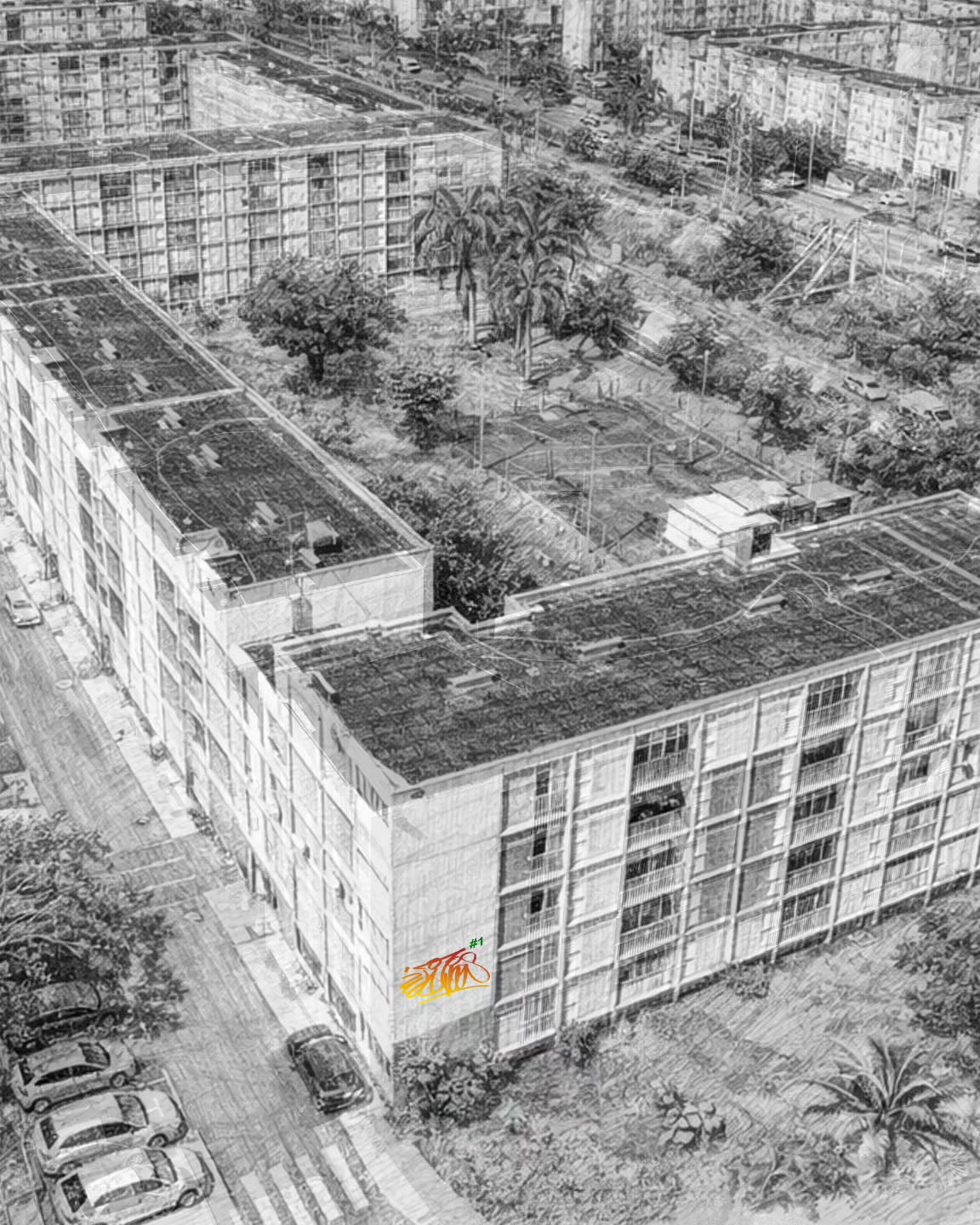
From May 9 to 17, 2026, the Raizet district of Les Abymes will play host to WAL FEST 2026, billed as Guadeloupe’s first major urban art festival. For ten days, 15 artists from Guadeloupe and elsewhere will create 12 monumental frescoes. The aim is clear: to turn the neighborhood into a free, permanent, open-air museum. The Abymes district at the heart of the project In Raizet, the walls of the Les Esses 1, 2 and 3 residences and of Quartiers 1 and 2 of the SIG will be more than just supports. They will become the visible heart of a cultural project designed in collaboration with residents, neighborhood associations and the Raizet socio-cultural center. WAL FEST 2026 is not just about showing finished works. It wants to make visible the artistic gesture, the live work, the exchanges, the hesitations and the encounters. Co-organized by the WAL association, Wad Al Lub,
Read More »
Paramaribo
HISTORY & HERITAGE
Tolotra

Suriname – Paramaribo: over 340 years old, made of wood and still standing

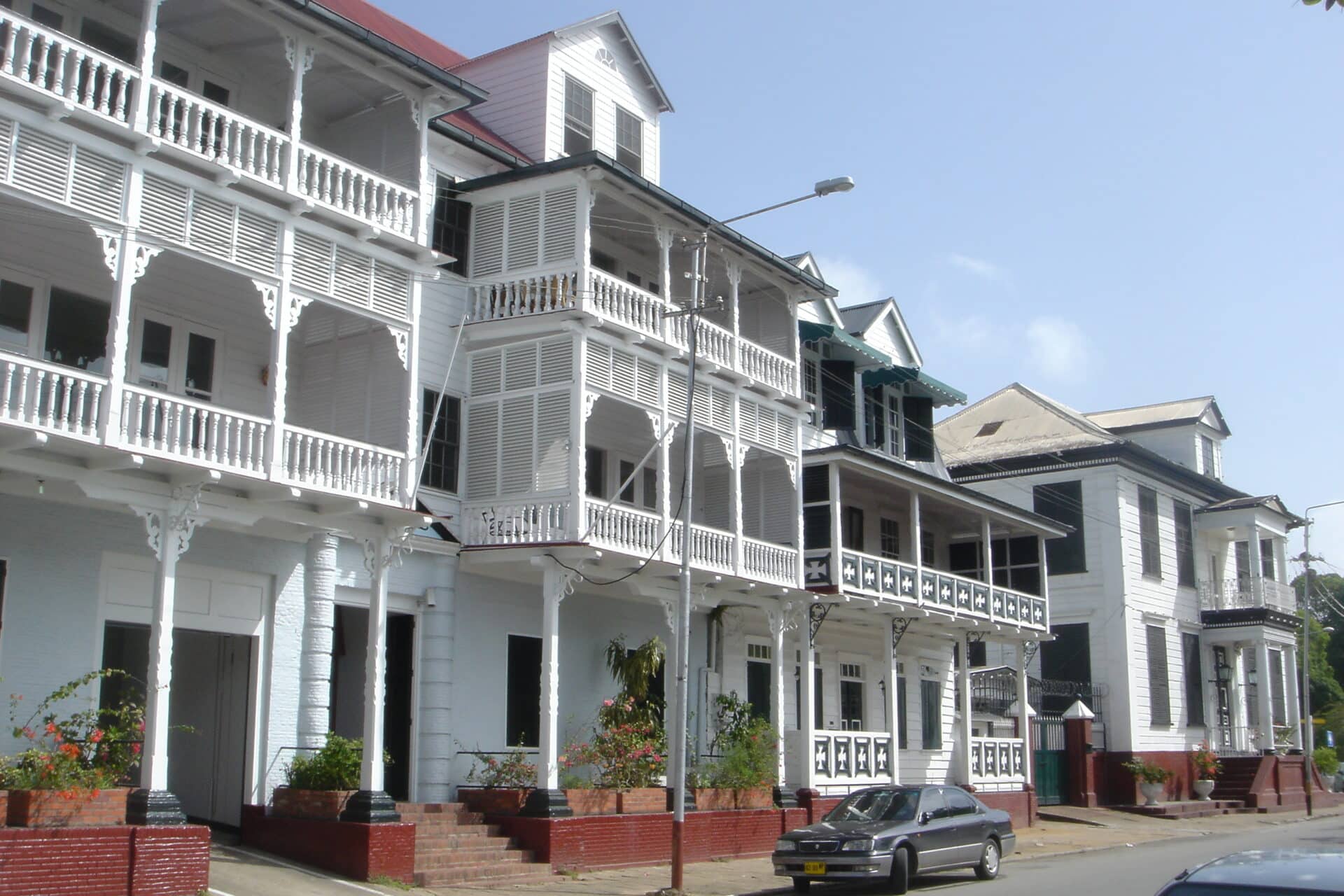
When you arrive from the Suriname River, it’s not a concrete silhouette that takes shape, but a succession of white plank buildings, lined up for over three centuries. Paramaribo doesn’t have the allure of other South American capitals. It took a strange gamble: to remain made of wood. And it has kept its promise, despite fires, humidity and urban pressures. A historic center recognized by UNESCO since 2002 Traced back to 1683, it’s one of the few colonial cities in America whose historic center is still mainly built of wood. Where other capitals have replaced their colonial houses with stone or concrete buildings, Paramaribo has preserved its original street layout and much of its ancient built fabric. This persistence earned Paramaribo its inscription on UNESCO’s World Heritage List on June 29, 2002, on the basis of cultural criteria ii and iv. The fusion of Dutch architecture, European techniques, South American

Read More »
2025-2026 cruise season
TOURISM
Tolotra

The 2025-2026 cruise season in Martinique: a strong showing for the island’s tourism industry

The 2025-2026 cruise season in Martinique has come to a close on a strong note, with 568,348 passengers announced and a clear increase in patronage over the previous season. In a region where tourism relies as much on hospitality as on the quality of experiences offered ashore, these results reflect the destination’s growing presence on Caribbean itineraries. They also show that Fort-de-France, Saint-Pierre and the local players are moving in the same direction: better welcome, better orientation and better promotion of Martinique’s heritage. Two long-awaited final stops in Fort-de-France The 2025-2026 cruise season will close on Friday, April 24, 2026 with two calls to Fort-de-France. RCCL’s ship is expected to call at the Tourelles terminal with around 2,000 passengers, while Princess Cruises’ Caribbean Princess is scheduled to call at the Pointe Simon terminal with around 3,500 passengers. Most of the cruise passengers are expected to be American, between 7 a.m.

Read More »

conTACT RK

we'd love to have your feedback on your experience so far

Join The List

Join our Richès Karayib community!  Sign up for our newsletter.

Want To Maximize Your Business Presence On Riches Karayib?

Complete the form to start the application