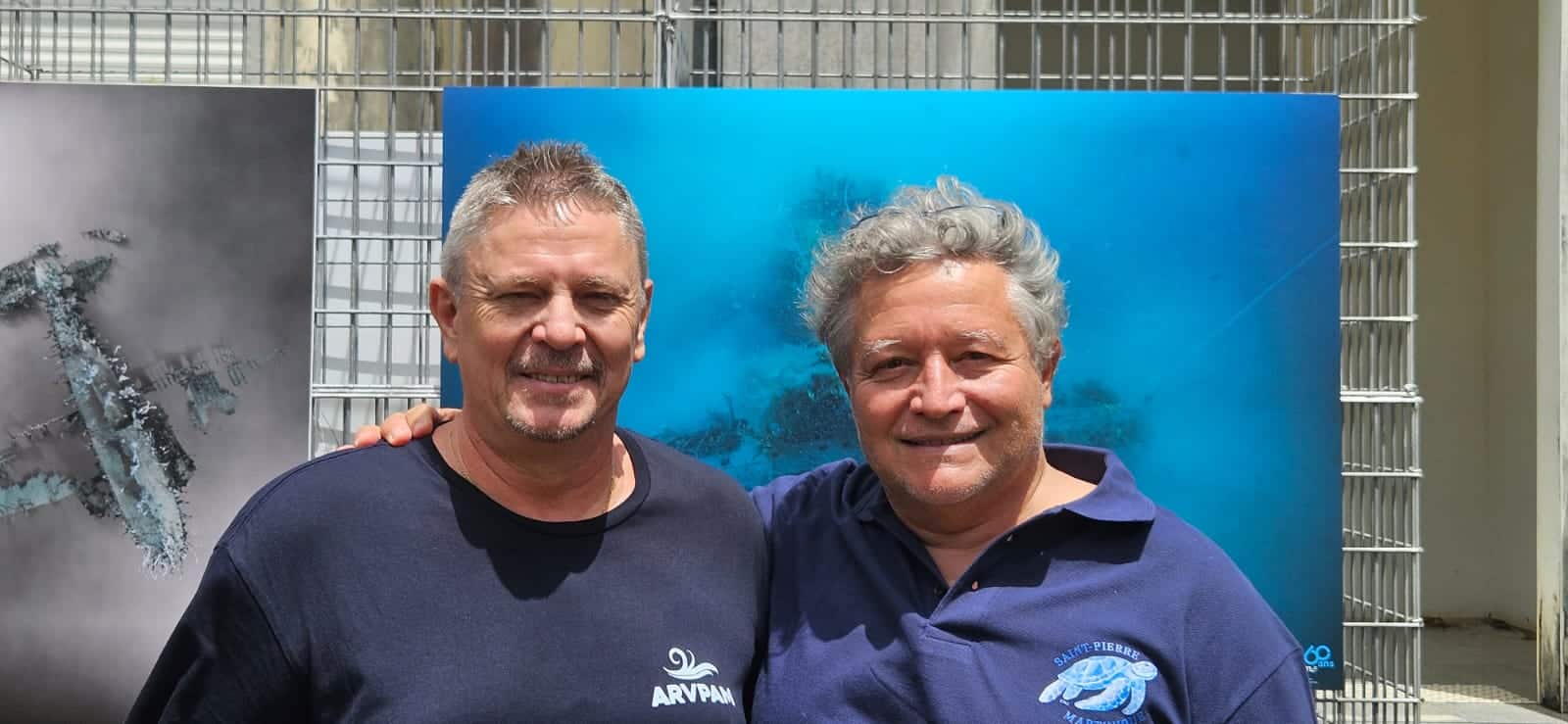
In Fort-de-France, a shipwreck doesn’t need to be brought to the surface to tell a story. Sometimes all it takes is a photo, an object, or a personal account. During European Archaeology Days, Martinique chose the sea as a gateway to its history. In the gardens and spaces of the “Department of Cultural Affairs”, the exhibition “Diving into the Blue, Where Shipwrecks Lie” showcased a heritage that is often invisible: the one that lies beneath the water.
European Archaeology Days as seen from Martinique
European Archaeology Days took place on June 12, 13, and 14, 2026. In Martinique, this event took on a special significance. It wasn’t just about discussing excavations, ruins, or conservation. It was about reminding people that the island also holds a part of its history in its seabed, its bays, its beaches, and its sand.
The Department of Cultural Affairs placed the sea at the center of this local edition. This choice coincided with the 60th anniversary of DRASSM, the Department of Underwater and Submarine Archaeological Research, established in 1966. Centered on this theme, visitors could view images of shipwrecks, recovered artifacts, and the work of those who preserve these historical traces.
Jean-Sébastien France: A Passion Born in 1991
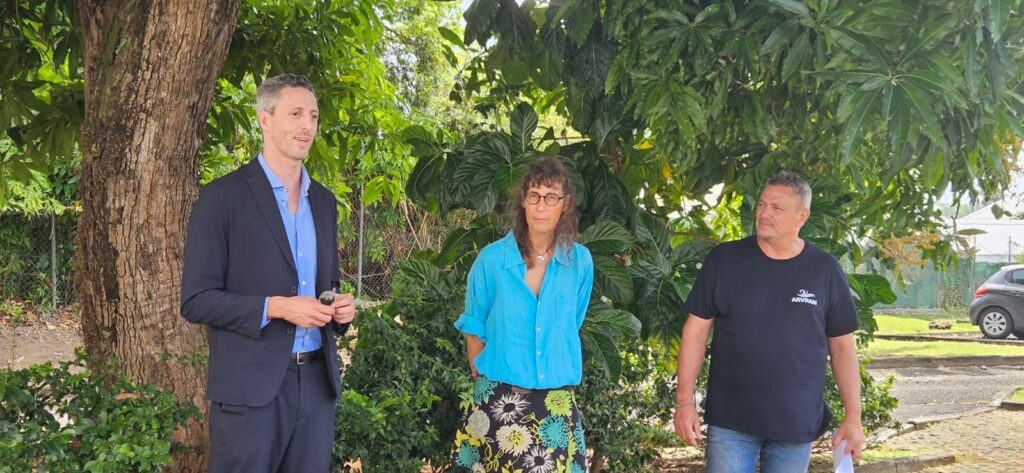
Jean-Sébastien France plays a key role. As president of the Association for the Research and Promotion of Martinique’s Underwater Archaeological Heritage, he does not present himself as an archaeologist. He speaks first and foremost as a man whose life has been shaped by a single encounter. In 1991, in southern Martinique, he took part in the discovery of an underwater archaeological site. Underwater, he saw anchors, cannons, and objects that time had deposited there. That day, he says, he felt “overwhelmed by history.” Underwater archaeology often begins with an emotional connection before evolving into research.
The association he chairs was founded in 2017. It now has about twenty members. Its goal is clear: to highlight a heritage that has long been overlooked and to raise awareness among the people of Martinique about this part of their shared history.

Wrecks, but above all, memories
The most powerful line from the interview can be summed up in a few words: “The sea doesn’t just hold shipwrecks; it also holds memories.” A shipwreck isn’t just a pile of metal or wood. It’s a trace of passage, of travel, of trade, of war, and sometimes of tragedy. An object found underwater always raises questions. Who made it? Which ship did it belong to? Where did it come from? Who lost it? Were there any missing people? Amateur divers, photographers, and organizations can spark this curiosity. Archaeologists then bring the methodology, the archives, the measurements, and scientific rigor.
During European Archaeology Days, this interplay between emotion and science found a public platform. Visitors were unable to go down into the bay of Fort-de-France or the harbor of Saint-Pierre themselves. But they were able to view these seabeds in a new light, thanks to the images and artifacts on display.
Through the lens of photographer Jacques-Yves Imbert
The exhibition owes a great deal to photography. Photographer Jacques-Yves Imbert is one of those artists whose vision allows the general public to gain access to a world that is otherwise difficult to reach. In underwater archaeology, images document, convey, and preserve a record.
Jean-Sébastien France reminds us: nothing remains unchanged at sea. Salt, currents, swells, sand, and coral transform shipwrecks. Some will eventually disappear. Photographs then become witnesses for future generations. They also make this heritage accessible to those who do not dive.

The Sikorsky S43B: A Story of the Islands
Among the most striking stories, that of the Sikorsky S43B gives tangible form to this submerged memory. This seaplane carried passengers between the islands. During a landing in Fort-de-France Bay, the sea was rough. The aircraft lost stability, hit the water, and capsized. Today, the wreck lies upside down at the bottom of the bay.
This site requires caution. The bottom is muddy. Any sudden movement can stir up the water and reduce visibility. A photogrammetric image was used to reconstruct the seaplane in 3D from several hundred photos. Here, technology helps us understand without causing damage.

European Archaeology Days: Heritage for Culture and Tourism
The European Archaeology Days also highlight another idea: tourism in Martinique can be enriched by deeper stories of its heritage. Martinique is not defined solely by its beaches, gardens, distilleries, or hills. It is also defined by its shipwrecks, maritime routes, remains buried beneath the sand, Native American traces, and memories linked to slavery.
But this heritage comes with a rule: Do not touch. Do not take anything. These objects belong to our shared history. Perhaps this is the most important lesson left by these European Archaeology Days: learning to look at the sea differently not as a backdrop, but as Martinique’s fragile library.


European Archaeology Days is an event dedicated to exploring archaeological heritage. In Martinique, the 2026 edition highlighted the sea, shipwrecks, underwater artifacts, and traces of heritage preserved on the seabed. The event gave the public a better understanding of a part of Martinique’s history that is often hidden from view—located beneath the sea, in the bays, on the beaches, and beneath the sand.
Underwater archaeology is important to Martinique because it reveals fragments of history that cannot be seen from land. Shipwrecks, anchors, cannons, ancient artifacts, and submerged remains tell the story of maritime routes, shipwrecks, trade between the islands, and Martinique’s ties to the Caribbean. This heritage is fragile, as salt, sand, waves, and coral can gradually alter it or cause it to disappear.
The ARVPAM, chaired by Jean-Sébastien France, works to raise awareness of Martinique’s underwater archaeological heritage. The association serves as a link between divers, photographers, institutions, archaeologists, and the general public. Its role is to raise awareness among the people of Martinique about this underwater heritage, to highlight the value of artifacts and shipwrecks, and to emphasize that this heritage must be protected, studied, and preserved in accordance with scientific standards.