Félix Mérine, the embodiment of resilience

Félix Mérine

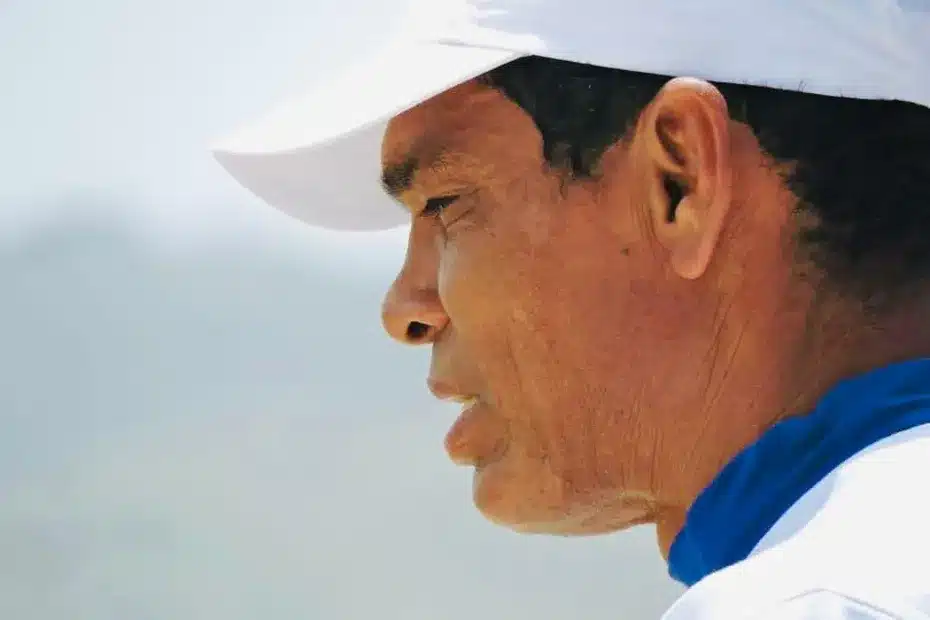
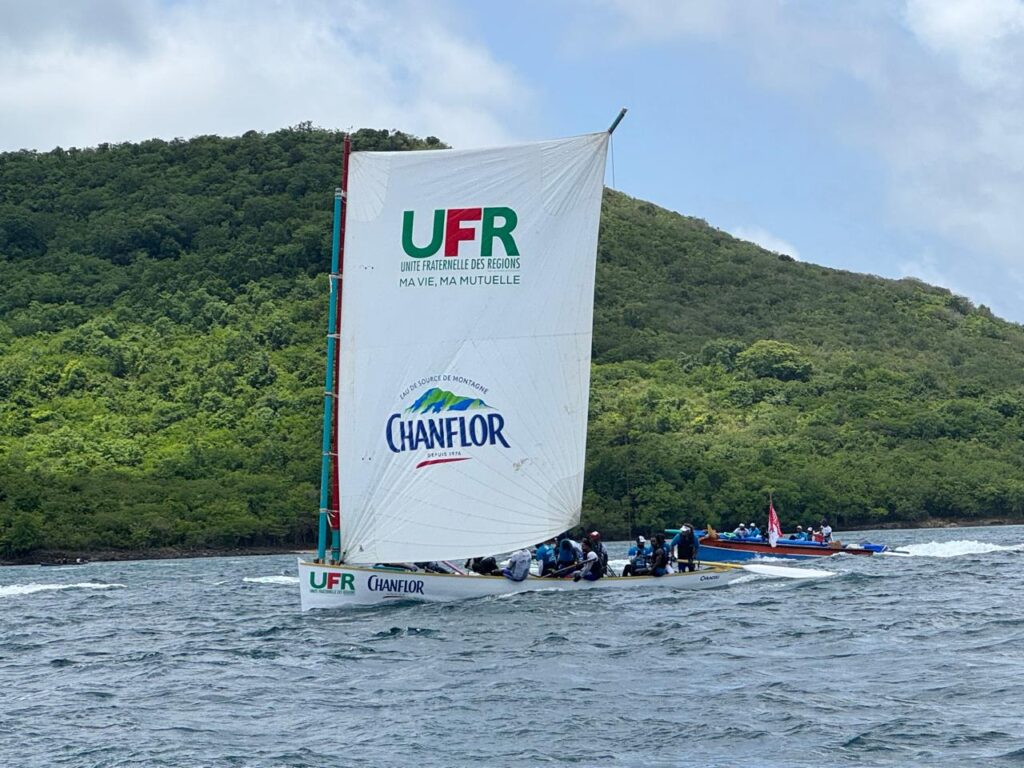
Félix Mérine grew up close to the water, in a house facing the sea. Even as a child, the yole (boat) was part of his daily life, without imagining that this traditional craft would become his lifelong companion. But it was much later, after the storms of life, that Félix Mérine came to understand the power of this craft. The yole didn’t just teach him how to sail, it gave him a path, a course, a reason to act. Today, this helmsman-turned-entrepreneur is dedicated to passing on what the sea has given him.

A child of the sea, forged by the waves

Félix Mérine grew up a stone’s throw from the sea, in Robert, in a house where water was part of everyday life. At a very young age, he discovered the world of the yole alongside his uncles. He didn’t immediately climb aboard – at first, he observed, learned and listened. He built small yoles on the street, helped wash the sails, and unknowingly took part in the life of the yole. This is where it all begins: in the repeated gestures, the exchanged glances, the silent respect for elders.

Félix Mérine
©Mady Aïssata Mérine

Adrift but not lost

At 16, Félix Mérine left school. “I didn’t listen to my mother,” he says bluntly. He entered a troubled period. Military service in Lyon had a profound effect on him. Discipline, respect, responsibility: he discovered strict rules that he applied without question.
8,000 kilometers away, his mother’s advice finally made sense.
On his return, his uncles took him back on a yole. This time, he took to it for good.

Félix Mérine
Sé pou la viktwa nou ka alé 💪🏼

Yole as a discipline, sport as a springboard

In 1987, he founded his association and imposed strict rules: regular training, zero alcohol, team spirit and respect for each other. It took time, but the results followed. The Yole became more than a sport: it became a school.

The Yole saved my life,” says Félix Mérine.

What he learns on the water, he applies to his business. Today, he runs a transport company active in the Caribbean, with over 60 employees. What was passed on to him, he in turn passes on. “What my elders passed on to me, I have a duty to pass on in my turn,” he says.

Félix Mérine
©Jérôme DESERT PASSIFOTO 1
Félix Mérine
©Jérôme DESERT PASSIFOTO
Félix Mérine
©Jérôme DESERT PASSIFOTO

Passing on to build tomorrow

Now retired from competitions, Félix Mérine devotes his time to passing on his skills. He supervises young people at risk, shares his experience and is in charge of a rehabilitation project through the Yole for prison inmates. For him, every effort counts, and can change everything. “Nothing is lost,” he says gravely, “even when everything seems to be.” What he has received from his elders has been decisive, and he knows that a well-supported young person can also find his way.

Félix Mérine’s story is that of a man who found in the sea a framework, a meaning, a strength. Today, he acts so that others can, in turn, move forward. Because sometimes, all it takes is a reference point, a listening ear, or a boat – to get things moving again.

Strong quote:

95% of what I have today, the yole gave it to me.

Watch the exclusive video interview

Leave a Reply

Your email address will not be published. Required fields are marked *

More articles from RK

NEWS
Tolotra

396 million people speak French: the 2026 report reveals

The Organisation internationale de la Francophonie has published a figure that reshuffles the deck in the global language debate: 396 million people now speak French. With this total, the French language in the world rises from 5th to 4th position behind English, Mandarin and Spanish, but ahead of standard Arabic. This is more than just an announcement. It marks a fundamental change in the place of French on the international stage, and confirms that the language continues to make headway in strategic areas such as education, economic exchanges, digital technology and cultural mobility. Global progress changes the narrative around French For years, French has often been portrayed as a language of great influence, but weakened in the face of global competition. The OIF’s 2026 report introduces an important corrective. The French language in the world is not only holding its own: it is gaining ground in terms of the number
Read More »
Bonaire
TOURISM
Tolotra

Bonaire, a Caribbean island built around the sea and conservation

In the southern Caribbean, off the coast of Venezuela, Bonaire is a territory in a class of its own. Less publicized than its neighbors Aruba and Curaçao, the island has built its identity around one central principle: the protection of its environment. Here, the sea structures the economy, landscapes and customs, while tourism development has been gradual and controlled. For travelers, Bonaire offers a clear picture: a compact island, visible natural areas, an accessible coastline and an organization geared towards sustainability. An island structured by its marine park Since 1979, Bonaire’s entire coastline has been protected by the Bonaire National Marine Park which completely surrounds the island. This marine area regulates nautical activities and aims to preserve the coral reefs, considered among the best preserved in the Caribbean. One of the island’s special features is the direct accessibility of its marine sites. Diving and underwater observation can be carried out
Read More »
Marcus Garvey
HISTORY & HERITAGE
Tolotra

Jamaica – Marcus Garvey, Jamaican hero of international renown

Marcus Garvey remains one of the most influential figures to emerge from the Caribbean. Born in Jamaica at the end of the 19th century, he transformed a local experience into a political and cultural project of international scope. At a time when black populations faced deeply rooted systems of exclusion, Marcus Garvey proposed a structured vision based on dignity, organization and autonomy. Recognized today as a national hero in Jamaica, he is much more than a historical symbol. His story helps us understand how the Caribbean helped shape major intellectual and political movements on a global scale. His name continues to circulate in contemporary debates on identity, memory and the development of societies born out of colonial history. From Jamaican origins to the formation of a committed conscience He was born on August 17, 1887 in St. Ann’s Bay, Jamaica, into a modest family. Very early on, he developed a

Read More »

conTACT RK

we'd love to have your feedback on your experience so far

Join The List

Join our Richès Karayib community!  Sign up for our newsletter.

Want To Maximize Your Business Presence On Riches Karayib?

Complete the form to start the application