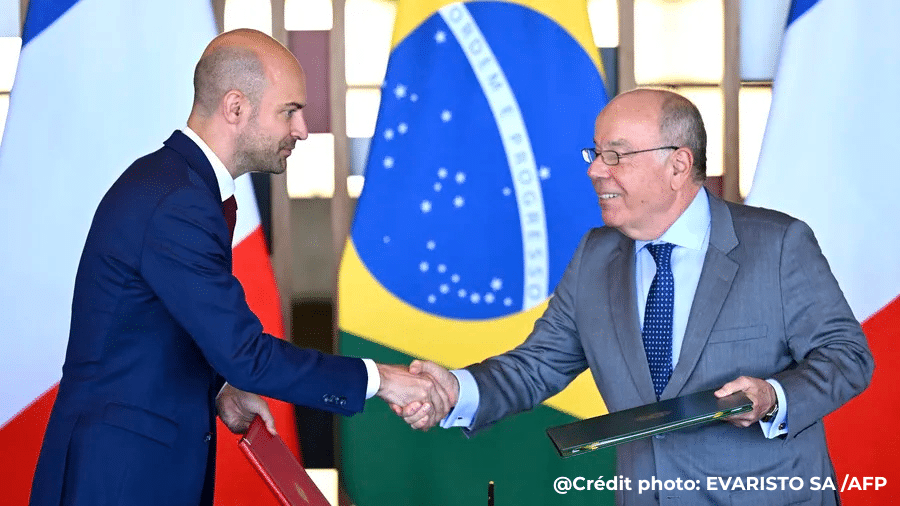
The decision was signed in Brasília, but its effects will be felt along the banks ofthe Oyapock River. On Wednesday, July 1, 2026, France and Brazil adopted a roadmap aimed at strengthening their cooperation along the French Guiana border. In particular, the agreement provides for the suspension of the short-stay visa requirement for Brazilian nationals wishing to travel to French Guiana, effective July 31.
On paper, this is an administrative measure. In reality, it touches on a more sensitive issue: that of a border long perceived by residents as close, yet complicated by regulations. For many Brazilians in Amapá, entering French Guiana has until now required a cumbersome process, even though family, business, and social ties exist on both sides of the river.
An anomaly that is difficult to defend
The France-Brazil announcement rectifies a situation often described as unfair. Brazilian nationals could travel to mainland France without a short-stay visa, but were required to apply for one to enter French Guiana, a French territory located right on their border. This difference in treatment fostered a sense of confusion, and sometimes even of discrimination.
French Guiana is not part of the Schengen Area, which partly explains this special arrangement. But on the ground, the legal explanation was no longer sufficient. In Saint-Georges-de-l’Oyapock, as in Oiapoque, the border is not merely a diplomatic line. It shapes lives, travel, markets, families, and long-standing traditions.
A Human and Strategic Border
France shares its longest land border with Brazil: approximately 730 kilometers between French Guiana and the state of Amapá, in the heart of the Amazon. This geographical reality gives the agreement special significance. France is not merely a European partner in its relations with Brazil. Through French Guiana, it is also a neighbor to South America, the Amazon region, and the Caribbean.
The suspension of short-stay visas does not apply solely to tourism. It can facilitate exchanges, bring residents closer together, support certain businesses, and ease a barrier that had been weighing particularly heavily on border communities. It also acknowledges that French Guiana cannot be understood solely from the perspective of Paris or Brasília, but must be viewed within the context of its own regional context.
Security, Drug Trafficking, and the Environment
This openness does not mean a lack of oversight. The roadmap signed in Brasília also aims to strengthen cooperation against drug trafficking, illegal gold mining, and environmental crimes. These are major challenges in a forested area that is difficult to monitor, where criminal networks operate, illegal gold flows, and intense pressure is being exerted on the Amazon.
The measure therefore strikes a delicate balance: facilitating legal travel while strengthening the fight against trafficking. For the French and Brazilian authorities, the challenge will be to demonstrate that the visa relaxation does not compromise security, but rather is part of a more effective, better-coordinated, and more respectful approach to local realities.


A development to watch closely
We must be clear: this is not a blanket, permanent waiver announced without conditions. The measure concerns the suspension of the short-stay visa requirement for Brazilian nationals entering French Guiana. The rules regarding duration, screening, and entry into the territory therefore remain in effect.
This is more than just a diplomatic agreement between France and Brazil. It demonstrates how an administrative decision can become a symbol of dignity, recognition, and regional cooperation. In Oyapock, the suspension of the short-stay visa marks a new phase. It will not single-handedly resolve border tensions, but it can correct an anomaly and compel both countries to view French Guiana as a true crossroads of the Amazon, the Caribbean, and South America.
Provided, however, that this openness is accompanied by concrete measures: an administrative presence, clear information for travelers, sustained police cooperation, and dialogue with local elected officials. Without these elements, the France-Brazil announcement could remain merely symbolic. With serious follow-through, it can bring about tangible change for those who experience the border firsthand every day—not just in press releases from the capitals, but right where the people affected live.
The France-Brazil agreement signed on July 1, 2026, in Brasília provides for enhanced cooperation between the two countries along the French Guiana border. In particular, it addresses the fight against drug trafficking, illegal gold mining, and environmental crimes. It also provides for the suspension of the short-stay visa requirement for Brazilian nationals wishing to travel to French Guiana starting July 31.
The suspension of the short-stay visa requirement is significant because it corrects a situation that has long been viewed as a border anomaly. Brazilian nationals could travel to mainland France without a short-stay visa, but were required to apply for one to enter French Guiana, even though it is located directly on the border with Amapá. This measure can therefore facilitate family, business, and social ties between the two territories.
No. The suspension applies to the short-stay visa requirement for Brazilian nationals traveling to French Guiana, but it does not eliminate border controls. Travelers must still comply with entry requirements, the authorized length of stay, and the rules applicable in French Guiana. The measure aims to facilitate legal travel while maintaining security cooperation between France and Brazil.