The Garifunas of Honduras embody a living memory of the Black Caribbean, at the crossroads of history, maritime tradition and contemporary struggles for cultural survival. For this Afro-Indigenous community, artisanal fishing is much more than an economic activity; it is the foundation of their identity. Heirs to a unique blend of escaped Africans and indigenous Caribbean populations, the Garifunas have developed and preserved a maritime know-how that intimately links everyday gestures to a vision of the world shaped by the ocean.
A story born of exile and resistance
The Garifunas of Honduras were not born on the shores of Central America. Their story takes root in the 17th century, on the Caribbean island of Saint-Vincent, where shipwrecked – and sometimes escaped – African slaves found refuge among the indigenous Kalinagos and Arawaks. This mix, unique in Caribbean colonial history, gave rise to a new community: the Garifunas.
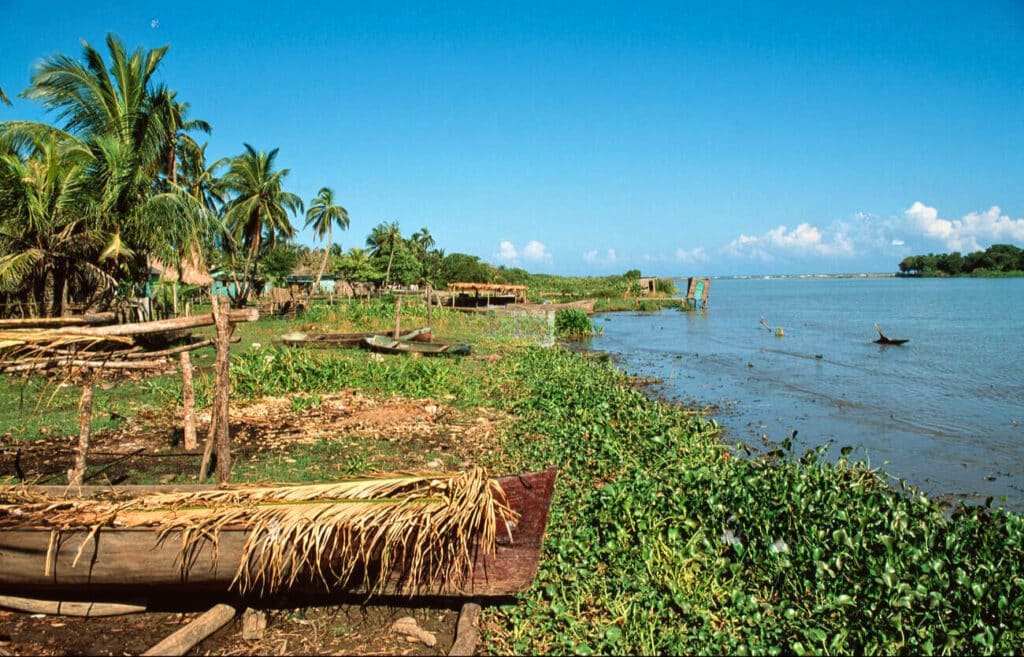
But this relative autonomy came to an end with the arrival of the British. In 1797, accused of supporting the French, the Garifunas were captured and deported en masse to the island of Roatan, off the coast of Honduras. From there, they gradually settled on the Caribbean coasts of Honduras, Belize, Guatemala and Nicaragua. It was on these shores that their special relationship with the sea emerged, through artisanal fishing.
Fishing rooted in tradition
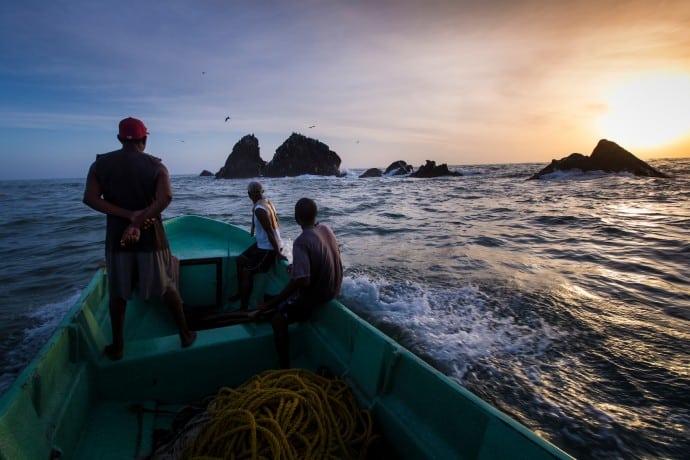
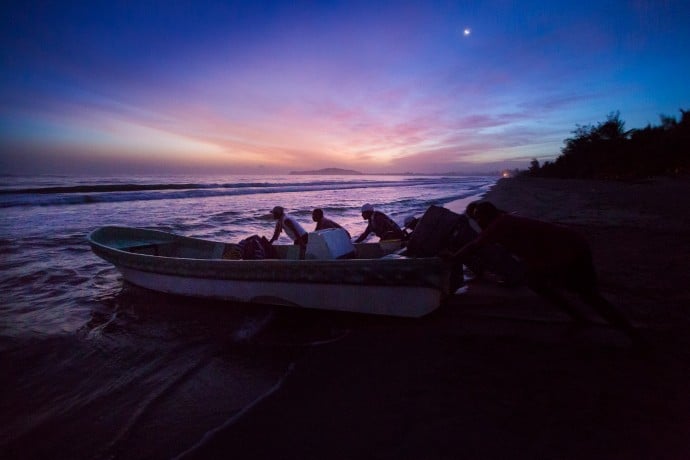
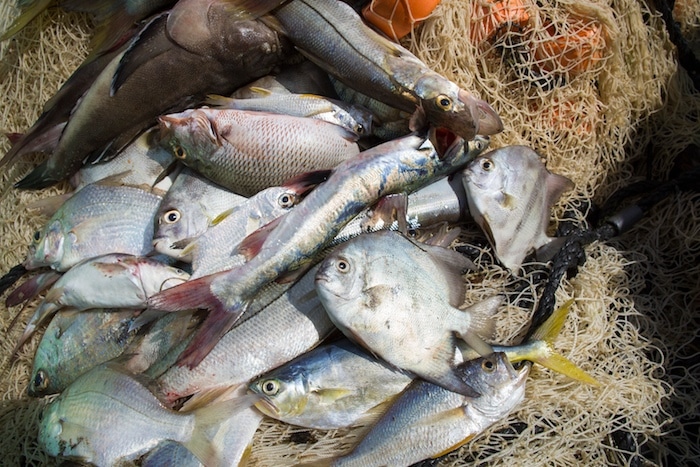
Even today, the Garifunas of Honduras perpetuate techniques that have been passed down orally for generations. Far removed from industrial logics, their practice relies on light boats, often made of wood, powered by oars or small motors, as well as on the use of nets, lines and creels. Respect for the reproductive cycle of species, detailed knowledge of currents and the seabed, and the ability to read the signs of the sky are all part and parcel of their expertise.
Fishing is not just a matter of subsistence. It’s a deeply cultural act, closely linked to cuisine, music and spirituality. Traditional dishes such as Machuca (mashed plantain with fish in a coconut milk broth) tell the story of the sea as much as they nourish the body. The transmission of these recipes, the sharing of meals and the songs sung on fishing trips are all part of a genuine community ritual.
A central role for women in the maritime economy
If the figure of the fisherman is often masculine, the Garifunas of Honduras are actually an ecosystem in which women play a central role. They prepare, process and sometimes even sell the fish. They keep culinary practices alive and organize the solidarity networks that keep villages alive. In some communities, they are also involved in coastal fishing, particularly for shellfish.
The Garifuna social model is based on complementarity between the sexes, structured around the extended family and the community. This strong social fabric provides a bulwark against external pressures, but is now under threat.

Land pressure and ecological upheaval
Since the 1990s, the Garifunas of Honduras are seeing their way of life threatened by the expansion of agro-industrial, tourism and sometimes extractive projects on their coastal lands. The development of palm oil plantations, resorts and marinas is encroaching on traditional fishing grounds, sometimes without prior consultation with local communities.
Expropriations, often contested by local residents, raise legitimate concerns about respect for Garifuna land rights. This phenomenon is leading to a scarcity of accessible marine resources, increased pressure on ecosystems and the gradual economic marginalization of fishermen.
Added to this are the effects of climate change. Coastal erosion, rising sea temperatures and disrupted breeding seasons have a direct impact on the abundance and diversity of fish species. The Garifunas of Honduras must now navigate in an increasingly uncertain environment.
Community and legal mobilization
In the face of these challenges, communities are not remaining passive. The Black Honduran Fraternal Organization (OFRANEH), a pillar of the Garifuna movement, has been working for over 40 years to defend the cultural and territorial rights of the Garifunas. It supports the Garifunas of Honduras through awareness-raising campaigns, legal action at national and international level, and support for food sovereignty projects.
Emblematic cases include that of the community of Triunfo de la Cruz, which won its case before the Inter-American Court of Human Rights. OFRANEH also campaigns for sustainable fishing practices that respect biodiversity and are adapted to the local ecological context.
Community and legal mobilization
In the face of these challenges, communities are not remaining passive. The Black Honduran Fraternal Organization (OFRANEH), a pillar of the Garifuna movement, has been working for over 40 years to defend the cultural and territorial rights of the Garifunas. It supports the Garifunas of Honduras through awareness-raising campaigns, legal action at national and international level, and support for food sovereignty projects.
Emblematic cases include that of the community of Triunfo de la Cruz, which won its case before the Inter-American Court of Human Rights. OFRANEH also campaigns for sustainable fishing practices that respect biodiversity and are adapted to the local ecological context.
A threatened but resilient living heritage
Beyond the material aspects, the Garifunas of Honduras are the guardians of an exceptionally rich intangible heritage. Their language, their music to the rhythm of drums and the puntatheir dances and beliefs linked to the sea make up a powerful symbolic universe. Fishing is both an everyday act and a metaphor for our relationship with the world.
Every trip out to sea, every net cast into the water, is also an act of cultural resistance. Sea tales, work songs and prayers to ancestors before fishing bear witness to a sacred relationship with the environment.
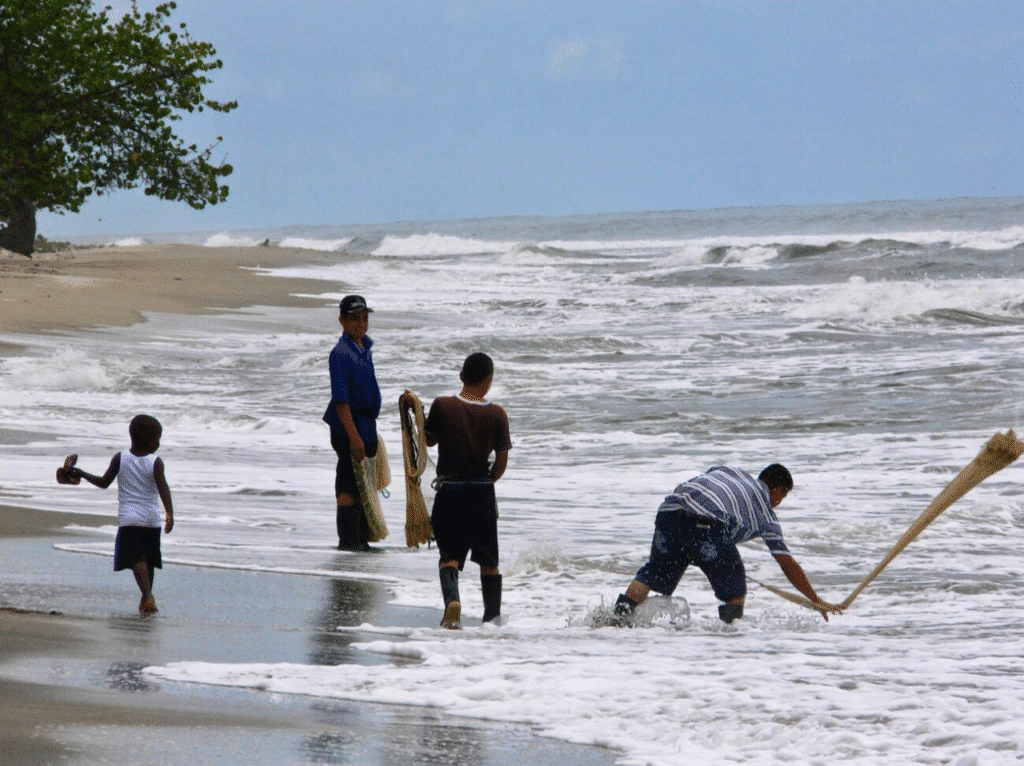
Garifuna of Honduras are not just economic players in coastal areas. They embody a balance between tradition and resilience, between ancestral know-how and contemporary issues. Their presence on the shores of Honduras is a reminder that the sea is not just a space of resources, but also a place of memory, transmission and struggle. Defending their way of life also means preserving another way of living in the world, one that is more respectful of natural and human balances.