Guanaja, the green island in the heart of the Bay Islands

Guanaja

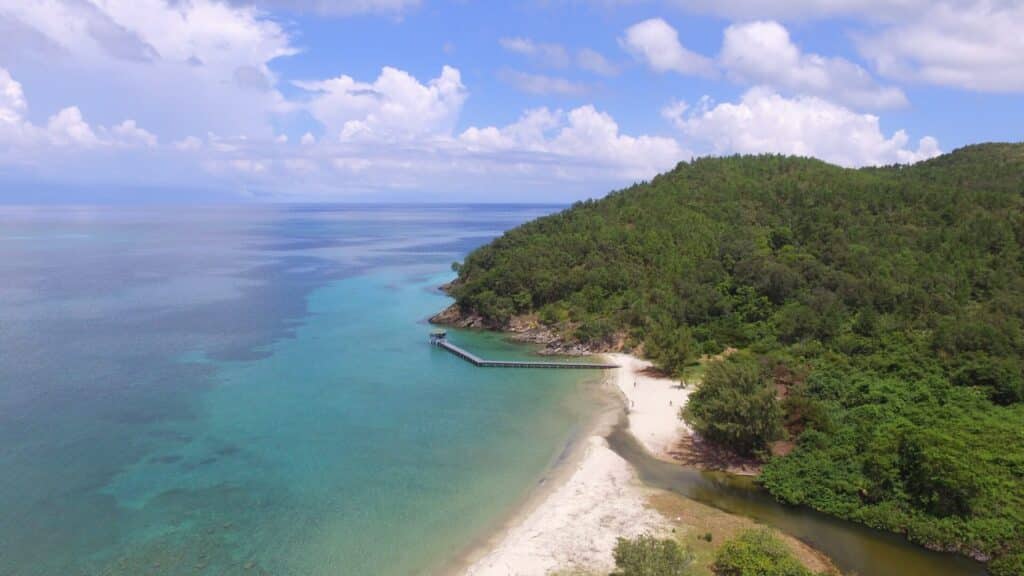
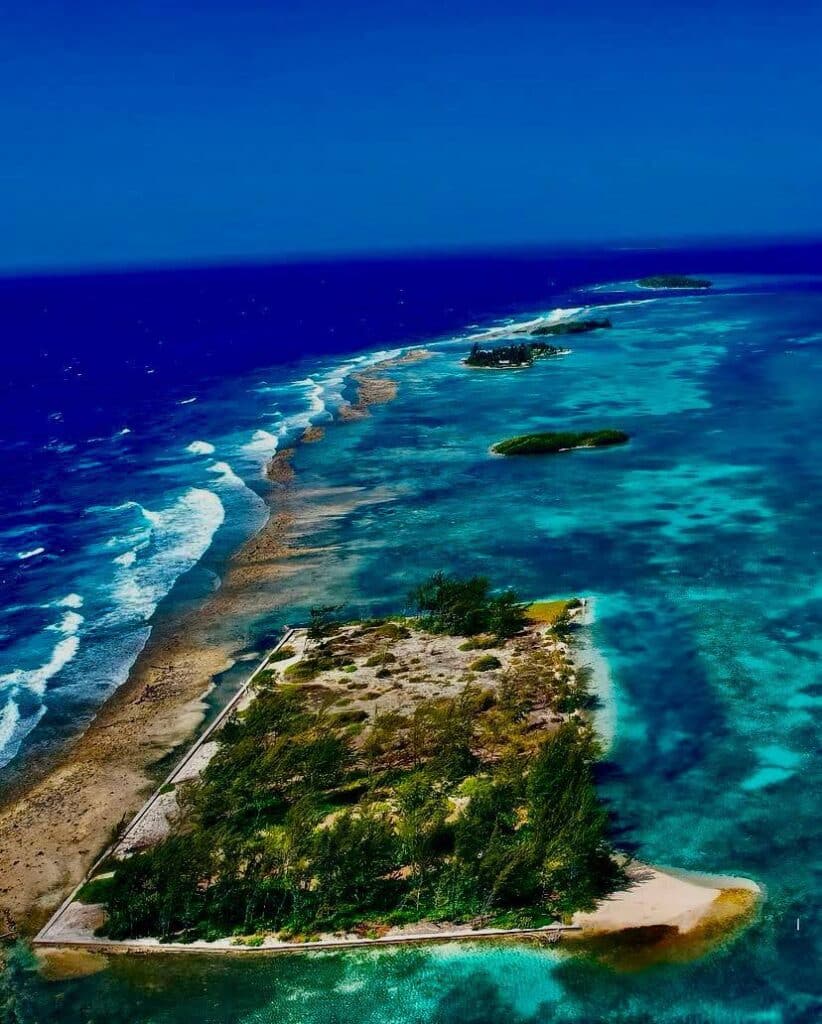
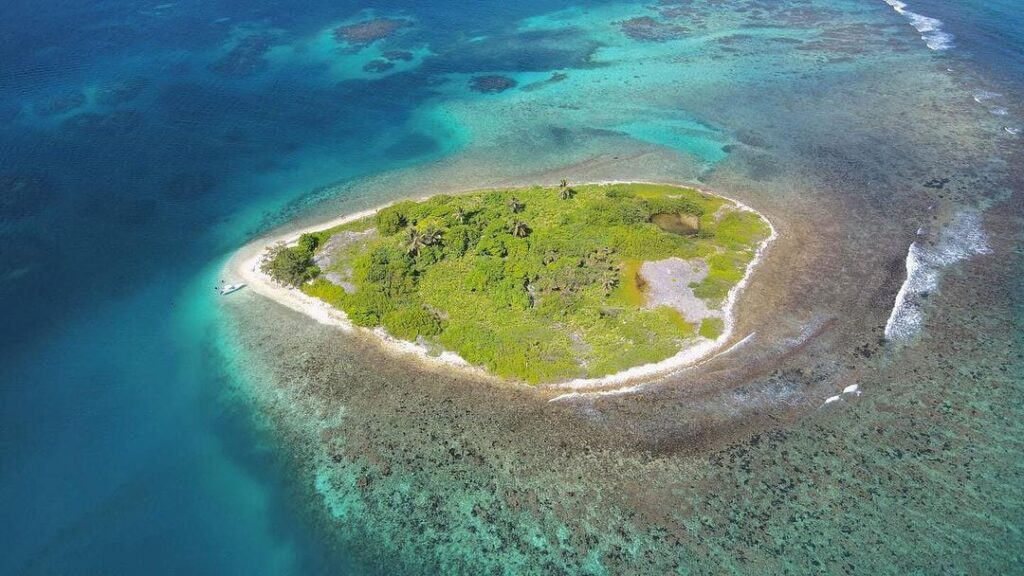
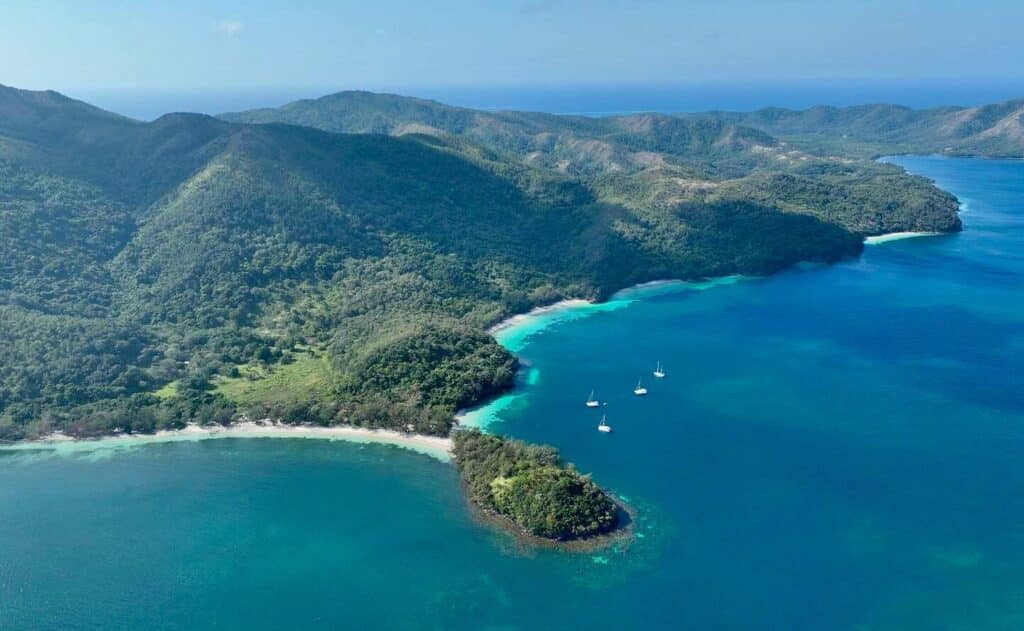
When approaching Guanaja from the sea, the island’s first impression is of its silhouette: pine-covered hills, encircled by a ring of reefs and small cays. Nothing flashy, just a landscape that immediately makes one thing clear: here, the sea, the mountains and the villages still live on a human scale.

A mountainous island facing the sea

Guanaja
Guanaja
Guanaja

Guanaja is one of the three large Bay Islands off the coast of Honduras. It lies some 70 km from the mainland, and offers a surprising relief for an island of its size. Often nicknamed “the Green IslandGuanaja is largely covered by Caribbean pine forests and tropical vegetation. From the ridges, a string of coves, discreet beaches and reefs form a natural boundary between the island and the open sea.

The forests were severely damaged by Hurricane Mitch in 1998, but some of the vegetation cover is gradually recovering. The island’s interior remains largely undeveloped, with trails used by locals and fishermen.

Guanaja
Guanaja
Guanaja

Bonacca, a town set on the sea

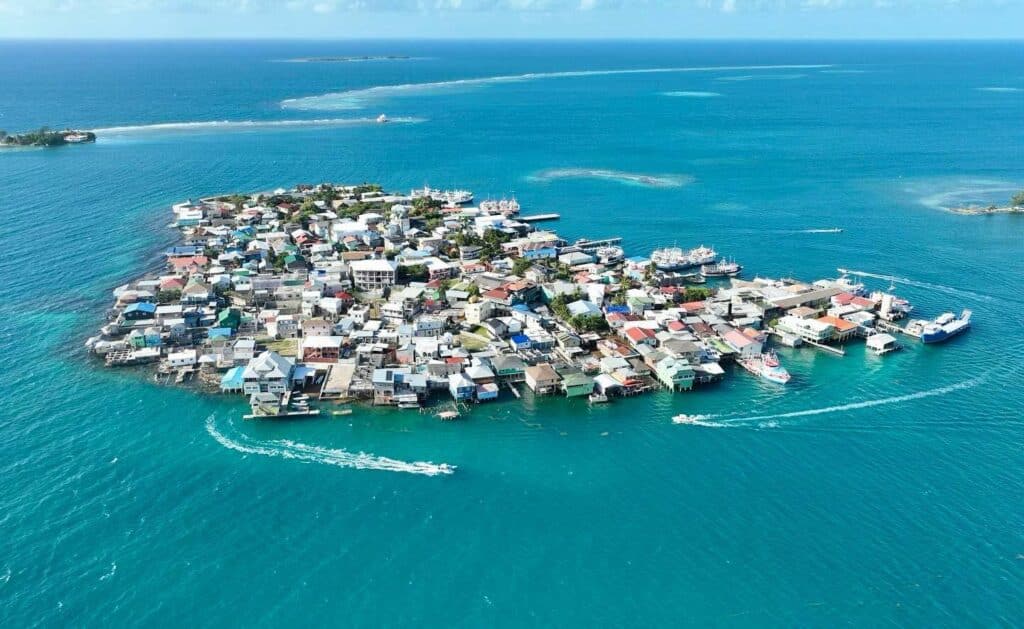
The contrast is striking when you arrive at Bonacca – often referred to as The Cay. Most of Guanaja’s inhabitants live on this tiny islet built on the water. The tightly-packed wooden houses rest on stilts, linked by footbridges and narrow lanes. Together, they form a singular urban network, where you walk above the sea and boats circulate as if in a labyrinth.

Bonacca is sometimes compared to a small Caribbean Venice, not for its aesthetics, but for the way it organizes a town around the sea. Several thousand inhabitants live on less than 40 hectares, with shops, schools, churches and docks in constant motion. The place is not a tourist attraction: it’s a concrete response to the constraints of a limited island territory.

Guanaja

A major reef in the Mesoamerican Barrier Reef

Around the island, the sea is a structuring element. The island is bordered by the Mesoamerican Barrier Reef, the second largest reef system in the world. The surrounding clear waters, seagrass beds, coral reefs and wetlands are part of the Bay Islands National Marine Park.

This park, created to preserve an essential marine heritage, covers hundreds of thousands of hectares and includes Roatán, Utila and Guanaja. On site, associations such as BICA work with local residents to protect the reefs, regulate fishing and involve local communities. These efforts enable the island to maintain a balanced relationship between human activity and the preservation of its marine environment.

Guanaja
Guanaja

A Caribbean history that links cocoa, pine trees and sea routes

The history of Guanaja far exceeds its size. In 1502, Christopher Columbus landed here on his fourth voyage and named it Isla de los Pinos, in reference to the forests that already covered it. Accounts of the time tell us that it was here that he first encountered cocoa, transported by merchants in large pirogues.

Later, the island became a transit point for privateers, merchants and families from the Cayman Islands, which explains the coexistence of English and Spanish in daily life today. Guanaja went through several names – Caguamara, Isla de Pinos, Bonacca – before being officially renamed as it is today.

Living on Guanaja: fishing, resilience and community ties

Guanaja
Guanaja

The island’s economy is still based on fishing and limited tourism, focused on nature and the sea. Hurricane Mitch left a lasting impression on the island’s inhabitants, destroying many homes, particularly in Bonacca. But the island proved resilient. The inhabitants rebuilt, slowly and with their own means, taking into account the sea and the constraints of the territory.

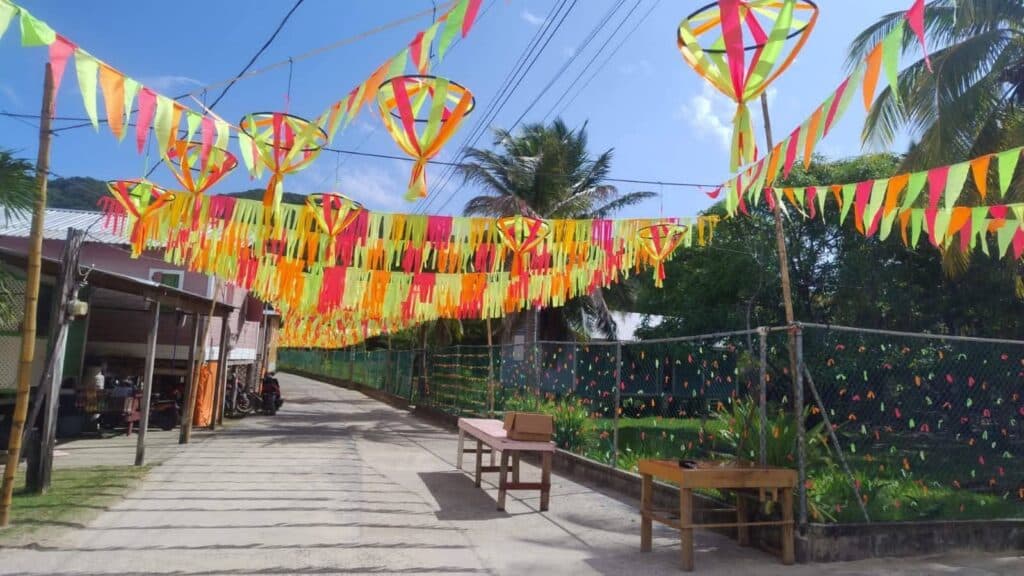
The local culture blends Honduran traditions, Anglo-Caribbean influences and specific festive practices such as the Junkanoo, where locals parade in costumes made from recycled fabrics and materials. These celebrations, often modest and very communal, are a reminder of the strength of the social bond that characterizes the island.

Guanaja
Guanaja

A discreet and essential Caribbean

To showcase Guanaja is to tell the story of a different Caribbean: an island that refuses the race to outdo itself, that relies on sobriety, the sea and the forest rather than on large-scale development. An island where we still build on the water because land is scarce, where we protect the reefs because they are the first line of defence, where we live as close as nature will allow.

Guanaja is a discreet island, but essential to understanding Caribbean diversity. An island where the sea structures life, where history can be read in the reefs and stilts, and where community remains the primary force.

📷©Guanaja, Islas de la Bahia / Facebook

FAQ

Guanaja is part of the Bay Islands archipelago off the north coast of Honduras. The island can be reached by boat or plane from Roatán and La Ceiba.

Bonacca, the inhabited heart of Guanaja, was built on a very small islet to avoid coastal mosquitoes and benefit from better ventilation. The houses on stilts are an extension of this adaptation.

Yes, the island belongs to Bay Islands National Marine Park which protects reefs, seagrass beds and mangroves around Guanaja, Roatán and Utila.

Leave a Reply

Your email address will not be published. Required fields are marked *

More articles from RK

Bamby
MUSIC
Tolotra

Bamby, première artiste de Guyane nommée aux Flammes, arrive à Paris

Bamby hasn’t announced a concert date like adding a line to a tour. In a video posted on Instagram, the Guyanese artist spoke of emotion. On October 20, 2026, she will take to the stage at the Élysée Montmartre in Paris, a venue steeped in history. For many fans, this appointment tells more than a musical agenda: it marks a rare milestone for a voice born in French Guiana. An artist shaped by French Guiana Behind the stage name Bamby, there’s Ambre Zamor, an artist from French Guiana, associated from the outset with a direct, popular dancehall energy, often carried by the language, attitudes and sound codes of the territory. She came to prominence in 2015 with Real Wifey, in collaboration with Jahyanai, another important figure on the Guyanese scene. This track establishes a clear identity: a female voice, an assertive Caribbean phrasing, a way of addressing her audience without

Read More »
Lobi
HISTORY & HERITAGE
Tolotra

“Lobi”: the Surinamese word for a different kind of love

Three words heard in Paramaribo “Lobi” often enters the ear before it enters a dictionary. In Paramaribo, the capital of Suriname, all it takes is a family conversation, a song in the distance or a message sent between loved ones to hear “mi lobi yu”. Three simple words. A declaration of love. And behind them, a long linguistic history born on the Guiana coast, between colonization, slavery, resistance and daily life. In Sranan Tongo, “lobi” means to love, to be in love or to feel strong affection, depending on the context. It should not be taken to mean more than it says. Sranan dictionaries distinguish other words for kissing or sexual relations. But “lobi” has a special place, because it concentrates the emotional impulse of a language long kept at a distance from official spaces. A Creole language born of Surinamese history Sranan Tongo, literally “language of Suriname”, is an

Read More »
Festival del Jíbaro Comerieño
EVENT MANAGEMENT
Tolotra

Festival del Jíbaro Comerieño: Puerto Rico’s mountain festival

Some 40 kilometers by road from San Juan, in the Cordillera Central, Comerío doesn’t have the visibility of Puerto Rico’s major coastal destinations. The town has fewer than 19,000 inhabitants according to the latest US estimates, but it has a strong nickname: la Cuna de Trovadores, the cradle of trovadores. Every June, this mountain town turns its reputation into a cultural event with the Festival del Jíbaro Comerieño. 2026 edition confirmed The Festival del Jíbaro Comerieño returns from June 12 to 14, 2026 for its 46th edition. This year’s event takes on a special significance, as Comerío also marks the 200th anniversary of its foundation. The 2025 edition of the Festival del Jíbaro Comerieño took place from June 12 to 15 in the Plaza de la Trova, with a program combining crafts, workshops, trovadores competitions, typical food, jíbaras masses, concerts and meetings around the decima. The format may vary from

Read More »

conTACT RK

we'd love to have your feedback on your experience so far

Join The List

Join our Richès Karayib community!  Sign up for our newsletter.

Want To Maximize Your Business Presence On Riches Karayib?

Complete the form to start the application