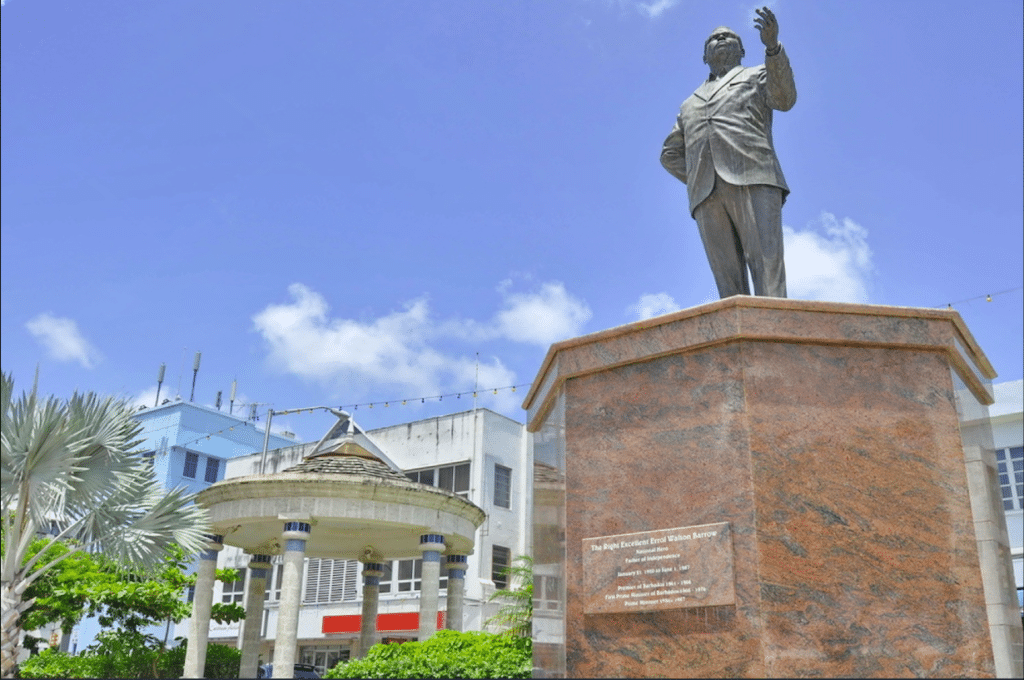
Every January 21st, Barbados is taking a break. This national holiday is in no way anecdotal. It is a reminder of the central role played by one man in the political construction of the country, and in the affirmation of a sovereignty conceived over the long term. That man is Errol Barrow recognized as the Father of Independence.
A date that structures national memory
January 21 is the birth date of Errol Barrow, born in 1920. Making this day a public holiday is not a purely symbolic gesture. It’s a reminder that Barbados’ independence was not just a formal act in 1966, but a political path built with method, constancy and clarity. Through this commemoration, the Barbadian state is underlining a simple idea: independence is a collective project that takes place over time and is based on precise political choices.
Errol Barrow, a structured political trajectory
He belongs to a generation of Caribbean leaders trained in a colonial context, but determined to free themselves intellectually from it. His training in the United Kingdom gave him a detailed understanding of the workings of British institutions. This knowledge did not alienate him from his homeland; on the contrary, it enabled him to anticipate the conditions for a real transfer of power.
When he became fully involved in politics, Barbadian society was still marked by strong social inequalities and a concentration of economic power. He quickly identified the main challenge: political independence could not be credible without social transformation.

Leading Barbados to independence
Barbados‘ independence, proclaimed in 1966, was the result of a structured political process. Errol Barrow built on existing institutions while asserting a new national authority. His objective was clear: to enable the country to govern itself, without institutional rupture, but with real autonomy.
This approach enables Barbados to maintain lasting political stability, while asserting its place on the international stage. Independence is not seen as an end, but as a starting point.
Independence for the company
Errol Barrow saw the state as a lever for social progress. Under his leadership, education became a national priority. Broadening access to education was designed to produce a population capable of taking charge of the country’s future. Health, housing and social protection policies followed the same logic. For him, independence must be reflected in everyday life. It must improve living conditions and reduce the imbalances inherited from the colonial period.
A strong Caribbean vision
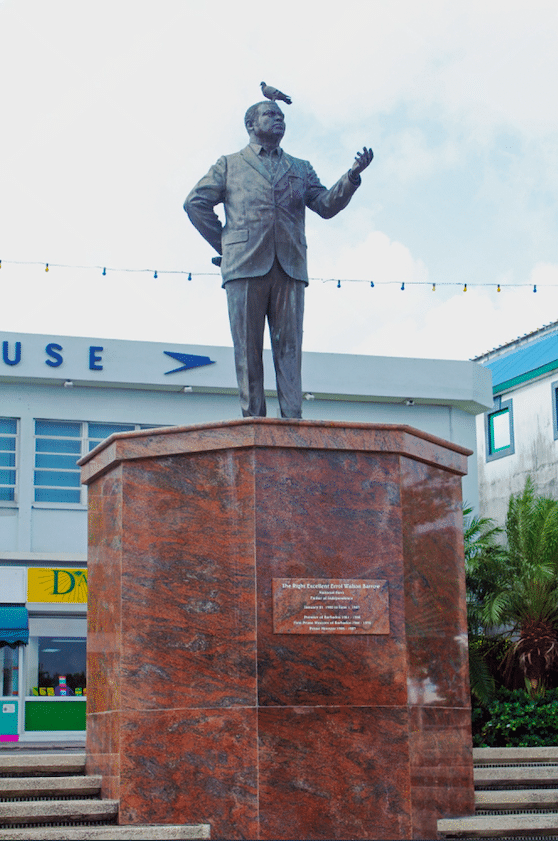
Errol Barrow never limited his thinking to the borders of Barbados. He was an early advocate of strong regional cooperation, convinced that Caribbean territories must unite their voices if they are to have an impact on the world’s major balances. This regional approach gave his actions a broader scope. It explains why his name remains associated with a demanding conception of Caribbean leadership, based on responsibility, cooperation and political lucidity.
January 21 today in Barbados
Even today, January 21 remains a key date in Barbadian institutional life. Official speeches, historical reminders and educational initiatives punctuate the day. The aim is not to freeze a political figure in the past, but to transmit a political culture based on clear principles. This active memory plays an important role in the country’s democratic continuity.
A legacy still visible
Many of the characteristics of contemporary Barbados can be traced back to the choices made under Errol Barrow: institutional stability, emphasis on education, international credibility and negotiating capacity. His legacy is not measured in commemorative speeches, but in the permanence of these orientations. His influence is still perceptible in the way Barbados approaches questions of sovereignty, governance and national identity.

Honoring Errol Barrow, questioning the present
On January 21, Barbados does more than simply honor a historic figure. It is a reminder of the need for a responsible state, built on clear choices and a long-term vision. In paying tribute to him, the country affirms that independence is never definitively acquired. A message that goes beyond Barbados and continues to resonate throughout the Caribbean.
January 21 is Errol Barrow’s birthday. Barbados has made it a national holiday to commemorate the central role he played in the country’s independence and in the building of the modern Barbadian state.
Errol Barrow was the main architect of Barbados’ independence, proclaimed in 1966. As the country’s Prime Minister, he laid the institutional, social and educational foundations that still structure Barbadian governance today.
Errol Barrow is regarded as the Father of Independence for his decisive role in the political process that led Barbados to self-government. His work was not limited to formal independence, but included lasting reforms in education, social justice and governance.