Martinique – Happy Place By Artimuse: Maryl Musard turns color into a source of happiness

Artimuse

At the far end of the Village de la Poterie in Martinique, a dazzling facade immediately catches the eye. Artificial flowers, painted fish, a profusion of bold hues: it’s impossible to pass by without slowing down. This is where Maryl Musard, known as the artist Artimuse has set up its studio gallery: Happy Place By Artimuse. A place conceived as a visual breathing space, where color is expressive. Settled in Martinique a few years ago, she has put down her brushes to anchor a universe where color becomes a living energy.

Maryl Musard, known as Artimuse: painting as a matter of course

“Ever since I was a little girl, I’ve been drawing, painting, writing poems and illustrating them. For Maryl Musard, creation is a continuous process. As a child, she wrote poems that she illustrated. The gesture is already there: writing, drawing, associating words with shapes.

Her career path, however, is not that of an artist trained from the outset in a fine arts school. She worked at Nice airport. There, she observed and captured attitudes, silhouettes and everyday scenes. She turned them into comic strips inspired by passengers and real-life situations. Drawing becomes a means of interpreting reality.

She then trained in interior design to learn the techniques of trompe-l’Å“il, faux wood and faux stucco. This gave her a technical understanding of materials and effects. It was here that she met artists – a trompe-l’Å“il specialist, a colorist – and confirmed an intuition: her job is not to make color, but to paint.

Today, she works in acrylics, using pure hues. She doesn’t mix her colors. She chooses a brand rich enough not to have to create her own shades. Sometimes she superimposes, but she assumes straightforward flat tints. This decision gives her work a direct, uncompromising intensity.

Artimuse

A Caribbean reinterpreted by color

Artimuse’s universe is deeply rooted in Caribbean aesthetics. It evokes the intensity of color in the Caribbean, the light that changes from one minute to the next, contrasts and bold assemblages.

But she doesn’t seek to faithfully represent what she sees; rather, she speaks of “recoloring” reality. The canvas is not a mirror; it’s a transformation: Mount Pelée can become more striking than it really is, or the sea can take on an unexpected tone. The objective is not documentary, but emotional.

A stay in Panama enriched her approach. There, she discovered Arawak art and the power of simplification. Two strokes can be enough to suggest an insect or a character. This economy of means left a lasting impression on her. Since then, she has tended towards pure, legible forms, without unnecessary overload.

Some of her works include specific references. She cites a painting that, for her, represents the map of Martinique, including Grand Rivière and the Caravelle peninsula. Other compositions, on the other hand, are not necessarily intended to be precisely understood. You can simply let yourself be carried away by the image: a watermelon heart, a leaf in front of a face. As the artist suggests, you don’t always have to explain. Sometimes, you just have to let yourself go… and smile.

Artimuse
Artimuse
Artimuse
Artimuse

The heart-shaped mouth: an identifiable signature

One detail recurs almost systematically in his portraits: the heart-shaped mouth. The lips come together to visually create an assertive little heart. It’s not just a stylized smile, but a deliberate graphic choice.

This heart-shaped mouth has become Artimuse’s signature. It immediately conveys softness and tenderness, almost an emotional dimension. The face appears benevolent, accessible. Without speech, the shape conveys a clear intention: here, color is accompanied by positive energy.

The eyes, on the other hand, are treated with restraint. They are neither overly laughing, nor marked by sadness. Their expression remains open, almost neutral. This choice allows the viewer to project his or her own emotions. The mouth asserts joy; the eyes leave room for interpretation. This combination creates a balance between artistic direction and freedom of interpretation.

Artimuse
Artimuse

Paint on any surface, integrate wax

Artimuse paints with acrylics on any support. Canvas, small objects, various surfaces: “anything that passes through my fingers can undergo colorful and radical transformations”, she says.

She is particularly fond of wax. This is a material with which she has developed a singular approach. During a stay in Dominica, where traditional supports were harder to find, she began experimenting with painting directly on fabric. This constraint quickly became a source of creativity.

Today, she can paint directly on the wax or integrate her motifs into her work. The “little zigouigouis”, as she calls them, become graphic elements in their own right. They structure the space, create rhythm and dialogue with the flat areas of pure color.

This relationship with textiles introduces a dimension that is both tactile and cultural. The motif is not simply decorative: it is integrated into the composition, sometimes absorbed, sometimes contrasted.

Artimuse
Artimuse
Artimuse
Artimuse

Happy Place By Artimuse: a place to live

The move to the Village de la Poterie came about through encounters and circumstances. Maryl Musard speaks of a natural alignment. The place corresponds to her rhythm: artisanal, open, lively. The studio and gallery cohabit. She paints on the spot, continuously. Visitors can catch her in the midst of creation, “under the ocean” or “in Mount Pelée”, depending on the work in progress. She invites them to interrupt. The encounter is part of the experience.

Audience reactions are constant: they talk of color, cheerfulness and a soothing effect. Some enter out of curiosity, leaving with a smile. Others return, settle in and have a coffee. The space becomes an anchor. The name Happy Place By Artimuse is not a slogan. It expresses a clear intention: to create an environment where color acts as energy. As Maryl Musard puts it, “I have to be able to give people happiness”.

Artimuse
Artimuse

Maryl Musard is a painter based in the Village de la Poterie in Martinique. Under the name Artimuse, she develops a pictorial universe deeply marked by the intensity of Caribbean colors. She paints with acrylics on a variety of supports – canvas, objects and wax fabrics – and is distinguished by a recognizable graphic signature, notably the heart-shaped mouth present in her portraits. Her work is based on pure, unmixed colors and a deliberate simplification of form, inspired in particular by Arawak art discovered during a stay in Panama.

Happy Place By Artimuse is located at the end of the Village de la Poterie, in Martinique. It is both a studio and a gallery, where the artist paints in the presence of the public. Visitors can discover colorful works inspired by the Caribbean, sometimes incorporating wax motifs and local geographical references such as Mount Pelée or the Caravelle peninsula. The space is identifiable by its colorful entrance, decorated with flowers and painted fish. The experience is not limited to contemplation: the place is designed as a space for exchange and sharing.

What sets Artimuse apart is her treatment of color and faces. She uses pure, unadulterated hues, giving her works an immediate visual intensity. Her most recognizable signature is the heart-shaped mouth, present in many of her canvases, a symbol of gentleness and joy. Conversely, the eyes of his figures remain deliberately neutral, leaving the viewer free to interpret. Her aim is clear: to convey positive energy and make color a vehicle for well-being.

Leave a Reply

Your email address will not be published. Required fields are marked *

More articles from RK

Marcus Garvey
HISTORY & HERITAGE
Tolotra

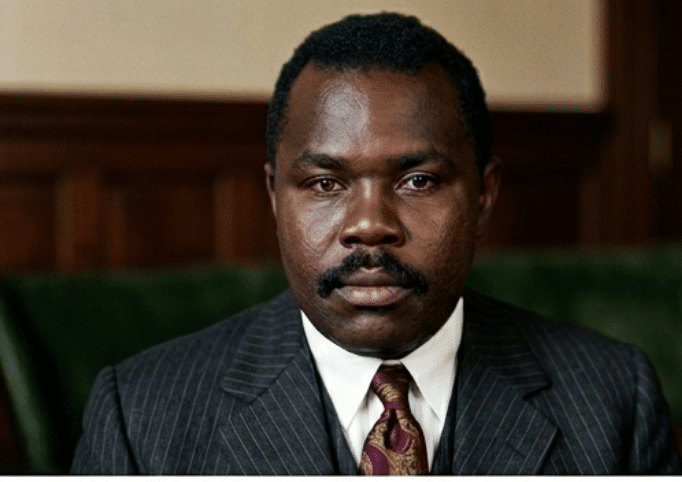
Jamaica – Marcus Garvey, Jamaican hero of international renown

Marcus Garvey remains one of the most influential figures to emerge from the Caribbean. Born in Jamaica at the end of the 19th century, he transformed a local experience into a political and cultural project of international scope. At a time when black populations faced deeply rooted systems of exclusion, Marcus Garvey proposed a structured vision based on dignity, organization and autonomy. Recognized today as a national hero in Jamaica, he is much more than a historical symbol. His story helps us understand how the Caribbean helped shape major intellectual and political movements on a global scale. His name continues to circulate in contemporary debates on identity, memory and the development of societies born out of colonial history. From Jamaican origins to the formation of a committed conscience He was born on August 17, 1887 in St. Ann’s Bay, Jamaica, into a modest family. Very early on, he developed a
Read More »
BlueSeas Festival
EVENT MANAGEMENT
Tolotra

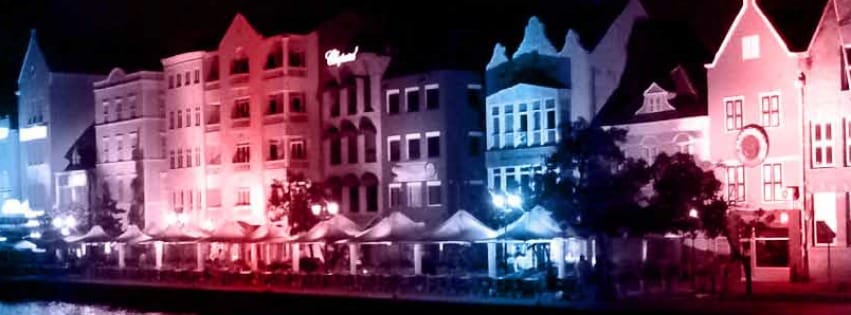
BlueSeas Festival: in Curaçao, Pietermaai becomes the epicenter of Caribbean blues in 2026

From April 2 to 4, 2026, Curaçao hosts another edition of the BlueSeas Festival a musical event that is gradually establishing itself as one of the most unique cultural events in the Caribbean. Free, open and rooted in the urban space, the festival goes far beyond simple musical programming to become a genuine territorial experience. Right from the opening night, Thursday April 2 at Kura Hulanda Village, the mood is set: the blues settle into a heritage setting, before taking full possession of the Pietermaai district on April 3 and 4. This two-stage format structures an immersive experience in which music, architecture and local life are seamlessly interwoven. A free festival that transforms the city into an open-air stage The BlueSeas Festival is based on the principle of offering free concerts in public spaces. This choice is not insignificant. It widens access to live music, while creating direct interaction between
Read More »
Le vodou : Haïti au cœur d’une candidature patrimoniale majeure avec le Bénin
COOPERATION
Tolotra

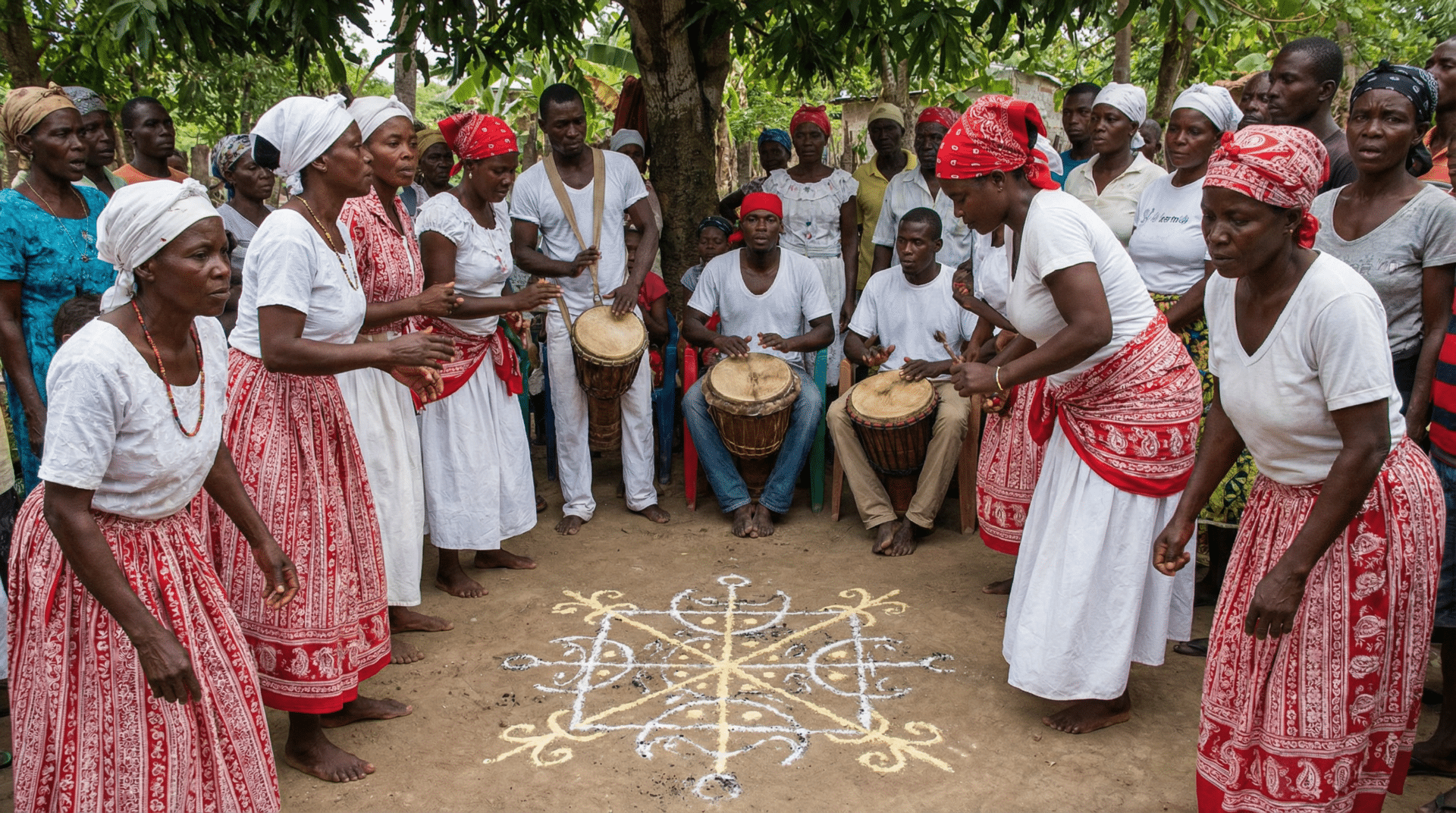
Vodou: Haiti at the heart of a major heritage bid with Benin

The vodou is entering a new phase in its international history. The joint candidacy of Haiti and Benin for inscription on the Representative List of the Intangible Cultural Heritage of Humanity places centuries of memory, transmission and creation at the heart of a global heritage debate. The deadline set by UNESCO for applications to be examined in 2027, and submitted before March 31, 2026, places this initiative within a precise and structured institutional calendar, but the stakes go far beyond the administrative procedure. For the Caribbean, and Haiti in particular, this candidacy is no mere cultural formality. It’s about recognizing a living heritage, often misunderstood, sometimes caricatured, but deeply rooted in the country’s social, artistic and spiritual history. Vodou is not a fixed folklore; it is a cultural matrix, a way of organizing the link between generations, communities and the sacred. To place it within an international heritage dynamic is
Read More »

conTACT RK

we'd love to have your feedback on your experience so far

Join The List

Join our Richès Karayib community!  Sign up for our newsletter.

Want To Maximize Your Business Presence On Riches Karayib?

Complete the form to start the application