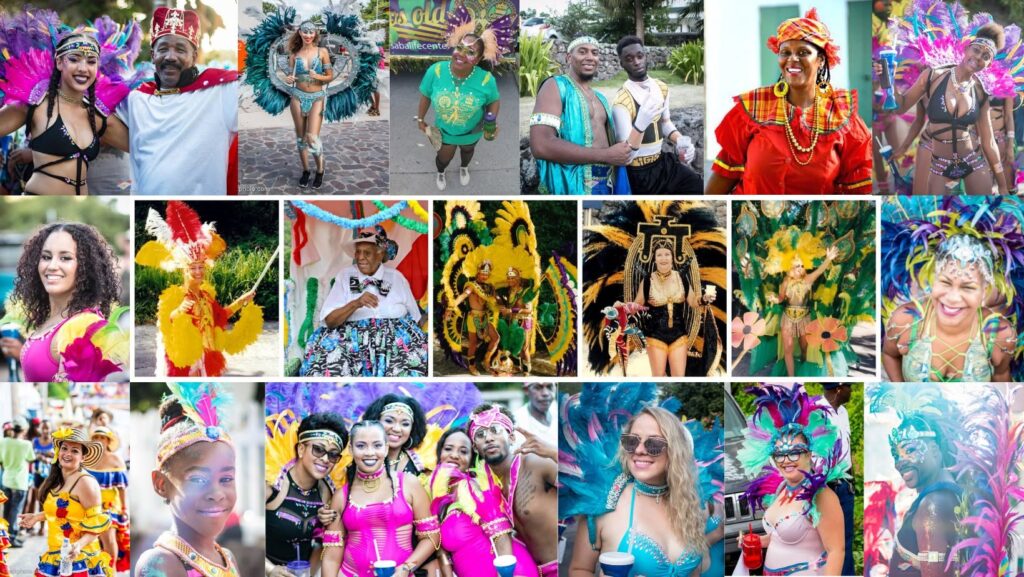
Since July 24, 2026, Saba has been celebrating a special occasion. This year, the Saba Carnival marks the symbolic milestone of its 50th edition. Through August 2, music, contests, family gatherings, and parades will transform the island. But this anniversary is about much more than just a celebration. It highlights the ability of a small Caribbean community to build, pass on, and reinvent a tradition that has become one of its major cultural events.
A story that began in 1975
The History of the Saba Carnival began in 1975 thanks to Carmen Simmons-Nicholson. The official organization credits her with introducing the carnival to the island, highlighting her vision and commitment. Fifty editions later, this legacy remains essential: the carnival did not emerge as an imported tourist event, but as an initiative spearheaded by a community leader and then gradually embraced by the residents.
On an island where villages, families, and community organizations play a central role in community life, the continuity of such an event holds special significance. The traditional costumes, music, competitions, and public gatherings allow each generation to inherit a history while adding its own unique touch.
A birthday celebration organized in the villages
Even before the official opening, the Saba Carnival began to spread across the island. The “Road to Carnival” program brought together residents and visitors in Windwardside, St. John’s, and then The Bottom. Local musicians, vendors, families, and guest artists took part in a series of events designed to build excitement in each community.
This organization highlights one of the strengths of the Saba Carnival: it is not limited to the Carnival Village or the major parades. It takes shape in various settings and is built on collective participation. In Saba, the small size of the community in no way diminishes the event’s ambition; on the contrary, it gives it a human dimension that is difficult to replicate in larger events.

The 2026 Program: A Blend of Tradition and Celebration
The celebrations began on Friday, July 24, with Soca Groovy, followed on July 25 by the Road March competition, open to junior and senior categories. The Family Fun Day on July 26 then put children and families at the center of the pre-festival weekend.
This Monday, July 27, marks the start of the official week with Operation Jump Up 50 and the opening night event, “Take Me Back.” The chosen title clearly captures the spirit of this year’s event: looking back at the past without letting the carnival become stuck in nostalgia.


The program for the Saba Carnival continues on July 28 with Caribbean Fusion, on the 29th with Issa Vybe 50, on the 30th with International Flag Fest, and on the 31st with Ultimate 50. These events highlight Saba’s connections to its regional surroundings. The local carnival serves as a hub for artists, rhythms, flags, and audiences from various Caribbean territories.
The highlight will take place on Saturday, August 1, with the J’ouvert, followed by the first major parade. A second day of parades is scheduled for Sunday, August 2, to bring the anniversary edition to a close. In the streets, the costumes, the groups, and the music will make collective expression the main language of the celebration.


Saba Carnival: More Than a Week of Fun
The longevity of the Saba Carnival raises an important question: What is a community protecting when it continues to hold a carnival for fifty editions? It protects memories, of course, but also skills, traditions of cooperation, and a way of publicly identifying with one another. The event also gives Saba regional visibility. Known for its volcanic landscapes, hiking trails, and its reputation as the “Unspoiled Queen,” the island reveals another side of itself here: that of a vibrant, creative place deeply connected to the rest of the Caribbean.
In this context, the 50th anniversary is not merely a time to take stock. It marks a transition between the people who launched and established the tradition, the artists who keep it alive today, and the young people who will be called upon to give it new forms.
By celebrating its history while embracing contemporary influences, the Saba Carnival reminds us that cultural heritage is truly alive only when it continues to bring people together. From the first project launched in 1975 to the parades of 2026, the island is therefore not merely celebrating fifty editions of music and color—it is celebrating fifty editions of community.
The 2026 Saba Carnival takes place from July 24 to August 2. The program includes music competitions, family activities, cultural evenings, the J’ouvert, and two big parade days.
The program includes the Soca Groovy, the Road March competition, Family Fun Day, Operation Jump Up 50, Caribbean Fusion, International Flag Fest, the J’ouvert, and the parades on August 1 and 2.
The announced connecting flights will allow passengers to continue on to Lima, Quito, San José, Guatemala City, Port of Spain, Havana, Santo Domingo, and several other cities in Central America, South America, and the Caribbean.