Saul d’antan is more than just an evocation of the past: it’s a living testimony to French Guiana‘s gold mining history, brought to life today by an eco-museum inaugurated in April 2025 in the heart of the village. By promoting its tangible and intangible heritage, the commune of Saül offers a sensitive and documented look at the traditions and daily lives of its former inhabitants.
An ecomuseum in tribute to two local figures
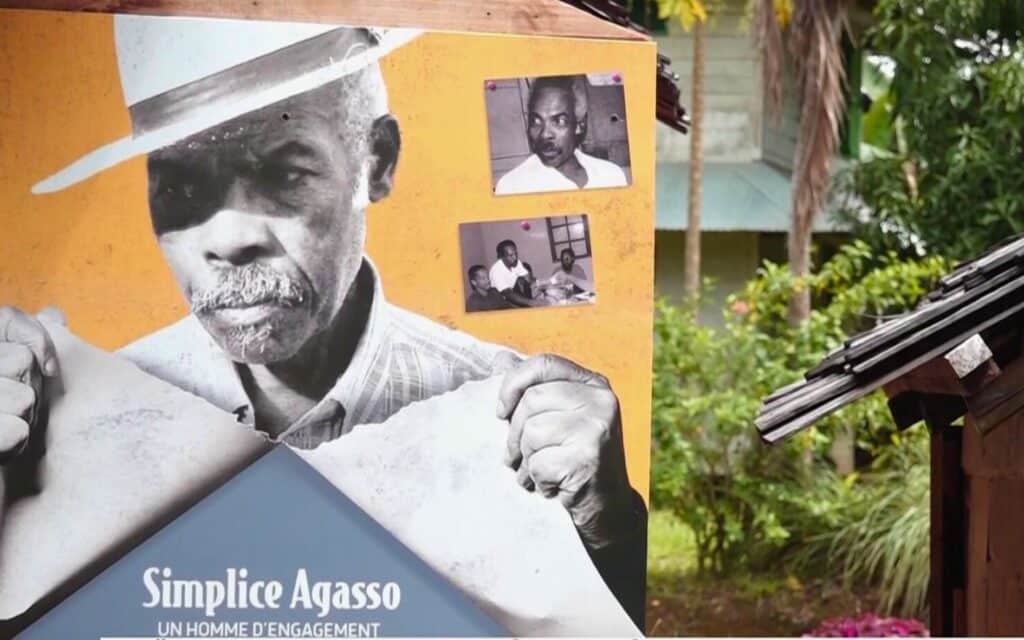
Christened Écomusée Madame Edmane et Monsieur Agasso the establishment pays tribute to two emblematic figures of Saül of d’antan. Madame Edmane, renowned for her memory of medicinal plants and her social commitment, and Monsieur Simplice Agasso, a former goldsmith, shopkeeper and local figure, both played a major role in passing on knowledge. The latter’s house, donated to the commune, is at the heart of the museum project.
A faithful recreation of a traditional house
The reconstruction of Mr. Agasso’s home is one of the museum’s most striking features. Every object, from the bread oven to the hanging laundry, accurately recreates the atmosphere of the time. The henhouse, period furniture and everyday utensils bear witness to a harsh way of life, but one marked by solidarity and ingenuity. Access is free of charge, helping to bring this heritage to a wider public.

Gold mining heritage showcased
A central feature of the ecomuseum is the presentation of the commune’s gold mining past. Through authentic objects such as shovels, pickaxes, frames and cocoa mills, visitors gain access to an often little-known reality: that of manual, demanding gold panning, without recourse to mechanization. Saül d’antan once gripped by gold fever, reveals an entire chapter in French Guiana’s economic and social history.
The Creole garden: a living memory of local pharmacopoeia
Around the house, a Creole garden has been laid out with medicinal plants, in homage to Madame Edmane. It is a natural extension of the museum and a testimony to ancestral practices still in use today. This garden is a bridge between the past and the present, illustrating how Saül d’antan is closely linked to its natural environment.

A collective project to preserve the memory of French Guiana
The creation of this eco-museum is the result of a joint effort. The Saül town council, the Communauté de Communes de l’Ouest Guyanais (CCOG), the Collectivité Territoriale de Guyane (CTG), the Parc Amazonien de Guyane, the Office de Tourisme de l’Ouest Guyanais and the French government joined forces to bring this project to fruition. With a budget of 238,000 euros, combining local and national funding, Saül d’antan has become a powerful symbol of our determination to preserve the region’s heritage.
A meticulous architectural approach
The reconstruction of the house was entrusted to architect Jochen Dürr. Following a method inspired by Eastern Europe, a third of the materials came from the original house, a third from the Guyanese coastline and a third from the surrounding forest. Each piece has been carefully numbered, disassembled and reassembled to guarantee the building’s authenticity. This meticulous work reinforces the heritage dimension of Saül d’antan, a material and symbolic landmark for the community.
An educational tool for future generations
The ecomuseum is not just for visitors. It plays a fundamental role in the education of young Saülians. Schools organize regular visits, during which pupils interact with village elders. These intergenerational exchanges provide a better understanding of past lifestyles and reinforce a sense of belonging. Saül d’antan thus becomes a genuine tool for cultural transmission.
With the Saül d’antan, the fruit of strong local mobilization, gives new visibility to a heritage that has long remained in the shadows. More than a museum, it’s a space for dialogue and recognition, where every object tells a story, every plant evokes knowledge, and every glance at the past strengthens the cohesion of the present.