Trinidad & Tobago – Le Soca: the Caribbean soul in rhythm, history, evolution and cultural impact

Soca

The soca, Soul of Calypso” is more than just carnival music. It represents a cultural revolution born between 1972 and 1973 in Trinidad and Tobago, symbolizing the fusion of two major heritages, African and Indo-Caribbean. In 2026, as the Caribbean prepares for a new cycle of large-scale carnival festivities, it remains more relevant than ever, serving both as a common thread of identity for the world’s diasporas and as a structuring economic driver for tourism.

Soca
Soca

Revolutionary origins: when an island reinvents itself

In the early 1970s, Trinidad and Tobago saw its traditional calypso music gradually lose ground to Jamaican reggae and American soul and funk influences. It was against this backdrop of cultural recomposition that Ras Shorty I, real name Garfield Blackman (1941-2000), emerged as the central figure of change.

Originally from Lengua Village, a territory where African traditions and Indian musical heritage coexist, Garfield Blackman intuitively understood that a truly Trinidadian music must integrate all the island’s peoples. Between 1970 and 1973, he deliberately fused calypso with Indo-Caribbean instruments such as the dholak, tabla and dhantal, giving birth to a new sonic identity.

The turning point came in 1973 with the track “Indrani”, a musical tribute to an Indian deity, organically integrating Indian instruments into a calypso structure. The “Endless Vibrations” album (1974) marked the explosion of this genre of music, thanks in particular to the track “Om Shanti”, based on a sacred Hindu mantra, whose success extended beyond the Caribbean borders to India.

By 1974 and 1975, soca had established itself as the new national musical direction, rapidly adopted by major figures such as Lord Kitchener and Mighty Sparrow.

The evolution of soca: sub-genres and constant reinvention

Fundamental musical characteristics

It features several structural elements:

  • – high tempos, ranging from 115 to 163 beats per minute depending on the sub-genre
  • – frequent use of the tresillo rhythm, with the bass accentuating the second and fourth beats
  • – an instrumental fusion combining African percussion, Indian drums, Caribbean brass and modern synthesizers
  • – constant exposure to outside influences, notably hip-hop, R&B, dancehall and, more recently, Afrobeats

The main sub-genres

Power Soca, developed in the 1990s by Superblue in particular, is characterized by extreme energy and tempos reaching 155 to 163 BPM. It quickly became the dominant soundtrack for carnival routes, with direct vocal instructions and an assumed physical intensity.

Groovy Soca, which emerged in 2005, is a reaction to this intensity. It favors melody, groove and soul and R&B influences. Robin Imamshah contributes to its popularization with “Frenchman”, while Precision Productions refines its sonic aesthetic.

Chutney Soca, initiated in 1987 by Drupatee Ramgoonai, fuses traditional Indo-Caribbean chutney with soca. This sub-genre enabled the Indo-Trinidadian community to take full ownership of this musical expression. Rikki Jai became one of its main ambassadors with the track “Sumintra”.

Ragga Soca, influenced by Jamaican dancehall, took off in the 1990s. It gained international visibility thanks to artists from Saint-Vincent, notably Kevin Lyttle with the worldwide hit “Turn Me On”.

Major soca figures

Ras Shorty I, founding visionary

After the success of “Endless Vibrations”, Garfield Blackman continued his artistic exploration. In 1984, disappointed by the commercial evolution of soca, he announced his conversion to Christianity and developed “jamoo”, a contraction of Jah Music. This sub-genre incorporates elements of gospel and reggae, and is ideologically consistent with Ras Shorty I’s assertion that music should convey messages of positivity and spiritual uplift.

Soca
Ras Shorty I

Calypso Rose, feminist pioneer

Calypso Rose, born in 1940, upset the patriarchal norms of calypso and soca. In 1977, she became the first woman to win the Carnival Road March with “Give More Tempo”. In 1978, she won both the Road March and the competition then renamed Calypso Rose, firmly establishing the place of women in Caribbean musical history.

Soca
Calypso Rose

Lord Kitchener and Mighty Sparrow, tutelary figures

Lord Kitchener (1922-2007) won eleven Road March titles, a long-standing record. Mighty Sparrow, born in 1935 and nicknamed the “King of Calypso”, won eight, demonstrating a remarkable ability to adapt to the evolution of calypso towards soca.

Soca
Lord Kitchener et Mighty Sparrow. ©96.1

Machel Montano, a central contemporary figure

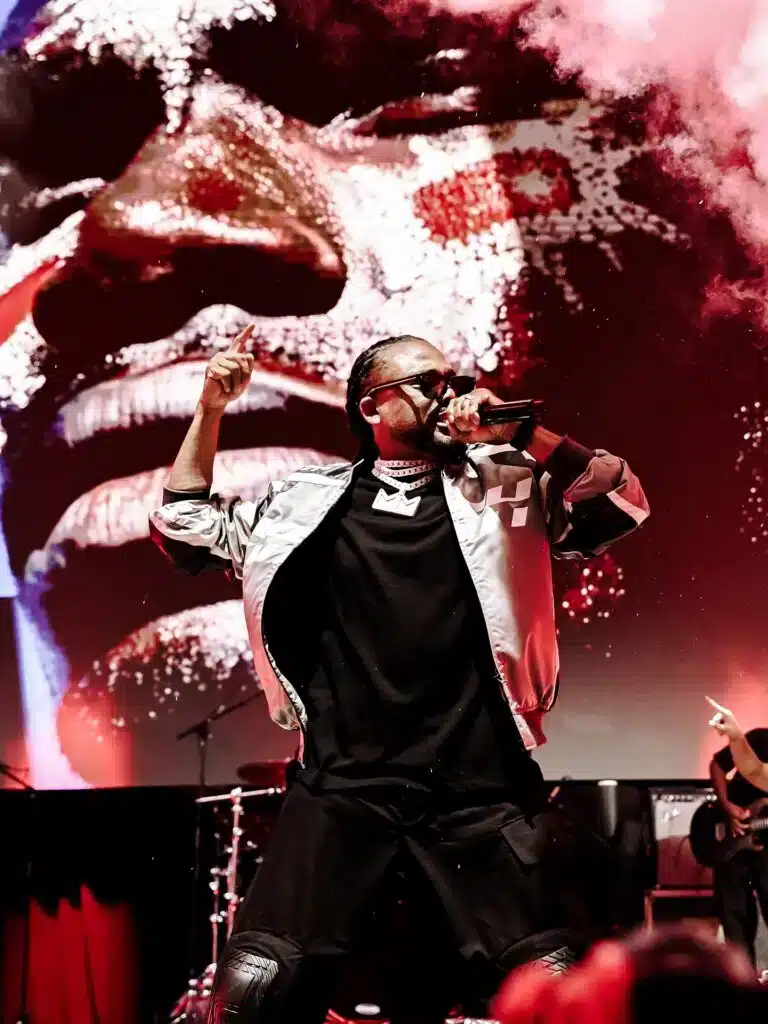
Machel Montano, born in 1983, has established himself as the most influential artist of the last four decades. With eleven Road March titles and twenty-one competitive titles combined, he embodies the modernization of the genre. In 2025, he won the Road March with “Pardy” and became the first soca artist to be featured on NPR’s Tiny Desk Concert.

Soca
Machel Montano

Destra Garcia, world female voice

A native of Laventille, Destra Garcia stands out for her ability to integrate international pop references into soca structures. Her adaptations include Cyndi Lauper’s “Time After Time” in “It’s Carnival” (2003) and A-ha’s “Take On Me” in “Bonnie and Clyde” (2004). Her work with multiple artistic identities reinforces her position as a major female figure in the genre.

Soca
Destra Garcia

Fay-Ann Lyons and Nailah Blackman, generational continuity

Fay-Ann Lyons, daughter of Superblue, wins three Road March titles as a solo artist, a unique achievement. In 2009, while pregnant, she won the Soca Monarch Internationals in the Power category.

Nailah Blackman, born in 1997 and granddaughter of Ras Shorty I, illustrates the intergenerational transmission of this kind of music. Her track “Origins” (2025) explicitly links the family heritage with contemporary R&B and Afrobeats influences.

Soca
Fay-Ann Lyons
Soca
Nailah Blackman

Soca and Caribbean carnivals in 2026

Trinidad and Tobago’s Carnival remains the epicenter of this musical genre. Competitions such as the Road March, Soca Monarch and International Soca Monarch structure the regional musical year. Other major carnivals reinforce this dynamic in 2026, including the Dominica Carnival, the Saint Lucia Carnival, the Grenada Spicemas and the Saint Vincent Carnival, each bringing a stylistic variation and identity to this genre of music.

Soca
Soca

A musical identity, social and economic

It is a direct expression of Trinidad’s multicultural identity. It inherits Canboulay’s traditions of resistance and remains a space for social critique, memory and collective celebration.

In the diaspora, it acts as a powerful emotional and cultural link, structuring festivals in New York, Toronto, London and Miami. Its economic potential remains considerable, particularly in the tourism, music cruise and specialized events sectors.

In 2026, soca remains a living, constantly evolving creation, true to its founding essence. From Ras Shorty I to Machel Montano, from Calypso Rose to Destra Garcia, from Fay-Ann Lyons to Nailah Blackman, it embodies the Caribbean ability to transform heritage, resistance and joy into a universal language. Through Caribbean carnivals and the global diaspora, it continues to carry the voice of a region that has turned rhythm into a tool for liberation, cohesion and projection into the future.

This musical genre was born in Trinidad and Tobago in the early 1970s. Derived from calypso, it incorporates African and Indo-Caribbean influences and is characterized by fast rhythms, a strong dance dimension and a close link with carnival.

Calypso places greater emphasis on text, social satire and narrative. Soca, while inheriting this tradition, emphasizes rhythm, physical energy and dance, while incorporating more varied instruments and influences.

It was created by Ras Shorty I, real name Garfield Blackman, between 1972 and 1973. He deliberately fused calypso with Indo-Caribbean instruments and rhythms to create a music representative of Trinidadian society as a whole.

Leave a Reply

Your email address will not be published. Required fields are marked *

More articles from RK

Maryse Condé
HISTORY & HERITAGE
Tolotra

Guadeloupe – February 11, 2026: Maryse Condé, a Caribbean literary conscience that continues to enlighten the world

Maryse Condé remains one of the most powerful voices in Caribbean and French-language literature. In this February 11On the anniversary of her birth in Pointe-à-Pitre in 1934, her work resonates with particular intensity. More than a novelist, she has shaped critical thinking on colonial history, black identity and the multiple heritages of the Caribbean. For readers both in the region and in the diaspora, she is the embodiment of a literature that rejects useless ornamentation in favor of a lucid analysis of reality. Her writing has helped reposition the Caribbean in major contemporary intellectual debates. A literary birth set in Caribbean history The trajectory of Maryse Condé began in Pointe-à-Pitre, in a Guadeloupe still marked by the social hierarchies inherited from colonization. From her earliest works, she set out to deconstruct simplified narratives of West Indian identity. Her work is not limited to memory: it questions the silences, fractures and

Read More »
Barbara Jean-Elie
LITERATURE
Tolotra

Martinique – Barbara Jean-Elie: Writing Is About Passing Things On

She introduces herself without emphasis: author, mom, journalist, presenter. And she loves to create. That’s all she says. But as we move through her books, her musical stories and her travels from island to island, one thing becomes clear: Barbara Jean-Elie doesn’t just create: she also creates. transmitsit preservesit gives voice to an intimate Caribbean, often unknown – sometimes even to those who live there. It all begins with a story read aloud It all began there, in the intimacy of a mother-child bond. Barbara Jean-Elie reads stories to her daughter, watches her grow up, then feels the urge to write for these children as they move forward, wonder, awaken. In 2013, Sina sur son Nuage was born: seven extraordinary stories from the Caribbean, carried by seven songs. Jean-Michel Martial tells the story, Alain Suréna composes, and the Caribbean voices of Lynnsha, Fanny J, N’Jie and Laura Beaudi embody the

Read More »
Bad Bunny
NEWS
Tolotra

Bad Bunny at the Super Bowl: the Caribbean invites itself to the center of the world

Bad Bunny ‘s presence at the Super Bowl halftime show was not just a musical performance. It was a major cultural and geopolitical moment for the Caribbean and the Americas as a whole. Announced several weeks ago, his participation was eagerly awaited. But what happened on stage went far beyond the classic half-time show. In just a few minutes, the Puerto Rican artist transformed the world’s most watched sporting event into a showcase of identity for an entire region long relegated to the periphery of mainstream narratives. A performance conceived as a cultural statement From the very first seconds, the tone was set. Backdrops inspired by Puerto Rico, urban Caribbean rhythms, dancers from the Latin-Caribbean diaspora: the stage was no longer just that of the Super Bowl, but that of a contemporary Caribbean, modern and global. Bad Bunny didn’t try to adapt its universe for American audiences. He has done

Read More »

conTACT RK

we'd love to have your feedback on your experience so far

Join The List

Join our Richès Karayib community!  Sign up for our newsletter.

Want To Maximize Your Business Presence On Riches Karayib?

Complete the form to start the application