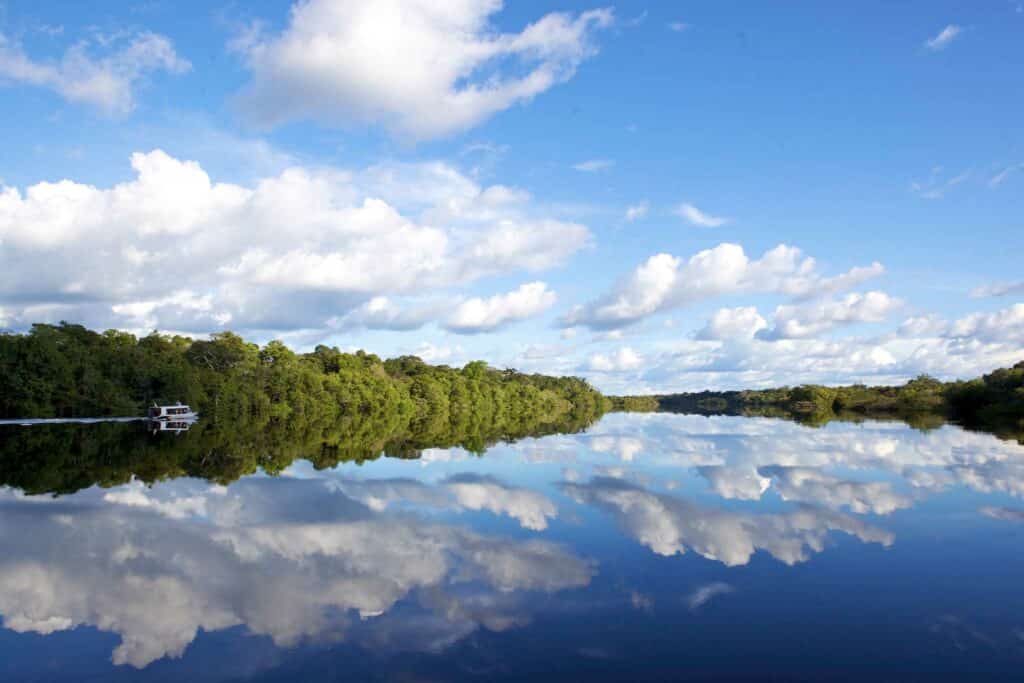
COP30 is being held in Belém, in the Brazilian state of Pará, from November 10 to 21, 2025. This 30ᵉ United Nations Climate Change Conference is taking place for the first time in the heart of the Amazon, symbol of an ecosystem vital to the planet. Through this COP30, the world’s leaders are embarking on a decisive negotiation, that of the real implementation of the commitments made since the Paris Agreement. For the countries of the Caribbean, which are directly exposed to the effects of global warming, this edition offers concrete hope: to obtain fairer recognition of their needs and sustainable funding for climate adaptation.
An opening focused on Amazonia and climate justice
President Luiz Inácio Lula da Silva opened COP30 by stressing the shared responsibility of nations and the need for immediate action. “We’re moving in the right direction, but at the wrong speed”, he told the delegations gathered in Brazil. This message resounds like a global warning.
Simon Stiell, Executive Secretary of the Climate Convention, reminded us that every delay has a cost, in human lives and economic losses. Holding the conference in Brazil, in the heart of a territory that is home to 60% of the Amazon rainforest, underlines the symbolic and ecological dimension of this edition. COP30 aims to put biodiversity, indigenous peoples and South-South cooperation back at the heart of international decision-making.
The first sessions demonstrated a new dynamic: the rapid adoption of the agenda and the determination to translate promises into concrete action, particularly in the fields of energy, transparency and financing.
@ALEXFERROFOTOGAFO
@ALEXFERROFOTOGAFO
An ambitious program of transition and governance
COP30 is organized around four priorities: emissions reduction, adaptation, financing and climate governance. By hosting the conference in Belém, Brazil aims to embody the transition to an economic model based on the preservation of nature. The “Capacity-Building Hub”, one of the highlights of the conference, focuses on strengthening local skills. Sessions cover sustainable financing, energy transition, nature-based solutions and the role of cultural heritage in building resilience.
The United Nations reiterates that limiting the temperature rise to 1.5°C remains an imperative, not a theoretical objective. COP30 must therefore validate concrete monitoring and transparency mechanisms capable of ensuring the credibility of national commitments.
The Caribbean, a united voice for survival
For the Caribbean, COP30 is a vital forum. Island states are calling for immediate responses to rising sea levels and intensifying hurricanes. The Caribbean Development Bank pointed out that “the region has never been so exposed or so determined to defend its climatic survival”.
The Caribbean delegations are calling for direct access to international funds, without debt conditions. They call for the pledges of $1,300 billion annually by 2035 to be honored and distributed equitably. In the parallel areas of Belém, several adaptation projects are presented: coastal restoration in Dominica, sustainable water management in Saint Lucia, community reforestation in Haiti. These initiatives demonstrate that the region is already taking action, but lacks financial support commensurate with the challenges.
COP30 discussions reveal structural tensions between industrialized countries and vulnerable states. The debate on climate finance crystallizes the disagreements. Northern nations recognize the need to increase their contribution, but without specifying transfer modalities or access criteria.
The “Together4Transparency” initiative seeks to establish a universal framework for monitoring commitments, guaranteeing public and comparable data. For small island states, this transparency will highlight their efforts, which are often invisible in global balance sheets. Delegations from tropical territories insist on a simple equation: without fair financing, adaptation is impossible. Negotiators must therefore decide between rhetoric and responsibility, between financial commitments and real climate justice.
Belém, symbol of renewed climate governance
The city of Belém embodies the contradictions of today’s world: ecological vulnerability, collective hopes and logistical constraints. Despite the organizational challenges, this COP30 is seeing record mobilization from civil society and local communities. Brazil, as host country, asserts its role as mediator between major emitters and vulnerable nations. The Amazon thus becomes a global mirror: preserving its forests means protecting threatened islands, deltas and coastlines. The indigenous peoples of the Amazon and representatives from the Caribbean share a common demand: to be heard, to participate in decision-making and to benefit from the resources needed to protect their territories.
@ALEXFERROFOTOGAFO
@ALEXFERROFOTOGAFO
@ALEXFERROFOTOGAFO
@ALEXFERROFOTOGAFO
A decisive COP30 for the Caribbean and the world
As negotiations continue, COP30 is shaping up to be a moment of truth. The Caribbean hopes to see its priorities enshrined in the final text: equitable financing, institutional inclusion and recognition of the role of tropical territories in climate regulation. The Belém edition could mark the beginning of a profound change, where small island nations cease to be spectators and become partners in balanced global governance. COP30, more than a summit, acts as a compass for the decades to come. If the decisions taken in Belém are translated into concrete action, they could transform the future of the Caribbean and the entire tropical world, united by the same urgency: survival in a rapidly changing climate.
A strategic conference in Trinidad and Tobago
The press conference held in Trinidad and Tobago on October 6, 2025, as part of the ACI-LAC 2025 ANNUAL ASSEMBLY – CONFERENCE AND EXHIBITION, brought together the region’s leading airport industry executives. Around Mónica Infante (President of ACI-LAC and CEO of Aerodom), from the Dr. Rafael Echevarne (Managing Director, ACI-LAC) and Hayden Newton (Managing Director, Airports Authority of Trinidad and Tobago), discussions focused on traffic growth, sustainability and the investments needed to support the growth of air transport in the Caribbean and Latin America.
ACI-LAC which stands for Airports Council International – Latin America & Caribbean, is the regional branch of the worldwide airport organization. It represents the interests of 91 members operating over 360 airports in 42 countries and territories in the region.
ACI World confirms record figures
Data released during the ACI-LAC 2025 Annual Meeting show that passenger traffic in Latin America and the Caribbean will reach 789 million passengers by the end of 2025.
The best-performing countries will be :
– Colombia 105 million (+5.6%)
– Mexico 191 million (+4.5%)
– Brazil: 221 million (+2.1%)
The region (Latin America and the Caribbean) is expected to handle nearly 821 million passengers in 2026 according to official ACI World projections. These figures reflect the strength of the post-pandemic recovery and the Caribbean’s growing place in international connectivity.
Long-term forecasts and a global pace
Regional air traffic is expected to reach 1.725 billion passengers by 2053, with an average annual growth rate (CAGR – Compound Annual Growth Rate) of 2.9% over the next thirty years, a rate similar to the global average. The ACI World report also states that traffic will double between 2024 and 2047, from 758 million to 1.482 billion passengers. Annual growth projections by sub-region confirm :
– Mexico: +3.4%, driven by the expansion of its international hubs ;
– Brazil: +2.4%, sustained by growth in domestic traffic ;
– Caribbean: +2%, more moderate growth, due to the small size of island markets, their dependence on tourism and the current limitations of inter-island connectivity;
– Other Latin American countries (excluding Mexico and Brazil) : +3%, thanks to economic diversification and new regional air corridors.
Colossal investments for sustainable growth
Capital expenditure requirements (CAPEX) for the period 2026-2040 amount to US$82.6 billion, of which over US$30 billion will be devoted to the construction of new greenfield airports. According to data from the ACI-LAC 2025 Annual Meeting, every million additional passengers generates 9,500 jobs and $25 million in GDP, demonstrating the direct economic impact of air transport on the region.
Carbon neutrality and accessibility: regional leadership
On the environmental front, speakers highlighted the results of the Airport Carbon Accreditation (ACA) program at the ACI-LAC 2025 ANNUAL ASSEMBLY. By September 2025, 621 airports worldwide were certified, including 104 in Latin America and the Caribbean. The region thus ranks second in the world for the number of airports committed to this approach. This internationally recognized program assesses and rewards airports’ efforts to reduce their carbon emissions, in line with ACI World’s Net Zero 2050 objective.
The other indicator of progress concerns Accessibility Enhancement Accreditation (AEA): of the 47 airports certified worldwide, 17 are in the LAC region. This distinction confirms the role of the Caribbean and Latin America as world leaders in air accessibility for passengers with disabilities.
Connectivity and liberalization: the pillars of the future
Looking beyond the figures, Mónica Infante and Rafael Echevarne stressed the urgent need to strengthen intra-Caribbean connectivity. For Mónica Infante, the priority is to break down regulatory barriers and create a framework enabling new regional airlines to operate freely. For his part, Rafael Echevarne reiterated that air transport liberalization is essential to boost competition and reduce costs for passengers.
“Aviation is not just an economic sector, it’s a vital infrastructure for the integration and sustainable development of our territories,” he declared.
Finally, Hayden Newton underlined the Airports Authority of Trinidad and Tobago’s commitment to modernizing infrastructure through biometrics, automated systems and digital innovations.
The ACI-LAC 2025 ANNUAL ASSEMBLY confirmed the dynamic growth, innovation and sustainability of the airport sector in Latin America and the Caribbean. With solid forecasts, massive investment and a vision focused on carbon neutrality, the region is establishing itself as a model of resilience and transformation in global air transport.
COP30: this name refers to the 30ᵉ Conference of the Parties to the United Nations Framework Convention on Climate Change, to be held from November 10 to 21, 2025 in Belém, Brazil. Held for the first time in the heart of the Amazon, this international conference will bring together more than 190 national delegations, heads of state, NGOs, scientists and representatives of civil society to negotiate urgent measures to deal with worsening climate disruption.
This geographic choice marks a turning point: the world’s largest tropical forest becomes both the backdrop and the focus of discussions. Faced with record levels of deforestation, loss of biodiversity and growing pressure from the extractive industries, COP30 aims to redefine the priorities in the fight against climate change by placing the protection of ecosystems at the heart of international commitments.
Curupira: an ancient spirit for the challenges of the future
To embody this decisive edition, Brazil has chosen a figure from indigenous legends: Curupira the mythical guardian of the Amazon rainforest. Far from being a consensual symbol, this character embodies a form of resistance. In Tupi-Guarani tradition, he is depicted as a small man with red hair and upturned feet, capable of outwitting intruders and fiercely defending his territory.
His name, formed from the words “curumin” (boy) and “pira” (body), evokes both childhood and vitality. Curupira is no mere folkloric character: he is deeply rooted in the collective memory of the forest peoples, and his influence extends beyond Brazil’s borders.
In French Guiana, it takes the name Makilili. In Colombia, it becomes Madre Monte. In Ecuador, it’s known as Sachamama, the mother of trees. In the Peruvian Amazon, it is known as Chullachaqui. In Suriname and Guyana, he is referred to as Winti-boskopu or Watramama. All these avatars fulfill the same mission: to protect the forest from predators.
A shared territory, a common emergency
The Amazon covers more than five million square kilometers and crosses nine countries: Brazil, Colombia, Peru, Bolivia, Ecuador, Venezuela, Suriname, Guyana and French Guiana. This vast territory is home to some 34 million inhabitants, including hundreds of indigenous peoples, often on the front line of the effects of extractivist policies and the climate crisis.
By choosing Curupira as its official mascot, COP30 is sending out a strong signal: the recognition of ancestral knowledge and local struggles, and the full involvement of Amazonian populations in global debates.
COP30 promises to be a strategic moment in international climate governance. Several crucial issues will be addressed in Belém:
✔️ Implementing a fair energy transition, with concrete support for the most vulnerable populations.
✔️ The creation of a global fund to preserve tropical forests, with announced support from China.
✔️ The aim is to mobilize $1,300 billion a year by 2035 to finance adaptation to climate change.
✔️ Sensitive negotiations around the reduction of fossil fuels, in a country like Brazil, a major oil producer.
These challenges are compounded by strong popular pressure. Brazilian civil society, researchers and indigenous organizations expect ambitious decisions. In this context, Curupira is not just a symbol: it has become the voice of an Amazon that is demanding its place at the negotiating table.
And what about the Caribbean?
The Caribbean territories are participating fully in COP30, as members of the Framework Convention and representatives of the Small Island Developing States. They include Barbados, Trinidad and Tobago, Haiti, Saint Lucia, Jamaica, Cuba, Antigua and Barbuda, Dominica, Saint Kitts and Nevis, Grenada and Saint Vincent and the Grenadines.
Why is their presence essential? Because these countries, although low emitters of greenhouse gases, are bearing the full brunt of climate change: increasingly violent cyclones, rising sea levels, water stress, coastal erosion and the collapse of marine biodiversity.
For the Caribbean, COP30 is an opportunity to advocate specific financing mechanisms tailored to their vulnerability, as well as to showcase their often innovative local initiatives in resilience, sustainable agriculture and risk management.
An educational and symbolic device around Curupira
Not every climate conference has had a mascot, but Curupira marks a breakthrough. At COP28, a sea turtle symbolized the fragility of marine ecosystems. But until now, no figure had embodied a protective force rooted in popular belief.
Curupira is to be presented in the form of educational and symbolic objects: posters, educational games, school events and workshops in the “citizens’ villages” running parallel to the official conference. This choice aims to raise awareness of global climate issues among a wider public, especially young people, through a figure from the collective imagination.
Curupira, the Amazon's red alert to the world
Through Curupira, COP30 is reminding us that the answers to ecological crises will not only come from laboratories or ministries. They will also require listening to local communities, recognizing local knowledge and redefining our relationship with living things.
By setting up its debates in the Amazon, COP30 is opening a new chapter. For the Caribbean, as for the Amazonian countries, it’s a question of transforming a long-marginalized voice into a lever for global decision-making. And perhaps by looking Curupira in the eye, leaders will understand that the forest is not asking for charity. It demands respect.
Climate resilience: between urgency and action
The Caribbean lives to the rhythm of hurricanes, droughts, coastal erosion and endangered biodiversity. Faced with these threats, the islands are stepping up their efforts to build a local climate resilience. And while the challenges are immense, the solutions are often concrete, quantified and rooted in the local area.
At Richès Karayib with this in mind, we have selected five recent, verified and significant data points that provide a straightforward overview of ecology and sustainability in the region. These figures illustrate the reality of Caribbean climate resilience on a territorial scale.
1ʳᵉ - Dominica, a pioneer in climate resilience
Dominica didn’t just rebuild after the devastating passage of Hurricane Maria in 2017. It took a radical turn by officially pledging to become the first ” climate-resilient nation” in the world.
This green reconstruction program, piloted by the Climate Resilience Execution Agency for Dominica, includes reinforced infrastructure, rethought urban planning and integrated renewable energies. A pioneering initiative on a global scale, it makes Dominica a showcase for sustainable development.
93% - Exceptional forest cover in Suriname
With 93% of its territory covered by forestsSuriname is one of the most forested countries on the planet. This impressive figure, confirmed by the United Nations Environment Programme (UNEP), places this small South American state – culturally and historically Caribbean – at the heart of global climate issues.
Its dense forest acts as a carbon sink essential for regulating the regional climate. Preserving this resource is therefore a vital issue, both for Suriname and for the entire Caribbean region. It is also a central pillar of the Caribbean climate resilience as a whole.
0.58 kg/day - The reality of waste in Haiti
Each Haitian produces an average of 0.58 kg of waste per day or more than 212 kg per year. This may not seem like much, but the problem lies in the collection rate, which has reached a ceiling of 12% only according to the World Bank.
As a result, a large proportion of this waste, often plastic, ends up in the streets, in rivers or on the coast. This situation weakens ecosystems, aggravates health risks and underscores the urgent need for action particularly in high-density areas. These issues are closely linked to the challenges of climate resilience in the Caribbean, particularly in an urban context.
10,000+ corals replanted around the Bahamas
Faced with the rapid degradation of coral reefs, the Bahamas National Trust launched the Reef Rescue program, which has over 10,000 coral reefs in the waters in the archipelago’s waters since 2019.
Reefs play a crucial role in coastal protection, marine biodiversity and the tourism economy. This program is one of the most dynamic in the Caribbean, mobilizing scientists, volunteer divers and local communities to restore these natural barriers weakened by global warming and ocean acidification. This is a concrete lever for Caribbean climate resilience on an ecological scale.
-38% - Alarming fish losses in the region
Between 1984 and 2017, the West Central Atlantic zone which includes the Lesser Antilles, recorded a 38% drop in fish catches according to the FAO and WECAFC.
This dramatic fall is the combined result of overfishing and marine pollution and warming waters. It poses a direct threat to food security and local economies dependent on fishery resources. Climate resilience in the Caribbean therefore also requires sustainable management of marine resources.
A Caribbean of natural riches and exposed vulnerabilities
This panorama of figures shows a Caribbean that is both vulnerable and combative. The environmental challenges are many: global warming, over exploitation of resources, coastal pollution. But the answers are there: they are rooted in the forests of French Guiana, the bold policies of Dominica, the restored coral reefs of the Bahamas, or the daily gestures to reduce waste in Haiti.
Sustainability in the Caribbean cannot be reduced to slogans: it must be measured, analyzed and discussed. These figures, which are sometimes worrying, are also action points. They show that Caribbean climate resilience is built on local realities, community know-how and visionary policies.
Brazil-Caribbean Summit 2025 held on June 13 in Brasilia, represents a strategic step in the redefinition of relations between Brazil and the Caribbean nations. Under the theme “Moving Closer to Unite”, it emphasizes solidarity in the face of regional and global challenges. The priorities defined by the delegations are clear: food security, climate change, energy transition, disaster management and connectivity.
A political turning point in Brasilia
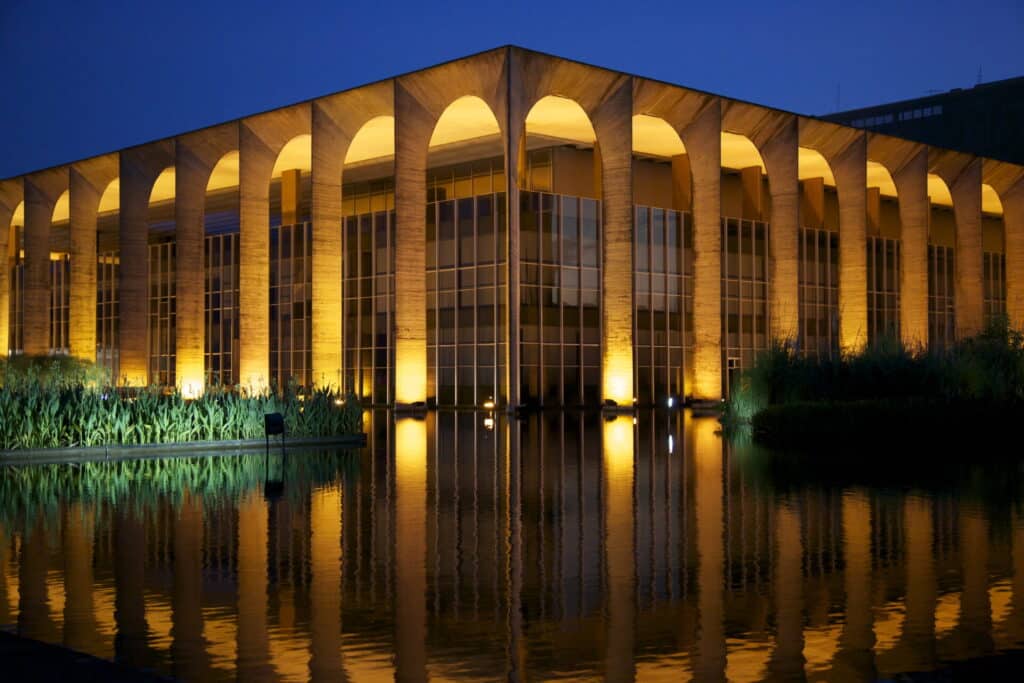
Brazil-Caribbean Summit 2025 brings together the heads of state of the fifteen CARICOM members, as well as those of Cuba, the Dominican Republic and representatives of major regional institutions. Held at the Itamaraty Palace under the presidency of Luiz Inácio Lula da Silva, the opening kicked off high-level political exchanges.
This meeting confirms Brazil’s determination to strengthen South-South cooperation, drawing on its economic power and geographical proximity. Key figures such as the Prime Minister of Saint Lucia, Philip J. Pierre, and the Secretary General of the ACS, Noemi Espinoza Madrid, underlined the importance of this dialogue for the future of the region.
Itamaraty Palace
Food security : bridging the logistics gap
Among the priorities of the Brazil-Caribbean Summit 2025 food security is central. While Brazil can feed 1.6 billion people, the Caribbean still faces logistical challenges. The aim is to strengthen supply chains, with the help of Brazilian institutions such as Embrapa and Conab, to guarantee stable and affordable access to food.
Climate change: on the road to COP30
The Caribbean states, in the front line of the effects of global warming, stressed the urgent need for coordinated action. Brazil-Caribbean Summit 2025 serves as a springboard for a common position ahead of COP30, scheduled to take place in Belém. The aim is to demand adequate financing, advance climate justice and speed up the implementation of international commitments.
Energy transition: a technical partnership
Brazil highlights its experience in biofuels, solar energy and the fight against deforestation. Brazil-Caribbean Summit 2025 provides an opportunity for technical cooperation to help Caribbean states develop clean energies and build a regulatory framework conducive to green investment.
Natural hazards: towards a coordinated response
Often hit by hurricanes, floods or earthquakes, the Caribbean region is crying out for more robust disaster management mechanisms. Brazil-Caribbean Summit 2025 proposes the pooling of resources and the transfer of skills to strengthen local capacities for warning, response and reconstruction.
Connectivity: developing regional infrastructures
The lack of air, sea, and land links complicates trade between Brazil and the Caribbean. Brazil-Caribbean Summit 2025 has also launched concrete projects such as the Roraima-Georgetown road. This drive to strengthen connectivity is aimed at facilitating the exchange of goods, services and know-how, while reducing dependence on external trade channels.
Institutional cooperation: laying the foundations
Brazil-Caribbean Summit 2025 follows on from the CARICOM-Brazil Joint Commission of April 2025. The aim is to structure a lasting dialogue, overcoming language barriers and establishing long-term frameworks for technical collaboration. The role of the Brazilian Cooperation Agency is central to this dynamic.
Luiz Inácio Lula da Silva
A common voice at COP30
The run-up to COP30 offers a clear political horizon. Brazil-Caribbean Summit 2025 aims to build a unified regional position capable of influencing international negotiations. Brazil presents itself as both host and partner, keen to amplify the voice of the countries of the South in the face of major climate challenges.
Itamaraty Palace
Brazil-Caribbean Summit 2025 is a strategic step in the consolidation of a sustainable partnership between Brazil and the Caribbean nations. By placing food security, climate, energy, disasters and connectivity at the heart of the debate, it proposes a concrete roadmap for tackling regional challenges. It also illustrates a shared determination to act in solidarity, in line with the reality on the ground. The future of this cooperation will now depend on the ability of those involved to translate political commitments into tangible results for local populations.