
Union activist Jacky Richard says he wrote the chorus spontaneously, in the midst of the 2009 strike. He didn’t yet know that those few words would come to symbolize an entire movement. “Gwadloup sé tan nou” became the anthem of the LKP, the collective that brought Guadeloupe to a standstill for several weeks. This article explains what “Gwadloup sé tan nou” means, how the song emerged from the strike, and why a single pronoun was enough to get an entire island singing.
“Gwadloup sé tan nou,” a title that consists of just one pronoun
In Guadeloupean Creole, “Gwadloup sé tan nou” means “Guadeloupe belongs to us.” Everything hinges on “nou,” the first-person plural pronoun, this “us” that brings people together. The chorus asserts that the island belongs to its inhabitants, not to a privileged minority. The phrase is short, rhythmic, and easy to chant in a procession.

Guadeloupe at a Standstill, from January 20 to March 4, 2009
On January 19, the island’s 115 gas stations closed. The next day, January 20, 2009, the LKP launched a general strike. Its full name, Liyannaj kont pwofitasyon, translates to “Collective Against Excessive Exploitation.” It brings together 48 organizations, mostly unions, but also political parties and cultural associations.

The LKP has put forward 146 demands, including a raise of at least 200 euros for low-wage workers and a reduction in taxes and profit margins on basic necessities. It is also calling for a minimum wage specific to Guadeloupe, based on the actual cost of living. This anger is backed by statistics: a cost of living approximately 30% higher than in mainland France and an unemployment rate of 27% in 2007. The demonstrations on January 24, 29, and 30 drew between 20,000 and 65,000 people, according to estimates. On March 4, a memorandum of understanding was signed with the government, and its extension to all businesses was announced on March 7.

In this movement, music is not just a backdrop. Among the members of the LKP are two associations with a strong focus on music, Akiyo in Pointe-à-Pitre and Voukoum in Basse-Terre, both of which are active in the carnivals. Drums and voices are everywhere at the demonstrations. Jacky Richard’s chorus thus lands on fertile ground, a crowd that knows how to sing together.
Gwoka, a School of Protest Songs
This fusion of song and struggle is by no means improvised. Gwoka, a drum-based musical tradition that originated during the era of slavery, has long been used to express both anger and joy. Around 1968, Guy Konkèt helped revive it and adapt it to the concerns of the 1970s. In the 1980s and 1990s, it was often associated with the independence movement, a label that carries far less weight today. Whenever there was major political or social tension, songs had already emerged in Guadeloupe. In 2009, it was Jacky Richard’s song that stood out.

Why “Gwadloup sé tan nou” Crossed the Ocean
The song didn’t stay on the island. Protesters sang it in Paris to support the strikers from Guadeloupe. It was also sung in the protest marches in Martinique. In Guadeloupe as in Paris, the same chorus serves as a rallying cry. Its success stems from the fact that it encapsulates in a single sentence anger, discontent, and hope—three sentiments that many shared at the time.
For its author, it wasn’t just about the high cost of living. It denounced an entire system that favors a minority at the expense of others. A chorus that draws a line inevitably raises the question of who is on the other side. The answer lies less in a specific group of people than in a system, and that is what sets “Gwadloup sé tan nou” apart from a mere slogan. The song gave the strike a voice that is recognizable within just a few notes.

Who is this “we” today?
The title raises a question that goes beyond the strike. What does “we” mean in Guadeloupe, an island shaped by slavery, colonization, and the arrival of indentured laborers, particularly those from India? The strike ended in March 2009, but the question posed by the chorus remains. Everyone has their own answer, and that is what gives “Gwadloup sé tan nou” its power, seventeen years later. So sometimes, a three-letter pronoun is enough to spark an entire debate. After “nou,” what other Caribbean expression deserves to be decoded?
FAQ on “Gwadloup sé tan nou”
In Guadeloupean Creole, “Gwadloup sé tan nou” means “Guadeloupe belongs to us.” It all hinges on “nou,” the pronoun “we,” which affirms that the island belongs to its inhabitants and not to a privileged minority.
Union activist Jacky Richard says he wrote the chorus spontaneously, in the midst of the 2009 strike. The song became the anthem of the LKP, the collective that brought Guadeloupe to a standstill for several weeks.
LKP stands for Liyannaj kont pwofitasyon, or “Collective Against Excessive Exploitation.” It brings together 48 organizations. Its general strike began on January 20, 2009, and a memorandum of understanding was signed with the government on March 4, 2009.
Organized by the Caribbean Chamber of Commerce in Europe (CCCE), the second edition of Caribbean Days brought together various expressions of Caribbean culture at UNESCO headquarters in Paris. Over the course of four days, the event provided a forum for dialogue on regional cooperation, sustainable tourism, and economic relations between the Caribbean and Europe.
A Caribbean-style restaurant with a view of Paris
On the roof of UNESCO, Caribbean chefs from the association Les Toques françaises are preparing a three-course Caribbean menu. From the restaurant, guests can see the Eiffel Tower, Les Invalides, and the Left Bank. This scene captures the spirit of the Caribbean Days : to showcase the Caribbean through its creative works and craftsmanship, and then use this cultural presence to foster broader exchanges.
The Caribbean Chamber of Commerce in Europe (CCCE) organized this second edition as part of Latin American and Caribbean Week. Under the theme “Peace, Diversity, and Sustainability,” the event brought together representatives from the cultural, institutional, diplomatic, and economic sectors.
Over the course of four days, the program featured the visual arts, gastronomy, fashion, film, literature, poetry, music, and dance. These disciplines showcased various facets of Caribbean creativity in a venue dedicated to education, science, culture, and heritage.
Creative Industries Take Center Stage
The Caribbean Days highlighted the creative industries as one of the region’s strengths. Cuisine, fashion, film, storytelling, music, and dance served as points of connection between different regions and sectors.
This diversity brought together Caribbean ambassadors, other diplomats, representatives from the public sector, and private-sector stakeholders. Culture thus provided a common framework for discussions on development, investment, and partnerships.
Founded in November 2019, the CCCE’s mission is to facilitate exchanges between the Greater Caribbean and Europe. It also seeks to encourage European investment in the region’s sustainable economic development. In Paris, this mission has taken the form of meetings between institutions, businesses, and Caribbean representatives.

Regional Cooperation Over Lunch
A luncheon discussion focused on cooperation between France’s overseas territories in the Caribbean and CARIFORUM member states. Representatives from the Bank of France, Expertise France, and the OECD gave presentations.
The remarks by French Senator Micheline Jacques, who supports an economic partnership between France’s overseas territories and Haiti, refocused the debate on a concrete question: How can we strengthen ties among the various parts of the Caribbean region?
Through this event, the Caribbean Days brought culture, diplomacy, and the economy closer together. Gastronomy was not merely a backdrop; it served as a framework for dialogue on potential areas of cooperation and on the Caribbean’s role in its relations with Europe.
Sustainable Tourism in the Face of Climate Change
A roundtable discussion was held on sustainable tourism. Geoffrey Lipman, former president of the World Travel and Tourism Council and former deputy secretary-general of the World Tourism Organization, participated alongside Florian Valmy-Desvillers, director of business development for the Caribbean Tourism Organization in the United Kingdom and Europe.
Jo Spalburg, Secretary General of the CCCE, summarized the main message of these discussions. According to him, the acceleration of climate change makes it necessary to develop tourism that is more sustainable and more beneficial to local communities. These communities play a direct role in protecting the region’s natural and cultural heritage for future generations.
This reflection gives the Caribbean Days a specific scope. It links the promotion of Caribbean destinations to the responsibility of preserving what attracts visitors: landscapes, cultural heritage, cultural practices, and local knowledge.

From Cultural Visibility to Partnerships
As this second edition comes to a close, the CCCE is highlighting a collective goal: to transform cultural visibility into collaborations, innovation, and sustainable growth for the region.
The Caribbean Days have shown that culture can foster dialogue among diplomats, institutions, businesses, and creative professionals. What happens next will depend on the ability of the partners gathered in Paris to turn these exchanges into concrete partnerships that benefit Caribbean regions and communities.
Caribbean Days, also known as Journées des Caraïbes, is an event organized by the Caribbean Chamber of Commerce in Europe at UNESCO headquarters in Paris. Over the course of four days, the second edition of the event showcased the visual arts, gastronomy, fashion, film, literature, poetry, music, and dance. The event took place under the theme “Peace, Diversity, and Sustainability,” as part of Latin American and Caribbean Week.
Caribbean Days is organized by the Caribbean Chamber of Commerce in Europe (CCCE). Founded in November 2019, this organization seeks to facilitate exchanges between the Greater Caribbean and Europe, while encouraging European investment in the region’s sustainable economic development. In Paris, the CCCE brought together representatives from the cultural, diplomatic, institutional, and economic sectors to discuss Caribbean culture and challenges.
Caribbean Days combined the promotion of creative industries with discussions on regional cooperation and sustainable tourism. A luncheon forum focused on relations between France’s overseas territories in the Caribbean and CARIFORUM member states. A roundtable discussion also addressed the effects of climate change and the need to develop more sustainable tourism that better benefits local communities working to protect the region’s natural and cultural heritage.
On June 2 and 3, 2026, public and economic players from Guadeloupe, Antigua and Barbuda, Dominica and St. Kitts and Nevis sat around the same table in Guadeloupe to work on a very concrete question: how can we better connect nearby islands, whose exchanges are still hampered by transport breaks? The first KARULINK steering committee is not yet launching new lines. It is setting up a method, partners and a timetable to examine the feasibility of regular maritime passenger services.
A first COPIL to move from principle to method
This meeting marks an important milestone for KARULINK, a European territorial cooperation project co-financed by the European Union as part of the INTERREG Caribbean 2021-2027 program. Discussions focused on three areas: feasibility studies for future maritime services, the development of more environmentally-friendly transport solutions, and prospects for economic and tourism cooperation between the partner territories.
This framing is essential. There’s more to a sea link than simply putting a ship out to sea. We need to study the possible flows, the ports involved, land connections, operating costs, standards, security, timetables, ticketing and passenger reception. The entire travel chain needs to be considered. This is one of the challenges of the project’s intermodal approach: to make it easier for passengers to switch from one mode of transport to another.


A Guadeloupean project with a Caribbean scope
KARULINK is led by the STEP Group in Guadeloupe, with several economic and institutional partners: the Antigua and Barbuda Chamber of Commerce, the Dominica Association of Industry and Commerce, the St. Kitts and Nevis Chamber of Industry and Commerce, the Communauté d’Agglomération La Riviera du Levant and the Ville de Bouillante. The project is scheduled to run until December 31, 2027.
Data published by INTERREG Caraïbes indicate a period running from January 4, 2025 to December 31, 2027, with a total cost of 1,868,743 euros, including 1,143,896 euros from the ERDF and 444,535 euros from the EDF. These amounts place KARULINK within a structured, financed and European framework, with measurable objectives.
The sea as a space for cooperation
The appeal of KARULINK lies in its starting point: the sea can once again become a space for traffic, work and cooperation between nearby islands. The project aims to strengthen connectivity within the Guadeloupe archipelago, while exploring new routes to Dominica, Antigua and St. Kitts. It also combines broader objectives: stimulating the tourism economy, promoting low-carbon transport, creating local jobs and developing training in maritime and land transport professions.
This is an important dimension for the Eastern Caribbean. The territories concerned share geographical proximity, commercial exchanges, family ties, tourist traffic and economic needs. Yet regional mobility remains a sensitive issue, as it depends on public decisions, private operators, technical constraints and fragile economic balances. KARULINK should therefore prove that cooperation can produce concrete solutions.


A response to the challenge of regional integration
The project is part of the “A more connected Caribbean” priority of the INTERREG Caribbean program. This priority includes a specific objective dedicated to sustainable, intelligent and cross-border mobility. It corresponds to the stated ambition of reducing obstacles to inter-island mobility and promoting economic, tourist and human exchanges.
For Guadeloupe, the stakes are also strategic. As one of Europe’s outermost regions in the Caribbean, it is seeking to better integrate into its regional environment. KARULINK gives it a pivotal role, not to speak on behalf of other territories, but to build useful, realistic and sustainable links with them.


The next stage will be decisive
At this stage, the available information points to feasibility studies, coordination between partners and preparation of the next steps. Future routes have yet to be defined: routes, frequency, fares, ships, ports and operating partners.
This is where KARULINK will be needed. If successful, the project could provide the Eastern Caribbean with a concrete example of maritime cooperation, at the service of inhabitants, visitors, businesses and territories. June 2 and 3, 2026 have not yet changed the transport map. But they did lay a foundation stone: that of Caribbean mobility conceived from within the region, with its constraints, needs and ambitions.
KARULINK is a European territorial cooperation project designed to strengthen maritime connectivity between several territories in the Eastern Caribbean. It brings together Guadeloupe, Antigua and Barbuda, Dominica and St. Kitts and Nevis, with a concrete objective: to study the establishment of regular maritime passenger links, improve transport intermodality and facilitate economic, tourist and human exchanges between the islands.
The KARULINK project mainly concerns Guadeloupe, Antigua and Barbuda, Dominica and Saint Kitts and Nevis. On the Guadeloupe side, it involves Groupe STEP, the Communauté d’Agglomération La Riviera du Levant and the Ville de Bouillante. The project is in line with a regional approach: to better link geographically close territories, which are still hampered by transport, coordination and organization constraints for maritime flows.
KARULINK is important because it addresses a central issue in the Caribbean: the difficulty of moving easily between islands that are nevertheless neighbors. By working on maritime services, more sustainable transport solutions and better cooperation between public and private players, the project can help strengthen regional integration. It can also support tourism, economic exchanges, family ties and the movement of people in the Eastern Caribbean.
When luxury is more than just décor
For a long time, luxury in the international hotel industry was measured by the thickness of the marble, the height of the ceilings, the scarcity of objects in the rooms. Some of this grammar still exists. But another, potentially more profitable, is emerging. Cultural luxury is gaining in importance. It is measured by the quality of the connection a traveler can establish with the place he or she is visiting.
This evolution is documented in Travel Dreams 2026: From data to delight, a report published by Amadeus in April 2026, based on a survey conducted by Opinium Research in the fourth quarter of 2025. Asked about the sensations they seek in a destination, 24% of the 6,000 travelers cited “connection to a place: food, experiences, special moments”. This was the second most frequent response, behind freedom. As far as hoteliers are concerned, the figure is becoming strategic: 44% of the 500 general managers surveyed across nine countries identified “concierge and guided experiences” as one of the two main drivers of growth in non-room revenues, on a par with social events.
What travellers are really looking for
In other words, what travelers are looking for, and what hoteliers worldwide are beginning to monetize in earnest, is the same thing: access to living culture. Cultural luxury is not just about décor or service levels. It’s about creating the right relationship between the visitor, the area and the people who bring it to life.
The Amadeus report goes further, putting a figure on what it calls “local experience kits”: neighborhood guides, handcrafted souvenirs, connections with cultural players. It estimates that a mid-range hotel could generate over $243,000 in additional annual revenue from this type of service, based on a guide price of $20 per kit. Nearly a third of business travelers who extend their stay for leisure purposes say they are prepared to pay more than 15% above the average rate for this type of service. With this in mind, cultural luxury is also becoming an issue of business model, not just image.
The Caribbean's value is still under-structured
This fact is particularly relevant to the Caribbean. The region’s cultural heritage is alive and well, but still unevenly structured in terms of tourism and hotel offerings. The Kalinago traditions of Dominica, the Creole languages spoken from island to island, the memory of ancient maritime routes, syncretic ritual practices, culinary know-how handed down outside the formal circuits: all this constitutes a capital that still largely escapes the logics of standard hotel valorization. And yet, this is precisely where cultural luxury can find its most solid footing.

Exceptions do exist. Some independent hotels in the Caribbean have long understood that having a traveler dine in a local market, meet with an artisan or enjoy an hour’s silent walk in a heritage district creates a value that is difficult to compare with a standardized spa facility. But these initiatives often remain isolated, barely visible in destination communications, and rarely structured as a coherent economic proposition. To turn cultural luxury into a sustainable lever, we need to move on from one-off initiatives to a clear, profitable offering that respects local players.

Local experiences to be organized differently
The Amadeus report identifies a potentially game-changing trend. According to the study, 41% of hotels surveyed have already created packages linked to regional concerts, cultural events or popular TV series, and 38% plan to do so within the year. The traveler of 2026 no longer comes just to see a place. They come to enter into a relationship with it, through proposals that are constructed, told and embodied. This shift towards cultural luxury is exactly the kind of proposition that the Caribbean can articulate, provided its economic players work together.
This implies a number of shifts. Firstly, we need to move away from competition between islands and think in terms of pan-Caribbean offerings, where the richness of each territory complements rather than cannibalizes each other. Secondly, we need to professionalize the way in which our cultural heritage is presented: not by folklorizing it, but by presenting it with the editorial and visual rigor expected by a well-informed international traveler. Finally, we need to structure the economic relationship between hotels, local cultural players and experience operators, so that the value generated benefits the regions and not just international intermediation platforms. Caribbean cultural luxury can only be as strong as the people who bring it to life.

A journey that also promises personal transformation
Another statistic in the report is worth noting. Asked what they hope to bring back from a trip, 18% of travelers surveyed cite “a new version of themselves: clearer, lighter, more intentional”. This figure rises to 39% among travelers surveyed in China. For Caribbean destinations seeking to diversify their source markets, this signal deserves attention. It does not allow us to generalize to all Asian markets, but it does show that some travelers already associate travel with a form of personal transformation.

Enhancing without diluting
In 2026, cultural luxury is no longer sold in rooms alone. It’s sold in encounters. In hours. In presence. The Caribbean has what it takes to meet these expectations. All that remains is to organize it, to tell its story, to enhance its value without diluting it.
Cultural luxury is a new way of thinking about high-end travel. It’s not just about the comfort of a hotel, the quality of a room or the presence of exclusive amenities. It’s built around the relationship between the traveler and the territory visited. In tourism, this can take the form of a meeting with an artisan, a meal prepared with local produce, a guided tour by a local, or an experience that provides a better understanding of a place’s history, languages, practices and memories. Cultural luxury therefore gives value to that which cannot easily be copied: the living identity of a territory.
Cultural luxury represents a major opportunity for the Caribbean, as the region boasts a rich living heritage: Creole languages, culinary traditions, historical memories, music, craft skills, community practices and indigenous or Afro-descendant heritages. Yet some of this richness remains unstructured in conventional tourism offerings. By developing better-organized local experiences, Caribbean territories can create new revenue streams, boost the attractiveness of their destinations and better involve cultural players in the value generated by tourism. The challenge is not just economic: it also concerns the transmission, recognition and preservation of local identities.
Caribbean hotels can develop cultural luxury by working directly with local players: artisans, guides, chefs, artists, historians, cultural associations, heritage communities and experience operators. The aim is not to turn culture into décor, but to build respectful, rewarding and well-told propositions. This means choosing legitimate partners, presenting traditions accurately, avoiding clichés and guaranteeing that income actually benefits the people who carry this knowledge. A solid cultural luxury doesn’t put culture on display: it creates a fair encounter between the visitor, the place and those who bring it to life.
“WHO” marks a milestone in Wil Aime’s career. The Guadeloupe-born director, known for his suspenseful short stories posted on social networks, brings his first feature film to the cinema. In Guadeloupe, several screenings are scheduled from May 28, 2026. In Abymes, Basse-Terre and Lamentin, Guadeloupean audiences will soon have access to a film eagerly awaited by a community that has been following Wil Aime for several years. This trip to the cinema is not just about going to the movies. It also tells the story of a creator who built his narrative language online before bringing it to the big screen.
A creator born with short stories
Wil Aime, whose real name is Wilhem J. Oxybel André, made his name on Vine before developing a sizeable audience on Facebook, Instagram and YouTube. His style is based on a precise construction: ordinary situations that tip over, moral choices, details that make sense at the end, and a tension that forces the viewer to stay attentive.
With “WHO”, he changes format without abandoning what has made him unique. Whereas his videos set up a plot in just a few minutes, this first feature-length film unfolds his universe over 2 hours and 10 minutes. The challenge is considerable: to transform writing designed for social networks into a cinematic narrative, without losing the rigor or the direct relationship with the audience.
A psychological thriller
“WHO” is billed as a psychological thriller, built around a central question: “In a world of monsters, who’s the monster?”. This sentence sets the tone. It doesn’t just promise an investigation or a series of twists and turns. It establishes moral doubt.
In the film, the characters evolve in a world where every decision can have serious consequences. Time is of the essence. Mistakes are paid for. Extreme situations reveal human flaws, fears and limits. This is precisely the terrain on which Wil Aime has often built his relationship with his audience: showing how a detail, a word or a choice can change the whole meaning of a story.


Guadeloupe in the release schedule
WHO” is scheduled for release on May 28, 2026. In Guadeloupe, the Cinestar in Les Abymes has scheduled a screening for Thursday May 28 at 7.30pm. The cinéma d’Arbaud, in Basse-Terre, announces a screening on Friday May 29 at 7.30pm. The Ciné-Club Nouveaux Regards is also organizing a screening at the Ciné-Théâtre du Lamentin on Thursday May 28 at 6:30pm, with a videoconference discussion with Wil Aime after the film.
This calendar gives the region a special place. For a director of Guadeloupean origin, presenting a first feature film in Guadeloupean cinemas carries a strong symbolic dimension. Local audiences don’t just receive a film that has already been released elsewhere. They are taking part in an important moment in the career of a creator from their own cultural area.

An outing beyond the Antilles
The project is not limited to Guadeloupe. Limited screenings have been announced in France, DROM-COM, Belgium and Switzerland on May 28 and 29, 2026. Canada is also included in the schedule, with a preview on May 29, followed by a national release on June 5. French-speaking Africa will follow on June 10.
This circulation gives “WHO” a wider reach. It shows how a Caribbean creator can now draw on an audience built up online to reach several territories. Cinema does not replace social networks. It becomes a new stage, longer, more demanding, but also more collective, as the cinema imposes a different relationship with the public.
A signal for Caribbean designers
Wil Aime ‘s journey is also interesting because it goes beyond his own personal case. It raises a central question for creators in the Caribbean and its diaspora: how do you go from digital visibility to lasting work? How do you transform a community of viewers into a cinema audience? How can we bring the stories of Caribbean journeys into wider distribution circuits?
With “WHO”, Wil Aime attempts this transition with a film that remains true to his taste for suspense, detail and dilemma. Whether this transition to feature film marks a new stage in his career will depend on public reception. But the event is already here: a creator of Guadeloupean origin, shaped by the customs of his time, arrives in cinemas with a work designed to be seen, discussed and shared in a different way.
Perhaps the real question now is not just who is the monster in “WHO”. It’s also to see how far this first film can take Wil Aime, from Guadeloupe to a much wider audience.
WHO is announced in Guadeloupe from May 28, 2026. The screenings announced include the Cinestar in Abymes, the cinéma d’Arbaud in Basse-Terre and the Ciné-Théâtre in Le Lamentin. These screenings will give Guadeloupean audiences the chance to discover Wil Aime’s first feature-length film in theaters, in a strong local setting for a director of Guadeloupean origin.
WHO is a psychological thriller built around a central question: “In a world of monsters, who is the monster? The story features characters confronted with choices fraught with consequences, in a mechanic where every mistake can become decisive. The film extends the universe of Wil Aime, known for his precise narratives, moral dilemmas and sense of turnaround.
The release of WHO is particularly significant for Guadeloupe, as Wil Aime is a director of Guadeloupean origin, who here passes a major milestone: that of his first feature-length film. His journey shows how a social network creator can transform a digital audience into a cinema audience. For Guadeloupe, this release also highlights the place of Caribbean talent in international cultural circuits.
With Bandi, a 2026 Netflix series set in Martinique, eight episodes have taken a Martinican Creole expression far beyond its native territory. “Sa sa pé foutew” means much more than “What’s it to you? It’s a way of setting a limit, sometimes with humor, sometimes with firmness, but always with an element of identity.
Three words, one border
Three Creole words, one question, and one attitude. When the Bandi series arrived on Netflix in 2026, it brought with it a phrase that many Martiniquais recognize: “sa sa pé foutew”. For some, it’s pride. For others, it’s a silent victory. For all those who know what these words mean in a conversation, it’s a moment that counts.
Literally, the phrase can be translated as “what’s it to you?” or “what’s it got to do with you?”. But the translation always gives us away. In reality, “sa sa pé foutew” functions like an air bubble between self and other. It means: you have no authority over my life, what I do is none of your business, I don’t expect your validation. It’s a boundary, not an aggression.

A short formula, many emotions
And it’s precisely this dual dimension – defense and tenderness – that makes the formula so special. Depending on the context, the tone and the face, “sa sa pé foutew” can be a burst of laughter between friends, an icy clarification, or a resigned sigh. The Creole language excels in these short formulas that carry several emotions at once.
Martinique Creole is rich in such expressions. According to the Atlas of Pidgin and Creole Language Structures, it is spoken by around 400,000 people in Martinique, with an equally large diaspora. But numbers don’t tell the whole story. A language doesn’t live by the number of speakers alone. It lives on through intonation, usage, everyday situations, the retorts that circulate in families, neighborhoods, markets, songs or conversations between relatives.
In “sa sa pé foutew”, there’s more than just a phrase. There’s a posture. That of a person who refuses to be intruded upon. It’s a popular voice that knows how to say no without making a speech. This is also why the expression remains difficult to translate properly. In French, it sounds abrupt. In Martinique Creole, it can be funny, dry, affectionate or sharp, depending on the mouth that utters it.
When Martinique Creole arrives on Netflix
The arrival of the formula on Netflix marks something. For a long time, Martinique’s Creole language circulated mainly in local cultural spaces, whether musical, theatrical, family or militant. Seeing it installed in a series broadcast on an international platform changes perception. What was local becomes audible elsewhere. What was familiar to some becomes a subject of curiosity for others.
This does not automatically transform the expression into a global phenomenon. We must not exaggerate. But it does give voice to a language in an area where it is still rare. And, for a regional language often reduced to orality or intimacy, this visibility has weight. It shows that Martinique Creole can carry a plot, a tension, an emotion and a strong line without being decorative.

A Caribbean resonance, without erasing differences
This upsurge in Martinique Creole does not stand alone. It is part of a wider movement to recognize Creole languages in the Caribbean. In Dominica, the country’s official profile mentions English and French Patois, also known as “Kwéyòl”. In Saint Lucia, Kwéyòl pride is expressed every October around Jounen Kwéyòl, linked to International Creole Day on October 28. In Haiti, the 1987 Constitution recognizes Creole and French as the official languages of the Republic.
In Guadeloupe, there are also sister formulas. “Ki sa ou ka chèché?” carries a similar intensity, even if it doesn’t say exactly the same thing. But each island has its own music. Guadeloupe Creole is not Martinique Creole. Saint Lucian kwéyòl is not Haitian Creole. They are related languages, not a single language.


A popular phrase, a demand for autonomy
What makes “sa sa pé foutew” singular in the Martinican context is its social significance. The phrase expresses a relationship with authority, whether familial, social or institutional, and a demand for autonomy that runs through part of popular culture. In zouk songs, in comic theater, in carnival, we find this posture: I hold my place, I don’t ask permission.
When a formula like this leaves its home territory and reaches the ears of viewers who don’t necessarily have a direct link with Martinique, it doesn’t become universal. It becomes curious. And curiosity, for a language long kept at a distance from the major cultural circuits, is already a form of victory.
Next week, we cross the sea to Trinidad to find the equivalent. What expression over there will say the same thing differently?
“Sa sa pé foutew” can be translated as “what’s it got to do with you” or “what’s it got to do with you? In Martinican Creole, the expression is often used to set a limit, with humor, firmness or distance, depending on the context.
The expression is brought back into the spotlight by the Bandi series, broadcast on Netflix and set in Martinique. Its presence in an international production gives new visibility to Martinique Creole and its popular formulas.
“Sa sa pé foutew” is not just a literal translation. The expression conveys an attitude, a way of refusing intrusion and asserting autonomy. It demonstrates the expressive power of Martinique Creole in everyday life.
From May 9 to 17, 2026, the Raizet district of Les Abymes will play host to WAL FEST 2026, billed as Guadeloupe’s first major urban art festival. For ten days, 15 artists from Guadeloupe and elsewhere will create 12 monumental frescoes. The aim is clear: to turn the neighborhood into a free, permanent, open-air museum.
The Abymes district at the heart of the project
In Raizet, the walls of the Les Esses 1, 2 and 3 residences and of Quartiers 1 and 2 of the SIG will be more than just supports. They will become the visible heart of a cultural project designed in collaboration with residents, neighborhood associations and the Raizet socio-cultural center. WAL FEST 2026 is not just about showing finished works. It wants to make visible the artistic gesture, the live work, the exchanges, the hesitations and the encounters.
Co-organized by the WAL association, Wad Al Lub, and the Société Immobilière de Guadeloupe, the event is based on a powerful idea: to transform a 1960s neighborhood into an open-air art trail. According to the dossier submitted by the organization, this transformation is part of a threefold logic: social inclusion, local development and the democratization of artistic creation.
15 artists, 12 frescoes and an international scene together


For ten days, 15 international artists will take over Le Raizet to create 12 monumental live frescoes. The announced program includes artists from Guadeloupe, Guyana, the Dominican Republic, France, the Netherlands, Spain and the Caribbean.
Among the artists announced are Steek, Al Pacman, Pauline and Mathilde Bonnet, the 4KG collective, Pock, Ti Latour, Greeffe, Kilia Llano, Hopare, Kaldea, Zailfana, Does and Zurik. The presence of established artists alongside Guadeloupean talent creates a dialogue between various practices: graffiti, muralism, painting, illustration, memory, abstraction, portraiture, public art and urban cultures. The festival also features a mixed program, with as many female as male muralists in this first edition.


WAL FEST 2026: A program designed for local residents, schoolchildren and families
WAL FEST 2026 opens on Saturday May 9 with an official launch featuring artistic performances, music and a screening of Gérard Maximin’s documentary Mas Ka Klé, La porte du retour. Tuesday May 12 will be dedicated to schoolchildren, with guided tours of the art trail, meetings with artists and educational workshops.
On Thursday May 14, an eco-citizen day will be organized in partnership with Cap Excellence. It will combine environmental awareness, civic action and reflection on the territory. On Friday May 15, starting at 7 p.m., the lewoz, a traditional Guadeloupean cultural evening, will honor local heritage with the participation of pô groups from Le Raizet.
On May 16 and 17, the WAL FEST Village, also known as Vilaj Papyon, will take place from 10 am to 6 pm. The village will feature three main hubs: employment, training, crafts, exhibitions, prevention and awareness-raising. From 4 p.m., the stage will host musical entertainment, dance performances and a fashion show, in partnership with the Conseil Départemental and the ONTGABF association.
Urban art as an educational tool
WAL FEST isn’t just about frescoes. From May 9 to 17, introductory urban art workshops will be held from 10 a.m. to 12 p.m. in the heart of the residences concerned. They will be led by Guadeloupe artists including Skem, Macfa, 1So, Art’So, Yeswoo, Karey and Sek. These workshops will enable children, young people and adults to understand the codes of urban art, experiment with techniques and engage in dialogue with professional artists. The stated aim is to stimulate creativity, boost self-confidence and open participants up to other artistic cultures.
This educational dimension gives WAL FEST 2026 a special significance. Audiences don’t just come to watch. They can learn, question, participate and situate themselves in a broader artistic history.

A citizens' village for jobs, culture and rights
Vilaj Papyon gives the festival a social and economic dimension. The employment and training center will be offering meetings with local companies, career advice, exchanges with recruiters, a discovery of professions and integration paths.
Another section will be devoted to heritage and culture, with local crafts, Guadeloupean know-how, exhibitions and demonstrations. An information area will also focus on access to health services, social rights, assistance for people on minimum social benefits and the elderly, as well as road safety education.
WAL, an established player in Guadeloupe's urban art scene
Created in 2014, the WAL association has established itself as a key player in the development of urban art in Guadeloupe. Its Le Mur Guadeloupe project, launched in 2023 in the Dothémare area of Les Abymes, has already welcomed 22 artists in residence since September 2023. With WAL FEST 2026, the association is taking things to the next level. The event does more than simply exhibit artists: it sets up a route through an inhabited neighborhood, involving residents and making urban art part of a territorial strategy.
If this first edition of WAL FEST lives up to its promise, Le Raizet could become the starting point for an event that would travel to another intercommunal region each year. So the question remains: how far can Guadeloupe turn its walls into a common language of creation, memory and future?
📸 ©WAL FEST
WAL FEST 2026 is an urban art festival to be held in Raizet, Les Abymes, Guadeloupe, from May 9 to 17, 2026. It includes the creation of 12 monumental frescoes by 15 artists from Guadeloupe and beyond.
WAL FEST 2026 will take place in Le Raizet, in the commune of Les Abymes. The frescoes will be created in the heart of the Les Esses 1, 2 and 3 residences and in Quartiers 1 and 2 of the SIG.
WAL FEST 2026 aims to transform Le Raizet into a free, permanent, open-air museum. The project combines artistic creation, resident participation, educational workshops, a citizens’ village, employment, training and neighborhood enhancement.
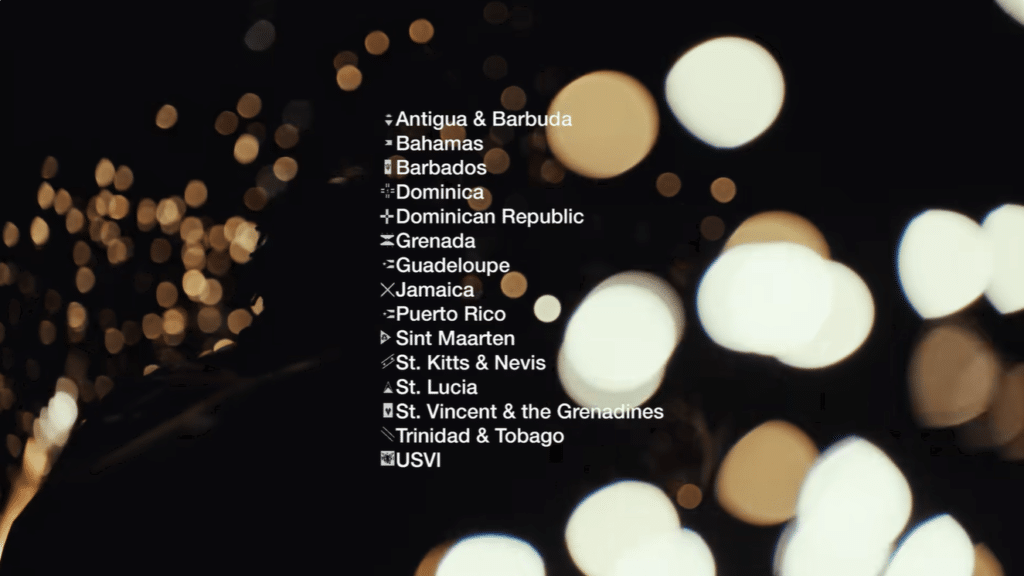
IShowSpeed Caribbean Tour opens a rare window on the Caribbean. The announcement was broadcast on April 20 on the American creator’s networks, with a live broadcast scheduled for April 25, 2026. The published list mentions fifteen destinations: Antigua and Barbuda, the Bahamas, Barbados, Dominica, the Dominican Republic, Grenada, Guadeloupe, Jamaica, Puerto Rico, Sint Maarten, Saint Kitts and Nevis, Saint Lucia, Saint Vincent and the Grenadines, Trinidad and Tobago and the US Virgin Islands. In the space of a few hours, this tour placed the region in an unusual position of global visibility.
IShowSpeed Caribbean Tour deserves attention for one simple reason: IShowSpeed gathers a gigantic audience. The Associated Press recalls that it surpassed 50 million subscribers on YouTube during its African tour in January 2026. At this scale, every move becomes a live event, picked up by other accounts and transformed into short sequences that circulate quickly. When an entire itinerary is devoted to the Caribbean, the territories, accents, landscapes and everyday customs enter the field of vision of an international audience.
The Caribbean as a whole
The first strength of the IShowSpeed Caribbean Tour lies in the overall picture it produces. The list combines independent states and territories, English-, French-, Spanish- and Dutch-speaking areas. This juxtaposition reminds us that the Caribbean is a multiple region, crossed by different languages and heritages, while retaining deep links.
This regional reading corresponds to a historical reality. Human, musical, commercial, religious and family circulations have existed for centuries from one island to another. Borders have shaped distinct administrations and statuses. They have never erased exchanges. In a single announcement, the Caribbean appears as a legible space for millions of people who often perceive it in a fragmented way.
Visibility through the codes of the present
The format counts almost as much as the list of destinations. IShowSpeed is all about live action, improvisation, immediate reaction and massive sharing. Its audience follows less a program than a presence. This way of filming changes the nature of the exhibition. The viewer watches streets, beaches, markets, journeys, encounters and crowd scenes as they happen.
For the Caribbean, this exhibition has a special significance. Many of the region’s territories suffer from uneven visibility in the major media circuits. The best-known benefit from a well-established image. Others remain absent from global narratives, or reduced to a few clichés. The IShowSpeed Caribbean Tour can therefore play a useful role: showing a diversity of places and atmospheres to a young public that is building its vision of the world through platforms.


An opportunity for cultural and media players
IShowSpeed Caribbean Tour is also of interest to artists, organizers, local media and creators based in the region. A tour of this scale can highlight a dancer, a musician, a culinary tradition, an urban setting, a popular event or a local personality. It can also create connections between territories that rarely communicate at this speed.
However, the added value of IShowSpeed Caribbean Tour will depend on how these moments are accompanied. A viral image attracts attention for a few hours. Serious editorial work extends this interest. It provides reference points, recalls history, clarifies political and cultural contexts, and helps us understand what we’re seeing. This is an opportunity for the Caribbean to tell the story of its plurality with greater mastery.
A visible symbolic impact
It would be premature to announce any quantified tourist effects or immediate economic spin-offs. However, one thing is clear: the Caribbean is gaining a global presence in one of today’s most popular formats.
This is where IShowSpeed Caribbean Tour really comes into its own. IShowSpeed Caribbean Tour brings together in a single movement territories that are often commented on separately. It reminds us that the region possesses a cultural, visual and social force capable of capturing attention on a grand scale. For audiences unfamiliar with the area, it can open a first door. For those who are already familiar with it, it confirms that the Caribbean remains a major hotbed of creation, circulation and energy in the contemporary world.
IShowSpeed Caribbean Tour is a tour announced by American creator IShowSpeed across several Caribbean territories. Beyond the announcement itself, this tour is attracting attention for its media scope and the visibility it can offer the region as a whole.
IShowSpeed Caribbean Tour is attracting a lot of interest because IShowSpeed is one of the most followed creators in the world. When he travels, his videos, live broadcasts and excerpts shared on the networks quickly reach an international audience, giving this tour a much wider reach than a series of stopovers.
IShowSpeed Caribbean Tour is important because it shows the Caribbean as a visible, vibrant and connected regional space. The tour links several territories in a single narrative and reminds us that the region possesses a cultural, linguistic and social richness capable of attracting attention on a large scale.
Yes, IShowSpeed Caribbean Tour can have a real cultural impact. This type of tour can highlight local landscapes, sounds, accents, lifestyles, artists and moods. It can also encourage a new way of looking at the Caribbean, particularly among a younger audience who follow world news via digital platforms.
It’s still too early to accurately measure the impact of the IShowSpeed Caribbean Tour on tourism. On the other hand, this tour can already raise the profile of the Caribbean and feed the curiosity of a global audience. This media exposure can then benefit the territories if it is intelligently relayed by cultural, tourism and media players.
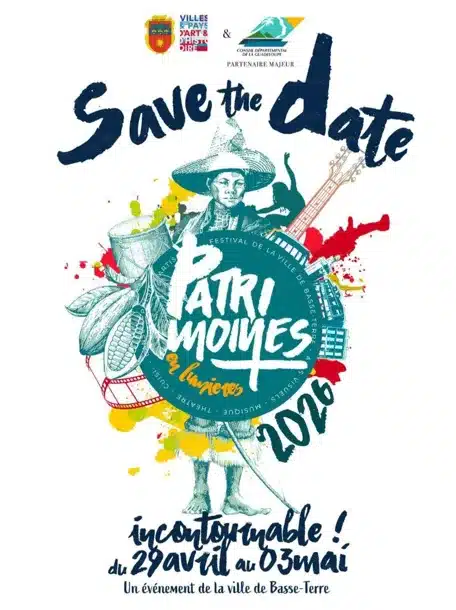
From April 29 to May 3, 2026, the city of Basse-Terre will host the second edition of the festival Patrimoines en Lumières 2026 is now a fixture on the Guadeloupean cultural calendar. After a highly acclaimed first edition in 2024, this biennial event has established itself as a structuring initiative, at the crossroads of heritage enhancement and contemporary artistic creation.
Conceived as a truly immersive journey, the festival transforms the capital into a living space where monuments, public spaces and emblematic sites become the mediums for a renewed artistic narrative. For five days, residents and visitors alike will rediscover Basse-Terre through a rich, accessible program deeply rooted in the region’s identity.
A festival that gives new meaning to Basse-Terre's heritage
With Patrimoines en Lumières 2026, the City of Basse-Terre is asserting a clear vision: to make heritage a lever for cultural, social and territorial development. The Guadeloupean capital has been awarded the Ville d’art et d’histoire (City of Art and History) label, and boasts a rich architectural, historical and intangible heritage that is often little-known by the general public. The festival offers a contemporary interpretation of this heritage, showcasing it through artistic installations, performances and immersive experiences. The aim is twofold: to pass on the collective memory, while making it part of a contemporary dynamic, capable of touching all generations.
This approach will also reposition Basse-Terre as a major cultural hub in Guadeloupe and the Caribbean, boosting its appeal to local and international audiences.
Multi-disciplinary programming open to all
The Patrimoines en Lumières 2026 festival stands out for the diversity of its programming. The event is not limited to a single format, but offers a genuine artistic journey:
- – live shows
- – concerts
- – film screenings
- – conferences and meetings
- – guided walks
- – participatory workshops
- – youth initiatives
- – contemporary art proposals
- – heritage culinary experiences
Each discipline contributes to building bridges between memory and creation, tradition and modernity, transmission and innovation. The festival thus appeals to a wide audience, from cultural enthusiasts to families and professionals in the arts.

Caribbean and international artists already announced
The artistic program for Patrimoines en Lumières 2026 is beginning to take shape, with an initial selection of established artists. This diversity reflects the festival’s desire to cross influences and showcase talent from the Caribbean and beyond.
Among the names announced:
- – Arnaud Dolmen
- – Beethova Obas
- – Big In Jazz Collective
- – Demwazel Dys
- – E.sy Kennenga
- – Gasandji
- – House An Nou
This first wave illustrates a demanding artistic line-up, blending jazz, contemporary music, hybrid creations and contemporary expressions. It also heralds a program that favors quality, diversity and dialogue between cultures. A number of events have already been identified, including musical performances at L’Artchipel, Scène nationale, and artistic performances from workshops, integrated into the overall festival program.

An immersive experience in the heart of the city
For five days, Patrimoines en Lumières 2026 transforms Basse-Terre into an open-air space for artistic exploration. Heritage sites become living stages, combining light, sound, image and movement. Visitors are invited to move from one site to another, take part in guided walks, attend performances or take part in workshops. This immersive dimension is one of the strong points of the festival, which favors direct experience and active discovery. In this way, the city is redesigned as you walk along, offering a fresh reading of its history and urban landscapes.


A project supported by major institutional partners
The Patrimoines en Lumières 2026 festival is organized by the City of Basse-Terre, with the support of the Conseil départemental de la Guadeloupe, a major partner of the event. It is also supported by the Direction des Affaires culturelles of Guadeloupe, Saint-Martin and Saint-Barthélemy, as well as L’Artchipel, Scène nationale. This collaboration testifies to a shared desire to structure an ambitious cultural offering, capable of boosting the region’s visibility and supporting local artistic players. By mobilizing these institutions, the festival is part of a global strategy for cultural development, in which heritage and creation become tools for cohesion and outreach.
Ramp-up scheduled for 2026
Following the success of its first edition, Patrimoines en Lumières 2026 marks an important step in the consolidation of this event. The 2026 edition promises to be more structured, more ambitious and more visible, with a program that is currently being rolled out. The gradual announcement of artists and events is helping to maintain a dynamic of attention around the festival, while leaving room for new revelations in the weeks to come. This rhythm of communication accompanies the rise of the event, which is becoming an essential fixture on Guadeloupe’s cultural scene.
Practical information
📅 Dates: from April 29 to May 3, 2026
📍 Location: Basse-Terre, Guadeloupe
🎭 Type of event: multidisciplinary festival (heritage, arts, music, cinema, conferences)
👥 Public: all audiences
🎟️ Detailed programming and ticketing: to be unveiled gradually.
Patrimoines en Lumières 2026 offers an immersive experience in the heart of the city of Basse-Terre, where heritage becomes a medium for artistic expression. For five days, historic monuments, public spaces and emblematic sites are transformed into open stages hosting concerts, live performances, screenings, visual installations, conferences and workshops. The festival also includes guided walks to help visitors better understand the city’s history, as well as initiatives dedicated to young people. This diversity allows each visitor to build his or her own pathway between culture, discovery and transmission.
The 2026 edition of Patrimoines en Lumières will feature a multi-disciplinary artistic program, mixing Caribbean talent with international artists. Several names have already been announced, including Arnaud Dolmen, Beethova Obas, Big In Jazz Collective, Demwazel Dys, E.sy Kennenga, Gasandji and House An Nou. Performances will cover a wide range of artistic universes, from jazz and contemporary music to hybrid creations and contemporary proposals. Added to this are a variety of formats such as cinema, lectures and open-air performances, reinforcing the richness and diversity of the festival.
Patrimoines en Lumières is gradually establishing itself as a structuring event for Guadeloupe, and in particular for the city of Basse-Terre. The festival plays a key role in promoting the region’s tangible and intangible heritage, while supporting contemporary artistic creation. It also contributes to strengthening the capital’s cultural appeal and creating links between residents, artists and visitors. Backed by major institutional partners and an accessible program, the event is part of a wider dynamic of cultural development and knowledge transfer, both locally and throughout the Caribbean.
On Saturday March 14, 2026, the Hotel de l’Assemblée de la CTM in Fort-de-France hosted the 6th edition of the Caribbean Business Cruise (CBC). Organized by Isanaja Consulting in partnership with Martinique Développement this economic morning brought together Caribbean entrepreneurs from Guadeloupe, Saint Lucia and Antigua & Barbuda to work towards a common goal: to turn the Caribbean into a concrete area of economic cooperation.
A business cruise, a pioneering concept in the Caribbean
The Caribbean Business Cruise is no ordinary networking event. Created in 2019 by Isabelle Adelis Flandrina, founder and CEO of Isanaja Consulting, the Caribbean Business Cruise is presented as the first Caribbean business cruise. The concept is to enable business leaders to meet aboard a ship, away from busy schedules, to build real business relationships.
"Together with my husband, we created the first edition of the Caribbean Business Cruise in 2019, which was originally founded to enable business leaders to go on mission with their families."
— Isabelle Adelis Flandrina, fondatrice d'Isanaja Consulting
In six years, Caribbean Business Cruise has evolved to include an increasingly structured economic dimension. Caribbean Business Cruise 6 now boasts a partnership agreement with the Organization of Eastern Caribbean States (OECS), making Isanaja Consulting one of the few private French companies to hold this partnership, according to its founder. This recognition opens up access to an English- and Spanish-speaking network that Martinique is still struggling to exploit to the full.
Martinique as a host and investment destination
The Caribbean Business Cruise kicked off with a speech by Alexandre Ventadour, territorial councillor at the Martinique Assembly and President of Martinique Développement. His message: Martinique isn’t waiting for investors, it’s getting ready to receive them.
"Our Martinican companies are here to showcase what Martinique can do best."
— Alexandre Ventadour, président de Martinique Développement

Yann Yala also of Martinique Développement, gave an economic overview of the region: GDP in excess of €10 billion, with growth of around 1%, per capita GDP of €29,000, a population of 356,000, and a trade balance that is largely in deficit, with a coverage rate of around 20% by 2025. Three sectors have been identified as priority development drivers: tourism (6% of GDP, €600 million in annual sales), renewable energies and the digital economy.

With this diagnosis in mind, the question of export support became central. Martinique Développement focuses on attractiveness and installation support, while the Martinique Chamber of Commerce and Industry (CCIM) has taken over responsibility for exports, notably via the Caribbean Trade Facilitation Team. Stéphanie Pujar, project manager for Caribbean cooperation at the CCIM, presented this bilingual (French and English) program, which supports companies from Martinique, Guadeloupe and Guyana in their export development.
"International business support is truly a tailor-made service. Every company has its own project, so every company also has services that suit it."
— Stéphanie Pujar, responsable coopération Caraïbes, CCIM

French companies can benefit from grants from the French Ministry for Overseas France covering between 50% and 75% of the cost of international assignments. It’s a little-known lever that’s regularly highlighted at this type of event.
Caribbean entrepreneurs in search of partners
Caribbean Business Cruise 6 gave a dozen companies the opportunity to present themselves in two minutes, before getting down to B2B business. A deliberately tight format to get straight to the point.
Among the English-speaking participants, Celia Samuel representative of Go To Enterprise (Antigua & Barbuda) and board member of the Antigua Chamber of Commerce, was back for the second year running. She distributes wholesale food products: fruits, vegetables, meats, agro-processed products, from producer to end customer, and is looking for manufacturers wishing to export to the English-speaking Caribbean.
"I am passionate about working with other Caribbean islands and other Caribbean companies. Time waits for no man. So if you see an opportunity, jump on it. "
"I'm passionate about working with other Caribbean islands and companies. Time waits for no one. So if you see an opportunity, seize it."
— Celia Samuel, Go To Enterprise, Antigua & Barbuda
Her testimonial is a concrete illustration of the value of the Caribbean Business Cruise: during the previous edition, she forged a relationship with a producer in Grenada, and is now the exclusive distributor of his brand in Antigua, with prospects for expansion to other islands.
Chantal Alexander, General Manager of Abby’s Exotic Blends (Saint Lucia), was presenting a range of preservative-free agro-processed products based on plantain, breadfruit, sweet potato and green banana, potato chips, confectionery and rum punches, and was looking for distributors or production partners.
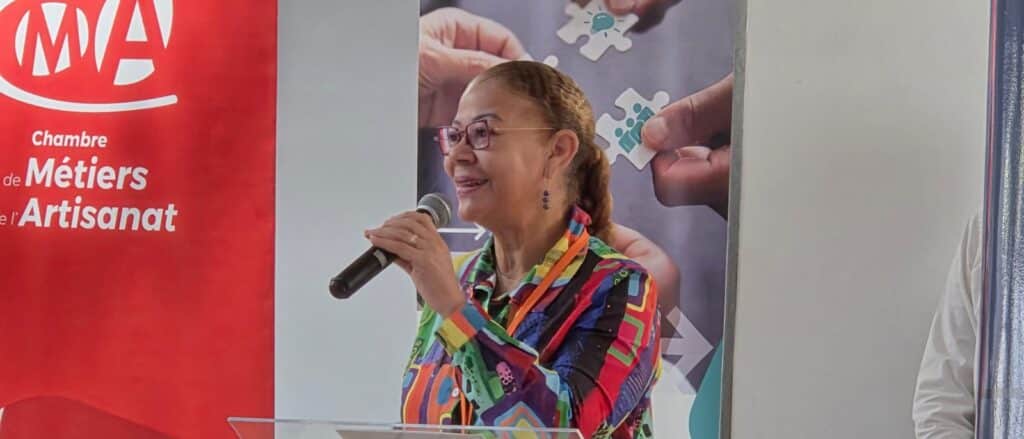
On the Guadeloupe side, the sectors represented covered a broad spectrum: cybersecurity with CyberCorsair (Jérémy Benallal) water and renewable energy engineering with Prest’eau Caraïbes (Luigi Apoari), management consulting with Auxiliary Being (Franciane Morvany), software and digital training with ISP Informatique and cultural and tourist development with the association Fout Gwada Bel (Leslie Morvany). Guadeloupe’s Chambre des Métiers de l’Artisanat was also on hand to promote its Artisans Pays de Guadeloupe label and explore synergies with its counterparts in Martinique.
A mindset to build
Isabelle Adelis Flandrina was keen to point out a reality with which the room is familiar: French-speaking and English-speaking entrepreneurs don’t arrive at the same meetings with the same frame of mind.
On the English side, when they go there, they go there to do business. Clearly, if they come to meet you, it's to find out if you can meet their demand."
— Isabelle Adelis Flandrina
This difference in entrepreneurial culture runs like a thread through the successive CBCs. This year, the Martinique and Caribbean delegations were more cautious than expected: the founder refers in particular to the Caribbean geopolitical context linked to US policies and its impact on regional business dynamics. A Haitian delegation, initially scheduled, was unable to join the event for logistical reasons.
Despite these absences, the Caribbean Business Cruise 2026 confirmed the usefulness of these regional meetings. The B2B exchanges that followed the presentations, in the Assembly hall, materialized what the CBC seeks to provoke: real connections between players who, geographically close, do not spontaneously cross paths.
Digicel Business a partner of the event, emphasized through the voice of its Administrative and Financial Director René Klock the importance of this type of initiative in strengthening the regional economic fabric around Caribbean VSEs and SMEs.
The 7th edition of the Caribbean Business Cruise is already on the cards, with organizers hoping for a larger Martinique delegation on board.

The Caribbean Business Cruise (CBC) is the first Caribbean business cruise, created in 2019 by Isanaja Consulting. Each year, it brings together business leaders from all over the Caribbean – French, English and Spanish speakers – for B2B exchanges and regional partnership opportunities. The 6th edition was held on March 14, 2026 in Fort-de-France, Martinique.
Martinique boasts a GDP of over 10 billion euros, a largely service-based economy and identified growth sectors: tourism, renewable energies and digital technology. Martinique Développement and the Martinique Chamber of Commerce and Industry offer tailor-made support for setting up and exporting, with grants covering 50-75% of the costs of international missions for French companies.
The 6th edition of the Caribbean Business Cruise in Fort-de-France brought together companies in five sectors: agro-processing (Abby’s Exotic Blends, Saint Lucia), cybersecurity (CyberCorsaire, Guadeloupe), water and environmental engineering (Prest’eau Caraïbes, Guadeloupe), distribution and international trade (Go To Enterprise, Antigua), and business training and support.
