Culture in Ouagadougou recently took on a special international dimension. From February 28 to March 3, 2026, the capital of Burkina Faso hosted Roots and Future 2026a meeting dedicated to the development of cultural and creative industries and cooperation between Africa and its diaspora. Conceived as a forum for dialogue and structuring of the cultural sector, the event brought together artists, entrepreneurs, institutions and players in the creative economy around a single ambition: to strengthen bridges between African territories and diasporic communities, particularly in the Caribbean.
For many observers, Roots and Future 2026 marks a milestone in the construction of an international cultural network where artistic and entrepreneurial exchanges become a lever for development.
A vision: linking Africa and its cultural diasporas
Under the theme “Authentic Africa and the Africa of the Diasporas”, the first edition of Roots and Future 2026 is part of a global movement to promote black cultural identities and strengthen cooperation between territories historically linked by the African diaspora. With this in mind, the event offered several formats for professional meetings: masterclasses, strategy sessions, discussions between cultural entrepreneurs and moments of exchange between artists.
These initiatives addressed key issues for the sector: financing of cultural projects, circulation of works, professionalization of players and development of new markets for African artists. Beyond the discussions, Roots and Future 2026 was distinguished above all by its willingness to create concrete collaborations between the various participants.
A strong Caribbean presence
One of the most significant aspects of Roots and Future 2026 was the participation of personalities from the Caribbean, illustrating the growing importance of cultural exchanges between these two areas.
Guests included entrepreneur Davon Carty as well as Victor E. Lewis, CEO of Caribbean One Media Group and Director of the Creative Campus Eco Institute (CCEI). Through the CCEI Victor E. Lewis develops training and coaching initiatives for talent in the creative industries, sports and environmental sectors. His work aims to open up new professional perspectives for young artists and cultural entrepreneurs.
His presence at Roots and Future 2026 provided an opportunity to share the Caribbean’s experience in the creative economy, a field in which the region has recognized expertise, notably in music, events and cultural festivals. These exchanges also served as a reminder of the extent to which the cultural trajectories of Africa and the Caribbean remain deeply intertwined.
Ouagadougou, fertile ground for the cultural economy
Even before the official opening of Roots and Future 2026, a strategy meeting was organized at the Centre culturel Gambidi, an emblematic venue on the Burkinabe art scene. The meeting brought together a number of international players as well as Claude Guingané, General Manager of the center and representative of the IKAM Burkina Faso focal point.
Discussions focused on consolidating the partnership established in 2019 between IKAM and the Maison des industries culturelles et créatives de Ouagadougou (MICCO). One of the projects discussed was the creation of an entrepreneurial hub dedicated to the cultural industries, designed to support artists and project leaders in developing their initiatives. Such a structure could play an essential role in structuring Burkina Faso’s cultural sector and opening it up to international networks.
Action-oriented business meetings
Highlights of Roots and Future 2026 include A media workshop at the Hotel Pacific brought together a number of professionals from the cultural sector for B2B meetings. These exchanges gave participants the opportunity to present their artistic projects, identify potential partners and explore new avenues of cooperation.
Discussions focused on the circulation of artists between Africa and the Caribbean, the co-production of cultural events and the development of transatlantic media projects. For many of the players present, these meetings represent a first step towards the creation of lasting collaborations.
Momentum set to continue
The first edition of Roots and Future 2026 ended on an encouraging note. By bringing together decision-makers, cultural entrepreneurs and artists around a common vision, the event laid the foundations for more structured international cooperation in the cultural field. In a context where the creative industries represent an important economic lever, the initiative also opens up prospects for the circulation of talent and the development of new cultural projects.
For the Caribbean, these exchanges represent an opportunity to strengthen historic ties with the African continent, while helping to build a more connected diasporic cultural space. With this first edition, Roots and Future 2026 positions Ouagadougou as a strategic meeting point between Africa and the world’s creative diasporas.
Roots and Future 2026 is an international event dedicated to the development of the cultural and creative industries, held in Ouagadougou, Burkina Faso.
The event aims to strengthen cooperation between Africa and its diaspora, particularly in the Caribbean, and to support the structuring of the cultural sector.
International guests included entrepreneur Davon Carty and Victor E. Lewis, CEO of Caribbean One Media Group and Director of the Creative Campus Eco Institute.
The OECS continues its regional modernization with a landmark initiative in Saint Lucia: the commissioning of automated kiosks at the country’s two main airports. A decisive step towards smoother, more technological and more secure border management in the Caribbean.
A forward-looking regional project
The OECS Commission (Organization of Eastern Caribbean States) has handed over ten self-service kiosks to Saint Lucia: eight at Hewanorra International Airport (HIA) and two at George F. L. Charles International Airport. This state-of-the-art equipment enables travellers to complete entry formalities themselves, reducing waiting times and congestion in arrival halls.
This operation is part of the OECS Border Management Improvement Program, financed by the European Union through the Regional Integration Through Growth Harmonisation and Technology (RIGHT) program. This partnership illustrates the regional organization’s determination to strengthen cooperation between its member states, while relying on technology as a lever for efficiency and security.
Automated kiosks for a better passenger experience
With this installation, Saint Lucia becomes a concrete example of digital transformation at the service of tourism. The new automated kiosks scan passports, capture fingerprints and speed up data verification, while maintaining a high level of security.
The aim is twofold: to facilitate travel for the region’s nationals, particularly those from CARICOM and the OECS, and to strengthen the country’s ability to identify and filter high-risk passengers. This intelligent approach illustrates the balance the region is seeking to strike between opening up tourism and tightening controls.
At the official handover ceremony at Hewanorra International Airport, OECS Director General Dr Didacus Jules emphasized the strategic significance of this development:
“As global tourism becomes more competitive, travelers are looking not only for beautiful destinations, but also for an efficient, seamless and secure entry experience.”
Dr Didacus Jules emphasized that modernizing ports of entry is an essential pillar for supporting the economic growth of member states and reinforcing the international perception of an organized, technological and welcoming Caribbean.
For his part, Saint Lucia’s Minister of the Interior, Crime Prevention and Persons with Disabilities, Hon. Jeremiah Norbert, praised the investment:
“To maintain the global competitiveness of our tourism sector and meet security challenges, efficient border management systems are essential. They must deny entry to at-risk passengers while offering smooth passage to legitimate travelers.”
These declarations reflect a shared vision: to make the OECS area a model of harmonized regional management, where technological innovation is integrated with the imperatives of sovereignty and mobility.
The handover of ten kiosks in Saint Lucia comes just a few months after a similar initiative in Grenada, where six kiosks were delivered in March 2025. Eventually, the OECS Commission aims to equip all member states: Antigua and Barbuda, Dominica, Saint Kitts and Nevis, Saint Vincent and the Grenadines, Montserrat, as well as associated territories such as Anguilla and the British Virgin Islands.
Beyond infrastructure, the aim is to establish a framework for cooperation and data sharing to harmonize entry procedures, strengthen traceability and ensure better coordination between immigration services.
The initiative is thus aligned with the OECS’ regional priorities, which aim to accelerate digital transformation, boost sustainable tourism and improve regional connectivity. Technology becomes a strategic tool to accompany the mobility of Caribbean citizens while supporting economic competitiveness.
For Saint Lucia, this partnership with the OECS and the European Union symbolizes a major step forward. The island is reinforcing its image as a modern, welcoming destination, with infrastructures that meet international standards. The automation of entry points is set to reduce waiting times, improve visitor satisfaction and optimize the management of tourist flows – a crucial issue for a country where tourism accounts for over 60% of GDP.
But beyond the immediate gain, this initiative reflects the political will to place Saint Lucia on a regional trajectory of digital integration. By relying on the structure and coordination of the OECS, the island benefits from a common framework of expertise, financing and training, while contributing to the construction of an interconnected Eastern Caribbean.
OECS is demonstrating its ability to combine vision, financing and execution in projects with a tangible impact. The installation of these terminals is more than just a technological gesture: it symbolizes the growing power of a region that is modernizing its infrastructure, reinforcing safety and making mobility more fluid.
At a time when competition between tourist destinations is intensifying, this modernization positions the Eastern Caribbean in a strategic niche: that of an integrated, safe and technologically advanced area.
By uniting its members around tangible initiatives, the OECS is once again asserting its role as a regional driving force, in the service of a more efficient, more connected and resolutely forward-looking Caribbean.
A regional dynamic in the face of energy dependence
Geothermal energy cooperation in the Caribbean is emerging as a strategic response to the common energy challenges faced by member states of the Organization of Eastern Caribbean States (OECS). Faced with the volatility of fossil fuel prices and the need for a low-carbon transition, several island territories have embarked on an innovative collective approach: the pooling of a geothermal drilling rig. This approach aims to strengthen their energy sovereignty while reducing operating costs.
Available and underused geothermal resources
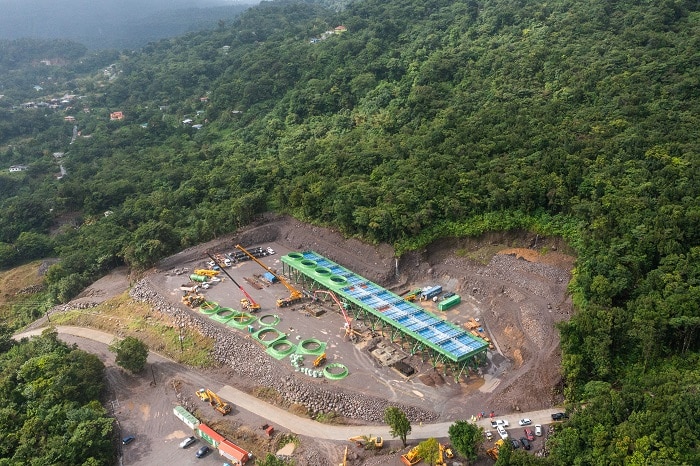
The volcanic islands of Dominica, Montserrat, Saint Lucia, Saint Kitts and Nevis, Grenada and Saint Vincent and the Grenadines have promising geothermal reservoirs. Their common geological characteristics offer a unique opportunity to produce renewable, stable and climate-independent electricity locally. Yet, despite this potential, geothermal energy cooperation in the Caribbean remains in its infancy. To date, only Dominica has embarked on the construction of a geothermal power plant, aiming to cover 50% of its electricity demand by the end of 2025.
The main stumbling block remains the high cost of exploratory drilling, estimated at several million dollars per well, not least due to the need to bring in a drilling rig from abroad. The lack of shared equipment at regional level is also a major obstacle.
To overcome these obstacles, the OECS has set up the GEOBUILD program (Geothermal Energy: Capacity Building for Utilization, Investment and Local Development). Co-financed by the Caribbean Development Bank (CDB) and implemented in partnership with the Caribbean Centre for Renewable Energy and Energy Efficiency (CCREEE), this program aims to structure geothermal cooperation in the Caribbean around three axes: capacity building, financial engineering and shared governance.
The main beneficiaries – Dominica, Saint Lucia, Grenada, Saint Vincent and the Grenadines and Saint Kitts and Nevis – take part in training workshops and technical exchanges, as well as field missions such as a visit to the Bouillante power plant in Guadeloupe. The aim is to create a regional geothermal energy culture adapted to local realities.
A shared drilling rig : towards concrete implementation
At the heart of this strategy, the pooling of a drilling rig is currently under study. The Italian company ELC-Electroconsult S.p.A., an expert in energy infrastructures, has been commissioned to assess the technical, economic and regulatory feasibility. The study explores scenarios for deploying the equipment in different member states, possible governance models and staff training requirements.
This geothermal energy cooperation initiative in the Caribbean would create a rotation schedule between territories, limiting mobilization and demobilization costs, while guaranteeing greater availability of the tool.
Pooling such equipment could generate substantial savings, with drilling costs cut by 20-30%. It would also make geothermal energy cooperation more competitive than the widespread use of oil-fired generators. What’s more, this approach would encourage the creation of technical jobs, the structuring of a regional industry and the revival of related activities such as engineering and industrial maintenance.
Geothermal energy cooperation in the Caribbean would also pave the way for new uses: heating agricultural greenhouses, thermal aquaculture, agri-food production, or even developing wellness tourism around natural hot springs.
Enhancing local skills
An essential aspect of the project is to increase the skills of local players. The aim is to reduce dependence on foreign experts by training specialized geologists, drillers, technicians and engineers. Partnerships are envisaged with regional universities such as the University of the West Indies (UWI) and the University of the West Indies to create appropriate curricula.
So geothermal energy cooperation in the Caribbean is not just a technical project: it’s part of a process of transforming educational, industrial and institutional systems, for the benefit of greater autonomy.
Financial partnerships and multilateral support
The initiative is supported by a number of international donors. In addition to the CBD, the project is supported by the European Union via the GCCA+ program, the Green Climate Fund and the Inter-American Development Bank. These players provide invaluable expertise in structuring the project in line with international standards, while ensuring that it is adapted to the specific characteristics of the islands.
The success of geothermal energy cooperation in the Caribbean will nevertheless depend on the political will of the governments concerned, their ability to share responsibilities, and the soundness of the legal mechanisms governing the use of the drill.
A collective ambition for the Caribbean of tomorrow
More than a technical project, geothermal energy cooperation in the Caribbean embodies a bold regional vision. By joining forces, the OECS countries are laying the foundations for an integrated, resilient and forward-looking energy strategy. If successful, geothermal energy cooperation in the Caribbean could become a model for other pooling initiatives in the fields of water, transport and health.
It bears witness to a shared conviction: in the face of global challenges, the Caribbean can build local, sustainable and mutually supportive solutions.
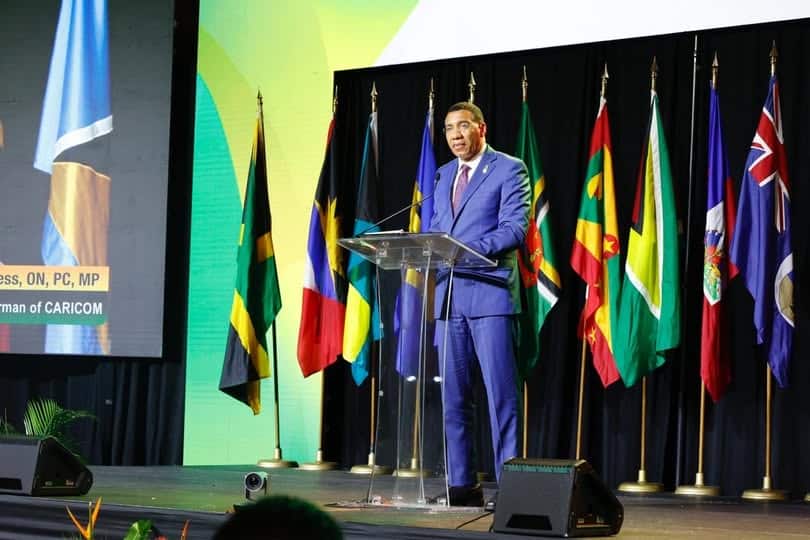
From July 6 to July 08, 2025, Montego Bay will vibrate to the rhythm of the 49th CARICOM Summit, where the Heads of State and Government of member countries will meet to discuss the major challenges facing the region. Chaired by Andrew Holness, Prime Minister of Jamaica, the atmosphere at this year’s summit is both solemn and charged with urgency, as each delegation has come with high expectations in terms of food security, economic resilience, the Haitian crisis and, above all, the overhaul of regional logistics.
The corridors of the Montego Bay Convention Centre are buzzing with strategic conversations, while plenary sessions alternate with thematic workshops, giving each territory the chance to make its voice heard.
A demanding regional context
Right from the opening of the 49th CARICOM Summit, the tone was set: the Caribbean is going through a pivotal period. Successive speeches by representatives from Barbados, Trinidad & Tobago, Saint Lucia and Dominica highlighted the reality of logistical disruption, dependence on costly air transport and the fragility of supply chains. The debates were lively, with each head of delegation insisting on the need for concrete and immediate solutions. Behind-the-scenes exchanges testify to a shared determination to make this summit a decisive moment for the region.
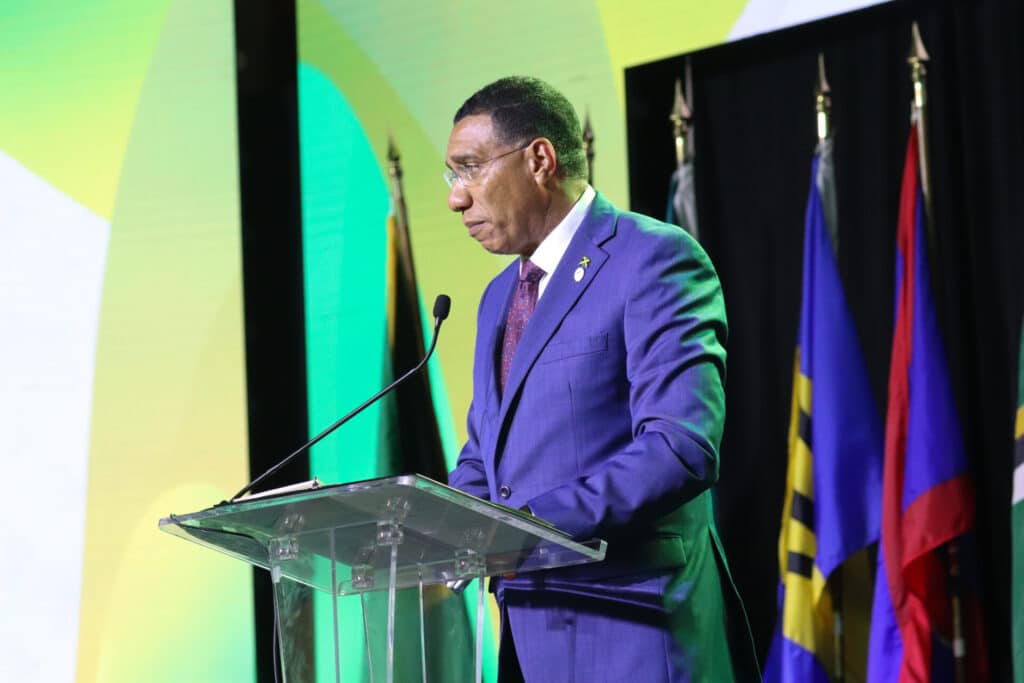
In his inaugural address, Andrew Holness reiterated the importance of strengthening cooperation and diversifying trade, while stressing the need for rapid responses to security and climate issues. His call for collective mobilization did not go unheeded: the 49th CARICOM Summit featured a series of round-table discussions on regional peace, the pooling of resources and the role of young people in building shared prosperity.
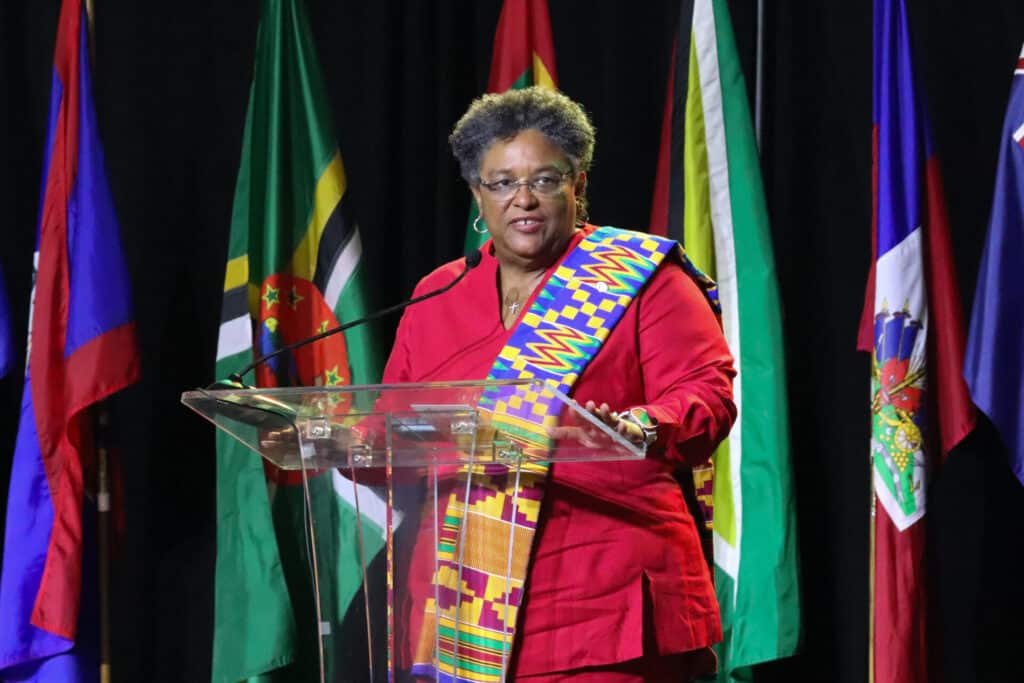
One of the highlights of the 49th CARICOM Summit was the address by Mia Mottley, Prime Minister of Barbados. With eloquence applauded by all participants, she painted a lucid picture of the logistical shortcomings holding back Caribbean development. Her voice, firm and poised, resonated in the auditorium as she spoke of the need for a “regional freight revolution”, stressing the urgent need to democratize transport and restore the sea to its historic role as a link between islands.
Mia Mottley was not one to rest on her laurels. She announced that two CARICOM member states are in advanced negotiations to acquire cargo aircraft, an initiative she believes will help to fluidify trade and guarantee the supply of essential goods. She also mentioned the expected presentation of a private-sector-led regional ferry project, which could revolutionize connectivity between the islands. These announcements, made at the heart of the 49th CARICOM Summit, were greeted with thunderous applause, a sign that the logistics issue is at the heart of our collective concerns.
Mia Mottley took advantage of her platform to point out that the success of these projects depends above all on the political will of leaders. She fondly evoked memories of the Federal Maple and Federal Palm, symbols of a time when the sea united the peoples of the Caribbean. Her plea, echoed in several sessions of the 49th CARICOM Summit, found particular resonance with the delegations, who recognized the need to overcome institutional inertia to build a modern, resilient regional logistics system.
The concrete contributions of the 49th CARICOM Summit for member territories
Food security and trade fluidity
Food security was one of the key topics discussed at the 49th CARICOM Summit. Participants emphasized that the establishment of new sea and air links, such as those mentioned by Mia Mottley, will ensure a steady supply of agricultural produce and essential goods. The exchange of best practices between the Ministers of Agriculture and the Economy testifies to a shared desire to optimize logistics circuits and strengthen the food sovereignty of each territory.
Strengthening economic integration and resilience
Discussions on economic integration have highlighted the importance of pooling resources and diversifying trading partners. The 49th CARICOM Summit’s announcements of public and private investment in regional freight pave the way for enhanced cooperation, enabling member territories to better withstand external shocks, whether economic, health-related or climatic. The participants agree that this edition represents a crucial milestone on the road to shared prosperity.
Outlook for youth and innovation
Throughout the workshops, Caribbean youth and technological innovation took center stage. The initiatives presented, whether in training programs, student mobility or support for entrepreneurship, illustrate the determination of leaders to prepare the next generation and give young people the means to become part of the regional dynamic. These perspectives, discussed in depth at the 49th CARICOM Summit, point to new, concrete opportunities for young people.
The 49th CARICOM Summit, catalyst for a new regional era
In Montego Bay, the 49th CARICOM Summit continues in a studious and determined atmosphere. Led by the likes of Mia Mottley and Andrew Holness, the region is taking a decisive step towards modernizing its infrastructure and deepening its integration. The discussions, rich and sometimes passionate, bear witness to a collective determination to transform challenges into opportunities and build a sustainable future for all the people of the Caribbean.
Philip J Pierre, Prime Minister of Saint Lucia, leads the delegation of the Organization of Eastern Caribbean States (OECS) to Washington, D.C., for a series of strategic discussions with the U.S. State Department. The meeting marks an important milestone in the relationship between OECS, Bahamas and the United States. The aim is to strengthen cooperation on major issues : economy, migration, security, diaspora and public health, while ensuring fair representation of small island economies in international decision-making.
A Caribbean delegation in solidarity in Washington
Broader political representation
The delegation, led by Philip J Pierre, includes several heads of government from OECS member states. The Bahamas, although not a member of the organization, is also taking part, demonstrating the regional scope of the initiative. Among those present: Dr Ralph Gonsalves (Saint Vincent and the Grenadines), Dr Ellis Webster (Anguilla), and Phillip Davis (Bahamas). Montserrat, Martinique and Guadeloupe were excused.
Clearly defined diplomatic objectives
Through this mission, Philip J Pierre intends to consolidate ties with Washington while defending regional priorities. As Chairman of the OECS Authority, he is emphasizing the common interests of these states, which are often marginalized in major international negotiations.
Economic cooperation is at the top of the agenda. Eastern Caribbean states want to access new markets, encourage investment and diversify their economies. For the United States, stability in the region is also a strategic issue.
Migration and human rights
Discussions also covered migration issues, including regularization, the fight against trafficking and the protection of migrants. The Caribbean diaspora in the United States is an essential vector for development, a subject on which Philip J Pierre insists strongly.
Strengthening regional security
In the face of cross-border trafficking and criminal threats, the OECS calls for greater support in terms of surveillance and prevention. However, Philip J Pierre stresses the importance of preserving the sovereignty of the states in the region, while working together effectively.
The structuring role of the diaspora
The Caribbean diaspora makes a significant contribution to the development of its countries of origin through remittances, economic initiatives and cultural transmission. OECS members, guided by Philip J Pierre, are keen to strengthen channels of dialogue and cooperation with this dispersed community.
Cuban medical program at the heart of diplomatic tensions
Vital health support for the Caribbean
In many states, the Cuban medical program compensates for the lack of health professionals, particularly in isolated areas or in times of crisis. Philip J Pierre recalls that Cuban aid was decisive during the COVID-19 pandemic and natural disasters.
American position and regional reactions
The United States, through officials such as Marco Rubio, denounces this program and is considering sanctions. However, several Caribbean governments, including those supported by Philip J Pierre, are defending this partnership, which is essential for their populations.
For OECS members, the United States remains a key partner. Philip J Pierre seeks to preserve this relationship, while asserting the specificities and needs of the Caribbean in a complex geopolitical context.
The vulnerability of small island economies
The OECS states are subject to multiple pressures : natural disasters, dependence on a few sectors, migration and difficulties in accessing financing. In Washington, Philip J Pierre argues for a differentiated approach that takes account of this structural fragility.
High expectations for the future
Strengthened regional diplomacy
The expected outcome of these talks goes far beyond declarations. Philip J Pierre hopes to obtain clear commitments on economic support, security cooperation, recognition of diasporas and continuity of health agreements.
Assertive regional leadership
With this mission, Philip J Pierre is demonstrating the OECS’s ability to speak with a united voice in major diplomatic forums. This approach illustrates our determination to defend the collective interests of the small nations of the Caribbean, without denying their specific characteristics.
By leading this delegation to Washington, Philip J Pierre confirms his central role in regional diplomacy. This dialogue between the OECS, the Bahamas and the United States highlights crucial issues for the future of the Caribbean : the economy, migration, security, health and international cooperation. Philip J Pierre’s firm yet open stance marks an important step towards greater recognition of Caribbean realities in global politics.
Montserrat and its exceptional biodiversity
Montserrat, the small Caribbean island, has just taken a crucial step towards protecting its biodiversity. biodiversity unique. In December 2024, the authorities launched the island’s National Biodiversity Strategy and Action Plan (NBSAP), marking a turning point in its conservation efforts.
Nestled in the heart of the Lesser Antilles, it is home to a surprisingly rich biodiversity. The island is one of the UK’s overseas territories, home to over 90% of the UK’s total biodiversity. This ecological importance contrasts with the island’s modest size, underlining the need for urgent action to preserve this natural treasure.
An ecological jewel under threat
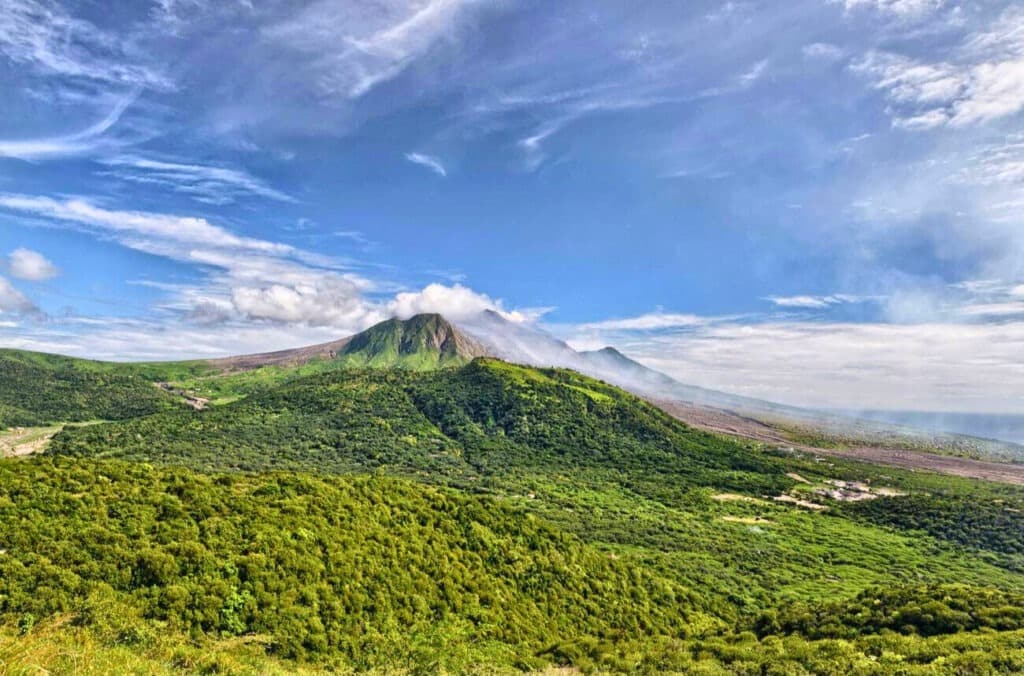
Known as the “Green Island”, the island is distinguished by its varied topography and breathtaking scenery. Dense tropical forests, sandy beaches and volcanic mountains make it an ideal habitat for many endemic species. However, this biodiversity is threatened by a number of factors, including climate change and human activities.
Volcan actif de Montserrat
Unique ecosystems to protect
Montserrat is distinguished by the diversity of its habitats, ranging from tropical rainforests to coral reefs and volcanic areas. The Centre Hills Forest Reserve, in particular, plays a crucial role as home to many endangered endemic species, such as the Montserrat oriole and the mountain frog. These species are not only ecologically valuable, but also constitute a cultural heritage for the island’s inhabitants.
An ambitious initiative supported by the OECS
The launch of NBSAP is part of the wider BioSPACE program (Biodiversity Support Program for Coastal Environments), an initiative funded by the European Union to the tune of 10.7 million euros. This program, coordinated by the Organization of Eastern Caribbean States (OECS), aims to strengthen biodiversity management throughout the Caribbean region.
Concrete actions to restore ecosystems
The plan’s key measures include :
The installation of an artificial reef to compensate for the loss of natural reefs due to volcanic eruptions.
The integration of this island into the Regional Environmental Data Portal, facilitating decision-making based on scientific data.
Setting up educational programs to raise local awareness of the importance of biodiversity.
A sustainable development model for the Caribbean
John Osborne, Montserrat’s Minister for Agriculture, Lands, Housing and the Environment, emphasizes the importance of this strategy: “The NBSAP will be tailored to Montserrat’s specific characteristics, addressing its challenges while building on its strengths. A well-designed strategy will be able to open up opportunities in ecotourism, sustainable agriculture and cottage industries, ensuring that the island’s natural heritage benefits all Montserratians.”
A collaborative and inclusive approach
The implementation of the NBSAP is based on extensive stakeholder consultation. Over the coming months, the Department of the Environment and the project planning team will be conducting bilateral meetings, field visits and workshops to ensure a truly collaborative approach.
Challenges for Montserrat
Despite the enthusiasm generated by this new plan, the island will have to face several challenges in its implementation:
Long-term financing of conservation actions
Managing the impact of climate change on island ecosystems
Reconciling economic development and environmental protection
Awareness-raising and ongoing involvement of the local population.
A ray of hope for Caribbean biodiversity
Montserrat’s initiative represents an important step towards more sustainable natural resource management in the Caribbean. By adopting a holistic approach that integrates conservation, economic development and community participation, the island is paving the way for a more environmentally-friendly development model.
At a time when the region is facing increasing threats from climate change and human pressure, Montserrat’s example could well inspire other islands to take similar steps. The future of the Caribbean’s rich biodiversity will depend on the ability of these island nations to strike a balance between preservation and development, a challenge that the island seems ready to meet with determination.
In conclusion, Montserrat’sbiodiversity is a crucial issue not only for the island, but for the entire Caribbean region. Through initiatives such as NBSAP, Montserrat is moving towards sustainability. It is essential that the island continues to strengthen its conservation efforts, while at the same time raising public awareness of the importance of preserving this natural heritage.
The future of biodiversity in the Caribbean depends on concrete action and collaboration between all stakeholders. Montserrat is on the right track, and hope remains for the preservation of its unique biodiversity.