
At Fort Oranje, the view descends toward the sea before rising again toward the verdant cone of the Quill. The cannons lined up along the ramparts serve as a reminder that here, on November 16, 1776, eleven shots were fired in response to a salute from an American ship. This historic scene offers a key to exploring Sint Eustatius, a Dutch Caribbean island where the landscapes preserve the memory of the world.
Sint Eustatius, where eleven gunshots rang out
On that day, the Andrew Doria entered Oranje Bay flying the flag of the rebellious American colonies. After the ship fired thirteen rounds, Governor Johannes de Graaff authorized Fort Oranje to return the salute with eleven rounds, in accordance with maritime protocol. The episode has become known as the “First Salute,” the first official tribute paid by a foreign authority to the new American flag.
The significance of this place, however, extends beyond the diplomatic event. From the ramparts, visitors immediately understand why the island was so important. The bay made it possible to monitor arrivals, protect trade, and connect the maritime routes between Europe, North America, and the Caribbean territories.
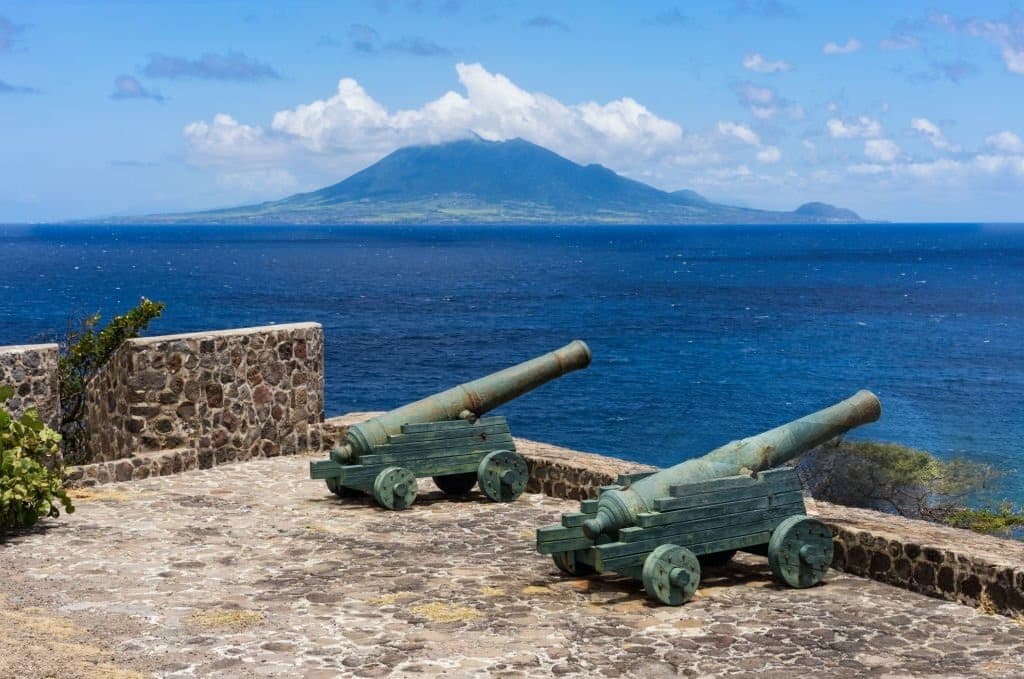
Sint Eustatius: Fort Oranje, the best starting point
Fort Oranje naturally separates Upper Town from Lower Town, the two distinct areas of Oranjestad. The upper part is home to government buildings and several historic sites. Further down, the road leads to the waterfront, the harbor, a few restaurants, and the ruins of the old commercial district.
The fort remains one of the island’s best-preserved monuments. In April 2026, management of the fort was officially transferred to the local government, just a few months before the 250th anniversary of the First Salute. This transfer of responsibility underscores a clear goal: to preserve a historic site without freezing it in time, so that it remains a place for gathering, remembrance, and passing on its legacy.
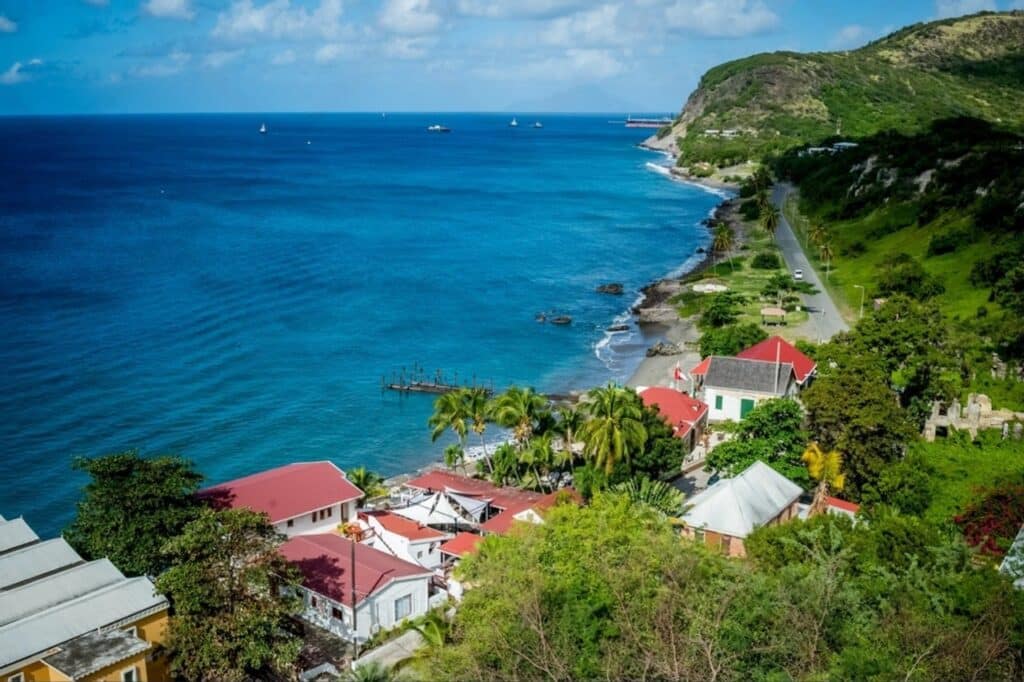
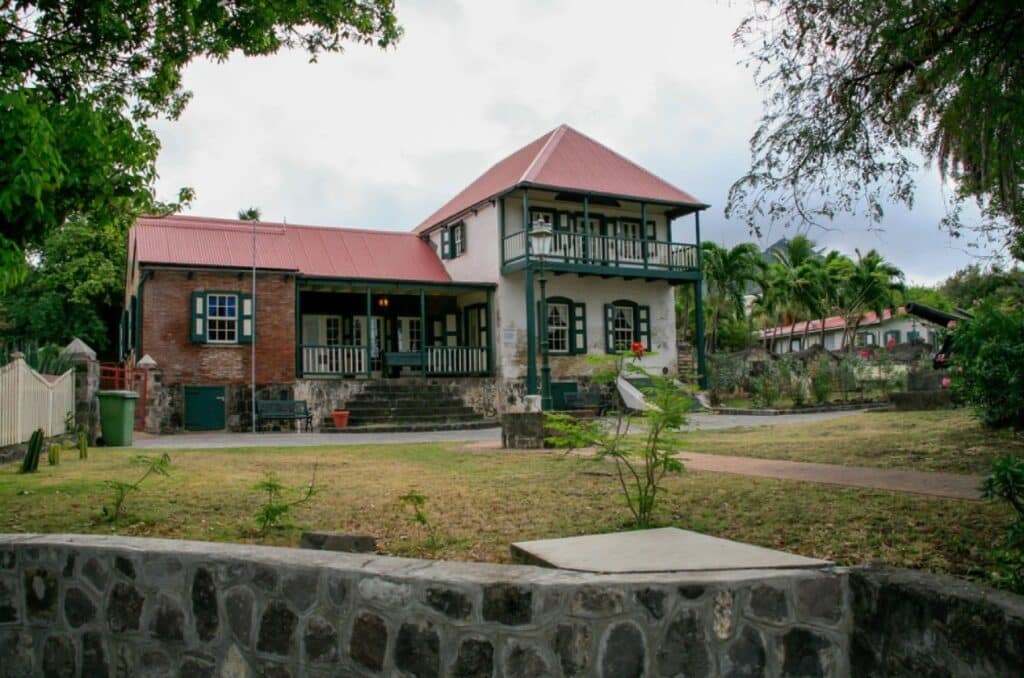
Oranjestad: A History to Explore
Heading down toward Oranje Bay means shifting from a panoramic view to an almost archaeological interpretation of the landscape. Lower Town preserves the ruins of warehouses, stone ovens, and brick structures dating back to the intense commercial activity of the 18th century. Some are now being eroded by the sea and bear the marks of hurricanes.
These ruins explain the nickname “Golden Rock” that Sint Eustatius was once given. Its free port attracted merchants from many different backgrounds and facilitated the flow of goods, weapons, and information. This prosperity was also based on slavery and the colonial system. The tour thus takes on its full significance when it combines the beauty of the site, its commercial power, and the memory of the exploited populations.
Sint Eustatius : Between Land-Based Heritage and Sunken Treasures
The story continues underwater. The marine park protects reefs, shipwrecks, and sites that can be explored with local dive operators. At Oranje Bay, snorkelers can see a submerged section of the old city wall. The sea hasn’t completely erased Lower Town—it has preserved part of it in a different way.

Sint Eustatius, from the Golden Rock to the greenery of the Quill
Just a few kilometers are enough to enter a whole new world. To the south, the Quill, a dormant volcano, dominates the landscape. Together with Boven National Park, it forms a network of seventeen trails totaling approximately twenty-one kilometers. Some trails wind through a semitropical forest, while others follow valleys lined with cacti or lead to overlooks of the Atlantic Ocean and the Caribbean Sea.
This proximity between fortifications, harbor ruins, the seabed, and volcanic terrain gives the island its unique rhythm. A morning might begin among the stone buildings of Oranjestad and continue along a shaded trail. Here, tourism isn’t based on a sheer number of attractions, but on the seamless blend of history, nature, and island life.

Why Visit Sint Eustatius in 2026?
The 250th anniversary of the First Salute is putting the island back in the spotlight. Exhibitions, heritage projects, and celebrations are set to culminate on Statia Day, November 16, 2026. For travelers, this year offers, above all, an opportunity to understand how a community tells its own story—one that is often presented from an American perspective.
The eleven cannon shots serve as an excellent starting point. They lead to a fort, a city straddling the hills and the shore, a former global port, a volcano, and a marine park. The real discovery begins after the famous story: what do we choose to listen to when a region reclaims its own history?
Sint Eustatius is particularly known for the First Salute. On November 16, 1776, Fort Oranje responded with eleven cannon shots to the American ship’s salute Andrew Doria. This event is considered the first official tribute paid by a foreign authority to the new American flag. The island was also an important free port in the 18th century, which earned it the nickname “Golden Rock.”
The main attractions in Sint Eustatius include Fort Oranje, Oranje Bay, the ruins of Lower Town, and the volcanic landscapes of the Quill. Visitors can also hike the island’s nature trails, see remnants of its former commercial district, and explore its marine heritage, which includes reefs, shipwrecks, and submerged historic structures.
The eleven cannon shots signify Fort Oranje’s reply to the salute from the Andrew Doria in 1776. This did not yet constitute full diplomatic recognition of the United States. Nevertheless, it represented a strong official gesture toward the flag of the rebellious American colonies. Today, this event links the heritage of Saint-Eustache to a major chapter in Atlantic history.
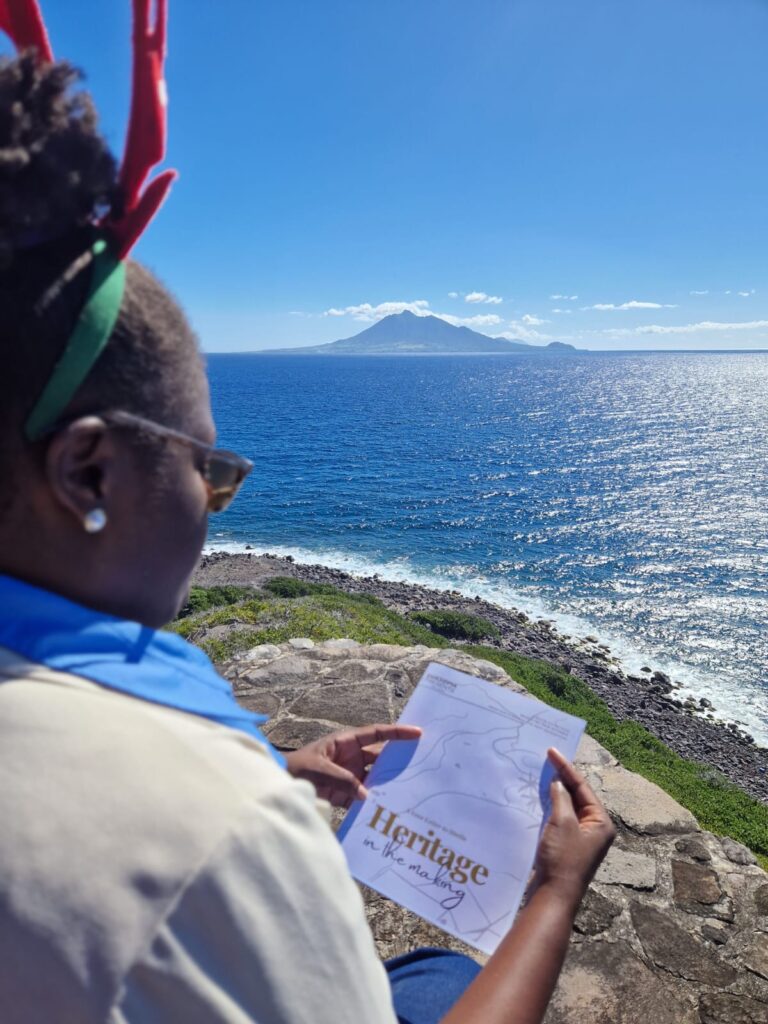
In St Eustatius, a small Caribbean island with a rich and often little-known past, transmission is not limited to history books. It is also built through words, living memory and collective commitment. This is precisely the ambition of the Heritage in the Making project, a community initiative that places senior citizens at the heart of the story and questions, with finesse, the St Eustatius cultural heritage in its human, social and forward-looking dimensions.
Supported by Euxtopia Innovations, this project took place over an entire year, in a deliberately long period of time. Time to listen, dialogue, create and, above all, recognize the central role played by seniors in shaping the island’s future. During the festive season, the seniors of St Eustatius received not a material gift, but a much more lasting one: recognition of their voice and their role in contemporary society.
Shaping stories, preserving living memory
The St Eustatius cultural heritage is more than just its colonial vestiges and volcanic landscapes. It lives in the memories, experiences and reflections of those who have seen the island evolve over the decades. Heritage in the Making is based on in-depth conversations with senior citizens, organized in the form of guided storytelling sessions and creative workshops.
These exchanges transformed memories, sometimes intimate, sometimes collective, into written accounts and visual works. Participants shared their concerns, their hopes and their vision of the future, contributing to a global reflection on the island’s social, economic and cultural changes. A process that goes beyond the simple preservation of the past to make memory part of an active, forward-looking dynamic.
A creative team at the service of the community
Under the direction of project manager EEdrieënna Brandao, a committed team accompanied the seniors throughout the process. Alongside community organizer Danielle Rivers, author Fí de Wit and content specialist Sabrina Richardson, the participants evolved within a structured, respectful and caring framework. The approach adopted was based on listening, dialogue and co-creation, ensuring that each voice was fully taken into account.
This methodology strengthened the sense of belonging and recognition, while building bridges between generations. By highlighting the stories told by our elders, the project also offered younger people a more nuanced and embodied reading of the past. St Eustatius cultural heritage far cry from fixed or institutional discourse.
Regional cooperation at the heart of the project
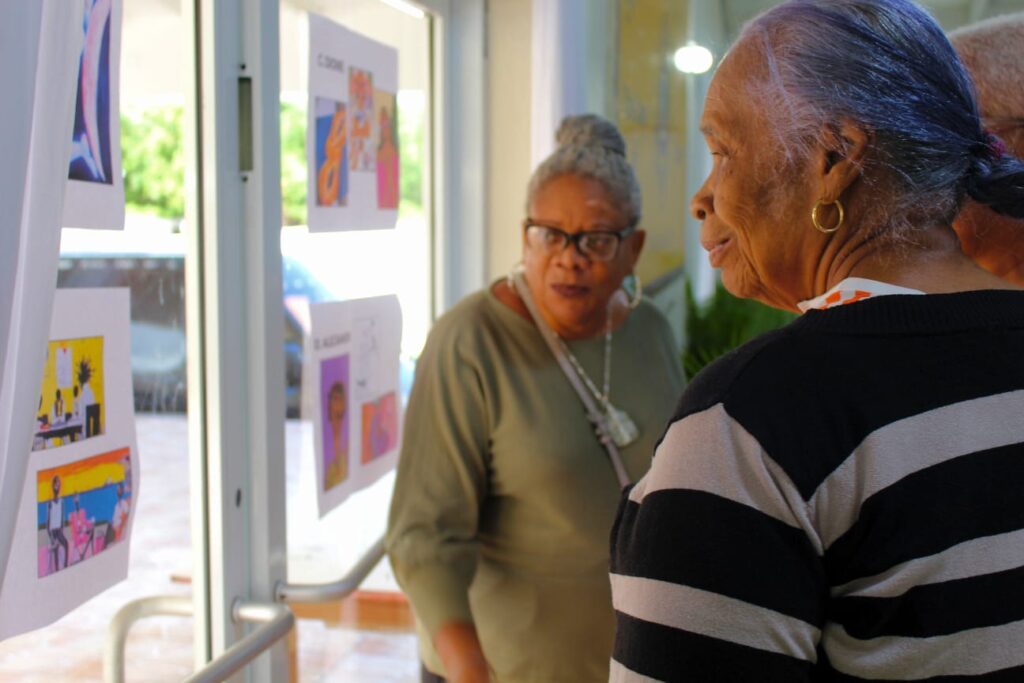
The initiative was distinguished by its regional openness. The collected stories took on a visual dimension thanks to the work of Curaçao-based digital illustrator Dione-Ariadne Bergland, whose works sensitively convey shared memories and emotions. Elton Villarreal, from Trini Inc, also led creative workshops, enabling senior citizens to play an active part in the artistic process.
This trans-Caribbean collaboration illustrates another facet of St Eustatius cultural heritage its place in a regional space where exchanges, influences and solidarity play a key role in contemporary creation.
Reflecting on the present to think about the future
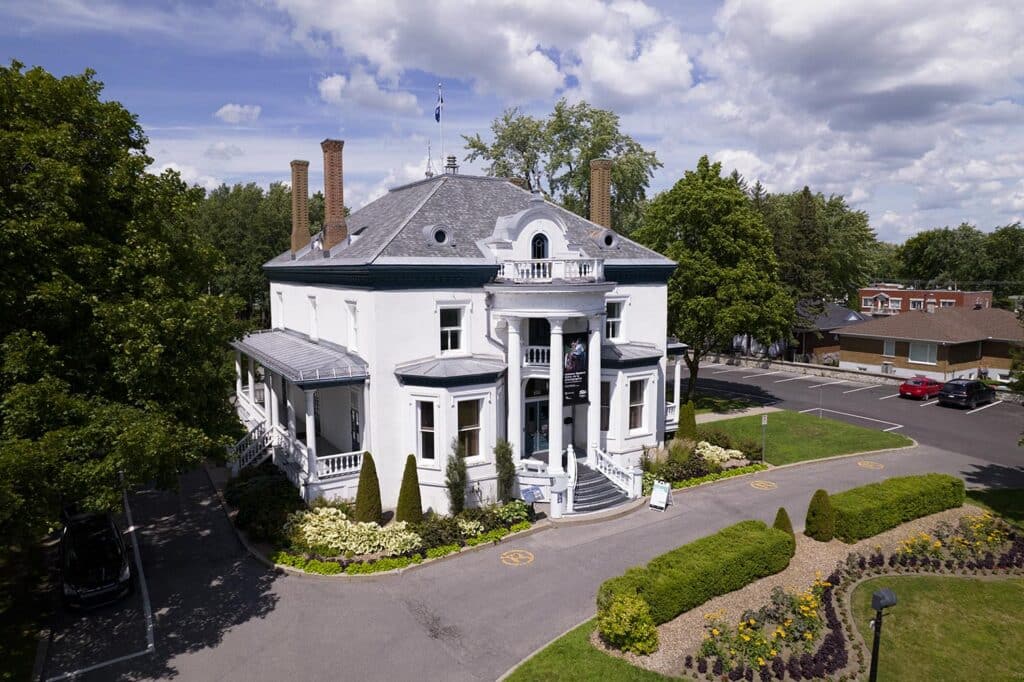
On December 6 and 7, brainstorming sessions addressed key themes such as culture, education, community vitality, banking services and infrastructure. These discussions enabled senior citizens to cross-reference their past experiences with their aspirations for the island’s future. An approach that gives the St Eustatius cultural heritage a resolutely political and civic dimension.
On December 10, a preview launch brought together participants to hear the first results of the project. This moment of sharing marked the culmination of a collective journey, and the recognition of the role of senior citizens as agents of change, rather than mere witnesses to the past.
A publication as archive and transmission tool
The stories and works from the project have been brought together in a carefully designed print publication. Both a cultural document and a community archive, this work helps to preserve local memory while inspiring future generations. It is fully in keeping with the logic of sustainable development of the St Eustatius cultural heritage by combining transmission, creation and civic commitment.
The project was supported by institutional and cultural partners, including the Fonds voor Cultuurparticipatie, Cultuurfonds Caribisch Gebied, local financiers and the Statia Roots Festival. A decisive support for an initiative that demonstrates that culture, when anchored in the territory, becomes a powerful lever for cohesion and collective projection.
Through Heritage in the Making, St Eustatius reminds us that its future is also built by listening to those who carry its memory. A valuable lesson for the Caribbean as a whole, where the St Eustatius cultural heritage is an example of living, participative and deeply human transmission.
Seniors are the bearers of a living memory, transmitted through direct experience. In St. Eustatius, their words document the social, cultural and economic history of the island, while feeding collective reflection on its future.
The project transforms oral histories into lasting written and visual archives. It contributes to preserving St Eustatius cultural heritage while making it accessible, shared and alive for future generations.
Heritage in the Making does more than simply preserve memory. It engages seniors in active reflection on contemporary issues – culture, education, infrastructure – and places the cultural heritage of St Eustatius in a forward-looking dynamic.
