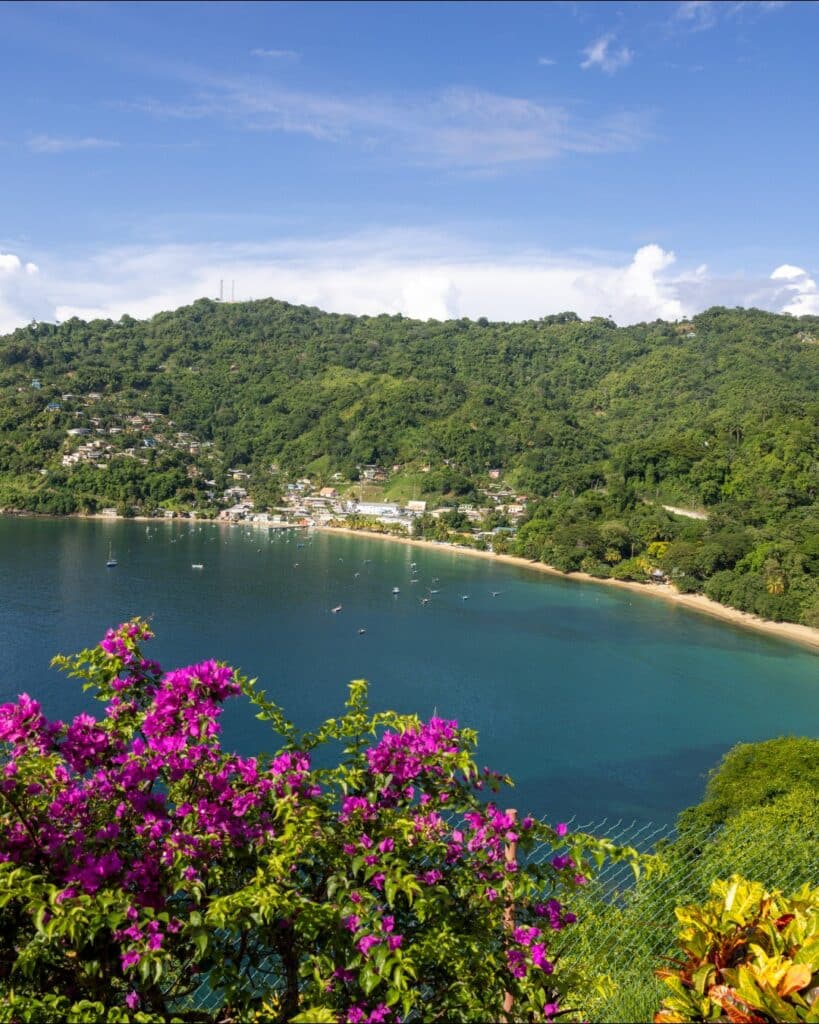
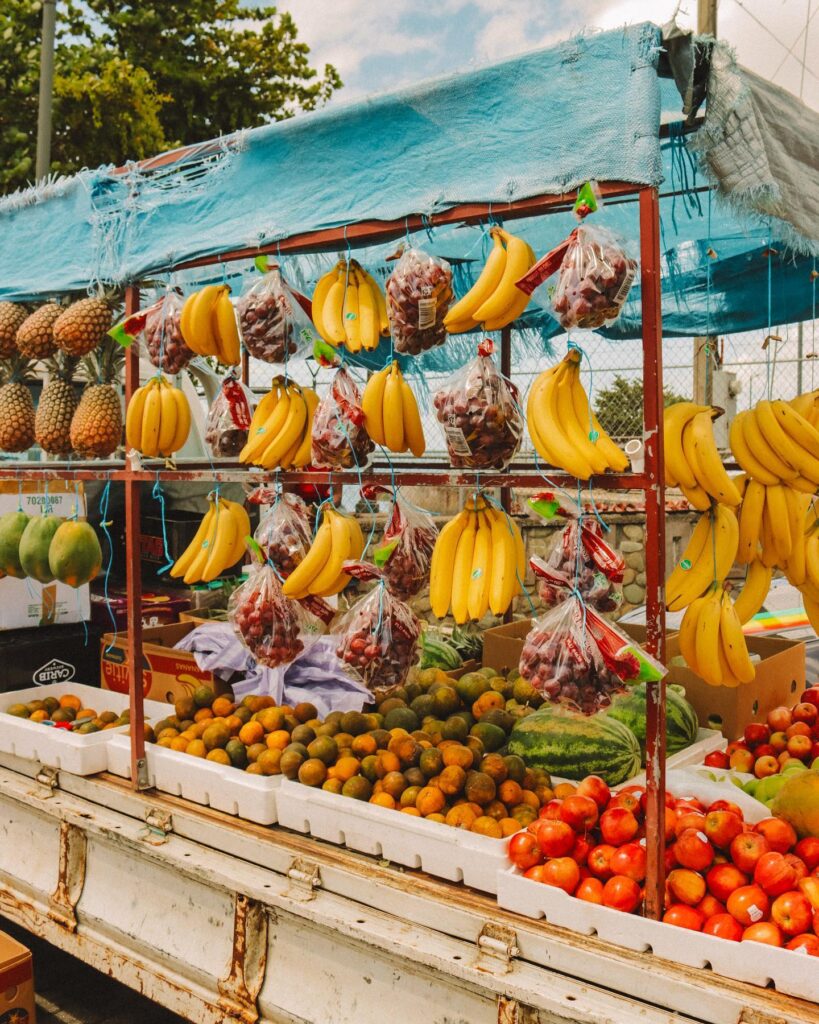
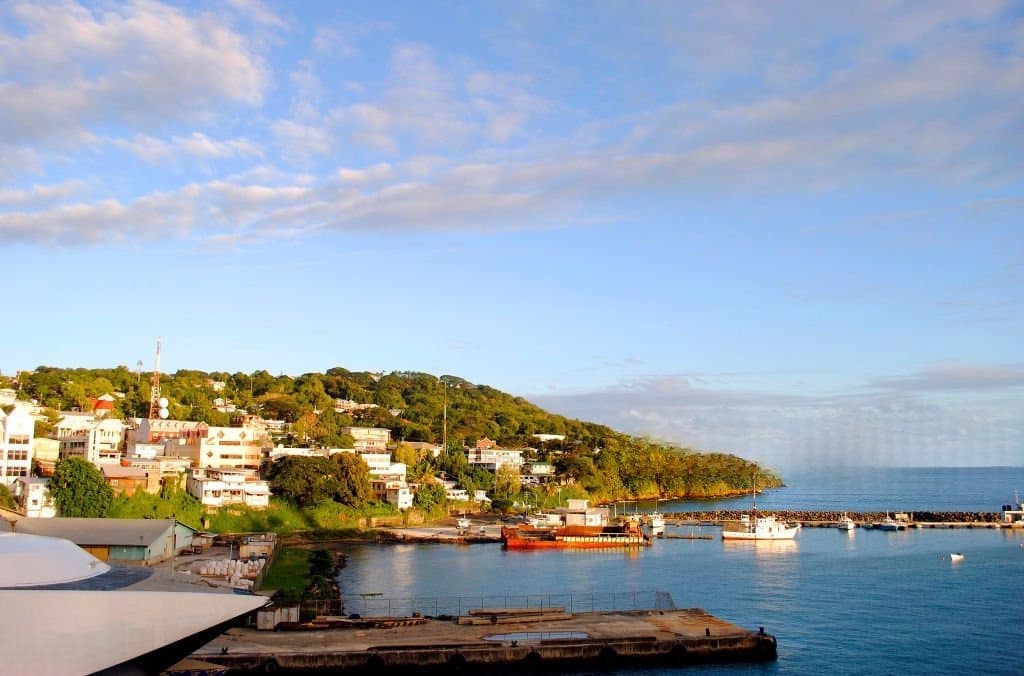
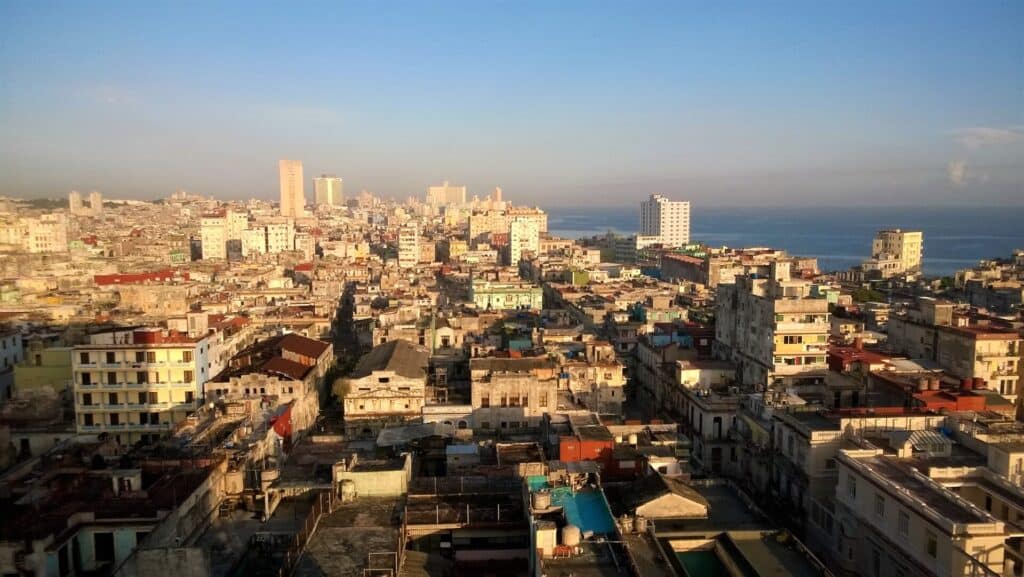
The integration of Richès Karayib into the Caribbean Broadcasting Union (CBU) marks a new stage in the development of Caribbean media. This membership formalizes Richès Karayib’s regional roots and reinforces its determination to actively contribute to the structuring of the Caribbean media landscape.

In a context where the circulation of content remains fragmented between linguistic and geographic territories, joining the Caribbean Broadcasting Union represents a strategic lever for boosting the visibility and circulation of Caribbean content.

The Caribbean Broadcasting Union, a pillar of the Caribbean media landscape

The Caribbean Broadcasting Union is the regional organization that federates the Caribbean media, covering radio, television, print and digital platforms. It plays a central role in cooperation between broadcasters, the circulation of content, the professionalization of players in the sector and the promotion of Caribbean productions.

Every year, the Caribbean Broadcasting Union organizes the CBU Media Awards. These awards recognize the most outstanding productions in radio, television, print and digital. These awards are a major event for Caribbean media professionals, helping to raise standards of journalistic and editorial quality in the region. By becoming a member of the Caribbean Broadcasting Union, Richès Karayib joins a structured and recognized network at the heart of regional media dynamics.

Richès Karayib

A strategic step for Richès Karayib

Since its creation, Richès Karayib has been promoting culture, heritage, tourism and the women and men who shape the Caribbean’s attractiveness and influence. Membership of the Caribbean Broadcasting Union consolidates this trajectory by opening up new prospects:

  • – publishing cooperation on a regional scale
  • – increased circulation of content
  • – professional exchanges between member media
  • – enhanced visibility with institutional and economic players

Joining the Caribbean Broadcasting Union also enables Richès Karayib to place its productions within a demanding regional framework, where content quality, journalistic rigor and editorial impact are decisive. This new step comes at a time when the medium is developing its print, digital and audiovisual formats, with a clear ambition: to connect Caribbean territories beyond linguistic borders.

Richès Karayib

Building a structured Caribbean media space

The Caribbean is rich in talent, culture and initiative. However, content produced in one territory is still not widely distributed to other islands and countries in the region. One of the major challenges of the Caribbean Broadcasting Union is precisely to promote this circulation and encourage regional collaboration.

By joining the Caribbean Broadcasting Union, Richès Karayib is affirming its desire to play an active part in this dynamic. This is not just institutional recognition, but a commitment: to contribute to a more connected, visible and structured Caribbean media.

This approach is in line with Richès Karayib’s mission to promote the region’s talents, initiatives and heritage, while encouraging synergies between regions.

Setting course for the CBU Media Awards

As part of this membership, Richès Karayib will take part in the 37th CBU Media Awards organized by the Caribbean Broadcasting Union. Richès Karayib’s participation is in line with the company’s commitment to professionalization and regional outreach.

Beyond the competition, the CBU Media Awards represent a space for Caribbean media to meet, exchange ideas and gain visibility. For RK, it’s a further opportunity to promote a committed editorial voice in the service of the Caribbean.

Richès Karayib

A new development phase

Joining the Caribbean Broadcasting Union marks a natural evolution for Richès Karayib. After consolidating its presence in the French-speaking Caribbean, the medium is now taking a decisive step towards wider regional integration.

In a changing media environment, where cooperation, editorial quality and international visibility are essential, joining the Caribbean Broadcasting Union is a strong signal.

Richès Karayib’s ambition is to contribute to a more visible, coherent and assertive Caribbean media.

The Caribbean Broadcasting Union (CBU) is the regional media organization for the Caribbean, covering radio, television, print and digital platforms. It promotes cooperation, the circulation of content and the professionalization of players in the sector.

Membership of the Caribbean Broadcasting Union enables Richès Karayib to join a structured regional network, boost its visibility on a Caribbean scale and develop editorial collaborations with other member media.

The CBU Media Awards are an annual competition organized by the Caribbean Broadcasting Union to recognize the best radio, television, print and digital productions in the region.

Black History Month 2026 is more than just an annual commemoration in the American cultural calendar. February 2026 marks a major historical turning point: the centenary of what was to become Black History Month. A century earlier, in 1926, an intellectual and activist initiative laid the foundations for an in-depth effort to correct a glaring absence: that of the history of black populations in official narratives and educational programs.

In 2026, Black History Month celebrates more than symbolic longevity. It invites us to question the way societies produce, select and transmit their memories, as well as the power relations that determine what deserves – or not – to be taught, recognized and commemorated.

Origins of Black History Month: from Negro History Week to national recognition

The history of Black History Month officially began in 1926 with the creation of Negro History Week the initiative of African-American researchers united within the Association for the Study of Negro Life and History. At a time when black history is largely absent from school textbooks and universities, this initiative aims to produce rigorous, documented and transferable knowledge about the contributions of people of African descent to the United States.

From the outset, the challenge went beyond mere symbolic recognition. It’s about rebalancing the historical narrative, based on research, archiving and educational dissemination. Negro History Week gradually became a space for contesting dominant narratives, highlighting trajectories, struggles and creations long relegated to the margins.

Black History Month 2026
“‘Negro Week’ Program Set” -Scrantonian Tribune, Scranton PA, page 4, Feb. 14, 1954.

2026, a pivotal year: the centenary of Black History Month

A century after this first initiative, Black History Month 2026 is part of a dynamic of historical rereading. The transformation of a week of commemoration into an officially recognized month in the mid-1970s marked an important, but not definitive, step in the institutional recognition of black history.

The theme chosen for this edition, “A Century of Black History Commemorations”. A century of commemorations is an opportunity to take a critical look at the road we’ve travelled. The aim is not simply to measure the progress made, but to analyze the profound dynamics revealed by a century of commemorations: tensions between institutions and communities, issues of educational transmission, struggles for historical legitimacy.

Black History Month 2026

Miami, Afro-American and Afro-Caribbean crossroads for Black History Month 2026

In this context, Miami occupies a singular place in the celebrations of Black History Month 2026. As a crossroads between North America, the Caribbean and Latin America, Miami embodies a transatlantic black memory, shaped by migration, exile and cultural circulation.

The programming supported by local and community institutions reflects this plurality. It articulates African-American and Afro-Caribbean heritages, underlining the historical continuity between the United States and the Caribbean. In Miami, Black History Month is not just a tribute to the past, but a living space for diasporic dialogue.

Black History Month 2026 program in Miami: highlights

Ceremonies and times of remembrance

  • – February 1st – Trayvon Martin Remembrance Gala
  • – February 2 – Dr. Martin Luther King, Jr. and Pieces of Black History Exhibition
  • – February 3rd – HistoryMiami Icon Awards

– Institutional launches and public events

  • – February 6th – Black History Month Kickoff and Exhibit (Miami-Dade County)
  • – February 20th – Black History Month Food Truck & Vendor Fair

Music, jazz, gospel and stage creations

  • – Concerts and performances throughout the month at the Adrienne Arsht Center, the New World Center and the African Heritage Cultural Arts Center
  • – Jazz, spirituals and gospel highlights, including creations dedicated to Malcolm X, Langston Hughes and Margaret Bonds
  • – Symphonic and vocal programming combining Afro-American heritage and contemporary expression

Festivals, gastronomy and diasporic culture

  • – Heritage Fest (February 7)
  • – Culinary events integrated into the South Beach Wine & Food Festival, with an explicit focus on Afro-Caribbean cultures
  • – Cultural brunches and community gatherings in Miami’s historic neighborhoods

Exhibitions and events throughout February

  • – Art exhibitions at Historic Hampton House, Pérez Art Museum Miami and in the public library network
  • – Heritage tours and Black History Bus Tours of historic black neighborhoods
  • – Screenings, performances and educational activities throughout the month
Black History Month 2026

Black arts, music and heritage: passing on a living history

Black music and collective memory

Music takes center stage at Black History Month 2026. Jazz, gospel, spirituals and contemporary creations tell the story of a black sound that spans the centuries. These musical forms bear witness to resistance, adaptation and cultural transmission from African and Caribbean worlds, transformed in the American context.

Through concerts and performances, music becomes a tool tool of memory capable of linking the history of slavery with contemporary artistic expression.

Visual arts, exhibitions and urban narratives

The exhibitions and heritage projects presented during Black History Month 2026 contribute to a critical re-reading of urban and social history. They shed light on long-invisibilized narratives, rooted in the neighborhoods, cultural practices and individual trajectories of black communities.

Afro-American and Afro-Caribbean gastronomy: an embodied cultural history

Gastronomy is another essential vector of transmission. Afro-American and Afro-Caribbean cuisines tell a story of constraint, inventiveness and resilience. Born of contexts marked by slavery and migration, they have established themselves as cultural heritages in their own right.

As part of Black History Month 2026, the showcasing of these culinary traditions highlights the historical circulations between the Caribbean and the United States, as well as the contemporary recognition of these heritages.

The Caribbean, an essential dimension of Black History Month 2026

Even when the Caribbean is not explicitly named, it remains omnipresent in Black History Month 2026. Caribbean migrations have profoundly shaped black American cultures, influencing music, religious practices, cuisine and intellectual movements.

Miami illustrates this historical continuity, where Afro-Caribbean and Afro-American narratives intersect and respond to each other. The Caribbean thus appears not simply as a background, but as a structural component of black history in the United States.

Black History Month 2026

A century of commemoration: passing on long-marginalized stories

The centenary of Black History Month raises a fundamental question: how does a society choose to pass on the stories it has long marginalized? The recognition of black history has never been a linear process. It is the result of intellectual struggles, community mobilizations and ongoing institutional negotiations.

In 2026, Black History Month presents itself not as a finished celebration, but as a critical tool for the present. It reminds us that history is a field of debate, where dominant narratives can and must be interrogated.

Black History Month 2026 marks the centenary of Negro History Week, created in 1926 by African-American scholars to document and transmit the history of black populations, long absent from mainstream narratives. This centenary edition invites critical reflection on a century of commemorations and the transmission of historical knowledge.

Miami is a unique Afro-American and Afro-Caribbean crossroads. In 2026, the city will host a dense program of memory, arts, music, gastronomy and heritage, illustrating the historical links between the United States and the Caribbean in the construction of contemporary black cultures.

Yes, the black history of the United States is inseparable from Afro-Caribbean migration and heritage. Black History Month 2026 highlights these cultural circulations, particularly in Miami, where Caribbean music, cuisine and stories play a central role in the celebrations.

The Caribbean coral reefs are one of the region’s most precious natural pillars. They protect coasts, feed populations, support tourism and harbor exceptional biodiversity. Yet this strategic ecosystem is undergoing an unprecedented crisis. In just over forty years, almost half of all hard corals have disappeared, under the combined effect of global warming and increasing human pressure. Behind this silent erosion lies a central issue for the future of the Caribbean territories: their ecological, economic and social resilience.

Caribbean coral reefs: a historic loss since 1980

Data compiled by the Global Coral Reef Monitoring Network have drawn a stark conclusion. Between 1980 and 2024, hard coral cover in the Caribbean fell by 48 %. This decline occurred in fits and starts, during several episodes of mass mortality, often correlated with major climatic anomalies.

Some years were marked by abrupt changes. In 1998 and again in 2005, widespread bleaching episodes led to major losses. More recently, the 2023-2024 period has been marked by a further fall estimated at 16.9% reduction in coral cover in a single year. This is a direct consequence of exceptionally high ocean temperatures. These figures now place Caribbean reefs among the world’s most threatened marine ecosystems.

Caribbean coral reefs

Coral bleaching and thermal stress: the causes of the decline

Warming waters and record-breaking sea temperatures

The main factor explaining the decline of Caribbean coral reefs is ocean warming. In the region’s reef zones, the average surface temperature has risen by around 1.07°C between 1985 and 2024 at a rate higher than that observed on a global scale. In 2023, some areas recorded temperatures exceeding 30°C for several weeks. This is a critical threshold for coral survival.

Ocean acidification and coral disease

Under the influence of heat or pollution, corals expel zooxanthellae, the symbiotic microalgae that provide them with most of their energy. This phenomenon, known as bleaching, permanently weakens colonies. When the stress is prolonged, mortality becomes inevitable. Added to this is ocean acidification, linked to the absorption of atmospheric CO₂, which weakens the calcareous structures of corals and encourages the onset of disease.

Caribbean coral reefs

Why are Caribbean coral reefs essential to biodiversity?

Although they only cover about 1% of the seabed coral reefs are home to almost 25% of the world’s marine biodiversity . In the Caribbean, they provide essential habitat for hundreds of species: parrotfish, lobsters, conch shells, sea turtles and coastal sharks.

The gradual disappearance of coral leads to a cascading cascade collapse associated ecosystems. Degraded reefs are gradually being invaded by macroalgae, whose presence has increased by more than 80% since 1980. This transformation is accentuated by the over-fishing of herbivorous fish, which used to play a key role in maintaining the reef’s ecological balance.

Caribbean coral reefs

A major economic impact for Caribbean territories

Coastal tourism and coral reefs

The Caribbean coral reefs represent a major economic driver. Their contribution is estimated at more than $6 billion a year. In many areas, these activities are an essential part of the local economy and employment. In many areas, these activities are an essential part of the local economy and employment.

Caribbean coral reefs

Artisanal fishing and food security

Reefs also serve as breeding and feeding grounds for many species exploited by artisanal fishing. Their degradation directly threatens the food security of already vulnerable coastal communities.

Caribbean coral reefs

Natural coastal protection against storms

Last but not least, reefs act as a natural natural barrier against coastal erosion and cyclonic swell. Their weakening exposes Caribbean coasts to increased risks of flooding and forces states to invest in costly artificial infrastructures.

Human pressure and urbanization: vulnerability specific to the Caribbean

The specificity of the Caribbean lies in the high human density in the vicinity of reefs. Since the early 2000s, the population living within 20 kilometers of these ecosystems has increased by nearly 30 %. This concentration results in increased coastal pollution, inadequate sanitation systems, poorly regulated tourism and rapid coastal urbanization.

The Caribbean coral reefs are undergoing a double shock: local pressure from human activities and the global impact of climate change, two mutually reinforcing dynamics.

Caribbean coral reefs

Can the Caribbean's coral reefs still regenerate?

Marine protected areas and ecological corridors

Despite the gravity of the situation, some areas are showing signs of resilience. Particularly resilient coral colonies have been identified in the southern Gulf of Mexico, some of them disease-free and home to critically endangered species. These discoveries have led to the creation of interconnected marine protected areas, encouraging the circulation of species and the natural regeneration of reefs.

Coral restoration and natural resilience

Restoration programs, based on coral nurseries and targeted transplants, demonstrate that recovery is possible when human pressures are reduced. As the United Nations Environment Programme, science shows that reefs can recover if coherent policies of protection, fisheries management and pollution reduction are implemented.

The loss of almost half of the Caribbean’s coral reefs since 1980 marks a historic turning point. It reveals the limitations of current management models, and underlines the urgent need for an integrated approach that brings together science, public policy and local stakeholders. The survival of the reefs will largely determine the environmental, economic and social future of the Caribbean.

Coral reefs in the Caribbean are disappearing mainly due to global warming, which is causing massive bleaching episodes, combined with ocean acidification, coral disease and local human pressures.

They support tourism, fishing and coastal protection. Their degradation leads to significant economic losses and increases the costs associated with erosion and coastal infrastructure.

Yes, when human pressures are reduced and effective protection measures put in place, some reefs show a real capacity for resilience and regeneration.

Tobago is often summed up in a few words: beaches, reefs, nature. Yet the island deserves more than a quick summary. Small in size but dense in what it has to offer, the island embodies a thoughtful Caribbean, where the territory has never yielded to excess. Here, tourism has developed without overshadowing local life, and nature remains a structuring framework.

Tobago
©Tobago
Tobago
Tobago

A separate island within Trinidad and Tobago

Situated in the south of the Caribbean arc, it has formed an independent state with Trinidad since 1962. Unlike its big industrial sister, the island has retained a resolutely insular profile. The island covers just over 300 km² and has a population of around 60,000. This small scale has a direct influence on the visitor experience: short distances, limited traffic, simple human relationships.

Scarborough, the capital, concentrates the administration and part of the commercial activity. Elsewhere, coastal villages and rural areas structure daily life. It’s not trying to compete with the big seaside destinations; it’s asserting a different logic, based on continuity and stability.

Tobago

Nature protected for centuries

One of Tobago’s strong points is its long-standing commitment to environmental protection. Buccoo Reef Marine Park officially created in the 1970s, is one of the oldest protected marine areas in the Caribbean. This shallow reef plays a central role in the coastal ecosystem and in the local economy, notably through artisanal fishing and supervised nautical activities.

Tobago
©Buccoo Reef Trust
©Buccoo Reef Trust

Inland, the Main Ridge Forest Reserve established in 1776, is often cited as the world’s oldest protected forest reserve. This forest covers a large part of the island’s backbone, helping to regulate the climate, preserve the soil and feed watercourses. For visitors, it offers a distinct counterpoint to the beaches: shady paths, gentle slopes, wildlife observation.

Tobago
©Stephen Kangal
Tobago
©Stephen Kangal
Tobago
©Stephen Kangal

Open, unstaged beaches

The island’s beaches are numerous and varied. Some, like Pigeon Point and Store Bay, are easily accessible and well developed. Others, on the east coast, are more exposed to the wind and less frequented. What they all have in common is the absence of massive beachfront constructions. Beaches remain public spaces, integrated into daily life.

This configuration attracts family tourism, independent travelers and visitors looking for extended stays. The island is not a quick stopover destination; it can be discovered over several days, sometimes weeks.

Tobago
©Tobago
Tobago

A culture rooted in continuity

The culture is the result of a long mixing of African heritage, British influences and Caribbean contributions. The English language structures the public space, but cultural practices remain profoundly local. Music, cuisine and community festivities are first conceived for the locals before being shared with visitors.

The Tobago Heritage Festival organized each year, illustrates this approach. It showcases villages, oral histories, dances and skills, without excessive staging. For the visitor, it’s an opportunity to observe a living culture, not a static one.

Tobago
Tobago
©Tobago
Tobago
Tobago Tourism Agency
Tobago
©Tobago heritage Festival

Controlled tourism

Accommodation on the island is deliberately modest. There are medium-sized hotels, guest houses and independent rentals. Large resorts are rare and concentrated in specific areas. This strategy limits pressure on infrastructure and natural resources.

Local authorities, including the Tobago House of Assembly. The local authorities play a central role in regional planning. Decisions relating to tourism, the environment and transport are often taken on an island-wide basis, which reinforces the coherence of the choices made.

A clear destination for travellers

Tobago is accessible by regional and international flights via A.N.R. Robinson International Airport. Entry formalities are straightforward for many travelers, and the island has sufficient infrastructure for a comfortable stay without excess.

For tourists, it represents a well-balanced destination: beaches, nature, culture and services are all present, without permanent competition between these elements. The island doesn’t seek to surprise, but to last.

Tobago
©Tobago

Highlighting the island today means underlining that another trajectory is possible in the Caribbean. That of an island that has chosen protection, moderation and continuity. It’s not spectacular for its accumulation, but for the coherence of its model.

For travelers with an eye for how a territory develops, the island offers a rare example: an island that welcomes visitors without transforming itself excessively.

Tobago lies to the south of the Caribbean arc. Together with Trinidad, it forms the independent state of Trinidad and Tobago, off the coast of Venezuela.

Tobago is characterized by deliberately limited tourism, strong protection of its reefs and forests, and local life that is still very much alive.

Yes, the island offers a stable environment, sufficient infrastructure and a pace of life conducive to stays of several weeks, without excessive tourist pressure.

From November 22 to November 30, 2025, the Caribbean Film Days festival is underway online. For the first time, a space entirely dedicated to Caribbean cinema brings together more than forty works accessible anywhere in the world, at any time. The event, the result of a collaboration between Caribbean Creativity and the Caribbean Chamber of Commerce in Europe, transforms the month of November into a time of cultural sharing and solidarity, in aid of the populations affected by Hurricane Melissa.

Caribbean Film Days doesn’t just show films: it builds bridges. A link between the islands, between the diaspora and the territories of origin, between art and social reality, between memory and the future. For a public often far removed from traditional cinemas or deprived of access to Caribbean films, it’s a rare, almost unique opportunity to enter into stories that tell the region from the inside.

A festival designed to be seen everywhere

Unlike physical festivals, Caribbean Film Days requires no travel, no reservations and no set times.

How to watch movies?

  • – visit the YardVibes platform,
  • – browse the catalog,
  • – choose a film,
  • – rent it via Vimeo on Demand,
  • – and watch it streaming, at any time of day.

No geographical constraints: Europe, the Americas, the Caribbean, Oceania: everyone can take part.

Caribbean Film Days
©Caribbean Creativity
Caribbean Film Days
©Caribbean Creativity

A cinema that tells the story of the islands as they live

To appreciate a festival, you have to understand what it shows. Caribbean Film Days isn’t just a list of titles: it’s a mosaic of Caribbean realities, from its music to its struggles, from its creativity to its contradictions.

Here are just a few examples of the works on offer at Caribbean Film Days:

  • “Kanaval” (Haiti – Dominican Republic): a powerful feature film about identity, migration and memory.
  • “Jocelyne Béroard, At Heart”: a sensitive portrait of the zouk icon and her influence in the Caribbean.
  • “Joseph” (Barbados – Jamaica – Ghana): a quest for origins linking the Americas to Africa.
  • “Stones Have Laws” (Suriname): an immersion in Maroon traditions and their relationship with the land.
  • “Heart of Haiti”: a journey to the heart of Haitian artistic creation.
  • “Why Do Jamaicans Run So Fast?” an intimate look at Jamaican athletes and their heritage.

Documentaries, fiction, archives, independent projects, artistic experiments: this is a complete panorama of Caribbean cinema, too often absent from international platforms. The aim of this program is clear: to show a Caribbean that is not just beaches or tourist clichés, but one that expresses itself through voices, faces, struggles and dreams.

Caribbean Film Days
©Caribbean Creativity
Caribbean Film Days
©Caribbean Creativity
Caribbean Film Days
©Caribbean Creativity

A festival in support of the islands affected by Hurricane Melissa

Caribbean Film Days

This first edition of Caribbean Film Days would not have the same scope without the context in which it takes place.

Hurricane Melissa left a devastating mark on the region, particularly in Jamaica, Cuba, Haiti and the Dominican Republic.

The rains, destruction and loss of life have left a deep mark on communities.

Caribbean Film Days has chosen to act on its own scale. Each film rental generates a donation, which goes entirely to reconstruction and support initiatives.
Watching a film means :

  • – support affected families,
  • – contribute to infrastructure rehabilitation,
  • – a gesture of solidarity that goes beyond words.

It’s an ethical stance: the Caribbean, while contributing very little to global emissions, is exposed to the most violent consequences of climate change.

This festival reminds us of this injustice by giving a central role to culture.

Caribbean Film Days
©Caribbean Creativity
Caribbean Film Days
©Caribbean Creativity

A rendezvous for the diaspora and fans of Caribbean culture

For many, watching “a film from home” means reconnecting with a language, an accent, a landscape, a way of telling a story. The Caribbean diaspora in Europe and North America will find in the festival a way to reconnect with universes that are similar to their own. For non-Caribbean audiences, it’s an essential discovery: the Caribbean isn’t just a vacation zone, it’s a region with social, political and artistic dynamics that deserve to be understood.

The online format also makes it possible to engage a younger audience, often accustomed to streaming platforms, but with little exposure to Caribbean cinema.

Why does this festival matter today?

Caribbean Film Days
©Caribbean Creativity

Caribbean Film Days fills a void. A gap in access, a gap in distribution infrastructure, a gap in international recognition.

They show that :

– the Caribbean has a solid, diverse and meaningful film production;

– solidarity can take the form of a cultural gesture;

– a film can link territories that sometimes don’t intersect;

– the stories told by Caribbean people have their place in global digital spaces.

Caribbean Film Days
©Caribbean Creativity
Caribbean Film Days
©Caribbean Creativity
Caribbean Film Days
©Caribbean Creativity
Caribbean Film Days

How to get involved

  • ▶️ Go to YardVibes (official platform).
  • ▶️ Choose one of the films below.
  • ▶️ Rent it via Vimeo on Demand.
  • ▶️ Watch, share, recommend.
  • ▶️ Every viewing contributes to Melissa’s post-hurricane relief efforts.

FAQ

Simply visit YardVibes, choose a film and rent it via Vimeo on Demand. Viewing is available 24/7.

Over forty works from Caribbean cinema: documentaries, fiction, portraits, historical accounts and musical films.

Yes, all proceeds from film rentals during Caribbean Film Days are donated to Hurricane Melissa relief and reconstruction initiatives in Jamaica, Cuba, Haiti and the Dominican Republic.

In 1978, in the heart of Trinidad and Tobago carnival, a woman shook the foundations of a male-dominated world. Calypso Rose, real name Linda McArtha Monica Sandy-Lewis, became the first woman to win the prestigious Calypso Monarch national competition.

But behind this victory lies a lifetime of perseverance, talent and struggle, carried by an artist whose voice symbolizes Caribbean resistance and freedom of expression.

From humble roots to the birth of a vocation

Born on April 27, 1940 in Bethel, on the island of Tobago, Calypso Rose grew up in a large family marked by faith and music. Her father, a fisherman and Baptist preacher, instilled discipline in her; her aunt, an avid calypso record fan, introduced her to popular rhythms.
At the age of thirteen, she composed Glass Thief, a song inspired by a simple news item, already revealing her instincts as a social observer. The young girl quickly realized that music could tell the realities of the people, denounce injustice and convey joy as well as pain.

When she moved to Trinidad, she discovered the “calypso tents”, carnival venues where only men took to the stage. She took her first steps there, first under the name Crusoe Kid, before choosing the name that would go down in history: Calypso Rose. A rose in a field of thorns, ready to bloom despite the obstacles.

Calypso Rose
©Calypso Rose
Calypso Rose
©Calypso Rose

Breaking the codes of a masculine world

In the 1960s, Calypso Rose made a name for herself in local competitions. Her presence shocked some, but her talent commanded respect. Where others had fun rhyming, she wrote to bear witness.
In 1978, her performance of Her Majesty and I Thank Thee shook up the stage: the jury and audience gave her a standing ovation. She became the first woman to win the Calypso King crown, and was immediately renamed Calypso Monarch to celebrate this breakthrough.
Her courage paved the way for all those who would come after her. That day, the Queen of Calypso was born.

The songs that shaped his legend

Fire in Meh Wire (1966)

This track marks a turning point. Its intoxicating melody and contagious energy make Fire in Meh Wire a Caribbean anthem. Played for two consecutive years during Carnival, the song became one of the first calypso tracks to cross borders. It sums up the essence of Calypso Rose: a popular music, rooted in everyday life, but universal in its message.

No Madam

One of her strongest songs. With No Madam, Calypso Rose denounces the abuse of domestic workers. The song becomes a collective cry for the dignity of working women, and urges the authorities to recognize their rights. In the Caribbean, few artists have dared to tackle such sensitive subjects head-on, let alone in a festive style.

More Tempo (1977)

Written in the New York subway, Tempo won the title of Road March at the carnival. The song illustrates Calypso Rose’s ability to connect the Caribbean diaspora around rhythm, pride and memory. Even far from home, she keeps the cadence of her heart.

A worldwide career and a triumphant comeback

From the streets of Port-d’Espagne to festivals in Paris, London and Montreal, Calypso Rose has taken the voice of the Caribbean to the biggest stages. Now based in Queens, New York, she continues to tour and collaborate with other artists.
In 2016, her album Far From Home, produced with Manu Chao, marked an international turning point. With tracks like Leave Me Alone, she proves that calypso remains a living force, capable of speaking of independence and female dignity. The album is a triumph: in 2017, it wins the “Album du Monde” award at the Victoires de la Musique awards, and is a major hit in the European charts.

That same year, at the age of 78, Calypso Rose took to the stage at Coachella. A historic performance: she became the doyenne of the festival and the first calypso artist to perform there. Her laughter, energy and authenticity conquered a worldwide audience.

Calypso Rose
©Calypso Rose
Calypso Rose
©Calypso Rose

Commitment, recognition and transmission

Calypso Rose’s work goes beyond music. Her songs have carried the voices of women, workers and those forgotten by society. She has always mixed art and commitment: “I sing for all the women who can’t speak,” she said in an interview with The Guardian.

His career has been hailed with the highest distinctions:

  • 🏆 the WOMEX Artist Award (2016);
  • 🏆 les Victoires de la Musique (2017);
  • 🏆 the Order of the Republic of Trinidad and Tobago, the country’s highest honor.

With over 800 songs and some twenty albums, she has turned calypso into a social and poetic chronicle. Each track carries a fragment of collective memory, a lesson in dignity and joy.

Calypso Rose
©Calypso Rose
Calypso Rose
©Calypso Rose
Calypso Rose
©Calypso Rose

Calypso Rose, a voice for the future

Today, she continues to sing, travel and inspire. Split between New York and Tobago, she remains faithful to her origins and her people.
His legacy can be seen in the footsteps of new generations of Caribbean artists, from Jamaica to Guadeloupe, who are now proudly asserting themselves.

By breaking the barriers of a male-dominated world, she didn’t just conquer a crown: she blazed a trail. Her laughter, strength and humanity make her a living legend of the Caribbean – an eternal rose, rooted in the land of calypso.

Calypso Rose
©Calypso Rose

Machel Montano has nothing left to prove. Yet, year after year, he continues to make Caribbean music history. On October 28, 2025, at the official Road March awards ceremony in Trinidad, the singer received his first-place trophy and award cheque for his track “PARDY”. A victory that once again confirms the longevity and influence of Machel Montano, a true ambassador of soca worldwide.

A ceremony of recognition and gratitude

On stage, the emotion was palpable. The artist took the floor to thank all those who had contributed to his success:
“Today the team and I attended the official Road March Prize Giving Ceremony to receive our 1st place Trophy and Cheque for winning the 2025 Road March Title.”
These words reflect the simple, sincere joy of an artist who, despite a career spanning several decades, remains faithful to his roots and his team.

At the official presentation ceremony, Machel Montano paid tribute to the organizers and partners:
“Special shouts to bmobile and TUCO for this wonderful presentation and acknowledgement of the hard work put in to make PARDY the song it is today.”
The thanks addressed to his entourage testify to the cohesion of a group united by passion and respect for a job well done.

Machel Montano
©Machel Montano

"PARDY": a song that has become a symbol of celebration and unity

The success of “PARDY” extends far beyond the borders of Trinidad & Tobago. According to figures released by the Trinbago Unified Calypsonians Organisation (TUCO), the song was played over 260 times during Carnival – a record that earned it the official title of Road March 2025.
But beyond the numbers, it’s the spirit of the track that has left its mark. With its catchy chorus and unifying tempo, “PARDY” embodies everything soca stands for: freedom, collective energy and the power of living together.

For Machel Montano, the success of this song is above all down to teamwork. He expressed his gratitude to those who supported him:
“Thank you to all those who believed in the project from the outset and made it possible to write a new page of history.
These words reflect the deeply human dimension of Machel Montano’s success: nothing is done alone, everything is built together.

An artist with roots and a global outlook

For over thirty years, Machel Montano has been promoting Caribbean culture. His international collaborations and tours have helped establish soca on the world stage. But this new award proves that, despite his global influence, he remains first and foremost a people’s artist, faithful to the streets, parties, carnivals and traditions of Trinidad.

“Thank you to everyone who helped us win this title and to everyone who continues to support PARDY globally – this one is for you!” he shared.
This message sums up Machel Montano’s philosophy: an artist who speaks to all, without borders. From the streets of Port of Spain to the stages of Miami, London and Paris, “PARDY” has united the Caribbean diaspora around a single pulse: that of the drum and the heart.

Machel Montano
©Machel Montano
Machel Montano
©Machel Montano
Machel Montano
©Machel Montano

Road March 2025: a historic victory

The year 2025 marks a new chapter in Machel Montano‘s career. Already a multiple Road March winner, he confirms that he remains the absolute reference in the genre.
This victory is also symbolic: it proves that soca, often considered a niche style, still has the power to unite entire generations and cultures.
For Machel Montano, this recognition is not an end in itself, but a reminder that Caribbean music lives, breathes and renews itself every year, to the rhythm of carnivals and collaborations.

Machel Montano
©Machel Montano

The legacy of a soca king

With “PARDY”, Machel Montano doesn’t just sign a new success; he perpetuates a tradition. A tradition of festive music, rooted in cultural resistance and shared joy.
The artist has made his career a bridge between generations: from his early beginnings to his more recent projects, each step reinforces his image as a modern icon.
His influence now extends beyond music: Machel Montano embodies a model of constancy, hard work and transmission. His commitment to young artists, his respect for local musicians and his vision of a united Caribbean make him one of the most inspiring figures in the cultural world.

Machel Montano
©Machel Montano

The Road March 2025 trophy awarded to Machel Montano for “PARDY” symbolizes more than just a musical success: it’s a collective victory for a team, a people and a culture.
Audiences, producers, musicians and fans have all contributed to this triumph. And, as the singer himself says, this prize belongs to all those who make the heart of soca beat faster.

👏 Congratulations to Machel Montano and the whole “PARDY” team – Road March 2025 champions! 👏

The Caribbean Japan Partnership has reached a new milestone with the organization of the first Caribbean Regional Dialogue, held on August 21 and 22, 2025 in Saint Lucia. Hosted at the Bay Gardens Hotel and orchestrated by the Commission of the Organization of Eastern Caribbean States (OECS) in collaboration with Japan’s Sasakawa Peace Foundation (SPF), the event brought together governments, regional organizations, the private sector, academia, civil society and youth representatives from across the CARICOM region. For two days, discussions centered on a central theme: “Advancing Resilient Prosperity in the Caribbean”.

A shared ambition: transforming resilience into a driver of prosperity

In his opening address, the Hon. Wayne Girard Minister in the Ministry of Finance, Economic Development and Youth Economy of Saint Lucia, emphasized that resilience is more than just the ability to bounce back from crises. It must be conceived as a commitment to sustainability, inclusion and innovation. For him, this Dialogue is both a wake-up call and a platform for cooperation to redefine the trajectory of the Caribbean.

The Caribbean Japan Partnership is part of this transformation process. Dr Didacus Jules, OECS Director General, invited the region to rethink its global narrative. In his view, the Caribbean needs to present itself not as a vulnerable territory, but as one of the world’s most dynamic regions. These include renewable energies, the blue economy, community tourism and the transformation of food systems.

Caribbean Japan partnership
Hon. Wayne Girard. ©OECS
Caribbean Japan partnership
S.E. Dr Didacus Jules. ©OECS

Five strategic pillars for sustainable development

The discussions were structured around five major pillars :

  1. Blue economy :  Sustainable use of marine resources and development of value chains.
  2. Community-based tourism : Community-based tourism: involving local populations in a more equitable form of tourism.
  3. Agriculture and food security : Strengthening food sovereignty on the islands.
  4. Economic and commercial development :  Diversification and integration into the global economy.
  5. Climate and disaster risk reduction: building infrastructures and policies adapted to island realities.

Through the Caribbean Japan Partnership, these pillars are reinforced by cross-cutting themes: the importance of data, gender mainstreaming, youth participation, the central role of civil society and the commitment of the private sector.

Concrete initiatives proposed by OECS

Dr Didacus Jules proposed several operational tools to transform discussions into tangible results:

  • ✅ A Caribbean Island Systems Management Pact : to harmonize policies and improve regional resilience.
  • ✅ A Blue Value Chain Accelerator : designed to maximize the economic benefits of marine resources.
  • ✅ A toolbox for climate-resilient financing : A toolbox for climate-resilient financing, to direct financial flows towards sustainable projects adapted to local realities.

The Caribbean Japan Partnership is therefore intended as a lever to translate the Antigua and Barbuda’s Agenda for SIDS into concrete, measurable solutions.

Closer cooperation with Japan

The Caribbean Japan Partnership is more than just a diplomatic exercise. It prepares the region for greater visibility on the world stage. Indeed, the Castries Dialogue served as a prelude to the Interregional Dialogue and World Island Summit  scheduled for 2026 in Tokyo. These gatherings will bring together the island nations of the Caribbean, Pacific and Indian Oceans to tackle common challenges and seize shared opportunities.

The Professor Mitsutaku Makino, President of the Ocean Policy Research Institute (OPRI-SPF), said the discussions represented an important first step in building solid international cooperation. In his view, the Caribbean Japan Partnership is an opportunity to advance collective solutions to the climate and economic challenges facing small island nations.

On his side, Hideyuki Shiozawa, Director of Island Nations at OPRI-SPF, stressed the need to bridge the gap between international policies and the realities experienced by local populations. For him, fostering dialogue and providing data to decision-makers is the key to building momentum towards the World Synergy Conference and the Tokyo Summit.

Caribbean Japan partnership
Professeur Mitsutaku Makino. ©OECS
Caribbean Japan partnership
M. Hideyuki Shiozawa. ©OECS

The Caribbean: from a catalog of vulnerabilities to a portfolio of solutions

Throughout the debates, a strong message emerged: no Caribbean country can tackle global challenges alone. Common threats – rising sea levels, dwindling fish stocks, inequalities in global financial systems – call for collective responses and bold innovation.

In conclusion, the participants affirmed their desire to present the Caribbean as a portfolio of solutions. Dr Didacus Jules summed up this ambition by saying:
“This isn’t just a meeting; it’s an important step towards enhanced cooperation, stronger systems and a shared Caribbean vision of peace, resilience and prosperity.”

This objective is at the heart of the Caribbean Japan Partnership which aims to go beyond mere diplomacy to become a concrete tool for development and resilience.

A step into the future

The Caribbean Japan Partnership opens up new prospects for small island nations. The challenge now is to turn promises into measurable actions, and to make the Caribbean voice heard in major international debates. In the run-up to the World Island Summit in Tokyo in 2026, the Caribbean is presenting itself not as a fragile periphery, but as a strategic player with global solutions for a sustainable future.

A historic meeting in Addis Ababa

CARICOM-Africa 2025 Summit was held on September 7 at the African Union headquarters in Addis Ababa, marking a new phase in the rapprochement between the Caribbean and the African continent. Described as a “return to basics” by CARICOM Secretary General Dr. Carla Barnett, the meeting symbolized a shared determination to overcome the divisions inherited from history and strengthen fraternal ties.

Beyond the declarations, this second summit gave concrete expression to commitments ranging from health development and economic cooperation to demands for restorative justice.

Shared heritage and common memory

In his opening address, Dr Barnett reminded us of the importance of this event: “Our peoples have been separated for centuries by the ocean, the colonial system and an unjust world economic order. Yet we remain linked by an indestructible spirit and a common heritage.”

CARICOM-Africa 2025 Summit is part of this collective memory, marked by deportations, slavery and the struggle for emancipation. The Caribbean and African leaders stressed that the African diaspora in the Americas and the Caribbean is a force that must now unite to defend its interests and prepare a common future.

CARICOM-Africa 2025 Summit
©CARICOM

Concrete progress since 2021

This second event follows on from the first 2021 summit, which was held virtually. Since then, several initiatives have been launched. The Memorandum of Understanding between CARICOM and the African Union has established a solid institutional framework. The launch of the Partnership for Health Development in Africa and the Caribbean (HeDPAC) illustrates this dynamic, with an action plan focused on strengthening medical capabilities.

CARICOM-Africa 2025 Summit also highlighted the growing cooperation with Afreximbank, whose Caribbean headquarters have been set up in Barbados. The organization of the Afro-Caribbean Trade and Investment Forum (ACTIF)

CARICOM-Africa 2025 Summit
©CARICOM
CARICOM-Africa 2025 Summit
©CARICOM

An ambition focused on restorative justice

One of the main focuses of the CARICOM-Africa 2025 Summit was the issue of reparations. The theme chosen – “A transcontinental partnership in search of restorative justice for Africans and African descendants” – reinforced the legitimacy of this struggle.

The participants recalled that slavery and colonization have profoundly marked the societies of both regions. The CARICOM Reparations Commission, which has been active for over a decade, was highlighted as the spearhead of this mobilization.

Sommet CARICOM-Afrique 2025
©CARICOM
Sommet CARICOM-Afrique 2025
©CARICOM

Economic and climate issues

CARICOM-Africa 2025 Summit also stressed the need to reform the global financial architecture, in line with the Bridgetown Initiative. The leaders denounced the persistent inequalities of a system that weighs heavily on the countries of the South.

Another key issue is climate change. Although responsible for only 6% of global emissions, African and Caribbean states are bearing the full brunt of its effects. Discussions therefore focused on coordinated responses to protect the most vulnerable populations.

Sommet CARICOM-Afrique 2025
©CARICOM
Sommet CARICOM-Afrique 2025
©CARICOM

Towards a unified voice on the international stage

Air connectivity was also discussed. A multilateral agreement on air services is in the pipeline, while bilateral initiatives, such as the joint venture between Antigua & Barbuda and Nigeria to relaunch LIAT 2020, aim to boost human and commercial exchanges.

The heads of state and government present stressed the importance of a common voice. Together, Africa and the Caribbean account for a fifth of the world’s population. CARICOM-Africa 2025 Summit called for a coordinated strategy to influence international debates, from UN Security Council reforms to global economic governance and climate negotiations.

This desire for unity is underpinned by a strong Pan-African heritage, inspired by historical figures such as Marcus Garvey, Patrice Lumumba and Kwame Nkrumah.

Sommet CARICOM-Afrique 2025
©CARICOM
Sommet CARICOM-Afrique 2025
©CARICOM

A founding moment for the future

In closing, the leaders emphasized the founding nature of the CARICOM-Africa 2025 Summit. For Terrance Drew, Prime Minister of Saint Kitts and Nevis and incoming Chairman of CARICOM, this is a “moment of reunion, memory and affirmation”, when repentance is no longer enough and reparations become a legitimate demand.

Through the CARICOM-Africa 2025 Summit, the two regions intend to transform the injustices of the past into levers of solidarity and cooperation. Their common goal: to build a future based on dignity, justice and shared prosperity.

Living conditions in the Caribbean are evolving under the impact of profound urban, demographic and social transformations. In 2025, several key indicators paint a contrasting picture of the region: between notable advances in public health and persistent structural vulnerabilities. At RichèsKarayib, we have selected six recent figures, sourced from international organizations such as the UN, ILO and FAO, to highlight the complex realities of Caribbean populations.

76.3% - Growing urbanization of the region

By 2025, 76,3 % of the Caribbean population lives in urban areas. This rate, slightly below the Latin American average (82.5%), reflects the growing concentration of inhabitants in cities and peri-urban areas. This dynamic is transforming living conditions in the Caribbean, with major issues surrounding access to housing, water, transport and security. Rapid urbanization often remains poorly controlled in many areas, generating growing inequalities between urban centers and rural areas.

Living conditions in the Caribbean
©journals.openedition

6.1% - Overall unemployment rate in 2024

According to the ILO, the projected unemployment rate for Latin America and the Caribbean in 2024 is 6,1 % down on 2023 (6.5%). While this improvement reflects a degree of economic recovery, it remains fragile and masks significant local disparities. In small island economies, the labor market remains tight, highly seasonal and heavily dependent on tourism. This fact directly calls into question living conditions in the Caribbean, where a significant proportion of the working population remains underemployed or confined to precarious jobs.

Living conditions in the Caribbean

58.8% - Food insecurity in the Caribbean (2023-2025)

Between 2023 and 2025, 58,8 % of the Caribbean population is moderately or severely food insecure, i.e. nearly 26.3 million people. This alarming figure, based on the latest reports from the FAO and the Global Report on Food Criseshighlights the structural vulnerability of island food systems. In Haiti, almost half the population is in a food crisis or worse. This reality has a profound effect on living conditions in the Caribbean, especially for rural households, single-parent families and children.

Living conditions in the Caribbean

32.4 years - Median age; 1.95 children/woman; 44.6 million inhabitants

The Caribbean population has a median age of 32.4 with a fertility rate of 1.95 children per woman. These figures point to demographic stabilization after several decades of rapid growth. With around 44.6 million inhabitants. By 2025, the Caribbean will be experiencing a gradual aging of its population, although youth will remain dominant in certain regions such as Haiti, the Dominican Republic and French Guiana. These demographic trends have a direct impact on public policies and influence living conditions in the Caribbean, particularly in terms of health, education and retirement.

Living conditions in the Caribbean

47.2% - Informal employment rate

Nearly 47,2 % of jobs in the region are considered informal, according to the latest ILO figures. Although this rate is slightly lower than the Latin American average (57%), it remains a cause for concern. The informal economy encompasses millions of workers with no contracts, no social security coverage and no income stability. It reflects both the resilience of populations and the fragility of economic structures. On the islands, informality is particularly prevalent in tourism, fishing and street trading. It contributes to accentuating inequalities in living conditions in the Caribbean.

74.1 years - Average life expectancy in 2025

Good news: life expectancy in the Caribbean reaches 74.1 years in 2025, compared with 69.6 years in 1990. This increase of +4.5 years in three decades is due to better health services, lower infant mortality and better access to drinking water. But major disparities remain: women live on average 76.6 years versus 71.7 years for men. This gap is linked, among other things, to the prevalence of cardiovascular disease and differential access to healthcare. This relative progress also demonstrates the extent to which public health is a central pillar of living conditions in the Caribbean.

Living conditions in the Caribbean

A plural Caribbean between social emergencies and measured progress

Living conditions in the Caribbean in 2025 reflect a dual reality. On the one hand, notable progress in terms of longevity, education and demographic stabilization; on the other, persistent fragilities linked to food insecurity, economic informality and urban concentration. These figures must inform public policy and regional cooperation projects. Because behind each percentage lie concrete lives, families and human trajectories. And it is on the basis of these precise indicators that a more equitable and resilient Caribbean can be built.