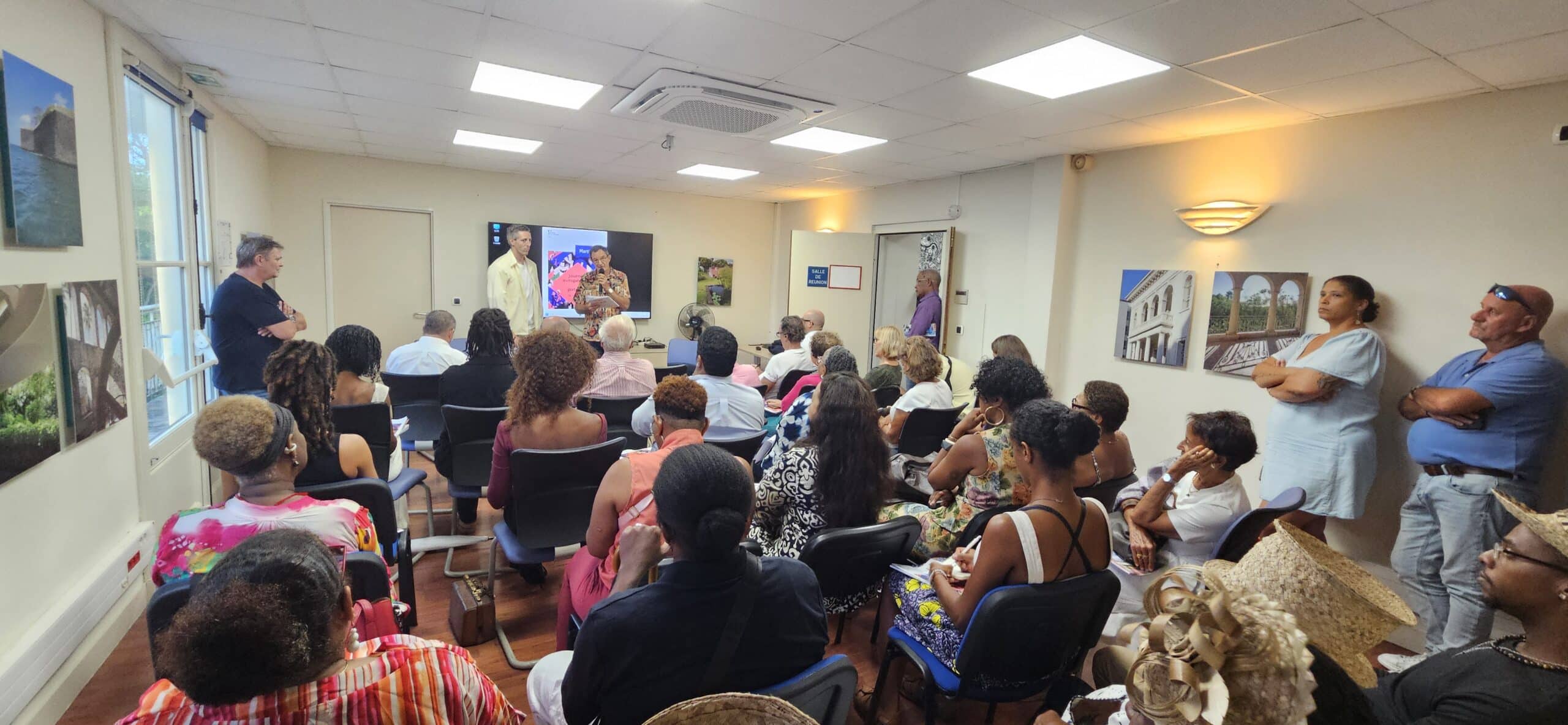
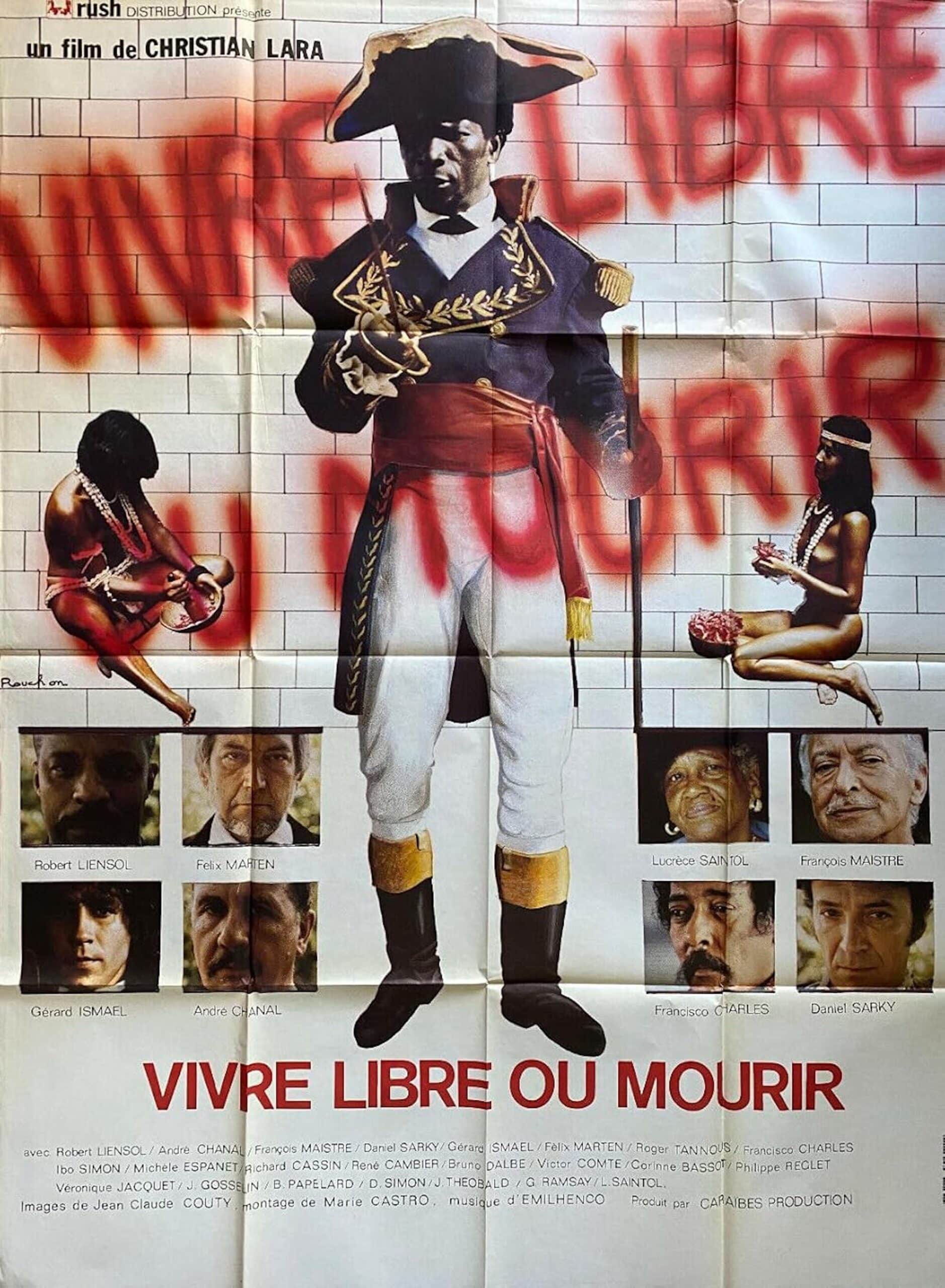
At the heart of Gwoka, a music listed as a UNESCO intangible cultural heritage site, the Bouladjel remains one of the most mysterious and powerful elements. Without drums, without instruments, without articulated words, it relies on the voice, the throat and the breath. A human pulse, transmitted from generation to generation, that links Guadeloupeans to their ancestors and their living memory.
A drum of breath and flesh
The word comes from the Creole expression “boulé a djèl”, meaning “to boil the mouth”. This image captures the principle: transforming the body into an instrument. Singers use their cheeks, saliva, breath and vocal chords to create percussive sounds. These sounds mimic drum beats, creating a unique polyrhythm.
In its traditional form, Bouladjel is played in a group. Three or four men are enough to produce the whole. Placed in a circle, they listen to each other, respond to each other and build a common rhythm. Breath becomes music, the mouth drums, and the whole body participates. This language of breath expresses life, cohesion and collective strength.
Music of mourning and vigil
Bouladjel was originally played at funeral wakes known as kannalé. These nights of vigil around the deceased took place in a tension between sadness and endurance. The rhythm helped keep the watchers awake, while soothing the pain. It was not a song of mourning, but a way of honoring life and maintaining solidarity between the living and the dead.
On Grande-Terre, particularly in the Grands-Fonds, it was also heard at traditional games and fights. It symbolized the unity of the group and the continuity of memory. In this shared breath, Guadeloupeans rediscovered the presence of their African ancestors, who, deprived of drums, had recreated music with their own breath.

An African heritage of resistance
Born of a ban, Bouladjel is a song of the body and of freedom. During the slave era, drums were banned as subversive. Slaves invented this vocal music to circumvent censorship. Breath became a means of existence and transmission, a language that no one could forbid.
Passed on orally, without any formal training, this practice has long resonated in the countryside of mainland Guadeloupe. It is still alive in the communes of Grands-Fonds, such as Sainte-Anne, Les Abymes and Le Gosier, where certain families perpetuate this ancestral knowledge. Each generation adds its own nuance, without ever breaking the chain.
A codified rhythmic structure
A traditional Bouladjel begins with a signal from the commander, who guides the group. Everyone starts together, unlike in Gwoka, where entrances are progressive. Each boularien repeats a different rhythmic motif, and the superimposition creates a dense percussive ensemble. Occasionally, a participant will slip in a rhythmic phrase, satire or joke to lighten the mood. These improvisations are part of the spirit of sharing.
The hands also play an essential role: they strike, rub or surround the mouth to modify the resonance. The cavity formed acts as a natural sounding board. No instrument can replace this interaction between breath and body. It’s all about listening to each other: the slightest mistake upsets the balance of the group.

A musical renaissance
Over time, Bouladjel moved from the wakes to the Gwoka stages. In the 1960s, artists such as Sergius Geoffroy, Napoléon Magloire and Robert Loyson began recording it. Gaston Germain-Calixte, known as “Chaben”, popularized it in 1966 with Zombi baré moin. These pioneers made it possible for this oral tradition to become part of our collective memory.
From the 1990s onwards, new Guadeloupean musicians have given new life to this inspiration. Lukuber Séjor, Klod Kiavue, Sonny Troupé and Jacques Schwarz-Bart have integrated this ancestral rhythm into their jazz and contemporary creations. The Kan’nida group, in collaboration with Gino Sitson, took a step further with the album Tayo (2013), adding ternary rhythms. Thanks to them, this musical form has been heard as far afield as the United States, notably through saxophonist David Murray.
Bouladjel has thus found a new place: it is no longer confined to wakes, but expresses itself on stage, in studios and in artistic education.
Transmission and backup
The transmission of Bouladjel remains fragile. It depends mainly on families and elders. The Centre Rèpriz in Pointe-à-Pitre is committed to documenting and promoting the practice. Every year, the Festival de Gwoka de Sainte-Anne gives it a place of expression and organizes workshops for young people.
Researchers are now studying its links with Central African traditions, where breath and voice also replace instruments. These comparisons underline the historical depth and universal scope of this art form. However, the absence of a structured apprenticeship and the rapid modernization of the territory pose a real threat to its continuity.
Music of breath and memory
Bouladjel is not just a musical form: it’s a philosophy of rhythm. Each breath contains a piece of Guadeloupean history. Born of imposed silence, it has become a voice of resistance and transmission.
In this collective beat, pain, dignity and hope mingle. It teaches that music doesn’t depend on tools, but on the body, listening and human connection. When you hear it, you feel the deep heart of Guadeloupe: a heart that breathes, remembers and lives on through the breath of people.