Cuba – Cayo Santa María, the serene island of Jardines del Rey

Cayo Santa María

Cayo Santa María is located to the north of Cuba, in the Jardines del Rey archipelago. A small island renowned for its luminous beaches and peaceful atmosphere, it attracts visitors in search of calm seas, fine sand and a holiday designed for relaxation. Connected to the mainland by a long dike road, it offers a unique experience: that of a modern island territory, yet still very close to nature.

An island linked to the mainland by a spectacular road

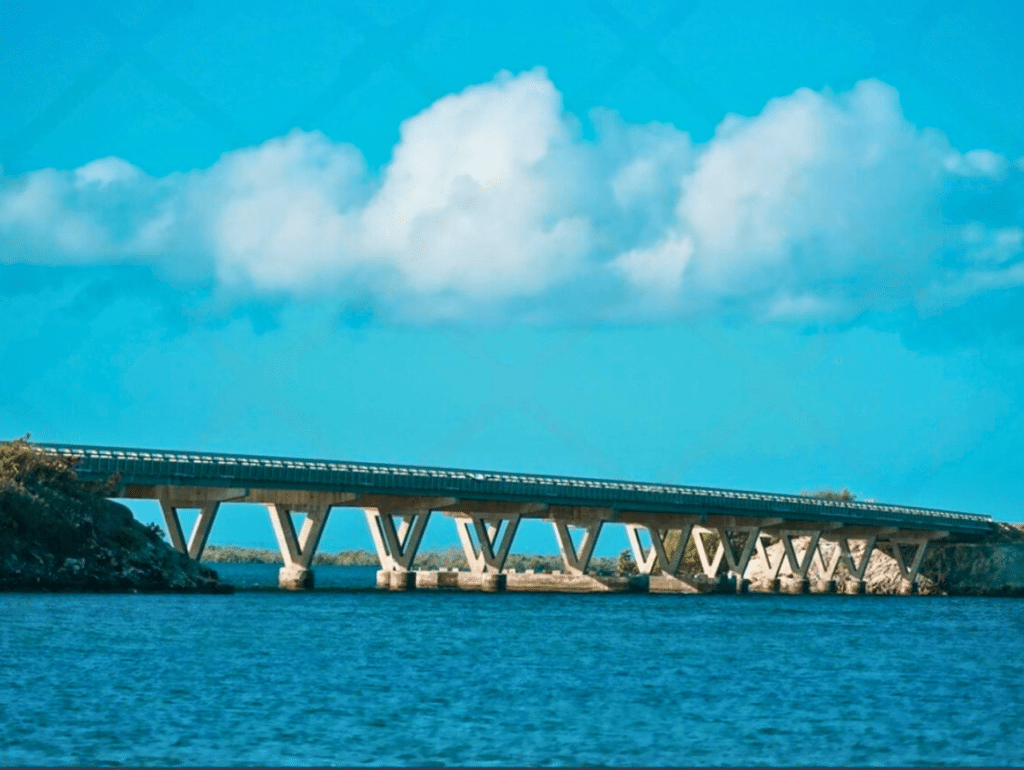
Access to Cayo Santa María is via the Pedraplénan almost 48 km linking the town of Caibarién to all the cayos in the region.

The crossing passes over lagoons, shallow waters and mangrove swamps.

From this point on, the journey becomes a parenthesis: wide horizons, sea breezes and the impression of moving towards an unspoilt island world.

The island is part of the province of Villa Clara alongside Cayo Las Brujas and Cayo Ensenachos.

This area has been developed to accommodate structured seaside tourism, while maintaining a clear separation between natural areas and hotel zones.

Cayo Santa Maria

Beaches and calm seas, at the heart of the experience

The north coast of Cayo Santa María is home to some of the archipelago’s most sought-after beaches. The sand is particularly clear, the water fresh and regular, and the seabed remains shallow for several dozen meters.


Areas such as Playa Perla Blanca, Playa Las Gaviotas or the main beach of Santa María are often cited as some of the most pleasant on the island.

Conditions are ideal for leisurely swims, long walks along the water’s edge and relaxing moments with family or couple.

The wilder southern coastline features mangroves, salt marshes and protected wetlands.

This balance between developed beaches and discreet nature contributes greatly to the island’s charm.

Cayo Santa Maria
Cayo Santa Maria
Cayo Santa Maria

A destination designed for travelers' comfort

Since 2000, Cayo Santa María has developed into one of the leading seaside resorts in northern Cuba. There are many all-inclusive hotels here, each offering services tailored to families, couples or groups, with direct access to the beach, swimming pools, varied catering and entertainment.

However, the atmosphere remains measured: the island has no cities, only hotel zones. Staff come daily from the nearby towns of Caibarién, Remedios and Camajuaní.

Cayo Santa Maria

Between nature and tranquillity

Even if it is landscaped, Cayo Santa María retains a strong natural presence. Mangroves are home to seabirds, dunes protect the coastline, and some areas are included in regional environmental programs.
The landscape is a reminder that the sea and coastal ecosystems are the true masters of the place, and that developments have been designed to respect the island’s fragile morphology.

Cayo Santa Maria
Cayo Santa Maria

Access and useful information for travellers

The main point of entry is the Abel Santamaría International Airport of Santa Clara (SNU). Transfers from the airport to the island take about 90 minutes to 2 hours depending on traffic conditions and stops.

For international travellers, Cuba requests :

  • – a valid passport ;
  • – a tourist card (visa) ;
  • – recognized medical insurance.

These formalities are easy to obtain via an agency, the airline or consular services.

Cayo Santa Maria
Cayo Santa Maria

An island to rest and breathe

Cayo Santa María is perfect for visitors looking for a gentle atmosphere, safe beaches and the possibility of staying for several days without pressure or schedules. The calm sea, the light of the Cuban coastline and the simplicity of the setting make it an ideal destination for family trips, beach breaks or slow-paced vacations.

FAQ

Cayo Santa María is located in northern Cuba, in the Jardines del Rey archipelago, and is part of the Villa Clara province.

The island can be reached via Santa Clara airport, then the Pedrapléna 48 km road-dike linking the mainland to the archipelago.

No. Cayo Santa María has no permanent population: only hotels and tourist services are located here.

Leave a Reply

Your email address will not be published. Required fields are marked *

More articles from RK

NEWS
Tolotra

Philippe Faure-Brac at Habitation Clément: Martinique rum as seen by a great sommelier.

Philippe Faure-Brac had never visited Habitation Clément before. World’s Best Sommelier 1992, member of the Meilleurs Ouvriers de France with honorary status since 2015, he came to Martinique to look at rhum agricole from its very place of production: the cane, the cellars, the bottling and the tasting. A first visit to Habitation Clément AtHabitation Clément, in Le François, this visit had a special significance. Philippe Faure-Brac was already familiar with Clément rums, their quality positioning and their universe. He had also contributed to the book Rhum Clément, une histoire de famille, bringing his insight into the house’s aromatic precision, balance and tradition of excellence. But he lacked the experience of the place. That of the light, the temperature, the atmosphere of the winery and the exchanges with the teams. “The first time in Martinique? I was going to say finally,” he confided, recalling that he had been hoping for

Read More »
Boiling Lake
TOURISM
Tolotra

Boiling Lake: 92 °C, 63 m wide, the 2nd largest bubbling lake in the world

Just 8 kilometers east of Roseau, the capital of Dominica, it’s a three-hour walk from Laudat to Boiling Lake. Three hours of humid forest, desolate valley, soil-heated rocks and sulfurous fumes. At the end of the path, a 63-metre-wide pool. Inside, the water bubbles almost continuously, with temperatures measured up to 91.6°C at the edges. It’s the second largest bubbling lake in the world. A rare phenomenon in a UNESCO park The world’s first is Frying Pan Lake in New Zealand’s Waimangu Valley. But the Dominican Boiling Lake is in a class of its own. Firstly, because it can only be reached on foot, after a demanding hike. Secondly, because it is part of a national park that has been a UNESCO World Heritage Site since 1997: Morne Trois Pitons National Park. This makes it one of the most singular geothermal phenomena protected in a world-renowned natural site. A flooded,

Read More »
Tourisme 3.0
TOURISM
Tolotra

Tourism 3.0: Jamaica wants to keep its tourist wealth

At the Montego Bay Convention Centre, the image speaks for itself. Local entrepreneurs showcase their products, hotel representatives circulate, meetings follow one another. Behind these rapid exchanges, one question weighs heavily: when tourism makes money, how much really stays in Jamaica? This is at the heart of Tourism 3.0, the new direction championed by Jamaica’s Minister of Tourism, Edmund Bartlett. At the Tourism Enhancement Fund’s 11th Speed Networking Event, he set out a clear ambition: to make tourism a more direct driver for Jamaican producers, artisans, manufacturers and suppliers. Tourism that no longer just wants to attract Jamaica knows how to welcome visitors. But the challenge is no longer just to fill hotels or increase arrivals. The real challenge is to retain more value in the territory. Edmund Bartlett has recognized a structural weakness: a large proportion of the goods and services consumed by the tourism industry are still imported.

Read More »

conTACT RK

we'd love to have your feedback on your experience so far

Join The List

Join our Richès Karayib community!  Sign up for our newsletter.

Want To Maximize Your Business Presence On Riches Karayib?

Complete the form to start the application