
Cuba – Cayo Santa María, the serene island of Jardines del Rey

Cayo Santa María

Cayo Santa María is located to the north of Cuba, in the Jardines del Rey archipelago. A small island renowned for its luminous beaches and peaceful atmosphere, it attracts visitors in search of calm seas, fine sand and a holiday designed for relaxation. Connected to the mainland by a long dike road, it offers a unique experience: that of a modern island territory, yet still very close to nature.

An island linked to the mainland by a spectacular road

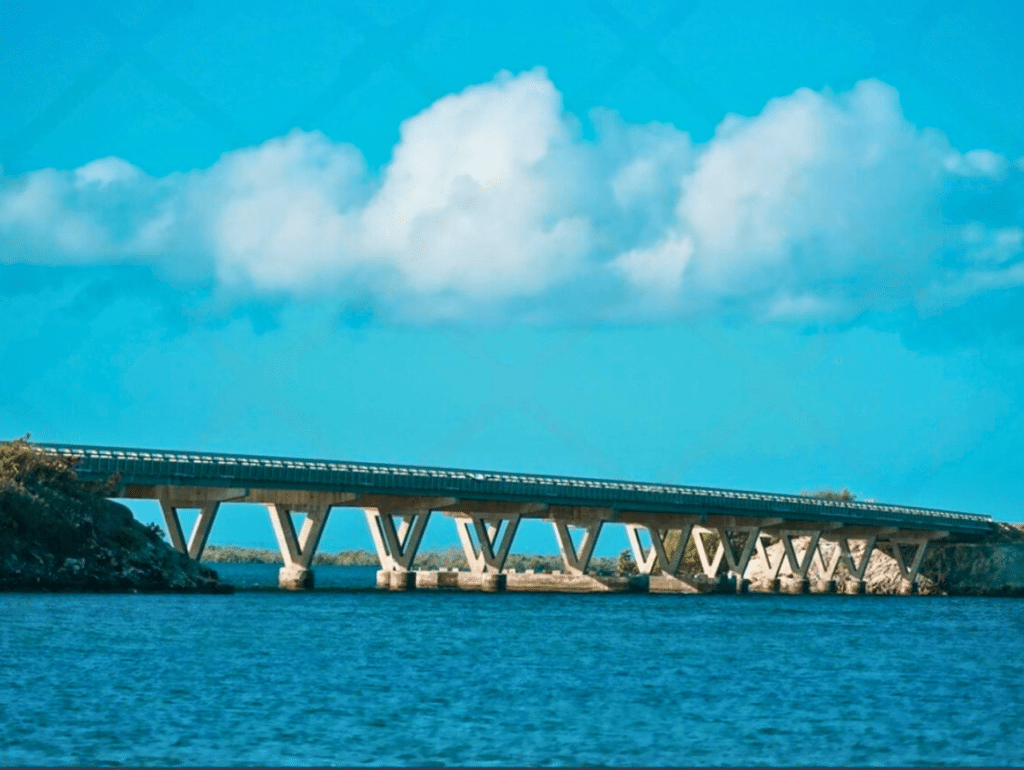
Access to Cayo Santa María is via the Pedraplénan almost 48 km linking the town of Caibarién to all the cayos in the region.

The crossing passes over lagoons, shallow waters and mangrove swamps.

From this point on, the journey becomes a parenthesis: wide horizons, sea breezes and the impression of moving towards an unspoilt island world.

The island is part of the province of Villa Clara alongside Cayo Las Brujas and Cayo Ensenachos.

This area has been developed to accommodate structured seaside tourism, while maintaining a clear separation between natural areas and hotel zones.

Cayo Santa Maria

Beaches and calm seas, at the heart of the experience

The north coast of Cayo Santa María is home to some of the archipelago’s most sought-after beaches. The sand is particularly clear, the water fresh and regular, and the seabed remains shallow for several dozen meters.


Areas such as Playa Perla Blanca, Playa Las Gaviotas or the main beach of Santa María are often cited as some of the most pleasant on the island.

Conditions are ideal for leisurely swims, long walks along the water’s edge and relaxing moments with family or couple.

The wilder southern coastline features mangroves, salt marshes and protected wetlands.

This balance between developed beaches and discreet nature contributes greatly to the island’s charm.

Cayo Santa Maria
Cayo Santa Maria
Cayo Santa Maria

A destination designed for travelers' comfort

Since 2000, Cayo Santa María has developed into one of the leading seaside resorts in northern Cuba. There are many all-inclusive hotels here, each offering services tailored to families, couples or groups, with direct access to the beach, swimming pools, varied catering and entertainment.

However, the atmosphere remains measured: the island has no cities, only hotel zones. Staff come daily from the nearby towns of Caibarién, Remedios and Camajuaní.

Cayo Santa Maria

Between nature and tranquillity

Even if it is landscaped, Cayo Santa María retains a strong natural presence. Mangroves are home to seabirds, dunes protect the coastline, and some areas are included in regional environmental programs.
The landscape is a reminder that the sea and coastal ecosystems are the true masters of the place, and that developments have been designed to respect the island’s fragile morphology.

Cayo Santa Maria
Cayo Santa Maria

Access and useful information for travellers

The main point of entry is the Abel Santamaría International Airport of Santa Clara (SNU). Transfers from the airport to the island take about 90 minutes to 2 hours depending on traffic conditions and stops.

For international travellers, Cuba requests :

  • – a valid passport ;
  • – a tourist card (visa) ;
  • – recognized medical insurance.

These formalities are easy to obtain via an agency, the airline or consular services.

Cayo Santa Maria
Cayo Santa Maria

An island to rest and breathe

Cayo Santa María is perfect for visitors looking for a gentle atmosphere, safe beaches and the possibility of staying for several days without pressure or schedules. The calm sea, the light of the Cuban coastline and the simplicity of the setting make it an ideal destination for family trips, beach breaks or slow-paced vacations.

FAQ

Cayo Santa María is located in northern Cuba, in the Jardines del Rey archipelago, and is part of the Villa Clara province.

The island can be reached via Santa Clara airport, then the Pedrapléna 48 km road-dike linking the mainland to the archipelago.

No. Cayo Santa María has no permanent population: only hotels and tourist services are located here.

Leave a Reply

Your email address will not be published. Required fields are marked *

More articles from RK

Stephen Cat Coore
MUSIC
Tolotra

Jamaica – Reggae legend Stephen Cat Coore dies aged 69

Stephen Cat Coore died at the age of 69, leaving the Caribbean bereft of one of its most consistent and demanding artisans. Guitarist, singer, composer and co-founder of the group Third World, he embodies a singular trajectory in the history of Jamaican music: that of a creator who chose continuity, rigor and thoughtful openness rather than rupture or effect. His death is not just that of a renowned musician. It marks the loss of a cultural landmark, of a man who knew how to think of reggae as a space for dialogue between Caribbean heritage and the global circulation of sounds. A musical heritage steeped in Jamaican history Stephen Cat Coore was born in a Jamaica where music was already structuring the collective narrative. Son of Bunny Ruggs, a member of the Maytals, he grew up in the shadow of a heritage shaped by ska, rocksteady and the first expressions

Read More »
Karen VIRAPIN
AIR
Tolotra

Karen VIRAPIN: Air Caraïbes’ first female CEO from the French overseas territories

Appointed Deputy CEO in January 2026, Karen Virapin becomes the first woman from the French overseas territories to reach this level of governance withinAir Caraïbes. A major development for the airline, but also a strong signal for the Caribbean air transport sector. Beyond the symbolism, this appointment raises a central question: what concrete impact could it have on governance, social dialogue, the regional network and service quality? An appointment that reflects continuity, but not stasis Having been with the company for fourteen years, Karen Virapin is no parachute. A former Director of Human Resources, Karen Virapin has been involved in all the company’s structural transformations: organizational changes, workforce growth, adaptation to the economic and social constraints of the airline industry. Her appointment to the position of Managing Director is therefore a logical step in the company’s continuity. But continuity does not mean standstill. In a sector as exposed as air

Read More »
Rara
HISTORY & HERITAGE
Tolotra

Haiti – Rara: street music, spirituality and social protest

The Haitian Rara is neither processional music nor seasonal entertainment. It is a structuring social fact. It’s rooted in the country’s history, religious practices, social hierarchies and modes of protest. Present in the streets, on the roads, in towns and outlying districts alike, Rara articulates sound, movement and speech in a collective logic that goes far beyond musical performance. In Haiti, Rara is part of a precise temporality, mobilizing entire communities and transforming public space into a place of ritualized expression. It is at once a spiritual practice, a social organization and a popular language. Rara: a collective practice before being a musical genre It cannot be understood as a simple sound style. It functions as a cultural season and a collective scheme. For several weeks, bands organize themselves, rehearse, build their instruments, prepare their routes and appearances. This preparation involves responsibilities, defined roles and an internal hierarchy that structure

Read More »

conTACT RK

we'd love to have your feedback on your experience so far

Join The List

Join our Richès Karayib community!  Sign up for our newsletter.

Want To Maximize Your Business Presence On Riches Karayib?

Complete the form to start the application