MARTINIQUE/CUBA – Caribbean cooperation: Le Lamentin and Santiago de Cuba, 30 years of cultural exchanges and solidarity

Cuba

For almost thirty years, cooperation between Le Lamentin and Santiago de Cuba has embodied a lasting commitment between two territories that share much more than a simple partnership. This structuring link, forged through concrete projects in the fields of culture, health, education and sustainable development, has established itself as a genuine lever for Caribbean proximity.

As the Festival del Caribe 2025 approaches, the two cities reaffirm their shared ambition to celebrate three decades of collaboration in 2026.

Cuba

Two key events to mobilize the region's driving forces

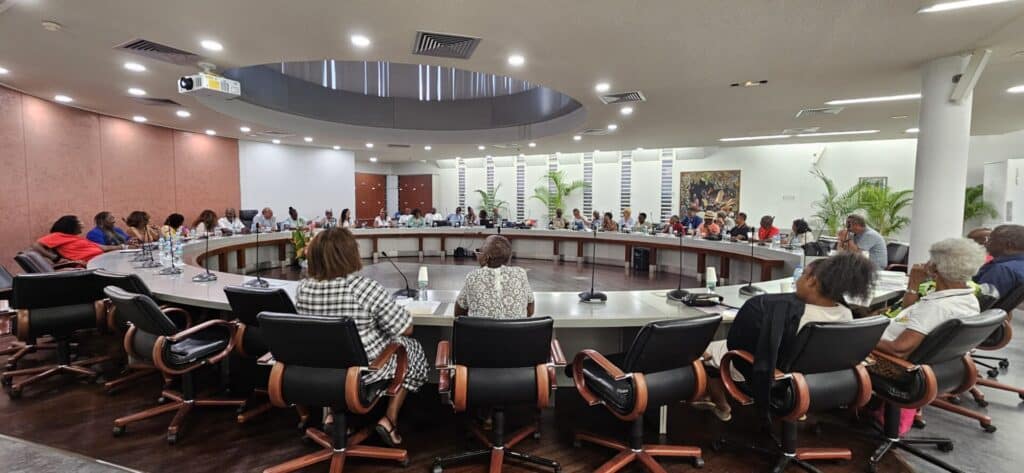
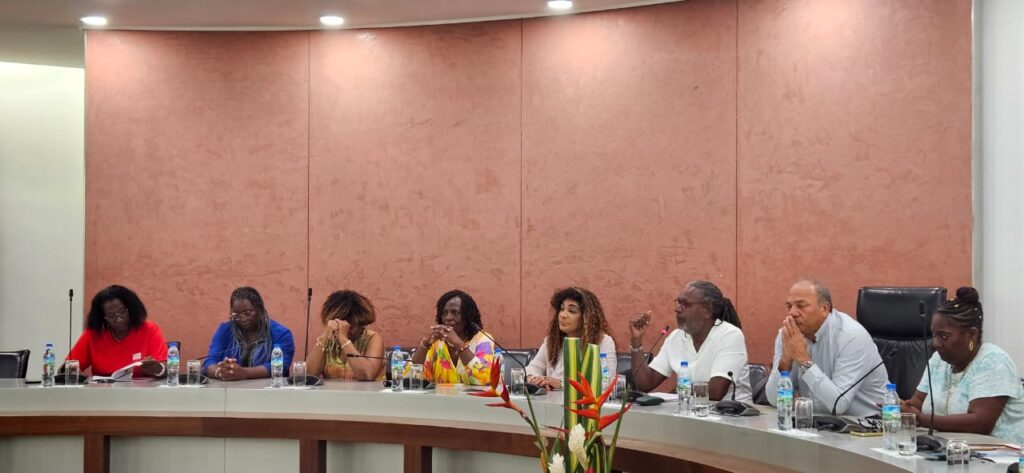
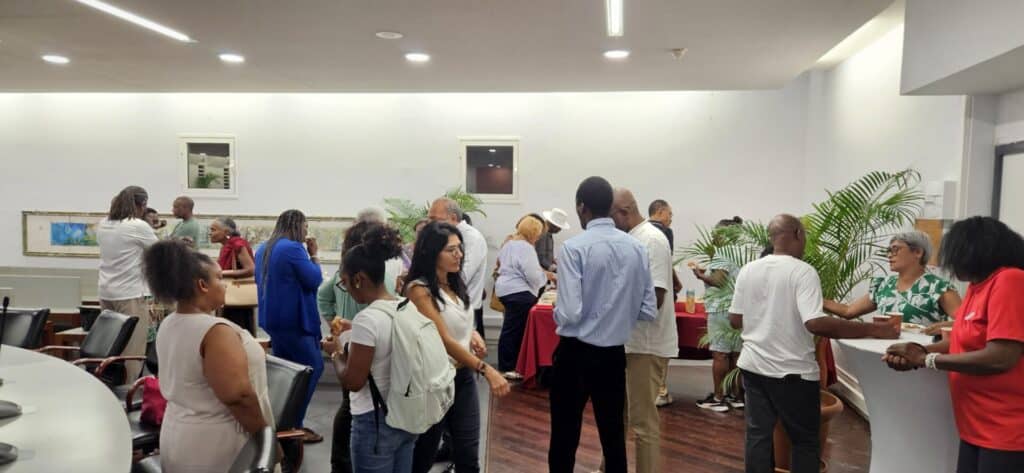
On May 21 and 23, two meetings punctuated the official visit of the representatives of Santiago de Cuba to Martinique. The first meeting, organized by the Lamentin town hall, brought together David Zobda, Odexa Fuentes Medina and Enaï Diamela Palacios Acosta, the territory’s main cultural and tourist organizations: Tropiques Atrium, Direction des Affaires Culturelles, Comité Martiniquais du Tourisme, community tourist offices, travel agencies, SAMAC airline, Préfecture, Université des Antilles, CCIM, comités d’œuvres sociales, clubs services and the Martinique-Cuba association. Member of Parliament Jean-Philippe Nilor was also present. The aim of the event was to present the Festival del Caribe 2025 and to launch a stronger institutional dialogue between the two territories.

Cuba

On May 23, a second meeting was held, this time with the cultural associations of Lamentin. This more operational exchange helped to identify ways of contributing to the festival, and to validate the interest of numerous local structures. Participants included Jeunesse en Fleurs – Ballet Kadan’s Kréol, Afrique Caraïbe Fraternité, GOPIO Martinique, AMESU and Gommier & Tradition. All expressed their willingness to play an active part in the event, through artistic, educational, heritage or gastronomic activities.

Cuba

Georges-Louis Lebon, third deputy mayor of Le Lamentin in charge of cultural affairs and president of the Office de la culture, introduced the meeting by recalling the foundations of the municipal commitment: “Sport, culture and associations are at the heart of the Ville du Lamentin’s project”. He also emphasized the structuring role of the media library, the Office de la culture, and the rich fabric of over 60 cultural associations, nearly 40 of which are particularly active.

Cuba
Cuba

Concrete, ambitious cooperation

The partnership between Le Lamentin and Santiago de Cuba goes far beyond the symbolic framework of a traditional twinning. Initiated around common issues such as water management, this cooperation has rapidly evolved to encompass essential fields such as health, sport, the environment, major risk management, and now economic development and scientific research.

David Zobda, Mayor of Le Lamentin, underlines this dynamic: “This is not just a one-off cultural exchange. We work together on concrete projects, with precise objectives, responding to the real needs of our respective populations.”

He adds: “We want this cooperation to be an economic lever too. We need to ask the real questions: how can we develop freight, make banking flows more fluid, harmonize our standards?”

Cuba
David Zobda

Diamela Palacios Acosta, Secretary of the Municipal Assembly of Santiago de Cuba, completes this vision by recalling the solidity of the link between the two cities: “Between Le Lamentin and Santiago, there is more than solidarity; there is a true fraternity. Despite the difficulties caused by the American embargo, our cooperation has remained constant and effective for almost 30 years.”

Cuba
Diamela Palacios Acosta

Odexa Fuentes Medina, for her part, underlined Santiago de Cuba’s determination to promote a diversity of artistic and cultural expression within the festival: “We are the fruit of a mixture of cultures: African, Spanish, French, Arab, Asian… The Festival del Caribe is the space where this diversity is fully expressed.” between the two cities: “Martinique and Santiago de Cuba have maintained a constant fraternity, even in the most difficult times. This relationship goes far beyond cultural exchanges.

Cuba
Odexa Fuentes Medina

Festival del Caribe 2025: a not-to-be-missed event

The Festival del Caribe, or Fiesta del Fuego, is one of the most emblematic events in the Caribbean cultural calendar. Held annually in Santiago de Cuba, this week-long event welcomes artistic delegations, researchers, cultural players and citizens from all over the Caribbean basin. The 2025 edition (July 3 to 9) will feature Curaçao, in an atmosphere marked by street music, traditional dances, popular arts and collective rituals such as the famous “Serpiente”.

Cuba

The festival offers an inclusive vision of Caribbean culture, at the crossroads of African, European, Asian and Amerindian heritage. Diamela Palacios insists on this openness: “The festival reflects the richness of our diversity. Even though it is rooted in the Caribbean, it is open to the world.

In addition to the artistic program, in 2025 Santiago de Cuba will also celebrate the 510th anniversary of its foundation, as well as key moments in its political and social history, such as the 72nd anniversary of the storming of the Moncada Quarter. These elements give the event a depth that goes beyond the purely cultural.

In 2026: 30 years of cooperation between Lamentin and Santiago

The year 2026 will mark a symbolic milestone in the history of the two cities. Santiago de Cuba has already proposed that this year’s Festival be marked by thirty years of cooperation. It’s a powerful invitation, and one that calls for a broad mobilization of Martinique’s associative, educational and economic fabric.

The idea? To build a multi-faceted delegation, representative of the region’s diversity and ambitions.

Cuba

The mayor of Lamentin calls for anticipation of this deadline: “We need to get organized now so that 2026 is not just a memory, but a real showcase of our ability to act collectively in the Caribbean.”

Cuba
Cuba

This dynamic is based on a shared desire to build a more integrated Caribbean space, where culture, education and the economy interact. The Lamentin town council has announced that it will be providing support to help associations structure their projects, identify funding and ensure their logistics.

Cuba
Cuba

Building a Caribbean that acts and shines

Through this active, multi-faceted cooperation, Le Lamentin and Santiago de Cuba are showing that another model of exchange is possible in the Caribbean: one based on trust, consistency and a shared vision. While 2025 will mark an important milestone with the expected presence of numerous delegations from Martinique at the Festival del Caribe, 2026 is already shaping up to be a high point.

Are you an association or a cultural, economic or educational player? Now’s the time to get involved.

Leave a Reply

Your email address will not be published. Required fields are marked *

More articles from RK

Soul Beach Music Festival
EVENT MANAGEMENT
Trainee

Soul Beach Music Festival: why is Curaçao taking over from Aruba after 22 years?

For 22 years, the Soul Beach Music Festival has been synonymous with Aruba. High-end R&B, bright beaches, American comedy, Memorial Day Weekend, all set against a backdrop of palm trees. In 2026, the event is moving. From May 20 to 25, this year’s festival will be held in Curaçao, 80 kilometers from its historic home port. The changeover is not insignificant. Curaçao in the spotlight The new address has a precise name: Capital C Dome, in Willemstad, the capital of Curaçao. The choice of the island is no accident. In January 2026, USA Today ranked Curaçao as the top Caribbean destination in its annual rankings, a title that Soul Beach Music Festival organizers now explicitly use in their promotional communications. “You voted Curaçao number 1 in the Caribbean, find out why”, reads the headline on the festival’s official website. The Soul Beach Music Festival 2026 promises what has made it

Read More »
IShowSpeed Caribbean Tour
NEWS
Tolotra

IShowSpeed Caribbean Tour: 305.9 million conversations for the Caribbean

IShowSpeed Caribbean Tour transformed a livestream tour into a global showcase for several Caribbean territories. In just a few weeks, beaches, markets, carnivals, popular neighborhoods, natural sites and street scenes were seen by millions of young Internet users. The result goes far beyond entertainment: it raises a central question for the Caribbean. How can viral exposure be transformed into lasting benefits for the territories visited? A tour conceived as a global digital event Announced as a tour of 15 Caribbean destinations, the IShowSpeed Caribbean Tour included Antigua and Barbuda, the Bahamas, Barbados, Dominica, the Dominican Republic, Grenada, Guadeloupe, Jamaica, Puerto Rico, Sint Maarten, Saint Kitts and Nevis, Saint Lucia, Saint Vincent and the Grenadines, Trinidad and Tobago and the US Virgin Islands. From the outset, the project did not resemble a conventional tourism campaign. It was an ongoing, unpredictable live event, driven by a very young and responsive community. The

Read More »
Eric Walrond
HISTORY & HERITAGE
Tolotra

Eric Walrond: the writer from Guyana who brought the black tropics into the Harlem Renaissance

Eric Walrond did not leave an abundant body of work, but his name occupies a singular place in the literary history of the Black Atlantic world. Born in Georgetown, Guyana, then under British rule, he grew up in Barbados, Panama, New York and England. This trajectory forms the very material of his writing. For him, Guyana is not a point of departure erased by migration. It remains a founding origin, extended by the ports, newspapers and languages that circulate around the Atlantic. Georgetown, the first anchor of a displaced life Eric Walrond was born on December 18, 1898 in Georgetown, Guyana. His father came from this mainland territory of the English-speaking Caribbean; his mother was from Barbados. From a very early age, he grew up in several different places. He left Georgetown, lived in Barbados, then in Colón, Panama, a city marked by the construction of the canal and the

Read More »

conTACT RK

we'd love to have your feedback on your experience so far

Join The List

Join our Richès Karayib community!  Sign up for our newsletter.

Want To Maximize Your Business Presence On Riches Karayib?

Complete the form to start the application