From March 16 to 21, 2026, 35 programmers from mainland France, Quebec and the French overseas territories are in Martinique to meet with local artists and companies. Organized by the Office National de Diffusion Artistique (ONDA), this week of meetings is a concrete opportunity for Martinique’s performing arts professionals to forge lasting links with national and international venues.
An unprecedented delegation to promote the arts in Martinique
Thirty-five performing arts professionals made the trip to Martinique this week. Among them were directors of national stages, festival programmers including the co-programmer of the Avignon Festival, heads of national drama centers, and a director of a festival for young audiences from Montreal. A composition that testifies to the growing interest of the French network in Martinique’s creations.
"For the first time, there are people from all the overseas territories in the delegation. There are people from Guadeloupe, Reunion and Guyana. And a programmer from Quebec as well, so we know it's not that far away."
— Marie-Pia Bureau, directrice de l'ONDA
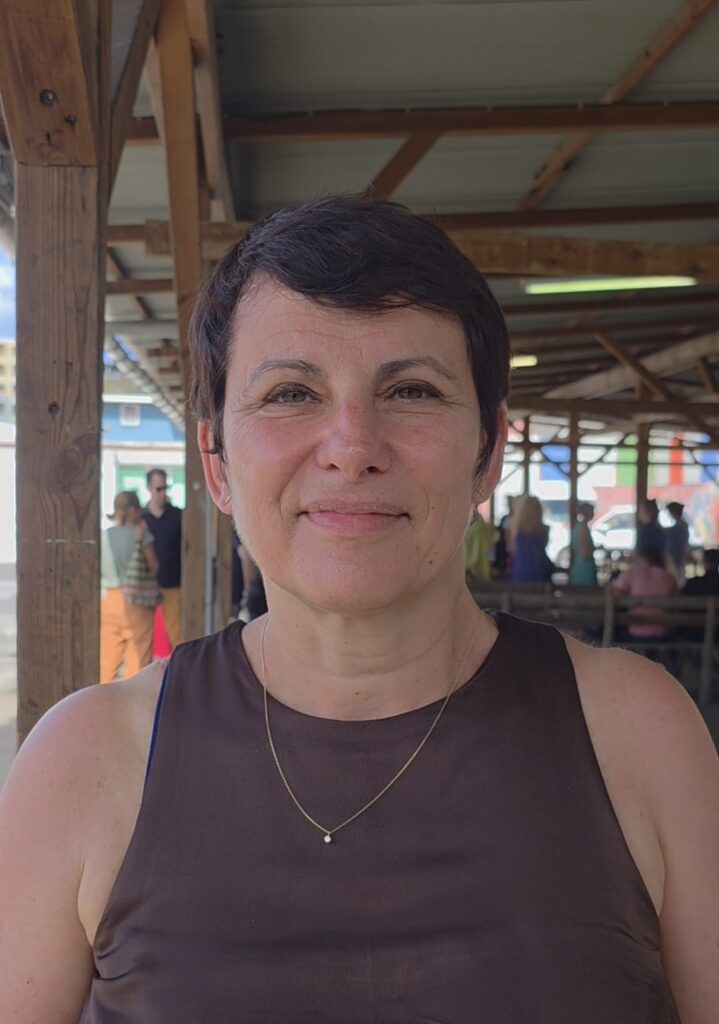
The delegation was drawn up in collaboration with the Direction des Affaires Culturelles (DAC), Tropiques Atrium Scène Nationale, Korzémo L’Envol, Les Coulisses de Saint-Esprit and other local structures. This territorial network ensures that the encounters reflect the true diversity of the island’s artistic ecosystem.
Multiple disciplines, professional artists
Encounters cover the full range of performing arts: theater, dance, circus, creative music (improvised jazz, contemporary music), spoken word and visual arts. This last dimension is a specific feature of Martinique, recognized by the delegation itself: several of the venues represented have galleries and are interested in visual artists.
The artists we met this week are professionals, some of them very young and still emerging, but all part of a contemporary creative process. ONDA does not support the reproduction of traditional forms per se, but is interested in approaches that work with tradition to take it elsewhere.
"We tend to encourage contemporary approaches. Sometimes tradition is very interesting when it's not just about reproducing gestures, but also taking you somewhere."
— Marie-Pia Bureau, directrice de l'ONDA
Around fifty artists from Martinique are presented over the course of the week, in a variety of formats: indoor shows, presentations strolling around the territory, work tables. Some don’t have the space to show a full show, but are able to present their work directly to programmers, which, at this level of the network, is already a decisive step.


Young audiences, a strategic focus for artistic dissemination in Martinique
Among the professionals present this week is Estelle Picot-Derquenne, Director of Scènes d’enfance, ASSITEJ France, the national association that federates players in artistic creation for children and young people. Her presence in Martinique illustrates one of the delegation’s key areas of focus: young audiences, already highlighted by the visit of a Quebec programmer specializing in youth festivals.
"I coordinate regional networks that bring together programmers and artists around issues of cooperation, distribution and circulation of works and artists."
— Estelle Picot-Derquenne, directrice de Scènes d'enfance – ASSITEJ France

It also supports the Rézo Filibo network for young audiences in Martinique, with an entire day devoted to it on Monday March 23, featuring meetings between professionals, elected representatives, journalists and institutions. The aim is clear: to make life easier for artists and promoters who choose to work with young audiences, by creating the conditions for a lasting relationship between local players and the national network.
Artistic dissemination: what these encounters produce in concrete terms
Artistic distribution is built up, often slowly, through the accumulation of links and trust. Marie-Pia Bureau is clear on this point: with each edition of these traveling meetings, organized every four years in each of the French overseas territories, two or three artists find new long-term partners in France.
"I'm thinking of Véronique Kanor, for example, who is now an associate artist at the scène nationale de Chambéry and whose productions have been supported for three years. She's the one who comes to me, but there are others like her every time."
— Marie-Pia Bureau, directrice de l'ONDA
These links can take many forms: a programming date, an invitation to a residency, a co-production. The logic is often one of progressive loyalty: first we welcome, then we co-produce, then we program. Johan Hillel Hamel, Director of the DAC Martinique, stresses the economic importance of these openings for local companies.
"The possibility of distribution outside Martinique is absolutely fundamental to a company's economy, but also to the diversity of audiences it will reach and the feedback it will have on the artists' work."
— Johan Hillel Hamel, directeur de la DAC Martinique

A changing gaze: the end of exoticism
Twenty years ago, being programmed as a Martinican artist in France often meant being associated with a folkloric image: music, rum, sunshine. This is no longer the dominant image. The programmers who make the trip to Martinique aren’t looking for exoticism: they’re looking for singular voices, artistic points of view that broaden their own understanding of French history and society.
"We try to listen to singular voices that look at our entire history from a different angle, and share it on set - not necessarily for overseas populations, but for all French people."
— Marie-Pia Bureau, directrice de l'ONDA
It’s a significant cultural shift. For Martinican artists, it opens up a space for artistic dissemination that is no longer based on the need to conform to an expected image, but on the singularity of their approach.


A week to build bonds that last
The Rencontre Itinéraire ONDA in Martinique runs from March 16 to 21, 2026. It is a dense sequence: performances at Tropiques Atrium, presentations at Korzémo L’Envol (Ducos), Les Coulisses in Saint-Esprit, Espace A’zwel in Schoelcher, Campus Caraïbéen des Arts, Terre d’Arts and ETC Caraïbes in Fort-de-France. A performance laboratory closes the week at Savane des Pétrifications, in the presence of Annabel Guérédrat and other Martinican performance artists.
For the island’s artists and cultural professionals, this week is less a one-off event than a starting point. The links forged here can lead to tours, residencies and co-productions. ONDA is committed to supporting the resulting projects, provided they are the result of a genuine, long-term encounter.

ONDA (Office National de Diffusion Artistique) is a public operator that supports the distribution of performing arts in France. It is a signatory to the Pacte de Visibilité des Artistes Ultramarins (Visibility Pact for Overseas Artists) with the French Ministry of Culture and the Ministry of Overseas France. Its role is to strengthen links between artists from the French overseas territories and programmers in France, notably through touring meetings organized every four years in each territory.
ONDA events in Martinique cover theater, dance, circus, creative music (improvised jazz, contemporary music), spoken word and visual arts. ONDA mainly supports contemporary artistic approaches, including those that reinterpret traditional forms in innovative ways.
The meetings enable artists to present their work directly to programmers from national stages, national drama centers and festivals. Collaborations may result: programming dates, residencies, co-productions. ONDA then supports the projects that come to fruition. By way of example, Véronique Canor is currently associate artist at the Chambéry national stage, a link born of this type of encounter.