Bequia, the maritime soul of the Grenadines

Bequia

An island apart in the Caribbean

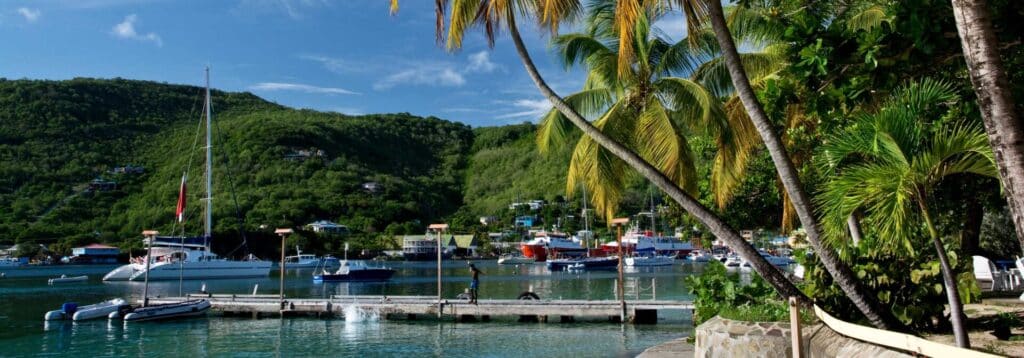
Bequia, the second largest island of Saint Vincent and the Grenadines, covers an area of around 18 km². It may seem modest in size, but its history and identity make it a singular territory. As soon as you approach its shores, a direct link with the sea is revealed: fishing boats lined up on the sand, sailboats at anchor in Admiralty Bay, shipyards where wood crafts are perpetuated. Bequia is a land shaped by the sea, its riches and its trials.

The breath of maritime history

© Photos Wilfred Dederer © BTA 2025

Bequia’s memory is deeply linked to whaling. As early as the end of the XIXᵉ century, locals learned from American whalers how to hunt humpback whales. This practice, now classified by the International Whaling Commission as “aboriginal subsistence hunting”, remains limited to a quota of four catches per year, rarely reached. More than a resource, it is now a heritage that illustrates how an island community has built its survival on the sea.
At the same time, Bequia retains a tradition of wooden boat building. In the villages, carpenters still fashion boats by hand. Each boat is a collective work of art, reflecting skills handed down from generation to generation.

Bequia
© Photos Wilfred Dederer © BTA 2025
Bequia
© Photos Wilfred Dederer © BTA 2025

The power of nature and everyday life

The island’s landscapes are a mix of beaches, hills and viewpoints. Princess Margaret Beach, just a stone’s throw from Port Elizabeth, stretches out its blond sand bordered by almond trees. Further south, Friendship Bay opens its waters to the Atlantic, offering a livelier sea. Trails lead up to Peggy’s Rock, a peak that reveals the beauty of the surrounding Grenadines.
These landscapes are also the rhythms of daily life. Fishermen leave the bay at dawn and return laden with tuna, sea bream and lobster. The market comes to life afterwards, reflecting a way of life still centered on the sea and its resources.

Bequia
© Photos Wilfred Dederer © BTA 2025
Bequia
© Photos Wilfred Dederer © BTA 2025

A preserved island culture

Bequia
© Photos Wilfred Dederer © BTA 2025
Bequia
© Photos Wilfred Dederer © BTA 2025

With around 5,000 inhabitants, Bequia remains a community on a human scale. Musical traditions – steelband, reggae, calypso – accompany gatherings, while crafts express the local identity. Meticulously carved models of wooden boats tell of the island’s maritime past, and are on display even in the small stores of Port Elizabeth.
This attachment to the island’s heritage is also expressed in its gastronomy, which focuses on seafood. Each dish is a reminder of the balance between tradition and adaptation.

Bequia
© Photos Wilfred Dederer © BTA 2025
Bequia
© Photos Wilfred Dederer © BTA 2025

Port Elizabeth, an island crossroads

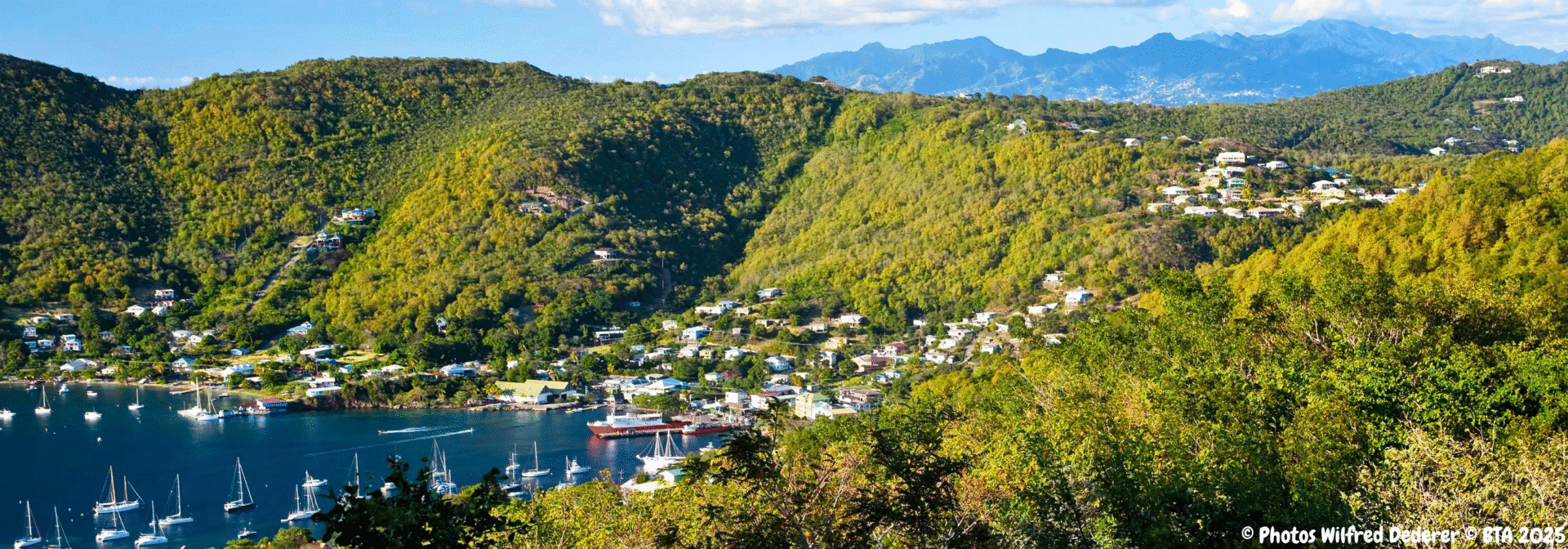
Port Elizabeth, Bequia’s modest capital, nestles at the head of Admiralty Bay. This natural harbor attracts fishermen, sailors and visiting yachts. For decades, it has been a renowned stopover for Caribbean sailing. Here, the liveliness of the anchorage contrasts with the tranquility of the lanes lined with colorful houses and small cafés. The island has not sought to become a mass destination: it favors a measured approach to tourism, based on close contact with the locals.

Bequia
Port Elizabeth. © Photos Wilfred Dederer © BTA 2025

Legacy and future

Bequia illustrates the dilemmas faced by many small Caribbean islands: preserving authenticity while securing an economic base. Controversial whaling is often the focus of debate, but it does not sum up the island. The future also relies on fishing, local agriculture, boating and handicrafts, all sectors that maintain a resilient economy.
This direction reflects a clear choice: to maintain a balance between openness to the world and respect for an identity forged by the sea.

A sensitive and human Caribbean

Bequia is not an island defined by its size or infrastructure, but by its maritime soul. Its landscapes, traditions and people make up a mosaic where every detail carries the weight of history and the hope of the future. On this island of the Grenadines, the sea is more than just a horizon: it is a memory, a resource and a promise.

Bequia
© Photos Wilfred Dederer © BTA 2025
Bequia
Bequia
© Photos Wilfred Dederer © BTA 2025
Bequia
© Photos Wilfred Dederer © BTA 2025
Bequia
© Photos Wilfred Dederer © BTA 2025
Bequia
© Photos Wilfred Dederer © BTA 2025

Leave a Reply

Your email address will not be published. Required fields are marked *

More articles from RK

French
NEWS
Tolotra

396 million people speak French: the 2026 report reveals

The Organisation internationale de la Francophonie has published a figure that reshuffles the deck in the global language debate: 396 million people now speak French. With this total, the French language in the world rises from 5th to 4th position behind English, Mandarin and Spanish, but ahead of standard Arabic. This is more than just an announcement. It marks a fundamental change in the place of French on the international stage, and confirms that the language continues to make headway in strategic areas such as education, economic exchanges, digital technology and cultural mobility. Global progress changes the narrative around French For years, French has often been portrayed as a language of great influence, but weakened in the face of global competition. The OIF’s 2026 report introduces an important corrective. The French language in the world is not only holding its own: it is gaining ground in terms of the number
Read More »
Bonaire
TOURISM
Tolotra

Bonaire, a Caribbean island built around the sea and conservation

In the southern Caribbean, off the coast of Venezuela, Bonaire is a territory in a class of its own. Less publicized than its neighbors Aruba and Curaçao, the island has built its identity around one central principle: the protection of its environment. Here, the sea structures the economy, landscapes and customs, while tourism development has been gradual and controlled. For travelers, Bonaire offers a clear picture: a compact island, visible natural areas, an accessible coastline and an organization geared towards sustainability. An island structured by its marine park Since 1979, Bonaire’s entire coastline has been protected by the Bonaire National Marine Park which completely surrounds the island. This marine area regulates nautical activities and aims to preserve the coral reefs, considered among the best preserved in the Caribbean. One of the island’s special features is the direct accessibility of its marine sites. Diving and underwater observation can be carried out
Read More »
Marcus Garvey
HISTORY & HERITAGE
Tolotra

Jamaica – Marcus Garvey, Jamaican hero of international renown

Marcus Garvey remains one of the most influential figures to emerge from the Caribbean. Born in Jamaica at the end of the 19th century, he transformed a local experience into a political and cultural project of international scope. At a time when black populations faced deeply rooted systems of exclusion, Marcus Garvey proposed a structured vision based on dignity, organization and autonomy. Recognized today as a national hero in Jamaica, he is much more than a historical symbol. His story helps us understand how the Caribbean helped shape major intellectual and political movements on a global scale. His name continues to circulate in contemporary debates on identity, memory and the development of societies born out of colonial history. From Jamaican origins to the formation of a committed conscience He was born on August 17, 1887 in St. Ann’s Bay, Jamaica, into a modest family. Very early on, he developed a

Read More »

conTACT RK

we'd love to have your feedback on your experience so far

Join The List

Join our Richès Karayib community!  Sign up for our newsletter.

Want To Maximize Your Business Presence On Riches Karayib?

Complete the form to start the application