Jamaica – Capleton honored at Grand Gala 2025: a life dedicated to reggae and Jamaican culture

Capleton

On August 6, 2025, the 63rd anniversary of Jamaican independence, Capleton received the Reggae Icon Award at the Grand Gala held at Kingston’s National Stadium. This official recognition crowns a career spanning more than three decades in the service of reggae, dancehall and Rastafari values.

A career built on spiritual fire and musical commitment

Born Clifton George Bailey III on April 13, 1967 in Islington (St. Mary’s), Capleton established himself as one of dancehall’s most powerful voices in the late 1980s. His stage name, inspired by a local lawyer, was associated from the outset with an intense stage presence and hard-hitting lyrics. After his first major concert in Canada in 1989, he went on to record a number of landmark tracks, including Bumbo Red, Number One on the Look Good Chart and Lotion Man, which made him rapidly popular with Jamaican sound systems.

But it was in the early 1990s that the artist underwent a major transformation. Converted to the Rastafari movement, more specifically to the Bobo Ashanti order, Capleton abandons provocative lyrics for a spiritual, militant and deeply conscious message. In 1992, the track Alms House marked this decisive turning point. Classics such as Tour and Wings of the Morning followed, earning him a contract with the American label Def Jam Recordings. His albums Prophecy (1995) and I-Testament (1997) confirmed his new positioning, at the crossroads of roots reggae and conscious dancehall.

Capleton
©Capleton

A national tribute on the 63rd anniversary of independence

The independence Grand Gala 2025, organized under the theme ” Be Proud and Be Bold in Green, Black and Gold ” was one of the highlights of the independence celebrations. In front of a massive audience, and in the presence of Prime Minister Andrew Holness, Capleton was presented with the Reggae Icon Award by the Jamaican authorities, alongside two other legends, Beres Hammond and Leroy Sibbles.

In his speech, the artist expressed his gratitude:
“Greetings in the name of his imperial majesty emperor Haile Selassie the first. It’s a great joy to be honored tonight as Jamaica celebrates 63 years of independence.”

For Olivia “Babsy” Grange, Minister of Culture, this recognition is part of a clear desire to celebrate artists during their lifetime: “They have played an essential role in promoting our culture. Their influence extends beyond our borders.”

This gesture by the Jamaican government follows on from the honors bestowed on Beenie Man and Bounty Killer in 2024, consolidating a tradition of paying tribute to the pillars of the nation’s music.

Capleton
©pbcjamaica
Capleton
©pbcjamaica
Capleton
©pbcjamaica

An emblematic figure of Caribbean cultural influence

While Capleton remains deeply rooted in the hills of St. Mary’s, his influence is international. His career has taken him all over the world, with tours of Europe, North America and especially Africa, where he has performed in Gambia, Senegal, Zimbabwe and South Africa. Carrying Jamaica’s colors high, he embodies the deep bond between the peoples of the diaspora.

In Europe, his presence at festivals such as the Reggae Lake Festival continues to draw large crowds, and his influence is undiminished among the younger generation. Capleton, nicknamed The Fireman, often explains that this fire is not physical violence, but spiritual purification:
“Is not really a physical fire. Is really a spiritual fire, and a wordical fire, and a musical fire.”

And his commitment goes beyond music. Every year, he organizes the A St Mary Mi Come From charity concert, which raises funds for educational and hospital projects in his home parish. It’s a spirit of solidarity in keeping with Rastafari values.

Capleton
©Capleton
Capleton
©Capleton

Capleton and the living memory of reggae

Since the inclusion of Jamaican reggae in UNESCO’s Intangible Cultural Heritage in 2018, this music has been recognized as an essential vehicle for universal messages: love, resistance, justice, spirituality. Capleton’s work embodies this social function of reggae. His lyrics are imbued with political awareness, biblical references and criticism of systemic injustice.

His ambassadorial role extends far beyond Jamaica. In French Caribbean territories such as Guadeloupe and French Guiana, his concerts regularly attract thousands of spectators. His acclaimed appearance at the Rencontres Musicales du Maroni in French Guiana confirmed his close ties with Caribbean audiences. Caribbean sound systems, heirs to Jamaican traditions, play his tracks extensively, extending his musical heritage.

Capleton
©Capleton

Passing on the heritage and inspiring new generations

At 58, Capleton isn’t slowing down. Surrounded by his David House Crew, he continues to train and promote new artists such as Jah Mason, Kultcha Knox and Military Man. His commitment to transmission is recognized throughout the Caribbean.

His spiritual message, often centered on justice, dignity and the elevation of the soul, appeals to a youth in search of authenticity. In a musical world sometimes dominated by the ephemeral and the commercial, he stands as a transmitter of values.

The tribute paid to Capleton at the indepedence Grand Gala 2025 goes far beyond an award. It is an act of cultural recognition, a tribute to an exemplary career, and a powerful gesture in favor of the preservation of Jamaican musical memory. For over thirty years, Capleton has embodied spiritual, militant and universal reggae. His voice, his lyrics and his commitment make him one of the guardians of the sacred fire of reggae, in a Caribbean still in search of landmarks and cultural affirmation.

Leave a Reply

Your email address will not be published. Required fields are marked *

More articles from RK

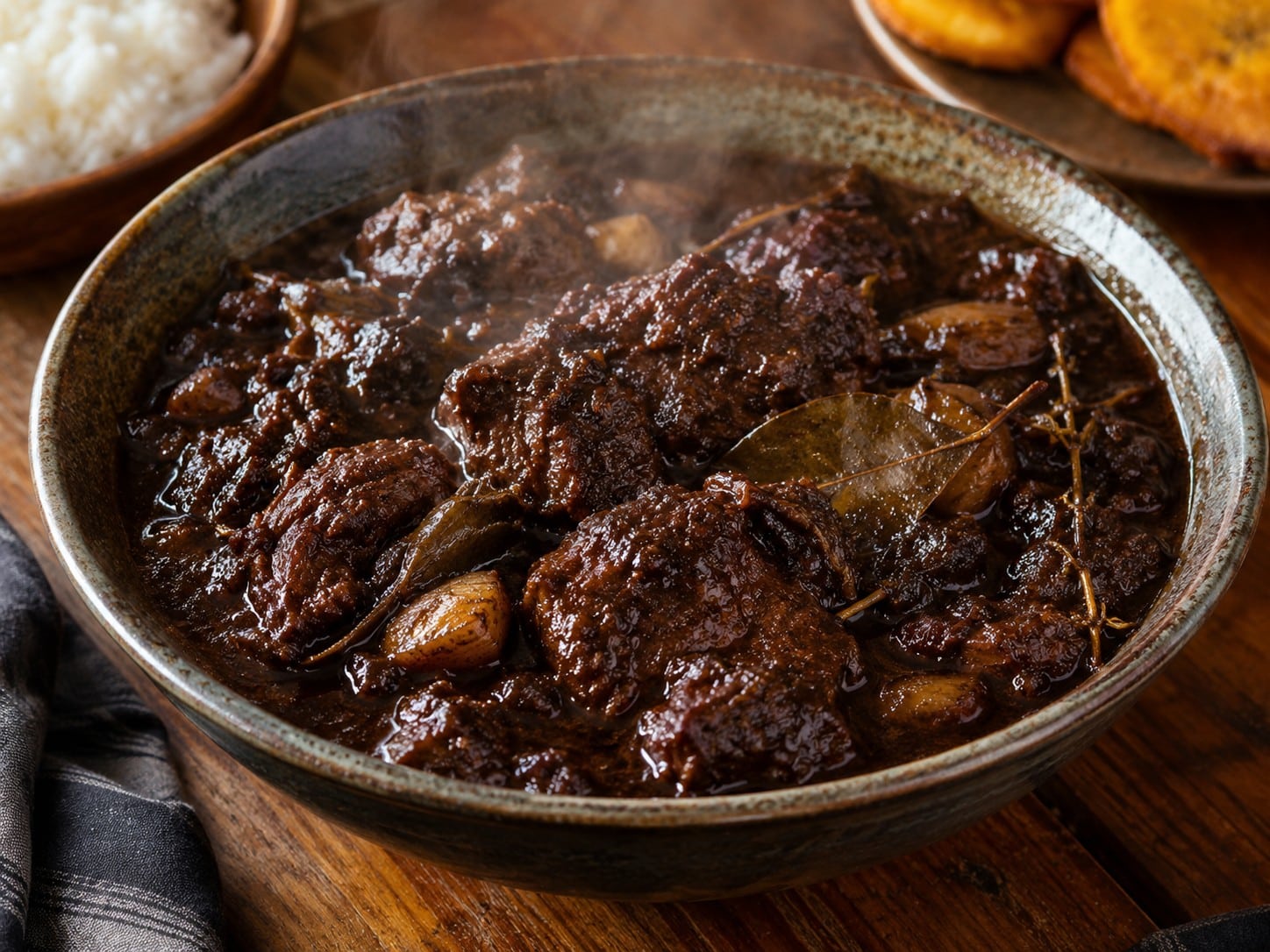
Steaming bowl of Guyanese pepperpot, a dark cassareep stew, served with rice and fried plantains
CULINARY ART
Tolotra

Pepperpot, the Guyanese stew that we heat up day after day

Guyanese pepperpot is a dark stew, simmered for hours with cassareep, a bitter cassava juice. Served on Christmas morning, it is reheated daily to keep it fresh. Considered the national dish, it originates from the country’s indigenous peoples. A black stew that heralds Christmas On December 25, in many Guyanese homes, people wake up to the smell of pepperpot. The pot has been simmering on the stove since the day before. The stew is thick, an almost black brown, with a flavor somewhere between bitter and sweet. It is served with plait, a braided bread, or with cassava bread, the other traditional side dish. Pepperpot, a dish of meat simmered for a long time, is considered Guyana’s national dish. Served at Christmas and New Year’s, it shares the festive table with garlic pork, black cake, and sorrel drink. In the interior of the country, some families eat it year-round. The

Read More »
Trans Guyana Airways aircraft 8R-GAD on the runway, guided by a ground crew member
AIR
Tolotra

Direct Flight Between Guyana and French Guiana: Trans Guyana Airways Promises 1 Hour 15 Minutes Versus 24 Hours by Road

There is currently no direct flight between Guyana and French Guiana. However, following the air services agreement signed on September 30, 2026, which replaces the 1976 agreement, Trans Guyana Airways is planning at least two flights per week between Georgetown and Cayenne, though no dates have been announced. In Georgetown, Guyana, the journey to Cayenne begins with a three- to four-hour drive to Moleson Creek. Next comes a ferry that departs only once a day, a crossing into Suriname, and then a second border crossing. That’s still what it takes in 2026 to reach French Guiana from English-speaking Guyana. The direct flight between Guyana and French Guiana being planned by Trans Guyana Airways would cut this journey from nearly 24 hours to about 1 hour and 15 minutes, according to the airline. Direct Flight Between Guyana and French Guiana: What the September 30, 2026 Agreement Unlocks On September 30, 2026,
Read More »
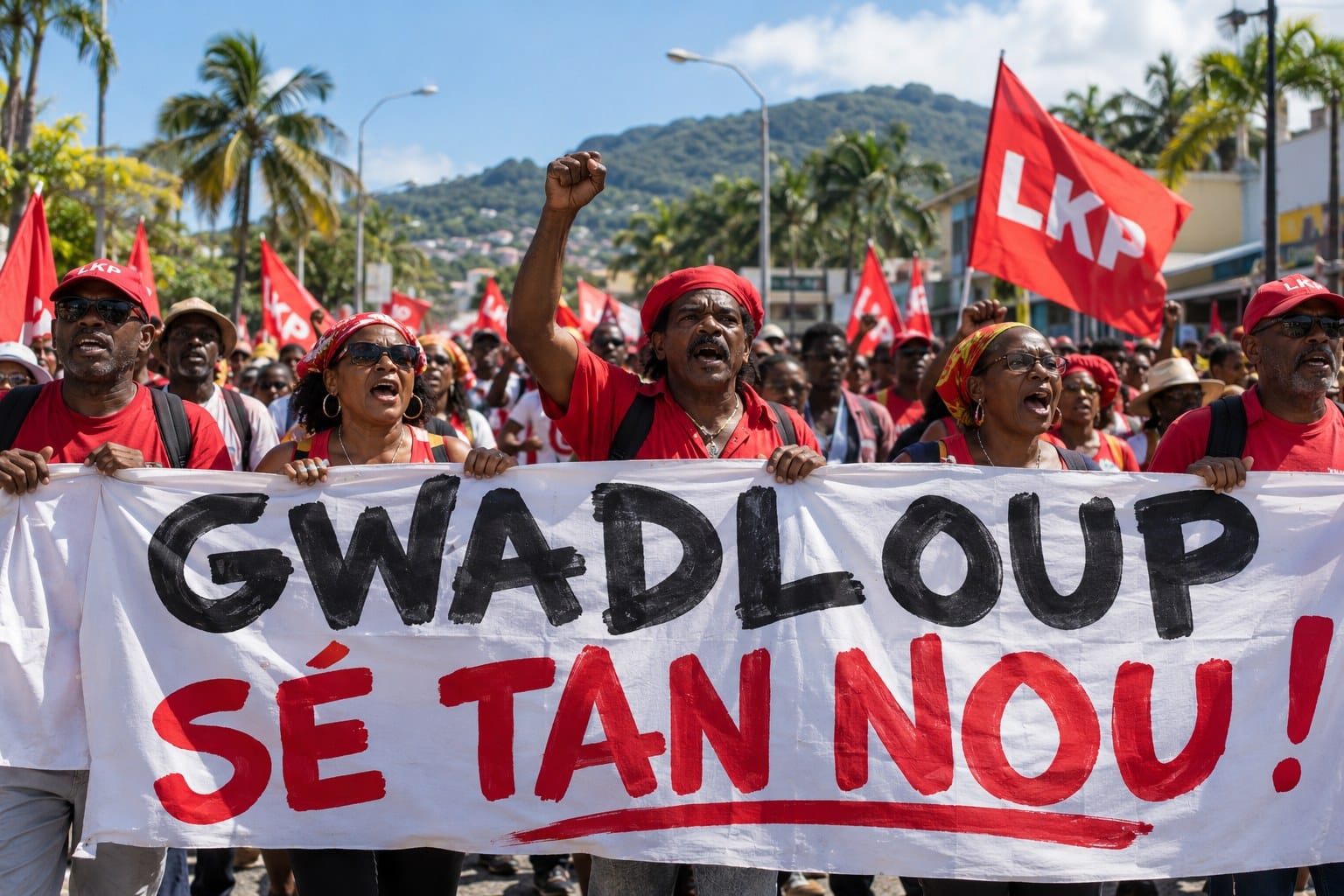
Illustration : manifestants en rouge derrière la banderole « Gwadloup sé tan nou ! » sous des drapeaux LKP
HISTORY & HERITAGE
Tolotra

“Gwadloup sé tan nou”: How a 2009 strike found its chorus.

Union activist Jacky Richard says he wrote the chorus spontaneously, in the midst of the 2009 strike. He didn’t yet know that those few words would come to symbolize an entire movement. “Gwadloup sé tan nou” became the anthem of the LKP, the collective that brought Guadeloupe to a standstill for several weeks. This article explains what “Gwadloup sé tan nou” means, how the song emerged from the strike, and why a single pronoun was enough to get an entire island singing. “Gwadloup sé tan nou,” a title that consists of just one pronoun In Guadeloupean Creole, “Gwadloup sé tan nou” means “Guadeloupe belongs to us.” Everything hinges on “nou,” the first-person plural pronoun, this “us” that brings people together. The chorus asserts that the island belongs to its inhabitants, not to a privileged minority. The phrase is short, rhythmic, and easy to chant in a procession. Illustration : le

Read More »

conTACT RK

we'd love to have your feedback on your experience so far

Join The List

Join our Richès Karayib community!  Sign up for our newsletter.

Want To Maximize Your Business Presence On Riches Karayib?

Complete the form to start the application