



Caribbean Airlines opens a new era between Dominica and Puerto Rico

Caribbean Airlines

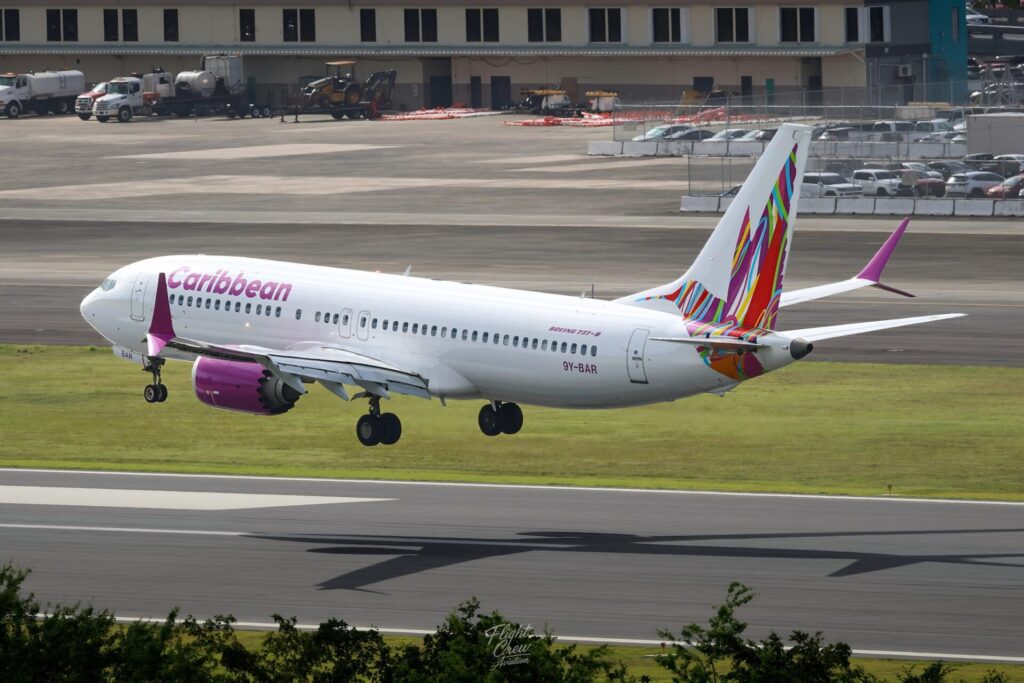
August 15, 2025 will go down as a milestone in the history of regional connectivity. Caribbean Airlines inaugurated its new direct service between Dominica and Puerto Rico, creating a strategic bridge between two complementary territories: one recognized as the Caribbean’s “nature island”, the other as an essential air hub for North American travellers.

This long-awaited launch meets growing demand from regional and international travellers, and confirms Caribbean Airlines’ role as a key player in Caribbean air transport.

A launch celebrated on both sides of the sea

Inaugural flights BW296 and BW297 set the tone for a new stage in Caribbean mobility. At Douglas-Charles airport in Dominica, the aircraft was greeted by a traditional water salute, a powerful symbol of the importance of this opening. On the other hand, in San Juan, a cultural ceremony highlighted the historical and human links that already unite the two territories.

For Garvin Medera, CEO of Caribbean Airlines, this new route is part of a wider strategy: “These schedule improvements are a direct response to market demand and feedback from our customers.” With this announcement, the company reaffirms its commitment to offering a more fluid and accessible air network in the Caribbean region.

Caribbean Airlines
Caribbean Airlines

Air services tailored to today's needs

Caribbean Airlines is now offering up to three weekly flights between San Juan and Dominica. Flight BW297 departs Puerto Rico at 4:00 pm, landing in Dominica at 5:50 pm, while return flight BW296 leaves Douglas-Charles at 10:25 am for San Juan at 12:15 pm.

With a flight time of around 1h50, the trip is quick and comfortable. Fares start from 363 US dollars round-trip, a price that further opens up the destination to a regional audience while attracting North American travelers.

In addition to this route, Caribbean Airlines is also strengthening its connections between Dominica and Trinidad, facilitating connections to New York and other international destinations via Port-of-Spain. The airline is thus positioning itself as a facilitator of multi-destination travel, particularly popular with tourists wishing to combine several islands in a single holiday.

©DiscoverDominica
BETWEEN DOMINICA AND NEW YORK – STARTING AUGUST 15
Caribbean Airlines
BETWEEN DOMINICA AND PUERTO RICO– STARTING AUGUST 15
Caribbean Airlines
BETWEEN DOMINICA AND TRINDAD – STARTING AUGUST 15

Dominica, a preserved natural treasure

With this new connection, Caribbean Airlines is putting the spotlight on a little-known territory: Dominica. Situated between Guadeloupe and Martinique, this English-speaking island of around 66,000 inhabitants attracts visitors with its authenticity and commitment to the environment.

Nicknamed the “Nature Island”, Dominica is famous for its Boiling Lake, countless rivers, spectacular waterfalls and Morne Trois Pitons National Park, a UNESCO World Heritage Site since 1997. Trafalgar Falls, Middleham Falls and Emerald Pool are must-sees for lovers of unspoilt scenery.

Visitors can hike the 185-kilometer Waitukubuli National Trail, which crosses the island from one end to the other, or meet the Kalinago community, custodians of an ancestral Caribbean culture. Add to this a pioneering environmental policy – Dominica has banned single-use plastics from 2019 – and the island emerges as a model of sustainable tourism.

Boiling Lake
©discoverdominica
Caribbean Airlines
©DiscoverDominica
Caribbean Airlines
©DiscoverDominica
Boiling Lake
©discoverdominica

Puerto Rico, the ideal gateway

Opposite this unspoiled jewel, Puerto Rico presents itself as a modern and practical hub. For American travelers, it requires no passport, making it a true gateway to the Lesser Antilles.

San Juan is known for its colorful historic center, a UNESCO World Heritage Site, as well as for its urban and festive atmosphere. The island also offers natural treasures such as the El Yunque rainforest and unique beaches like Mosquito Bay in Vieques, world-famous for its bioluminescence.

For Chekira Lockhart-Hypolite, Dominica’s Acting Minister of Tourism, “this new service brings incredible convenience, especially for travelers from the United States. With less congestion than major hubs like Miami or New York, visitors reach Dominica faster and with less stress.”

Caribbean Airlines
©Kristin Northrop Osborne
Caribbean Airlines
©Kristin Northrop Osborne
Caribbean Airlines
©Kristin Northrop Osborne
Caribbean Airlines
©Kristin Northrop Osborne
Caribbean Airlines
©Kristin Northrop Osborne

Economic and tourism benefits

In addition to its practical benefits, this direct service provided by Caribbean Airlines represents a major economic lever. It encourages the development of multi-island tourism, combining the modernity of Puerto Rico with the ecological adventure of Dominica.

For Willianette Robles Cancel, Executive Director of the Puerto Rico Tourism Company, “the tourism industry is a pillar of the Caribbean economy. These alliances that increase air access are essential to encourage growth and offer varied experiences.”

The Dominican authorities are anticipating a significant increase in tourist arrivals, particularly from the United States. This increase should support the local economy while preserving the island’s authentic charm.

Caribbean Airlines

With this new route, Caribbean Airlines is not content to simply open an air route. It offers a new way to travel in the Caribbean, combining efficiency, comfort and cultural diversity.

Dominica gains in accessibility without sacrificing its authenticity, while Puerto Rico strengthens its role as a strategic hub. For travelers and economic players alike, this air route represents much more than just a journey: it is a link between preserved nature and modernity, between authenticity and connectivity.

Leave a Reply

Your email address will not be published. Required fields are marked *

More articles from RK

Journée mondiale du steelpan
EVENT MANAGEMENT
Tolotra

World Steelpan Day: In Trinidad, Young People March Alongside the Pioneers

This Tuesday, August 11, Trinidad and Tobago celebrates World Steelpan Day with a program built around a powerful idea: connecting those who shaped the movement with the generation that must now carry it forward. In Port of Spain, performances by youth orchestras, the Ancestral Walk, and a closing concert come together to create a day where memory does not stand still. It flows, is played out, and is passed on. In Port of Spain, a day designed to symbolize a passing of the torch Pan Trinbago has chosen “Rhythm and Rise: Youth. Discipline. Culture. Community.” as the theme for the 2026 edition. This choice is no coincidence. For this World Steelpan Day, the organization is clearly placing youth at the center of the program, while paying tribute to the movement’s pioneers. The celebration begins at the Massy Trinidad All Stars Steel Orchestra’s panyard, featuring youth ensembles from various regions of

Read More »
Well mudda sick
HISTORY & HERITAGE
Tolotra

“Well mudda sick!”: But what do these three words really mean?

In the Bahamas, three words are enough to express surprise even before you realize what just happened. Good news breaks, a plan falls through, something exceeds expectations: “Well mudda sick!” might pop up in conversation. Taken literally, the meaning is confusing. In Bahamian usage, however, the expression is much simpler than it seems. Three words that don’t really translate word for word “Well mudda sick!” literally translates to “Well, my mother is sick.” But that’s not what a Bahamian means when they use it. Instead, the expression functions more like an exclamation: “Wow!”, “Oh my!”, “Unbelievable!”, or even “My God!”, depending on the situation and tone. It is precisely this discrepancy that makes it interesting. Someone who knows every single English word can understand the sentence on paper and yet completely miss its meaning in conversation. Here, it’s not just the words that matter. Context, speed, and intonation play a

Read More »
Chattel house
HISTORY & HERITAGE
Tolotra

Chattel House: The Hidden Social History Behind Barbados’ Houses

At first glance, they catch the eye with their wooden facades, their colors, and their simple proportions. Yet Barbados’ chattel houses are not merely an architectural signature. Their form reflects a specific social reality: for a long time, some residents could own their homes without owning the land on which they stood. A chattel house therefore had to be movable. Chattel House: A Home Designed for Traveling To understand this unique aspect, we must look back to the post-emancipation period. In Barbados, the emancipation of enslaved people was completed in 1838. However, the island’s land structure remained deeply shaped by the sugar economy. As early as the 17th century, the expansion of sugarcane cultivation had led to the concentration of land in the hands of large plantations. After emancipation, many workers still lived on land belonging to the plantations. They could build a home and own it, without owning the

Read More »

conTACT RK

we'd love to have your feedback on your experience so far

Join The List

Join our Richès Karayib community!  Sign up for our newsletter.

Want To Maximize Your Business Presence On Riches Karayib?

Complete the form to start the application