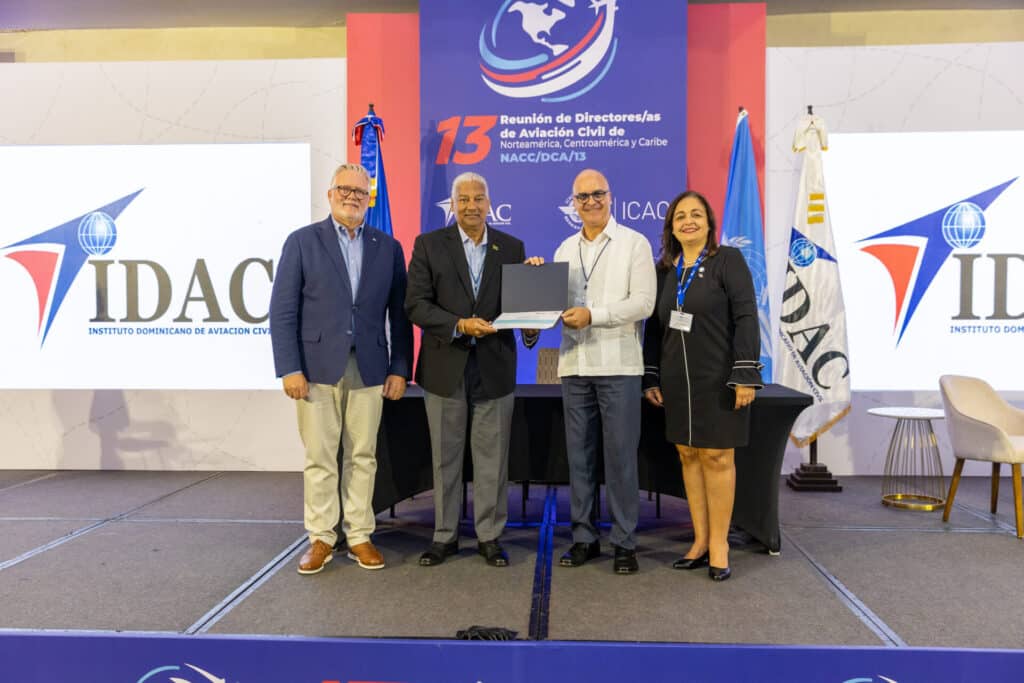
The 13ᵉ Meeting of Civil Aviation Directors of North America, Central America and the Caribbean (ICAO NACC/DCA/13) brought together public decision-makers, civil authority officials and technical partners to set regional priorities for safety, interoperability and connectivity. The meeting was held at the Santo Domingo Sheraton, under the aegis of the NACC regional office of the International Civil Aviation Organization and the Dominican Institute of Civil Aviation (IDAC). 

At the heart of the discussions, the Collectivité Territoriale de Martinique (CTM), through the Direction de la Sécurité de l’Aviation Civile Antilles-Guyane (DSAC-AG), presented two structuring projects: the First Air Conference in Martinique and the LAC eFTI4all pilot site. The stated aim is to strengthen long-haul and intra-regional links, optimize freight, accelerate the dematerialization of information flows and place the region on a path of innovation at the service of the Greater Caribbean, in line with ICAO NACC/DCA/13.

Assumed visibility in a strategic forum

The ICAO NACC/DCA/13 format is a major operational rendez-vous for civil authorities in the area, with agendas, technical sessions and planning workshops aimed at sharing feedback and common roadmaps. Held from August 4 to 7, 2025, it confirms the importance of this forum for member states and territories.

In this context, Martinique relies on the DSAC Antilles-Guyane – the competent authority for Martinique, Guadeloupe, French Guiana, Saint-Barthélemy and Saint-Martin – to carry out its priorities: safety, quality of service, fluidity of operations on the ground and in the air, coordination with port and logistics infrastructures, in line with the commitments reiterated at ICAO NACC/DCA/13.

ICAO NACC/DCA/13
ICAO NACC/DCA/13

Two key announcements

These two announcements are part of the roadmap discussed at ICAO NACC/DCA/13 and supported by the Territory’s Logistics Strategy Commission, chaired by Sandra Casanova at the instigation of Executive Council President Serge Letchimy.

1) First Airline Conference in Martinique

Conceived as a working meeting between companies, infrastructure managers, service operators and institutional players, the conference has three aims:

  • ✅Strengthen connections (long-haul and intra-regional) to improve service, reduce dependence on a few hubs and secure territorial continuity;
  • ✅Improving freight capacity, a decisive factor in the competitiveness of export industries and the supply of island markets;
  • ✅Accelerate innovation (equipment and procedures), with a focus on energy efficiency and operational performance.

The conference is intended as a catalyst to position Martinique as a key player in the regional and transatlantic air network.

2) eFTI4all LAC pilot site

The second focus is digital: Martinique serves as a pilot site for eFTI4all, a European project implementing the eFTI regulation (EU 2020/1056) and aimed at dematerializing transport documents. In concrete terms, the aim is to make information exchanges (shipments, formalities, controls) between companies and authorities interoperable and legally reliable, from the first kilometer to the last. On the scale of the Europe-Caribbean corridors, the reduction in delays, errors and administrative costs represents a direct gain for both companies and control authorities.

Why is it so important for the Greater Caribbean?

The regional economy is based on a logistics chain in which air and sea complement each other. By standardizing data and making their circulation more reliable, the approach adopted by ICAO NACC/DCA/13 makes it possible to anticipate load disruptions, improve the predictability of operations and save days on certain sensitive flows (spare parts, high-value health products). For airlines and forwarders, the challenge is not just a technological one: it’s a question of competitiveness and resilience in the face of climatic hazards, peak demand and regulatory constraints.

On the passenger side, the conference announced in Martinique should help structure more regular and better-coordinated connections between the islands and the major continental airports. Service quality depends as much on runway and departure lounge capacity as it does on procedures and the quality of data transmitted upstream. All operators will be keeping a close eye on the link between strategic thinking and practical implementation (slots, maintenance, handling, security).

ICAO NACC/DCA/13
ICAO NACC/DCA/13

Governance and cooperation

Martinique’s approach is based on clear governance: the CTM sets the course, the Logistics Strategy Commission ensures coordination, and the DSAC-AG guarantees alignment with safety and compliance requirements. This political-operational-regulatory triptych, presented at ICAO NACC/DCA/13, is essential if we are to move from announcements to achievements.

ICAO NACC/DCA/13
OACI NACC/DCA/13

Next steps

  • 🔜 Operational timetable: publication of the detailed program for the First Air Conference in Martinique (format, speakers, expected deliverables) and articulation with the workstreams defined by ICAO NACC/DCA/13.
  • 🔜 eFTI4all: consolidation of use cases in the LAC (Latin America & Caribbean) zone and provision of tools for companies (interfaces, exchange repositories, compliance guides).
  • 🔜 Partnerships: mobilizing airlines, port operators, logisticians, research centers and administrations to test, evaluate and deploy joint solutions – with Martinique as a bridgehead.

Martinique’s active participation in ICAO NACC/DCA/13 is more than just an institutional presence: it formalizes a course where connectivity, freight and reliable data come together. The Première Conférence de l’aérien en Martinique aims to organize the ramp-up of regional links and capacity, while eFTI4all provides the digital infrastructure needed to make exchanges more fluid and secure. On a Caribbean scale, the challenge is clear: boost performance without compromising on safety or transparency of operations.

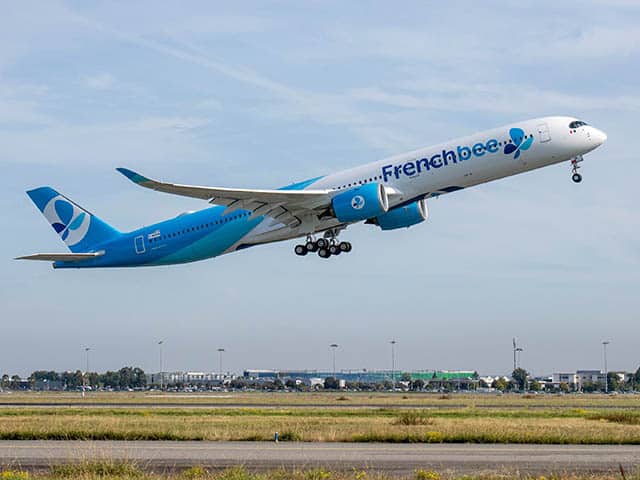
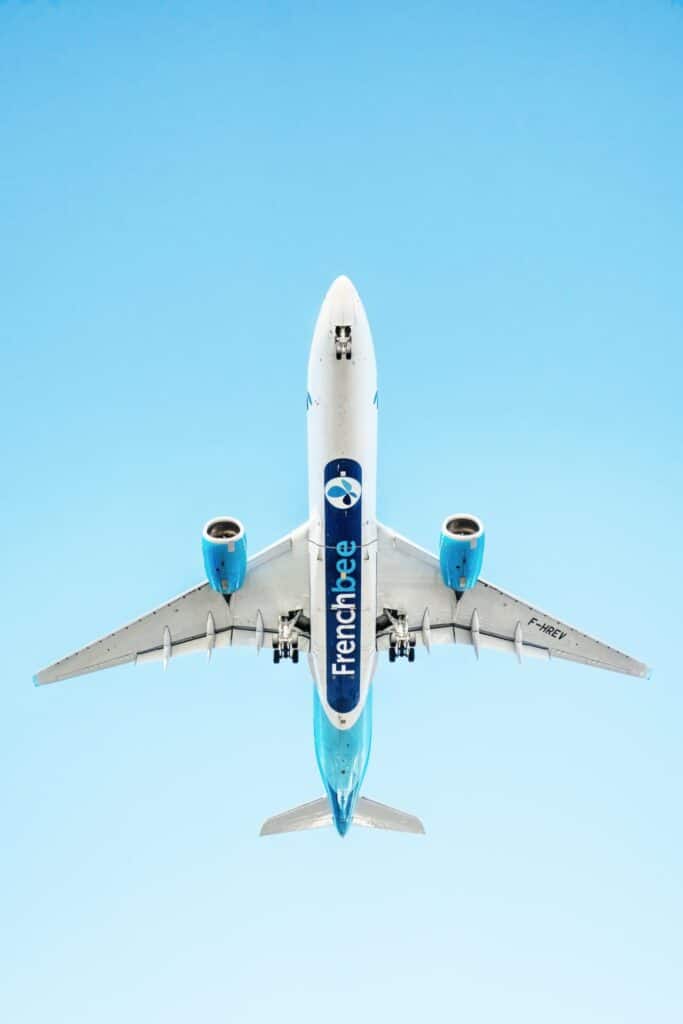
Air Caraïbes, French Bee and Volotea have just signed an unprecedented interline agreement enabling passengers of Spanish low-cost carrier Volotea to combine their short-haul flights with the long-haul routes of Air Caraïbes and French Bee. This alliance aims to considerably simplify bookings and connections, while expanding travel possibilities to the Caribbean, North America and the Indian Ocean without multiplying tickets or the risks associated with stopovers.

An unprecedented partnership in the European and overseas air markets

Air Caraïbes, French Bee and Volotea are opening a new chapter in the airline industry, by combining the low-cost business model with airlines specialized in long-haul flights to the French overseas territories. This cooperation expands Volotea’s network without direct investment in long-haul aircraft, while Air Caraïbes and French Bee strengthen their visibility in Europe, particularly in the face of well-established players.

This geographical alliance now covers connections between several European regional cities – including Lourdes, Rodez, Ancona, Genoa and Turin – and destinations such as Guadeloupe, Martinique, French Guiana, Réunion, Saint-Martin, Saint-Barthélemy, as well as the USA and Canada.

French Bee and Volotea
©Airbus H. Goussé

Simplified travel: one ticket, one reservation

At the heart of this partnership is the desire to make travel simpler and less stressful. Air Caraïbes, French Bee and Volotea now enable passengers to book a one-way ticket covering the whole journey, whether it’s a short-haul flight with Volotea or a long-haul one with Air Caraïbes or French Bee.

This integration considerably improves baggage management, with baggage transported directly to the final destination, eliminating the usual hassle of retrieving and depositing baggage during stopovers. The promise of “no more complexity is also based on optimized connections at Paris-Orly airport, the nerve center of these connections. This process makes journeys smoother and reduces the stress associated with delays or difficult connections between several airlines.

French Bee and Volotea
©French bee

An optimized network for a better passenger experience

The coordination of schedules between Volotea and the French long-haul airlines guarantees improved connectivity, enabling passengers to connect the main European regional capitals with the French overseas territories without hindrance. The dense network of short and long flights offers a wide range of connections, coupled with improved logistics management and lower overall costs. Air Caraïbes, French Bee and Volotea are thus reinforcing the fluidity of their routes.

French Bee and Volotea
VOE ©Marc Glen

Economic benefits for travellers

Volotea’s low-cost model, combined with the strength of Air Caraïbes and French Bee, now makes destinations previously often reserved for more expensive direct flights accessible at competitive prices. This economic gain is accompanied by greater choice, with the possibility of reaching places like Santo Domingo, Miami, Reunion or Polynesia without the constraint of multiple bookings.

These savings are not purely financial: the reduction in waiting time, the peace of mind linked to integrated baggage management, and the ease of booking clearly enhance the customer experience. Air Caraïbes, French Bee and Volotea are thus helping to democratize access to these destinations.

French Bee and Volotea
©Arnaud Gaulupeau-Groupe ADP

Impact on the traditional airline industry and future prospects

This strategic alliance between Air Caraïbes, French Bee and Volotea could shake up the traditional hierarchy of airlines linking Europe to its overseas territories. The association of a low-cost player with long-haul airlines brings a new dynamic that could encourage other airlines to consider similar collaborations.

At a time when demand for flexible, simple solutions at competitive fares is growing, this partnership is positioned as an appropriate response to travelers’ expectations, while strengthening the attractiveness of the French Overseas Territories and promoting their links with Europe.

French Bee and Volotea
©French bee

A stronger bridge between Europe and the French overseas territories

In short, the interline agreement signed between Air Caraïbes, French Bee and Volotea offers a turning point for travelers wishing to connect Europe with tropical and overseas destinations. Thanks to simplified routes, more affordable fares and better connection management, this agreement paves the way for a more connected, fluid and competitive air network.

Passengers benefit from a more integrated, less restrictive experience, while airlines strengthen their presence in a fast-changing market. This new balance between low-cost and long-haul could well redraw the map of air transport between Europe and the French overseas territories.

The “Rush été 2025” system is now fully deployed at Guadeloupe Maryse Condé airport, in response to an unprecedented number of passengers at this time of year. From the very first days of July, high passenger numbers at Guadeloupe Maryse Condé airport confirm the trend: the 2025 summer season will be marked by a high number of passengers.

The month of June already recorded 144,459 passengers, a significant increase over the same period in 2024. According to airport management, this increase is part of a wider dynamic, with a 3.8% growth in traffic over the first six months of the year. Faced with this situation, SAGPC SA has launched the Rush summer 2025 plan to maintain fluidity of operations and quality of service.

A targeted operational plan

“Rush été 2025” is based on a reinforced organization. The aim is to avoid the inconveniences often associated with peaks in traffic, while ensuring the smooth running of flights. The plan, devised in advance, mobilizes all the hub’s operational teams, from ground services to operations staff. Particular attention is paid to coordination between airlines, managers and subcontractors.

Rush été 2025
©Aéroport Guadeloupe Maryse Condé

Adapting flights to key destinations

To meet demand, Air France, Corsair and Air Caraïbes have adjusted their schedules. Additional rotations to France are being introduced, with a peak expected on August 21, when eight flights to Paris are scheduled. “Rush été 2025” also includes the return of charter flights to Punta Cana, as well as a regular Sunday flight to Miami. These reinforcements reflect the region’s attractiveness, but require rigorous logistics.

Rush été 2025
©Aéroport Guadeloupe Maryse Condé
Rush été 2025
©Aéroport Guadeloupe Maryse Condé

Reinforced human resources

The success of “Rush été 2025 ” also relies on the deployment of additional human resources. The “pink polos”, young students identifiable by their uniforms, have been recruited to guide passengers through the check-in and boarding areas. Their mission: to reduce the anxiety associated with travelling during busy periods, by simplifying the passenger’s journey. The number of baggage handling and cleaning staff has also been increased.

Easy traffic flow and access

As part of “Rush été 2025”, improvements have been made to vehicle circulation and terminal access. The P1 parking lot now benefits from a more flexible configuration, thanks to mobile barriers that allow for smoother exits. These adjustments are designed to limit the bottlenecks seen in previous years, particularly at long-haul flight arrival times.

Rush été 2025
©Aéroport Guadeloupe Maryse Condé
Rush été 2025
©Aéroport Guadeloupe Maryse Condé
Rush été 2025
©Aéroport Guadeloupe Maryse Condé

New installations in progress

Two elevators accessible directly from the forecourt are due to go into service by the end of July. This installation is designed to facilitate travel for families with children and people with reduced mobility. “Rush été 2025” also sees the arrival of new baggage carts, designed to improve overall passenger comfort during peak periods.

Practical advice for worry-free travel

In order to limit the impact of heavy traffic, management is advising passengers to follow a few simple instructions. As part of “Rush été 2025”, passengers are advised to arrive at the airport at least four hours before departure for international flights. Check the validity of your travel documents, clearly label your baggage and find out in advance about check-in times. Reception staff are on hand as passengers enter the airport to guide them to the various check-in points.

Rush été 2025
©Aéroport Guadeloupe Maryse Condé
Rush été 2025
©Aéroport Guadeloupe Maryse Condé

A summer under tension, but under control

Thanks to “Rush été 2025”, Guadeloupe Maryse Condé airport intends to maintain a constant quality of service despite the pressure exerted by increased traffic. By focusing on anticipation, human resources and technical adjustments, SAGPC SA aims to guarantee a smooth airport passage for all passengers. The success of this strategy hinges on the coordinated mobilization of all the hub’s players, in a context where logistical control remains essential.

American Airlines is introducing new flights from Boscobel and Kingston to Miami, starting December 18. This change, which goes beyond a simple adjustment of the flight schedule, is part of a territorial development strategy that could transform the economic, social and cultural dynamics of several regions of the country over the long term.

An overhead network redesigned to meet demand

For almost fifty years, American Airlines has accompanied the region’s development in terms of connectivity. The addition of two daily flights from Ian Fleming airport in Boscobel, and four daily flights between Kingston and Miami, is a direct response to the increasing flow of travellers – whether from tourism, the diaspora or the business world.

Miami, a major base for Jamaicans living in the United States, is now closer and more accessible. Thanks to American Airlines, passengers will now benefit from optimized routes, with extended schedules and a better distribution of flows. The offer has been designed to adapt to the reality of different uses: family travel, business trips or tourist stays.

American Airlines
©American Airlines

An ambitious winter program

From December 18, the company will operate :

  • ✅ Two daily flights between Boscobel (St Mary) and Miami
  • ✅ Four daily flights between Kingston and Miami

These new routes reinforce an already dense winter schedule, with more than twenty daily departures from Jamaica to seven major U.S. cities: Boston, New York, Dallas-Fort Worth, Charlotte, Chicago, Philadelphia and Miami. The increase in capacity, estimated at 20% over the previous year, illustrates American Airlines’ determination to adapt to new trends and meet the strong growth in international mobility needs.

American Airlines
©American Airlines

Economic leverage for St Mary's and Kingston

The opening of Ian Fleming Airport to direct flights to the USA offers an unprecedented opportunity for the St Mary’s region. This area, long considered secondary on traditional tourist circuits, could now benefit from new visitor numbers, stimulated by the presence of American Airlines. Local restaurateurs, craftsmen, innkeepers and carriers could all benefit immediately from this increased international exposure.

In Kingston, the growing importance of connections with Miami is consolidating the capital as a strategic center for Jamaica. Thanks to American Airlines, local companies, particularly in the trade, services and logistics sectors, benefit from easier access to the North American market, encouraging exchanges, partnerships and the circulation of skills.

American Airlines
©airports authority jamaica
American Airlines
©airports authority jamaica
American Airlines
©airports authority jamaica
American Airlines
©airports authority jamaica

A stronger link with the diaspora

The Jamaican community residing in Florida, particularly in the Miami-Dade and Broward areas, maintains intense family, cultural and economic ties with the country of origin. The new connections offered by American Airlines facilitate these interactions by reducing physical and symbolic distances.

Homecomings are becoming more frequent and simpler, and are often accompanied by transfers of skills, investments or community projects. By enabling more families to reunite more easily, this initiative supports social cohesion on a transnational scale.

A new dynamic for regional tourism

The integration of Boscobel into the international network represents a significant step forward in the company’s tourism diversification strategy. While Montego Bay and Ocho Rios have historically concentrated the majority of traffic, American Airlines is redirecting attention to the as yet under-exploited northeast coast.

This territorial rebalancing not only relieves pressure on certain infrastructures, but also enhances Jamaica’s other natural, heritage and human assets. The local authorities, in coordination with the air transport industry, ensure that this development is sustainable and respects local communities.

Measurable effects on daily life

Several direct impacts can be observed in the short term:

  • ✅ Greater accessibility: Residents of St Mary’s and Kingston can now travel more easily, with more flexible timetables and smoother connections.
  • ✅ Job creation: Increased air traffic generates new needs in the hotel, security, ground transportation and catering sectors.
  • ✅Enhanced appeal: By partnering with American Airlines, the destination gains greater visibility in the North American market, without sacrificing its authenticity.
American Airlines
©American Airlines

A shared vision for the future

The arrival of these new flights reflects the shared ambition of the Jamaican authorities and American Airlines to build a long-term partnership. This partnership is based on mutual commitments to sustainable growth, local value creation and community support.

The company is already planning to keep a close eye on traffic trends, adjusting frequencies and destinations if necessary. The aim: to position Jamaica as a modern, connected and forward-looking Caribbean hub.

With these new routes between Boscobel, Kingston and Miami, American Airlines is establishing itself as a key player in the transformation of mobility and regional development. By improving connectivity, generating tangible economic benefits and enhancing the value of previously less exposed regions, this initiative creates the conditions for a more balanced and inclusive development of Jamaica.

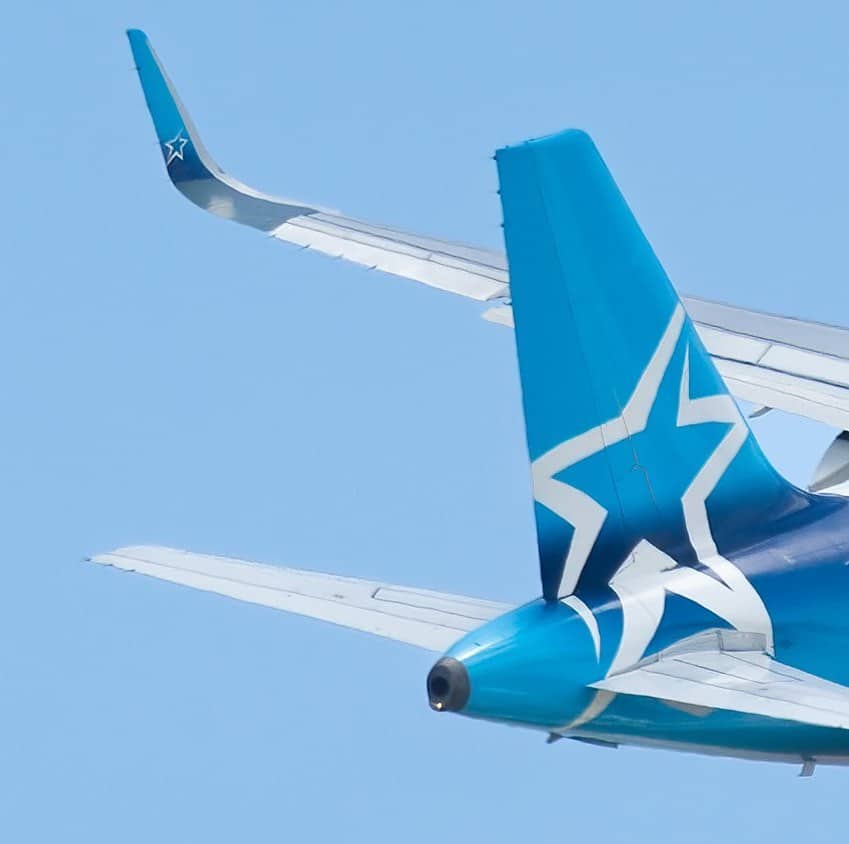
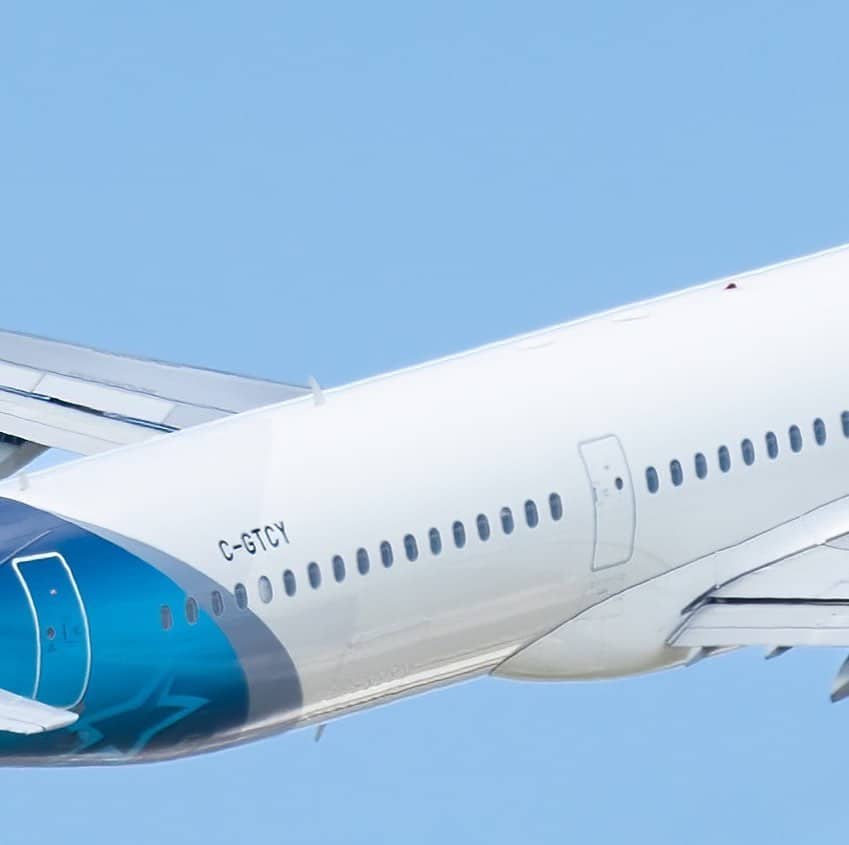
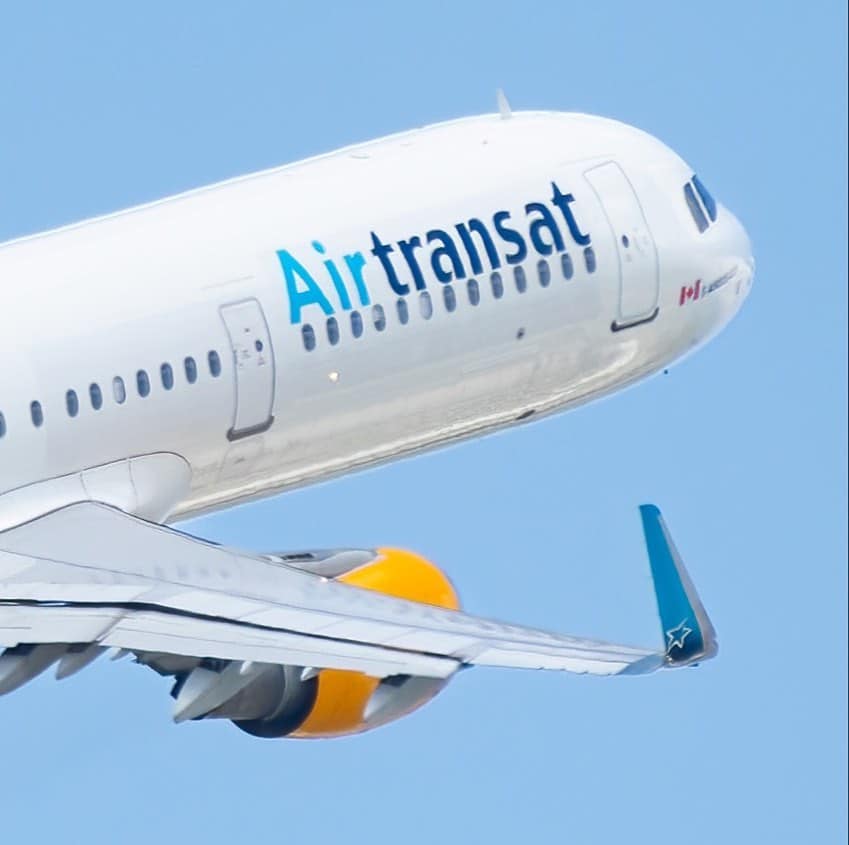
Air Transat is set to transform connectivity between Quebec and Guadeloupe with the opening, in February 2026, of a weekly direct flight between Quebec City and Pointe-à-Pitre.

A strategic advance between two worlds

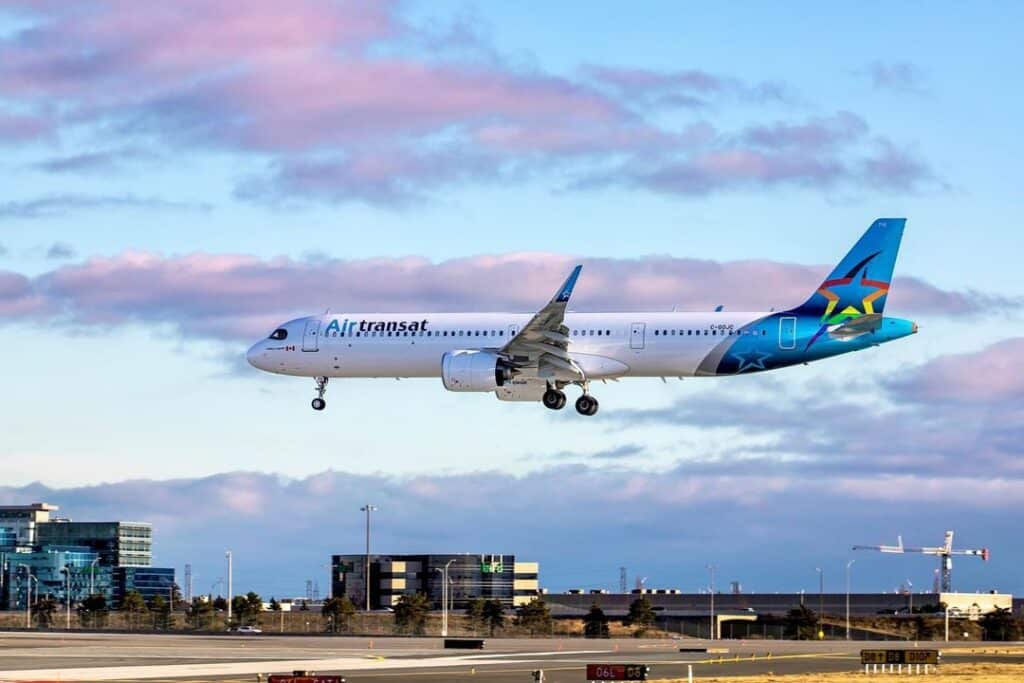
February 18, 2026, Air Transat will launch a direct service between Quebec City’s Jean-Lesage airport and Guadeloupe, operated by Airbus A321LR. This six-hour weekly flight will mark a major step in the development of tourism between these two French-speaking territories. Until now, travellers from the Quebec City region had to pass through Montreal or other air hubs. This new flight eliminates these stopovers, simplifying the journey and opening up Guadeloupe to a public that has hitherto been less represented.

Behind this decision lies a clear desire: to reposition Air Transat as an innovative player, capable of anticipating the expectations of travellers in search of authenticity, accessibility and meaning.

Air Transat
Air Transat
Air Transat
Air Transat
Air Transat
Air Transat

A direct response to a concrete request

Over the past few seasons, booking data have shown growing interest in Guadeloupe from Quebec City. The bitter cold of the Canadian winter, the desire to get away from it all, and the appeal of Creole culture have created a market potential that, until now, has been under-exploited. In response to this dynamic, Air Transat offers direct access to the archipelago, reducing both logistical constraints and costs.

This new link comes at just the right time: it will redistribute tourist flows within Canada, relieving congestion on departures from Montreal and broadening the Caribbean offer to a wider clientele.

Guadeloupe from a bird's eye view

Air Transat
Air Transat

Guadeloupe is a destination with character, seduced by its natural contrasts – beaches, volcanoes, tropical forests – and its cultural richness. Thanks to this new link, Quebecers will now have direct access to a territory where spectacular nature, living traditions, tasty cuisine and sincere hospitality come together.

For tourism professionals, this opening represents a unique opportunity to strengthen exchanges. Guadeloupe doesn’t just welcome tourists: it invites them to a genuine human, cultural and sensory encounter.

Air Transat
Air Transat

Expected economic benefits

The impact of this new route will not be limited to air travel. By broadening the pool of potential visitors, Air Transat will make a direct contribution to boosting the local economy: hotels, restaurants, crafts, tourist services… every link in the chain will be affected. Jobs will be created, offers redesigned, and tours adapted to this new audience developed.

This strategy also benefits local producers: by promoting Guadeloupe’s terroir to a curious clientele, it encourages the consumption of artisanal products, the discovery of typical flavors, and a better distribution of the benefits of tourism.

Air Transat

A vision consistent with environmental issues

At a time when aviation is regularly criticized for its carbon footprint, Air Transat is focusing on rationalizing its routes. By eliminating connecting flights, this route reduces overall travel emissions. It’s a step towards more responsible tourism, in line with the expectations of travellers conscious of their ecological footprint.

This approach is in line with a desire shared with local authorities to promote longer, more immersive stays, and to encourage tourism that respects the environment and host communities.

Air Transat

An ambitious strategy for Air Transat

With this new Québec-Guadeloupe flight, Air Transat confirms its diversification strategy. After consolidating its presence on the Montreal-Pointe-à-Pitre route, the company is now expanding its network to secondary cities, capitalizing on their untapped potential. This choice demonstrates a keen understanding of market needs and a capacity for innovation.

Unlike other carriers that focus on standardized destinations, Air Transat bets on originality, Francophonie and cultural added value. This orientation strengthens its brand with travelers eager to get off the beaten track.

Air Transat

Close cooperation with local players

The success of this link also relies on solid collaboration with local institutions, notably the Comité du Tourisme des Îles de Guadeloupe (CTIG) and Pôle Caraïbes airport. Together, they are developing targeted campaigns for the Quebec market, showcasing the region’s riches, and preparing a welcome adapted to this new clientele.

More than a promotional operation, this cooperation aims to build a lasting bridge between Guadeloupe and Quebec. The benefits will extend far beyond tourism: cultural exchanges, heritage enhancement, cross-fertilization of artistic creations… the prospects are numerous.

Air Transat

An opening that brings cultures closer together

French-speaking and attached to their roots, Quebec and Guadeloupe share much more than language. They share a certain vision of the world, a strong relationship with the land, and a creativity rooted in memory and everyday life. Thanks to Air Transat, these affinities can now materialize more easily.

This flight is also an opportunity to strengthen bridges between artists, entrepreneurs and educational institutions. New projects can be born from this new-found proximity. The sky is no longer a border, but a link.

By creating this direct service, Air Transat is not just adding a new route to its catalog. It is part of a sustainable transformation of regional tourism. It responds to a need, creates a desire, and redraws the map of possibilities.
February 2026: a date that will mark the beginning of a new era between Quebec and Guadeloupe.

Cayman Airways is taking a new step in the history of regional air travel by introducing Sir Turtle’s Sky Brew, the first signature craft beer served on board a Caribbean airline. The launch, made official on May 22, 2025, marks a turning point for international passengers looking for an authentic experience from the moment they board.

Cayman Airways has teamed up with Caybrew, the Cayman Islands “iconic brewer, to offer a drink that reflects the soul of the territory. This initiative illustrates Cayman Airways” ability to innovate while valorizing local talent, thus reinforcing its position as a leader in the region.

Sir Turtle's Sky Brew: a signature beer adapted to altitude

The development of Sir Turtle’s Sky Brew required a meticulous approach and in-depth expertise. The Cayman Airways and Caybrew teams worked closely together to design an India Pale Ale capable of retaining all its taste qualities at an altitude of 10,000 metres.

Dry air and reduced cabin pressure alter the perception of flavors, so every step of the brewing process has been designed to ensure an optimal in-flight sensory experience. Sir Turtle’s Sky Brew stands out for its freshness, roundness and balanced notes, offering passengers a taste of Cayman Islands brewing expertise from the very first service on board.

Cayman Airways

Cayman Airways: standard-bearer of Caymanian excellence

Since its creation, the company has established itself as a true ambassador for the region, highlighting the richness and uniqueness of the Cayman Islands. The introduction of Sir Turtle’s Sky Brew is part of this approach, offering an exclusive product that embodies local quality and authenticity.

Caybrew, renowned for its high standards and commitment to tradition, is contributing its expertise to this project, enabling Cayman Airways to distinguish itself with international customers. This partnership testifies to a shared desire to promote Caymanian excellence at every stage of the journey.

Cayman Airways

A strategic asset for the image and economy of the Cayman Islands

The integration of Sir Turtle’s Sky Brew into the onboard Cayman Airways offer goes beyond the simple gastronomic dimension. It plays an active role in enhancing the local heritage and promoting local artisans. This approach reinforces the identity of the Cayman Islands for travellers, who benefit from a cultural immersion from the moment they board the plane.

In this way, the company plays a key role in the country’s international outreach strategy, while generating positive economic spin-offs for the entire brewing and tourism industry. This initiative contributes to positioning the Cayman Islands as a destination where authenticity and quality come first.

Cayman Airways

Cayman Airways redefines the passenger experience

On board international flights, every major passenger receives a complimentary can of Sir Turtle’s Sky Brew, an attention to detail that sets Cayman Airways apart from its competitors. This exclusivity joins the emblematic offer of Seven Fathoms rum punch, another signature of the airline. Together, these products embody Cayman Airways’ signature hospitality and refinement, creating a singular and memorable atmosphere.

Passenger satisfaction is enhanced, and the on-board experience becomes a true extension of a stay in the Cayman Islands. The company thus demonstrates its ability to anticipate the expectations of a demanding clientele, while remaining true to its roots.

Cayman Airways

Innovations and prospects for Caribbean airlines

The decision to introduce Sir Turtle’s Sky Brew on board its aircraft is a model of innovation for the entire regional airline sector. This approach, based on local collaboration and heritage enhancement, is inspiring other airlines to rethink their service offering.

The company proves that it is possible to combine tradition and modernity to offer a differentiating experience, while generating benefits for the local economy. The initiative opens the way to new prospects for Caribbean air transport, where the promotion of local know-how becomes a lever for development and attractiveness.

Cayman Airways

Cayman Airways, Forerunner of a New Generation of Services

With Sir Turtle’s Sky Brew, Cayman Airways has established itself as a key player in regional air transport, capable of combining excellence, authenticity and innovation. This partnership with Caybrew illustrates the company’s desire to offer an enriched passenger experience, true to the identity of the Cayman Islands. By showcasing local talent and offering exclusive products on board, the company is helping to strengthen the region’s image on the international scene.

Inter-island air connectivity today represents one of the greatest challenges to the development of sustainable tourism in the Caribbean region. Getting around between the islands of the Caribbean remains a complex task, despite the region’s considerable tourism potential. This is as true for international travelers as it is for local residents, for whom getting from one island to the next can be an obstacle course.

The current state of air connectivity in the Caribbean

The Caribbean airline industry has undergone profound upheaval in recent years. Historic players such as Air Antilles and LIAT have gone through major crises, with the latter even liquidated in June 2020. This situation has created a considerable gap in inter-island services, particularly felt between the region’s French-, English- and Spanish-speaking territories.

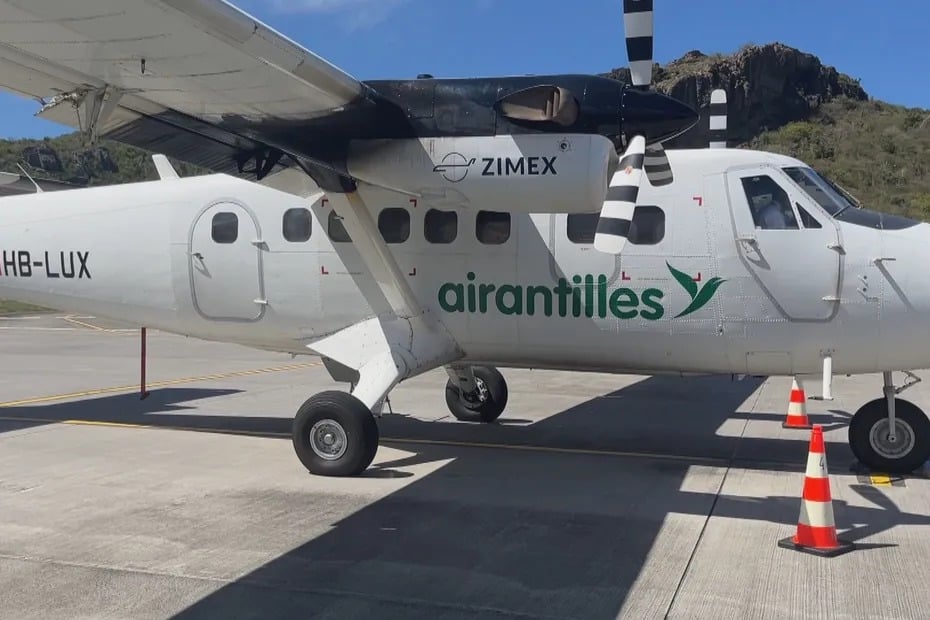
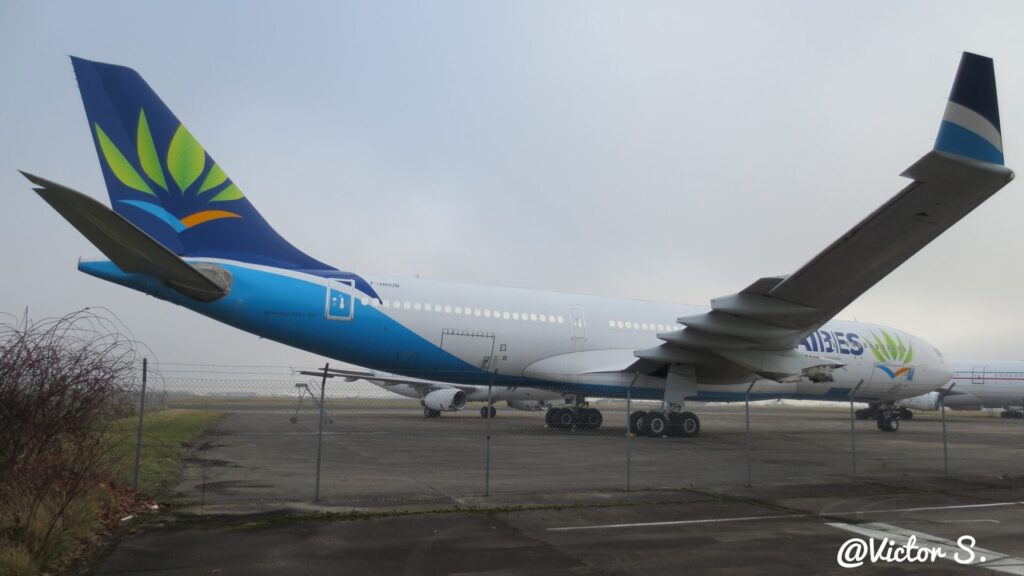
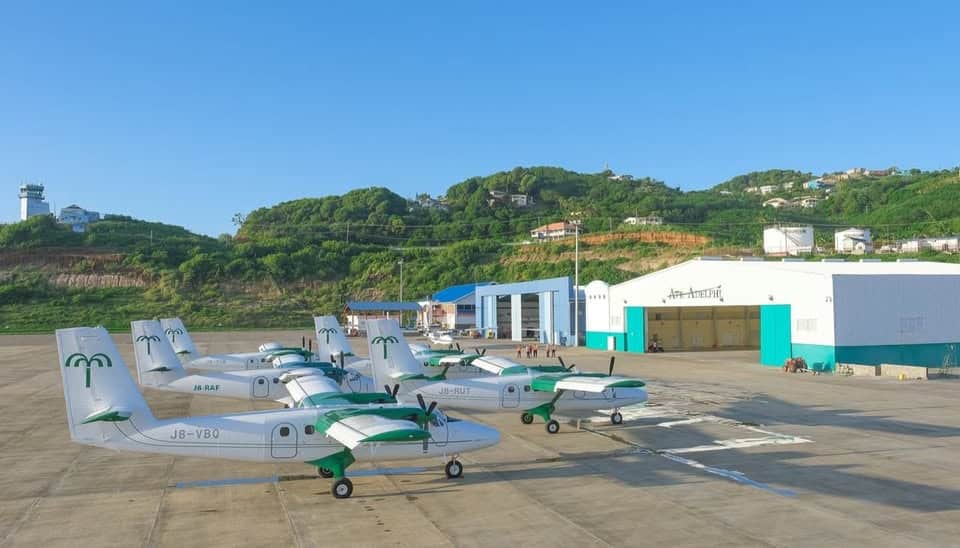
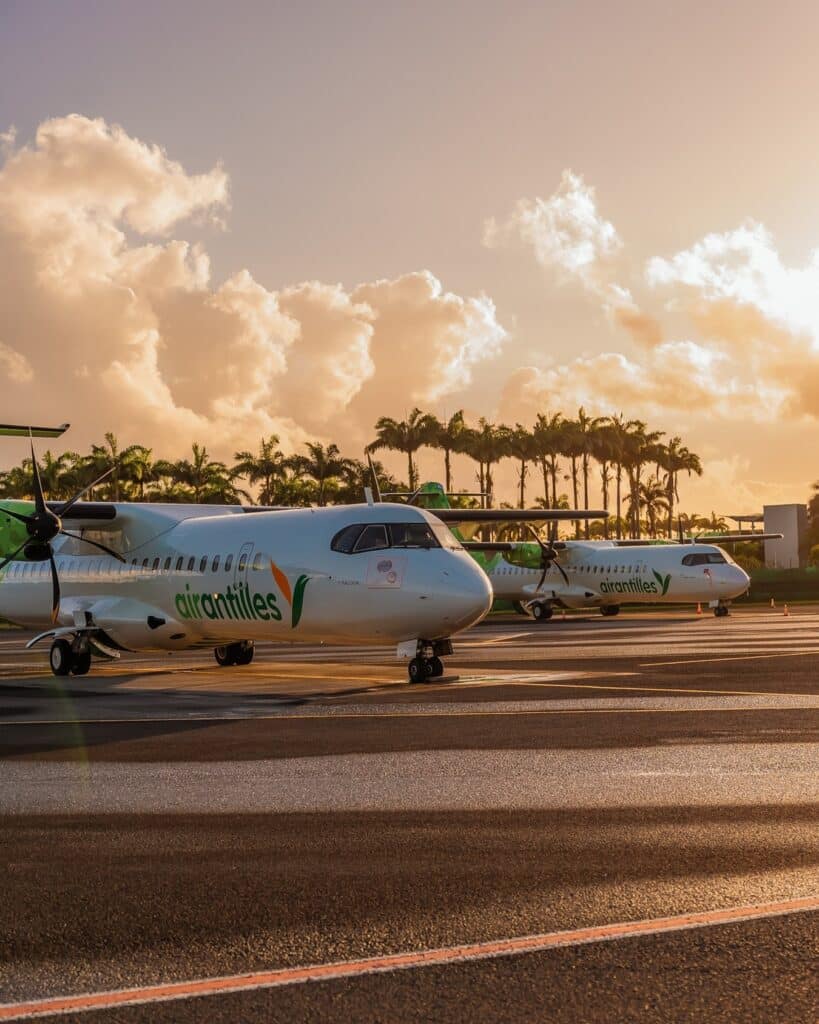
Air Caraïbes now operates a number of routes, notably between Guadeloupe, Martinique and Saint-Martin, but the overall offer remains insufficient to meet demand. New initiatives are emerging, however, such as Air Adelphi, which recently inaugurated a regular service linking Martinique with Saint Lucia and Saint Vincent and the Grenadines, filling a gap left since 2019.

Inter-island air connectivity

Structural barriers to inter-island connectivity

Several factors explain the difficulty of establishing a coherent air network in the Caribbean. Firstly, the political and linguistic fragmentation of the region, with territories under different jurisdictions (French departments, British territories, independent states), complicates the harmonization of aviation regulations.

Secondly, the modest size of island markets makes it difficult to make air routes profitable. This fragile economic reality, based essentially on tourism and turned towards the outside world rather than intra-regional trade, is a major obstacle to efficient inter-island air connectivity.

The economic challenges of inter-island air connectivity

Inter-island air connectivity plays a crucial role in the economic development of the Caribbean. Every direct flight between two islands represents an open door to new tourism and business opportunities. Improved connectivity would make it possible to capitalize on the specific characteristics of each territory, and promote the gastronomic and cultural riches specific to each island.

The potential economic impact is considerable: the air sector currently accounts for 3.6% of regional GDP, supports 8.3 million direct and indirect jobs and generates $240 billion. Improving inter-island air connectivity could significantly boost these figures by facilitating the movement of tourists and professionals throughout the region.

Inter-island air connectivity

The untapped potential of multi-destination tourism

One of the great untapped potentials of the Caribbean lies in multi-destination tourism. At present, most visitors limit their stay to a single island, due to the lack of convenient and affordable air links between the territories. Yet the archipelago’s cultural, natural and historical diversity is a major asset that could be better exploited through multi-island tours.

Initiatives such as the CARIBSKY alliance, formerly grouping Air Antilles, Winair and LIAT, aimed to facilitate this type of tourism by offering a “one-way ticket to the Caribbean”. Although this specific project was compromised by the difficulties of the participating airlines, the idea remains relevant.

Towards sustainable aviation in the Caribbean

Faced with environmental challenges, Caribbean aviation is gradually making the transition to more sustainable practices. The region’s airlines have reduced their fuel consumption per passenger kilometer by 28% since 2011, thanks to fleet renewal and improved operational efficiency.

Initiatives such as Green Pilot® certification recognize the efforts of airlines developing robust carbon reduction programs in their operations. This transition to greener aviation is essential to ensure that improved inter-island air connectivity does not come at the expense of the fragile environment of the Caribbean islands.

connectivité aérienne inter-îles

The challenge of operating costs and profitability

One of the main obstacles to inter-island air connectivity remains the weakness of the business model. Regional airlines face high fixed costs (salaries, maintenance, airport taxes), which are not sensitive to passenger volume. Flight fares vary from 50 to 150 euros one way, which represents a a real obstacle for residents, especially in areas with low purchasing power.

A round trip between two islands can be equivalent to several days’ wages for a local worker. Conversely, some very short sea crossings are still affordable, costing around 8 to 15 euros. But these connections are limited. This situation makes intra-regional mobility difficult, and hinders the development of sustainable, multi-destination tourism in the Caribbean.

Initiatives and partnerships to improve regional connectivity

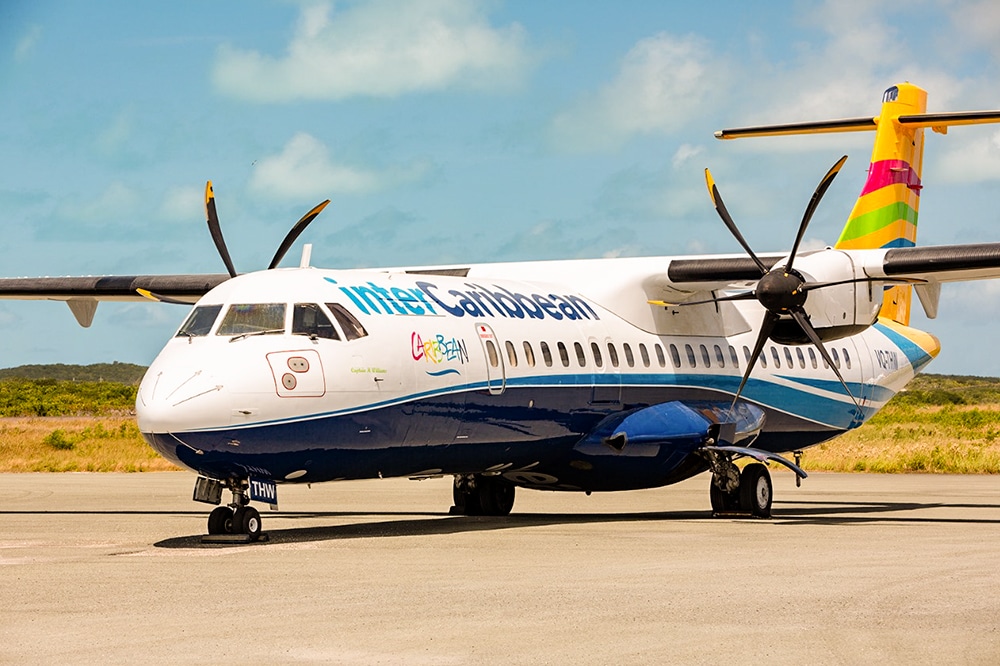
In the face of economic and logistical challenges, airline alliances are emerging as a promising solution. New collaborations are emerging, such as the partnership between Winair and Air Caraïbes, or the expansion of networks like InterCaribbean Airways. These initiatives aim to improve inter-island air connectivity by pooling resources.

Governments and regional organizations have a crucial role to play. The World Bank is contributing to this effort with projects such as the “Caribbean Regional Air Transport Connectivity Project”, which has awarded $159 million to several countries to enhance air transport safety and airport infrastructure resilience.

Future prospects for inter-island air connectivity

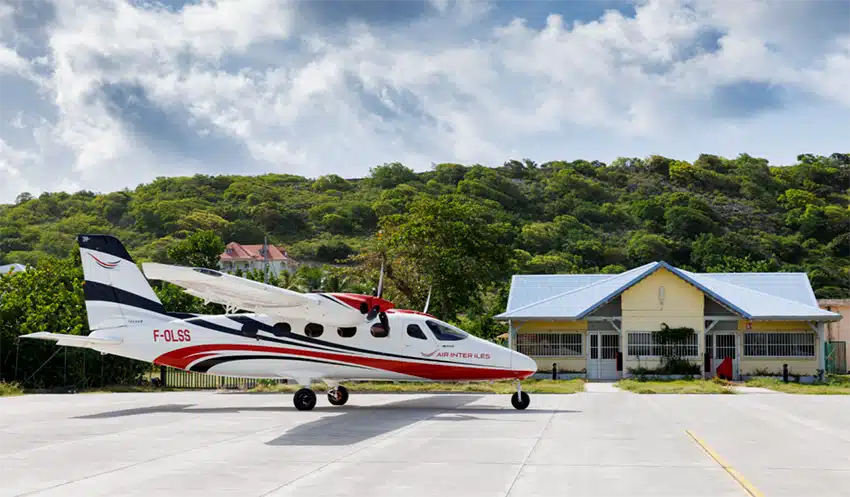
The future of inter-island air connectivity in the Caribbean will necessarily involve innovative solutions. Companies like Air Inter Îles are developing new premium shuttle services with aircraft adapted to short distances, such as the TECNAM P2012 STOL.

Digital technologies also offer interesting prospects, with integrated booking platforms making it easier to combine different flight segments between partner airlines.

Inter-island air connectivity
TECNAM P2012 STOL

Inter-island air connectivity represents both a major challenge and a tremendous opportunity for the development of sustainable tourism in the Caribbean. The obstacles are many: political fragmentation, economic difficulties for airlines, high operating costs and environmental challenges.

The stakes are high: the aim is not only to facilitate travel for tourists and local residents, but also to create the conditions for more balanced, environmentally-friendly economic development throughout the region. By strengthening air links between the islands, a more inclusive and sustainable tourism model can emerge, enhancing the richness and diversity of each territory while promoting greater regional cohesion.

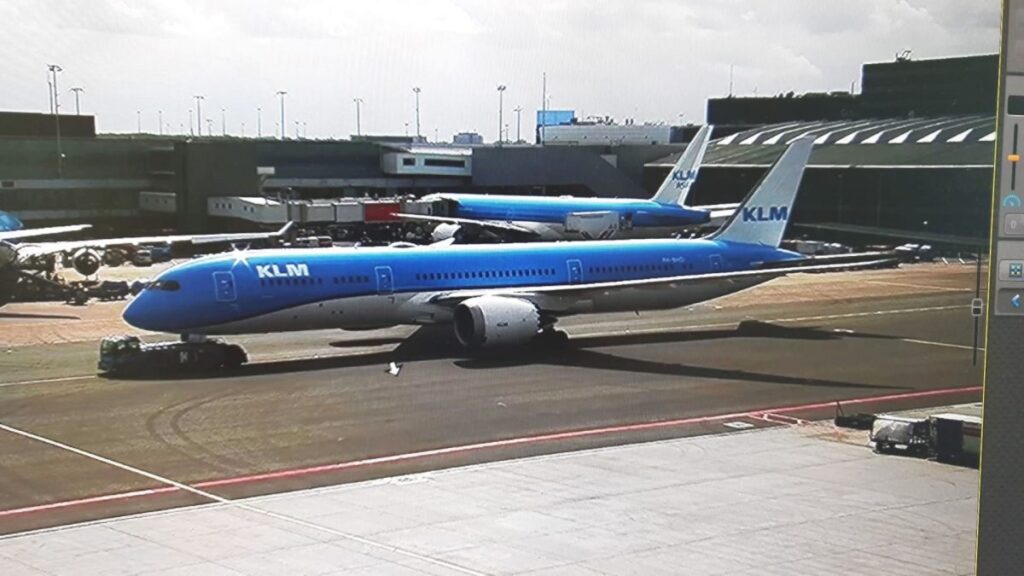
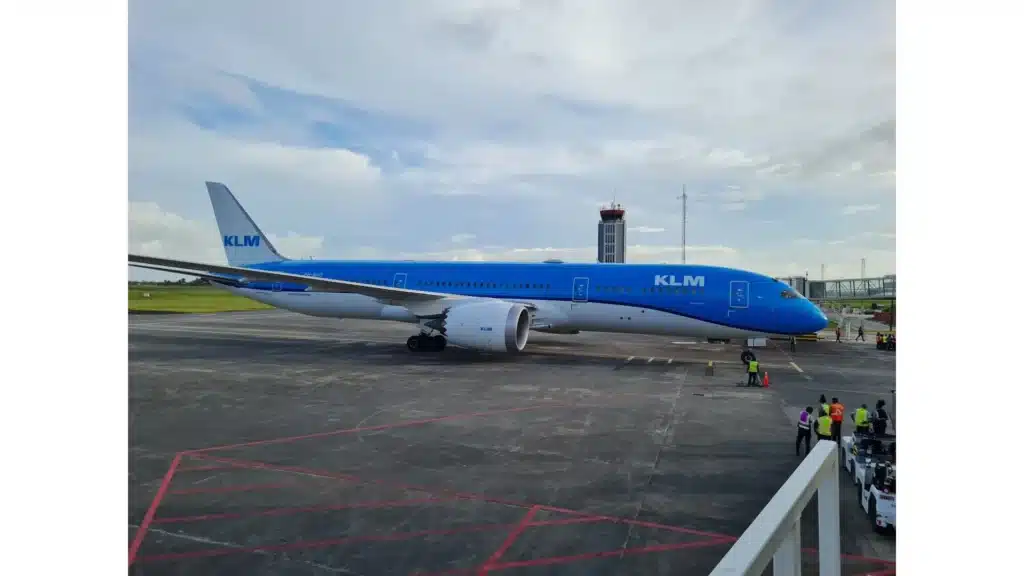
KLM Royal Dutch Airlines inaugurates a new route between Europe and Guyana, marking a decisive step forward in the air integration of this South American country. Thanks to this direct flight from Amsterdam, with a stopover in Sint Maarten, Georgetown is now more accessible, both for travelers and for the business community.

Accelerated growth in air travel since 2020

In recent years Guyana is undergoing a significant transformation in its air transport sector. Several international airlines, including KLM Royal Dutch Airlines. This new dynamic has made it possible to expand the range of flights on offer, while lowering costs for customers. This new dynamic is helping to expand the range of flights on offer, while lowering costs for customers.

KLM Royal Dutch Airlines

A necessary distinction with French Guiana

Often confused with French Guiana. Guyana is a sovereign state with a history marked by British and Dutch influences. Its English-speaking capital, Georgetown, reflects this singularity within the South American continent. The flight operated by KLM Royal Dutch Airlines therefore responds to a specific logic, distinct from the issues specific to the neighboring French territory.

Route details Amsterdam - Georgetown

The service offered by KLM Royal Dutch Airlines plans two weekly rotations, on Wednesdays and Saturdays. Flight KL789 leaves Schiphol at 9:45 a.m., making a stopover in Sint Maarten, before continuing on to Georgetown, where it lands at 4:25 p.m. The return flight is by direct overnight flight. The return flight is a direct overnight flight, considerably reducing the journey time between Europe and Guyana to less than ten hours.

The Airbus A330-200 used on this route offers 18 seats in Business class and 246 in Economy class. This choice guarantees passengers a level of comfort in line with international standards and seamless access to the intercontinental network of KLM Royal Dutch Airlines.

KLM Royal Dutch Airlines

Major economic and tourism benefits

The launch of this route by KLM Royal Dutch Airlines is part of a wider national strategy. President Irfaan Ali hailed a step forward that goes beyond simple passenger transport: it also involves developing trade, freight and diplomatic connections.

Guyana’s aviation sector already generates over $116 million for the country’s GDP and supports around 5,000 jobs. The presence of KLM Royal Dutch Airlines in this context further strengthens the country’s position as an up-and-coming player in the region.

One ambition: to reach 3 million passengers

By 2030, the Guyanese government is forecasting a spectacular increase in traffic, with a target of three million passengers a year. This ambition is accompanied by a vast program to modernize airport infrastructures and open up new routes. KLM Royal Dutch Airlines plays a key role in this shift towards greater international connectivity.

Guyana, the new regional crossroads?

With eleven airlines now serving its territory – compared with just six four years ago – Guyana is positioning itself as a potential regional hub. Linking South America to Europe, KLM Royal Dutch Airlines is directly involved in this geostrategic vision.

This opening also represents an opportunity for local companies, who can now consider exporting to the European market, while benefiting from improved logistics times. For travelers, the gains in accessibility and flexibility are obvious.

KLM Royal Dutch Airlines

Cooperation welcomed by both sides

The inauguration of the flight by KLM Royal Dutch Airlines was enthusiastically welcomed by local and Dutch authorities. The Minister of Public Works, Juan Edghill, saw it as a validation of the efforts being made to modernize the aviation sector. For his part, the Dutch ambassador, Walter Oostelbos, emphasized the importance of the diplomatic and economic rapprochement that such an initiative enables.

Dirk Buitelaar, regional representative of Air France KLM, underlined the human importance of this new link, capable of bringing communities together across continents. The inaugural flight gave rise to a symbolic reception, marked by warm exchanges and high local visibility.

Looking to the future

With this route, KLM Royal Dutch Airlines confirms its commitment to connecting strategic growth regions. Thanks to this strengthened position on the air transport map, Guyana is opening up new prospects for tourism, trade and international cooperation.

Offering direct and regular access to Europe, KLM Royal Dutch Airlines is not just adding a new route to its network: it is actively participating in Guyana’s integration into the world’s major air flows. An initiative that could well reshape the region’s air traffic balance.

The expansion of theAmerican Airlines network marks a milestone in connectivity between the United States and the Cayman Islands. This new daily service between Miami and Grand Cayman, which will begin on October 6, 2025, is not just another announcement: it embodies the desire to connect two major hubs, while meeting a growing demand from travelers in search of sun, heavenly beaches and new experiences.

A new daily service: Miami - Grand Cayman

From October 6, 2025, American Airlines will offer a daily flight between Miami International Airport (MIA) and Grand Cayman’s Owen Roberts Airport (GCM). Arrival in Grand Cayman is scheduled each evening at 7:05pm, with a return flight the following morning at 8:30am. This frequency, in place until November 1, 2025, offers unprecedented flexibility for travelers, whether tourists or residents wishing to reach Miami with ease.

Why is this route so strategic? Miami has always been a privileged gateway to the Caribbean. By adding this evening flight, American Airlines is not only meeting strong seasonal demand, but also facilitating connections for those arriving from other US or international cities, making Grand Cayman more accessible than ever.

American Airlines
American Airlines

A bet on growth: the reasons for expansion

This expansion byAmerican Airlines is no accident. According to Gary Rutty, Deputy Prime Minister and Minister of Tourism and Business Development for the Cayman Islands, this increase in air capacity is the fruit of an ambitious strategy led by the Department of Tourism. The aim? To support the growth of the sector, attract new visitors and offer more options to residents.

The choice of launching this flight during a traditionally quieter period (October-November) is also revealing: this is a full-scale test, a “preamble” to the high winter season. Tourism Director Rosa Harris sees it as an opportunity to demonstrate the market’s potential, and to encourage American Airlines to make the route permanent if it proves successful.

American Airlines
American Airlines

Concrete benefits for passengers

This new American Airlines service brings tangible benefits. Firstly, it facilitates same-day connections via Miami, a major advantage for travellers coming from different parts of the United States or elsewhere. No need to wait overnight in Miami: the sequence of flights becomes smoother and more convenient.

Secondly, residents of the Cayman Islands now have an additional option for traveling to Miami, whether for business, study or leisure. This added flexibility is welcomed by local authorities, who see it as a lever for boosting trade and strengthening ties between the two destinations.

In terms of fares, American Airlines offers round-trip economy class tickets from US$325 between Miami and Grand Cayman, making this trip attractive and accessible to a wider public.

American Airlines' commitment to the region

The initiative doesn’t stop there. American Airlines has also announced an increase in its daily flights between Chicago O’Hare and Grand Cayman from December 18, 2025, until April 2026, the peak tourist season. This strategy is part of a wider expansion drive, with new routes and a significant increase in capacity to sun destinations.

The close collaboration between American Airlines and the Cayman Islands Department of Tourism was decisive. At the CAPA Airline Leader Summit – Americas and the GAD Americas Summit in April 2025, local teams were able to convince the airline’s decision-makers of the strength of the market and its growth prospects, highlighting the forthcoming increase in the hotel offer and the boom in vacation rentals.

American Airlines

Future prospects for tourism in the Cayman Islands

The arrival of this new American Airlines flight comes at a time of unprecedented tourist dynamism for the Cayman Islands. In 2025, the destination has already recorded a 5.3% year-on-year increase in visitors, with over 144,000 tourists welcomed in the first quarter. The United States remains the main outbound market, accounting for over 83% of arrivals.

At the same time, the hotel offering continues to expand: the forthcoming openings of the Grand Hyatt, the Kailani Grand Cayman (Curio Collection by Hilton) and the 1GT Hotel promise to attract a diverse clientele, from business travellers to families in search of relaxation.3. Summer promotions, such as the “seventh night free”, further enhance the destination’s appeal.

This dynamism is matched by a varied calendar of cultural and sporting events, from the Flower Sea Swim to music and art festivals, offering visitors a thousand and one reasons to (re)discover Grand Cayman.

American Airlines
American Airlines
American Airlines

American Airlines’ new daily service between Miami and Grand Cayman symbolizes much more than just an additional flight: it reflects the industry’s confidence in the potential of the Cayman Islands, and its desire to build lasting bridges between the United States and this pearl of the Caribbean. Whether you’re a seasoned traveler or a curious traveler in search of adventure, this new route offers unprecedented flexibility and accessibility, while supporting local economic growth. It remains to be seen whether this gamble will be transformed into a lasting success… but one thing is certain: the skies are opening up, and the horizon is widening for Grand Cayman thanks to American Airlines.

New impetus for the Paris-Orly - Saint-Martin Juliana service

Air Caraïbes is relaunching the direct Paris-Orly – Saint-Martin Juliana service from December 2025. This announcement is sure to delight both regular travellers and those curious about the Caribbean. After a three-year hiatus, the airline is making a comeback on this route, responding to growing demand for direct, reliable and regular flights between France and the Dutch part of Saint-Martin. This relaunch marks a turning point in Air Caraïbes’ strategy, as it aims to strengthen its presence in the coveted transatlantic market.

Why have we been waiting for this return?

The suspension of the route in 2022 had left a gap, temporarily filled by Air France. But for many travelers, Air Caraïbes ‘ unique service was missing. The announcement that the service would be resumed in 2024 raised hopes, which were quickly dashed by the cancellation due to economic uncertainty. This time around, the airline is back with a solid offer, buoyed by a more favorable context and a sharp rise in tourist and family demand.

©Air Caraïbes

Details of the direct Paris-Orly - Saint-Martin Juliana service

Frequencies, schedules and device type

From December 12, 2025, Air Caraïbes will offer three flights a week, on Mondays, Wednesdays and Fridays, between Paris-Orly (ORY) and Princess Juliana airport (SXM). Departure from Orly is at 11:45 a.m., arriving in Saint-Martin at 3:45 p.m.. The return flight takes place at 6:30pm, arriving in Paris at 7:40am the following day. The flights will be operated by Airbus A330-200, an aircraft renowned for its reliability and comfort, configured to seat 303 passengers.

Three classes for all traveler profiles

On board, Air Caraïbes offers three distinct classes to meet every need:

  • Soleil Class: 267 seats for travelers looking for an attractive fare without compromising on quality.
  • Caribbean class: 24 premium seats for those who want more space and services.
  • Madras Class: 12 seats dedicated to business travelers or those looking for an upscale experience.

Rates and opening of reservations

Bookings for this route have been open since May 12, 2025. Return fares start at 699 euros in Soleil class, 999 euros in Caraïbes class and 1,999 euros in Madras class. This fare policy means that everyone can find an offer to suit their budget and expectations, while benefiting from the airline’s expertise.

Air Caraïbes
©Air Caraïbes

A dual gateway to Saint-Martin and the Caribbean

Complementing the regional network

Air Caraïbes doesn’t just fly from Paris to Saint-Martin. The airline already operates daily flights to Grand-Case as part of its regional network. This dual approach – long-haul to Juliana and regional to Grand-Case – strengthens the island’s connectivity and offers travelers greater flexibility.

Connections to neighbouring islands

Thanks to code-share agreements with Winair, St-Barth Executive, St-Barth Commuter and navigAIR, the airline facilitates connections to other Caribbean destinations such as Saint-Barthélemy, Saint-Domingue, Marie-Galante and Sainte-Lucie. This strategy makes Saint-Martin a true gateway to the entire Caribbean basin, for both air and sea travel.

Strategic reasons for Air Caraïbes' return

A favorable economic and tourism context

When the airline suspended the route in 2022, it was partly due to soaring fuel costs and uncertain profitability. Today, lower operating costs, combined with growth in tourist and family traffic, have created the conditions for a winning return to this strategic route.

Competitive positioning

In the absence of the airline, Air France had doubled its frequencies on the route, benefiting from a virtual monopoly. The return of Air Caraïbes has rebalanced the offer, to the benefit of passengers who can now take advantage of increased competition, synonymous with better service and more attractive fares.

Air Caraïbes
©Air Caraïbes
Air Caraïbes
©Air Caraïbes
Air Caraïbes
©Air Caraïbes

What this means for travellers

More options, more flexibility

With three direct flights a week, travelers benefit from greater flexibility in organizing their stays, whether they’re traveling for leisure, family or business. The possibility of combining a long-haul flight with regional connections greatly simplifies travel in the Caribbean.

Renewed on-board comfort

The airlines’ Airbus A330-200 offers modern comfort, with spacious cabins and services adapted to each class. Whether you choose the Soleil class for its excellent value or the Madras class for a more exclusive experience, every passenger benefits from the attention and professionalism for which the airline is renowned.

Air Caraïbes
©Air Caraïbes
Air Caraïbes
©Air Caraïbes
Air Caraïbes
©Air Caraïbes

A new lease of life for connectivity between Paris and Saint-Martin

Air Caraïbes makes a remarkable comeback on the Paris-Orly – Saint-Martin Juliana route. This long-awaited resumption offers travellers a new, reliable, flexible and comfortable alternative for reaching the Caribbean. Thanks to an affordable fare policy, a three-class offer and optimized connections, the airline is consolidating its role as a bridge between France and the West Indies. This return is not only good news for passengers, it’s also a strong signal for the region’s tourism and economic development.