
Martinique – Professionalizing the music industry: SACEM relies on local consultation.

SACEM

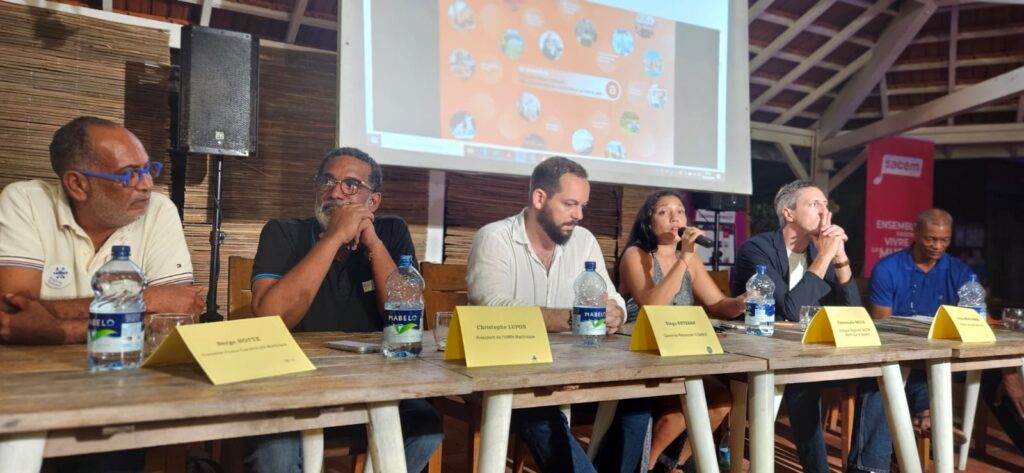
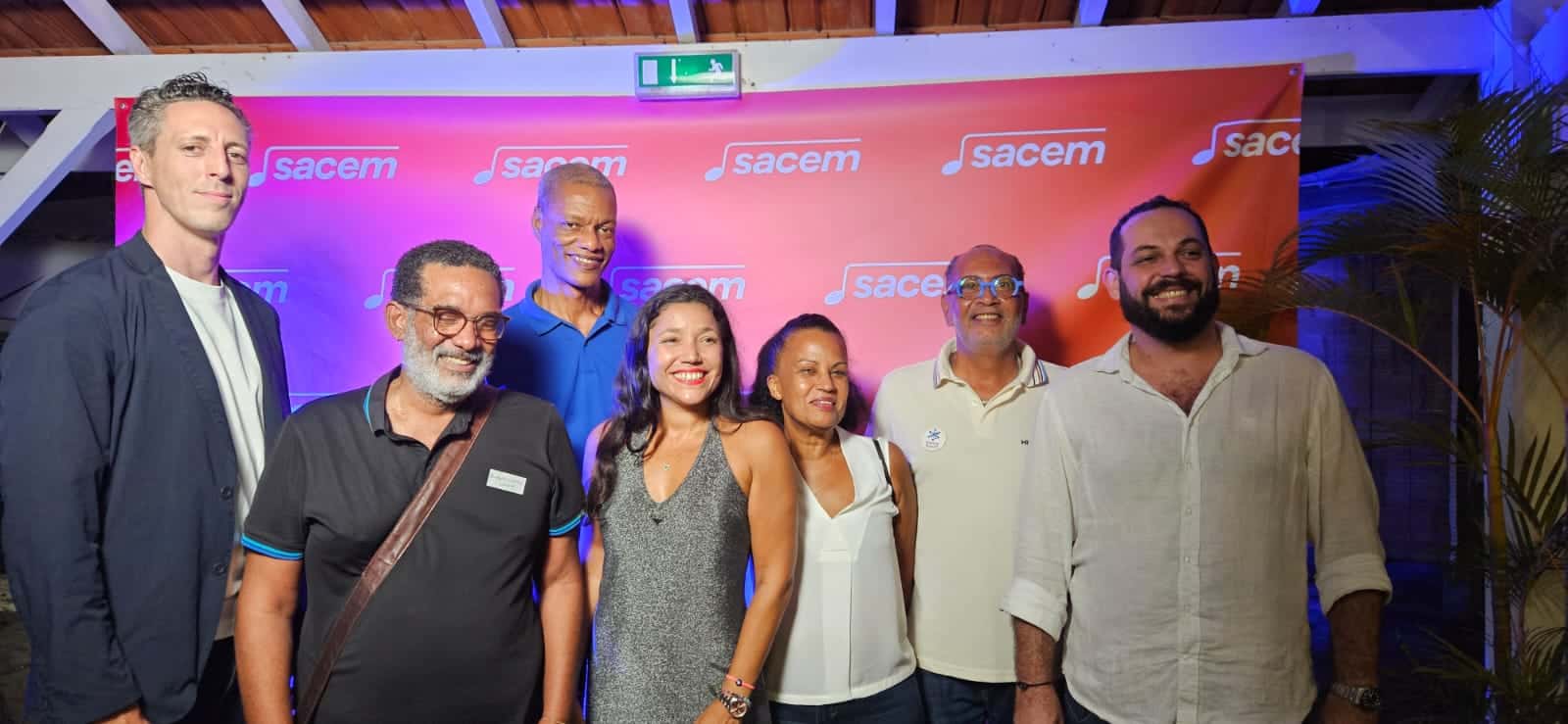
At the SACEM CONNECT evening held at Ti Sable, professionals, institutions and artists came together with a clear objective: to structure and professionalize the Martinican music industry. A seminal event where words from the field, concrete measures and genuine calls for unity to help practices evolve.

Music as an economic and cultural lever

Around the SACEM (Société des Auteurs, Compositeurs et Éditeurs de Musique –Society of Authors, Composers and Music Publishers)Emmanuelle Bruch, and Alain Marlin, Chairman of SACEM’s Board of Directors, a number of key local players took part in the event:

  • ★ Pierrette Betto (CNM – Centre National de la Musique – National Music Center)
  • ★ Julie Rosenkranz (GIP Cafés-Cultures)
  • ★ George Louisia and Alfred Salomon for the Collectivité Territoriale de Martinique – Territorial Collectivity of Martinique(CTM)
  • ★ Johan Hilel Hamel for the Direction des Affaires Culturelles – Department of Cultural Affairs (DAC)
  • ★ Serge Notte for France Travail (French national public employment agency) / GUSO (Guichet unique du spectacle occasionnel – Simplified administrative service for occasional hiring in the live performance industry)
  • ★ Christophe Lupon for UMIH Martinique (Union des Métiers et des Industries de l’Hôtellerie)
  • ★ And Diego Esteban, host of the evening and manager of Ti Sable
SACEM

A variety of support schemes were presented: creative residencies, support for distribution, intermittent work grants, support for the equipment of cultural venues, support for project structuring and professional training.

The GIP Cafés Cultures has been highlighted as a flagship scheme to enable cafés, hotels, restaurants and local authorities to hire artists legally, thanks to partial coverage of fees and social charges. An essential tool for professionalizing the local scene.

Persistent obstacles, collective solutions

Discussions at SACEM CONNECT were lively and often frank, focusing on key issues such as delays in institutional payments, lack of suitable venues, undeclared artists and lack of awareness of the system. Testimonies from artists and presenters highlighted the complexity of the system, but also the need to change practices at all levels.

“Artists must refuse to play under the table. And presenters must assume their role as employers. Together, we can make a difference.” – Diego Esteban, Ti Sable.

The idea of a music industry contract for Martinique, inspired by the one set up in La Réunion, was raised as a structuring lever.

A first step towards a lasting dynamic

More than a simple presentation of systems, this evening was an opportunity to connect the players in the same cultural ecosystem, who are often isolated in their respective realities. By initiating this format, SACEM is laying the foundations for a shared governance dynamic, in the service of a stronger, fairer and more economically viable music industry.

“This is just the beginning. But together – artists, restaurateurs, institutions – we can go further.” – Emmanuelle Bruch, SACEM Martinique-French Guiana.

SACEM
SACEM

An evening that ends with music

The event couldn’t have ended any other way than with a musical atmosphere worthy of its ambition. On the Ti Sable open stage, several artists offered a festive and warm moment of sharing: Maher Beauroy, Brice Bapté, the group EKANGA with Loy Sonja, Lanah, Politik Nai and their musicians. An idyllic setting, with your feet in the sand, to remind us that music is above all an art of encounter and a formidable driving force for bonding and transformation.

Practical guide - Organizing a musical event

Scan the QR-code or click HERE for a guide to organizing a musical event.

Leave a Reply

Your email address will not be published. Required fields are marked *

More articles from RK

Bonaire
TOURISM
Tolotra

Bonaire: Three markets account for 85.5% of visitors

Bonaire welcomed 13,387 overnight visitors in June 2026, according to preliminary data from the Tourism Corporation Bonaire. Visitor numbers declined slightly by 1.6% year-over-year. The most revealing information, however, lies in the travelers’ countries of origin: the Netherlands, the United States, and Curaçao together accounted for 85.5% of arrivals. Bonaire’s visitor numbers remain close to 2025 levels In June 2026, the island welcomed 13,387 visitors, compared with 13,606 a year earlier. The difference amounts to 219 fewer arrivals. This variation remains limited, especially when viewed over a longer period: by June 2025, attendance had increased by 12,2 % compared to June 2024. The 2026 figure therefore reflects more of a stabilization following the sharp increase recorded the previous year. The 1.6% decline provides a useful point of comparison, while trends in the major markets offer a more accurate picture of visitor numbers. Three markets bring 11,445 visitors to Bonaire The

Read More »
Brimstone Hill Fortress
TOURISM
Tolotra

Brimstone Hill Fortress: Two Centuries of History at the Summit of Saint Kitts

To the northwest of Saint Kitts, the walls of Brimstone Hill Fortress overlook the coast from a volcanic hill nearly 240 meters high. Behind the panoramic view lies a more complex history: that of a fortress designed by the British, built and maintained by enslaved Africans, and designated aUNESCO World Heritage Site in 1999. Brimstone Hill Fortress, a citadel perched atop a volcano As you climb Brimstone Hill, the sea comes into view between the steep slopes and the dark stone ramparts. From this natural vantage point, soldiers could observe the western coast of Saint Kitts and keep watch for the possible arrival of enemy ships. The location was far from insignificant. This volcanic hill, nearly 800 feet high, had steep, hard-to-access slopes. It thus offered a prime vantage point and a defensive refuge in the event of a naval attack. Nevertheless, the builders had to adapt their techniques to

Read More »
Lido Pimienta
MUSIC
Tolotra

Lido Pimienta: From Barranquilla to Toronto, a Voice That Refuses to Fade Away

Born in Barranquilla and now based in Toronto, Lido Pimienta has never had to choose between her home regions, her artistic disciplines, or her cultural heritages. On the eve of the release of Caribenya, her fourth studio album, tells the story of an artist who has transformed displacement, difference, and imposed labels into her own personal language. Lido Pimienta: A Voice That Defies Categorization In the video by “Tóxica”, the first track unveiled from Caribenya, the colors burst forth as the cumbia carries lyrics directed against toxic friendships. The track perfectly encapsulates Lido Pimienta’s approach: making people dance without sugarcoating what needs to be said. Her label describes the album as a work guided by connection, resistance, and the desire to break new sonic ground. This freedom did not come about through a linear journey. It took root in Barranquilla, a city on Colombia’s Caribbean coast, with a mother of

Read More »

conTACT RK

we'd love to have your feedback on your experience so far

Join The List

Join our Richès Karayib community!  Sign up for our newsletter.

Want To Maximize Your Business Presence On Riches Karayib?

Complete the form to start the application