Martinique – A new dynamic for tourism: how CMT (Martinique Tourism Board) is redesigning the island’s year-round appeal

CMT

Martinique is reinventing itself to become an attractive year-round tourist destination. Faced with the challenges of seasonality and the need to diversify its tourist market, the Comité Martiniquais du Tourisme (CMT) is embarking on an ambitious strategic transformation. New logo, activation of local tourism, support for socio-professionals: decipher an inspiring approach presented at the latest CMT conference.

Why a new tourism strategy?

Martinique has reached a milestone in terms of tourist numbers, with almost a million visitors a year and a target of 1.2 million. However, strong seasonality remains a major hindrance: peaks in visitor numbers concentrated over a few months leave long slack periods, impacting on profitability and employment in the tourism sector.

To meet this challenge, CMT has devised a three-pronged strategy:

– Reinforce the image of Martinique as an attractive year-round destination.

– Open up to new markets beyond France.

– Stimulate the region through a program of events and local initiatives.

The “Partez en vacances en Martinique” program: a driving force for local tourism

At the heart of this strategy, the “Partez en vacances en Martinique” program aims to stimulate local tourism. It encourages residents of Martinique, Guadeloupe, Guyana and the diaspora to consume locally and rediscover their territory.

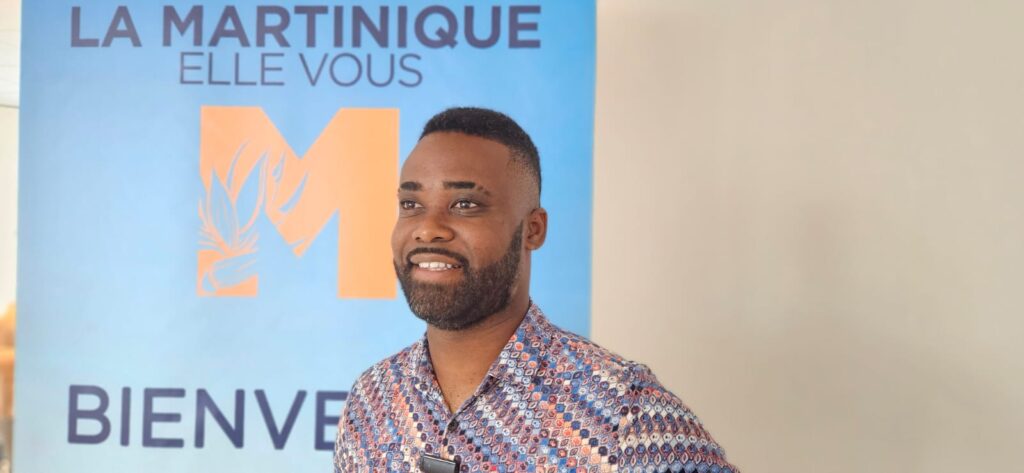
This program provides a platform for visibility and support for 32 tourism professionals. These include Le Mantou with its eco-responsible mangrove excursions.
CMT
Faustin Annette (Le Mantou)

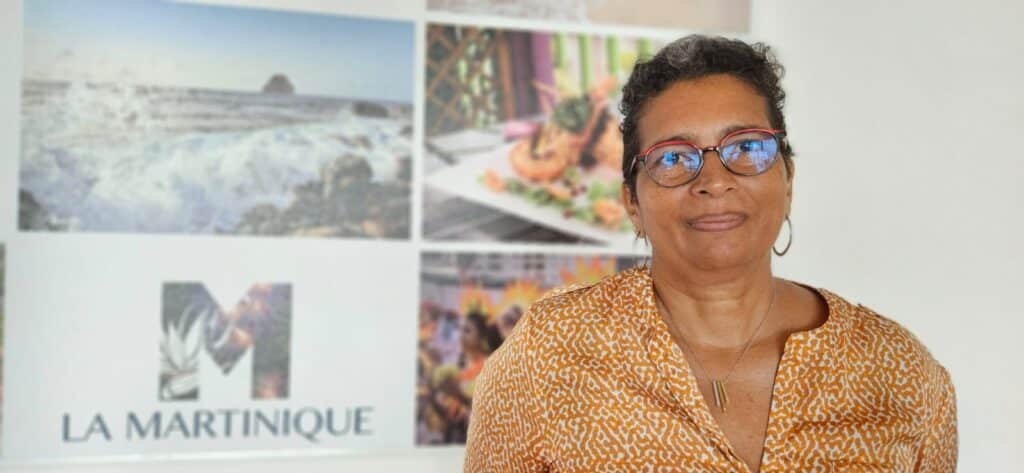
The Hôtel Bambou, with its inclusive hotel offer, is a perfect illustration of the diversity of Martinique’s tourism offering.
CMT
Carole de Laval

Feedback has been very positive: the program is deemed effective by the professionals themselves, who see a direct impact on their sales in the off-season. In terms of budget, the CMT is devoting several hundred thousand euros to the program, divided between the various target markets.

A new logo for a new dynamic

CMT

To accompany this renewal, CMT has unveiled a new logo embodying “martinicality”, the island’s plural and authentic identity.

Why this change? To make the CMT’s action more visible, better align its institutional image with the expectations of the tourism markets, and strengthen the sense of belonging of the Martiniquais themselves.

The device is designed for dual use:

CMT logo: for corporate communications.

– “M” destination logo: for tourism promotion campaigns, which professionals can adopt under certain conditions.

This logo reflects the richness of Martinique: beaches, nature, culture, terroir, hospitality. It helps build a coherent, inspiring image for the island, both locally and internationally.

CMT

A transformation strategy that inspires

By redefining its image and activating local tourism, Martinique is charting a new course to boost its year-round appeal. The CMT is combining the transformation of communication with concrete action in the field to support the entire industry.

In a Caribbean context where many territories face the same challenges of seasonality and diversification, this approach offers an inspiring model to follow.
Leave a Reply

Your email address will not be published. Required fields are marked *

More articles from RK

Ida Does
FILM & VIDEO
Tolotra

Ida Does: Filming Affiba to Bring Forgotten Lives to Light

On August 31, 1896, in Paramaribo, Affiba Maria Magdalena Dompig rode through the city in a horse-drawn carriage, surrounded by several generations of her family. The photograph of that moment, now housed at the Rijksmuseum, became—130 years later—the starting point for*Affiba — The Eldest Woman of Paramaribo*, the new documentary by Ida Does. Through this story, the Surinamese-Caribbean director continues her ongoing work: looking at archives in a new light and bringing lives that have long remained on the margins back into the spotlight. It is in this space between traces and memory that Ida Does works. Affiba, a Face That Transcends Time In the photograph, Affiba is looking at the camera. Standing beside her are two of her children, a granddaughter, and a great-granddaughter. The Rijksmuseum dates the scene to August 31, 1896, and notes that Affiba was considered the oldest woman in Paramaribo at the time. The photographer

Read More »
Caribbean Music Awards
HISTORY & HERITAGE
Tolotra

2026 Caribbean Music Awards: Patra, Calypso Rose, Alan Cavé, and Shyne to Be Honored

Four artists, four regions, four journeys. On September 19, 2026, the National Academy for the Performing Arts in Port of Spain will host a ceremony at which Patra, Calypso Rose, Alan Cavé, and Shyne will each receive a special award. The 2026 Caribbean Music Awards will bring them together on the same stage, but their journeys tell different stories about Caribbean music and its ability to transcend borders. One Scene, Four Legacies The announcement made by the Caribbean Music Awards highlights four distinct honors. Patra will receive the Lifetime Achievement Award. Calypso Rose will be honored with the Elite Calypso Honors. Alan Cavé will receive the Elite Konpa Honors, while Shyne will be awarded the Global Ambassador Award. This selection almost maps out the region’s musical landscape. Jamaica, Trinidad and Tobago, Haiti, and Belize are thus represented by artists whose careers have taken very different paths. More than just a

Read More »
Larimar
HISTORY & HERITAGE
Tolotra

Larimar: From Barahona to the World—A Stone That Has Become Part of Our Cultural Heritage

In Barahona, in the southwestern part of the Dominican Republic, a blue stone bridges geology, craftsmanship, and national identity. Larimar is not only prized for its color: its history is tied to a specific region, to those who mine it, and to those who craft it. From the Sierra de Bahoruco to the jewelry workshops, its journey illustrates how a local resource can become cultural heritage, a symbol, and a cause for conservation. In Barahona, a stone begins its journey In 1974, Dominican artisan Miguel Méndez became interested in a blue stone known in the Barahona region. Together with geologist Norman Rilling, he helped identify its deposit and develop its use in jewelry. Méndez also gave it its name: “Larimar,” a combination of “Larissa,” his daughter’s first name, and “mar,” the Spanish word for “sea.” Behind this name, which has become familiar in the Dominican Republic, lies a history deeply

Read More »

conTACT RK

we'd love to have your feedback on your experience so far

Join The List

Join our Richès Karayib community!  Sign up for our newsletter.

Want To Maximize Your Business Presence On Riches Karayib?

Complete the form to start the application