In Pointe-à-Pitre, a bronze statue depicts a seated man with a ka drum between his legs. It pays tribute to Vélo, one of the greatest masters of gwoka, the Guadeloupean music that emerged from the resistance to slavery. Since 2014, UNESCO has designated it as a World Heritage Site.
A Tambouyé Turned into a Statue
Marcel Lollia, known as Vélo, was born on December 7, 1931, and died on June 5, 1984. He trained several generations of ka players—a drum carved from a tree trunk and covered with a stretched skin. He also inspired Akiyo, a cultural movement advocating for identity founded in 1979, which brought gwoka out of the small circles where it was still surviving.
On June 5, 2004, twenty years after his death, a statue by sculptor Jacky Poullier was unveiled in Pointe-à-Pitre, modeled after an earlier Guadeloupean portrait dedicated to another of the island’s great figures. Two plaques accompany the statue, one of them inscribed in Guadeloupean Creole, as if to remind us to whom this memory belongs first and foremost. Vandalized in 2012, the statue was restored and reinstalled in 2014, the very year that gwoka was added to UNESCO’s list of Intangible Cultural Heritage. These two dates are interconnected and, on their own, tell the story of an art form that was long marginalized but has since become a source of national pride.

Gwoka, a practice born of necessity
The roots of gwoka date back to the Africans who were deported to Guadeloupe and enslaved there as early as the 17th century, who danced and sang despite the restrictions imposed by the colonists. But it was really after the abolition of slavery in 1848 that gwoka established itself as a cultural expression in its own right, rather than a tolerated clandestine practice. It relies on a simple ensemble: two or three ka drums and a calabash.
Two drums, called boula, maintain a repeated rhythm that varies depending on the piece being played. A third drum, the makè, with a higher-pitched sound, responds in real time to the dancer’s steps and movements. It is often the dancer, alone in the center of the circle, who sets the tempo for the musician, rather than the other way around.

Seven Rhythms, One Identity
Tradition recognizes seven fundamental rhythms: toumblak, graj, woulé, léwoz, kaladja, padjanbel, and menndé. The word léwoz refers both to one of these rhythms and to the traditional evening gathering where people dance and play music together, often outdoors, open to anyone who wants to sing, call and respond, or dance in the center of the circle. Elders mingle with the younger generation, in a process of transmission that owes nothing to a textbook.
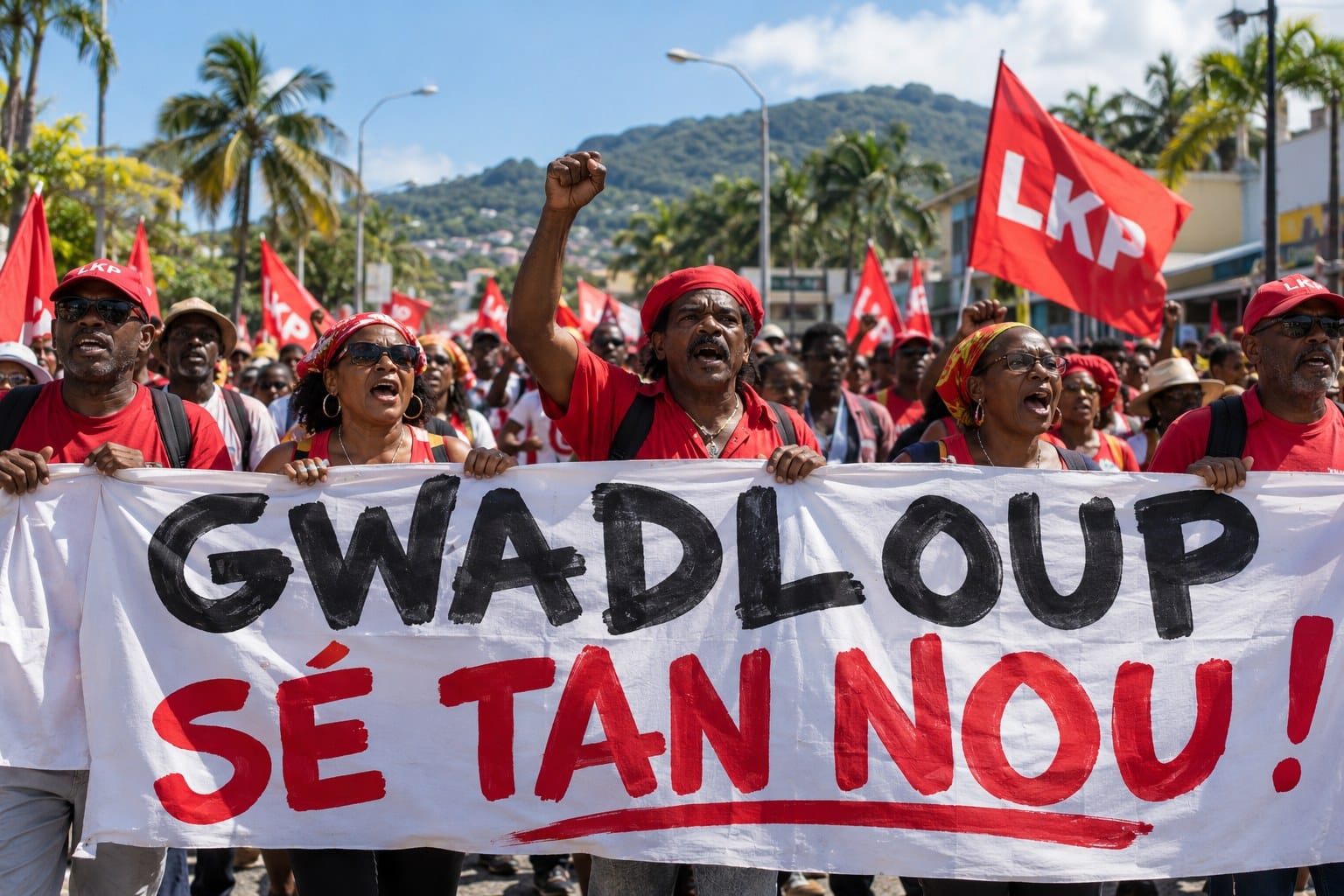
It was in these léwoz that gwoka was passed down orally, from generation to generation, far from concert halls—much like the Fête de la Musique continues to bring Guadeloupean music to life in public spaces every year. Starting in the 1960s, it also became a political symbol, championed by Guadeloupean identity movements that saw it as an expression of cultural resistance rooted in colonial slavery.

From the Margins to World Heritage
Institutional recognition quickly followed this underlying trend. Gwoka was added to the French National Inventory of Intangible Cultural Heritage in 2013, then to UNESCO’s Representative List in 2014, by Decision 9.COM 10.17, under the exact title “music, songs, dances, and cultural practices representative of Guadeloupean identity.” Barely a year separated the two recognitions. As early as 2010, the government had awarded the title of Master of Art to a craftsman who restores ka drums, proof that a skill as essential as the music itself deserved to be protected.
Such a UNESCO inscription also places an obligation on France, which must report on the measures taken to ensure that gwoka remains a living tradition, rather than merely a museum piece. Today, schools and organizations are keeping the tradition alive in Guadeloupe and on the French mainland, alongside family-based transmission, which remains, for many Guadeloupeans, the primary gateway to gwoka. This trend is also evident in other UNESCO recognitions in the Caribbean region.
A transmission yet to be written
Gwoka is therefore not a relic frozen behind a glass case in a museum. The léwoz continue to bring people together, schools train new tambouyé, and the statue of Vélo stands watch over a square in Pointe-à-Pitre where the history of Guadeloupean resistance continues to be reenacted with every drumbeat.
One question remains—one that the heirs of Vélo, both in Guadeloupe and throughout the diaspora, are asking themselves: how to pass on this rhythm to a generation growing up far from the léwoz circle, and what this world heritage must still prove in order to remain a living tradition rather than just a title. This is a question that extends beyond Guadeloupe alone and concerns all traditions born of suffering that must now learn to thrive in the spotlight of an international designation.
Gwoka is a form of music, song, and dance from Guadeloupe performed to the beat of the ka drum. Originating from the resistance of enslaved Africans in Guadeloupe, it has been recognized by UNESCO as an Intangible Cultural Heritage of Humanity since 2014.
Gwoka has been inscribed on UNESCO’s Representative List of the Intangible Cultural Heritage of Humanity since 2014 because it is a living cultural practice that embodies Guadeloupean identity and is passed down orally from generation to generation.
Marcel Lollia, known as Vélo (1931–1984), was a Guadeloupean tambouyé master who trained several generations of ka players. A statue honoring him has stood in Pointe-à-Pitre since 2004.