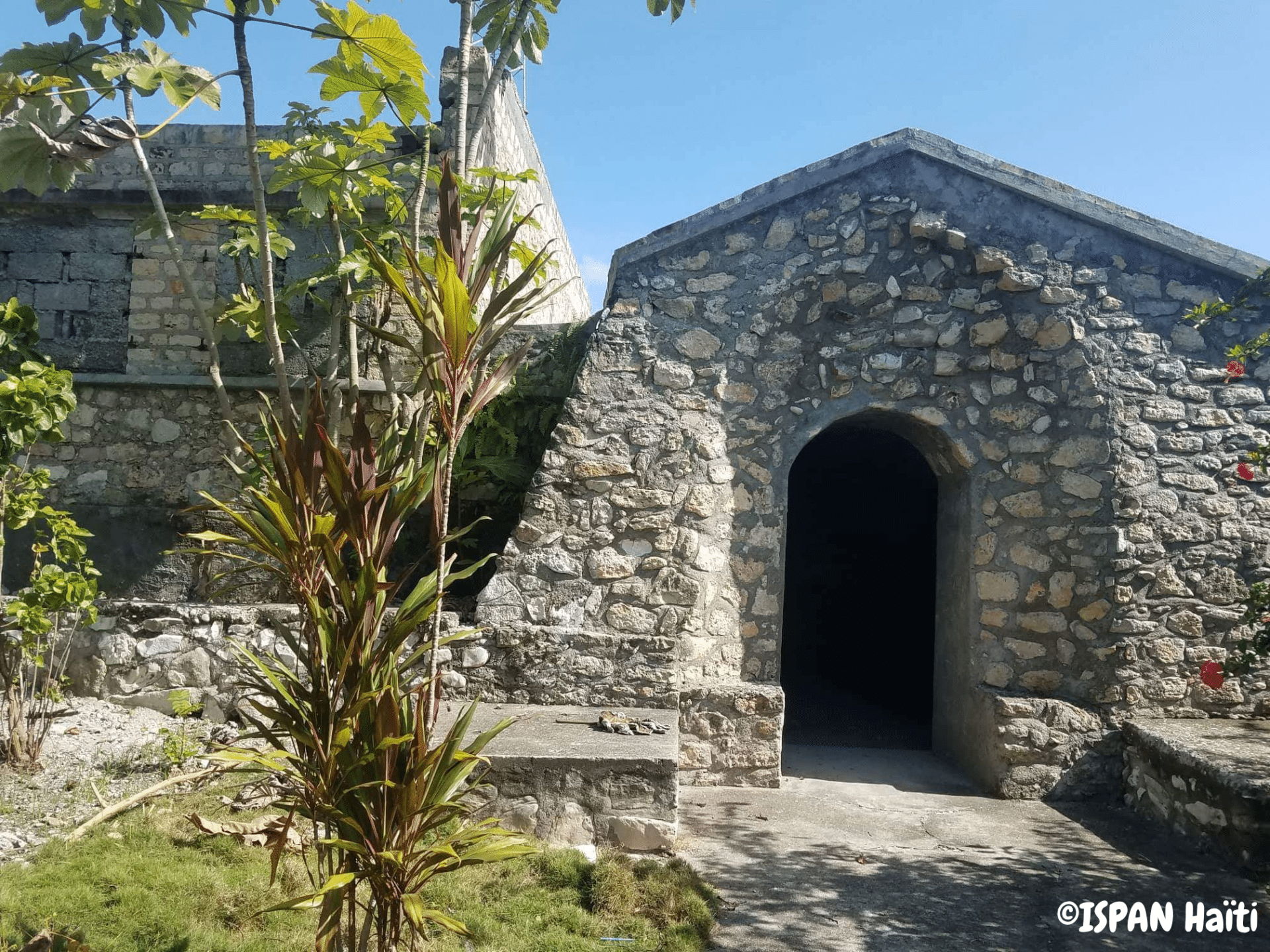
Fort Marfranc alone concentrates several major strata of Haitian history: the defense of the young state after 1804, the memory of the struggle against the colonial order and the presence, within its walls, of the tomb of Laurent Férou, signatory of the Act of Independence. Few sites combine military, political and memorial dimensions with such intensity. In the Grand’Anse region, this fort therefore has a value that goes far beyond that of a mere ancient vestige.
A strong link to the urgent need to protect independence
After 1804, Haiti had to consolidate the freedom it had won in a decisive war. The territory was therefore equipped with a series of fortifications designed to prevent the return of the former masters of Saint-Domingue. Fort Marfranc was part of this defensive logic. Its existence is a reminder that, in the aftermath of independence, sovereignty was not just a matter of texts and proclamations: it was also built in stone, on landforms, through strategic occupation of the territory.
The site dominates the area around Jeremiah, giving it a particularly useful watch and control role in a region exposed to the uncertainties of the time. There was nothing aesthetic about this choice of location. It was a response to a very concrete military interpretation of the terrain: to see far ahead, anticipate movement, defend a zone of passage and inscribe security in the very landscape of the Grand’Anse. This relationship between relief and strategy is part of the major interest of the site.

The uniqueness of the site: a fortress built on a former colonial site
The symbolic power of Fort Marfranc also lies in its physical roots. The fort was built on the remains of the former mansion of Captain Marfranc, a French officer in the first company of gendarmes. The land also covered the site of former slave huts. In just a few square meters, the site thus brings together three temporalities: the colonial order, the revolutionary rupture and the defensive organization of the new Haitian state. This superimposition gives the monument a rare historical density.
And this is precisely where Fort Marfranc’s profound appeal lies. The site doesn’t just tell the story of a battle or of military architecture. It materializes a shift in power. A space once linked to colonial domination becomes a point of protection for the independent country. For a reader attentive to Caribbean history, this detail changes everything: it enables us to understand how independence also transformed places, their use and their political significance.


Laurent Férou, a central figure in the fort's memory
The history of Fort Marfranc is closely linked to Laurent Férou, one of the leaders of the Haitian insurgency against the French. It was he who directed the fort’s construction and chose its location. This fact gives the site a special significance, as it is a place conceived by a direct player in the War of Independence, rather than an anonymous structure detached from its protagonists. The fort thus bears the concrete imprint of a political and military decision set within a strong personal trajectory.
The presence of his tomb inside the enclosure further reinforces this significance. Laurent Férou, born on the Pinot aux Côteaux dwelling and who died in Jérémie in 1806, was buried here after having been one of the signatories of the Act of Independence. This funerary dimension gives Fort Marfranc exceptional memorial value. The site has become a military post, a historical landmark and a place of national remembrance. In the Haitian heritage landscape, this combination remains particularly strong.
Heritage in ruins, but value intact
Today, Fort Marfranc is almost entirely destroyed. This situation limits its legibility in the field, weakens its transmission and complicates its promotion to the general public. Yet its ruin in no way diminishes its importance. On the contrary, it underlines the heritage urgency that surrounds many of Haiti’s historic sites, especially when they are far from the best-known circuits. It’s not just a question of conserving stones, then; it’s about preserving a national narrative that is localized, precise and deeply rooted in the Grand’Anse.
From this perspective, Fort Marfranc could play a much stronger cultural and educational role. The site has the potential to fuel the transmission of information on independence, the regional history of Jérémie and the forms taken by the defense of the territory in the early 19th century. It also offers a powerful entry point for discussing the continuities between slavery, war, sovereignty and memory. For a medium like RichèsKarayib, this type of place deserves sustained attention, as it enriches the reading of Haitian history beyond the most frequently cited references.
Why does this fort deserve a clearer place in Caribbean narratives?
In the Caribbean region, many heritage sites attract attention for their monumentality, state of preservation or tourist numbers. Fort Marfranc attracts interest for another reason: its ability to hold together the colonial experience, the revolutionary rupture and the memory of a signatory of independence. This depth makes it a site of great historical significance, even in its current state. It shows a Haiti that defended itself, organized itself and told its story through places charged with meaning.
Fort Marfranc deserves to be seen as a major heritage landmark on the Grand’Anse. Its relief, its history, its link with Laurent Férou and the symbolic power of its location make it a place of memory of rare density. For the novice reader, it opens a clear door on the issues at stake in the early years of independence. For the expert reader, it serves as a reminder that lesser-known sites remain essential to a full understanding of Haitian and Caribbean history.
Because it combines several dimensions rarely found in the same place: a military function linked to the defense of independence, a location on a former colonial site and the presence of the tomb of Laurent Férou, signatory of the Act of Independence. This combination gives the site a strong historical and symbolic importance in the Grand’Anse region.
Laurent Férou directed the fort’s construction and chose its location. His name gives the site a special depth, as he was a key player in the independence struggle. The fact that he lies buried within the fort’s walls further enhances the memorial value of the site, making it an important landmark in Haitian political history.
Today, the fort is almost completely destroyed. Despite this state of disrepair, its historical value remains considerable. The site retains its importance for understanding the defensive strategy adopted after 1804, the local memory of Grand’Anse and the way in which certain places still concentrate, on their own, a large part of the Haitian historical experience.