Sanité Bélair occupies a singular place in the history of the Haitian revolution. Long absent from dominant narratives, her story is a reminder that the struggle against the colonial order was neither exclusively male nor limited to figures who became heads of state. First a sergeant, then a lieutenant in the insurgent forces, she embodied an armed, conscious and assertive resistance, until her execution in October 1802. Her death came at a time when France was attempting to regain control of Saint-Domingue and restore the slaveholding order, making her fate an enduring symbol of refusal and dignity.
A freedwoman faced with the limits of the colonial system
Born in 1781 as Suzanne Bélair, in Verrettes, in the French colony of Saint-Domingue, Sanité Bélair belonged to the category of freedwoman. This status guarantees neither equality nor security. Free people of color remained subject to strict legal, social and political discrimination, despite the official abolition of slavery in 1794.
In this hierarchical society based on skin color, access to rights remains blocked. The day-to-day experience of this inequality nourishes an acute political awareness in many freedmen. For Sanité Bélair, commitment is not a symbolic impulse, but a necessity. The partial freedom offered by the colonial system appears insufficient in the face of the structural violence it maintains.
Marriage and military service
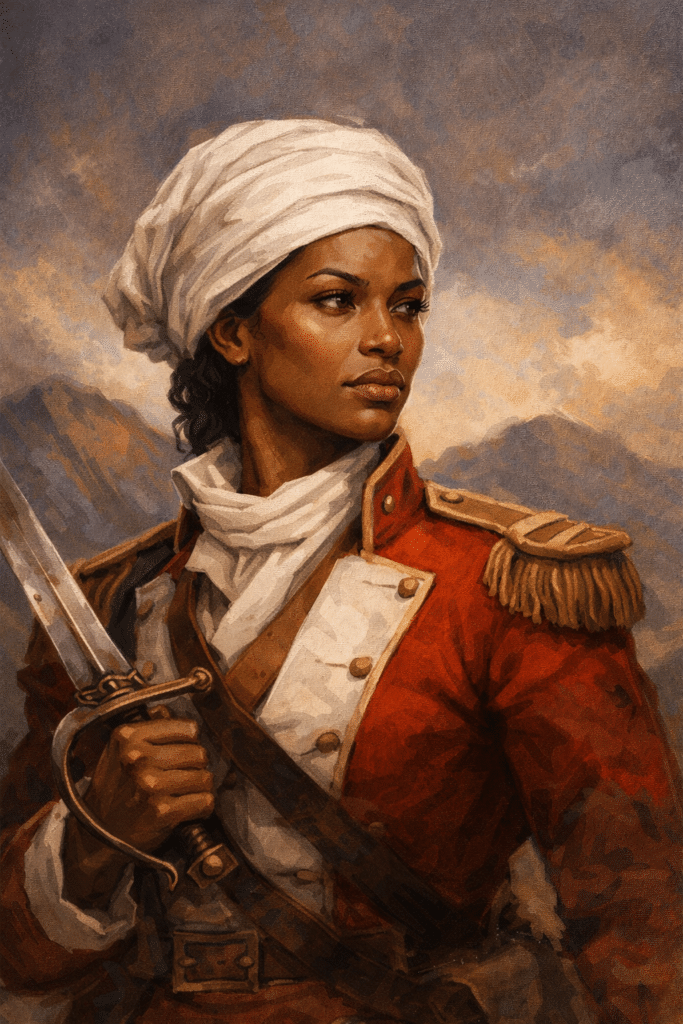
In 1796, Sanité Bélair married Charles Bélair, an officer in the revolutionary forces and a close associate of Toussaint Louverture. This union marked her official entry into armed combat. Contrary to the social norms imposed on women of her time, she did not remain in the background. Historical sources indicate that she actively engaged alongside the insurgent troops.
She quickly rose through the military ranks, attaining the rank of sergeant and then lieutenant. In the context of the Haitian revolution, this was an exceptional career. Sanité Bélair did not limit herself to quartermaster duties. She took part in organizing the troops, mobilizing the local population and engaging in direct confrontations with the French colonial forces.
1802, the Leclerc expedition and the rupture
1802 marked a decisive turning point. Napoleon Bonaparte sent a military expedition led by General Leclerc to re-establish French authority in Saint-Domingue. Behind the official rhetoric of pacification lay the desire to call into question the abolition of slavery.
Sanité Bélair and her husband joined resistance groups active in the Artibonite and Matheux regions. They called for insurrection, exploited their knowledge of the terrain and inflicted several local setbacks on the French columns. However, these successes remained fragile in the face of an army with superior logistical and human resources.

Capture and sentence
Faced with persistent resistance, the colonial authorities stepped up repression. A French column managed to surprise the insurgents. Sanité Bélair was captured during this operation. Charles Bélair also surrendered, refusing to give up.
Both were brought before a colonial military tribunal. The verdict was final. Charles Bélair was sentenced to be shot. Sanité Bélair, as a woman, was sentenced to beheading, a punishment then reserved for female convicts. This judicial distinction embodies the discriminatory logic of the colonial system.

Dying as a soldier
Sanité Bélair refuses this sentence. She asserted her military status and demanded to die like a soldier. This request, exceptional in the context of a colonial court, was accepted. On October 5, 1802, she first witnessed her husband’s execution.
When it’s her turn, she refuses the blindfold. Witnesses report that she remains standing in front of the firing squad. Her words are a matter of oral tradition, but her firm, determined attitude is well documented. She was shot standing up, in accordance with her wishes.

A memory long marginalized
Sanité Bélair’s death did not put an end to the struggle. In January 1804, Jean-Jacques Dessalines proclaimed Haiti’s independence. In the national memory, Sanité Bélair joins the ranks of women associated with this victory, alongside Catherine Flon, Cécile Fatiman and Dédée Bazile.
His institutional recognition came late. In 2004, his portrait appeared on a commemorative ten gourde banknote issued for the bicentenary of independence. More recently, his name has appeared on international memorial projects dedicated to the struggle against slavery and colonialism.
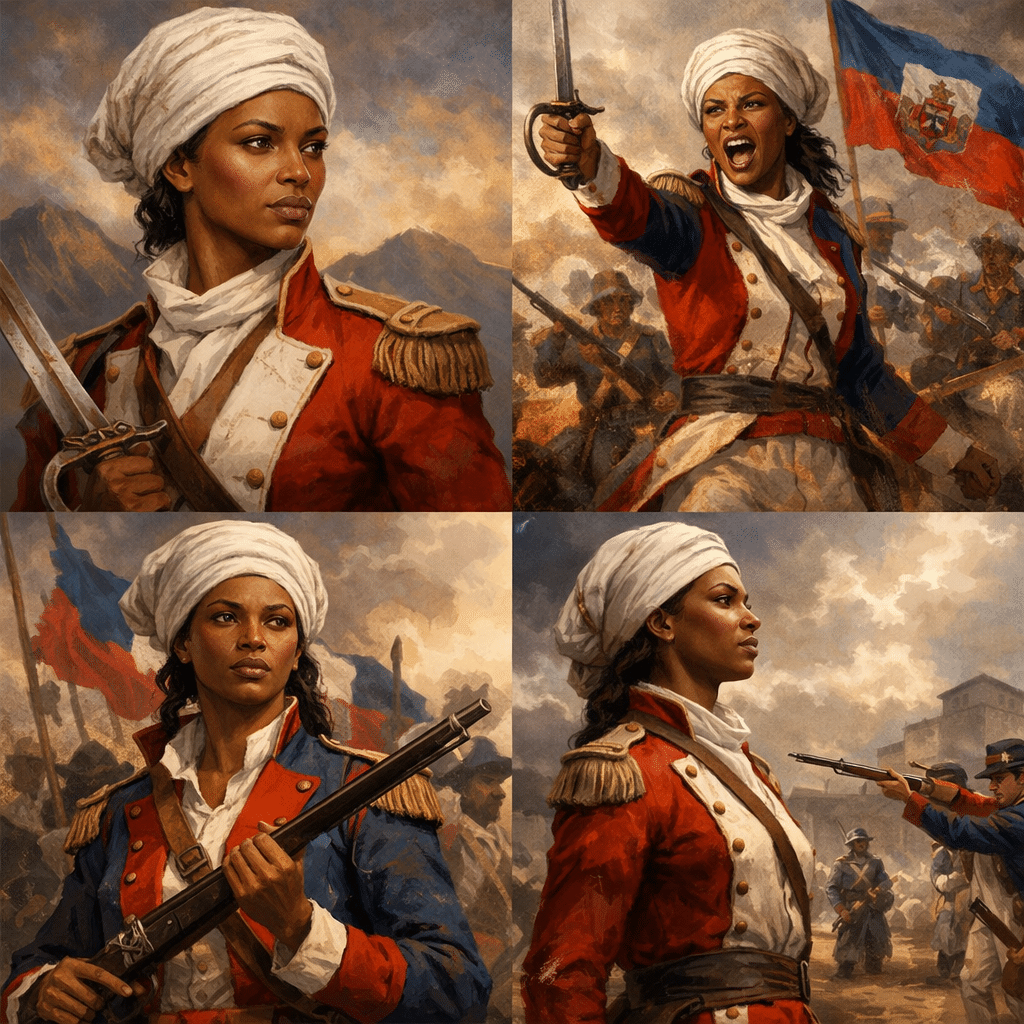
Sanité Bélair embodied total resistance – political, military and moral. A freedwoman in a discriminatory colonial society, a lieutenant in an insurgent army, she chose to be consistent with her convictions right to the end. Her demand to die on her feet sums up the scope of her commitment. Her story reminds us that Haitian independence was built at the cost of major individual sacrifices, and that certain figures, long marginalized, remain essential to understanding the depth of this unique revolution.
FAQ
The biographical notes present her as sergeant, then lieutenant in the forces linked to Toussaint Louverture, engaged in the fighting against the 1802 expedition.
Detailed accounts attribute the capture to a French column often cited as that of Faustin Répussard in a surprise attack; Dessalines was sent against the Bélairs by
She has become a major figure in Haitian memory: her portrait appears on the commemorative commemorative 10 gourde banknote (2004) and is featured in recent memorial projects, notably at the Pantheon (“We Could be Heroes” exhibition).