Labora Caribbean Art Expedition: sailing to transmit Caribbean memories

Labora Caribbean Art Expedition

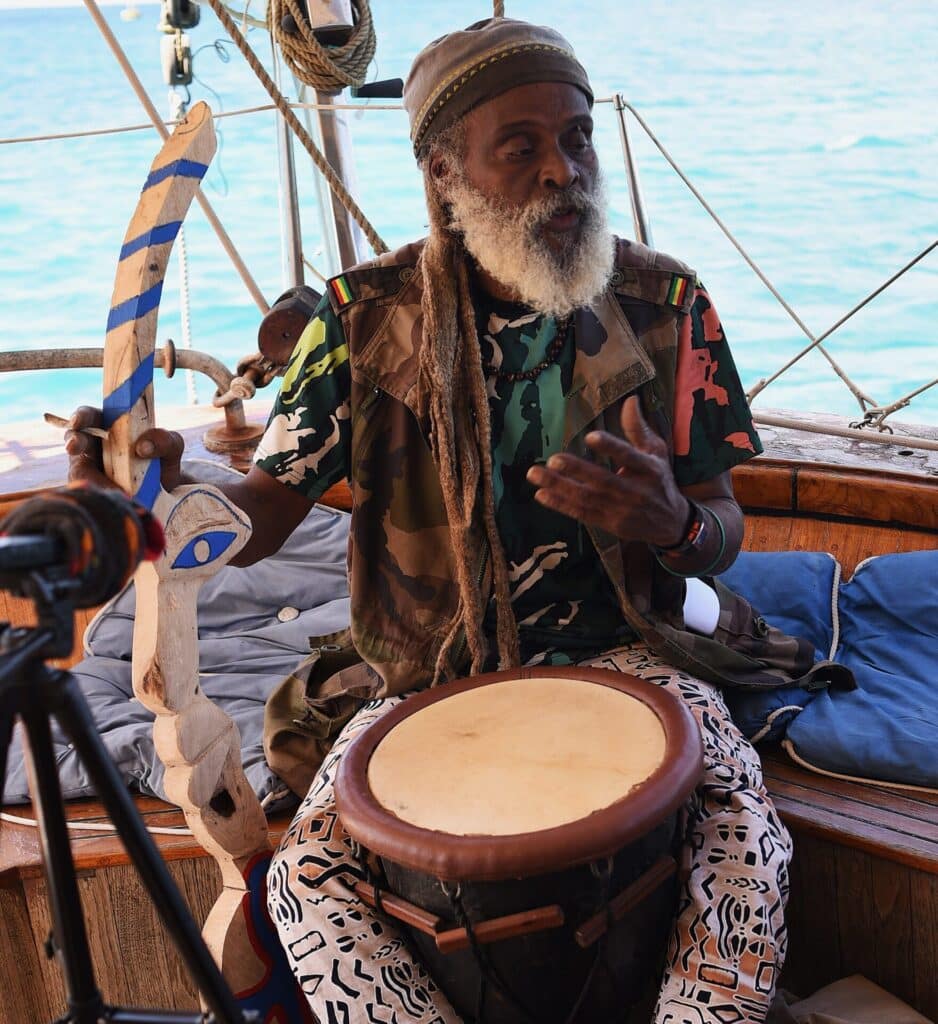
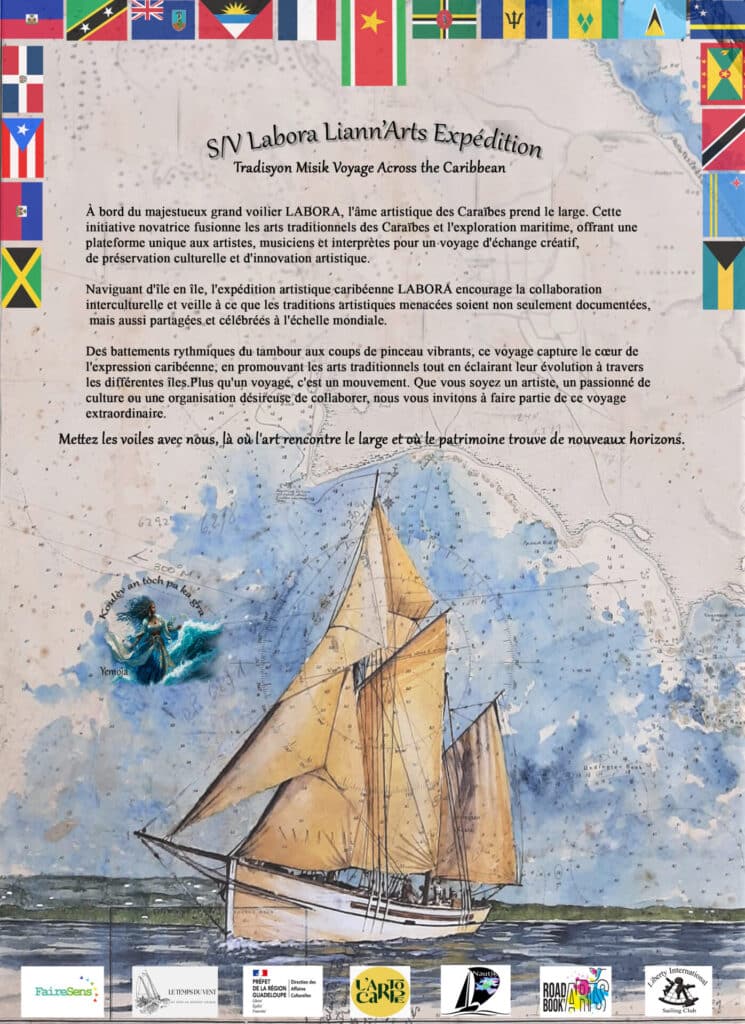
Labora Caribbean Art Expedition is an artistic, maritime and heritage initiative that has taken root in Guadeloupe and is now spreading throughout the Caribbean. Supported by artists, sailors, researchers and institutions, this expedition aboard a traditional sailboat aims to link islands, gather knowledge, promote dialogue between generations and enhance the value of popular cultures that are often marginalized. More than just an artistic program, it is a living process of documentation, transmission and exchange between island communities, with the sea as a link.

Labora Caribbean Art Expedition

A mobile artistic platform born in Guadeloupe around the sailboat Labora

The project takes shape around the S/V Labora, a Danish wooden hajkutter built in 1939, now restored and transformed into a living museum and mobile creative platform. The idea was born in Guadeloupe, particularly during his stopover at the ACTe Memorial during the Rhum Race, where musicians from Grenada came aboard and hundreds of Guadeloupean schoolchildren discovered life on board. This experience gave rise to a collective desire to make the Labora a vehicle for living memory on a Caribbean scale.

Labora Caribbean Art Expedition

Three fundamental axes: traditional arts, navigation and transmission

Labora Caribbean Art Expedition is based on three inseparable pillars:

  • The traditional Caribbean arts (music, dance, visual arts, oral narratives, craft skills).
  • The sailing as a means of transport, but also as a historical link between the islands.
  • The intergenerational transmission through workshops, residencies, documentaries and training courses.

At each port of call, the sailboat becomes both itinerant stage, a place of artistic residence and living archive space.

Labora Caribbean Art Expedition

Responding to island isolation with art and the sea

The project is based on a simple but profound observation: in the Caribbean, many island communities remain isolated isolated by a lack of transport infrastructure which hinders cultural exchanges. The sailboat Labora overcomes these obstacles by creating a creation, documentation and sharing network.. It becomes a tool for dialogue, breaks down prejudice, connects artistsand opens up spaces for collaboration between often distant communities.

Labora Caribbean Art Expedition

Educational, social and scientific objectives

The ambition of Labora Caribbean Art Expedition is to preserve endangered knowledge but also to give them a place in today’s society. The project aims to :

  • Document vanishing traditions through films, recordings films, recordings, photographs, logbooks.
  • Creating digital archives returned to communities and schools.
  • Organize transmission workshops in schools, ports, neighborhoods and villages.
  • Set up an international internship program (in conjunction with anthropology, musicology, ethnology and audiovisual universities).
  • Encourage the emergence of educational initiatives integrating Caribbean cultures into curricula.
Labora Caribbean Art Expedition

A collective project: artists, institutions, researchers, sailors

Three main entities coordinate the project:

  • Road Book’ Arts (Guadeloupe), an association specializing in artistic production and cultural residencies.
  • Le Temps du Vent, a French collective based in Marie-Galante and owner of the Samsara sailboat, dedicated to promoting traditional sailing.
  • The Liberty International Sailing Club (LISC), a transnational structure that pilots the sailboat Labora and brings together sailors, anthropologists, video artists and musicians.

They are accompanied by an extended network of Caribbean and international partners, including :

  • Galerie l’Art s’En Mêle, Artocarpe, United Caribbean Artists, Patoray, Waka Films, FaireSens BeeSiw, La Croisée des Chemins, Pointe-à-Pitre Arts Centre.
  • Anna Chiara Sabatino, Italian researcher and filmmaker in digital storytelling.
  • Tara Douglas, documentary filmmaker from the Adivasi Arts Trust.
  • Mark Lindenberg, anthropologist and filmmaker.
  • Makeda Martel, artistic facilitator and founder of La Croisée des Chemins.
Labora Caribbean Art Expedition

Guadeloupe's central role in project governance

A local committee supports the development and territorial anchoring of the project:

  • Martine Fazer, journalist and director of the International Graffiti and Street Art Festival.
  • Arthur Trouabal, former art expert and trainer.
  • Raymonde Pater Torin dancer, choreographer and specialist in gwoka.

Their involvement ensures that the project remains connected to local realities without exoticism or folklorization.

Expedition schedule and itinerary

The pilot phase will run from January to May 2025 with stopovers in Guadeloupe, Dominica, Martinique and probably Saint Lucia. It will enable us to test formats, evaluate logistics, refine the documentation method, and solidify partnerships. The aim is then to extend the project into 2026 gradually linking Trinidad to Cuba with two to three sailboats sailing in coordination eventually.

Labora Caribbean Art Expedition

An invitation to Caribbean artists

The Labora team is launching a call for participation Caribbean artists wishing to get involved in this collective creative process. Whether musicians, dancers, craftsmen, storytellers, video artists or teachers, all are invited to come on board to share their vision of living heritage and contribute to a shared Caribbean memory.

Labora Caribbean Art Expedition

Labora Caribbean Art Expedition is more than just a cultural expedition. It’s a project political, social and educational which uses traditional navigation as a lever for cohesion, resilience and inspiration. By linking islands, it also links memories, heritages and generations. It proposes a new way of thinking the Caribbean from the sea by floating the forgotten voices, the threatened gestures, and the music that carries the soul of the island peoples.

Leave a Reply

Your email address will not be published. Required fields are marked *

More articles from RK

Marcus Garvey
HISTORY & HERITAGE
Tolotra

Jamaica – Marcus Garvey, Jamaican hero of international renown

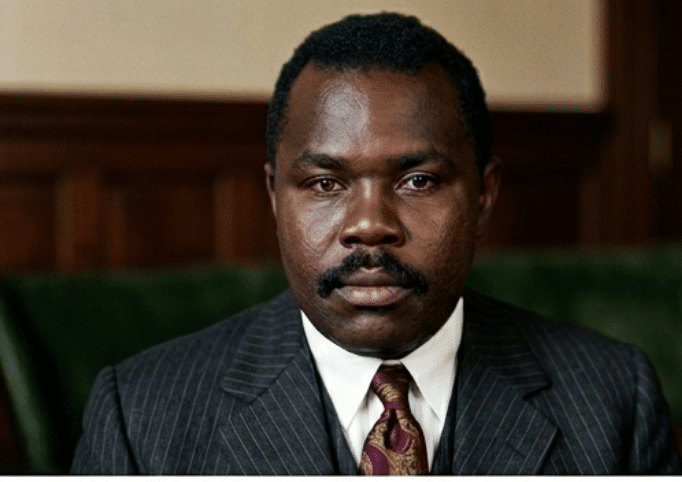
Marcus Garvey remains one of the most influential figures to emerge from the Caribbean. Born in Jamaica at the end of the 19th century, he transformed a local experience into a political and cultural project of international scope. At a time when black populations faced deeply rooted systems of exclusion, Marcus Garvey proposed a structured vision based on dignity, organization and autonomy. Recognized today as a national hero in Jamaica, he is much more than a historical symbol. His story helps us understand how the Caribbean helped shape major intellectual and political movements on a global scale. His name continues to circulate in contemporary debates on identity, memory and the development of societies born out of colonial history. From Jamaican origins to the formation of a committed conscience He was born on August 17, 1887 in St. Ann’s Bay, Jamaica, into a modest family. Very early on, he developed a
Read More »
BlueSeas Festival
EVENT MANAGEMENT
Tolotra

BlueSeas Festival: in Curaçao, Pietermaai becomes the epicenter of Caribbean blues in 2026

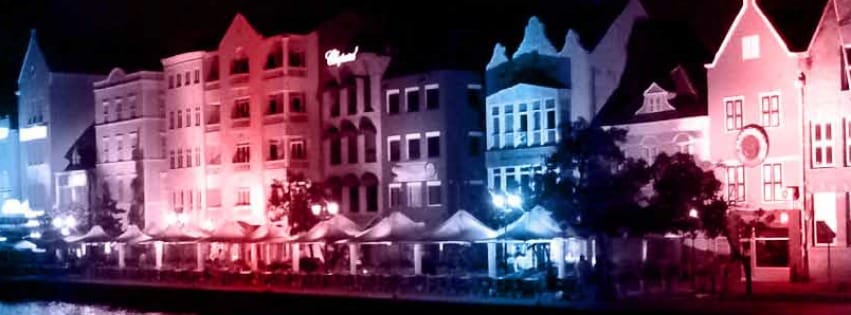
From April 2 to 4, 2026, Curaçao hosts another edition of the BlueSeas Festival a musical event that is gradually establishing itself as one of the most unique cultural events in the Caribbean. Free, open and rooted in the urban space, the festival goes far beyond simple musical programming to become a genuine territorial experience. Right from the opening night, Thursday April 2 at Kura Hulanda Village, the mood is set: the blues settle into a heritage setting, before taking full possession of the Pietermaai district on April 3 and 4. This two-stage format structures an immersive experience in which music, architecture and local life are seamlessly interwoven. A free festival that transforms the city into an open-air stage The BlueSeas Festival is based on the principle of offering free concerts in public spaces. This choice is not insignificant. It widens access to live music, while creating direct interaction between
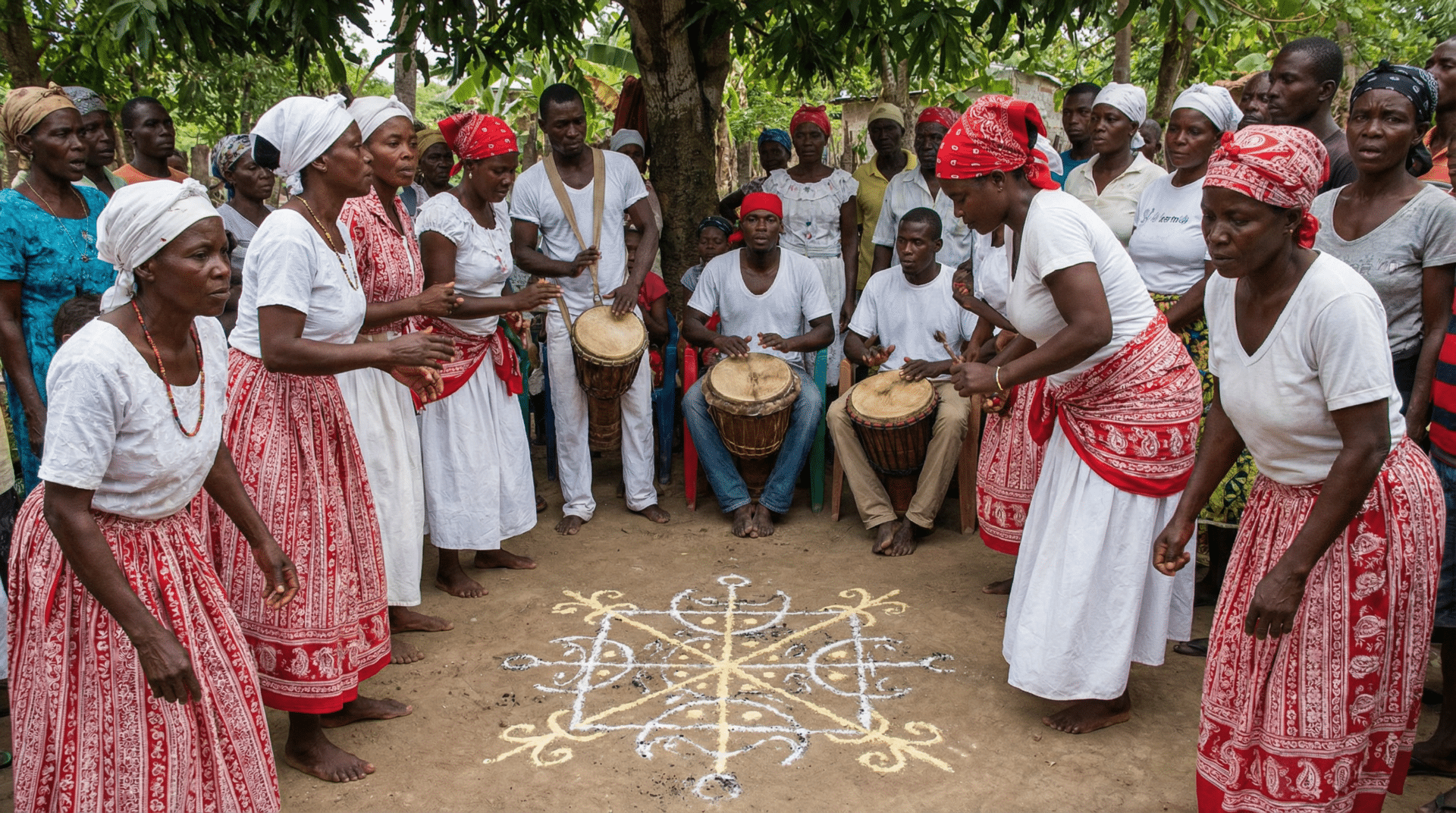
Read More »
Le vodou : Haïti au cœur d’une candidature patrimoniale majeure avec le Bénin
COOPERATION
Tolotra

Vodou: Haiti at the heart of a major heritage bid with Benin

The vodou is entering a new phase in its international history. The joint candidacy of Haiti and Benin for inscription on the Representative List of the Intangible Cultural Heritage of Humanity places centuries of memory, transmission and creation at the heart of a global heritage debate. The deadline set by UNESCO for applications to be examined in 2027, and submitted before March 31, 2026, places this initiative within a precise and structured institutional calendar, but the stakes go far beyond the administrative procedure. For the Caribbean, and Haiti in particular, this candidacy is no mere cultural formality. It’s about recognizing a living heritage, often misunderstood, sometimes caricatured, but deeply rooted in the country’s social, artistic and spiritual history. Vodou is not a fixed folklore; it is a cultural matrix, a way of organizing the link between generations, communities and the sacred. To place it within an international heritage dynamic is
Read More »

conTACT RK

we'd love to have your feedback on your experience so far

Join The List

Join our Richès Karayib community!  Sign up for our newsletter.

Want To Maximize Your Business Presence On Riches Karayib?

Complete the form to start the application