In a context marked by economic tensions and accelerated transitions, Martinique is questioning its ability to remain attractive, credible and desirable. Attractive for investors, for entrepreneurs, for talent, but also for its own young people, who have to choose between leaving, staying or returning.
The third edition of La Rencontre du Monde Économique, organized by MEDEF Martinique, focused on these issues. A morning of debates structured into five panels, where elected representatives, business leaders, institutions, training players and young people shared their visions of a region at a pivotal moment in its economic transformation.
As the discussions progressed, one thing became clear: attractiveness can no longer be summed up in tax measures or one-off incentives. It is built over time, at the intersection of institutional stability, infrastructure quality, air and sea connectivity, security, the ability to produce locally… and, above all, the way a region makes people want to live there.
From business competitiveness to energy transition, from artificial intelligence to skills training, from logistics to tourism, this Rencontre du Monde Économique highlighted a central question: Which Martinique do we want to make attractive, and for whom?
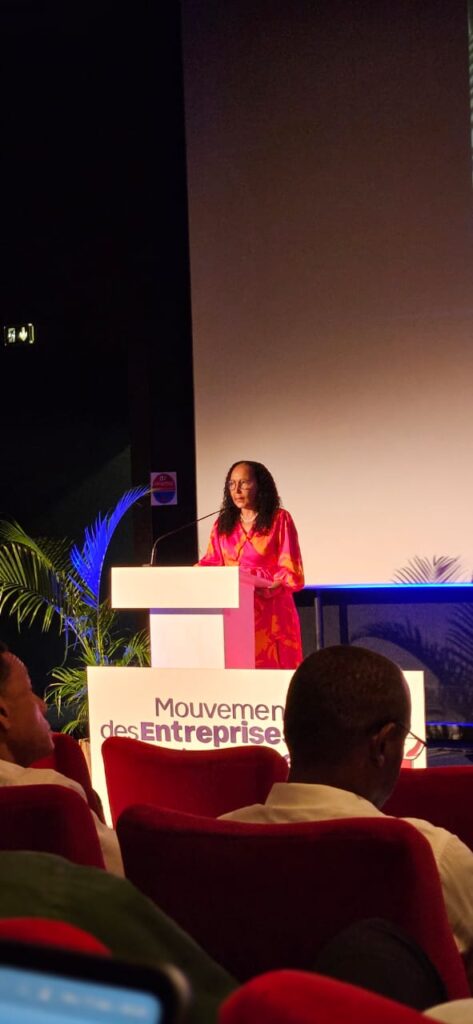
Opening this third edition, Catherine Rodap, president of MEDEF Martinique, set out a clear political and economic framework. Refusing to give up, she pointed out that the mobilization of economic players reflected a strong reality: Martinique’s economy is holding up, but at the cost of extreme resilience. A situation she considers untenable in the long term.
For her, Martinique is at a pivotal moment, where choices – or non-choices – will have a lasting impact on the competitiveness of businesses, employment, the attractiveness of the region and the ability of young people to project themselves into the future.
” Resilience cannot be a social project. “
Panel 1 - Institutional viewpoints
Stabilizing and transforming Martinique’s economy
This first panel provides the political and institutional framework for the Rencontre du Monde Économique 2025. A dense, sometimes head-on sequence, in which national and regional elected representatives make a lucid observation: Martinique has differentiating assets in its Caribbean environment, but its development remains hampered by unstable rules, cumbersome administration and an economic model that has run out of steam.
For Alexandre Ventadour, local councillor and Chairman of the “Attractivité, Développement économique, Numérique et Tourisme” commission, Martinique retains its strategic uniqueness. Institutional stability, tax systems, access to financing and geostrategic position are still levers for investment, provided that a paradigm shift is implemented. The region can no longer be seen solely as an economic extension of France, but as an area capable of producing, exporting and building sovereignty, particularly in terms of food.
“To be in Martinique right now is also to be in the place where a new economic system is being rebuilt.”- Alexandre Ventadour
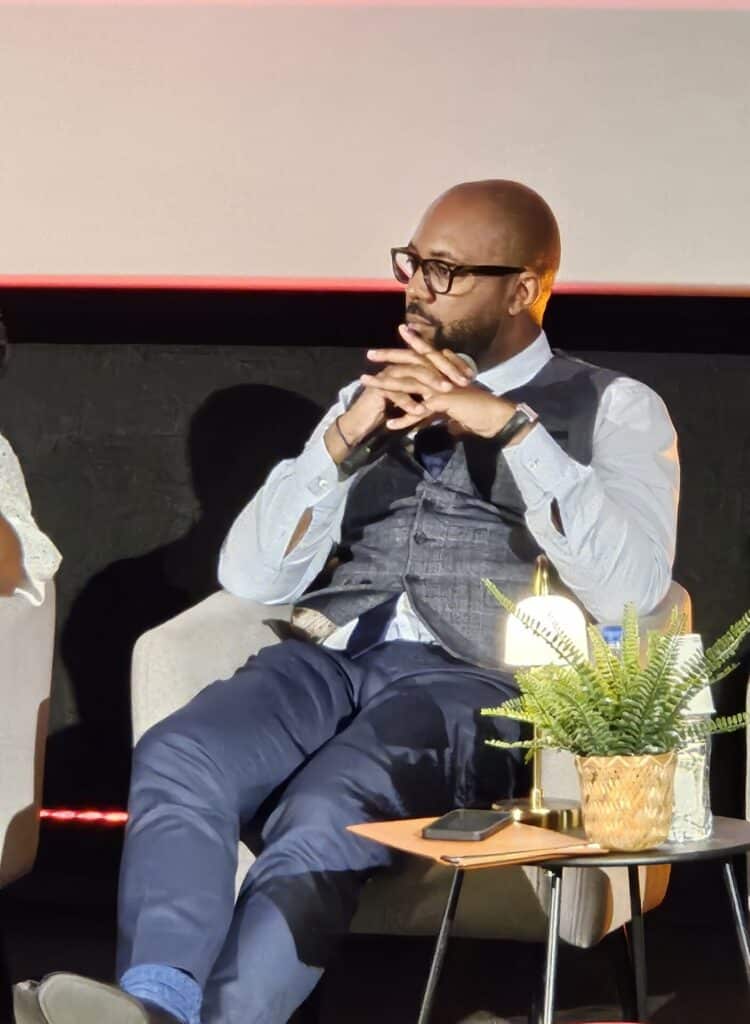
Senator Catherine Conconne introduces a more critical tone, rooted in the day-to-day reality of business leaders. She points to the ongoing instability of economic measures, in particular the LODEOM, and denounces a profound gap between institutional rhetoric and the concrete obstacles encountered by investors. While Martinique benefits from a reassuring rule of law – a real comparative advantage in the Caribbean – it suffers, in her view, from an excess of procedures, slowness and a collective denial in the face of the scale of the obstacles.
“Let’s get out of denial and face reality with real glasses.”- Catherine Conconne

Béatrice Bellay sets the debate against a backdrop of budgetary and macroeconomic constraints. She reminds us of the fragility of the overseas economies in the face of government arbitration, and calls for structural reform of existing schemes to make them more readable and effective. For her, stabilizing Martinique’s economy requires genuine planning, better regional integration and a rethinking of local economic models, in order to create better-paid, sustainable jobs.
“Our economic and social fabric is fragile. They deserve special attention.”- Béatrice Bellay
Finally, Giovanni William emphasizes the persistent difficulty of making Martinique’s realities heard at national level. Between constant legislative changes and the piling up of standards, companies operate in a climate of uncertainty that is hardly conducive to investment. He calls for a genuine simplification drive and for laws to be better adapted to the economic realities of the region.
“We need a simplification shock. We’ve been talking about it for years, but we’re not doing it.” – Giovanni William

This first panel thus lays a clear foundation: the transformation of Martinique’s economy requires stability, clarity and a clear break with certain institutional reflexes. The challenge is no longer simply to attract investment, but to create the conditions for sustainable added value, anchored in the region and open to the Caribbean.
Panel 2 - Structural costs, LODEOM & overseas taxation
How stable will 2026 be?
This second panel gets to the heart of Martinique’s economic realities: structural costs. These are often cited, but rarely documented with such precision. From the outset, the diagnosis is clear: insularity, dependence on imports, the small size of the market and limited productive diversification are lasting handicaps that cannot be totally erased, but whose effects can be mitigated by targeted choices.
For Patrick Croissandeau, according to the Director of the IEDOM, these constraints have a very tangible impact on business competitiveness. With higher working capital requirements, reduced margins, lower added value and higher financing costs than in mainland France, Martinique’s economy has to bear a systemic additional cost that weighs heavily on wealth creation.
“We import nearly 80% of our consumer goods, which puts a lasting burden on companies’ logistical and financial costs.”

Faced with this reality, Sandra Casanova, Member of the Martinique Assembly. Chairwoman of the “Stratégies logistiques du territoire – Politique de la recherche et de l’innovation” commission. proposes a change of focus: to think of logistics as a strategic lever for economic transformation. In her view, Martinique will not be able to become a production and export territory without an appropriate regulatory framework, in particular via the implementation of a “logistics law” customs-free zone capable of attracting value-added industrial activities.
” Logistics is the silent industrial policy of economic development.”

From the corporate side, Guillaume Gallet de Saint Aurin, vice-president of the FEDOM and manager of Sintorin, insists on a central issue: tax stability. fiscal stability. After the threat of cuts to the LODEOM and tax assistance for overseas investment, collective mobilization has helped to avoid a brutal shock for businesses. However, the challenge remains for 2026: to secure these measures, provide a better framework for them, and preserve the mechanisms that encourage innovation and upmarket development.
“The cuts envisaged would have been cataclysmic for our regions and for employment.”

Last but not least, Franck Zameo representative of the Martinique Chamber of Commerce and Industry, reminds us that in the face of these structural constraints, support for businesses has become a daily imperative. Export, logistics, performance, digital technology, access to aid and prevention of difficulties: the CCIM is positioning itself as an economic shock absorber, as close as possible to the realities on the ground.
“In 2024, the Martinique CCI supported more than 300 companies in export and export logistics.”
This second panel thus highlights a key point: competitiveness for Martinique’s businesses will not be achieved by denying structural constraints, or through unstable systems, but through clear, targeted, long-term policies capable of transforming these handicaps into levers for development.
Panel 3 - Transforming businesses
Digital, AI & energy transition
This third panel marks a turning point: that of the operational transformation levers in Martinique. Digital technology, artificial intelligence and energy are no longer distant horizons, but tools already at work, even if their appropriation remains uneven and sometimes still fragile.
On digital and AI, Chams Kora (Regional Director, FASFOX) points out that artificial intelligence is already being used on a massive scale… but often in an isolated, unsecured and non-strategic way. The challenge for companies is no longer to discover generative AI, but rather to use it to their advantage controlled integration into business processes from reliable in-house data, without dependence on mass-market platforms.
“Today, usage is still very individual, sometimes against the directives of the hierarchy, with tools that raise questions of sovereignty and reliability.”

The energy transition is also a strategic pillar, particularly for the region’s industry and economic continuity. For Michel Yp-Tcha (Director of Strategy and Transition, SARA), energy security relies on a combination of levers: diversification of supplies, local industrial capacity and adaptation to an unstable geopolitical environment. Energy transformation cannot be dissociated from economic realities, market volumes and the need to guarantee affordability.
“Energy is strategic for our territories, and it’s this local industrial capacity that enables us to ensure continuity of supply.”
Finally, the role of financing appears to be a decisive gas pedal. Franck Sannier reminds us that the energy transition is now an integral part of our banking strategy. Energy diagnostics, project structuring, renewable energy financing and long-term business support are the new standards in bank-business dialogue.
“Sustainable financing has become a central pillar of our strategy, with a very strong acceleration in renewable energies.”

To complement Franck Sannier’s speech, Rachida Anaïs, director of the BNP Paribas Antilles-Guyane Corporate Business Center, explains the operational role of banks in the energy transition of local businesses. Her speech highlights a profound change in the banking profession, which is now fully integrated into ESG issues, energy performance and the transformation of business models.
“Today, our role as bankers fully integrates the environmental, societal and governance issues faced by our customers.”
. In particular, it underscores the company’s support for concrete projects – photovoltaics, self-consumption, modernization of production tools, mobility, waste treatment – with subsidized financing terms. These are designed to accelerate the energy transition and boost competitiveness.

This panel highlights a clear reality: the transformation of Martinique’s businesses is already underway, but it requires method, security and support. AI, energy and finance are only effective when they are conceived together, in the service of a more robust, more sober and more competitive economic model.
Panel 4 - The region's economic and tourist appeal
Stability, connectivity and trust: the foundations of a credible Caribbean narrative
This panel, undoubtedly the most structuring of the Rencontre du Monde Économique 2025, addresses Martinique’s attractiveness as a global system economic stability, quality of public services, air and sea connectivity, security, infrastructure and image. A common thread: without confidence, there can be neither sustainable investment nor credible tourism development.
For Étienne Desplanques: according to the French government’s representative, the year 2025 remains marked by a fragile economic climate, inherited in particular from the social tensions of 2024. Against this backdrop, the State must play a clear role in stability factor a prerequisite for attractiveness. The prefect also warns of major structural weaknesses – water, waste, electricity – which will weigh heavily on the region’s ability to attract businesses and investors if they are not dealt with quickly.
“Business leaders need stability, especially after a year 2024 marked by a major social crisis.”
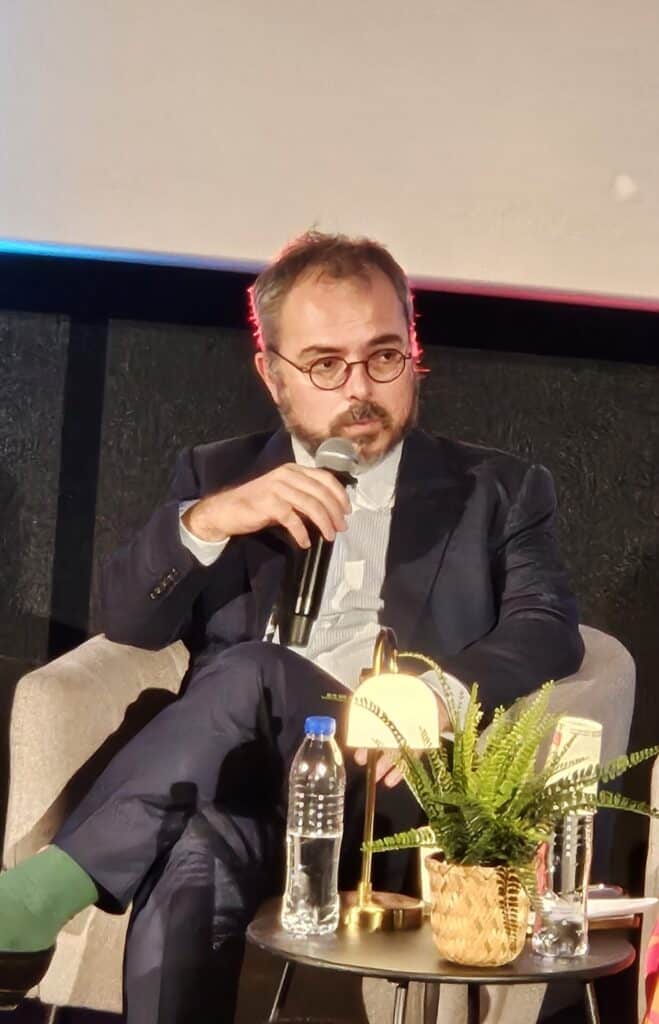
President of MEDEF Martinique, Catherine Rodap extends this analysis, calling for an end to the prevailing pessimism, without denying the difficulties. She defends a 360° reading of measures such as the LODEOM, pointing out that they also generate activity, employment and tax revenues. She also highlights two critical issues for the region’s attractiveness: the risk of a massive rise in energy costs for businesses, and the deleterious impact of drug trafficking on the confidence of economic partners.
“The real attractiveness of the region also depends on neutralizing this parallel economy.”

The question of air connectivity, a pillar of tourism and regional openness, is then addressed by Nathalie Sébastien. She reminds us that, for an island territory, air travel is not a comfort but a prerequisite for development. Since the Covid crisis, our strategy has been to diversify our outbound markets and destinations, with greater openness towards Europe, North America and the Caribbean.
“For a region like ours, air transport is a strategic lever for economic development and tourism.

From the tourism industry’s point of view, Patrice Fabre insists on a Martinique paradox: a destination with exceptional assets, but penalized by overly seasonal visitor numbers. For him, the challenge is not just air travel, but the collective ability to attract visitors all year round, a prerequisite for profitable hotel investments and the revitalization of the entire local ecosystem.
“How do you expect to be profitable when we’re full four to five months a year?”
Attractiveness also depends on the sea. Philippe Rech puts Martinique back on the map of Caribbean and international logistics flows. The creation of the CMA CGM Antilles hub by 2026, the fruit of a public-private partnership, should strengthen regional connectivity, facilitate trade and reposition the region in global logistics chains.
“The Caribbean region is dynamic, and maritime connectivity is as much an opportunity as it is a competitive challenge.”
Last but not least, Jean-Marc Poullet reminds us that attractiveness also comes down to the ground. Opening up roads, making essential networks more resilient, adapting infrastructures to climate change: these are all structuring projects designed to improve quality of life, reduce costs for businesses and enhance the region’s image.
“Traffic jams have a direct social, economic and commercial impact on the attractiveness of the region.”
For Richès Karayib, this panel 4 reveals the obvious: Martinique’s attractiveness cannot be decreed. It is built at the intersection of institutional stability, regional connectivity, security, infrastructure quality and a strong collective narrative, capable of projecting the territory in its Caribbean and international environment.
Panel 5 - Youth, skills and transmission
Train, attract, retain: human capital at the heart of attractiveness
The final highlight of the Rencontre du Monde Économique 2025, this panel refocuses the debate on a lever that is often presented as a constraint, but which appears here as a key factor of transformation. key factor of transformation human capital. Young people, skills, training, recruitment and transmission are no longer peripheral issues; they directly condition Martinique’s ability to project itself economically.
The young people’s voice sets the scene in no uncertain terms. Léa Nicolas, a high school student, expresses a strong attachment to the region, while acknowledging the need for mobility to train and gain experience.
” I’d like to continue my studies abroad and, if I get good opportunities, come back to work in Martinique, because it’s my island. ”

Her testimony is complemented by that of Elison Jean-Marie Alphonsine who sheds light on an often unspoken reality: access to employment does exist, but it requires selectivity, high standards and the ability to meet companies’ expectations.
” We have to live up to the demands of the working world. ”
From the employment institutions, Paul Eddy Paulin, Director of External Relations Strategy France-Travail Martinique points out that recruitment difficulties remain high, even if they are declining slightly. Over and above the figures, he stresses the profound change in young people’s expectations, as they become more sensitive to corporate projects, values and social responsibility.

” Young people don’t necessarily project themselves into a permanent contract, but into a project. ”
This evolution is analyzed more structurally by Yannick Decompois which debunks the preconceived notion of a simple mismatch between training and employment. Demographic ageing, the attractiveness of professions, perceived hardship and the lack of structuring of sectors are the main reasons for current tensions. In his view, companies need to become training actors not just consumers.

” Companies cannot simply position themselves as consumers of training. They have to be active players. ”
In the field, Audrey Florent, Director of Business Development at Skillfor Campus, illustrates this approach with concrete examples. Training courses designed in conjunction with companies, work-study programs, new professions linked to AI, data, cybersecurity or personal services: training is becoming a strategic tool for anchoring skills in the region.

” The aim is not to train for the sake of training, but to provide useful training in response to identified needs. ”
Last but not least, Charles Larcher, Chairman of the MEDEF Martinique’s Education, Training and Employment Commission, makes a straightforward diagnosis: high youth unemployment, a lack of understanding of professions, and a lack of bridges between guidance, training and business. He calls for an increase in apprenticeships, including at higher qualification levels, and for better transmission of know-how.
” Young people are not rejecting the corporate world, but they are calling for stronger links between training and the business world. ”
This last panel acts as a conclusion in itself: without a clear strategy on skills, transmission and integration of young people, no policy of attractiveness – whether economic, tourist or industrial – can be sustained over the long term. For Martinique, the challenge is not only to train, but also to make people want to stay, come back and get involved.

Attractiveness as a collective responsibility
At the end of this third edition of La Rencontre du Monde Économique, one thing is certain: Martinique’s attractiveness is neither a slogan, nor an isolated feature. It is the result of a delicate balance between stability, clear rules, quality infrastructures, the ability to produce locally, regional openness and collective confidence. It’s a patient and demanding process, involving both companies and public institutions.
From debates on structural costs to those on the energy transition, from artificial intelligence to air and sea connectivity, from business competitiveness to skills training, each panel reminded us that economic trajectories cannot be decreed. They are built by coherent choices, taken over time, and by a vision capable of rallying the region’s driving forces.
The issue of youth, which was omnipresent throughout the morning, is undoubtedly the strongest indicator of this. Training, attracting and retaining young people, but also making them want to come back: human attractiveness now determines economic attractiveness. A region that fails to offer credible prospects to its young people is permanently undermining its future.
Through this Meeting, the MEDEF Martinique has set a clear framework: that of an economy that refuses to give up, but can no longer be content with resilience. The challenge now is to transform endurance into a collective project, and to make attractiveness not just an abstract objective, but a shared, long-term responsibility, open to the Greater Caribbean.


FAQ
The Rencontre du Monde Économique is an annual event organized by the MEDEF Martinique. It brings together business leaders, government representatives, elected officials and training professionals to discuss the region’s major economic challenges and identify concrete levers for transformation.
This third edition of MEDEF Martinique focused on several major areas: economic and institutional stability, structural costs and taxation overseas, business transformation (digital, AI, energy transition), economic and tourist appeal, as well as youth, skills and transmission.
Because it allows the MEDEF and all the economic and institutional players to confront the realities on the ground, to identify the limits of the current systems and to collectively reflect on sustainable solutions to strengthen attractiveness, competitiveness and employment in Martinique.