
Pietermaai: where Curaçao is written in color

Pietermaai

A neighborhood shaped by history

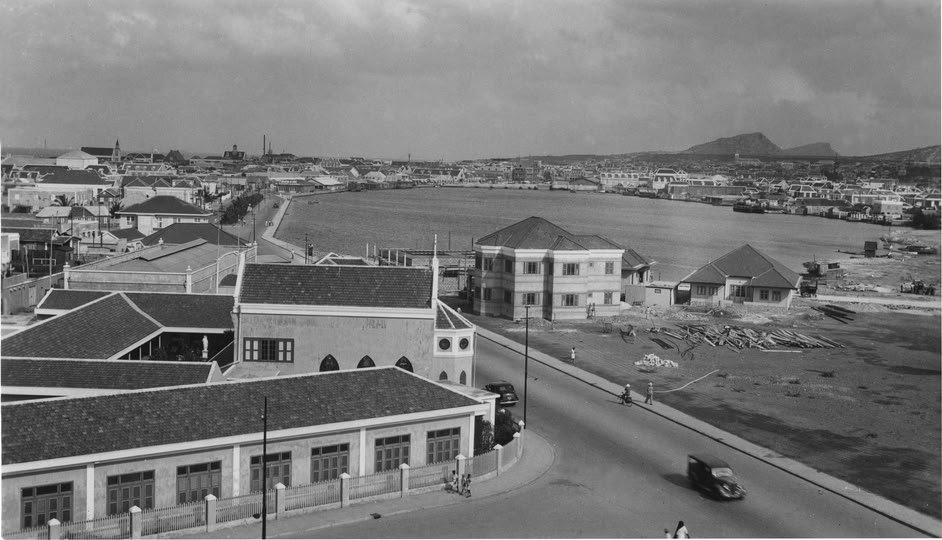
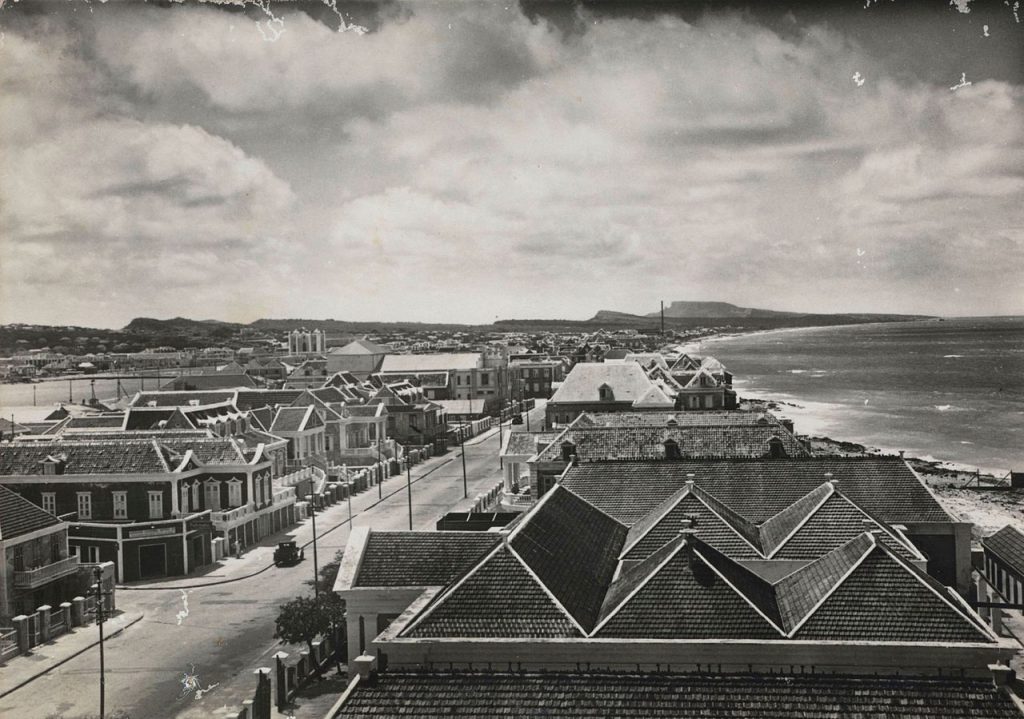
Located east of Fort Amsterdam, Pietermaai is one of Curaçao‘s oldest districts. It takes its name from Pieter de Meij, a ship’s captain who came from Brazil in 1674 to establish a plantation called “Zeelucht”. As early as 1680, the Dutch West Indies Company began to subdivide the land outside the city walls, creating a suburb that was both strategic and autonomous.

This development was part of a desire to maintain a clear firing range around the Willemstad fortifications, while responding to demographic pressure.

Pietermaai town planning was thus born of a compromise between military security and residential expansion. Colonial villas quickly sprang up in this intermediate zone, marking the beginnings of an original, structured urbanization. The famous “Steenen Padt”, linking the fortified city to Caracas Bay, played a crucial role in trade, particularly during the French attack of 1673.

Pietermaai
©Pietermaai District Curaçao 2
©pietermaaidistrict
©Pietermaai District Curaçao
Pietermaai
©pietermaaidistrict

From strategic suburb to Bohemian enclave

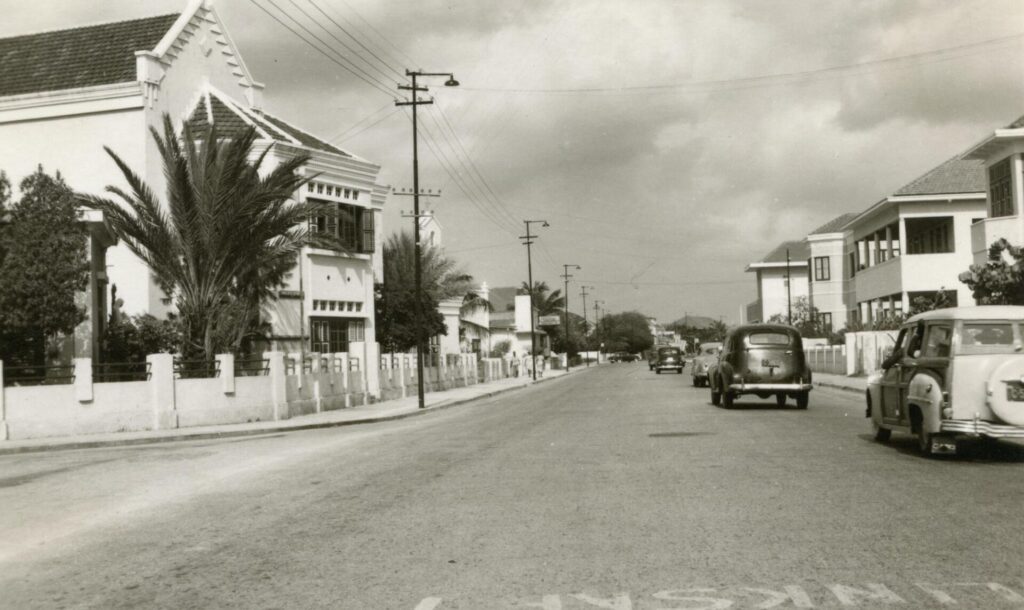
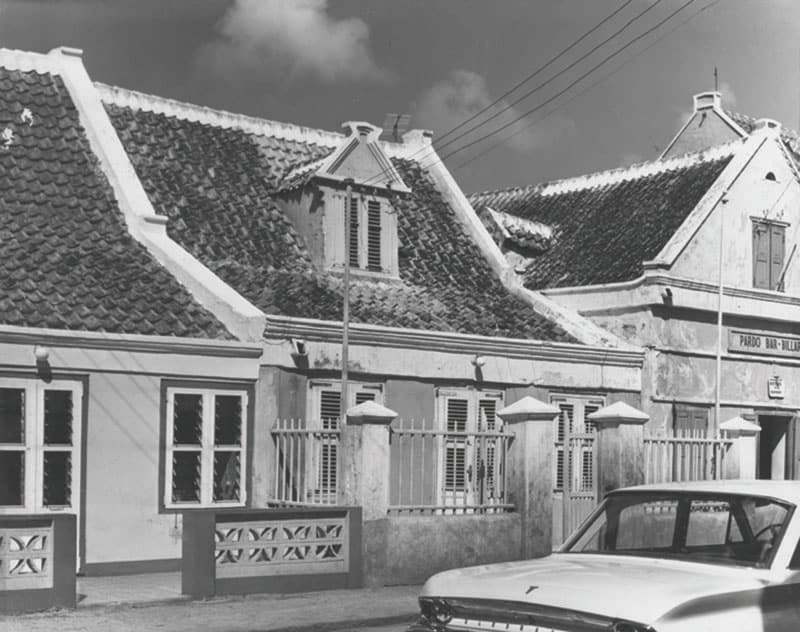
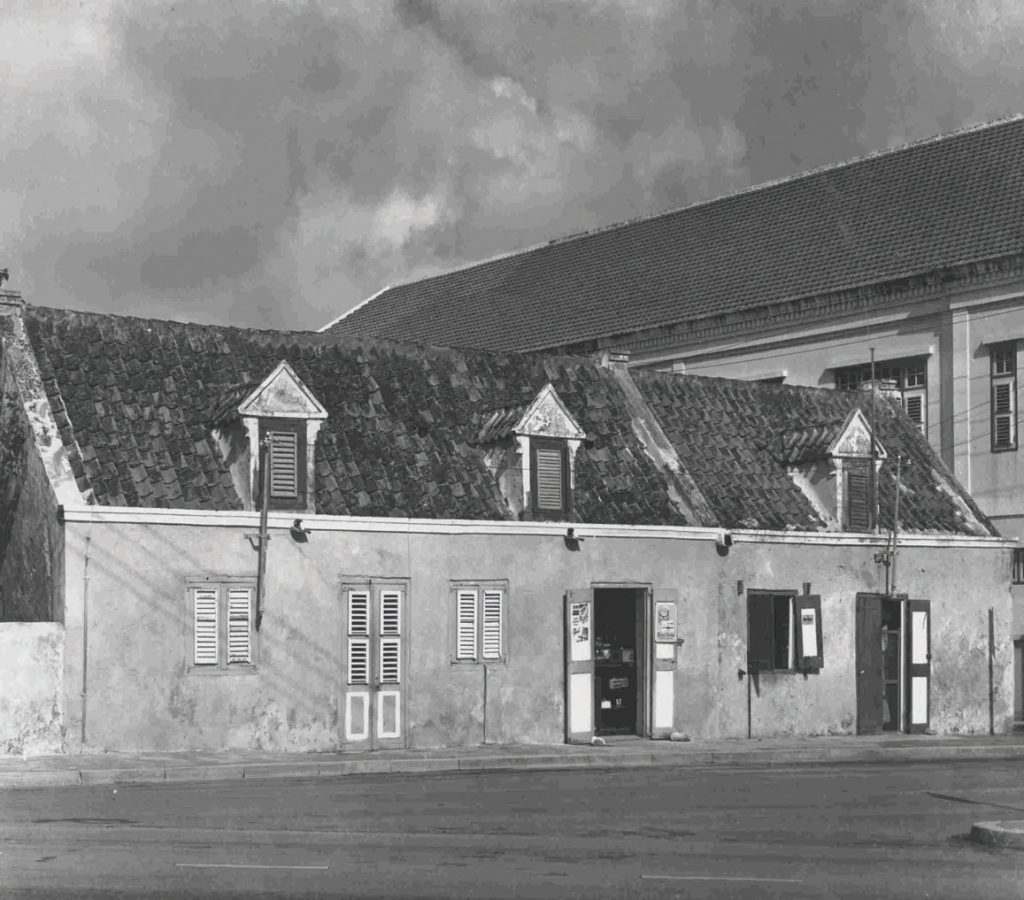
Over the centuries, Pietermaai has seen its ramparts fall and its boundaries evolve. The gradual demolition of the fortifications in the 19th century allowed architecture to express itself fully, with colorful residences, small shops and European-style buildings. Some urban expansion projects never came to fruition, giving the district a distinct personality, untouched by large-scale real estate development.

Today, the town is often compared to a “Caribbean Soho”, not to follow a trend, but for its ability to bring together residents, artists, artisans and visitors in the same space. Far removed from standardized circuits, the district has become a veritable living space where artistic and culinary expression find fertile ground. This revival is no accident: it’s the fruit of careful renovation and constant local involvement.

Pietermaai
©pietermaaidistrict
Pietermaai
©pietermaaidistrict

The beating heart of Nieuwestraat

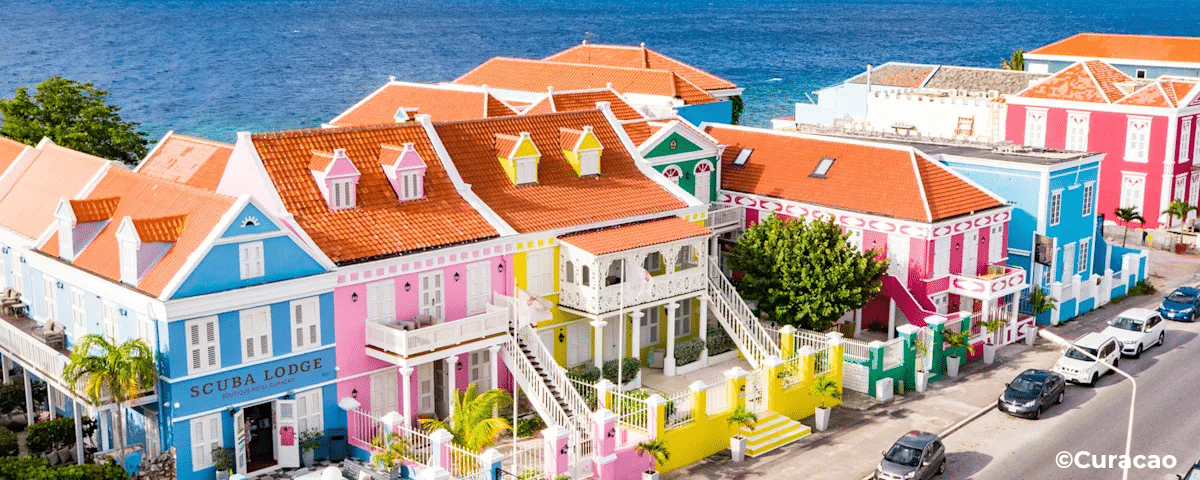
The Nieuwestraat is Pietermaai’s main thoroughfare. Pietermaai. Lined with houses painted in pastel hues, it comes alive in the early hours of the morning. Restored facades bear witness to an attention to detail and a deep respect for old buildings. At night, the soft lighting of the establishments gives the street a warm, almost cinematic atmosphere.

Restaurants, cafés, jazz bars… there’s no shortage of addresses, each with its own ambience, without excess or uniformity. Here, world cuisines mingle with local traditions, and menus are designed to appeal to palates without artifice. Visitors will find something to satisfy both their appetite and their curiosity.

A neighborhood fueled by creativity

The town is also a place of cultural expression. Art galleries, walls painted by local artists and designer boutiques line the side streets. Each wall seems to bear a trace of the past, while leaving room for contemporary imagination. Far from being static, this collective memory evolves in step with community initiatives.

Some places pay tribute to emblematic figures, such as Wilson “Papa” Godett, a respected trade unionist and politician, whose name adorns one of the neighborhood’s main thoroughfares. These references are not decorative: they recall the social struggles that have shaped the identity of Curaçao and its people.

Pietermaai
©corendon
Pietermaai
©Pietermaai District Curaçao

Sleep in the heart of the neighborhood

Stay in Pietermaai is choosing authenticity without sacrificing comfort. Numerous boutique hotels and charming guesthouses have taken up residence here. Their architecture respects the heritage of the area while incorporating modern amenities. Establishments such as BijBlauw or Scuba Lodge stand out for their attention to detail, ideal location and respectful approach to the local environment.

This type of accommodation offers a real immersion in local life. In the morning, visitors meet local residents, craftsmen and fruit deliverymen; in the evening, they share the terraces with musicians and students. This relaxed rhythm makes Pietermaai is a popular place to stay because of its close proximity to Willemstad’s centers of interest, without the hustle and bustle of crowded areas.

Pietermaai
©mycuracaoguide
Pietermaai
©Pietermaai District Curaçao

A successful heritage renaissance

Renovating Pietermaai was not a quick process. Abandoned for several decades, particularly in the 1970s and 1980s, the district had lost its lustre. It was local players – architects, entrepreneurs, artists – who initiated the revival, with ambitious rehabilitation projects that respected the original setting.

Today, this renaissance is cited as a successful example of urban conservation. Island authorities see it as a model of balance between heritage enhancement and economic dynamism. This success is based on collaborative management, combining private initiatives and institutional support.

Pietermaai
©Pietermaai District Curaçao
Pietermaai
©Pietermaai District Curaçao
Pietermaai
©corendon

Pietermaai is neither an open-air museum nor just another fashionable district. It embodies a way of life, where collective memory meets contemporary creativity. It is precisely this tension between roots and contemporary uses that gives it its unique personality.

While other areas of Curaçao are focusing on more uniform developments, Pietermaai charts a different course, one that is both demanding and faithful to its history. The aim is not to reproduce a decor, but to maintain an atmosphere. An editorial and architectural choice that continues to seduce those in search of authenticity and roots.

Leave a Reply

Your email address will not be published. Required fields are marked *

More articles from RK

Sonia Sotomayor
HISTORY & HERITAGE
Tolotra

Sonia Sotomayor: Puerto Rican, first Latina on the US Supreme Court

The Oath of a Bronx Kid On August 8, 2009, at the seat of the U.S. Supreme Court, Sonia Sotomayor raises her right hand and takes the oath of office. She became the third woman in U.S. history to sit on the Supreme Court, and the first Hispanic, the first Latina, to enter the institution. At that very moment, the child of Puerto Rican-born parents from the Bronx public housing project became one of the nine people charged with interpreting the U.S. Constitution. A Puerto Rican family in the Bronx Sonia Maria Sotomayor was born on June 25, 1954 in the South Bronx, New York. Her parents, Juan Sotomayor and Celina Báez, were both born in Puerto Rico and moved to the Americas after the Second World War. Juan worked in a tool factory. Celina, who had served in the Women’s Army Corps, became a nurse. The family lives in

Read More »
EVENT MANAGEMENT
Sabrina

Rendez-vous aux Jardins: see the real thing at the Domaine d’Émeraude

Kévin, Maya and Maeva at Domaine d’Émeraude For the grand finale of the RK Heritage series at Rendez-vous aux Jardins 2026, Kévin Belcoua returns. After discovering five gardens alongside his grandparents Émile and Jocelyne, he wanted to pass on his experience to others: he took two classmates, Maya and Maeva, to the Domaine d’Émeraude. In the heart of Martinique’s hygrophilous forest, under the guidance of Patrick LAPU, nature guide, they discover that learning to see is first and foremost learning to taste, listen, understand… to see truly. Maeva, Kevin, Patrick Lapu and Maya Kévin didn’t come alone… After crossing five gardens alongside his grandparents Émile and Jocelyne, he was keen to bring along two classmates for the last of the series. Maya and Maeva had never been to the Domaine d’Émeraude before. Neither had he. But something told him this place was best discovered by more than one person. Sometimes,

Read More »
Anse Latouche
EVENT MANAGEMENT
Sabrina

Rendez-vous aux Jardins: see the living at Anse Latouche

The Belcoua at Habitation Anse Latouche, Martinique Zoo For the 2026 Rendez-vous aux Jardins, the Habitation Anse Latouche opens the doors to a unique site, part botanical garden, part zoo and part remains of a dwelling founded in 1643. RICHÈS KARAYIB follows the Belcoua family as they discover the Remarkable Gardens of Martinique. That day, between monumental cheese trees, semi-liberty atelas and butterflies in the greenhouse, they discovered that looking at living things is already a commitment to protecting them. At the entrance to the park, the Belcoua family stops. In front of them, the trunk of an old tamarind tree, massive and blackened, resisting cyclones and years. Jocelyne stops, gazing up at the top. Kévin and Émile, nearby, observe the majestic tree. Somewhere in the foliage, a bird call pierces the silence. A little further on, iguanas roam freely. Here, plant, mineral and animal cohabit in the same space.

Read More »

conTACT RK

we'd love to have your feedback on your experience so far

Join The List

Join our Richès Karayib community!  Sign up for our newsletter.

Want To Maximize Your Business Presence On Riches Karayib?

Complete the form to start the application