
In April 2008, a handful of freedivers dove into a marine abyss south of Long Island in the Bahamas and broke three world records and twenty-three national records over ten days of competition. Since that first event, Dean’s Blue Hole, near Clarence Town, has established itself as one of the world’s premier venues for constant-weight freediving.
This sinkhole owes its fame to a specific figure—202 meters below the surface—which was scientifically measured as early as 1994. Long touted as the world’s deepest marine blue hole, it now ranks third in the world, according to the Bahamian tourism authorities themselves—a ranking that few destinations publicize so openly.
Dean's Blue Hole, a bell-shaped sinkhole near Clarence Town
Long Island stretches about 130 kilometers, is barely 6 kilometers at its widest point, and has fewer than 3,000 residents. Clarence Town, its administrative capital, is home to only about a hundred of them, scattered among a few stone buildings dating from the post-slavery era and two churches built by the same priest-architect in the early twentieth century.
Just a few minutes away lies Dean’s Blue Hole, a narrow entrance in the limestone that suddenly widens underwater into a bell-shaped chamber. Researcher William Wilson published the first precise scientific measurement of its depth in 1994 in the Bahamas Journal of Science: 202 meters deep. The porous limestone that makes up the entire Bahamas explains the exceptional concentration of marine sinkholes of this type in the archipelago—a phenomenon rarely seen elsewhere in the world.

202 meters that have made Long Island a global hub for freediving
Calm, current-free water and sufficient depth just a few meters from the shore—these are exactly the conditions sought by constant-weight freediving, a discipline in which the athlete descends and ascends using only their own body strength, without assistance. Dean’s Blue Hole meets these conditions better than any other site accessible from the shore.
That is what led freediver William Trubridge to found the Vertical Blue competition there in 2008. Open only to invited athletes, it has since been the site of several world records, including one set by British athlete Sara Campbell in 2009. Every year, the small global community of competitive freedivers returns to this stretch of Long Island, transforming a fishing village into an event closely followed by the sport’s international federations.
In July 2025, the fifteenth edition of Vertical Blue once again broke that record. France’s Arnaud Jerald set a new world record in the constant-weight, bi-fin category at 126 meters, while Slovenia’s Alenka Artnik tied the women’s best performance in the discipline at 123 meters. Seventeen years after its inception, Dean’s Blue Hole continues, every summer, to push the limits of the human body in freediving a little further.

Ranked third in the world—a distinction few destinations can claim
For decades, Dean’s Blue Hole was cited in guidebooks and news reports as the world’s deepest marine blue hole. That is no longer the case. The Dragon Hole, in the South China Sea, surpasses it at approximately 301 meters. And a study published in 2024 in the journal *Frontiers in Marine Science* measured Taam Ja’, in Chetumal Bay, Mexico, at more than 420 meters, though researchers have not yet reached the bottom.
Rather than continuing to claim a record that has been surpassed, the official Bahamian tourism website now lists Dean’s Blue Hole as the third-deepest marine blue hole in the world. This level of precision—rare in an industry that often favors hyperbole over accuracy—speaks volumes about the site itself; its value lies not in a ranking, but in what freedivers and scientists continue to discover there.

Long Island, a protected area that attracts freedivers from around the world every year
The limestone of the Bahamas is home to the highest concentration of marine sinkholes in the world, a geological treasure documented by the Bahamas National Trust, the national conservation organization. Many of these blue holes, including Dean’s Blue Hole, remain fragile ecosystems that are sensitive to runoff and human activities near the shoreline.
Long Island, on the other hand, has retained an economy centered on fishing and small-scale agriculture, far from the large hotel resorts found on other Bahamian islands. Every new measurement of a marine abyss elsewhere in the world could still reshape this ranking of the deepest points. In Clarence Town, this does not change what freedivers come to seek each year in the calm waters of Dean’s Blue Hole.

Dean’s Blue Hole reaches a depth of 202 meters below the surface, a measurement established by researcher William Wilson in 1994 in the Bahamas Journal of Science. The blue hole opens with a narrow entrance that suddenly widens underwater into a vast, bell-shaped chamber.
No, it currently ranks third in the world. Dragon Hole, in the South China Sea, is about 301 meters deep, and Taam Ja’, in Mexico, was measured at more than 420 meters in a study published in 2024.
Dean’s Blue Hole is located on Long Island in the Bahamas, near Clarence Town, the island’s administrative capital.
Sidney Poitier was born on February 20, 1927, in Miami, Florida, while his Bahamian parents were visiting to sell tomatoes; he later grew up without electricity or running water on Cat Island in the Bahamas. On April 13, 1964, he became the first Black actor to win the Oscar for Best Actor, for his role in *Lilies of the Field*. More than sixty years later, Nassau, the capital of the Bahamas, named one of the bridges connecting Cat Island to Paradise Island after him.
A theater director who tells him he doesn't know how to speak
In 1946, in New York, Sidney Poitier walked into the basement of a library in Harlem where the American Negro Theatre was rehearsing. He was actually looking for a dishwashing job in the classifieds of the Amsterdam News when he stumbled upon an ad that read, “Actors Wanted.” The theater director listened to him read two paragraphs and brusquely sent him away, telling him he could barely speak and would be better off washing dishes. He would later recount that this remark, rather than discouraging him, triggered exactly the opposite reaction. Standing on the street between Lennox and Seventh Avenue, he decided to become an actor—not out of a calling, but to prove that the man was wrong about him.
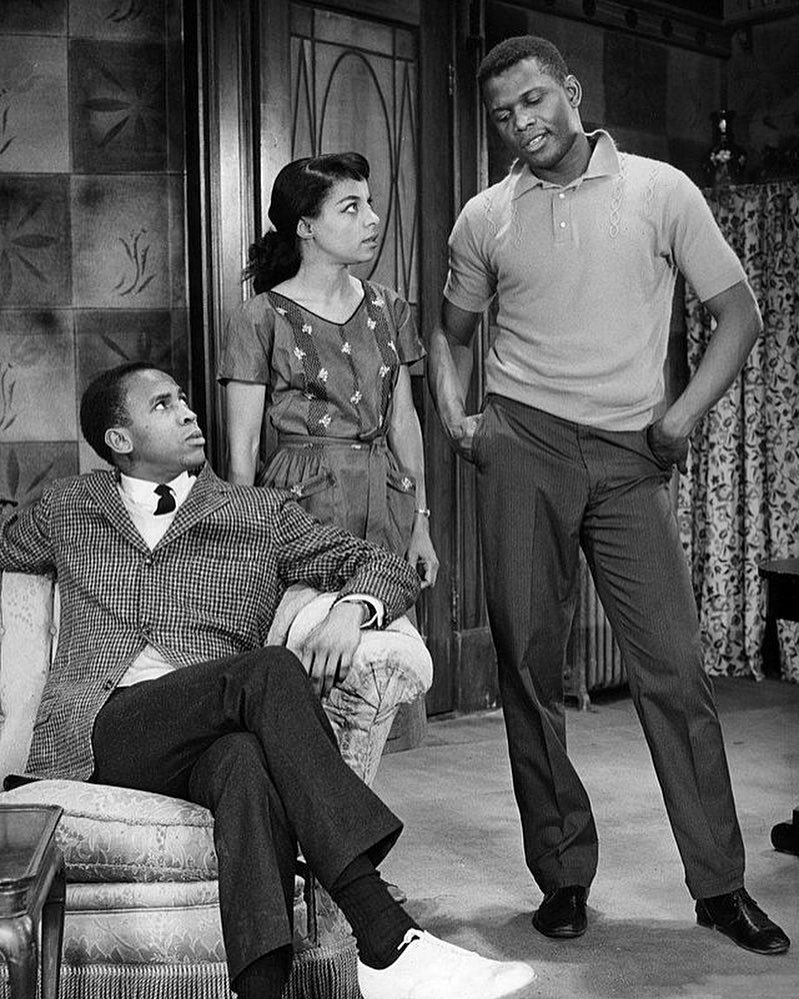
Sidney Poitier: A Childhood on Cat Island Without Electricity or Running Water
Sidney Poitier grew up on Cat Island in the Bahamas, where his family grew tomatoes. He worked in the fields from the age of five and attended a one-room school sporadically. When he was about ten and a half, after Florida stopped importing Bahamian tomatoes, the Poitier family moved to Nassau, the capital of the Bahamas. There, he saw his first car and his first movie—a cowboy story that left him wondering how so many characters could fit into such a small theater.
At twelve and a half, he left school to help support his family financially, before joining his older brother Cyril in Miami, Florida, at the age of fifteen. After spending a summer washing dishes at a hotel in Georgia, he saved enough money to try his luck in New York, where he arrived at age sixteen, sleeping in bus stations before finding a room in Harlem. Cat Island is located in the Bahamas archipelago, not far from the Exuma archipelago in the Bahamas.


Six months to change your accent
After being fired from the American Negro Theatre, Sidney Poitier spent six months working on his diction and his Bahamian accent, poring over newspapers between shifts washing dishes and repeating aloud every word he heard on the radio. He then returned to the theater, offered to work as an unpaid janitor in exchange for acting lessons, and eventually landed a small understudy role in the play *Lysistrata*.
On the night of the performance, the lead actor, a young man named Harry Belafonte, had to help his father empty the ashes from a building’s boiler and couldn’t make it to the show. He stepped in to play the part, forgot his opening lines in front of 1,200 audience members, and sparked laughter, earning him favorable reviews. A Broadway director who was in the audience that night later offered him his first professional role.

From *No Way Out* to the 1964 Oscars
In 1950, Sidney Poitier made his film debut in *No Way Out*, in which he played a young doctor confronted by a racist patient, a role so powerful that the film was banned in Chicago and several cities in the southern United States, as well as in the Bahamas by the British colonial authorities at the time, for fear of racial tensions. He subsequently turned down several roles he considered demeaning, even when he needed money for the arrival of his second daughter.
In 1958, The Defiant Ones, in which he plays a convict chained to a white fellow inmate, earned him his first Oscar nomination. On April 13, 1964, for his role in Lilies of the Field (1963), Sidney Poitier became the first Black actor to win the Oscar for Best Actor in a leading role, six years after that nomination. Actress Hattie McDaniel had won an Oscar for Best Supporting Actress as early as 1940, but no Black actor had yet been honored for a leading role. He later said that what he enjoyed most about the role was playing a man who was aware of his own worth, neither a servant nor a victim.

1967, the year three of his films topped the box office
In 1967, three films starring Sidney Poitier were released: To Sir, with Love, In the Heat of the Night, and Guess Who’s Coming to Dinner. In In the Heat of the Night, he insisted on a scene in which his character, a Black police officer, is slapped by a white suspect and immediately strikes back, contrary to the original script, which had him walking away without reacting. In his own words, he explained to producer Walter Mirisch that the Black community would find such passivity unacceptable on screen. Once the year’s box office receipts were tallied, these three films ranked among the highest-grossing of 1967, making him the biggest box-office draw of his time.

A bridge in Nassau—so we won't forget
In 1974, one year after the Bahamas gained independence, Queen Elizabeth II knighted Sidney Poitier. He then served as the Bahamian ambassador to Japan from 1997 to 2007, and as the Bahamian ambassador to UNESCO from 2002 to 2007. In 2009, President Barack Obama awarded him the Presidential Medal of Freedom.
On November 2, 2012, in Nassau, Bahamas, the bridge connecting New Providence Island to Paradise Island was officially renamed the Sidney Poitier Bridge, in the presence of the actor and Bahamian schoolchildren. Prime Minister Perry Christie referred to him as the most famous Bahamian in the world and reminded the children present that day that they represent the country’s future. He died on January 6, 2022, in Los Angeles, at the age of 94.

Sidney Poitier grew up on an island without electricity to become the first Black person to win an Oscar in the top category. His name remains engraved today on a bridge in Nassau, which Bahamians cross every day—though not all of them may know where he came from. How many other stories of people who set out from such a small island in the Caribbean remain to be told?
Sidney Poitier was an actor, director, and diplomat born on February 20, 1927, in Miami, Florida, to Bahamian parents; he grew up on Cat Island and later in Nassau, in the Bahamas. He died on January 6, 2022, in Los Angeles at the age of 94.
On April 13, 1964, Sidney Poitier won the Oscar for Best Actor for his role in *Lilies of the Field* (1963), marking the first time a Black actor had won in this major category. Actress Hattie McDaniel had previously won an Oscar for Best Supporting Actress in 1940.
Sidney Poitier was born to Bahamian parents and grew up on Cat Island and then in Nassau. On November 2, 2012, the bridge connecting Nassau to Paradise Island was renamed the Sidney Poitier Bridge in his honor, and he served as the Bahamas’ ambassador to Japan from 1997 to 2007 and then to UNESCO from 2002 to 2007.
Nassau Cruise Port welcomed 6.1 million passengers in 2025 and expects to welcome approximately 6.7 million in 2026. As the Bahamian port is nominated for the World Cruise Awards, the numbers tell a broader story: that of a gateway to the Bahamas that is expanding in scale.
Six ships and 33,254 passengers in a single day
On June 8, 2026, six cruise ships were in Nassau at the same time. The Oasis of the Seas, Allure of the Seas, Mardi Gras, Carnival Celebration, Caribbean Princess, and Disney Fantasy all contributed to a record-breaking day: 33,254 passengers welcomed in twenty-four hours.
The previous record, set on March 11, 2025, was 30,538 passengers. In just over a year, that figure has risen once again. For Mike Maura Jr., CEO and port director, this passenger volume is also due to the many Bahamian businesses that welcome visitors: retailers, artisans, restaurant owners, tour operators, transportation providers, and artists. This record adds another dimension to the news announced this week.
Nassau Cruise Port Nominated for the World Cruise Awards
Nassau Cruise Port is among the nominees for the title of Caribbean’s Best Cruise Terminal 2026 at the World Cruise Awards. It is competing against Antigua Cruise Port, Grand Turk Cruise Center, Port of Bridgetown, Port St. Maarten, and Port of Willemstad, among others. The Bahamas are also in the running in the category of Caribbean’s Best Cruise Destination 2026, alongside Antigua, Barbados, the Cayman Islands, Jamaica, and the Turks and Caicos Islands.
Voting, which began on July 13, will continue until August 21, 2026. Winners will be selected based on the number of votes received in each category. The awards ceremony is scheduled for October 12, 2026 at the Princess Grand Jamaica. But above all, the nomination comes amid a period of spectacular growth.
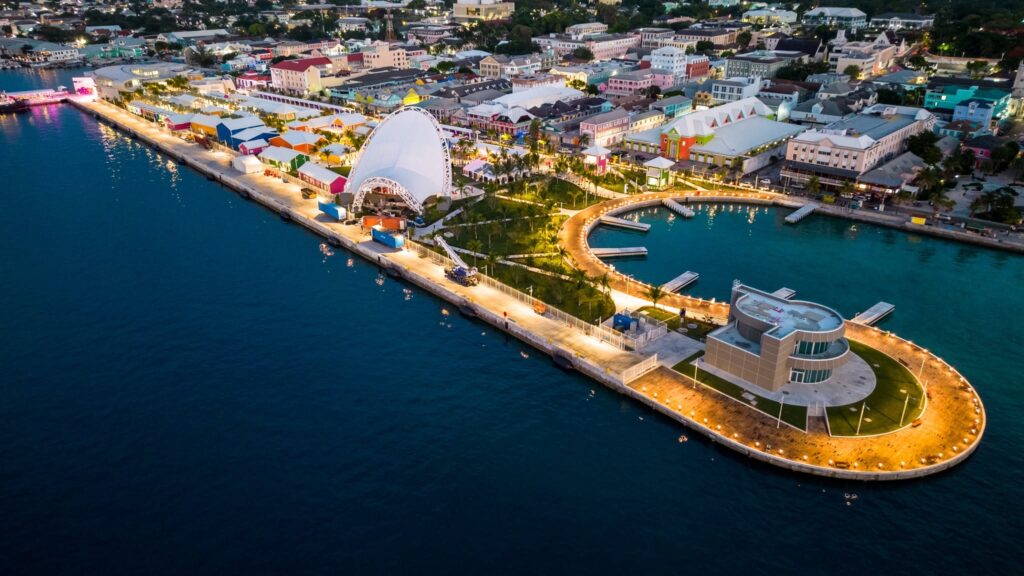
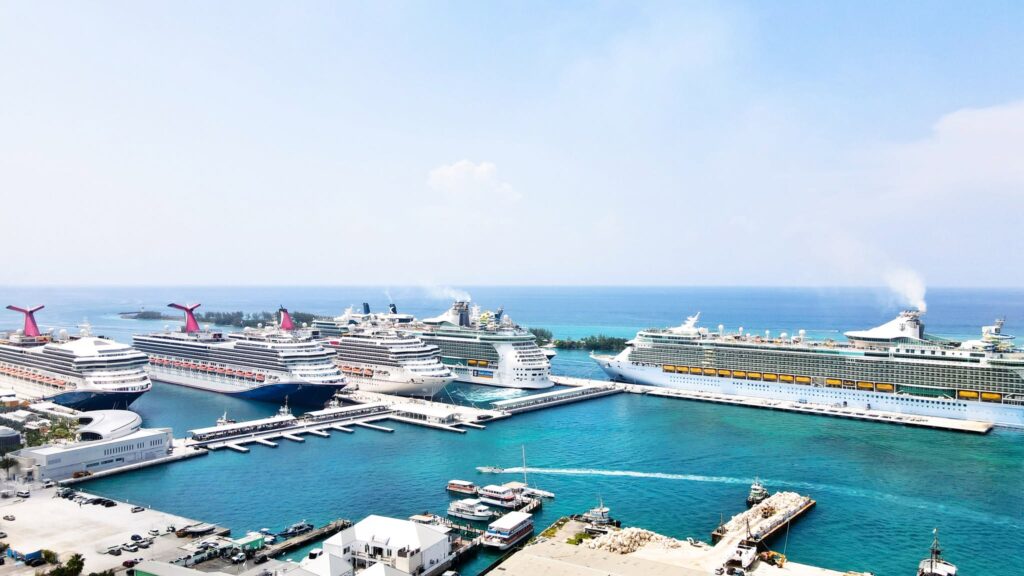
From 6.1 to 6.7 million passengers
In 2025, Nassau Cruise Port welcomed approximately 6.1 million passengers, compared to 5.6 million in 2024. Nearly 1,600 port calls were recorded over the course of the year. For 2026, the port now expects approximately 6.7 million passengers. This growth puts Nassau in a league of its own. The port is touted as the world’s busiest transit cruise port, a situation that makes the few hours spent in Nassau the first point of contact with the Bahamas for millions of travelers. The issue, therefore, is no longer just about the number of ships capable of docking. It’s also about what visitors find when they go ashore.
More than just a landing site
Recent investments reflect this trend. In particular, a marina for yachts 100 feet and longer has been added, along with new dining and recreational options. Bahamian culture is also reflected in some of the port’s initiatives. In May, approximately 120 crew members from Margaritaville at Sea participated in “Junkanoo and Chill”, an experience that included a presentation on the history and cultural significance of Junkanoo, a dance workshop, and a rushout—a collective moment driven by its rhythms and movements.
The example referred to crew members, not all cruise passengers. But it points to an interesting direction: turning a port call into an opportunity to experience Bahamian culture, rather than just a logistical stopover.

What will 6.7 million visitors take away from the experience?
Winning a World Cruise Award would offer Nassau Cruise Port additional recognition. The numbers, however, raise a deeper question. As passenger volumes increase, Nassau has only a few hours to give millions of visitors their first impression of the Bahamas. Between infrastructure, recreation, shopping, and culture, what will they actually remember about the destination once they’re back on board?
Nassau Cruise Port has been nominated in the category Caribbean’s Best Cruise Terminal 2026. This nomination comes as the port continues to grow and expects to welcome approximately 6.7 million passengers in 2026.
Nassau Cruise Port plans to welcome approximately 6.7 million passengers in 2026, following approximately 6.1 million in 2025. The port also set a record of 33,254 passengers in a single day in June 2026.
Nassau Cruise Port is developing experiences that go beyond simply disembarking passengers. Some of these initiatives highlight the Junkanoo, a major cultural tradition of the Bahamas, through its history, music, and dance.
In the Bahamas, three words are enough to express surprise even before you realize what just happened. Good news breaks, a plan falls through, something exceeds expectations: “Well mudda sick!” might pop up in conversation. Taken literally, the meaning is confusing. In Bahamian usage, however, the expression is much simpler than it seems.
Three words that don't really translate word for word
“Well mudda sick!” literally translates to “Well, my mother is sick.” But that’s not what a Bahamian means when they use it. Instead, the expression functions more like an exclamation: “Wow!”, “Oh my!”, “Unbelievable!”, or even “My God!”, depending on the situation and tone. It is precisely this discrepancy that makes it interesting. Someone who knows every single English word can understand the sentence on paper and yet completely miss its meaning in conversation. Here, it’s not just the words that matter. Context, speed, and intonation play a major role.
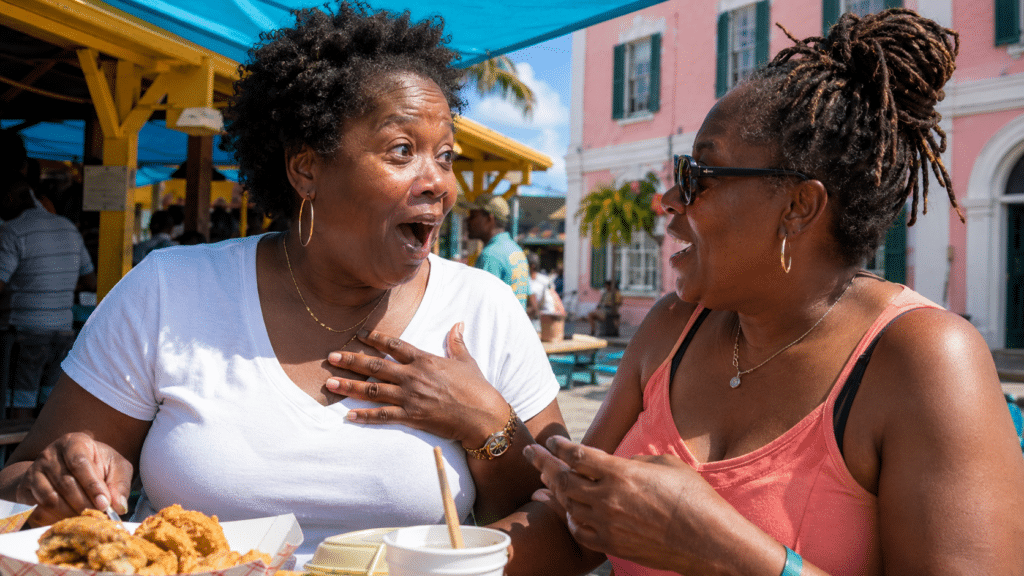
The same expression for the very good… and the very bad
What’s special about “Well mudda sick!” also lies in its flexibility. In the Bahamas, it can be used to express both great news and an unpleasant surprise. A happy announcement can trigger the phrase. So can a sudden disappointment. The meaning, therefore, doesn’t hinge on a single emotion. Above all, the expression conveys the intensity of the reaction. It’s that moment when something stops you in your tracks, surprises you, or forces you to react immediately.
That’s why a single French translation wouldn’t be enough. “Wow!” might work in some cases. “Oh no!” would be more appropriate in others. In other situations, it would simply be “No way!” To understand “Well mudda sick”, you have to look at what just happened.

When the Way of Speaking Transforms the Sentence
The form itself says something about Bahamian speech. In a presentation on local expressions, the three words are even grouped together: “WellMuddaSick!”. The explanation emphasizes the rapid pace of speech and the way the words blend together when spoken.
There is also a shorter version of the phrase: “Well Muddo!”, used with the same meaning. This shortening is telling. An expression repeated in conversation eventually takes on a rhythm of its own. It no longer needs to be pronounced like a carefully articulated English sentence to be understood by those who share the same way of speaking. However, we should avoid turning this observation into an absolute rule. Bahamian speech is not uniform. Usage and speech patterns can vary from one island to another within the archipelago.

From Conversation to a Recognition Signal
“Well, that’s sick!” isn’t limited to spoken language. The term “MUDDASICK” also appears on clothing and accessories designed by local creators, alongside other words strongly associated with Bahamian vocabulary such as “BEY”. This shift from conversation to clothing speaks to its cultural recognition. A phrase uttered spontaneously can become a symbol that is displayed, printed, and instantly recognized. It then functions almost like a nod among those who already know the code.

That’s also what makes this type of expression difficult to convey accurately in another language. You can learn its definition. You can memorize its approximate equivalent. But using it naturally requires understanding when it’s appropriate, with what intonation, and in what kind of conversation.

Listen Before Translating
“Well, that’s crazy!” reminds us, above all, that a language can never be reduced to a dictionary. The spoken language of the Bahamas has its own characteristics and is the subject of linguistic studies devoted in particular to Bahamian English and Bahamian Creole. These varieties have long received less attention than other Caribbean Creoles, even though they have their own distinct history and linguistic characteristics.
In this setting, “Well mudda sick” serves as a small gateway. Three very simple English words come together to form a reaction that a literal translation cannot capture. Perhaps that is where the true appeal of Caribbean expressions lies: they force you to listen before translating. And after “Well mudda sick!”, how many other regional phrases seem familiar until you discover they actually mean something entirely different?


“Well mudda sick” is a Bahamian expression used to convey great surprise or an intense reaction. Depending on the context, it can be similar to “Wow!”, “Oh my!”, or “You’ve got to be kidding me!”.
The expression can be used in response to both good news and an unpleasant surprise. Its meaning depends mainly on the context and the speaker’s tone of voice.
No. A literal translation does not convey the true meaning of the expression. “Well mudda sick” functions primarily as an exclamation specific to Bahamian usage and must be understood in context.
In Saint Lucia, during the 51st meeting of CARICOM heads of government, Dr. Hyginus “Gene ” Leon, executive director of DBRP/The Nature Bank, presented an ambitious idea during a side event on reparations: using restorative justice to rethink Caribbean development. Here, the term does not refer solely to financial compensation. It aims to acknowledge the consequences of slavery and colonization, to redress the harm caused, and to transform the mechanisms that continue to perpetuate them.
Four Measures of Development
Development is often measured in terms of growth, investment, and infrastructure. This perspective is incomplete. An economy can build roads, ports, or hotels while at the same time undermining its natural resources, its population, or its institutions. This discussion is based on four forms of wealth. Productive capital includes infrastructure, businesses, and financial resources. Natural capital encompasses soil, forests, water, reefs, and the climate. Human capital encompasses health, education, skills, and dignity. Finally, societal capital relates to institutions, social cohesion, and trust.
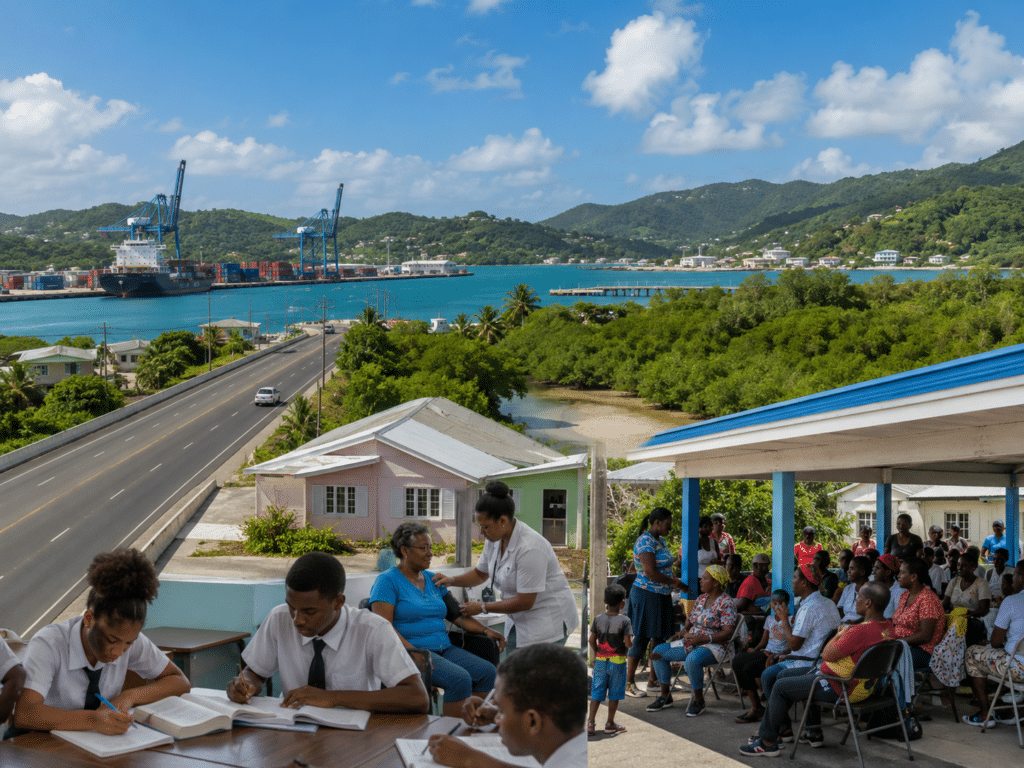
Progress requires that these four forms of wealth advance together. When one form of capital develops at the expense of the others, growth becomes fragile. A region can achieve strong economic performance while simultaneously depleting the very foundations that make that prosperity possible.
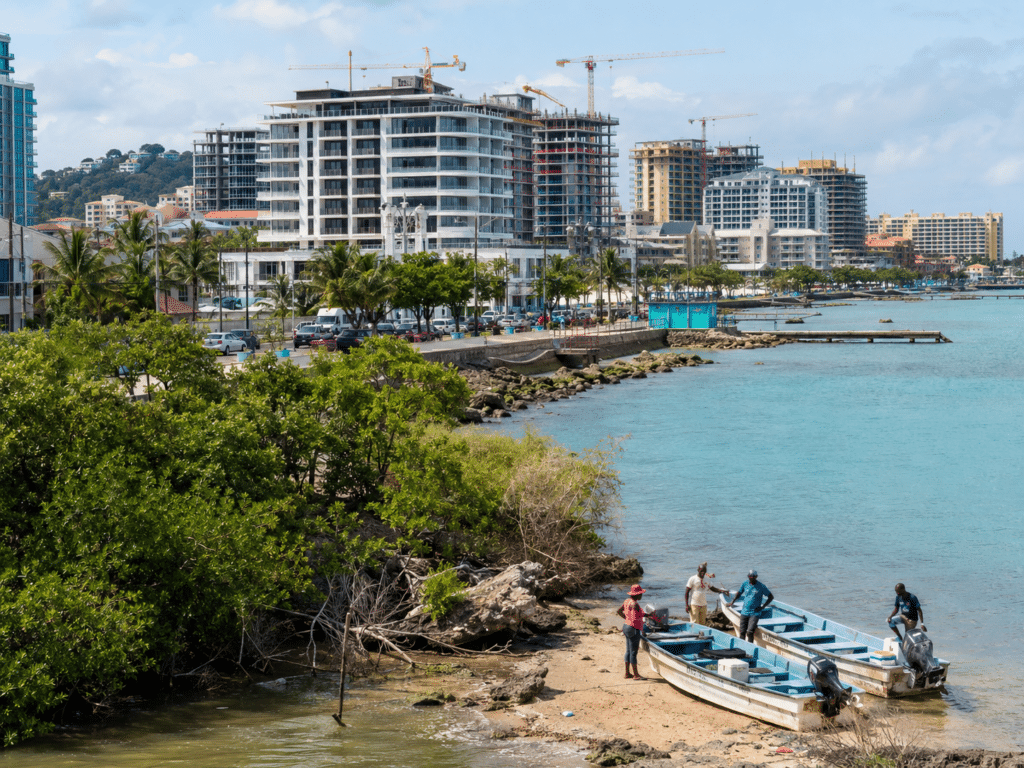
A Five-Century-Old Economic Error
Restorative justice takes on a broader dimension here. It stems from a historical observation: for centuries, the economic system has assigned a price to produced goods while reducing people and nature to mere resources. The British Emancipation Act of 1833 illustrates this logic. More than 800,000 enslaved people were freed. Yet the 20 million pounds allocated compensated the slaveowners, while the freed people received no compensation. The financial value of property was recognized; the value of human life remained absent from the balance sheet.

This extractive model has not entirely disappeared. Cocoa produced in Ghana and Côte d’Ivoire fuels a global industry, while producers and the regions of origin retain only a small share of the value created. Incomes remain low, forests are shrinking, and the bulk of the profits are concentrated elsewhere.

Reparations, Climate, and Inequality: A Common Root
Reparations for slavery, climate-related losses and damages, and the fight against inequality are often addressed separately. Yet these issues stem from the same mistake: counting only part of the actual wealth. In the Caribbean, this contradiction is evident. A mangrove forest may be destroyed to make a project profitable in the short term. Its ability to protect coastlines, limit storm damage, or support fisheries is not always factored into the initial calculations. When disaster strikes, the region must finance reconstruction, often through debt. The value of nature is ignored at the outset, and then its absence becomes a collective burden.

Restorative justice thus links memory, the economy, and the environment. It raises a concrete question: How can we redress a historical injustice without reproducing the same imbalances in current decisions?

Rescue, Rebuild, and Transform
Restorative justice is structured around three stages: relief, reconstruction, and repositioning. The first addresses immediate emergencies. The second restores what has been lost. The third transforms the rules so that the harm is not repeated. This final stage is crucial. Rebuilding a house on the same fault line is tantamount to setting the stage for its next collapse. Similarly, compensation scattered across isolated projects may produce temporary results without addressing the root causes of vulnerability.

Restorative justice could therefore fund additional investments: education, health care, ecosystem protection, resilient infrastructure, strong institutions, and economies capable of retaining more value within the Caribbean region. The goal would be to compensate for a loss while making its recurrence less likely.

Three Possible Changes for CARICOM
Restorative justice offers three avenues for the region. First, every major public or financial decision could assess what it creates and what it destroys in terms of the four forms of wealth. Second, reparations could be organized as a coherent portfolio of reconstruction and transformation. Finally, human and environmental costs could be incorporated into the evaluation of projects, loans, and investments.
Restorative justice would thus shift the focus of the debate. For the Caribbean, making amends for the past could become a way to protect the future, by finally treating people, nature, institutions, and infrastructure as equally valuable.
In this context, restorative justice refers to an approach aimed at acknowledging and addressing the lasting consequences of slavery and colonization. It is not limited to the payment of financial compensation; it also seeks to invest in communities, institutions, the environment, and the economy to ensure that the same inequalities do not continue to be perpetuated.
The four forms of capital are productive capital, which includes infrastructure and businesses; natural capital, such as forests, reefs, and water; human capital, which encompasses health, education, and skills; and societal capital, based on institutions, trust, and social cohesion. Sustainable development requires advancing these four forms of capital together, without enriching one at the expense of the others.
It could help fund a coherent set of initiatives in education, health, ecosystem protection, climate resilience, and infrastructure. It also involves factoring human and environmental costs into financial decisions and assessing what each project creates or destroys. These guidelines were presented to CARICOM as proposals, not as decisions that have already been adopted.
In Andros, the water doesn’t just surround the island—it opens it up. With 178 documented blue holes on land, at least 50 at sea, and 162 km² protected by the Blue Holes National Park, this Bahamian island tells its story through its depths as much as through its shores.
An island cut through by water
On Andros, the landscape may seem simple at first glance. Pine trees, mangroves, quiet roads, scattered villages, and the clear waters of the Bahamas. But beneath this tranquil surface, the island hides something else: a network of blue holes—deep water openings that lead to caves and underground passages.
So when visitors arrive near Captain Bill’s Blue Hole, they aren’t just looking at a round pool surrounded by trees. They’re looking at a gateway. Beneath it, the water tells a story older than the beaches—a story of limestone, rain, rising seas, and caves that filled up after the last ice age.

178 blue holes on land, at least 50 at sea
The number is staggering: Andros has 178 documented blue holes on land and at least 50 at sea. This is the highest known concentration in the Bahamas. It is a geological signature. Blue holes form in limestone. Freshwater dissolves the rock, opens fissures, widens passages, and eventually creates cavities. When sea levels rise, some caves fill with water. From the surface, sometimes all that remains is a dark circle. Beneath it lies a vertical world.
The island is the largest in the Bahamas and also one of the most mysterious. Its true architecture isn’t always visible from the road. Part of the island lies beneath our feet, beneath the roots, and beneath the water.
A 162-square-kilometer park to protect the deep sea
In 2002, Blue Holes National Park was established on North Andros. It covers 40,000 acres, or approximately 162 km². This scale matters. It shows that the blue holes are not treated as mere isolated curiosities, but as a natural system that must be protected. The park protects several blue holes, freshwater reservoirs, and pine and coppice forests. It is also home to 22 inland blue holes considered to be unique. Around them, trees, birds, insects, and groundwater all contribute to a delicate balance.
At Captain Bill’s Blue Hole, the depth exceeds 30 meters. A walkway, a gazebo, and a designated access point allow visitors to approach the site. But the experience isn’t limited to jumping into the water. This place serves as a reminder that every blue hole is fragile. The upper layer may be soft, the water denser at depth, and the chemical balance depends on what falls into it.


Worlds We Can't See from the Beach
Andros’s value lies precisely in what is not immediately apparent. In some blue holes, fresh water and saltwater meet. Between the two, a unique zone traps leaves, organic debris, and bacteria. Rare species or those adapted to these conditions can live there, sometimes in very confined spaces.
This gives Andros a richness that differs from the classic image of the Bahamas. Here, beauty isn’t limited to the horizontal blue of the sea. It extends downward. It plunges deep. It compels us to think of the Bahamas as an archipelago of cavities, water reservoirs, hidden ecosystems, and geological memories.
This natural wealth remains vulnerable. Blue holes have sometimes been used as dumping grounds. This action may seem harmless when viewed from the surface, but it can disrupt a very delicate balance. A bottle, a tire, or pollutants don’t just end up in a water hole—they enter a living system.


Andros, the Other Hidden Gem of the Bahamas
The island attracts visitors with its ocean, fishing, diving, and the tranquility of its natural landscapes. But its greatest draw may lie elsewhere: beneath its surface lies an exceptional concentration of gateways to the underground world.
That’s what makes Andros unique. Its blue holes are not mere attractions. They tell the story of an island shaped by water, protected by science, and inhabited by subtle balances. At a time when destinations often seek to showcase what glitters, Andros poses a deeper question: what is a place worth when its greatest treasure lies beneath the surface?


Andros is known for its exceptional concentration of blue holes—water-filled cavities that open up in the limestone. The island has 178 documented blue holes on land and at least 50 in the sea. This unique feature sets Andros apart in the Bahamas, as much of its natural identity lies beneath the surface.
Blue Holes National Park is located in North Andros, in the Bahamas. Established in 2002, it covers 40,000 acres, or approximately 162 km². The park protects several blue holes, freshwater reservoirs, pine forests, coppice areas, and fragile groundwater-dependent ecosystems.
The blue holes offer a different perspective on Andros—one that goes beyond that of a mere beach destination. They tell the story of an island shaped by water, limestone, and changes in sea level. They also reveal hidden ecosystems, fragile balances, and a different side of the Bahamas—one that is more scientific, more geological, and more unique.
In Nassau, the night belongs to the drums
In Nassau, capital of the Bahamas, December 26 is like no other Boxing Day. In the hours after midnight, Bay Street becomes a corridor of sound. Goatskin drums, cattle bells, brass instruments and whistles take to the streets. Costumes, made over months in community workshops, advance beneath strips of crepe paper and colored cardboard. This is Junkanoo. And this is no ordinary carnival.

Two major events, one collective discipline
The two major traditional Junkanoo events take place on Boxing Day, December 26, and New Year’s Day. Depending on the event, the parades begin in the dead of night or in the pre-dawn hours, then continue into the morning. The best-known image is that of Bay Street, in Nassau, but parades are also held on other Bahamian islands.
The festival is based on a highly codified collective organization. Junkanoo groups don’t just parade. They rush, i.e. they move forward with music, dance and movement. Performances are judged on several dimensions: costumes, music, theme and presentation. Groups like the Saxon Superstars, the Valley Boys, One Family, Roots, Genesis or Music Makers mobilize large teams, craftsmen, musicians, dancers and months of preparation. Price counts, but national prestige carries even more weight.


A debated origin, a memory of slavery
The exact origin of Junkanoo remains a matter of debate. This must be said with caution, as several accounts coexist. What comes back strongly is the link with the era of slavery in the British colonial Bahamas. African slaves would have taken advantage of the days granted around Christmas to get together, sing, dance, wear masks, play percussion and maintain gestures inherited from African memories, particularly West African ones.
This filiation is more than just historical background. It explains why Junkanoo still strikes a deep chord in Bahamian society. The festival is about constraint, reclaiming time, creating in the margins and collective dignity. It transforms a few hours on the street into a shared memory.
John Canoe, "the unknown" or "junk enoo"?
The very name Junkanoo is open to debate. The best-known version links it to “John Canoe”, a figure associated in many Caribbean traditions with an African memory of resistance. Other hypotheses evoke the French “l’inconnu”, in reference to the masks worn by participants, or the Scottish “junk enoo”, linked to the idea of salvaged materials.
None of these tracks alone is enough to enclose the word. Perhaps that’s what makes Junkanoo so interesting: its name keeps the trace of a Caribbean world made of circulations, dominations, crossed languages and popular reinventions. Uncertainty does not weaken the festival. It’s a reminder that it was built from many sources.
A Bahamian tradition, not just a carnival
This Bahamian singularity deserves to be precisely named. Junkanoo doesn’t have the same structure as Trinidad’s Carnival, marked by calypso, soca, mas and the Catholic calendar. Nor does it follow the logic of Barbados’ Crop Over, linked to the history of the sugar harvest. It also differs from related traditions in Jamaica and elsewhere in the Caribbean.
In the Bahamas, Junkanoo is unique for its concentration of time, its late-night schedules, its ephemeral costumes made of crepe paper and cardboard, its anchoring in the Christmas season and the central role of community workshops. The costumes are not mere ornaments. They tell the story of a theme, a group, a memory and a vision of the country.


Women, tourism and transmission
Another dimension is worth mentioning. Women, long kept at a distance from the parades, gradually entered the world of Junkanoo from the 1950s-1960s onwards. This evolution also says something about Bahamian society: a tradition can remain strong while changing its practices, roles and faces.
The festival’s summer extension, also designed for visitors, raises another question. How do you share a tradition without reducing it to an attraction? How can we showcase a living heritage without tearing it away from its calendar, its workshops, its neighborhood rivalries and its history? The debate exists. It proves that this tradition is not set in stone.


A national heritage recognized by UNESCO
Today, Junkanoo is one of the Bahamas’ great national symbols. The archipelago comprises some 700 islands and a population of almost 400,000, according to official census data for 2022. It has been independent from the United Kingdom since July 10, 1973. In this island nation, the festival is more than just a street party.
In 2023, Junkanoo was inscribed on UNESCO‘s Representative List of the Intangible Cultural Heritage of Humanity. This international recognition confirms what Bahamians have long known: this tradition is a total art. It combines music, gesture, sewing, sculpture, dance, community organization and family transmission.
The image of the parade-goer in costume, accompanied by drums, bells and brass instruments, is also part of the country’s official imagination. It even appears on the Bahamian $5 bill, featuring a costumed Junkanoo cowboy. December 26, Boxing Day, is a national holiday and remains one of the landmarks of the Bahamian cultural calendar.


What links those who have left
For part of the Bahamian diaspora, the images of Junkanoo broadcast online extend the link with the country. Watching the parade, hearing the drums, recognizing a group or a theme, is sometimes a symbolic return to Nassau, to an island, to a family, to a memory.
And that’s what Caribbean pride is all about: keeping a ritual alive for over two centuries, transforming it without emptying it of its meaning, and ensuring that it continues to speak to those who live there as well as those who have left. Junkanoo is not just a night show. It’s a Bahamian way of saying that memory can walk, dance, ring and keep an entire nation awake.
Junkanoo is one of the Bahamas’ major cultural festivals. It is held mainly around Boxing Day, December 26, and New Year’s Eve, with night parades marked by goatskin drums, cattle bells, brass instruments, whistles and crepe paper costumes. More than a carnival, Junkanoo is a national tradition that combines the memory of slavery, community creation, artistic competition and cultural transmission.
Junkanoo is distinguished by its calendar, its history and its art form. Unlike other Caribbean carnivals linked to the Catholic calendar or the sugar season, Junkanoo is strongly associated with Christmas and the New Year. Its costumes are often made over a period of months, in community workshops, from crepe paper and cardboard. This tradition is as much about music and dance as it is about historical memory and Bahamian pride.
The best-known Junkanoo parade takes place on Bay Street in Nassau, where the big Bahamian bands parade before the public and juries. Other Bahamian islands also organize their own parades, sometimes with more intimate local expressions. For visitors and the Bahamian diaspora alike, Nassau remains the most emblematic venue, as it is here that Junkanoo takes on its most spectacular, national and media-savvy dimension.
IShowSpeed Caribbean Tour transformed a livestream tour into a global showcase for several Caribbean territories. In just a few weeks, beaches, markets, carnivals, popular neighborhoods, natural sites and street scenes were seen by millions of young Internet users. The result goes far beyond entertainment: it raises a central question for the Caribbean. How can viral exposure be transformed into lasting benefits for the territories visited?
A tour conceived as a global digital event
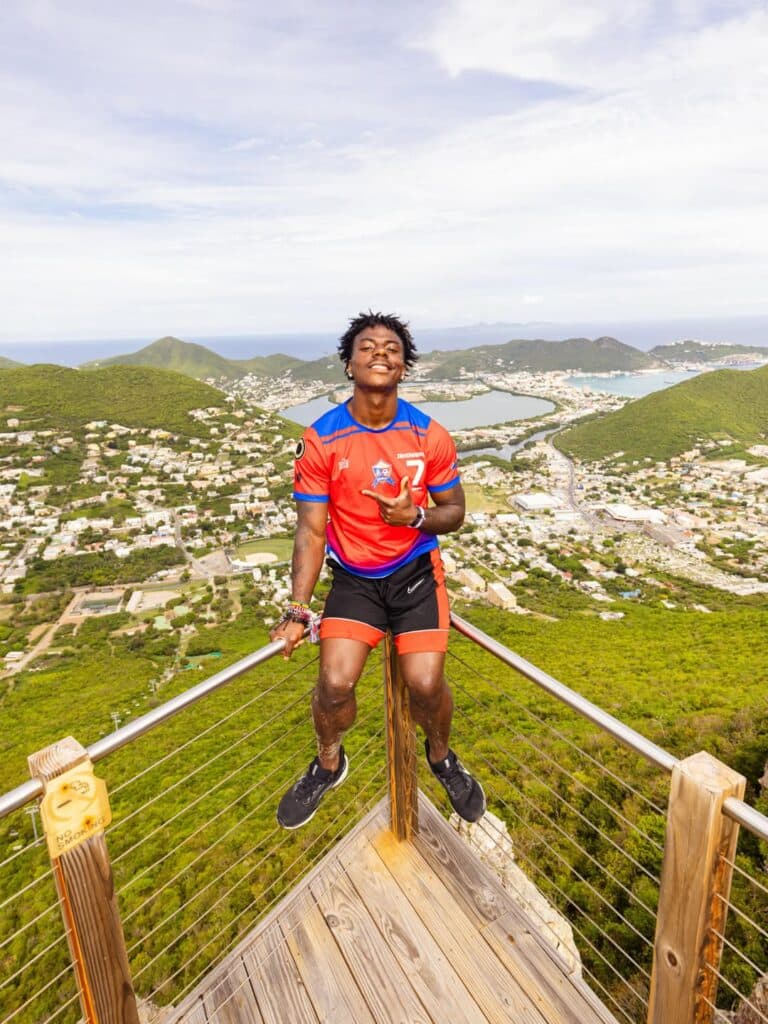
Announced as a tour of 15 Caribbean destinations, the IShowSpeed Caribbean Tour included Antigua and Barbuda, the Bahamas, Barbados, Dominica, the Dominican Republic, Grenada, Guadeloupe, Jamaica, Puerto Rico, Sint Maarten, Saint Kitts and Nevis, Saint Lucia, Saint Vincent and the Grenadines, Trinidad and Tobago and the US Virgin Islands. From the outset, the project did not resemble a conventional tourism campaign. It was an ongoing, unpredictable live event, driven by a very young and responsive community.
The most telling figure comes from the analysis published after the tour: over the period studied, IShowSpeed Caribbean Tour generated some 1.4 million new subscribers, 12.6 million engagements and an estimated conversational reach of 305.9 million. In other words, the Caribbean wasn’t just watched. It was commented on, shared, replayed, discussed and turned into a global topic on social platforms.
Territories propelled before a young audience
The livestream results show the scale of the phenomenon. The Dominican Republic leads the way with around 7.04 million views. The Dominica, Guadeloupe, Saint Kitts and Nevis and Sint Maarten block follows with around 6.87 million views. Trinidad and Tobago reached around 4.97 million, St. Lucia and St. Vincent and the Grenadines around 4.95 million, and Grenada around 4.32 million. These figures should be read with caution, particularly for the Dominican Republic, where warnings of artificial traffic have been mentioned. But even with this caveat, the order of magnitude remains exceptional for territories often absent from the world’s major digital narratives.
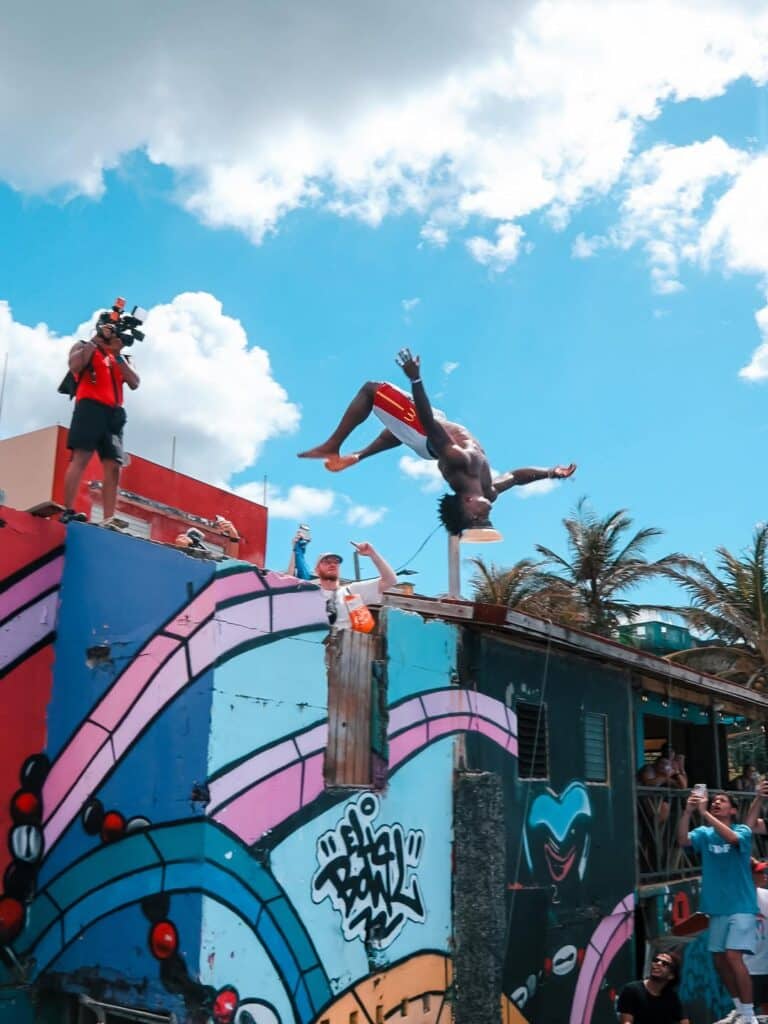
In Trinidad and Tobago, the tour got off to a highly popular start. The visit to Port-of-Spain reportedly attracted around 3,000 people and disrupted traffic around Tragarete Road. But the real impact came from the content on show: tassa, steelpan, cricket, mas, stickfighting, Queen’s Park Oval, Peter Minshall’s presence. Trinidad and Tobago was not reduced to a tropical setting. The territory was presented through its sounds, its gestures, its crowds and its lively relationship with the street.


Saint Lucia, the most measurable example
Saint Lucia offers one of the most interesting cases for measuring tourism impact. The Saint Lucia Tourism Authority reported that the livestream had attracted over 4.4 million viewers. Its General Manager, Louis Lewis, also reported an estimated return on investment of 77 to 1. This means that, for every dollar invested, the destination estimates that it has obtained media value equivalent to $77.
The passage showed Reduit Beach, Pigeon Island, Castries Market, Derek Walcott Square, the Pitons and Sulphur Springs. This choice of locations is important. It combines postcard, heritage, downtown, nature and local experience. In the IShowSpeed Caribbean Tour review, Saint Lucia thus appears as a territory that has tried to transform buzz into a structured visibility strategy.
Antigua and Barbuda: from direct to tourist route
Antigua and Barbuda also capitalized on the exhibition. The May 3 tour attracted over 2.5 million viewers on YouTube alone, according to data reported by the tourist board. The program featured Dickenson Bay, Hellsgate, stingrays, drag racing, Sir Vivian Richards Stadium, Carnival, Burning Flames, the Nyabinghi community, Ffryes Beach, the Antigua Black Pineapple and Barbuda.
Here again, the highlight is not just the number of views. It’s the way in which the region has been able to tell many different stories about itself: beach, sport, music, heritage, gastronomy, spirituality and sister island. IShowSpeed Caribbean Tour has shown that a livestream can become a tourist itinerary, provided that local players know how to transform it into legible, bookable and well-relayed offers.


Jamaica, between cultural power and Generation Z
Jamaica enjoyed massive exposure. The livestream from Kingston exceeded 2.8 million views, with a peak of 194,805 live viewers, 696,349 chat messages and 34,692 new subscribers. These figures are a measure of the attention generated by IShowSpeed’s visit to an area with an already strong cultural image.
The Jamaican challenge was different. The destination didn’t need to prove that it existed culturally. Reggae, dancehall, patois, athletics, gastronomy and street culture are already recognized the world over. But IShowSpeed Caribbean Tour put this power in front of a very young audience, used to consuming the world live, without waiting for institutional campaigns.


A turning point for Caribbean tourism
The partnership with Expedia confirms that this tour is more than just a creative phenomenon. The platform has named IShowSpeed “Official Travel Partner” and launched a space where fans can follow his travels, consult content and book stays, flights or activities inspired by his travels. This is probably one of the most important lessons to be learned from the review: livestreams are becoming a tool for inspiration, and then potentially for tourism conversion.
For the Caribbean, the results are clear. IShowSpeed Caribbean Tour offered visibility that few traditional campaigns can achieve with Generation Z. But visibility isn’t enough. But visibility is not enough. Territories will now have to capture this attention, improve their official content, make their experiences accessible online, better reference the places seen in the videos and involve local players in this new image economy.


The balance sheet is therefore powerful, but incomplete. The views are there. The conversations are there. The crowds were there. The question now is whether this exposure will generate travel, bookings, revenue for local communities and a stronger place for the Caribbean in the global digital imagination. Only then will IShowSpeed Caribbean Tour go from being a viral phenomenon to a useful moment for the Caribbean territories.
The results of the IShowSpeed Caribbean Tour are first and foremost digital. The tour gave several Caribbean territories worldwide exposure to a very young audience, very active on YouTube and social networks. The figures available speak of millions of views, millions of engagements and a very high conversational reach. For the Caribbean, the main impact is therefore in terms of visibility: places, street scenes, natural sites, markets, beaches and local cultural expressions have circulated massively online. On the other hand, the real economic impact must still be measured with caution, as there is as yet no complete official record of tourist bookings or revenue generated.
Several territories took advantage of the IShowSpeed Caribbean Tour, each in their own way. Saint Lucia stands out as one of the most structured examples, with official communication around the media ROI and locations shown during the live tour. Antigua and Barbuda also turned the visit into a tourist itinerary, highlighting beaches, culture, sport, gastronomy and heritage. Jamaica benefited from strong exposure to Generation Z, while Trinidad and Tobago made its mark with street culture, steelpan, carnival and cricket. The impact varies according to each region’s ability to follow up the buzz with a clear tourism strategy.
Yes, but only if Caribbean territories turn this visibility into concrete action. A livestream can create envy, give a more spontaneous image of a territory and reach audiences difficult to reach with traditional campaigns. But for the impact to last, the places seen in the videos need to be well referenced, the experiences easy to book, tourist offices need to publish appropriate content and local players need to be involved in the spin-offs. So the IShowSpeed Caribbean Tour has opened a door: it’s now up to Caribbean destinations to convert this global attention into travel, revenue and visible benefits for local communities.
IShowSpeed Caribbean Tour opens a rare window on the Caribbean. The announcement was broadcast on April 20 on the American creator’s networks, with a live broadcast scheduled for April 25, 2026. The published list mentions fifteen destinations: Antigua and Barbuda, the Bahamas, Barbados, Dominica, the Dominican Republic, Grenada, Guadeloupe, Jamaica, Puerto Rico, Sint Maarten, Saint Kitts and Nevis, Saint Lucia, Saint Vincent and the Grenadines, Trinidad and Tobago and the US Virgin Islands. In the space of a few hours, this tour placed the region in an unusual position of global visibility.
IShowSpeed Caribbean Tour deserves attention for one simple reason: IShowSpeed gathers a gigantic audience. The Associated Press recalls that it surpassed 50 million subscribers on YouTube during its African tour in January 2026. At this scale, every move becomes a live event, picked up by other accounts and transformed into short sequences that circulate quickly. When an entire itinerary is devoted to the Caribbean, the territories, accents, landscapes and everyday customs enter the field of vision of an international audience.
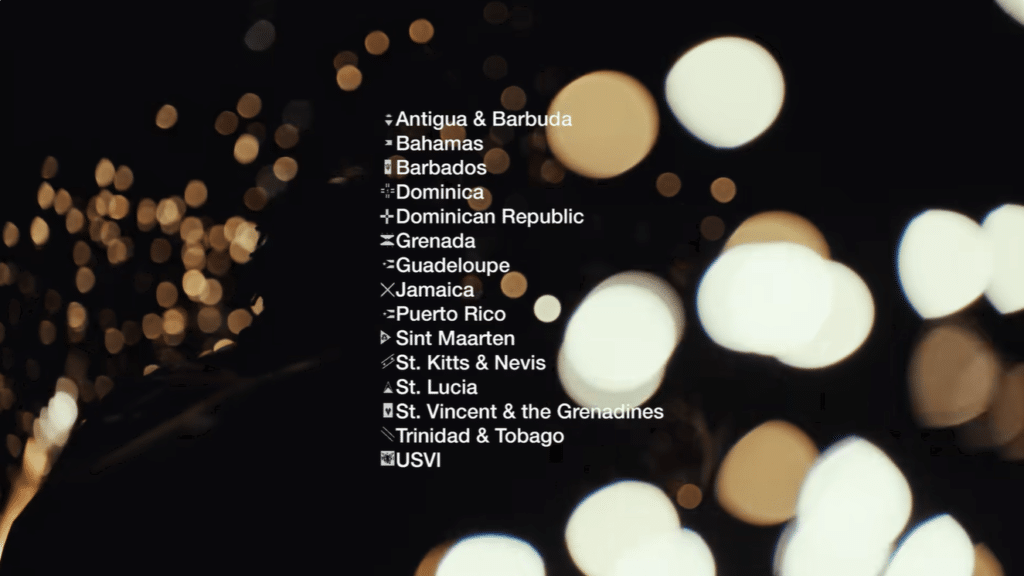
The Caribbean as a whole
The first strength of the IShowSpeed Caribbean Tour lies in the overall picture it produces. The list combines independent states and territories, English-, French-, Spanish- and Dutch-speaking areas. This juxtaposition reminds us that the Caribbean is a multiple region, crossed by different languages and heritages, while retaining deep links.
This regional reading corresponds to a historical reality. Human, musical, commercial, religious and family circulations have existed for centuries from one island to another. Borders have shaped distinct administrations and statuses. They have never erased exchanges. In a single announcement, the Caribbean appears as a legible space for millions of people who often perceive it in a fragmented way.
Visibility through the codes of the present
The format counts almost as much as the list of destinations. IShowSpeed is all about live action, improvisation, immediate reaction and massive sharing. Its audience follows less a program than a presence. This way of filming changes the nature of the exhibition. The viewer watches streets, beaches, markets, journeys, encounters and crowd scenes as they happen.
For the Caribbean, this exhibition has a special significance. Many of the region’s territories suffer from uneven visibility in the major media circuits. The best-known benefit from a well-established image. Others remain absent from global narratives, or reduced to a few clichés. The IShowSpeed Caribbean Tour can therefore play a useful role: showing a diversity of places and atmospheres to a young public that is building its vision of the world through platforms.


An opportunity for cultural and media players
IShowSpeed Caribbean Tour is also of interest to artists, organizers, local media and creators based in the region. A tour of this scale can highlight a dancer, a musician, a culinary tradition, an urban setting, a popular event or a local personality. It can also create connections between territories that rarely communicate at this speed.
However, the added value of IShowSpeed Caribbean Tour will depend on how these moments are accompanied. A viral image attracts attention for a few hours. Serious editorial work extends this interest. It provides reference points, recalls history, clarifies political and cultural contexts, and helps us understand what we’re seeing. This is an opportunity for the Caribbean to tell the story of its plurality with greater mastery.
A visible symbolic impact
It would be premature to announce any quantified tourist effects or immediate economic spin-offs. However, one thing is clear: the Caribbean is gaining a global presence in one of today’s most popular formats.
This is where IShowSpeed Caribbean Tour really comes into its own. IShowSpeed Caribbean Tour brings together in a single movement territories that are often commented on separately. It reminds us that the region possesses a cultural, visual and social force capable of capturing attention on a grand scale. For audiences unfamiliar with the area, it can open a first door. For those who are already familiar with it, it confirms that the Caribbean remains a major hotbed of creation, circulation and energy in the contemporary world.
IShowSpeed Caribbean Tour is a tour announced by American creator IShowSpeed across several Caribbean territories. Beyond the announcement itself, this tour is attracting attention for its media scope and the visibility it can offer the region as a whole.
IShowSpeed Caribbean Tour is attracting a lot of interest because IShowSpeed is one of the most followed creators in the world. When he travels, his videos, live broadcasts and excerpts shared on the networks quickly reach an international audience, giving this tour a much wider reach than a series of stopovers.
IShowSpeed Caribbean Tour is important because it shows the Caribbean as a visible, vibrant and connected regional space. The tour links several territories in a single narrative and reminds us that the region possesses a cultural, linguistic and social richness capable of attracting attention on a large scale.
Yes, IShowSpeed Caribbean Tour can have a real cultural impact. This type of tour can highlight local landscapes, sounds, accents, lifestyles, artists and moods. It can also encourage a new way of looking at the Caribbean, particularly among a younger audience who follow world news via digital platforms.
It’s still too early to accurately measure the impact of the IShowSpeed Caribbean Tour on tourism. On the other hand, this tour can already raise the profile of the Caribbean and feed the curiosity of a global audience. This media exposure can then benefit the territories if it is intelligently relayed by cultural, tourism and media players.
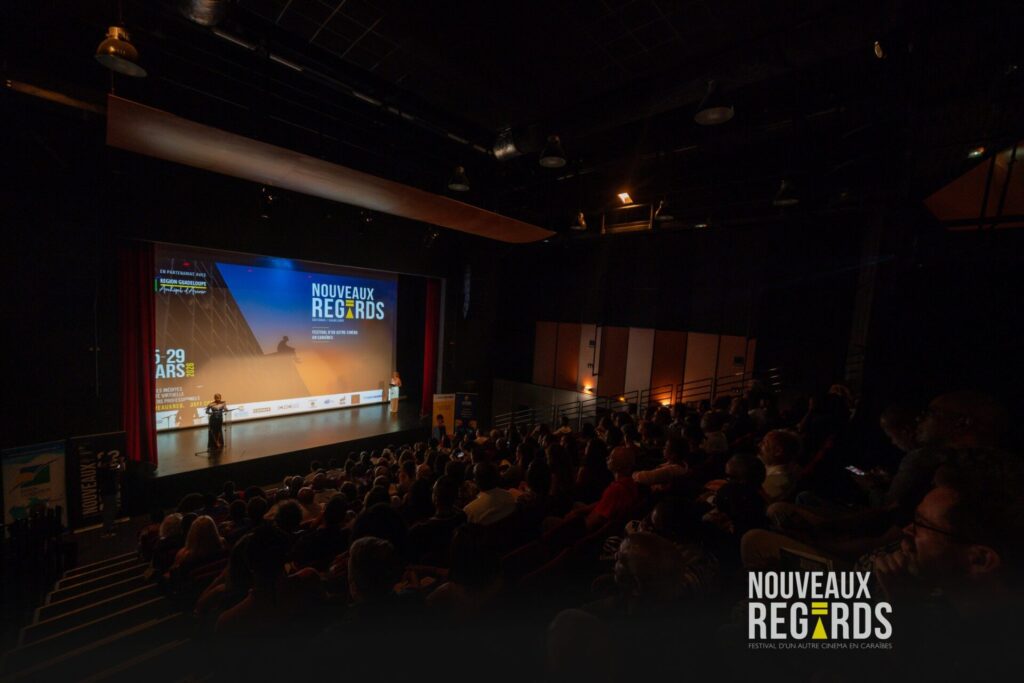
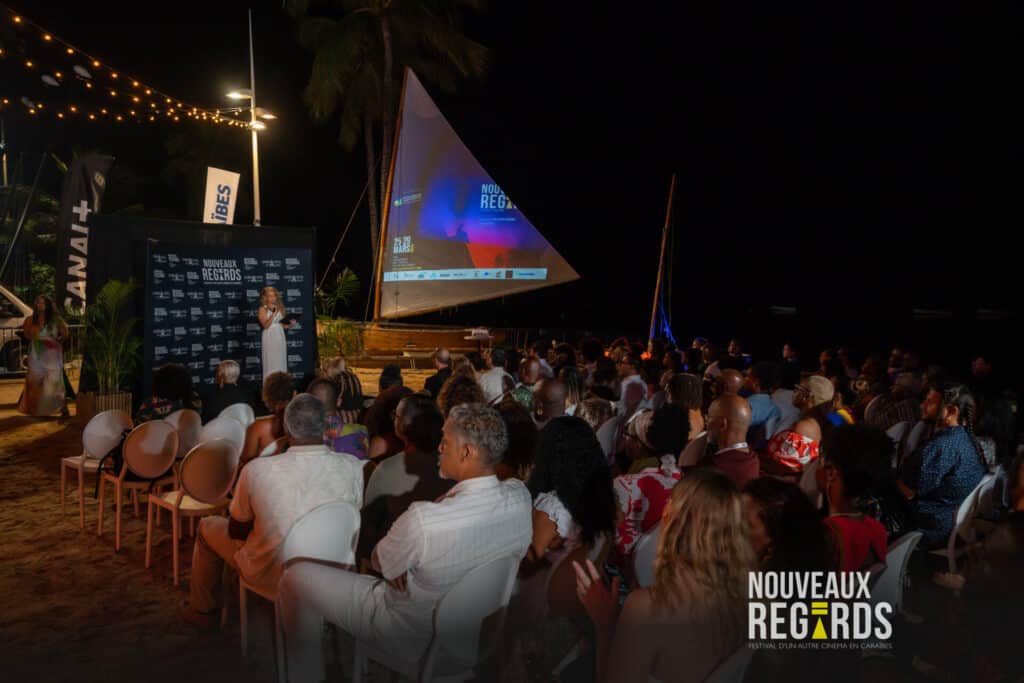
The Nouveaux Regards Film Festival drew to a close on March 29, 2026 in Guadeloupe with a prize list that confirms the rise of Caribbean and Guyanese cinema. Held from March 25 to 29, this 9ᵉ edition closed at the Sainte-Anne nautical base, on the ANASA site, in a rare setting: light installations, chairs placed on the sand, a marine horizon as a backdrop and a traditional canoe whose sail had been transformed into an open-air screen. The stage alone summed up the festival’s identity: rooted in its territory, but focused on creation in motion.
Over the years, the Nouveaux Regards Film Festival has established itself as a key event in the regional audiovisual industry. The festival acts as a space for distribution, a tool for professionalization, a place of visibility for emerging talent and a gateway to a better circulation of Caribbean stories on the international scene. In addition to this, the festival also raises public awareness, giving the event a wider scope than just a succession of screenings.
A 9ᵉ edition buoyed by solid figures
This year, the Nouveaux Regards Film Festival brought together 45 films from 20 countries including 21 films from the Caribbean and Guyana. Programming also included 5 immersive virtual reality works and welcomed 2021 students in school sessions, a record for the event. Another highlight: 55% of the films presented were directed by women, a sign of an editorial line attentive to the plurality of viewpoints.
These figures are more than just a balance sheet. They show that in Guadeloupe, the Nouveaux Regards Film Festival has become a credible platform for cinema from the Caribbean and French Guiana. The awards list is therefore not just a list of prizes: it maps out contemporary Caribbean cinema, with its multiple territories, scripts and realities.
A competition designed for Caribbean and French Guiana cinema
True to its identity, the Nouveaux Regards Film Festival has placed at the heart of its programming a competition devoted exclusively to cinema from the Caribbean and French Guiana. This choice remains essential in an environment where many regional works still struggle to find distribution and recognition. This year’s award-winning films demonstrate the extent to which Caribbean narratives are able to speak to the present with force, nuance and singularity.
Documentary: Haiti honoured, Guadeloupe applauded
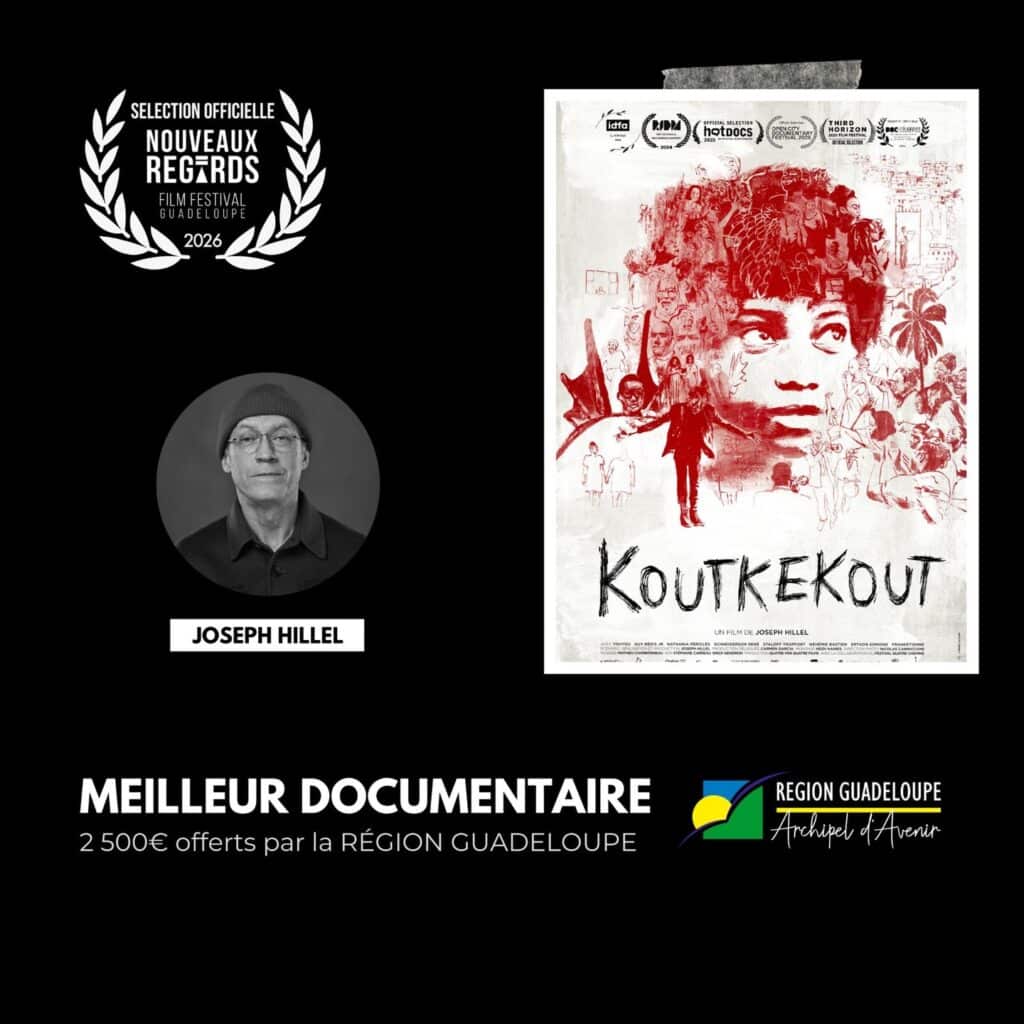
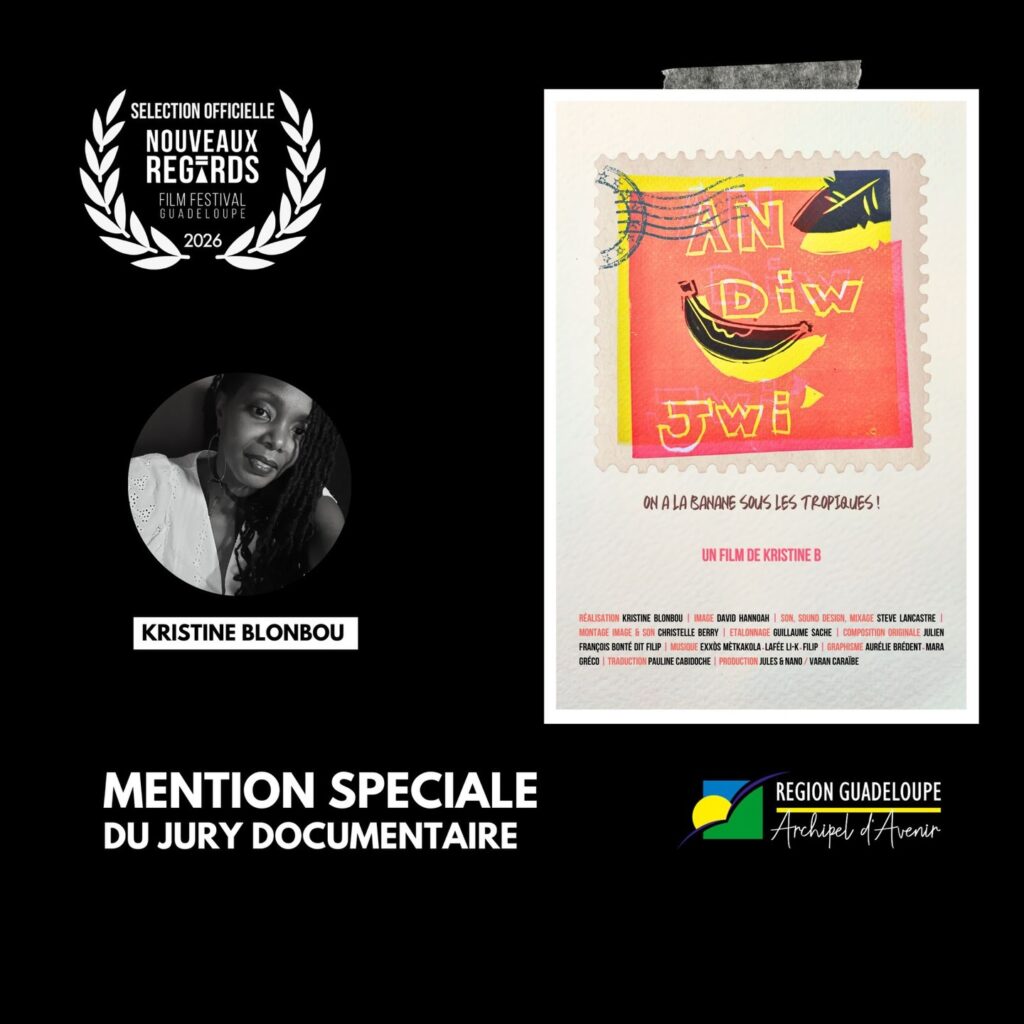
In the documentary category, the Jury Prize for Best Documentary endowed with 2,500 euros from the Région Guadeloupe, was awarded to KOUTKETKOUT by Joseph Hillel for Haiti. A special mention from the jury was also awarded to AN DIW JWI, A BANANA IN THE TROPICS by Kristine Blonbou for Guadeloupe. This double signal shows the diversity of the proposals selected, between a Haitian vision rewarded at the highest level and a Guadeloupean work hailed for its own strength.
Short film: GLORIA takes the cake
In the short film category, GLORIA by Marvin Yamb for Guyana was one of the big names of the year. The film received the Jury Prize for Best Antilles-Guyane Short Film with 5,000 euros from the Conseil départemental as well as the Audience Award supported by the Communauté d’agglomération de la Riviera du Levant and the Prix du Jury Jeunes Regards supported by the DAC Guadeloupe. This triple distinction shows that the same work has won over professionals, the general public and young viewers alike.


The Jury Prize for Best Caribbean Short Film endowed with 1,500 euros was awarded to SUNNY by German Gruber Jr for Curaçao. Poté Ganm Award for Best Screenplay supported by Karibbean Hive went to FORT BUKU by Loëlle Monsanto for Suriname which also won a special mention from the Jury Jeunes Regards. A special mention from the Short Film Jury went to THE ROADS WE TRAVEL by Mary Cecilia Walker for Barbados. Together, they make up an award list that spans several territories, several sensibilities and several ways of telling the Caribbean story.


Immersive Lab: virtual reality takes its place
New for this year’s edition is the Immersive Lab confirmed the festival’s interest in new writing. The two prizes in the virtual reality section were won by Draw for change: Existimos, Resistimos from Mariana Eva Cadenas for Belgium. The work was awarded the High School Award for Best VR Experience awarded by Lycée Sonny Rupaire and the People’s Choice Award for Best VR Experience, endowed with 1,000 euros with the support of Evaveo. By fully integrating this aspect, the Nouveaux Regards Film Festival shows that it also keeps pace with formal developments in the audiovisual sector.

A festival serving the region and its talents
Beyond the awards, the Nouveaux Regards Film Festival is asserting its role as an economic engine by mobilizing the local production chain, as a space for professionalization notably through the NR Academy and its professional meetings international showcase for Caribbean designers, and a educational tool for tomorrow’s audiences. In a region where the structuring of cultural industries remains a concrete challenge, this mission gives the festival a particular importance.
This 9ᵉ edition of the Nouveaux Regards Film Festival is also a reminder that a cultural event of this scale relies on a collective dynamic. Institutional and private partners, guests, juries, the organizing team, the large and enthusiastic audience 21 volunteers contributed to the success of this event. This human dimension is just as important as the awards themselves, as it demonstrates a region’s ability to sustain an ambitious cultural project over the long term.
Heading for a 10ᵉ anniversary edition
The date has already been set for 2027 with a 10ᵉ anniversary edition announced as exceptional. At this stage, the Nouveaux Regards Film Festival is no longer just rewarding works: it is accompanying the gradual affirmation of a Caribbean cinematographic space that is more visible, better structured and more sure of its voice. The 2026 prize list is further proof of this.
The winners of the Nouveaux Regards Film Festival 2026 feature several outstanding works of Caribbean and Guyanese cinema. The documentary KOUTKETKOUT by Joseph Hillel (Haiti) won the Jury Prize for Best Documentary. In the shorts category, GLORIA by Marvin Yamb (Guyana) won three major awards: the Prix du Jury, the Prix du Public and the Prix Jeunes Regards. Other films such as SUNNY by German Gruber Jr (Curacao) and FORT BUKU by Loëlle Monsanto (Suriname) are also among the works honored, confirming the diversity of viewpoints present in this edition.
The Nouveaux Regards Film Festival takes place in Guadeloupe, a territory that plays a central role in its identity. The 2026 edition took place in the commune of Sainte-Anne, with a closing evening organized at the ANASA nautical base. This seaside setting, with an open-air screen, reflects the festival’s determination to offer an experience rooted in its Caribbean environment, while remaining open to works from different horizons.
The 2026 edition of the Nouveaux Regards Film Festival presented 45 films from 20 countries, including 21 from the Caribbean and Guyana. The program reflects a balance between international openness and regional roots. It gives concrete visibility to Caribbean productions, while encouraging exchanges with other territories and other forms of storytelling.
Virtual reality plays an increasingly important role at the Nouveaux Regards Film Festival, thanks to the Immersive Lab section. In 2026, this category rewarded the experience Draw for change: Existimos, Resistimos by Mariana Eva Cadenas, which won both the Prix Lycéen and the Prix du Public. This orientation shows the festival’s interest in new forms of storytelling and the evolution of audiovisual practices.
The Nouveaux Regards Film Festival plays a structuring role for Caribbean cinema. It provides a distribution platform for the region’s creators, encourages the professionalization of the sector and contributes to the international visibility of works. At the same time, it contributes to image education by welcoming a large school audience. This combination makes it a key event for the development and recognition of Caribbean and Guyanese cinema.
