The vodou is entering a new phase in its international history. The joint candidacy of Haiti and Benin for inscription on the Representative List of the Intangible Cultural Heritage of Humanity places centuries of memory, transmission and creation at the heart of a global heritage debate. The deadline set by UNESCO for applications to be examined in 2027, and submitted before March 31, 2026, places this initiative within a precise and structured institutional calendar, but the stakes go far beyond the administrative procedure.
For the Caribbean, and Haiti in particular, this candidacy is no mere cultural formality. It’s about recognizing a living heritage, often misunderstood, sometimes caricatured, but deeply rooted in the country’s social, artistic and spiritual history. Vodou is not a fixed folklore; it is a cultural matrix, a way of organizing the link between generations, communities and the sacred. To place it within an international heritage dynamic is to recognize its complexity, depth and vitality.
A candidacy that redefines the way we look at vodou
The strength of this initiative lies in its ambition to go beyond simplistic representations. Too often confined to spectacular or distorted images, Vodou appears here as a complete cultural system, articulating beliefs, social practices, arts, rituals and modes of transmission. The official documentation associated with the Benin project reminds us that Vodou has its roots in West Africa, and that it spread to territories marked by the transatlantic slave trade. This historical continuity sheds light on the deep bond between Benin and Haiti, not as a diplomatic juxtaposition, but as a shared history.
This repositioning is essential. Registering Vodou as intangible cultural heritage means recognizing that it is not an isolated object, but a body of knowledge, gestures, rhythms and stories transmitted within living communities. Heritage recognition does not freeze tradition; it underlines its capacity to adapt and evolve. It affirms that the value of vodou lies as much in its spiritual dimension as in its social and artistic role.

Haiti, vodou territory in the Caribbean
A structuring presence in Haitian society
In Haiti, vodou permeates the deepest layers of society. It shapes not only rituals, but also forms of sociability, symbolic calendars, relationships with ancestors and ways of interpreting the world. It is not only expressed in ceremonies; it also permeates everyday gestures, family stories and community relations. To understand Vodou in Haiti, we need to look beyond the boundary between religion and culture: it’s a universe of meaning where spirituality, aesthetics and social organization are in constant dialogue.
This reality explains why the candidacy takes on a special dimension for the country. Haiti has more than just a historical legacy; it is a vital part of a heritage that continues to shape contemporary identities and practices. In a context where Haiti’s international image is often dominated by narratives of crisis, highlighting Vodou as a living heritage is part of a more balanced and fairer rewriting of the national narrative.

An artistic and creative matrix
It has long nourished Haitian artistic expression. The percussive rhythms, responsorial songs, codified dances and symbols traced on the ground make up a remarkably rich aesthetic language. The vèvè, symbolic drawings associated with the spirits, bear witness to a graphic sophistication that has influenced generations of artists. Textiles, embroidery and contemporary creations inspired by the vodou imagination illustrate how tradition continues to dialogue with modernity.
This artistic dimension is not secondary; it lies at the heart of the application. It shows that vodou is not just a belief system, but also a creative space where body, voice and matter become vectors of memory and transmission. For readers in the Caribbean, this perspective will help them better understand why it occupies a singular place in the region’s cultural ecosystem.

From the Gulf of Benin to Haiti: transatlantic historical continuity
A history shaped by the Atlantic slave trade
The link between Benin and Haiti is part of the long history of the transatlantic slave trade. Beliefs and practices originating in the ancient kingdoms of the Gulf of Benin region crossed the ocean with enslaved people. When they arrived in the Caribbean, they were transformed, adapted and enriched by contact with other traditions and the colonial context. Haitian vodou is not a simple reproduction; it is the result of a process of cultural re-creation in the face of the violence of uprooting.
Acknowledging this continuity means recognizing the ability of displaced peoples to preserve essential elements of their worldview. The joint candidacy highlights this complex trajectory, where African memory and Caribbean experience come together in a shared heritage.
Cultural diplomacy aimed at recognition
Beyond history, this initiative is part of active cultural diplomacy. Together, Benin and Haiti are asserting the value of a shared heritage, as part of a dynamic of intercultural dialogue. This cooperation underscores the fact that intangible heritage can become an arena for rapprochement and mutual recognition, far removed from the logic of symbolic competition.
The challenges for Haiti: recognition, transmission and international image
A heritage already present on the UNESCO stage
Haiti has recently distinguished itself with the inscription of several cultural elements on UNESCO’s Representative List, including joumou soup in 2021, cassave bread knowledge in 2024 and compas in 2025. This trajectory confirms the country’s determination to promote its living traditions. In this continuity, it appears as a fundamental pillar, whose recognition would reinforce the coherence of this heritage policy.
An opportunity to rebalance representations
International recognition of vodou would have a powerful symbolic impact. It would help to deconstruct sensationalist visions and place the tradition in its historical and social context. For Haiti, the stakes are also educational: offering younger generations a more structured reading of their heritage and encouraging documentation, education and safeguarding programs.


Heritage recognition as a lever for the future
Inscription on the Representative List would not be an end in itself. It would open up a space for reflection on how to preserve a living heritage without freezing it. It would encourage the active participation of communities and strengthen transmission mechanisms. Above all, it would affirm that Vodou fully belongs to the world’s cultural heritage, not as an exotic curiosity, but as a complex system of knowledge and artistic expression.
At the crossroads of Africa and the Caribbean, it tells a story of continuity despite rupture, of creation despite constraint, of memory despite erasure. For Haiti, this candidacy represents a significant step in the recognition of a heritage that continues to structure its cultural identity and international influence.
No. Vodou is the subject of a joint nomination by Haiti and Benin for inscription on the Representative List of the Intangible Cultural Heritage of Humanity. The final decision is expected during a forthcoming evaluation cycle by the intergovernmental committee.
In Haiti, vodou is a living heritage that structures collective memory, social practices, artistic expression and intergenerational transmission. It plays a central role in Haitian cultural identity.
Vodou originated in West Africa, particularly in the Gulf of Benin region. Following the transatlantic slave trade, these beliefs and practices were transmitted to the Caribbean, where they were adapted and transformed in Haiti, while retaining common roots.
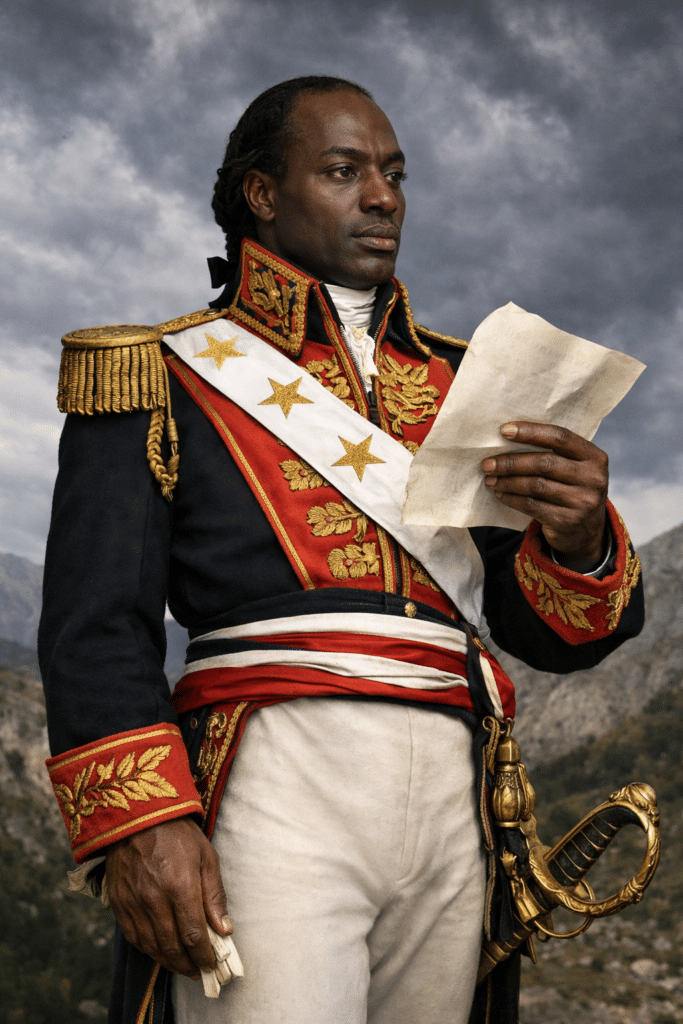
At the heart of Caribbean history, few figures have marked the trajectory of the Atlantic world as profoundly as Toussaint Louverture. Born a slave in the French colony of Saint-Domingue in the XVIIIᵉ century, he became a military strategist, administrator and political leader of a territory in the throes of revolution.
His journey took him through the upheavals of the French Revolution, rivalries between European empires and the aspirations of enslaved populations. At the crossroads of these historical forces, he helped transform a slave insurrection into a structured political project that paved the way for the birth of the first independent black state in the Americas: Haiti. To understand Toussaint Louverture is to understand how the Caribbean has influenced world history.
A birth in the slave system of Saint-Domingue
He was born around 1743 on the habitation Bréda, near Cap-Français, in the colony of Saint-Domingue, now Haiti. At the time, the colony was the richest French possession in the Americas. Its prosperity was based on a plantation economy dominated by sugar and coffee production, fueled by an extremely brutal slave system. Toussaint Louverture enjoyed a special position among the slaves of the Bréda dwelling. He learned to read and write, received training in animal husbandry and acquired an in-depth knowledge of plantation organization.
These skills play an essential role in his future career. They enable him to understand not only the economic mechanisms of the colony, but also the power relationships that structure colonial society. Go to 1776, he was granted his freedom. From that moment on, he became a free man in a society where slavery remained the norm for hundreds of thousands of people.
1791: the insurrection that changed Caribbean history
The founding event in Toussaint Louverture’s political career was the great slave uprising of 1791. On the night of August 22 to 23, 1791, thousands of slaves rose up in the north of Saint-Domingue. Plantations burned, colonial structures were shaken and a social war began. The revolt marked the start of the Haitian Revolution, one of the most important events in modern history.
At the start of the uprising, he was not immediately in the limelight. But his military and organizational skills soon became apparent. He joined the insurgent forces and began to distinguish himself as a military leader. By this time, the conflict had grown beyond a simple local revolt. Spain and Great Britain tried to take advantage of the situation to weaken revolutionary France. Saint-Domingue became a strategic theater for rivalries between empires.
A strategist able to navigate between empires
His strength lay in his ability to understand the international balance of power. Initially, he fought on the side of Spain, which controlled the eastern part of the island of Hispaniola. When the French National Convention abolished slavery in the colonies in 1794 he changed sides and joined the French Republic. It was a decisive choice.
By supporting the Republic, Toussaint Louverture obtained the military resources needed to repel British troops and gradually regain control of the colony. Over the years, he became the dominant political and military player in Saint-Domingue. By the end of the 1790s, he was de facto ruler of the colony.
Restoring the economy without restoring slavery
One of the most complex aspects of Toussaint Louverture’s policies concerned the economy. The war had destroyed a large part of the plantations. Yet the colony’s prosperity was still based on agricultural production for international trade. To revive the economy, he imposed a system of supervised work on the plantations. Former slaves remained attached to the farms, working under the supervision of military officers.
This system did not legally re-establish slavery, but it did impose strict work discipline. Today, this policy remains one of the most debated aspects of his legacy. It reveals the complexity of his project: to build a free society while maintaining the economy that enabled the colony to survive.
1801: the constitution asserting Saint-Domingue's autonomy
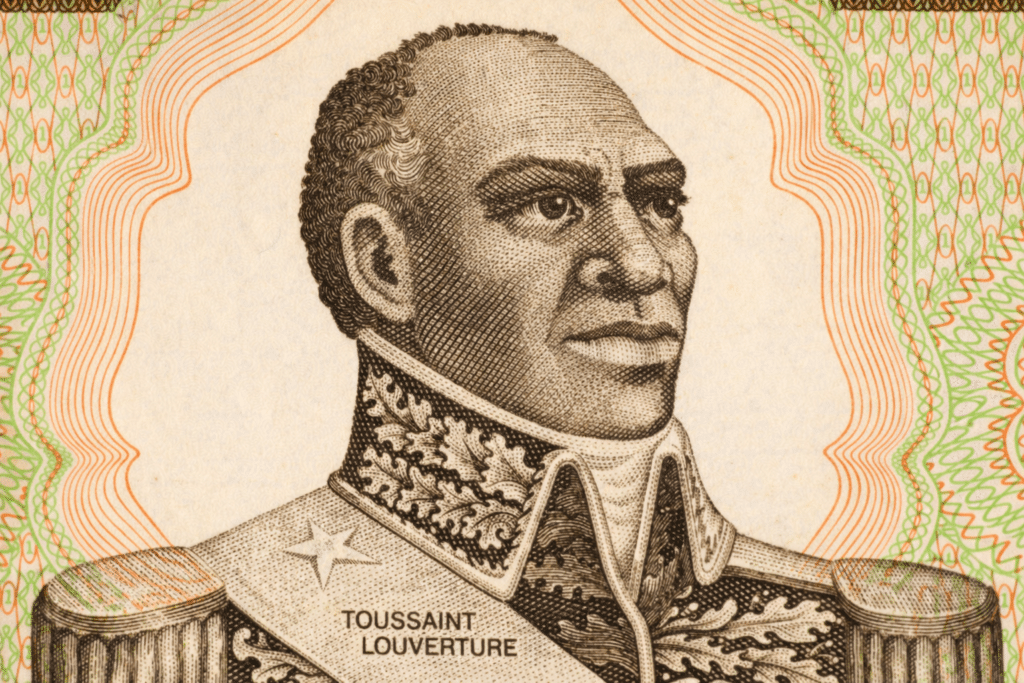
He took a major political step. He promulgated a constitution for Saint-Domingue. This definitively abolished slavery and organized the administration of the territory. The colony remained officially attached to France, but enjoyed considerable political autonomy. The constitution appoints Toussaint Louverture Governor General for life.
This decision marked a fundamental transformation: the former slave became the political leader of a territory that redefined its status within the colonial empire. That same year, he also took control of the Spanish part of the island, Santo Domingo, uniting the whole of Hispaniola under his authority.
Napoleon Bonaparte's reaction
His rise to power worried the French government. When Napoleon Bonaparte became First Consul, he decided to regain direct control of Saint-Domingue. In 1802. A major military expedition led by General Charles Leclerc was sent to the colony. After several months of fighting, he was arrested following a negotiation. He and his family were deported to France.
Death at Fort de Joux
Toussaint Louverture is imprisoned at the Fort de Joux in the French Jura. Prison conditions were extremely harsh. Isolated, deprived of his loved ones and confronted with the harsh climate of the region, he died on April 7, 1803. His death did not put an end to the war. On the contrary, it strengthened the resolve of the former revolutionary generals. Less than a year later, on January 1ᵉʳ 1804, Haiti proclaimed its independence under the leadership of Jean-Jacques Dessalines.
A founding figure in Caribbean history
Today, he is considered one of the most important figures in Caribbean history.
His career embodies several major transformations:
- – questioning the slave system in the Americas
- – the emergence of black political leadership in the atlantic world
- – the birth of a revolution capable of overthrowing a colonial power
Toussaint Louverture’s impact extended far beyond Haiti. His actions influenced abolitionist movements, anti-colonial struggles and reflections on freedom throughout the Atlantic area.
A living memory
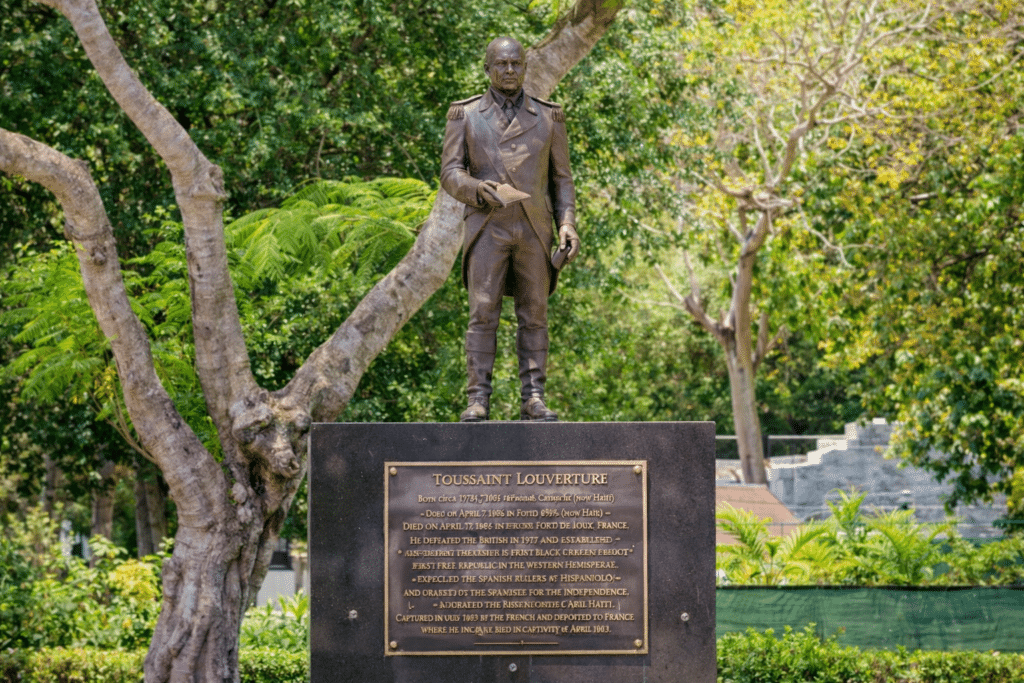
More than two centuries after his death, Toussaint Louverture continues to occupy a central place in the historical memory of the Caribbean. His name is associated with places, institutions and commemorations in several countries. In Haiti, he is one of the founding fathers of the nation. In France, his memory is linked to the Fort de Joux, where he died. For many historians, Toussaint Louverture symbolizes the capacity of Caribbean societies to produce political figures capable of transforming the course of world history.
Toussaint Louverture and the contemporary Caribbean
In today’s view of the Caribbean, he represents a major reference point in the region’s political history. He reminds us that the Caribbean was a political laboratory where some of the great questions of the modern era were played out: freedom, citizenship, sovereignty and human rights. Through the Haitian Revolution, he demonstrates that colonial societies are not only spaces dominated by empires. They can also become hotbeds of political transformation capable of redefining the world order. And it is precisely for this reason that his story remains essential to understanding the Caribbean of yesterday, as well as today.
Toussaint Louverture was a military and political leader born into slavery in Saint-Domingue around 1743. He played a central role in the Haitian Revolution, helping to transform a slave insurrection into a political project that led to Haiti’s independence in 1804.
Toussaint Louverture is a major figure in Caribbean history, as he participated in the abolition of slavery in Saint-Domingue and led the colony at the end of the XVIIIᵉ century. His actions influenced abolitionist movements and transformed power relations in the Atlantic world.
Toussaint Louverture was arrested in 1802 by the French authorities following the military expedition sent by Napoleon Bonaparte. Deported to France, he was imprisoned at the Fort de Joux in the Jura region, where he died on April 7, 1803.
In January 1991, a new group appeared on the Haitian konpa scene. Fourteen musicians decided to form Riské an all-female orchestra in a male-dominated field. At a time when women are rarely present behind the instruments in konpa bands, this initiative represents a major breakthrough in the organization of the Haitian music scene.
The project is the brainchild of two singers, Sandra Jean and Sabrina Kolbjornsen soon joined by Gina Rouzeau and Maguy Limage. Around them, ten instrumentalists complete the ensemble: bassists, keyboardists, drummers and percussionists. From the outset, the objective was clear: to demonstrate that female musicians can perform all the functions of an orchestra, from writing to interpretation, and not be confined to the role of singer or chorister.
Sandra Jean sums up this ambition in an interview with the newspaper La Presse in 1992: Riské was created to encourage Haitian women to break out of the traditional roles often assigned to them in the music industry.
The birth of an original musical project
At the time of the group’s creation, female instrumentalists were rare in konpa. Sandra Jean already had several years’ stage experience, notably alongside Hans Peters and the Caribbean Sextet in the 1980s. She then imagined a project involving only female musicians.
The first person to join the adventure is Sabrina Kolbjornsen with whom she had already worked. Sabrina had previously made a name for herself with the song “Ti Boy“ in the band Skandal. The two artists take on the musical direction of the project and become its main leaders.
Gradually, the band formed around a full ensemble of instrumentalists. Bass, drums, keyboards and percussion were all played by women, a configuration almost unheard of in the Haitian music scene at the time.

The Alfabê album, the first step on the recording ladder
The band’s first album, Alfabê was released in 1991. Compositions by Sandra Jean and Sabrina Kolbjornsen form the core of the musical project. The album is clearly in the tradition of konpa while highlighting a plural vocal identity. The songs reflect the diversity of the group’s voices. Sandra Jean performs “Alfabê”, “Celebrated”, “Lanmou” and “Di Fé” while Sabrina Kolbjornsen signs titles such as “Zanmi”, “Madam Marie” and “Kité Yo”.
On her side, Gina Rouzeau an experienced pianist and singer, provides both keyboards and vocals on several tracks. Maguy Limage and Valérie Cayo also contribute to the album’s distinctive vocal harmonies. The release of Alfabê quickly established the group on the konpa circuit and caught the public’s attention.
An international tour
Following the album’s release, Riské embarked on a series of concerts that took him to several regions where konpa has a loyal following: Haiti, the West Indies, France, Panama and North America.. The band’s performances leave a lasting impression. On stage, the collective energy and all-female line-up capture the attention of an audience used to seeing male orchestras.
At a concert held in a stadium in Port-au-Prince. Several thousand spectators attended the band’s performance. The event illustrates the interest aroused by this singular musical project in the konpa landscape.
Internal tensions and the first departures
Despite the visibility gained in a short space of time, the group’s trajectory soon became complicated. Disagreements arose between certain members and the management team. Internal tensions added to the difficulties of running an ambitious artistic project. Sabrina Kolbjornsen left the group after less than a year. She went on to play with a number of leading Haitian bands, including System Band and the New York Superstars and collaborates with major konpa figures such as Dadou Pasquet, Robert Martino or Claude Marcelin.
Two years after the creation of the group, Sandra Jean also withdrew from the project. She would later refer to the machismo in the Haitian music industry, believing that this climate undermined the Riské experience.
An overhauled line-up in the 1990s
Despite the departure of its founders, Riské continues its recording career. In 1994 the band released the album Joyeux Noël. This eight-track album is inspired by the traditional repertoire of Christmas carols. Songs include “Tropical Christmas”, “Klosh Noël”, “Christian Midnight”, “Jingle Bells” and “Silent Night” in a konpa-sounding adaptation.
Two years later, in 1996, Riské released a final album entitled 20th Syek featuring nine tracks, including “Do the Kompa”, “Respect”, “Saturday Night” or even “Fem Dous”.
Women in konpa: a still fragile presence
Before the creation of Riské, the female presence in konpa remained marginal. However, from the 1980s onwards, a number of individual artists made their mark, such as Danielle Thermidor, Anna Pierre, Jacqueline Denis or Emeline Michel whose album Flanm has left its mark on the Haitian music scene. After Riské, a number of initiatives were launched, but it was often difficult to sustain them over the long term. Projects such as Konpa O Féminin in 2013 or the group Siromiel created in 2018, bear witness to a persistent desire to strengthen the presence of women in this musical genre.
At the same time, some artists, such as Rutshelle, Darline Desca, Bedjine or Fatima whose titles regularly dominate digital platforms and social networks.
A pioneering experiment in konpa history
More than three decades after its creation, Riské remains a landmark in the history of Haitian konpa. The group’s experience demonstrated that a female orchestra could make its mark in a musical universe long structured around male formations. Even today, Sandra Jean expresses the wish to see the emergence of new female formations capable of extending this dynamic. In her opinion, cohesion and solidarity between female musicians remain essential elements for success in a demanding artistic environment.
Thirty-four years after its debut, Riské remains a benchmark when it comes to evoking the place of women in konpa and the gradual transformations of the Haitian music scene.
Riské was founded in January 1991 by singers Sandra Jean and Sabrina Kolbjornsen, joined by several musicians and singers, including Gina Rouzeau and Maguy Limage. The group brought together a total of fourteen musicians, all women – a particularly rare configuration in the konpa world at the time.
The group’s first album, Alfabê, was released in 1991. This recording marks Riské’s recording debut, and includes several tracks performed by the group’s different female singers, including “Alfabê”, “Zanmi”, “Madam Marie”, “Lanmou” and “Célébré”.
After Alfabêthe band continued their musical journey with Joyeux Noël in 1994, an album devoted to Christmas carols adapted to konpa, followed by 20ème Syek in 1996, the last album released by the group.
On February 17, 2026, pastor and civil rights activist Jesse Jackson passed away at the age of 84. A major figure in the fight for racial equality in the United States, Jesse Jackson leaves behind more than half a century of political, social and moral commitment. His death has prompted a wave of tributes around the world, hailing him as a servant of justice whose influence extended beyond American borders.
But it would be a mistake to reduce Jesse Jackson to American political history. His career is part of a much broader diasporic dynamic, in which the Caribbean plays a strategic role. Haiti, Cuba and Guadeloupe were all areas of intervention, reflection and solidarity that shed new light on the legacy of this major figure, and enable us to understand the extent of his international influence.
From segregated America to the world stage
Born October 8, 1941, in Greenville, South Carolina, Jesse Jackson grew up in a society marked by racial segregation. Involved in the civil rights movement from an early age, he joined Martin Luther King Jr. in the 1960s and took part in major mobilizations against discrimination. As a member of the Southern Christian Leadership Conference, he distinguished himself through his oratory skills and ability to mobilize. In particular, he developed the Operation Breadbasket initiative, which used economic boycotts to force companies to hire more African-Americans. This strategy made him one of the most visible faces of the civil rights movement’s fight for economic justice.
In 1971, he founded Operation PUSH, an organization dedicated to the economic and political empowerment of black communities. This structure, followed by the Rainbow Coalition, helped broaden the civil rights struggle into a multiracial and social coalition. As a candidate for the Democratic presidential nomination in 1984 and again in 1988, he became one of the first African-Americans to reach this level of national electoral competition, paving the way for a new generation of black political leaders.
But his influence was not limited to the United States. Early on, he sees the fight for equality as a global struggle linking Africa, the United States and the Caribbean.

The Caribbean, a central space for black consciousness
In the political thought of Jesse Jackson. The Caribbean is never peripheral. It represents a founding space in modern black history, marked by slavery, colonization and the struggle for independence. This historical reading feeds his vision of transnational solidarity between Afro-descendant peoples. For him, the injustices suffered by black communities in the United States cannot be dissociated from the economic and political realities experienced in the Caribbean.
Thus, his international action is part of a diasporic logic in which African-American, Caribbean and African destinies are closely intertwined. This approach explains the positions he has repeatedly taken on major Caribbean issues.


Haiti: economic justice and human dignity
Among the Caribbean territories that have marked this commitment, Haiti occupies a central place. On several occasions, he visited the country to warn of poverty, hunger and political instability. During a particularly significant visit in 2008, he called for the cancellation of Haiti’s debt and for international mobilization in the face of the food crisis. He also denounced inequalities in the treatment of Haitian migrants and insisted on the responsibility of the major powers in the country’s economic situation.
For Jesse Jackson, Haiti symbolizes the historical injustice suffered by societies born of slavery and colonialism. His plea for Haitian dignity is part of a broader vision of global racial justice.

Cuba: parallel diplomacy and dialogue
The relationship between Jesse Jackson with Cuba is another major chapter in this Caribbean commitment. From the 1980s onwards, he was involved in parallel diplomacy missions between Washington and Havana. In 1984, he played a decisive role in the release of American prisoners in Cuba, demonstrating his ability to intervene in sensitive geopolitical issues. Exchanges with Cuban authorities are part of a desire for dialogue and de-escalation between the two countries.
Critical of the US embargo against the island, he advocates a more humane and pragmatic approach to relations between the United States and the Caribbean. This position reinforces his image as an international political player capable of transcending ideological divides.


Guadeloupe: remembering slavery and passing it on
In 2015, the visit of Jesse Jackson at the Mémorial ACTe in Guadeloupe marks an important symbolic moment. For him, this center dedicated to the memory of slavery and the transatlantic slave trade represents an essential place of transmission and historical recognition. In front of a large audience, he saluted the importance of this institution in the construction of a collective black consciousness and in the dialogue between the peoples of the diaspora. His presence in Guadeloupe underlines the importance of Caribbean memory in the global history of the struggle for human dignity.
This milestone illustrates the commitment to a shared memory linking African-Americans and Caribbeans, beyond national borders.

A diasporic vision ahead of its time
Throughout his career, he developed a global approach to black struggles. He supported anti-apartheid movements in South Africa, intervened in crises in Central America and multiplied international mediation initiatives. In this vision, the Caribbean appears as a strategic space where historical, economic and cultural issues intersect. Migration, diplomatic relations with the United States and questions of memory are recurring themes in this commitment.
By articulating these different dimensions, it helps to reinforce the idea of an international black community sharing common struggles.

What legacy for the Caribbean in 2026?
The disappearance of Jesse Jackson comes at a time when issues of racial justice, economic inequality and historical memory remain at the heart of global debates. For the Caribbean, his career is a reminder of the importance of diasporic solidarity and international cooperation. The issues he has championed, whether debt, migration, economic dignity or the memory of slavery, remain highly topical.
His action also highlights the need for the region to continue asserting its place in global discussions on justice and equality.
An American figure, a Caribbean heritage
Jesse Jackson will be remembered as one of the great voices of social justice in the 20th and early 21st centuries. Pastor, activist, mediator and presidential candidate, he dedicated his life to defending marginalized populations and promoting global solidarity. Beyond America, his career reveals the importance of the Caribbean in the construction of an international black consciousness. His interventions in Haiti, Cuba and Guadeloupe bear witness to a political vision in which the region plays a central role in the struggle for dignity and equality.
In the wake of Jesse Jackson’s death, this diasporic reading of his legacy offers an essential key to understanding his influence. Above all, it reminds us that the Caribbean, far from being peripheral, remains at the heart of the history and future of the struggle for global justice.
He was a Baptist minister and a major figure in the U.S. civil rights movement. A close associate of Martin Luther King Jr. he dedicated his life to social justice, racial equality and the defense of marginalized populations on an international scale.
On several occasions, he has been involved in major Caribbean issues. He has pleaded for debt relief for Haiti, led diplomatic missions to Cuba and visited Guadeloupe, notably the Mémorial ACTe, to support the memory of slavery and diasporic solidarity.
His commitment to issues of economic justice, migration, historical memory and international relations remains relevant to the Caribbean. His career is a reminder of the importance of solidarity between Afro-descendant peoples, and of the region’s central role in global debates on equality and dignity.
Le February 4, 1794 the French Republic adopted a major decree: the abolition of slavery in the French colonies. The text is voted by the National Convention and directly concerns the Caribbean: Saint-Domingue (future Haiti) , Guadeloupe, Martinique and French Guiana.
This date is often portrayed in textbooks as republican progress. Yet it cannot be understood as an enlightened decision that fell from the sky. The abolition of slavery in the French colonies was first and foremost a response to colonial collapse, triggered by revolts, uprisings and organized resistance by Caribbean slaves.
February 4, 1794 did not mark a moment of political generosity. It marks a moment when the French state no longer has any real choice.
Abolition of slavery born of colonial chaos
Even before the decree was passed, the slave system was already cracking from the inside. Santo Domingo, in 1791, insurrection broke out in the richest French colony. Thousands of slaves rose up, burning plantations, disrupting production and clashing with colonial militias.
This revolt was neither improvised nor isolated. It was based on networks, military leaders, survival and combat strategies. The colonial order soon became impossible to maintain. Revolutionary France, already engaged in European conflicts, found itself faced with an ungovernable colony.
In this context, proclaiming freedom is not an abstract ideal. It’s an attempt to save what can still be saved.

1793: freedom proclaimed before Paris
A fundamental element is often forgotten: theabolition of slavery begins in the field, before Paris. In 1793, in Saint-Domingue, the civil commissioners of the Republic proclaimed the freedom of slaves to avoid the total loss of the colony and rally the former slaves to the Republican camp.
This chronology is essential. The decree of February 4, 1794 did not unleash freedom, it formalized it. It transformed a local reality imposed by war and revolt into a national decision.
It’s a classic reversal of colonial history: the Empire adapts after losing control.


What the decree of February 4, 1794 really says
The text abolished slavery in all French colonies and recognized citizenship for former slaves, regardless of color. In legal terms, the break was clear: slaves ceased to be property and became subjects of law. On a European scale, the act was exceptional. Few states then dared to go so far. But this breakthrough remained fragile, as it was based on an unstable political balance.
The abolition of slavery in the French colonies now exists in law but its reality still depended on local power relations.
Applications vary widely from one region to another
The abolition of slavery in Guadeloupe: conditional freedom
In Guadeloupe, the abolition of slavery was proclaimed in 1794 after the island was taken over by Republican forces. Former slaves were armed, conscripted and mobilized to defend the territory. Freedom was real, but it was linked to the war effort and loyalty to the Republic.
The abolition of slavery in Martinique: freedom suspended
In British-occupied Martinique, the decree did not apply. Slavery persisted despite the Parisian decision. This situation reveals a brutal reality: a law can be passed without ever being implemented.
The abolition of slavery in Saint-Domingue: an irreversible dynamic
In Saint-Domingue, the abolition of slavery was part of a wider movement. The former slaves already controlled entire territories. The break with the colonial order was profound, and would lead, a few years later, to Haiti’s independence in 1804.
These discrepancies show that the abolition of slavery in the French colonies was neither uniform nor guaranteed.


History's forgotten: women, marronnes and smugglers
Behind the decrees and dates, there are lives. Women slaves, marronnes, healers, messengers, often absent from official archives. Yet they played a central role in transmission, survival and resistance. Some fled the plantations, others organized mutual aid networks, hid insurgents and passed on stories and knowledge. Their actions are not enshrined in law, but they played a full part in the collapse of the slave system.
To speak of February 4, 1794 without evoking these trajectories is to reduce abolition to an administrative act, when it is first and foremost a human and collective experience. a human and collective experience.
1802: when the Republic reneged on its own decision
In 1802, under the Consulate, the power led by Napoleon Bonaparte re-established slavery in several colonies. This step backwards was not a discreet one. It was accompanied by repression, deportations and a determination to restore the plantation economy. Free men and women are once again enslaved. This shift reveals a disturbing truth: republican principles give way when colonial interests are deemed paramount.
February 4, 1794 was a fragile and contested interlude.

1848: Abolition of slavery definitive, but incomplete
It wasn’t until 1848 that slavery was definitively abolished in the French colonies. This time, there was no going back. But legal freedom did not solve everything. Former slaves had to cope with new forms of dependence: forced labor, land inequalities, political exclusion. The abolition of slavery marked a legal end, but the fight for real equality had barely begun.
Why is February 4, 1794 so important?
February 4, 1794 is not a fixed symbol. It tells a complex story, made up of struggles, concessions, setbacks and resistance. It reminds us that the Caribbean has never been simply a dominated space, but a territory capable of imposing its own realities on world history.
The abolition of slavery in the French colonies on this day shows that rights are not only born in assemblies, but in the fields, forests, revolts and daily struggles.
Because it formalizes a freedom wrested through the struggles of slaves, and directly concerns several major Caribbean territories.
But not everywhere. Its application depends on local contexts, foreign occupations and political choices.
It shows the fragility of rights when they are not solidly protected, and the priority given, at the time, to colonial economic interests.
Citadelle Henri. The name sounds like an affirmation. That of a territory, a people and a region that, at the beginning of the XIXᵉ century, chose to stand up to empires. Dominating northern Haiti at an altitude of over 900 metres, the Citadelle Laferrière better known as the citadel Henri remains one of the most powerful monuments in the Caribbean. Beyond its monumentality, it embodies strategic thinking, conquered sovereignty and a message addressed to the Atlantic world.
A founding historical context for Haiti and the Caribbean
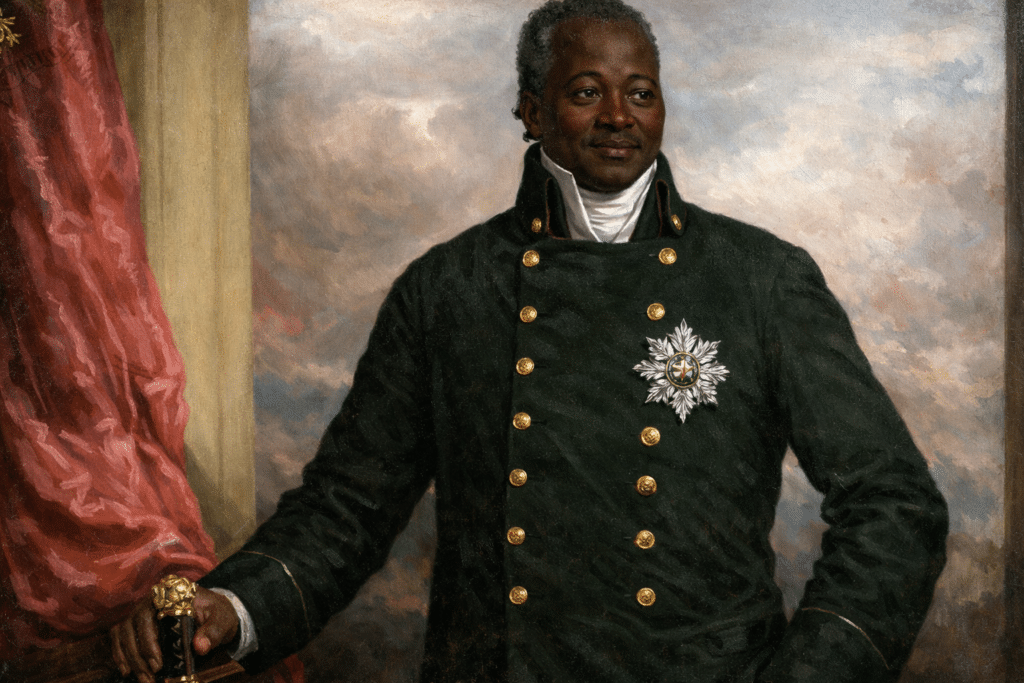
It was born in the immediate post-war period of Haitian independence (1804). At the head of the Kingdom of the North, Henri Christophe between 1805 and 1820, erected a defensive system unrivalled in the region. The aim was clear: to prevent any return of the colonial powers, particularly France, and to secure a sovereign black state in the heart of the Caribbean.
In a Caribbean region still largely dominated by European empires, the Henri citadel represents a political and symbolic breakthrough. It embodies the ability of a young state to think in terms of its defense, its territory and its future.
An architectural and military feat
With walls sometimes reaching 40 meters in height, it is no mere fort. It was designed as a self-sufficient fortress, capable of withstanding a prolonged siege. Water reserves, food warehouses, powder magazines, dormitories, hospital: everything is designed to support several thousand men.
The figures speak for themselves:
- – more than 365 cannons imported or salvaged from former ships,
- – ramparts several metres thick,
- – a strategic location making any attack from land or sea extremely complex.
In the Caribbean of the XIXᵉ century, no other military edifice had such defensive ambitions. It was a direct response to the Atlantic colonial order.


A powerful political symbol for the Black Caribbean
The significance of Citadelle Henri extends far beyond Haiti’s borders. It sends a clear message to neighboring slave-owning societies: freedom can be protected, organized and perpetuated.
At a time when servile revolts regularly rocked the region, this monument became a mental and political landmark. It proves that a black Caribbean state can produce monumental architecture, master technical know-how and assert a long-term strategic vision. It is thus part of a shared Caribbean history, marked by resistance, self-determination and the circulation of ideas of freedom.


From Henri Christophe's kingdom to world heritage
After the fall of the Northern Kingdom and the death of Henri Christophe in 1820, the citadel lost its active military function. But it was never forgotten. Its stature and natural isolation contribute to its preservation.
In 1982,UNESCO declared the Citadelle Henri, the Palais Sans-Souci and the Ramiers a World Heritage Site. This international recognition confirms what Caribbean historians have long emphasized: this site is an essential milestone in the region’s modern history.

A contemporary reading of Haitian heritage
Today, it occupies a central place in thinking about Caribbean heritage. It raises questions:
- – the transmission of post-slavery history,
- – the valorization of Caribbean narratives in the global arena,
- – the role of heritage as an economic, cultural and educational lever.
For Haiti, it remains a strong marker of identity, often mobilized in discourses on sovereignty, memory and national reconstruction. For the Caribbean, it represents a common anchor, reminding us that the region’s history is not limited to plantations and colonial routes.
Tourism, memory and regional responsibility
Every year, Citadelle Henri attracts visitors from Haiti, the diaspora and abroad. But its potential goes far beyond tourism alone. It invites us to rethink Caribbean tourism based on knowledge, memory and respect for historic sites. The sustainable development of the citadel also raises the question of regional cooperation: how can we protect and pass on these major sites, when they tell a story shared by the entire Caribbean?


Why is the Henri citadel still essential today?
In a world marked by debates on reparations, colonial memory and the recognition of African legacies, Citadelle Henri remains strikingly relevant. It reminds us that the Caribbean has not only suffered history: it has produced it. More than a monument, it is a political act set in stone. It embodies the ability of a Caribbean people to transform a revolutionary victory into a state project, to think in terms of security, dignity and continuity.
It is one of the few Caribbean monuments built by an independent black state in the early XIXᵉ century. It symbolizes Haiti’s ability to defend its sovereignty after the abolition of slavery, and is a political, military and cultural landmark for the entire post-colonial Caribbean.
It was built under the authority of Henri Christophe, King of Northern Haiti, between 1805 and 1820. Its purpose was to prevent any attempt at colonial reconquest, particularly by France, and to provide lasting security for Haitian independence in a regional context still dominated by European empires.
Today, the Henri citadel is a UNESCO World Heritage Site and a pillar of Caribbean memory. It plays a central role in transmitting Haitian history, reflecting on post-slavery legacies and promoting cultural tourism based on knowledge and heritage responsibility.
Appointed Deputy CEO in January 2026, Karen Virapin becomes the first woman from the French overseas territories to reach this level of governance within Air Caraïbes. A major development for the airline, but also a strong signal for the Caribbean air transport sector. Beyond the symbolism, this appointment raises a central question: what concrete impact could it have on governance, social dialogue, the regional network and service quality?
An appointment that reflects continuity, but not stasis
Having been with the company for fourteen years, Karen Virapin is no parachute. A former Director of Human Resources, Karen Virapin has been involved in all the company’s structural transformations: organizational changes, workforce growth, adaptation to the economic and social constraints of the airline industry. Her appointment to the position of Managing Director is therefore a logical step in the company’s continuity.
But continuity does not mean standstill. In a sector as exposed as air travel, marked by a fragile balance between costs, social demands, quality of service and local expectations, governance plays a decisive role. And it is precisely at this level that this appointment takes on its full meaning.

First woman from the French overseas territories to reach this level: a signal for Caribbean aviation
Air transport has historically been a very male-dominated sector, particularly in the executive ranks. The arrival of Karen Virapin as Managing Director is therefore a strong marker, both for the representation of women and for that of talent from the French overseas territories.
This signal goes beyond the company’s internal framework. It refers to a broader reality: the ability of companies operating in the Caribbean to recognize locally-built career paths, rooted in a detailed knowledge of the region, and not solely the result of external trajectories. This recognition is not just symbolic; it can influence the way strategic decisions are made, prioritized and implemented.

Social dialogue: a strategic lever, not a slogan
In the airline industry, social dialogue is never a secondary issue. Working conditions, organization of schedules, changes in professions, operational pressures: every decision has a direct impact on the stability of the company and the customer experience.
The fact that the new Managing Director comes from a human resources background is not insignificant. This does not guarantee the absence of tensions or consensual decisions, but it does imply a method. A method based on an understanding of internal balances, the expectations of both flight and ground crews, and the constraints specific to Caribbean services.
In the medium term, the impact will be measured less by rhetoric than by concrete indicators: social climate, ability to anticipate conflicts, continuity of service in sensitive periods.
Caribbean-Guyana regional network: local governance put to the test
Based in Pointe-à-Pitre, Karen Virapin embodies a form of governance rooted in the territories served. This geographic positioning is not neutral. It puts management as close as possible to the realities of the Antilles-Guyane regional network, which is often faced with specific challenges: flight regularity, connections, territorial continuity, and the expectations of residents and tourism professionals alike.
It’s not just a question of maintaining individual lines, but of ensuring their overall coherence. How can we link regional and transatlantic networks? How can we guarantee a clear and reliable offer in a context of increased competition and pressure on costs? Here again, future decisions will enable us to assess the real scope of this so-called “local” governance.

Service quality: maintaining high standards in a context of transformation
One of the major challenges for any airline lies in its ability to transform itself without degrading the quality perceived by passengers. Fleet modernization, internal reorganization, operational adjustments: each change entails a risk for the customer experience.
Against this backdrop, the new Executive Vice President’s career path will be closely scrutinized for consistency between internal transformation and the service promise. Punctuality, regularity, quality of welcome and management of disruptions are all concrete markers for passengers and for the regions that depend on air connectivity.
What territories can expect to see in the coming months
For the French West Indies and Guyana, the stakes go far beyond internal governance. It affects mobility, tourism, economic attractiveness and daily life. The concrete impact of this appointment can be assessed through a number of weak but revealing signals: social stability, legibility of the regional offer, continuity of services, capacity to adapt to unforeseen events. It’s not a question of waiting for spectacular ruptures, but of observing whether the promise of an anchored leadership, attentive to Caribbean realities, is translated into reality.
An appointment observed far beyond the company
Karen Virapin’s appointment to the position of Chief Operating Officer is more than just a new face inAir Caraïbes governance. She also embodies a broader evolution in the relationship between companies, territories and leadership in the French Caribbean. It’s an evolution that’s still fragile, but one that’s full of structural challenges. The next few months will tell whether Karen Virapin’s appointment marks a mere symbolic milestone, or a lasting step forward in the way we think about the governance of Caribbean air transport.
Karen Virapin is a French executive originally from Guadeloupe, appointed Chief Operating Officer of Air Caraïbes in January 2026. She has been with the company for fourteen years, and for over a decade held the position of Director of Human Resources.
Her career has been built up both in France and in the West Indies, with solid experience of organizational management and social dialogue in a demanding air transport sector. Her appointment makes her first woman from the French overseas territories to reach this level of governance within the company.
The Managing Director holds a executive position governance. She works in close coordination with General Management and is directly involved in the company’s strategic, operational and organizational decisions.
- – supervision of internal organization,
- – managing structural transformations,
- – social dialogue with teams,
- – consistency between business strategy, operational constraints and service quality.
Air Caraïbes plays a central role in air connectivity in the French West Indies and French Guiana. The company provides both:
- – essential transatlantic links with France,
- – a structuring regional network for intra-Caribbean mobility.
The Haitian Rara is neither processional music nor seasonal entertainment. It is a structuring social fact. It’s rooted in the country’s history, religious practices, social hierarchies and modes of protest. Present in the streets, on the roads, in towns and outlying districts alike, Rara articulates sound, movement and speech in a collective logic that goes far beyond musical performance.
In Haiti, Rara is part of a precise temporality, mobilizing entire communities and transforming public space into a place of ritualized expression. It is at once a spiritual practice, a social organization and a popular language.
Rara: a collective practice before being a musical genre
It cannot be understood as a simple sound style. It functions as a cultural season and a collective scheme. For several weeks, bands organize themselves, rehearse, build their instruments, prepare their routes and appearances. This preparation involves responsibilities, defined roles and an internal hierarchy that structure the life of the group. Each Rara band is part of a precise territory: a neighborhood, a locality, a network of relations. Movements are never improvised. They follow known itineraries, charged with social and symbolic significance. The passage of a band is not insignificant: it signals a presence, a continuity, sometimes a position.


Music for Lent
Rara ‘s main season is Lent, between the end of Carnival and Easter. This calendar inscription is not decorative. It is rooted in an ancient relationship between imposed Christian practices and reinterpreted Afro-Creole traditions. Lent, a period of restraint in the Catholic calendar, paradoxically becomes a time of sound and collective occupation of public space. It is a parallel practice that does not oppose the Christian calendar head-on, but reconfigures it according to local logics. This coexistence illustrates Haiti’s ability to superimpose religious referents without dissolving them.

Instruments: collective sound architecture
Its sound is based on a specific instrumental organization, designed for the street and movement.
Vaksin: the foundation of musical language
The vaksin, these trumpets, made from bamboo or similar materials, each produce a unique note. Their strength lies not in individual virtuosity, but in their collective arrangement. Each player occupies a precise place in a polyrhythmic system where the absence or error of a single player disrupts the whole. This musical logic reflects a deeply communitarian conception: sound exists only through coordination.
Percussion, metal and sound objects
Drums, graj, bells and metal objects complete the set-up. Their use reinforces the rhythmic impact and accentuates the mobile character of Rara. The materials used often reflect an economy of recovery, where inventiveness makes up for a lack of resources.
Regional specificities
Depending on the region, it adopts different configurations. À Léogâne the integration of fanfare instruments modifies the sound texture and gives the processions a particular breadth, without breaking with the collective logic of the genre.
Rara and Vodou: spirituality in motion
Rara is inseparable from Haitian Vodou not as folklore, but as a structuring framework.
Rara bands don’t just play in the street: they activate spiritual forces, respect prohibitions, follow ritual sequences and recognize internal religious authorities.
The songs can be read on several levels. Some are accessible to all, others are for the initiated.
Gestures, stops, offerings and routes are all part of a precise spiritual logic, in which the street becomes a temporary ritual space.
This dimension explains why it cannot be moved, neutralized or reconfigured without losing its meaning.
It’s not a portable show: it’s linked to a territory, a time and a community.

Sung words and social criticism
Its lyrics play a central role. They comment on daily life, point out injustices, evoke local or national figures, denounce abuses. These words are neither abstract nor neutral. It is embedded in a precise context and circulates through song, repetition and mobility.
Satire is a privileged weapon. It allows us to name without direct confrontation, to criticize without institutional discourse. In Haiti’s recent history, Rara has often served as a means of channel of popular expression especially in times when public speech was under surveillance or repressed.
The message circulates all the more effectively because it is carried by a group in motion, difficult to isolate, and by music that attracts as much as it compels listening.
Léogâne: community structuring and Rara continuity
Léogâne occupies a special place in contemporary Rara history. The town has established itself as a major center for the practice, with recognized bands and a solid collective organization. L’Union des Rara de Léogâne (URAL) plays a central role in coordinating, transmitting and promoting this tradition. The festival is more than just a cultural event: it is a moment of recognition for the bands, a space for intergenerational transmission and a local economic driver.
This structuring demonstrates that Rara is not a fragile survival, but a practice capable of organizing itself, defending itself and projecting itself into the future.


A living heritage, a source of tension
Rara evolves in a complex environment. Its public visibility, Vodou roots and critical potential regularly place it at the heart of social, religious and political tensions. Some negative perceptions persist, particularly around its link with Vodou. Added to this are economic constraints: instruments, travel, costumes and organization represent a significant cost for often precarious communities.
Despite these obstacles, it continues to exist because it responds to a fundamental need: to form a body, to speak collectively and to occupy space in a different way..
Rara in the diaspora
With migration, it has crossed Haitian borders. It has been reconstituted in diasporic contexts, where it plays a different but complementary role: maintaining cultural links, asserting identity, transmitting a collective memory. In these spaces, it becomes a tangible reminder of Haiti, a way of making the Haitian street exist elsewhere, without detaching it from its roots.
No. It is deeply linked to Vodou, but it is also social, cultural and political. Its spiritual dimension structures the practice without exhausting its uses.
Because this period allows a symbolic reappropriation of public space, in dialogue with the Christian calendar, but according to Afro-Creole logics specific to Haiti.
No. Styles, instruments, songs and organizations vary greatly according to regions, communities and local trajectories.
A major figure in Caribbean history, Marie Louise Coidavid was the first and only queen of Haiti. Born free in a slave colony, crowned at the summit of the first independent black state, died in exile in Pisa, her life sums up the fractures of the Haitian revolution.
A free birth in the colonial society of Saint-Domingue
Marie Louise Coidavid was born in 1778 in Ouanaminthe, in northeastern Santo Domingo. She belonged to a family of freed blacks, free in a predominantly slave society. Her father, Melgrin, owned the Hôtel de la Couronne in Cap-Français, an establishment frequented by the colored elite. Her mother, Célestina Coidavid, oversaw her education. She learned to read and write, rare qualities for a black woman in the late XVIIIᵉ century.
This privileged social status – black, free, educated, from a wealthy family – opened doors that would remain closed to the mass of plantation slaves. She was already the exception.
Meeting Henri Christophe and building a couple in the revolution
It’s at the Hôtel de la Couronne that destinies cross. Henri Christophe, then employed as a servant, met Marie Louise Coidavid. Around 1792, the fifteen-year-old became his mistress. They married in Cap-Français in 1793.
Four children were born of this union: François Ferdinand Christophe (1794), Françoise Améthyste Christophe (1798), Athénaïs Christophe (1800) and Jacques Victor Henry Christophe (1804). Family life was immediately marked by war. During the French invasion of 1802-1803, Marie Louise Coidavid and her children lived in hiding, sometimes underground, to escape attack.

From First Lady of the North to Queen of the Kingdom of Haiti
After independence in 1804, Henri Christophe established himself in the North. In 1807, he became president for life of the State of Haiti. Marie Louise Coidavid became First Lady. Involved in the emerging court life, she embodied dignity and stability, but kept her distance from affairs of state.
March 26, 1811, Henri Christophe was crowned King Henri I. Marie Louise Coidavid became Queen of Haiti, the first and only queen in history. She had her own court, ladies-in-waiting and secretariat. She lived in the Palais Sans-Souci, the royal family’s main residence, an architectural masterpiece.
The Sans-Souci complex is not just a palace: it’s a political program in stone. In addition to the royal apartments, it includes barracks, a hospital, an academy of fine arts, a library, a mint, gardens, workshops, state rooms and a royal chapel. The queen even had her own garden, the “Folie des dames”, where rare plants were cultivated.
Contemporaries describe her as gentle, educated, pious and devoted to her children and her people. She sometimes tried to soften the fate of some of the regime’s prisoners. Her role was above all symbolic: to affirm that Haiti, the first black republic, was capable of producing a monarchy as “civilized” as those of Europe.

Family drama and the collapse of the northern monarchy
The Queen’s life was marked by successive tragedies. The eldest son, François Ferdinand Christophe sent to Paris for an education, died of hunger in 1814 at the Maison des Orphelins. This tragedy illustrates the contempt shown by European powers for black elites, even royal ones. In 1820, a revolution broke out in the Northern Kingdom. Faced with insurrection, Henri Christophe committed suicide at the Palais Sans-Souci. His son Jacques Victor Henry Christophe, King Henri II, briefly proclaimed king, was captured and hanged by the insurgents. The palace was ransacked, marking the end of the monarchy.
Political downfall and forced departure from Haiti
After the fall, Marie Louise Coidavid is escorted with her two daughters to the Lambert dwelling near Cape Town. The President Jean-Pierre Boyer who had overthrown the monarchy, paid him a visit. According to tradition, she offered him gold spurs, which he refused, pointing out that he was “the leader of a poor people”. English merchants soon encouraged her to leave Haiti for her own safety. She boarded a British ship bound for Europe. Her exile was definitive: she never set foot in Haiti again, despite her repeated requests.
A life of piety and solitude in Tuscany
Marie Louise Coidavid settled in Pisa around 1824. Her life was marked by modesty and piety. She lived in a well-appointed residence, devoted part of her resources to charity and supported the Capuchin convent in Pisa. She financed the construction of a small chapel, which was to become her burial place. Bereavements followed. In 1831, her daughter Françoise Améthyste Christophe dies. In 1839, Athénaïs Christophe succumbed to a long illness. By the end of the 1830s, the Queen was the sole survivor of the royal family.
To ease her loneliness, she brings in her sister Louise Geneviève Coidavid Pierrot who would later become First Lady ofHaiti through her marriage to President Louis Pierrot. This small Haitian nucleus in Tuscany foreshadowed an unexpected diaspora. Marie Louise Coidavid died in Pisa on March 14, 1851, aged 72 or 73. She is buried in the Capuchin chapel, alongside her daughters. A stone plaque commemorates these “Haitian ladies” who died far from their island.
Contemporary rediscovery and historical rehabilitation
Long forgotten, the queen has been enjoying a memorial renaissance since the XXIᵉ century. In Italy, Haitian associations have organized commemoration days in April 2023, with plaques and cultural events.
In the UK, heritage ceremonies are dedicated to her. In Haiti, historians and activists are rehabilitating her as a symbol of the struggle against slavery, colonialism and racism.
Cultural centers, schools and dance schools bear his name.
The Palais Sans-Souci and Citadelle Henri, listed as World Heritage Sites, are reminders that this black queen embodied Haitian sovereignty at the time of its construction.
Its history shows that the post-slavery Caribbean experimented with diverse forms of government, of which the black monarchy of northern Haiti remains a fascinating laboratory.
It also illustrates how free, educated and sovereign black women defied clichés about the supposed inability of Africans to found “civilized” states.
From Ouanaminthe to Sans-Souci, from the Citadelle to the alleys of Pisa, Marie Louise Coidavid’s story crosses the Black Atlantic and reveals its tensions: slavery and freedom, glory and fall, memory and oblivion.
Her name, celebrated today, is a reminder that Caribbean history is also made up of queens, mothers, court ladies and women of exile, whose silent dignity helped keep the world’s first independent black nation on its feet.

She was the first and only queen of Haiti, wife of King Henri Christophe. Born free in Saint-Domingue before the Haitian Revolution, she embodied the attempt to build a black monarchical state in the early XIXᵉ century. Her role, primarily symbolic, was to affirm the ability of former slaves to govern according to political norms recognized by Europe, while asserting an unprecedented black sovereignty.
After the violent fall of the northern monarchy in 1820, she was forced to leave Haiti for her own safety. Encouraged by British merchants, she went into exile in Europe, settling in Pisa, Tuscany. Despite repeated requests, she was never allowed to return to Haiti, illustrating the definitive break between the former monarchy and the unified Republic.
Haitian history has long favored military and republican figures, relegating the northern monarchy and its players to the background. As a woman, queen and exile, she didn’t fit into the dominant narrative. It is only recently, thanks to the work of historians and memorial initiatives in Haiti and Europe, that her role has been reassessed as central to the political and cultural history of the post-slavery Caribbean.
Sanité Bélair occupies a singular place in the history of the Haitian revolution. Long absent from dominant narratives, her story is a reminder that the struggle against the colonial order was neither exclusively male nor limited to figures who became heads of state. First a sergeant, then a lieutenant in the insurgent forces, she embodied an armed, conscious and assertive resistance, until her execution in October 1802. Her death came at a time when France was attempting to regain control of Saint-Domingue and restore the slaveholding order, making her fate an enduring symbol of refusal and dignity.
A freedwoman faced with the limits of the colonial system
Born in 1781 as Suzanne Bélair, in Verrettes, in the French colony of Saint-Domingue, Sanité Bélair belonged to the category of freedwoman. This status guarantees neither equality nor security. Free people of color remained subject to strict legal, social and political discrimination, despite the official abolition of slavery in 1794.
In this hierarchical society based on skin color, access to rights remains blocked. The day-to-day experience of this inequality nourishes an acute political awareness in many freedmen. For Sanité Bélair, commitment is not a symbolic impulse, but a necessity. The partial freedom offered by the colonial system appears insufficient in the face of the structural violence it maintains.
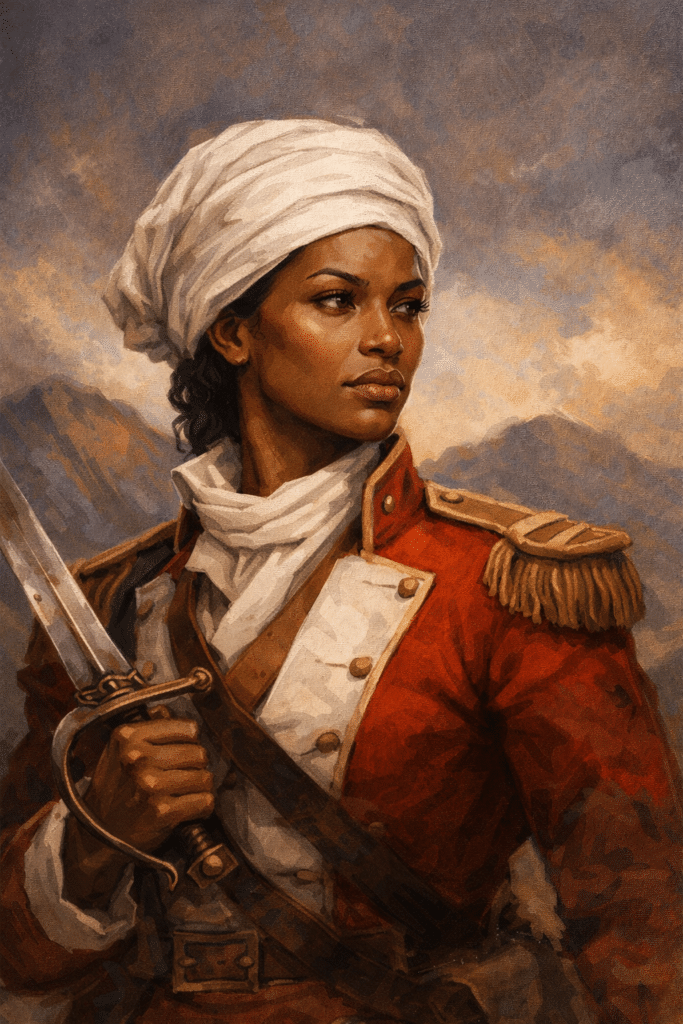
Marriage and military service
In 1796, Sanité Bélair married Charles Bélair, an officer in the revolutionary forces and a close associate of Toussaint Louverture. This union marked her official entry into armed combat. Contrary to the social norms imposed on women of her time, she did not remain in the background. Historical sources indicate that she actively engaged alongside the insurgent troops.
She quickly rose through the military ranks, attaining the rank of sergeant and then lieutenant. In the context of the Haitian revolution, this was an exceptional career. Sanité Bélair did not limit herself to quartermaster duties. She took part in organizing the troops, mobilizing the local population and engaging in direct confrontations with the French colonial forces.
1802, the Leclerc expedition and the rupture
1802 marked a decisive turning point. Napoleon Bonaparte sent a military expedition led by General Leclerc to re-establish French authority in Saint-Domingue. Behind the official rhetoric of pacification lay the desire to call into question the abolition of slavery.
Sanité Bélair and her husband joined resistance groups active in the Artibonite and Matheux regions. They called for insurrection, exploited their knowledge of the terrain and inflicted several local setbacks on the French columns. However, these successes remained fragile in the face of an army with superior logistical and human resources.

Capture and sentence
Faced with persistent resistance, the colonial authorities stepped up repression. A French column managed to surprise the insurgents. Sanité Bélair was captured during this operation. Charles Bélair also surrendered, refusing to give up.
Both were brought before a colonial military tribunal. The verdict was final. Charles Bélair was sentenced to be shot. Sanité Bélair, as a woman, was sentenced to beheading, a punishment then reserved for female convicts. This judicial distinction embodies the discriminatory logic of the colonial system.

Dying as a soldier
Sanité Bélair refuses this sentence. She asserted her military status and demanded to die like a soldier. This request, exceptional in the context of a colonial court, was accepted. On October 5, 1802, she first witnessed her husband’s execution.
When it’s her turn, she refuses the blindfold. Witnesses report that she remains standing in front of the firing squad. Her words are a matter of oral tradition, but her firm, determined attitude is well documented. She was shot standing up, in accordance with her wishes.

A memory long marginalized
Sanité Bélair’s death did not put an end to the struggle. In January 1804, Jean-Jacques Dessalines proclaimed Haiti’s independence. In the national memory, Sanité Bélair joins the ranks of women associated with this victory, alongside Catherine Flon, Cécile Fatiman and Dédée Bazile.
His institutional recognition came late. In 2004, his portrait appeared on a commemorative ten gourde banknote issued for the bicentenary of independence. More recently, his name has appeared on international memorial projects dedicated to the struggle against slavery and colonialism.
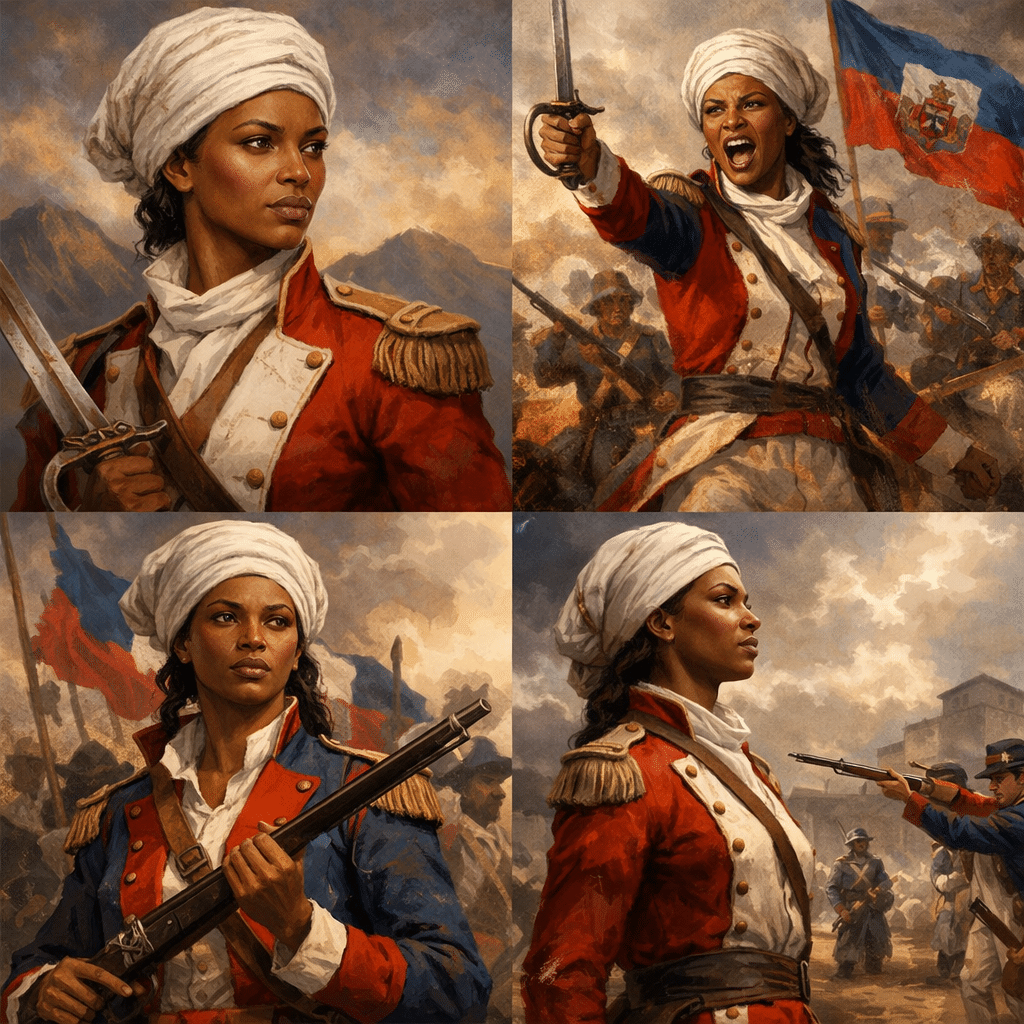
Sanité Bélair embodied total resistance – political, military and moral. A freedwoman in a discriminatory colonial society, a lieutenant in an insurgent army, she chose to be consistent with her convictions right to the end. Her demand to die on her feet sums up the scope of her commitment. Her story reminds us that Haitian independence was built at the cost of major individual sacrifices, and that certain figures, long marginalized, remain essential to understanding the depth of this unique revolution.
FAQ
The biographical notes present her as sergeant, then lieutenant in the forces linked to Toussaint Louverture, engaged in the fighting against the 1802 expedition.
Detailed accounts attribute the capture to a French column often cited as that of Faustin Répussard in a surprise attack; Dessalines was sent against the Bélairs by
She has become a major figure in Haitian memory: her portrait appears on the commemorative commemorative 10 gourde banknote (2004) and is featured in recent memorial projects, notably at the Pantheon (“We Could be Heroes” exhibition).