
We’ve reached the halfway point of the “Stories of Caribbean Cinema” series. The first four episodes have covered nearly three decades of cinema, from Cuba in the 1960s to productions from Martinique and Curaçao in the 1980s. This fifth installment moves into the 1990s with two films set in very different worlds. Euzhan Palcy’s “Siméon” delves into a Caribbean imagination where music, ghosts, and magical realism converge. Raoul Peck’s “The Man on the Quay” looks back at François Duvalier’s dictatorship in Haiti through the eyes of a child.
You are now reading the fifth episode in a series of ten. Four episodes have already been published on Richès Karayib, and five more will follow through 2025.
1992: MARTINIQUE/GUADELOUPE - SIMÉON, BY EUZHAN PALCY
Following his early work in Hollywood, Euzhan Palcy returned to the Caribbean with a film rooted in Caribbean magical-religious folklore, told in the style of a fairy tale and shot in Guadeloupe. In the first twenty minutes, music teacher Siméon, majestically portrayed by Jean-Claude Duverger, passes away. Unable to ascend to heaven, Siméon’s ghost (known as “the spirit of music”) remains with his friends, who have formed a band called “Jacaranda”, whose members are played by the real-life band Kassav’ (led by Jacob Desvarieux and Jocelyne Béroard), who invented zouk.
He’ll help them promote their music to producers in Paris. Partly narrated by the young Orélie (Lucinda Messager), the film’s plot presents the French capital (recreated in studios) as imagined by a young woman from Guadeloupe, in the style of an Épinal print, as a “shift” in perspective: it is now the French mainland (and no longer the overseas territories) that is to be seen as a “postcard.”
Above all, this film cinematographically develops a marvelous realism, a sort of Caribbean fantasy in which supernatural events are experienced without surprise and in which the characters interact quite naturally with a ghost they cannot see (unlike in most ghost movies) but can hear (in a clear celebration of oral tradition). A few years later, *Nord-Plage* (2004), the only film to date directed by a Béké from the French Antilles (a descendant of a slave-owning family), based on a screenplay by Patrick Chamoiseau (1992 Goncourt Prize winner), would brilliantly continue this tradition, which has been tentatively emerging since the earliest films of Caribbean cinema. Siméon, a blend of joy and originality!

1993: HAITI – "The Man on the Quay", by Raoul Peck
Defining Haitian cinema is no easy task. Indeed, unlike other Caribbean film industries that are more “structured,” such as in Cuba or Jamaica, for example, or those with limited production, like Antigua and Barbuda, in Haiti, many films are made, sometimes under precarious technical conditions, and are highly popular with the public despite their semi-professional nature.
One might think, in particular, of films such as Does the President Have AIDS? (2006), starring the famous Jimmy Jean-Louis, who played “the Haitian” in the American series Heroes (2006–2010), and A Zombie’s Love (2010) by Arnold Antonin, starring the future director of Freda (2021), Gessica Généus, a must-see filmmaker best known for his documentaries and his relentless commitment to chronicling everyday life in Haiti.
One date is often mentioned: the release of the medium-length film Anita by Rassoul Labuchin in 1980. As for feature-length fiction films, “L’Homme sur les quais” is a must-see, if only for its international cast and Raoul Peck’s career: among other works, the fictional film “Lumumba” (2000), and the documentaries “I Am Not Your Negro” (2016) about the intellectual James Baldwin, and Orwell: 2+2 = 5 (2025) or the documentary series Exterminate All These Brutes (2021), not to mention his tenure as director of the prestigious FÉMIS film school (2010–2019).
Selected for the official competition at the Cannes Film Festival, “The Man on the Docks” is a rare film in Caribbean cinema due to its reliance on numerous slow-motion effects, achieved through the actors’ performances and frequent camera movements (starting with the very first sequence), which capture the constant tension that existed during the dictatorship of François Duvalier (1957–1971), a tension that, at times, erupts without warning within a consistently understated visual style.
Seen through the eyes of a young girl whose father opposes the regime, and who is staunchly defended by her grandmother, played with dignity by the famous singer Toto Bissainthe (who passed away shortly after the film was released), the film’s plot concludes with the child’s voice-over: “even as my story ceases to be just my own and becomes everyone’s…” A major film about dictatorship.

About the Author
Guillaume Robillard holds a Ph.D. in film studies; he is a professor and researcher, a documentary filmmaker, and a specialist in Caribbean cinema and artistic production. He is the author of two books: *Conquest of Space and Time: Caribbean Cinema (Éditions Jannink, “Hypothèses d’Art,” 2023) and Decolonial Cinema: Characters in Caribbean Cinema (Presses Universitaires des Antilles, “Arts et Esthétique,” 2024).
The release of Magma, a film by French director Cyprien Vial heavily inspired by the 1976 eruption of La Soufrière, which raised fears that the capital city of Basse-Terre (Guadeloupe) would be destroyed, followed by two films directed by Guadeloupeans, namely Fanon (Jean-Claude Barny), about the famous anti-colonialist intellectual during his time in Algeria, and *Zion*, in less than a month, succeeded in drawing the attention of the French media (Le Monde, Libération, etc.) to the potential of Caribbean cinema and, more broadly, of films dealing with the French overseas territories.
"Stories of Caribbean Cinema" series. Season 4, Episode 10 is already available on Richès Karayib. Stay tuned for Season 6, Episode 10 coming soon.
Haitian filmmaker Gessica Généus has just received the Best Film Award at the Villa Medici Festival in Rome for “Marie Madeleine.” This feature film, shot in Creole and set in Jacmel, opens in France on October 21. The award, which includes a 5,000-euro prize and a residency, is the latest achievement in a career that has taken her to Cannes and Cabourg.
“The film isn’t even a distortion of reality it is reality.” Gessica Généus made this statement about the brothel in Jacmel where her film is set, in an interview published by the Cannes Film Festival in May. She also says she wants to explore “our relationship as a people with morality, in Haiti.” Four months later, a jury in Rome recognized this perspective with an award.
The sixth edition of the Villa Medici Festival took place from September 16 to 20, 2026. The jury consisted of actress and director Zar Amir Ebrahimi, artist Rosa Barba, and director Radu Jude. It selected “Marie Madeleine” for the Best Film Award, which comes with a prize of 5,000 euros and a residency at the Villa Medici. According to the festival, the jury praised the film’s exploration of what happens when faith becomes both a refuge and a prison, as well as the courage of its vision and the extraordinary humanity of its cinema.
Jacmel, a sex worker and an evangelist
The film is set in Jacmel, on Haiti’s southern coast. Marie Madeleine works there as a prostitute. She meets Joseph, a young evangelist, and a relationship develops between these two people who are polar opposites. Gessica Généus plays the lead role herself, alongside Béonard Monteau, who plays Joseph. The feature film runs 104 minutes and alternates between Haitian Creole and French.
It is a co-production between France, Haiti, Belgium, Luxembourg, and Canada. The French company Sanosi Productions is the lead producer. The Haitian company Ayizan Productions is one of the co-producers.


Gessica Généus, a filmmaker who started at age seventeen
Gessica Généus grew up in Port-au-Prince. She began her acting career at age seventeen in Richard Sénécal’s “Barikad.” She went on to direct documentaries. “Douvan jou ka leve” earned her the Grand Prize at the first FIFAC, the Amazon-Caribbean Documentary Festival, in French Guiana. In 2021, her first feature-length fiction film, “Freda,” was selected for the Un Certain Regard section at the Cannes Film Festival.
According to the Washington Post, “Freda” was the first Haitian film selected for Cannes since 1993. The American newspaper adds that the director had difficulty financing the project, in part because she insisted on using dialogue in Creole. The film was also submitted by Haiti for consideration for the Oscar for Best International Feature Film. Both feature films are set in Haiti and follow women.

Cannes, Cabourg, Rome: The Journey of “Marie Madeleine”
“Marie Madeleine” premiered at Cannes on May 14, 2026, in the Cannes Première section. It went on to win the Grand Prix at the Cabourg Film Festival in June, the festival’s 40th edition, which Le Nouvelliste describes as its first major award. The film was also screened in Toronto as part of the Centrepiece program, and then in Calgary on September 28. Namur will host a screening on October 3.
Gessica Généus now has two films at Cannes, in 2021 and 2026. The Haitian media outlet Chokarella describes her as the first Haitian female director to win the Villa Médicis Prize.

What This Award Means for Gessica Généus and Haitian Cinema
The actual impact on Haitian cinema remains to be seen. However, some signs are already evident. A film set in Jacmel, spoken in Creole, and directed by a Haitian woman who also plays the lead role is making the rounds at festivals in Europe and North America. It will be distributed in theaters in France by Pyramide Distribution. The residency at the Villa Medici also offers the director a period of time to work in Rome, though the festival has not yet specified the dates.
French audiences will be able to see “Marie Madeleine” in theaters starting October 21. On October 6, the FIFAC kicks off its eighth edition in Saint-Laurent-du-Maroni, French Guiana, a festival that Gessica Généus knows well, having won an award there and later served as jury president in 2024. One question remains unanswered by this journey. After “Freda” and “Marie Madeleine,” which other Haitian films in Creole will in turn make their way to Cannes and Rome?
Frequently Asked Questions
It won the Best Film Award at the Villa Medici Festival in Rome. The prize includes 5,000 euros and a residency at the Villa Medici. The sixth edition of the festival took place from September 16 to 20, 2026.
The film is set in Jacmel, on Haiti’s southern coast. Marie Madeleine works there as a prostitute and meets Joseph, a young evangelist. A relationship develops between these two people who are polar opposites. The director plays the lead role alongside Béonard Monteau. The film runs 104 minutes and alternates between Haitian Creole and French.
The film opens in theaters in France on October 21, distributed by Pyramide Distribution. It was presented at Cannes on May 14, 2026, in the Cannes Première section, and then screened in Toronto and Calgary on September 28. Namur will host a screening on October 3.
A soup made before dawn

The giraumon, the squash that gives the dish its name
Saint-Domingue, a colony built on forced labor
The story of soup joumou has its roots in the French colony of Saint-Domingue, which became Haiti after 1804. At the end of the eighteenth century, Saint-Domingue was among the wealthiest colonies in the French colonial empire, a wealth built on the forced labor of hundreds of thousands of people enslaved on sugarcane and coffee plantations. It is against this backdrop of coercion and a strict social hierarchy that the founding narrative of soup joumou is rooted, a story of endurance echoed in the proverb “Dèyè mòn, gen mòn,” as recounted by Richès Karayib.

The Story Passed Down of a Colonial Taboo
The most widely told story in Haiti is that enslaved people grew giraumon in the plantation gardens but were not allowed to eat the soup made from it, which was reserved for the colonists’ table. According to this story, after Haiti’s declaration of independence on January 1, 1804, soup joumou became a symbol of a newly acquired right: the right to eat what one grows with one’s own hands. Part of the oral tradition credits Marie-Claire Heureuse Félicité, wife of Haiti’s first head of state, Jean-Jacques Dessalines, with serving this soup on that day, amid a festive atmosphere marking the break from colonial slavery.

A narrative that academic history has not confirmed
The account of January 1, 1804—widely reported by the press and by Haitian families themselves—has not, however, been corroborated by any historical or anthropological studies published to date. A well-documented critique, published by the writer and linguist Robert Berrouët-Oriol on the Fondas Kréyol website, notes that no peer-reviewed academic source confirms the specific scene of January 1, 1804, attributed to Marie-Claire Heureuse Félicité, and emphasizes that she was illiterate, which calls into question certain versions of the account that attribute personal writings to her.
Based on the available research, the story of joumou soup therefore remains a tale that Haitians tell one another and pass down as an expression of national identity, rather than a specific episode dated and documented by a historical institution.
The only Caribbean dish recognized by UNESCO
What can be said with certainty is that the dish itself has gained international recognition. In December 2021, UNESCO inscribed soup joumou on the Representative List of the Intangible Cultural Heritage of Humanity, under the name “soupe au giraumon.” This inscription makes soup joumou the only dish originating in the Caribbean to appear on this list today—a distinction that no other country in the region currently shares, and one that is highlighted in the RK dossier on Caribbean heritage recognized by UNESCO.
The UNESCO nomination file explicitly describes a family and community practice, driven by the women who cook, the children who help with the preparations, and the farmers who provide the giraumon.

A Legacy That Lives On, in Haiti and Among the Diaspora
Every January 1, soup joumou continues to bring Haitian families together around a single bowl, both in Haiti and in Haitian communities in the diaspora—in Canada, the United States, and France. On that day, parishes and organizations hold community food drives that extend—on a neighborhood scale—a tradition that always begins in a family kitchen, in the same spirit of solidarity as konbit, the tradition of mutual aid already described by Richès Karayib.
For many young Haitians born far from Haiti, the soup joumou on January 1 remains an opportunity to learn, over a bowl of soup, what their parents tell them about the country’s history—a blend of stories passed down from generation to generation and what international institutions now confirm.

What Joumou Soup Continues to Nourish
Joumou soup needs no definitive academic proof to continue bringing Haitian families together every January 1. One question remains, one that the soup itself never quite answers, namely, how a people chooses to recount its own freedom from one generation to the next, and what this ongoing tradition continues to reveal about Haiti today.
Joumou soup is a Haitian soup made with pumpkin, beef, pasta, and vegetables, traditionally prepared and eaten on January 1, Haiti’s Independence Day.
The most widely accepted account states that enslaved people were not allowed to eat this soup during the French colonial period in Saint-Domingue, and that after independence on January 1, 1804, it became a symbol of newly gained freedom. However, this specific account has not yet been confirmed by academic sources.
Yes, UNESCO inscribed “soup joumou,” under the name “soupe au giraumon,” on the Representative List of the Intangible Cultural Heritage of Humanity in December 2021, making it the only Caribbean dish to date to receive this recognition.
In Haiti’s Central Plateau, a mountain trail leads to Morne Michel, one of the most remote villages served by Zanmi Lasante, the health organization co-founded by American physician and anthropologist Paul Farmer. It is by taking this path, amid ridges that seem to go on forever, that writer Tracy Kidder comes to understand why an old Creole saying so aptly describes this place: “Dèyè mòn, gen mòn.” Behind the mountain, there is another mountain. Kidder would use this as the title of a book that would introduce Haiti to millions of readers around the world, far beyond the Caribbean.
What does “Dèyè mòn, gen mòn” mean?
“Dèyè mòn, gen mòn” literally translates to “beyond the mountains, more mountains.” The true meaning of the proverb goes beyond a simple geographical observation: in life, once one problem is overcome, another almost always arises. It’s a way of saying that life is a series of trials, without suggesting that one should give up. The proverb has been passed down orally for generations in Haiti, long before any book picked it up and spread it far and wide.


Wisdom Born of Haiti's Landscape
The proverb draws directly from the country’s landscape. Haiti—whose name is believed to derive from the Taíno word *Ayiti*, meaning “land of high mountains” according to the generally accepted etymology—is largely covered by a series of hills and mountains stretching from the coast inland. This terrain has also long isolated certain rural communities from the rest of the country. In everyday life, the phrase “Dèyè mòn, gen mòn” is used to describe everything from losing a job followed by a rent increase to one health problem piling up on top of another.
The expression never seeks to downplay the difficulty. It acknowledges it with a clarity that many Haitians claim as a national trait. It’s also used in a lighter tone among close friends and family to comment, with a resigned smile, on one difficult day following another, without the next challenge always being a serious one.

From the Morne Michel Trail to a Book Read All Over the World
In 2003, American writer Tracy Kidder published *Mountains Beyond Mountains: The Quest of Dr. Paul Farmer, A Man Who Would Cure the World* with Random House. The book opens with a quote in Creole and English: “Deye mon gen mon, Beyond mountains there are mountains.”
It tells the story of how Paul Farmer, a Harvard-trained physician, founded the organization Partners In Health in 1987 with Ophelia Dahl, Thomas J. White, Todd McCormack, and Jim Yong Kim; its Haitian counterpart, Zanmi Lasante, grew out of a small clinic opened in Cange in 1985. Zanmi Lasante, which literally means “partners in health” in Creole, has since become the country’s largest nongovernmental healthcare provider. It was there that Farmer developed his conviction that access to care should never depend on a patient’s income—a conviction he would later carry far beyond Haiti, to the ends of the earth.
Kidder’s book became a New York Times bestseller and received the Ulysses Letter Award for the Art of Reportage, turning the Haitian proverb into a title read by millions of people who had never heard of Cange or Morne Michel. Paul Farmer, for his part, continued this work until his death in Rwanda on February 21, 2022, at the age of 62.

A philosophy that is still alive today
The proverb has never fallen out of everyday use in Haiti, but it has now spread far beyond, carried by the popularity of Kidder’s book all the way to the Haitian diaspora, where it is sometimes cited to describe a resilience that remains undiminished from one generation to the next. RK has already chronicled this same collective energy through konbit, this tradition of mutual aid which turns collective work into a celebration. “Dèyè mòn, gen mòn” may be its other, more intimate side—the one that reminds us that no mountain is truly the last, and that we often have to keep walking without ever seeing the summit. Who, in Haiti or elsewhere in the Caribbean, continues to climb their own mountain today?

“Dèyè mòn, gen mòn” literally means “beyond the mountains, more mountains” and expresses the idea that, in life, once one difficulty has been overcome, another almost always arises.
This Haitian proverb provided the title for Tracy Kidder’s book, *Mountains Beyond Mountains*, published in 2003, which chronicles the journey of Dr. Paul Farmer and the organization Partners In Health in Haiti.
Zanmi Lasante, which means “partners in health” in Haitian Creole, is a health organization that grew out of a clinic opened in Cange in 1985 and has since become Haiti’s largest nongovernmental healthcare provider, according to Partners In Health.
Four artists, four regions, four journeys. On September 19, 2026, the National Academy for the Performing Arts in Port of Spain will host a ceremony at which Patra, Calypso Rose, Alan Cavé, and Shyne will each receive a special award. The 2026 Caribbean Music Awards will bring them together on the same stage, but their journeys tell different stories about Caribbean music and its ability to transcend borders.
One Scene, Four Legacies
The announcement made by the Caribbean Music Awards highlights four distinct honors. Patra will receive the Lifetime Achievement Award. Calypso Rose will be honored with the Elite Calypso Honors. Alan Cavé will receive the Elite Konpa Honors, while Shyne will be awarded the Global Ambassador Award.
This selection almost maps out the region’s musical landscape. Jamaica, Trinidad and Tobago, Haiti, and Belize are thus represented by artists whose careers have taken very different paths. More than just a list of winners, this selection offers a glimpse into the cultural diversity of the Caribbean.
Patra, a leading figure in Jamaican dancehall
With Patra, the 2026 Caribbean Music Awards are honoring an artist associated with a significant period in the globalization of Jamaican dancehall. Her style, visual identity, and positioning have helped bring to the forefront a strong female presence in a musical world often dominated by male figures.
The Lifetime Achievement Award highlights this aspect of longevity and influence. It is not merely a matter of recalling past successes, but of recognizing an artist whose image remains closely tied to a pivotal moment in the spread of dancehall beyond Jamaica.

Calypso Rose, the Living Legend of Calypso
Calypso Rose represents a different story. A native of Tobago, she has for decades embodied the narrative power of calypso, a genre that reflects society, comments on its times, and transforms the stage into a space for expression.
The Elite Calypso Honors, therefore, highlight more than just an individual career. Through her, it also celebrates a musical tradition deeply rooted in Trinidad and Tobago. Her presence in Port of Spain will give this honor a special significance: that of an artist being honored in the very heart of the land to which her musical history remains intimately tied.

Alan Cavé and the Spread of Konpa
With Alan Cavé, Haitian konpa also takes its place in this regional landscape. The singer is one of those artists whose career has unfolded across Haiti, the diaspora, and audiences located far beyond his homeland.
His *Elite Konpa Honors* serves as a reminder that Caribbean music isn’t limited to the genres that enjoy high visibility in English-speaking markets. Konpa has its own networks, communities, and collective memory. Alan Cavé’s recognition brings this history back to the forefront of a scene designed to celebrate the sounds of the entire Caribbean.

Shyne: An Influence That Goes Beyond Music
Shyne’s career offers a fourth perspective. A native of Belize, he was honored with a Global Ambassador Award—a category that goes beyond musical performance alone. His public career has gradually combined music with representing and promoting his country on the international stage. This award thus broadens the very definition of cultural influence. Promoting the Caribbean can be achieved through a song, a musical genre, or an artistic career, but also through the ability to project a region’s image beyond its borders.

Four Ways to Experience the Caribbean
Bringing together Patra, Calypso Rose, Alan Cavé, and Shyne ultimately reveals what the 2026 Caribbean Music Awards aim to celebrate this year: not a single Caribbean musical identity, but multiple heritages capable of coexisting. Dancehall, calypso, konpa, and cultural representation don’t all tell the same story. Yet each demonstrates how a region can produce a voice that travels, transforms, and reaches new audiences.
In this context, their differences will thus become the true common thread: four distinct legacies, four different relationships with the world, and a shared ability to integrate Caribbean creations into international and sustainable cultural networks. On September 19, these four paths will converge in Port of Spain. And perhaps that is where the strength of this edition lies: in reminding us that the Caribbean shines precisely because it never speaks with a single voice.
Patra, Calypso Rose, Alan Cavé, and Shyne will each receive a special award at the 2026 Caribbean Music Awards.
Patra will receive the Lifetime Achievement Award, Calypso Rose will receive the Elite Calypso Honors, Alan Cavé will receive the Elite Konpa Honors, and Shyne will receive the Global Ambassador Award.
The 2026 Caribbean Music Awards ceremony will take place on September 19, 2026 at the National Academy for the Performing Arts in Port of Spain, Trinidad and Tobago.
In Saint Lucia, during the 51st meeting of CARICOM heads of government, Dr. Hyginus “Gene ” Leon, executive director of DBRP/The Nature Bank, presented an ambitious idea during a side event on reparations: using restorative justice to rethink Caribbean development. Here, the term does not refer solely to financial compensation. It aims to acknowledge the consequences of slavery and colonization, to redress the harm caused, and to transform the mechanisms that continue to perpetuate them.
Four Measures of Development
Development is often measured in terms of growth, investment, and infrastructure. This perspective is incomplete. An economy can build roads, ports, or hotels while at the same time undermining its natural resources, its population, or its institutions. This discussion is based on four forms of wealth. Productive capital includes infrastructure, businesses, and financial resources. Natural capital encompasses soil, forests, water, reefs, and the climate. Human capital encompasses health, education, skills, and dignity. Finally, societal capital relates to institutions, social cohesion, and trust.

Progress requires that these four forms of wealth advance together. When one form of capital develops at the expense of the others, growth becomes fragile. A region can achieve strong economic performance while simultaneously depleting the very foundations that make that prosperity possible.
A Five-Century-Old Economic Error
Restorative justice takes on a broader dimension here. It stems from a historical observation: for centuries, the economic system has assigned a price to produced goods while reducing people and nature to mere resources. The British Emancipation Act of 1833 illustrates this logic. More than 800,000 enslaved people were freed. Yet the 20 million pounds allocated compensated the slaveowners, while the freed people received no compensation. The financial value of property was recognized; the value of human life remained absent from the balance sheet.

This extractive model has not entirely disappeared. Cocoa produced in Ghana and Côte d’Ivoire fuels a global industry, while producers and the regions of origin retain only a small share of the value created. Incomes remain low, forests are shrinking, and the bulk of the profits are concentrated elsewhere.

Reparations, Climate, and Inequality: A Common Root
Reparations for slavery, climate-related losses and damages, and the fight against inequality are often addressed separately. Yet these issues stem from the same mistake: counting only part of the actual wealth. In the Caribbean, this contradiction is evident. A mangrove forest may be destroyed to make a project profitable in the short term. Its ability to protect coastlines, limit storm damage, or support fisheries is not always factored into the initial calculations. When disaster strikes, the region must finance reconstruction, often through debt. The value of nature is ignored at the outset, and then its absence becomes a collective burden.

Restorative justice thus links memory, the economy, and the environment. It raises a concrete question: How can we redress a historical injustice without reproducing the same imbalances in current decisions?

Rescue, Rebuild, and Transform
Restorative justice is structured around three stages: relief, reconstruction, and repositioning. The first addresses immediate emergencies. The second restores what has been lost. The third transforms the rules so that the harm is not repeated. This final stage is crucial. Rebuilding a house on the same fault line is tantamount to setting the stage for its next collapse. Similarly, compensation scattered across isolated projects may produce temporary results without addressing the root causes of vulnerability.

Restorative justice could therefore fund additional investments: education, health care, ecosystem protection, resilient infrastructure, strong institutions, and economies capable of retaining more value within the Caribbean region. The goal would be to compensate for a loss while making its recurrence less likely.

Three Possible Changes for CARICOM
Restorative justice offers three avenues for the region. First, every major public or financial decision could assess what it creates and what it destroys in terms of the four forms of wealth. Second, reparations could be organized as a coherent portfolio of reconstruction and transformation. Finally, human and environmental costs could be incorporated into the evaluation of projects, loans, and investments.
Restorative justice would thus shift the focus of the debate. For the Caribbean, making amends for the past could become a way to protect the future, by finally treating people, nature, institutions, and infrastructure as equally valuable.
In this context, restorative justice refers to an approach aimed at acknowledging and addressing the lasting consequences of slavery and colonization. It is not limited to the payment of financial compensation; it also seeks to invest in communities, institutions, the environment, and the economy to ensure that the same inequalities do not continue to be perpetuated.
The four forms of capital are productive capital, which includes infrastructure and businesses; natural capital, such as forests, reefs, and water; human capital, which encompasses health, education, and skills; and societal capital, based on institutions, trust, and social cohesion. Sustainable development requires advancing these four forms of capital together, without enriching one at the expense of the others.
It could help fund a coherent set of initiatives in education, health, ecosystem protection, climate resilience, and infrastructure. It also involves factoring human and environmental costs into financial decisions and assessing what each project creates or destroys. These guidelines were presented to CARICOM as proposals, not as decisions that have already been adopted.
On February 26, 2017, at the Dolby Theatre in Los Angeles, Raoul Peck awaits the announcement of the Oscar for Best Documentary. “I Am Not Your Negro” is among the five nominated films. It will not win the Oscar, which goes to O.J.: “Made in America”, but this event confirms the Haitian filmmaker’s place among the leading voices in global documentary filmmaking.
A Childhood Spent Between Haiti and the Congo
Raoul Peck was born on September 9, 1953, in Port-au-Prince. When he was eight years old, his family left Haiti during the dictatorship of François Duvalier and moved to the newly independent Congo. His father, an agronomist, worked there as part of a United Nations mission. His childhood in the Congo had a lasting impact on his worldview. It exposed him to the consequences of colonization, the hopes for African independence, and the legacy of Patrice Lumumba, who was assassinated in January 1961. Lumumba would later become one of the central themes of his work.
Raoul Peck continued his studies in Brooklyn, then in France, and later in Germany. In Berlin, he studied economics and engineering before turning to film. He enrolled at the Deutsche Film- und Fernsehakademie Berlin (DFFB), from which he graduated in 1988. He also founded Velvet Film, the company that will support many of its projects.

"Haitian Corner," Raoul Peck's first project
His first feature film, “Haitian Corner”, made in 1988, follows a Haitian exile in New York who is haunted by the torture he endured under the dictatorship. When he thinks he recognizes one of his former torturers in Brooklyn, the past comes crashing back into his life. The film already contains the defining features of his cinema: a political story told from an intimate perspective, a focus on exiles, and a rejection of folklore. In Raoul Peck’s work, great tragedies never remain abstract. They permeate bodies, families, and memories.
This method continues with “Lumumba”, The Death of the Prophet” in 1991, “The Man on the Docks” screened in competition at Cannes in 1993, and then “Lumumba” in 2000. “Sometimes in April”, aired on HBO in 2005, addresses the genocide of the Tutsi in Rwanda. “Fatal Assistance”, published in 2013, examines the failures of international aid following the 2010 earthquake in Haiti.
Eighteen months at the Ministry of Culture
Raoul Peck’s career is not limited to film sets. In 1996, Prime Minister Rosny Smarth appointed him Haiti’s Minister of Culture. He held this position for about eighteen months, during a period of intense institutional tensions. When Rosny Smarth’s government resigned in 1997, he also stepped down from his post. This experience gave him firsthand knowledge of the government and power dynamics. He recounts it in “Mr. Minister… my patience has run out.”
This foray into politics has deepened his interest in the mechanisms that shape official narratives, obscure certain responsibilities, and marginalize certain populations from the historical record.

"I Am Not Your Negro", a global turning point
The major turning point came in 2016 with “I Am Not Your Negro”. The documentary is based on “Remember This House”, an unfinished manuscript in which James Baldwin set out to tell the stories of Medgar Evers, Malcolm X, and Martin Luther King Jr., three figures of the civil rights movement who were assassinated. Narrated by Samuel L. Jackson, the film combines archival footage, film clips, Baldwin’s writings, and contemporary images. Raoul Peck does not present a traditional biography. Instead, he connects the writer’s words to the history of racism in the United States and the portrayals produced by Hollywood.
Screened at the Toronto International Film Festival in September 2016, the documentary won the Audience Award in its category. A few months later, it was nominated for the Oscar for Best Documentary. That year, four of the five selected films were directed by Black filmmakers. “I Am Not Your Negro” went on to win the César Award for Best Documentary Film in 2018. This success is also due to an approach that has become characteristic of Raoul Peck: creating a dialogue between archival footage and the present, questioning those who create the images, and placing the absent at the center of the narrative.


Nine years as president of La Fémis
From 2010 to 2019, Raoul Peck served as chair of the board of directors of La Fémis, one of France’s leading public film schools. Under his leadership, the school launched La Résidence, a program designed to make training accessible to young filmmakers who have not followed the traditional academic path.
This role builds on another aspect of his work: passing on his knowledge. Having built his career across several countries and cinematic traditions, he is also helping to broaden access to cinema.
Cinema as a Way to Fight Forgetting
The following films continue this engagement with history. ““The Young Karl Marx”, released in 2017, explores the intellectual development of Marx and Engels. “Exterminate All the Brutes”, a miniseries that aired in 2021, connects colonialism, slavery, and genocidal violence. Silver Dollar Road, in 2023, follows an African American family threatened with losing their land. In 2024, “Ernest Cole: Lost and Found” is receiving “The Golden Eye“ at the Cannes Film Festival. The documentary traces the career of South African photographer Ernest Cole, who captured the daily violence of apartheid. “Orwell: 2+2=5”, presented at Cannes in 2025, then reinterprets George Orwell’s work in the context of propaganda and political lies.
At age 72, Raoul Peck is also working on a documentary exploring the circumstances leading up to the assassination of Haitian President Jovenel Moïse on July 7, 2021. This project brings his focus back to Haiti, his homeland and a constant point of reference in his work. His films do not present a static memory. He draws on archival footage, texts, and lives that dominant narratives have simplified or sidelined. By making the documentary a space for the confrontation between past and present, Raoul Peck reminds us that an image can also challenge the official history. After Lumumba, Baldwin, Cole, and Orwell, whose memory will he choose next to bring back into the center of the frame?
Raoul Peck is a Haitian filmmaker, screenwriter, and producer born in 1953 in Port-au-Prince. His journey through Haiti, the Congo, the United States, France, and Germany has shaped a body of work dedicated to colonization, racism, exile, and marginalized historical narratives. He also served as Haiti’s Minister of Culture from 1996 to 1997, and as chairman of the board of directors of La Fémis from 2010 to 2019.
Released in 2016, *I Am Not Your Negro” is based on “Remember This House”, an unfinished manuscript by writer James Baldwin. The documentary connects the lives of Medgar Evers, Malcolm X, and Martin Luther King Jr. to the history of racism and the portrayal of Black people in the United States. Narrated by Samuel L. Jackson, the film was nominated for an Oscar for Best Documentary in 2017 and won the César Award for Best Documentary Film in 2018.
Haiti plays a central role in Raoul Peck’s life and work. Born in Port-au-Prince, he left the country as a child, but several of his films directly explore Haiti’s political and social history. Haitian Corner evokes the trauma left behind by François Duvalier’s dictatorship, while Fatal Assistance He is analyzing the impact of international aid following the 2010 earthquake. He is also working on a documentary about the assassination of President Jovenel Moïse.
Repeal of the “Code Noir”: behind this legal formula lies a much deeper issue than the vote on an old text. On May 20, 2026, the National Assembly’s Law Commission adopted the proposal put forward by Max Mathiasin, MP for Guadeloupe. The text is due to be examined in a public session on May 28, 2026. The aim is not to abolish slavery a second time – it was definitively abolished in 1848 – but to expressly remove from the French legal system a text that organized enslavement in the French colonies.
Before repeal, understanding the Code Noir
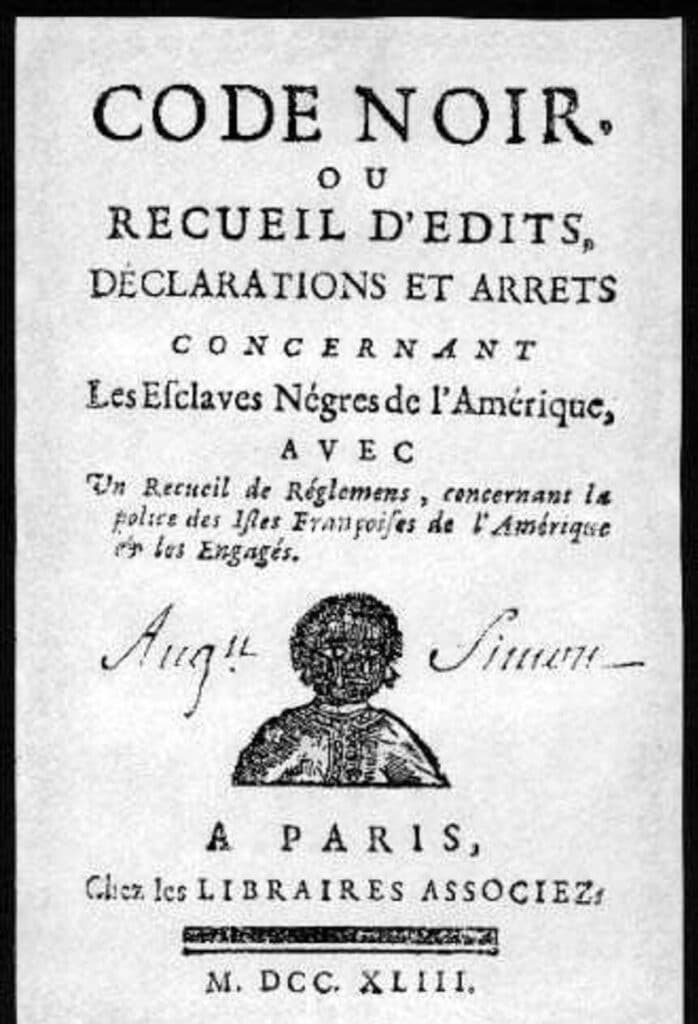
The “Code Noir” is not simply a dusty document reserved for legal historians. It refers first and foremost to the royal decree of March 1685 on slaves in the American islands, and then to all the texts that extended it, notably in 1723 and 1724.
The “Bibliothèque nationale de France” presents it as a law concerning relations between masters and slaves in the French colonies of America, with the creation of a derogatory colonial law.
This text did not invent colonial slavery.
But it gave it a legal framework. It provided a framework for the condition of enslaved people, imposed religion, work, family, sanctions, relations with masters and daily life on plantations.
In other words, the “Code Noir” made slavery administrable.
He transformed economic and social violence into a system governed by royal law.
This is why the Abrogation of the “Code noir” cannot be read as a simple technical operation.
It concerns the way in which a state looks at the texts it has produced, even when these texts no longer govern present-day life.
The Comité national pour la mémoire et l’histoire de l’esclavage (National Committee for the Memory and History of Slavery) points out that for over a century and a half, this body of law organized slave society in the French colonies of the Caribbean, the Indian Ocean and Louisiana.
A text without effect, but not without weight
Since its abolition in 1848, the “Code Noir” no longer has any legal effect. None of its articles can be applied today. The danger would therefore be to make people believe that it still existed as an active rule. This is not the case. The issue lies elsewhere: the ordinance of 1685 and the texts that extended it were not expressly repealed in the terms covered by the current proposal.
It is this paradox that gives current events their force. A text can be legally dead and still be symbolically powerful. It may no longer produce law, but continue to wound through its presence in national legal history. On the 25th anniversary of the Taubira law, the Élysée supported its repeal, stating that it was not a question of erasing history, but of making it clear that this text is contrary to equal human dignity.

Why does this news speak to the French West Indies and French Guiana?
The roots are to be found in Guadeloupe, Martinique, French Guiana and La Réunion, but also in the families that still bear the traces of a history handed down sometimes without archives, sometimes without words.
The “Code Noir” is not an abstraction for these territories. It refers to imposed names, severed lineages, dwellings, registers and incomplete family accounts. It reminds us that slavery was not just an exploitation of bodies. It was also a fabrication of statuses, silences and inequalities inscribed over time.

The fact that this proposal was put forward by Max Mathiasin, MP for Guadeloupe, is no detail. The Law Commission unanimously adopted the text, after its author presented it as an additional milestone for the memory of slavery. A voice from the French overseas territories is thus bringing to parliament a demand that goes beyond the symbolic: to name, to remove, to pass on.

What repeal can really open up
The Abrogation of the “Code noir” does not in itself repair the violence of slavery. It does not settle the question of reparations, which Max Mathiasin did not wish to include in the text so as not to blur its message. But it can open up a more concrete avenue: that of education, archives and places of remembrance.
The text under review calls for a report to be submitted to Parliament. The report will cover not only the provisions stemming from colonial law, but also the place given to the history of slavery, the slave trade and its abolition in school curricula. The commission also added elements on memorial sites and historical research.
Removing the text is not enough. We still need to explain what it enabled, how it shaped colonial societies, why its effects can still be read in memories, and how younger generations can receive this history without it being reduced to a commemorative date.


Remove text, keep memory open
The Abrogation of the “Code Noir” does not close the book on history. On the contrary, it forces it to return to the public arena with greater clarity. To repeal does not mean to forget. It means officially removing from French law a text that gave legal form to enslavement, while leaving historians, teachers, museums and families with the responsibility of passing it on.
For the French West Indies, French Guiana and the other territories concerned, the stakes are twofold: obtain an official act, but refuse to let this act become an end in itself. After the Abrogation of the Code Noir, the real question remains: how can we teach this history without softening it, without freezing it, and without letting future generations discover it only at the bend of a parliamentary news item?
Abrogation of the Code Noir means the formal withdrawal of this text from the French legal system. The Code Noir has had no legal effect since the definitive abolition of slavery in 1848, but had not been expressly repealed. This step does not therefore change the current legal life of citizens, but it does carry a strong memorial value. It marks the official withdrawal of a text that organized colonial slavery in the former French colonies.
The Abrogation of the Code Noir directly concerns the territories inherited from French colonial slavery, notably Guadeloupe, Martinique, French Guiana and Reunion Island. In these territories, the Code Noir refers to a family, social and memory history that is still sensitive: imposed names, incomplete archives, plantation societies, colonial hierarchies and sometimes difficult transmission. For the French West Indies and French Guiana, this repeal is not just a legal act. It involves the recognition of a history that has long been written into texts, places and memories.
No, the Abrogation of the Code Noir does not erase the history of slavery. On the contrary, it can reinforce the need to teach it better, document it better and pass it on better. Repealing a text does not mean removing it from archives or historical works. It means that the State officially recognizes that this text, which gave legal form to enslavement, no longer has a place in the symbolic order of law. The next challenge is to keep this memory alive in schools, museums, research centers and families.
When Edwidge Danticat arrived in Brooklyn at the age of twelve, in 1981, English was not her language. She wore Haitian clothes, spoke Creole as her mother tongue, and had a family history already marked by separation. Forty-five years later, she is one of the most respected living Haitian-American writers, a MacArthur Fellow and professor at Columbia University, where she holds the Wun Tsun Tam Mellon Professor of the Humanities. But above all, she has done something that few writers of her generation have achieved on this scale: she has placed Haiti at the heart of contemporary world literature.
A childhood between Port-au-Prince and waiting
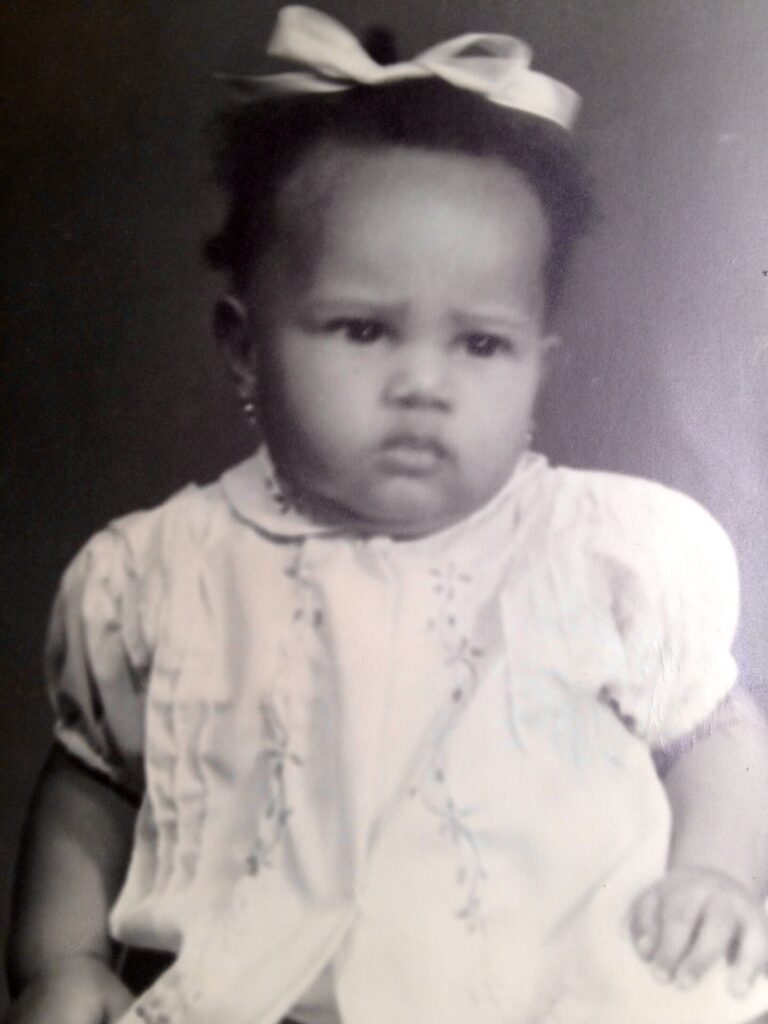
Edwidge Danticat was born on January 19, 1969 in Port-au-Prince, under the dictatorship of François Duvalier. Her father left for the United States when she was still very young, and her mother joined him a few years later. She was brought up in Haiti by her uncle Joseph and aunt Denise, in a house in Bel Air where other children were also experiencing the absence of parents who had left to seek a life elsewhere. “I remember missing them, but I accepted it as a fact of life”, she confided to the Vilcek Foundation. This childhood, divided between waiting, the surrogate uncle and the late arrival of biological parents, would nourish all her work.
Writing as a third language
Edwidge Danticat began writing as a child. As a teenager in Brooklyn, she wrote for New Youth Connections, a newspaper edited by New York high school students. She earned a BA in French literature from Barnard College in 1990, then a Master of Fine Arts in creative writing from Brown University in 1993. Her Master’s thesis became her first novel, Breath, Eyes, Memory, published in 1994 at the age of 25. The book was selected for Oprah’s Book Club in 1998, propelling her career to massive proportions.

Eighteen books and major recognition
The figures are impressive. Eighteen books published. A finalist nomination for the National Book Award for his short story collection Krik? Krak! in 1995. A MacArthur Fellowship in 2009, the famous “genius grant”. The Neustadt International Prize for Literature in 2018, one of the most prestigious American literary prizes. The PEN/Malamud Award in 2023. The PEN/Nabokov Award for Achievement in International Literature in 2026. The National Book Critics Circle Award. The American Book Award. These distinctions tell us one thing: Edwidge Danticat is not just a great voice of the Haitian diaspora. She is a major figure in contemporary American and Caribbean literature.

Haiti, not as a backdrop, but as a memory
But what’s most impressive is the thematic coherence. From Breath, Eyes, Memory to Everything Inside, via The Farming of Bones on the massacre of Haitians on the Dominican border in 1937, The Dew Breaker on the traces left by Duvalier’s violence and the deeply moving memoir Brother, I’m Dying on the death of her uncle in the American immigration detention system, Edwidge Danticat has never stopped writing Haiti. Not as an exotic subject. As a language, a memory, a family.
One of her singularities lies in the way she articulates individual and collective experience. Brother, I’m Dying, for which she won the National Book Critics Circle Award for autobiography, recounts the death of her uncle Joseph, a Haitian asylum seeker who died while in U.S. immigration custody. The book functions as both intimate mourning and political indictment. It helped shed light on the detention conditions of Caribbean migrants in the United States, long before the subject became central to American public debate.
A work for adults, young readers and the diaspora
Edwidge Danticat has also written eight books for children and teenagers, including Anacaona: Golden Flower, about the Taino queen who opposed the Spanish conquistadors. She has published a travelogue, After the Dance: A Walk Through Carnival in Jacmel, as well as several essays. Her collection Create Dangerously: The Immigrant Artist at Work has become a reference text for thinking about the place of the immigrant artist, caught between memory, exile, responsibility and creation.
Edwidge Danticat now teaches at Columbia University in the Department of African American and African Diaspora Studies. She lives in Miami, a city marked by a strong Haitian presence. This presence is not anecdotal. Since the 1980s, Miami has become one of the great capitals of the Haitian diaspora – and therefore, by extension, one of the cultural laboratories where contemporary Haitian-American literature is invented.


A turning point for contemporary Haitian literature
Edwidge Danticat ‘s absolute singularity lies in a simple fact. Before her, a part of Haitian literature was often read, in international circuits, as regional literature or as postcolonial Francophone literature. With her, written in English and awarded prizes by major American literary institutions, Haitian memory has gained a central place in world publishing. This shift could not have been achieved mechanically by a single person. But without Edwidge Danticat, it would not have happened on the scale it did.
A voice always on the move
The sequel confirms that his work remains in motion. Watch Out for Falling Iguanas, a children’s book illustrated by Jamaican artist Rachel Moss, was published by Akashic Books in 2025. And a new novel, Dèy, has been announced for August 2026. The title, in Haitian Creole, refers to mourning and memory. It extends what his work has been about for over thirty years: family, loss, exile, violence, but also the tiny gestures that allow us to stand.
Forty-five years after Brooklyn, Edwidge Danticat continues to write with the same precision and tenderness. And as long as she continues to write, Haiti will have a voice that carries beyond its borders.
Edwidge Danticat is a Haitian-American writer born in Port-au-Prince in 1969. She moved to Brooklyn at the age of twelve, and has built a major body of work around exile, family memory, migration, Haitian history and the diaspora. Her books include Breath, Eyes, Memory, Krik? Krak!, The Farming of Bones and Brother, I’m Dying, have made her one of the most important voices in contemporary Caribbean literature.
Edwidge Danticat occupies an essential place because she has enabled Haitian memory to enter the great circuits of world literature, notably through American publishing. Her work presents Haiti not simply as a setting, but as a language, a history, a wound, a strength and a family memory. She links the intimate to the collective, recounting the separations, political violence, migrations and dignity of Haitian families.
To enter Edwidge Danticat’s work, you need to start with Breath, Eyes, Memory, her first novel, which deals with filiation, exile and the links between Haiti and the United States. Krik? Krak! provides an insight into his art of the short story and his relationship with collective memory. The Farming of Bones sheds light on the history of the Haitian massacre on the Dominican border in 1937. Finally, Brother, I’m Dying is indispensable for grasping the intimate and political dimensions of his writing.
In a yard, at the edge of a field or near a house in need of repair, someone calls out. You don’t just lend your arms. They come with their presence, their voice, sometimes a drum, often a dish to share. In Haiti, Konbit doesn’t just mean one-off help. The word tells of a way of living together. It is this force that still runs through the living word today.
To say “fè yon konbit”, in Haitian Creole, is to announce that work is being carried out by several people. The simplest translation would be “collective work” or “mutual aid”. But that’s too short a translation. A Konbit implies a call, a response, a reciprocity. Today we help a neighbor prepare his field, tomorrow that neighbor will come and help in turn. Effort circulates. Debt is not accounting. It is social.
Working together, but never cold
The word is strongly associated with rural Haiti. In many descriptions, the Konbit is used to prepare the land, plant, harvest, clean up a space or carry out a task impossible to accomplish alone. So it’s not an abstract gathering. It’s a concrete gesture. Hands coordinate. A plot of land moves forward. A family breathes. A community remembers that it can produce strength without waiting for an institution.
What makes the Konbit unique is the alliance between work and social ties. The field is not just a place of production. It becomes a space for speech, rhythm, meals and mutual recognition. Some forms combine singing, music or drumming. Rhythm helps the body to hold on. The meal is a reminder that shared effort also opens up a time of hospitality. However, we must avoid turning this practice into a fixed folkloric image. Not all Konbits are alike. Depending on place, time and need, the practice can be agricultural, communal, familial or symbolic.


African roots recomposed in Haiti
Its roots are often traced back to African forms of collective work. Researchers have linked Haitian coumbite to the dokpwe of Dahomey. It is better to speak of a probable and documented filiation, rather than a single and direct origin. Haitian history has always recomposed heritages. The Konbit thus carries the memory of Africa, the plantation experience, survival after slavery and the peasant creativity of a people who had to organize to stand on their own feet.
This strength explains why the word now extends beyond the agricultural field. It can be found in educational, social, cultural and diasporic initiatives. It is used to name collectives, projects and solidarity initiatives. In these contemporary uses, Konbit retains its central idea: several people pooling their resources to achieve what none could achieve alone. The word has not lost its weight. It has just changed scale.


Kinship on the island, a lesson for the Caribbean
The relationship with the neighboring Dominican Republic also needs to be approached with caution. In certain contexts, the Spanish term convite also refers to a form of community work or mobilization. This proximity reminds us that both parts of the island share rural histories, circulations and African heritages.
Konbit is important because it gives a name to a collective Caribbean intelligence. It rejects the idea that work is necessarily solitary, cold or silent. It shows that a community can transform a necessity into a bonding moment. In a region marked by natural disasters, migration, economic fragility and the strength of extended families, this idea still speaks. It reminds us that grassroots organization is not a last-minute emergency. It’s a culture. It’s not just a Haitian tradition. It’s a social lesson: when arms multiply, the load becomes lighter.
Konbit is more than just a method. It’s a trust in one’s neighbor, a memory of gestures passed down, and a very Haitian response to a universal question: how do you move forward when no one, alone, has enough hands? The answer begins with a common call to action. What if the next Caribbean word took us to Jamaica, to irie, that way of saying that all is well, but with more than just well-being?

Konbit refers to a form of collective work in Haiti. The word refers to neighbors, families or community members helping each other to accomplish a task that requires several hands. This may involve preparing a field, harvesting, repairing a house or supporting a joint initiative. But Konbit doesn’t just mean “working together”. The word also conveys the idea of reciprocity, social ties, shared meals, sometimes music and festivities.
The Konbit is important because it shows how Haitian society has long organized everyday solidarity. In rural areas, it enabled people to carry out difficult tasks without depending solely on money or institutions. It is also a reminder that work can be a moment of cohesion, a time for talking and mutual recognition. Through this word, Haiti conveys a social philosophy: when a load is too heavy for a single person, the community can carry it together.
Yes, Konbit remains a strong reference in Haiti, even if its forms have evolved. It remains associated with the rural world, but today the word is also used to refer to community projects, social initiatives, associations, collectives or solidarity initiatives in the diaspora. Its meaning has broadened: it no longer refers only to collective agricultural work, but to any action where several people pool their forces to advance a cause, a neighborhood or a community.
