TeMeUm 2026 marks a new stage in the policy of supporting local biodiversity initiatives in the French overseas territories. Launched by the French Office for Biodiversity (OFB), this annual campaign aims to finance micro-projects undertaken by associations, small communities and managers of natural areas who are active in the field.

At a time when island ecosystems are under heavy pressure from urbanization, climate change, pollution and biodiversity erosion, this program provides financial and technical resources to transform local initiatives into concrete, measurable actions. Project leaders have until April 14, 2026 to submit their applications via a fully paperless procedure.

Since its creation in 2010, the program has supported more than 420 micro-projects in the French overseas territories, confirming its role as a structuring force in supporting local environmental dynamics.

Financing tailored to small structures

One of the major assets of TeMeUm 2026 lies in its accessibility. The program deliberately targets smaller structures, which often have difficulty accessing traditional financing. Grants awarded range from a few thousand euros to 20,000 euros and can cover up to 80% of the total budget.

Aid is paid out in a single instalment as soon as the project is launched, enabling project sponsors to get their initiatives off the ground quickly, without having to wait for lengthy administrative procedures. This approach responds to a well-known reality in the French overseas territories: local players have solid expertise, but often lack immediate financial resources.

In addition to financial support, the OFB provides technical and administrative assistance to secure the implementation of projects and promote their development on a regional scale.

Three complementary schemes to structure projects

The campaign TeMeUm 2026 campaign is built around three distinct systems, designed to meet a variety of needs.

Springboard: supporting immediate local action

The Tremplin scheme is the operational heart of the program. It supports micro-projects for the protection or restoration of biodiversity, from first experiments in ecological management to innovative pilot initiatives.

Each year, around thirty projects are co-financed for amounts of up to 15,000 euros. The actions supported cover a wide range of fields: species monitoring, restoration of natural habitats, raising public awareness, and experimentation with new ecological management methods.

Among the initiatives supported in 2025 are participatory monitoring of marine biodiversity in Saint-Pierre-et-Miquelon, a project to mobilize citizens around sustainable urban development in French Guiana, and the creation of a botanical trail in Polynesia to preserve endangered endemic flora.

Cooperation: strengthening technical skills

The Cooperation component aims to structure partnerships between biodiversity stakeholders in order to strengthen local technical capacities. With a grant of up to 20,000 euros. This scheme supports collaborative projects involving several organizations.

These cooperative ventures enable us to pool scientific expertise, improve ecological management methods and develop more coherent territorial strategies. In 2025, a wetland restoration project in Mayotte benefited from this funding following a cyclone that weakened local ecosystems.

Companionships: transmission and training in the field

The Compagnonnages program focuses on vocational training and the transmission of know-how. It enables teams from the French overseas departments and territories to spend short periods of time – one to two weeks – working within expert structures.

The OFB will cover travel, accommodation and catering expenses, up to a maximum of 5,000 euros. This format encourages direct technical exchanges and rapid skills transfers.

In 2025, environmental agents in the Indian Ocean were trained in techniques for capturing and studying chiropterans, while an international partnership studied the impact of microplastics on green turtle egg-laying sites and seabird nesting.

TeMeUm 2026
TeMeUm 2026
TeMeUm 2026

Simplified procedures and local support

The program TeMeUm 2026 is based on a clear commitment to administrative simplification. Applications are submitted entirely electronically via the Démarches Simplifiées platform, making it easier for organizations located far from major administrative centers to apply. Applications are examined by local juries made up of biodiversity stakeholders from each region. This organization guarantees an assessment adapted to the ecological and social realities of each overseas zone.

Support doesn’t stop at the selection stage. TeMeUm’s national teams and the OFB’s regional delegations follow project leaders through the entire process, from dossier preparation to operational implementation, evaluation and valorization of results.

A handbook detailing eligibility criteria and expected commitments is available to applicants. Two information webinars are also scheduled on March 23 and 25, 2026 to help structures prepare their bid.

A major challenge for the Caribbean and Indian Ocean territories

For the French overseas territories, biodiversity is both an exceptional natural heritage and a factor of economic, cultural and tourist resilience. The marine and terrestrial ecosystems of the Caribbean, French Guiana and the Indian Ocean play a central role in protecting against climate risks, ensuring food security and enhancing the attractiveness of these territories. Against this backdrop, TeMeUm 2026 represents a strategic opportunity for local players wishing to develop concrete projects, whether to restore natural habitats, protect endemic species or raise public awareness.

The program also contributes to structuring a network of committed players, encouraging the circulation of skills and the sharing of experience between overseas territories.

TeMeUm 2026
©Roatan-Marine-Park
TeMeUm 2026
©zoo-de-Guyane
TeMeUm 2026
©Buccoo-Reef-Trust
TeMeUm 2026
©Roatan-Marine-Park

Local mobilization for sustainable biodiversity

By renewing its call for projects, the OFB confirms the importance of a territorial approach to biodiversity, based on the expertise of local players. TeMeUm 2026 is more than just a funding scheme: it’s part of a global strategy designed to strengthen the capacity for action of structures in the French overseas territories, and to support initiatives tailored to the ecological realities of each territory. Applications for the three schemes – Tremplin, Coopération and Compagnonnages – are open until April 14, 2026. Project sponsors can contact their local OFB delegation or the TeMeUm team directly for further information.

Through this new campaign, TeMeUm 2026 confirms that preserving biodiversity in the French overseas territories depends above all on the commitment of local players, who are capable of transforming targeted initiatives into sustainable solutions for their territories.

TeMeUm 2026 is a program run by the French Biodiversity Office to finance micro-projects to protect and restore biodiversity in the French overseas territories. It supports associations, local authorities and natural area managers working in the field.

Associations, small local authorities, public establishments and managers of natural areas in the French overseas territories are all eligible to apply. The program is designed to be accessible to small structures with concrete projects in favor of biodiversity.

Applications for the Tremplin, Coopération and Compagnonnages schemes are open until April 14, 2026. Applications must be submitted online via the Simplified Procedures platform of the French Biodiversity Office.

The Rézo 2025 seminar, held in Grenada, brought together the directors of the Alliances Françaises of the English-speaking Caribbean, with the same ambition: to consolidate the links between the territories and reinforce the vitality of the French-speaking world in the region.

Having explored the institutional and strategic vision of this regional cooperation in the previous article, “The Alliances Françaises network at the heart of the Caribbean: cooperating, innovating, sharing”, Richès Karayib now turns the spotlight on those who are at its beating heart.

For several days, the participants shared their experiences, challenges and successes, revealing a common conviction: to bring culture and the French-speaking world closer to the people of the Caribbean via the Alliances Françaises.

Alliances Françaises

An essential meeting for a fragmented network

Each Alliance Française operates on an island, often geographically isolated. This seminar, organized with the support of the Service de Coopération et d’Action Culturelle (SCAC) of the French Embassy in Saint Lucia, was a breath of fresh air for the Alliance Française network. The directors emphasized that these meetings are an essential step: they enable them to exchange tools, compare local realities and together find concrete solutions to shared challenges. They all emphasized the strength of the collective, the richness of exchanges in an English-speaking environment and the complementarity of approaches between territories.

These moments offer both a human and a formative dimension: they re-energize, reinforce solidarity and remind us that, despite the diversity of contexts, the Alliances Françaises move forward with the same ambition – to make the French-speaking world live and shine in the Caribbean. From an institutional point of view, Christiane Bourgeois, Cooperation and Cultural Action Advisor, reminded us that this annual seminar is the only time when all the directors can get together to discuss successes, difficulties and common perspectives.

Alliances Françaises

Nine territories, nine realities, but the same conviction: these times of exchange are essential to maintain the network’s momentum and strengthen cooperation in the Caribbean. Beyond these collective exchanges, it is in the field that the vitality of the Alliances Françaises network takes on its full meaning. Each Alliance Française acts in its own way, in line with the realities of its environment and the languages and cultures of its territory.

Alliances Françaises

A deep-rooted network: ten Alliances, one commitment

Although their contexts differ, the Alliances Françaises of the English-speaking Caribbean share the same vocation: to teach, connect and bring the French-speaking world to life on a daily basis. They adapt to local realities with the same conviction: culture and language are levers for social cohesion, openness and the future.

Grenade – Ilona Forte-Gilbert: teaching differently, connecting differently

The Alliance Française de Grenade operates without permanent premises, a situation that Ilona Forte-Gilbert has turned into an asset.

Courses are now offered online, helping to maintain the French language’s presence and reach new audiences. The Alliance is also involved in schools through educational and cultural activities carried out in partnership with teachers. Out-of-home screenings and workshops keep us in touch with the community.

“Our priority is to remain present and useful, even without a building. Digital technology and partnerships enable us to keep the Alliance going.”

Alliances Françaises

Saint Lucia – Aurélie Gbeffa: coordinating and federating

In Saint Lucia, Aurélie Gbeffa runs the local Alliance and is responsible for regional coordination of the ten Alliances Françaises in the Eastern Caribbean. She assists managers with communication, pooling, associative governance, digital transition and cultural revitalization.

It also pilots the Rézo project, an annual seminar supported by the SCAC, which has become a key event for cohesion and collective reflection. In Castries, the Alliance Française de Sainte-Lucie combines language courses, cultural activities and Creole language promotion through exhibitions and workshops.

“Our strength lies in moving forward together while valuing the cultural diversity of our islands.”

Alliances Françaises

Barbados – Océane Gaillard: promoting French in an English-speaking environment

In Barbados, the Alliance Française acts as a linguistic and cultural bridge. Under the leadership of Océane Gaillard, it has consolidated its foothold in a predominantly English-speaking environment. Educational programs have been set up for schools and adults, and the Alliance has trained members of the Regional Security System in French and Haitian Creole.

On the cultural front, it has welcomed the Guianese troupe Ôtepé, and is developing a program open to different French-speaking expressions.

“We represent a plural Francophonie: France, Africa, Canada and the Caribbean. Culture is our best lever for inspiring the desire to learn.”

Alliances Françaises

Trinidad & Tobago – Anyka Batista: an open and inclusive francophonie

In Trinidad & Tobago, Anyka Batista defends an inclusive and creative Francophonie, which values local languages as much as French. Every October, Creole Heritage Month brings together screenings, conferences and concerts, reflecting a strong commitment to cultural diversity.

The Alliance Française also offers courses for children, teenagers and adults, as well as cultural evenings that encourage encounters between communities. Challenges related to visibility and funding persist, but are offset by a collaborative approach with local schools and institutions.

“We want the Francophonie to be seen as part of our culture, not something external.”

Anyka Batista

Jamaïque – Clovis Lemée: creating living spaces

In Jamaica, Clovis Lemée is revitalizing a historic Alliance Française, transforming it into a place for living and creating. The Language Exchanges, monthly multilingual evenings, bring together a varied public around cultural themes, while the French Library Sessions – mini-concerts filmed in the media library – turn language into a tool for encounters and artistic expression.

“Learning a language is about creating links. That’s what the Alliances Françaises are all about.”

This cultural dynamic is attracting a younger audience and helping to restore the French language to its rightful place in the English-speaking Caribbean.

Clovis Lemée

Saint-Kitts & Nevis – Lucille Caulliez : education and ecology

The Alliance Française de Saint-Kitts & Nevis combines language learning with civic engagement. Her Naturally Learn French project, supported by a grant from the French Embassy to the Eastern Caribbean, Barbados and the OECS, offered six months of free tuition to twelve teenagers from disadvantaged backgrounds, combining French language discovery, ecological workshops and cultural activities. Each month, participants explored local ecosystems, cultivated a garden, created with recycled materials or exchanged online with students from Guadeloupe – a concrete and lively way to learn the language while forging links in the Caribbean.

This project, which earned the Alliance the Green Alliance Award from the Global Environment Facility, illustrates the vitality of an open, sustainable and youth-oriented French-speaking community. She is also developing Francoscop, an audiovisual series produced by young people, dedicated to the French-speaking world.

Director Lucille Caulliez sums up the spirit of the program:

“We want to show that French is a tool for openness and creativity.”

Lucille Caulliez

Dominique – Cévinne M’Voula-Henderson: connecting languages and cultures

Established in 1965, the Alliance Française de la Dominique is active in the educational and cultural fields. The Creole & French Spelling Bees, bilingual spelling contests, encourage students to play with the two languages, understand their complementarity and take pride in them. Training workshops and cultural activities support the enhancement of Creole heritage while promoting the French language.

“The aim is to make French and Creole languages of pride and transmission.”

Alliances Françaises

Guyana – Déborah First-Quao: rebuilding and training

In Georgetown, Déborah First-Quao, recently appointed to Guyana, is re-launching a long-standing but low-profile Alliance Française by focusing on training and educational partnerships. She has created a network of French teachers, developed bilingual workshops at the National Library and renewed ties with local institutions. Cultural and educational initiatives aim to put French back into everyday life, despite major logistical constraints.

“We want to restore French to its rightful place in schools, showing that it can be useful, lively and accessible.”

Alliances Françaises

Suriname – Virginie Lemay: building institutional bridges

In Suriname, Virginie Lemay is strengthening links between the Alliance Française and local institutions. Language training is offered to the security forces, the Ministry of Education, businesses and the hotel industry. La Journée Française, organized with the Collectivité Territoriale de Guyane, is a five-day event featuring exhibitions, professional meetings and concerts.

“French becomes a concrete tool for regional cooperation.

This cross-sectoral approach positions the Alliance Française as a key player in the dialogue between Suriname, Guyana and the rest of the Caribbean.

Alliances Françaises

A shared vision: support, connect, promote

For Christiane Bourgeois, Regional Advisor for Cooperation and Cultural Action at the French Embassy in Saint Lucia, this seminar is an essential moment for consolidating the network’s ties. She points out that it’s “the only occasion of the year when we have the opportunity to meet the directors of the Alliances Françaises”, a privileged time to take stock, exchange practices and difficulties, and set up joint projects.

“The Alliances Françaises are an essential tool for embassies, especially in areas like the Caribbean, where there is no Institut Français. They are local organizations, rooted in the territory, with their own board of directors and their own strategy”. She also recalled the key role played by the Alliances in disseminating the French language and promoting dialogue between peoples, stressing that they promote the language, ensure its teaching and maintain the link between the cultural and the educational, between France and the countries of the region.

Alliances Françaises

Aware of the economic fragility of the associative model, Christiane Bourgeois stresses the importance of the support provided by the Service de Coopération et d’Action Culturelle (SCAC) and the French Ministry of Europe and Foreign Affairs.

Last but not least, it pays tribute to Granada, the seminar’s host, and its people:

“It’s an absolutely authentic island, with extremely friendly people. I encourage all French and Caribbean people to come to Grenada, a country that deserves to be known and appreciated.”

Alliances Françaises

Where the French language comes alive

Over and above balance sheets and figures, these meetings are a reminder that the French-speaking world lives and breathes through the people who make it happen. On every island, the Alliances Françaises gather, transmit and inspire. Anchored in their reality, they build bridges between languages, cultures and generations – a living, inclusive and deeply Caribbean Francophonie.

The Alliances Françaises play a central role in French language teaching, cultural dissemination and dialogue between Caribbean territories. Anchored locally, they adapt their actions to the social, linguistic and cultural realities of each island.

The Rézo seminar is the only annual gathering of all the directors of the Alliances Françaises in the Caribbean. It enables them to share practices, strengthen regional cooperation and maintain a collective dynamic in a geographically dispersed network.

The Alliances Françaises develop tailor-made projects: online or face-to-face courses, actions in schools, ecological projects, cultural events, professional training or institutional cooperation. This adaptability is their strength in a predominantly English-speaking environment.
The OECS continues its regional modernization with a landmark initiative in Saint Lucia: the commissioning of automated kiosks at the country’s two main airports. A decisive step towards smoother, more technological and more secure border management in the Caribbean.

A forward-looking regional project

The OECS Commission (Organization of Eastern Caribbean States) has handed over ten self-service kiosks to Saint Lucia: eight at Hewanorra International Airport (HIA) and two at George F. L. Charles International Airport. This state-of-the-art equipment enables travellers to complete entry formalities themselves, reducing waiting times and congestion in arrival halls.

This operation is part of the OECS Border Management Improvement Program, financed by the European Union through the Regional Integration Through Growth Harmonisation and Technology (RIGHT) program. This partnership illustrates the regional organization’s determination to strengthen cooperation between its member states, while relying on technology as a lever for efficiency and security.

OECS
©OECS

Automated kiosks for a better passenger experience

With this installation, Saint Lucia becomes a concrete example of digital transformation at the service of tourism. The new automated kiosks scan passports, capture fingerprints and speed up data verification, while maintaining a high level of security.

The aim is twofold: to facilitate travel for the region’s nationals, particularly those from CARICOM and the OECS, and to strengthen the country’s ability to identify and filter high-risk passengers. This intelligent approach illustrates the balance the region is seeking to strike between opening up tourism and tightening controls.

OECS
©OECS

Strong words from Caribbean leadership

At the official handover ceremony at Hewanorra International Airport, OECS Director General Dr Didacus Jules emphasized the strategic significance of this development:

“As global tourism becomes more competitive, travelers are looking not only for beautiful destinations, but also for an efficient, seamless and secure entry experience.”

Dr Didacus Jules emphasized that modernizing ports of entry is an essential pillar for supporting the economic growth of member states and reinforcing the international perception of an organized, technological and welcoming Caribbean.

OECS
©OECS

For his part, Saint Lucia’s Minister of the Interior, Crime Prevention and Persons with Disabilities, Hon. Jeremiah Norbert, praised the investment:

“To maintain the global competitiveness of our tourism sector and meet security challenges, efficient border management systems are essential. They must deny entry to at-risk passengers while offering smooth passage to legitimate travelers.”

These declarations reflect a shared vision: to make the OECS area a model of harmonized regional management, where technological innovation is integrated with the imperatives of sovereignty and mobility.

OECO
©OECS

A regional program already underway

The handover of ten kiosks in Saint Lucia comes just a few months after a similar initiative in Grenada, where six kiosks were delivered in March 2025. Eventually, the OECS Commission aims to equip all member states: Antigua and Barbuda, Dominica, Saint Kitts and Nevis, Saint Vincent and the Grenadines, Montserrat, as well as associated territories such as Anguilla and the British Virgin Islands.

Beyond infrastructure, the aim is to establish a framework for cooperation and data sharing to harmonize entry procedures, strengthen traceability and ensure better coordination between immigration services.

The initiative is thus aligned with the OECS’ regional priorities, which aim to accelerate digital transformation, boost sustainable tourism and improve regional connectivity. Technology becomes a strategic tool to accompany the mobility of Caribbean citizens while supporting economic competitiveness.

OECO
©OECS
OECO
©OECS

Saint Lucia, showcase of a new Caribbean era

For Saint Lucia, this partnership with the OECS and the European Union symbolizes a major step forward. The island is reinforcing its image as a modern, welcoming destination, with infrastructures that meet international standards. The automation of entry points is set to reduce waiting times, improve visitor satisfaction and optimize the management of tourist flows – a crucial issue for a country where tourism accounts for over 60% of GDP.

But beyond the immediate gain, this initiative reflects the political will to place Saint Lucia on a regional trajectory of digital integration. By relying on the structure and coordination of the OECS, the island benefits from a common framework of expertise, financing and training, while contributing to the construction of an interconnected Eastern Caribbean.

OECO
©OECS

Towards intelligent regional connectivity

OECS is demonstrating its ability to combine vision, financing and execution in projects with a tangible impact. The installation of these terminals is more than just a technological gesture: it symbolizes the growing power of a region that is modernizing its infrastructure, reinforcing safety and making mobility more fluid.

At a time when competition between tourist destinations is intensifying, this modernization positions the Eastern Caribbean in a strategic niche: that of an integrated, safe and technologically advanced area.

By uniting its members around tangible initiatives, the OECS is once again asserting its role as a regional driving force, in the service of a more efficient, more connected and resolutely forward-looking Caribbean.

OECO
©OECS
OECO
©OECS
OECO
©OECS
OECO
©OECS

Together for a radiant Caribbean, the Alliances Françaises become bridges between cultures, languages and territories.

At the RÉZO seminar in Grenada, the directors and presidents of the Alliances Françaises of the English-speaking Caribbean met to strengthen cultural and linguistic cooperation in the region and define new common directions.

Supported by the French Embassy’s Service de Coopération et d’Action Culturelle (SCAC), which also took part in some of the discussions, the seminar was an opportunity to strengthen synergies between the Alliances Françaises network and consolidate dialogue with the SCAC, in a spirit of listening and collaboration.

Alliances Françaises
Suelin Low Chew Tung (President, AF Grenada), Aurélie GBEFFA (Director, AF Saint Lucia and Regional Coordinator), Ilona Fort-Gilbert (Director, AF Grenada) and Christiane Bourgeois (CORCAC)

Between exchanges, common strategies and innovative projects, this meeting outlined the contours of a more open, inclusive and modern French-speaking and multilingual Caribbean.

A key moment for an evolving network, serving a Caribbean that learns, shares and shines.

Alliances Françaises

A meeting with a family flavour

Sometimes they’ve known each other for years, sometimes only through a screen. But from the very first minutes, the laughter, hugs and warmth of the reunion remind us that, in the Caribbean, the Alliances Françaises network is above all a human adventure.

Over the course of three days, directors and presidents shared their experiences from country to country – from day-to-day challenges to local pride and a shared determination to build a stronger, more united and more visible network. In the room, diversity was evident in the accents, the backgrounds and the ideas. From Jamaica to Trinidad and Tobago, each voice brought its own nuance, its own experience, its own way of bringing culture and the French-speaking world to the heart of the territories.

Welcomed by Ilona Fort-Gilbert, Director, and Suelin Low Chew Tung, President of the Alliance Française of Grenada, participants spent several days exchanging ideas and reflections in an atmosphere that was both productive and warm.

Alliances Françaises
Suelin Low Chew Tung (left) and Ilona Fort-Gilbert (right) (Alliance Française de Grenade)
AF Team of Grenada - Dalia Barbour (Support Staff), Mathias Dorel (Honorary Consul of France), Ilona Forte-Gilbert (Director), Nafessah Abdullateef (Secretary of the Executive Committee), Suelin Low Chew Tung (President)

Around the table, the directors: Aurélie Gbeffa (Saint Lucia and regional coordinator of the Alliances Françaises of the Eastern Caribbean), Océane Gaillard (Barbados), Virginie Lemay (Suriname), Lucille Caulliez (Saint Christophe-et-Niévès), Cévinne M’Voula (Dominique), Anyka Batista (Trinidad and Tobago), Ilona Forte-Gilbert (Grenada), Déborah First-Quao (Guyana) and Clovis Lemée ( Jamaica), as well as Christiane Bourgeois (CORCAC – Saint Lucia) and Suelin Low Chew Tung (President – Grenada).

Alliances Françaises

Joining them by videoconference were the presidents: Charlene White-Christian (Dominica), Ruben Del Prado (Suriname), Danielle Parkinson (Trinidad and Tobago), Kara Daly (Saint Kitts and Nevis), Delphine Hadley and her successor Denvil Douglas (Saint Vincent and the Grenadines), and Stuart Defreitas, vice-president (Guyana).

christoane bourgeois
Alliances Françaises

During the discussions, Christiane Bourgeois, Regional Counsellor for Cooperation and Cultural Action (Conseiller Régionale de Coopération et d’Action Culturelle – CORCAC), Head of the Cultural and Cooperation Department (Service de Coopération et d’Action Culturelle – SCAC) of the French Embassy to the Eastern Caribbean, Barbados and the OECS, underlined the essential role of the Alliances Françaises in promoting French and Caribbean culture.

The Regional Counsellor for Cooperation and Cultural Action – CORCAC structures its action around cultural, educational, scientific and economic cooperation, seeking to link French priorities – culture, the French-speaking world, sustainability and human rights – to the specific needs of the countries of the English-speaking Caribbean. We believe that it’s not just the structures, but also the committed men and women on the ground who bring this open, supportive and creative French-speaking community to life.

“The Alliances Françaises are essential partners.”

The presence of Jean-François Hans, Geographical Delegate for Zone C at the Fondation des Alliances Françaises, reminded us from Paris of the importance of the network’s global cohesion.

Charter of values, governance tools, visual identity and support for local teams: the Foundation ensures that quality and ethics are shared across all five continents.

“A large Alliance must always reach out to a smaller one. That’s our collective DNA.”

This solidarity, the driving force behind the movement, takes on its full meaning in the Caribbean, where logistical and human challenges combine with cultural and linguistic richness.

A global Francophonie rooted in local realities

Founded in 1883, the Alliances Françaises network is now the world’s largest cultural network, with over 820 establishments in 135 countries.

In the English-speaking Caribbean, ten Alliances promote the French language and culture: Barbados, Saint Lucia, Dominica, Grenada, Jamaica, Saint Kitts and Nevis, Guyana, Saint Vincent and the Grenadines, Trinidad and Tobago and Suriname.

In 2024, they welcomed over 1,000 learners, delivered 9,000 hours of courses and organized 160 cultural events, bringing together over 7,000 participants.

These figures reflect a living, dynamic reality: the Caribbean Francophonie is not just an idea, it’s a daily presence in classrooms, galleries, festivals and the streets of island capitals. Francophonie thrives on exchanges, local initiatives, and the passion of those who keep the French language alive.

A network in motion: between vision and action

Projet Rézo

Driven by a shared desire to see the network evolve, the RÉZO project is a real driving force for the Alliances Françaises of the English-speaking Caribbean, and a way of thinking about the network differently: more collaborative, more agile, more visible.

Supported by the French Embassy’s Service de Coopération et d’Action Culturelle (SCAC), it aims to strengthen regional coordination, pool tools and professionalize teams. Over the course of the sessions, discussions highlighted a shared ambition: to harmonize practices, encourage pedagogical innovation and strengthen skills, while consolidating the place of the French-speaking world in plural linguistic environments.

Under the coordination of Aurélie Gbeffa, six areas of work were addressed:

  • Associative governance and transparency: strengthening internal management and communication with members.
  • Team training: consolidating skills and promoting regional mobility.
  • Certifications and educational quality: aligning training and evaluation standards across the network.
  • Digital transition: developing collaborative tools and shared digital resources.
  • Setting up RÉZO projects: creating and leading joint projects between Alliances.
  • Revitalizing media libraries: modernizing cultural spaces to better reflect today’s audiences and practices.

Each Alliance leaves with a personalized roadmap, proof of a shared commitment and a strong regional dynamic.

Micro-projects

In the same vein, the SCAC has reiterated its key role in supporting and facilitating micro-projects. These subsidies, allocated each year to local project leaders, are a concrete lever for the implementation of cultural, educational and civic initiatives throughout the region.

A virtuous mechanism that supports local creativity, while promoting training and autonomy for local players. Beyond the financial aspect, this initiative, a signature of the French Ambassy of Saint Lucia, reflects a form of close, human-centered diplomacy that fosters exchange and cooperation between Francophone and Anglophone territories.

From Saint Lucia to Dominica, from Trinidad and Tobago to Grenada, the micro-projects supported reflect the diversity of shared challenges: culture, education, the environment, inclusion and innovation. These are just some of the areas in which the Alliances Françaises, supported by the SCAC, are building bridges between societies and driving sustainable cooperation in the Caribbean.

Alliances Françaises

CARIFRAN

This strategy is also part of the regional dynamic of the CARIFRAN program, dedicated to the training and mobility of teachers of French in the Caribbean.

Implemented by the Organization of American States and funded by the French Embassy to the Eastern Caribbean, Barbados and the OECS to the tune of 453,000 euros, CARIFRAN is helping to strengthen a French-speaking educational community open to inter-island exchanges and linguistic cooperation. It embodies the complementary nature of the network’s educational, cultural and diplomatic activities.

Alliances Françaises

The strength of a fragile network

Over and above the discussions, workshops and decisions, the RÉZO seminar confirmed the vitality of a network in the throes of transformation. But it also served as a reminder of the fragility of an associative model that relies on commitment, passion and solidarity more than on substantial resources.

In the English-speaking Caribbean, as elsewhere, the Alliances Françaises carry out their activities with modest means but remarkable efficiency, and with a real desire to move forward together, thanks to the strength of their teams, their volunteer presidents and the constant support of the SCAC and the Fondation des Alliances Françaises.

Alliances Françaises
The directors of the Alliances Françaises with the Minister of Foreign Affairs, Hon. Joseph Andall

It’s this collective humanity, built on resilience and conviction, that makes the network unique: the ability to forge links, invent and reinvent ourselves, even in the face of uncertainty. And while cultural and linguistic cooperation can sometimes be a challenge, it is also a promise: that of a plural Caribbean, connected, proud of its diversity and capable of writing its future through dialogue between cultures.

On behalf of the French Embassy, Christiane Bourgeois, advisor for cooperation and cultural action, presented the directors of the Alliances Françaises in the Caribbean with scarves, bracelets, and pins in the colors of Pink October, symbols of commitment and solidarity in the fight against breast cancer.

The BioSPACE project, led by the Organization of Eastern Caribbean States (OECS) and its partners, aims to strengthen the sustainable management of natural resources, protect biodiversity and support island communities in the face of the impacts of climate change. Its actions focus on environmental data collection, ecosystem restoration and the development of sustainable livelihoods.

BioSPACE

In the Eastern Caribbean, BioSPACE supports island territories in their transformation towards a more resilient model. Whether it’s farming, fishing, ecosystem restoration or bee-keeping, these initiatives strengthen livelihoods while preserving biodiversity.

These videos illustrate the concrete actions undertaken by BioSPACE in different parts of the region, giving a voice to communities and showing how they are becoming active players in the preservation of their environment.

BioSPACE

Agriculture in Saint Vincent and the Grenadines

In Saint Vincent and the Grenadines, sustainable agriculture is at the heart of the initiatives supported by BioSPACE. This video shows how adapted farming practices boost food security and enable communities to better cope with climate change.

Fishing in Saint Vincent and the Grenadines

Artisanal fishing is essential to the people of Saint Vincent and the Grenadines. With the support of BioSPACE, sustainable management measures are helping to protect marine resources while ensuring stable incomes for local fishermen.

Restoration of the Woburn mangrove (Grenada)

The restoration of mangroves in Woburn, Grenada, illustrates the importance of coastal ecosystems in the fight against erosion and climate change. Thanks to the BioSPACE project , these vital areas are regaining their protective role and becoming areas of restored biodiversity.

Beekeeping at Produce Delight (Saint Kitts and Nevis)

In Saint Kitts and Nevis, beekeeping is supported by BioSPACE as a sustainable economic alternative. It adds value to honey production, diversifies livelihoods and protects pollinators, essential players in biodiversity and local agriculture.

Through these examples, the BioSPACE project is demonstrating its central role in the resilience of Caribbean communities and the preservation of island ecosystems.

To find out more about the project and discover other Caribbean initiatives, read Richès Karayib magazine #2 – The Caribbean’s Maritime Attractiveness

The Organization of Eastern Caribbean States (OECS) has taken another step forward in its commitment to sustainable development by signing a memorandum of understanding with the International Solar Alliance (ISA). The agreement was signed in Santiago, Chile, at the seventh meeting of the ISA Regional Committee for Latin America and the Caribbean, held from August 4 to 6, 2025.

More than just a technical document, it embodies a collective vision: to accelerate the energy transition of small island states thanks to solar energy, and reduce dependence on costly fossil fuel imports.

OECS: a central player in the Eastern Caribbean

Created in 1981, the OECS currently has eleven members, including six independent states: Antigua and Barbuda, Dominica, Grenada, Saint Kitts and Nevis, Saint Lucia and Saint Vincent and the Grenadines. This regional organization plays a fundamental role in economic integration, shared governance and the coordination of public policies in strategic areas such as education, health, climate and energy.

The signing of this protocol with the ISA is part of a wider strategy to strengthen the economic and environmental resilience of a region particularly exposed to the effects of climate change, devastating hurricanes and volatile energy prices.

OECS
©OECS

The strengths of the International Solar Alliance

The ISA, founded in 2015 on the initiative of India and France, today brings together 124 member states on four continents. It positions itself as a gas pedal of the solar transition, offering innovative financing, technical support and capacity-building programs. Its expertise is particularly valuable for countries in the South, which have to reconcile economic development with climate imperatives.

Under the agreement, ISA undertakes to :

  • ✅ promote solar energy in member states,
  • ✅ mobilize public and private funds via the World Solar Fund and other climate finance instruments,
  • ✅ strengthen local skills through Solar Technology Application Resource Centers (STAR-C).
OECO

Action-oriented cooperation

For the OECS, the agreement signed with the ISA goes beyond mere institutional cooperation. It aims to achieve concrete results:

  • ✅ develop solar projects capable of reducing dependence on diesel,
  • ✅ facilitate access to financing for governments and businesses alike,
  • ✅ create skilled jobs in green industries,
  • ✅ pool solar equipment purchases to lower costs.

This strategy is perfectly aligned with the “Decade of Sustainable Energy” launched by the OECS for the period 2025-2035. The objective is clear: to make solar energy a cornerstone of the economic and social development of member states.

OECO
©OECO

The specific challenges of small island states

OECS member countries belong to the category of Small Island Developing States (SIDS). Their vulnerability is manifold:

  • Geographical, because hurricanes and extreme weather can destroy energy infrastructures in a matter of hours;
  • financial, since access to international credit remains limited due to the small size of their economies;
  • structural, with heavy dependence on fossil fuel imports that weigh heavily on national budgets and trade balances.

Kerryne James, Minister for Climate Resilience and Co-Chair of the ISA Regional Committee for Latin America and the Caribbean, emphasized this point: “We need to recognize that access to finance for the energy transition remains a major challenge for SIDS.”

A regional center of excellence for solar energy

One of the most innovative aspects of this cooperation is the creation of a Regional Center of Excellence for Solar Energy. This will be used to develop local expertise, promote knowledge sharing and set up training programs tailored to Caribbean realities.

According to Ashish Khanna, Managing Director of the ISA, this initiative will also leverage digital innovations: “By promoting group purchasing of solar energy through digital bidding platforms, we will improve efficiency, reduce costs and attract large-scale private investment.”

A long-term vision for the Caribbean

For Dr Didacus Jules, Director General of OECS, the agreement signed is not just about energy. It is a truly strategic investment in the resilience and economic independence of the region. By transforming the energy sector, the OECS intends to offer its citizens a better quality of life, while reducing greenhouse gas emissions.

The Decade of Sustainable Energy (2025-2035) thus marks a turning point: solar energy is no longer seen as just another option, but as a pillar of the economic and social future of the islands of the Eastern Caribbean.

OECS as regional leader

By signing this agreement with the International Solar Alliance, the OECS confirms its role as a leader in the Caribbean energy transition. By focusing on solar energy, it is charting a credible course towards greater resilience, independence and prosperity for its member states. Beyond the technical aspect, this partnership embodies an ambition: to enable small island states to transform their vulnerability into an asset, by becoming laboratories for sustainable solutions on a global scale.

A regional dynamic in the face of energy dependence

Geothermal energy cooperation in the Caribbean is emerging as a strategic response to the common energy challenges faced by member states of the Organization of Eastern Caribbean States (OECS). Faced with the volatility of fossil fuel prices and the need for a low-carbon transition, several island territories have embarked on an innovative collective approach: the pooling of a geothermal drilling rig. This approach aims to strengthen their energy sovereignty while reducing operating costs.

Available and underused geothermal resources

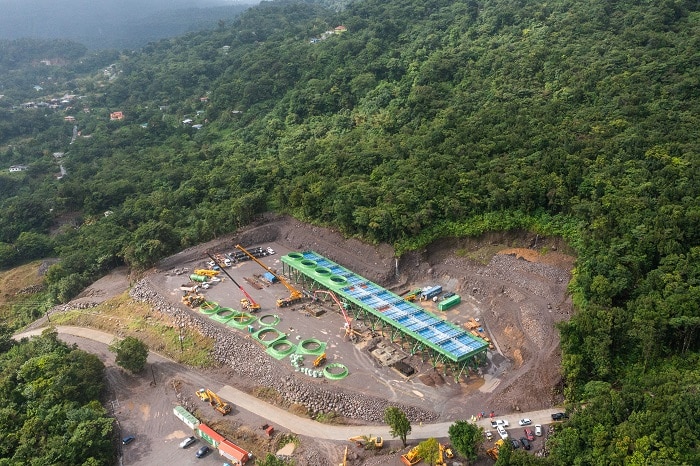
The volcanic islands of Dominica, Montserrat, Saint Lucia, Saint Kitts and Nevis, Grenada and Saint Vincent and the Grenadines have promising geothermal reservoirs. Their common geological characteristics offer a unique opportunity to produce renewable, stable and climate-independent electricity locally. Yet, despite this potential, geothermal energy cooperation in the Caribbean remains in its infancy. To date, only Dominica has embarked on the construction of a geothermal power plant, aiming to cover 50% of its electricity demand by the end of 2025.

The main stumbling block remains the high cost of exploratory drilling, estimated at several million dollars per well, not least due to the need to bring in a drilling rig from abroad. The lack of shared equipment at regional level is also a major obstacle.

geothermal energy cooperation
geothermal power plant in Dominica © Karib'info

GEOBUILD: training, structuring, accelerating

To overcome these obstacles, the OECS has set up the GEOBUILD program (Geothermal Energy: Capacity Building for Utilization, Investment and Local Development). Co-financed by the Caribbean Development Bank (CDB) and implemented in partnership with the Caribbean Centre for Renewable Energy and Energy Efficiency (CCREEE), this program aims to structure geothermal cooperation in the Caribbean around three axes: capacity building, financial engineering and shared governance.

The main beneficiaries – Dominica, Saint Lucia, Grenada, Saint Vincent and the Grenadines and Saint Kitts and Nevis – take part in training workshops and technical exchanges, as well as field missions such as a visit to the Bouillante power plant in Guadeloupe. The aim is to create a regional geothermal energy culture adapted to local realities.

coopération géothermique dans la Caraïbe
©OECO

A shared drilling rig : towards concrete implementation

At the heart of this strategy, the pooling of a drilling rig is currently under study. The Italian company ELC-Electroconsult S.p.A., an expert in energy infrastructures, has been commissioned to assess the technical, economic and regulatory feasibility. The study explores scenarios for deploying the equipment in different member states, possible governance models and staff training requirements.

This geothermal energy cooperation initiative in the Caribbean would create a rotation schedule between territories, limiting mobilization and demobilization costs, while guaranteeing greater availability of the tool.

geothermal energy cooperation
Geothermal drill ©OECO

Economic, energy and social benefits

Pooling such equipment could generate substantial savings, with drilling costs cut by 20-30%. It would also make geothermal energy cooperation more competitive than the widespread use of oil-fired generators. What’s more, this approach would encourage the creation of technical jobs, the structuring of a regional industry and the revival of related activities such as engineering and industrial maintenance.

Geothermal energy cooperation in the Caribbean would also pave the way for new uses: heating agricultural greenhouses, thermal aquaculture, agri-food production, or even developing wellness tourism around natural hot springs.

Enhancing local skills

An essential aspect of the project is to increase the skills of local players. The aim is to reduce dependence on foreign experts by training specialized geologists, drillers, technicians and engineers. Partnerships are envisaged with regional universities such as the University of the West Indies (UWI) and the University of the West Indies to create appropriate curricula.

So geothermal energy cooperation in the Caribbean is not just a technical project: it’s part of a process of transforming educational, industrial and institutional systems, for the benefit of greater autonomy.

Financial partnerships and multilateral support

The initiative is supported by a number of international donors. In addition to the CBD, the project is supported by the European Union via the GCCA+ program, the Green Climate Fund and the Inter-American Development Bank. These players provide invaluable expertise in structuring the project in line with international standards, while ensuring that it is adapted to the specific characteristics of the islands.

The success of geothermal energy cooperation in the Caribbean will nevertheless depend on the political will of the governments concerned, their ability to share responsibilities, and the soundness of the legal mechanisms governing the use of the drill.

coopération géothermique dans la Caraïbe
©OECO

A collective ambition for the Caribbean of tomorrow

More than a technical project, geothermal energy cooperation in the Caribbean embodies a bold regional vision. By joining forces, the OECS countries are laying the foundations for an integrated, resilient and forward-looking energy strategy. If successful, geothermal energy cooperation in the Caribbean could become a model for other pooling initiatives in the fields of water, transport and health.

It bears witness to a shared conviction: in the face of global challenges, the Caribbean can build local, sustainable and mutually supportive solutions.

From July 6 to July 08, 2025, Montego Bay will vibrate to the rhythm of the 49th CARICOM Summit, where the Heads of State and Government of member countries will meet to discuss the major challenges facing the region. Chaired by Andrew Holness, Prime Minister of Jamaica, the atmosphere at this year’s summit is both solemn and charged with urgency, as each delegation has come with high expectations in terms of food security, economic resilience, the Haitian crisis and, above all, the overhaul of regional logistics.

The corridors of the Montego Bay Convention Centre are buzzing with strategic conversations, while plenary sessions alternate with thematic workshops, giving each territory the chance to make its voice heard.

A demanding regional context

Right from the opening of the 49th CARICOM Summit, the tone was set: the Caribbean is going through a pivotal period. Successive speeches by representatives from Barbados, Trinidad & Tobago, Saint Lucia and Dominica highlighted the reality of logistical disruption, dependence on costly air transport and the fragility of supply chains. The debates were lively, with each head of delegation insisting on the need for concrete and immediate solutions. Behind-the-scenes exchanges testify to a shared determination to make this summit a decisive moment for the region.

49th CARICOM Summit
©CARICOM

The priorities of the Jamaican presidency

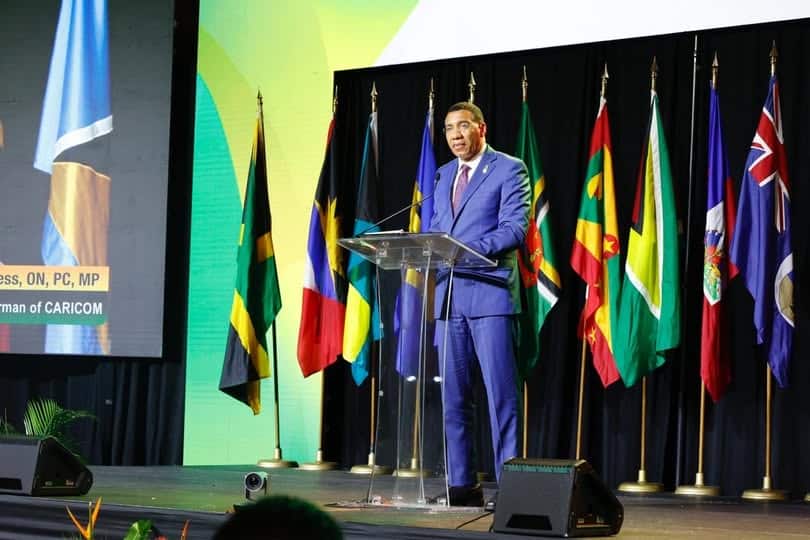
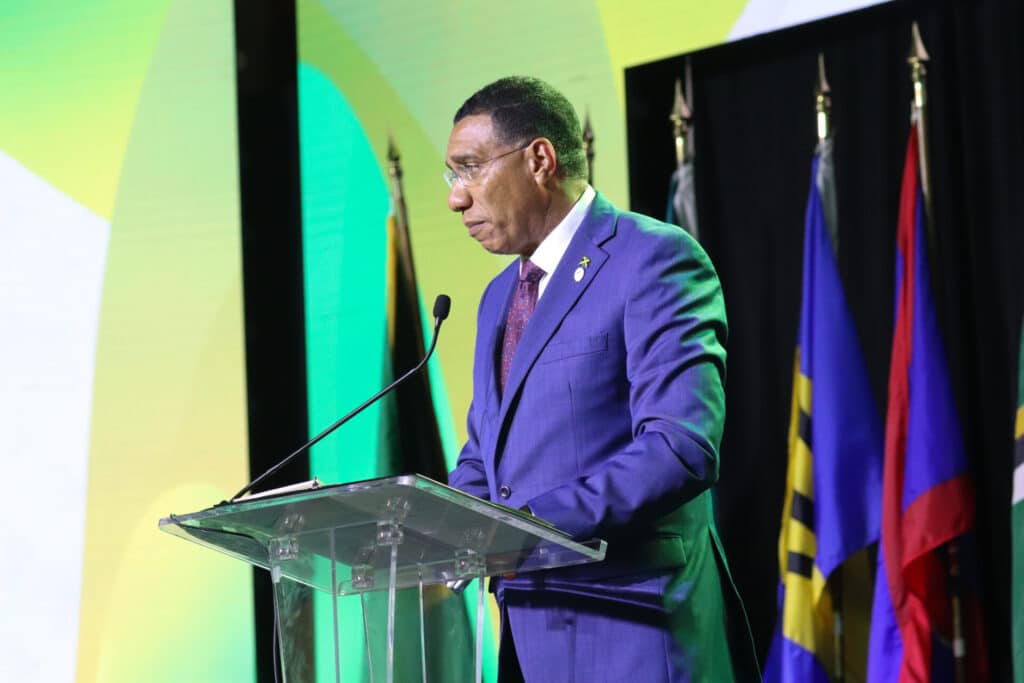
In his inaugural address, Andrew Holness reiterated the importance of strengthening cooperation and diversifying trade, while stressing the need for rapid responses to security and climate issues. His call for collective mobilization did not go unheeded: the 49th CARICOM Summit featured a series of round-table discussions on regional peace, the pooling of resources and the role of young people in building shared prosperity.

49th CARICOM Summit
Andrew Holness, chairman of CARICOM. ©CARICOM
49th CARICOM Summit
©Andrew Holness, chairman of CARICOM. ©CARICOM

Mia Mottley: a plea for logistics transformation

One of the highlights of the 49th CARICOM Summit was the address by Mia Mottley, Prime Minister of Barbados. With eloquence applauded by all participants, she painted a lucid picture of the logistical shortcomings holding back Caribbean development. Her voice, firm and poised, resonated in the auditorium as she spoke of the need for a “regional freight revolution”, stressing the urgent need to democratize transport and restore the sea to its historic role as a link between islands.

49th CARICOM Summit
Mia Mottley. ©CARICOM

Concrete proposals for regional freight

Mia Mottley was not one to rest on her laurels. She announced that two CARICOM member states are in advanced negotiations to acquire cargo aircraft, an initiative she believes will help to fluidify trade and guarantee the supply of essential goods. She also mentioned the expected presentation of a private-sector-led regional ferry project, which could revolutionize connectivity between the islands. These announcements, made at the heart of the 49th CARICOM Summit, were greeted with thunderous applause, a sign that the logistics issue is at the heart of our collective concerns.

49th CARICOM Summit
Mia Mottley. ©CARICOM

Political will at the heart of change

Mia Mottley took advantage of her platform to point out that the success of these projects depends above all on the political will of leaders. She fondly evoked memories of the Federal Maple and Federal Palm, symbols of a time when the sea united the peoples of the Caribbean. Her plea, echoed in several sessions of the 49th CARICOM Summit, found particular resonance with the delegations, who recognized the need to overcome institutional inertia to build a modern, resilient regional logistics system.

49th CARICOM Summit
Mia Mottley. ©CARICOM
49th CARICOM Summit
Mia Mottley. ©CARICOM

The concrete contributions of the 49th CARICOM Summit for member territories

Food security and trade fluidity

Food security was one of the key topics discussed at the 49th CARICOM Summit. Participants emphasized that the establishment of new sea and air links, such as those mentioned by Mia Mottley, will ensure a steady supply of agricultural produce and essential goods. The exchange of best practices between the Ministers of Agriculture and the Economy testifies to a shared desire to optimize logistics circuits and strengthen the food sovereignty of each territory.

Strengthening economic integration and resilience

Discussions on economic integration have highlighted the importance of pooling resources and diversifying trading partners. The 49th CARICOM Summit’s announcements of public and private investment in regional freight pave the way for enhanced cooperation, enabling member territories to better withstand external shocks, whether economic, health-related or climatic. The participants agree that this edition represents a crucial milestone on the road to shared prosperity.

Outlook for youth and innovation

Throughout the workshops, Caribbean youth and technological innovation took center stage. The initiatives presented, whether in training programs, student mobility or support for entrepreneurship, illustrate the determination of leaders to prepare the next generation and give young people the means to become part of the regional dynamic. These perspectives, discussed in depth at the 49th CARICOM Summit, point to new, concrete opportunities for young people.

49th CARICOM Summit

The 49th CARICOM Summit, catalyst for a new regional era

In Montego Bay, the 49th CARICOM Summit continues in a studious and determined atmosphere. Led by the likes of Mia Mottley and Andrew Holness, the region is taking a decisive step towards modernizing its infrastructure and deepening its integration. The discussions, rich and sometimes passionate, bear witness to a collective determination to transform challenges into opportunities and build a sustainable future for all the people of the Caribbean.

📸 Photo gallery: relive the highlights of the opening ceremony ©CARICOM

49e Sommet de la Caricom

The Nevis Mango Festival 2025 is shaping up to be the key event of the summer for all those with a passion for gastronomy and exotic discoveries. From July 4 to 6, 2025, the island of Nevis, located in the federation of Saint Kitts and Nevis, will vibrate to the rhythm of the mango, the emblematic fruit celebrated during this unique festival.

For the past eleven years, the Nevis Mango Festival has attracted locals and visitors from all over the world, seduced by the island’s wealth of flavors and warm atmosphere. This event has become a must for all those wishing to explore the culinary diversity of Nevis while enjoying its legendary hospitality.

The Nevis Mango: A Local Treasure in the Spotlight

It’s impossible to talk about the Nevis Mango Festival 2025 without mentioning the undisputed star of the event: the mango. The island boasts over 44 different varieties, each with its own characteristics, aromas and textures. This exceptional diversity makes Nevis a veritable paradise for lovers of this sweet, juicy fruit.

Beyond its gustatory aspect, the mango occupies a central place in local culture. It is a symbol of conviviality, a key ingredient in traditional cuisine and a source of inspiration for the most creative chefs. During the festival, mango comes in all shapes and sizes: savoury dishes, refined desserts, refreshing cocktails, spicy chutneys and creamy sorbets.

Highlighting mango at the Nevis Mango Festival 2025 also highlights the know-how of local farmers and promotes sustainable agriculture that respects the environment and traditions.

Nevis Mango Festival 2025
© Nevis Mango Festival 2025
Nevis Mango Festival 2025
© Nevis Mango Festival 2025

Chef Bryant Terry: Guest of Honor of the 2025 Edition

The announcement of Chef Bryant Terry as Headline Chef of the Nevis Mango Festival 2025 has caused quite a stir. Winner of the prestigious James Beard Award, best-selling author and publisher, Bryant Terry is renowned for his commitment to healthy, sustainable and inclusive cuisine.

His innovative approach highlights the richness of local produce while celebrating the diversity of culinary cultures. Through his books and speeches, he encourages conscious eating that respects the environment and is accessible to all. His presence at the Nevis Mango Festival 2025 promises exceptional moments, where the mango will be sublimated by his talent and creativity.

Bryant Terry will not only share his recipes and tips in interactive workshops, but will also bring his unique vision of gastronomy, based on sharing, transmission and innovation.

Nevis Mango Festival 2025
© Nevis Mango Festival 2025

Festival Program: Three Days of Flavors and Creativity

Friday, July 4: Official Launch and Masterclass

The Nevis Mango Festival 2025 kicks off on Friday July 4 with a festive opening ceremony, followed by a masterclass hosted by chef Bryant Terry. This special moment will enable participants to discover the secrets of an inventive cuisine, where the mango is transformed into dishes as surprising as they are delicious.

Saturday, July 5: Exclusive Supper Club

On Saturday, enjoy an exceptional Supper Club dinner in the enchanting surroundings of the Golden Rock Inn. This convivial meal, prepared by the guest chef, will be an opportunity to taste original creations featuring the different varieties of Nevis mango. A moment of sharing and discovery, ideal for exchanging ideas with other gourmet enthusiasts.

Sunday, July 6: “For the Love of Mangoes” Competition and Celebration

On Sunday, the festival reaches its climax with the “For the Love of Mangoes” culinary competition. Participants, amateurs and professionals alike, will compete in ingenuity to win over the jury, presided over by Bryant Terry. The competition will showcase the creativity and technical skills of our chefs, while celebrating the mango in all its forms.

Also on the program: tastings, entertainment for young and old, book signings and meetings with local producers. The Nevis Mango Festival 2025 promises an immersive, gourmet experience, where every moment will be devoted to pleasure and discovery.

© Nevis Mango Festival 2025
Nevis Mango Festival 2025
© Nevis Mango Festival 2025
Nevis Mango Festival 2025
© Nevis Mango Festival 2025

Beyond Tasting: Experiences and Discoveries

The Nevis Mango Festival 2025 is not just about tasting mangoes. Visitors will be immersed in the island’s culture and terroir. Cooking workshops, mixology competitions, a mango hunt for children, craft markets and musical performances will punctuate the three-day festival.

The more curious can take part in guided tours of the orchards, meet the farmers and learn more about environmentally-friendly growing techniques. There will also be stands selling mango-based by-products, souvenirs and local specialities, perfect for prolonging the experience back home.

This educational and interactive dimension makes the Nevis Mango Festival 2025 an event accessible to everyone, whatever their age or level of gastronomic knowledge.

© Nevis Mango Festival 2025
Nevis Mango Festival 2025
© Nevis Mango Festival 2025
Nevis Mango Festival 2025
© Nevis Mango Festival 2025

The Nevis Mango Festival 2025 is much more than just a gastronomic event: it’s a celebration of diversity, creativity and sharing. From the discovery of 44 varieties of mango, to inspiring masterclasses by chef Bryant Terry, competitions and entertainment for all, every visitor leaves with unforgettable memories and the desire to return the following year.

Whether you’re a gourmet, curious about new flavors or simply a mango lover, this festival is for you. Get ready for a unique sensory experience, in the heart of an authentic and welcoming island. The Nevis Mango Festival 2025 awaits you for a gourmet adventure like no other.

Saint Kitts affirms its commitment to sustainable tourism and immersive experiences

Present at Seatrade Cruise Global 2025 in Miami, St. Kitts confirmed its determination to establish itself as an authentic, sustainable and attractive Caribbean destination all year round.
Through the testimonies of representatives of the St. Christopher Air and Sea Ports Authority and St. Kitts Tourism Authority The island has shown that it relies both on environmental innovation and on enriching the tourist experience to attract cruise passengers and visitors from all over the world.

A port at the service of the island's attractiveness - The Port Authority's strategy

Adeola MooreGeneral Manager of St. Christopher Air and Sea Ports Authority It’s the first and last impression cruise passengers have of our island,” she stresses.

Aware of this essential role in the visitor experience, the island is constantly striving to improve its infrastructure to meet the expectations of a rapidly evolving industry.

In response to the new demands of the sector, Saint Kitts is investing in sustainable projects:

  • Deployment of solar and wind power solutions to reduce carbon footprint,

  • Anticipation of the arrival of the first ships powered by shore power.

St Kitts
Adeola Moore

With its new slogan “Venture Deeper”, the island invites visitors to dive deeper into the soul of St. Kitts: explore its culture, savor its gastronomy, vibrate to the rhythm of its music and discover its authentic way of life.

🎯 Adeola Moore’s aim: to make Saint Kitts a dynamic and attractive cruising destination all year round, beyond the peak season.

Strengthening the tourism offer - The commitment of the Comité du Tourisme

Kelly Fontenelle

For Kelly Fontenellerepresentative of the St. Kitts Tourist Board (St. Kitts Tourism Authority) For more information, visit
It’s crucial to remind companies of all that St. Kitts has to offer,” she says.

This season, the island is aiming for a historic milestone: welcoming over a million cruise passengers – a landmark performance after the slowdown caused by the pandemic.

Saint-Kitts is seductive for the diversity of its offer:

Unspoilt beaches,

Brimstone Hill Fortress, a UNESCO World Heritage Site,

Rich cultural heritage,

Local gastronomic experiences,

Numerous activities and events.

To further enhance its nautical appeal, the island is preparing to launch its own regatta, scheduled for 2026-2027.

🎯 Kelly Fontenelle’s ambition: to make this regatta a major event in the Caribbean sailing calendar.

Saint Kitts, a new impetus for sustainable and immersive tourism

At Seatrade Cruise Global 2025, St. Kitts clearly asserted its determination to consolidate its position as a benchmark cruise destination, extend its appeal beyond the traditional season, offer a more authentic experience and inscribe its development in a sustainable approach.

A cruise to St. Kitts is more than just a stopover: it’s an immersion in a lively, generous island with a resolutely forward-looking outlook.