The Caribbean Culture Fund (CCF) has announced its second cohort of grantees, awarding twenty-five grants to creatives and cultural organizations in Puerto Rico, Guadeloupe, Saint Lucia, Saint Vincent and the Grenadines, Curaçao and the Cayman Islands. These projects receive a total of USD 400,000 in funding. These grants, awarded in three categories – Migration, Archiving & Memory, and Caribbean Collaboration – support initiatives that preserve and enhance Caribbean heritage, analyze the cultural impact of migration, and encourage regional artistic cooperation. The Caribbean Cultural Fund thus confirms its commitment to culture diversity and regional creativity.
Subsidy categories
The selection process was carried out by a jury of experts from the eligible countries. Raymona Henry-Wynne, Executive Director of the Saint Lucia Cultural Development Foundation, participated in the evaluation of this second cohort. She describes the experience as “a revealing insight into the immense creative potential of the region”.
Migration
Five projects have been awarded grants of USD 10,000 each to explore the cultural impact of migration and strengthen links between territories. They include:
- Narratives of Change (Cayman Islands)
- Mama Baranka (Curaçao)
- Bigidi (Guadeloupe)
- Para Impresionar ¿A Quién? (Puerto Rico)
- Lakay (andépandans) (Saint Lucia)
Archiving & Memory
Ten projects have also been awarded grants of USD 10,000 each to document and conserve Caribbean heritage:
- Bon Kabei (Good Hair) (Curaçao)
- Cinuca (Guadeloupe)
- I Am Lolita Lebrón (Puerto Rico)
- Matronas de las Luchas (Puerto Rico)
- MAC en el Barrio Digital Archive (Puerto Rico)
- Mujeres del Cine Boricua (Puerto Rico)
- Paradoja en el Paraíso (Puerto Rico)
- Bolom Birth (Saint Lucia)
- Machete, Masquerade & Memory (Saint Lucia)
- O.N.G. (Operation Nex’ Generation) (Saint Vincent and the Grenadines)
Caribbean collaboration
Ten projects promoting artistic cooperation across the region received grants of USD 25,000 each:
- News from MAF (Guadeloupe/French Guiana)
- Pawòl a Mas (Guadeloupe/Saint Lucia/Trinidad and Tobago)
- Temporal: Sanando el Cuerpo y la Tierra (Puerto Rico/Barbados)
- Conjunto Antillano (Puerto Rico/Dominican Republic/Cuba)
- Bridging the Archipelago (Puerto Rico/Dominican Republic)
- La Memoria de la Arcilla (Puerto Rico/Cuba/Dominican Republic)
- It Takes a Village: Honoring Caribbean Matriarchs (Puerto Rico/U.S. Virgin Islands)
- Entre Cosmovisiones y Resistencia (Puerto Rico/Guadeloupe/Aruba)
- Hairouna Film Festival (Saint Vincent and the Grenadines/Haiti)
- Music, Film & Storytelling (Saint Vincent and the Grenadines/Trinidad and Tobago)

Impact of the Caribbean Culture Fund
According to CCF Executive Director Kellie Magnus, “the success of our first cohort has enabled us to raise additional funds, making our second cohort even more significant. We believe in regional cooperation and are enthusiastic about opening up new opportunities for creative people in the Caribbean”. The Caribbean Culture Fund thus becomes a key player in the structuring of the regional cultural sector.
Victoria Apolinario, a Dominican filmmaker and beneficiary of the first cohort, illustrates this impact: “Thanks to the CCF, I can now say that I am the coordinator of Muestra Karibe, a cinematographic space dedicated to the Caribbean and its diasporas. It’s more than a professional advancement, it’s also a way of taking a stand, a way of making our artistic identities more visible”.
Wizeman Seide, a Haitian culinary artist, confirms that the CCF is “much more than financial support: it’s a real springboard. It gives legitimacy to cultural initiatives and opens up new horizons”. This support from the Caribbean Culture Fund represents a major step forward for the development of cultural and creative industries.

Future prospects
The mission of the Caribbean Culture Fund is to support creators in the Caribbean by reducing financial barriers and encouraging artistic development. Funding for this second cohort was provided by the Andrew W. Mellon Foundation and the Open Society Foundations. To build on this momentum, the Caribbean Culture Fund is preparing to launch new initiatives, including a matching grants program to attract other cultural funders.
In addition, an online database of funding opportunities will be made available to artists for simplified access to resources.
The Caribbean Culture Fund plays a major role in promoting and developing regional artistic creation. By supporting local initiatives and fostering collaborations, the Caribbean Culture Fund contributes to enriching Caribbean cultural expression, while offering it new prospects for expansion.
Caribbean women shape history, spanning the centuries as guardians of time and tradition, but also as visionary architects of the future.
This phrase is a perfect illustration of the crucial role that Caribbean women have played, and continue to play, throughout history. From the slave plantations of the 18th century to the UN podiums of the 21st century, Caribbean women have been both guardians of collective memory and builders of better futures. Whether they hail from French-, English- or Spanish-speaking islands, whether they are active in politics, culture, science or social struggles, their impact is profound and multifaceted. From Queen Nanny, Jamaica’s maroon heroine, to Mia Mottley, Barbados’ visionary Prime Minister, not to mention renowned artists and activists, the women of the Caribbean deserve a heartfelt tribute on this International Women’s Rights Day.
Pioneers in Caribbean politics
When it comes to politics, Caribbean women have broken many glass ceilings. Dame Eugenia Charles (Dominica) was a trailblazer: in 1980 she became the Caribbean’s first female Prime Minister, earning the nickname of the region’s “Iron Lady”. For 15 years, she steadfastly governed Dominica, paving the way for other female leaders.
She is credited with this famous observation: “Men have the grand vision… women, on the other hand, follow the details to make sure it becomes reality”.
This quote reflects the pragmatic and determined touch that women have brought to the exercise of power.
Since then, several islands have been led by women. Portia Simpson-Miller (Jamaica), for example, has twice been Prime Minister of Jamaica (2006-2007, 2012-2016), embodying the hopes of the working classes. Ertha Pascal-Trouillot (Haiti), a lawyer by training, broke a taboo by becoming her country’s first female president in 1990. More recently, in 2018, Barbados elected Mia Mottley as Prime Minister – the first woman to lead this young island state since its independence.
Mia Mottley quickly established herself as a strong voice far beyond her island. Under her leadership, Barbados even became a republic in 2021, turning the page on the British monarchy, and named singer Rihanna as its national heroine during this historic transition. Today, Mia Mottley is recognized as “the leading voice of Caribbean peoples and developing nations on the international stage”, thanks to her intelligence, eloquence and passion for social justice. Since January 1ᵉʳ 2025, Mia Mottley, Prime Minister of Barbados, has assumed the presidency of the Caribbean Community (CARICOM). Richès Karayib also devoted an article to her. To find out more about her background and impact, read our article on Mia Mottley.
These political figures – be they heads of government, ministers or local elected representatives – often share the same struggle: to make the interests of small island nations and marginalized populations heard. Their journeys, strewn with pitfalls in worlds long dominated by men, make them models of audacity and resilience for new generations.


Cultural icons and guardians of memory
Maryse Condé (Guadeloupe ) is one of the most admired Caribbean writers. A novelist of genius, her works highlight the richness of West Indian culture, the memory of slavery and the strength of women. A multiple award-winner, Maryse Condé has traveled the world while remaining a proud voice of her native Guadeloupe. Through novels such as Ségou and Moi, Tituba sorcière…, she has shown how Caribbean women are the guardians of time – the bearers of stories handed down from generation to generation – as well as the agents of change. Her work has inspired many women writers and intellectuals in the region and beyond.
When it comes to music, it’s impossible not to mention Celia Cruz (Cuba), the “Queen of Salsa”. With her powerful voice and legendary cry of “¡Azúcar!”, Celia Cruz has been setting stages on fire around the world for over five decades, becoming the quintessential ambassador of Caribbean music. Born in Havana, she conquered a global audience and won multiple Grammy Awards, while remaining proud of her Afro-Cuban roots. Her success paved the way for other Latin artists and brought Caribbean culture to the forefront of the international scene.
Similarly, Jocelyne Béroard, a singer from Martinique and member of the group Kassav, played a central role in the popularization of zouk, contributing to the musical identity of the French-speaking Caribbean.
The new generation continues in this vein. Rihanna (Barbados), global pop superstar and accomplished businesswoman, fully embraces and promotes her Caribbean heritage, whether in her music, her inclusive cosmetics brand or her philanthropic commitment. In 2021, Barbados elevated her to the rank of National Heroine, symbolizing the extent to which culture can be a vector of national pride and unity. Other figures, such as director Euzhan Palcy (Martinique ) – the first black director to be produced by Hollywood – or poet Louise Bennett-Coverley (Jamaica) – an icon of Jamaican Creole – have also contributed to preserving and magnifying Caribbean identity. Through the arts, these women are the true architects of tomorrow: they shape the collective imagination and pass on to future generations a living heritage, self-confidence and openness to the world.


Brilliant minds in Caribbean science
Less talked about, Caribbean women also excel in science and innovation. Dr. Camille Wardrop Alleyne (Trinidad & Tobago) is a prime example. As an aerospace engineer, she worked her way up through the ranks at NASA to take a senior position in the International Space Station program.
As such, Dr. Camille Wardrop Alleyne is the only woman from the Caribbean to hold a senior position in the U.S. Space Agency – a remarkable achievement in a field that is still very male-dominated. Aware of the lack of Caribbean women in STEM, she founded the Brightest Stars organization to encourage girls and women from the Caribbean, Africa and Latin America to pursue careers in science. Her trajectory illustrates the audacity and talent of Caribbean female brains, often obliged to go abroad to deploy their full potential, but deeply committed to making their region shine.
Caribbean women also contribute to global medical progress. Dr. Deborah Persaud (Guyana) a virologist, made headlines in 2013 by contributing to the first functional remission of a baby born with HIV. Born in Georgetown and emigrated to the United States, this pediatric HIV specialist – hailed as one of the top researchers in her field – led the team that administered very early antiretroviral treatment to a newborn, enabling the child to live without detectable virus. This major scientific breakthrough gave new hope in the fight against childhood AIDS. Dr. Persaud’s journey, from his childhood in Guyana to the laboratories of Johns-Hopkins University, testifies to the invaluable contribution of the Caribbean diaspora to science.
Whether it’s innovations in tropical agronomy, climate research or technological entrepreneurship, many other Caribbean women are leading pioneering projects. Climatologist Courtnae Bailey (St. Vincent), for example, is committed to island resilience to volcanoes and hurricanes.
Though often in the shadows, these “guardians of knowledge” are paving the way for today’s girls to become tomorrow’s innovators.


Fighters for rights and social justice
Caribbean women have also been at the forefront of social struggles and fights for equality. As early as the 18th century, Queen Nanny – also known as Nanny of the Maroons – led a community of Maroon slaves in the hills of Jamaica, waging a guerrilla war against the British colonizers. A renowned military strategist and spiritual leader (she is said to have been an Obeah priestess), Queen Nanny helped establish homes of freedom for runaway slaves. Her name became so legendary that she was named Jamaica’s national heroine. A guardian of time, she embodies age-old resistance to oppression, and her militant legacy lives on in modern Jamaica.
Another strong symbol comes from the Dominican Republic with the Mirabal sisters – Patria, Minerva and María Teresa. In the 1950s, these three Caribbean women dared to challenge the bloody dictatorship of Rafael Trujillo. Their commitment to freedom and justice cost them their lives: they were brutally murdered on November 25, 1960, on the orders of the regime. But their martyrdom was not in vain. The “Mariposas” (their code name in the underground) have become emblems of the fight against violence against women. In tribute to their struggle, the UN chose the anniversary of their murder, November 25, as the International Day for the Elimination of Violence against Women. Even today, the memory of the Mirabal sisters inspires feminist movements throughout Latin America and the world.
In the French-speaking West Indies, Gerty Archimède (Guadeloupe) is a pioneer of civil rights. Born in 1909, in 1939 she became the first Caribbean woman to become a Guadeloupean lawyer, and in 1946 the first Guadeloupean deputy to sit in the French National Assembly. Gerty Archimède devoted her life to defending the oppressed and promoting women’s rights. A communist activist, she created the Union des Femmes Guadeloupéennes to structure the local feminist struggle. She also supported international causes, organizing support committees for Angela Davis in the 1970s. Until her death in 1980, this “exceptional woman” remained faithful to her convictions. ” Gerty Archimède is a true symbol of West Indian women and a role model for all women,” sums up a portrait of her by a memorial foundation. The legacy of this Caribbean woman can be found in every elected official and activist in Guadeloupe today.
In the same way, all over the Caribbean, countless anonymous or less publicized heroines have risen up to defend human rights, education, the environment or gender equality.


Caribbean Wonder Woman
From presidential palaces to research laboratories, from concert stages to street barricades, the women of the Caribbean have proved that they are both guardians of time and architects of tomorrow. Guardians of time, because they preserve the culture, memory and traditions of their islands. Architects of tomorrow, because they imagine and build a fairer, more prosperous and freer future for their communities. On this International Women’s Rights Day, Richès Karayib ‘s tribute to them reminds us just how valuable their influence is. This overview highlights just a few of these Caribbean Wonder Women – and there are many more, often in the shadows, all of whom deserve to be mentioned. May their stories inspire future generations to continue their work, so that the legacy of Caribbean women continues to shine throughout the world.
Fallen Fetters is much more than just a song; it’s a poignant tribute to life, to those who have left us, and to those who continue to celebrate every moment. The world of Caribbean music, rich in color and emotion, finds here a new expression thanks to the collaboration between Skinny Fabulous and Machel Montano. In this article, we’ll explore the main themes of this work, its impact on Caribbean culture, and the deep meaning it carries for the artists and their fans.
The power of collaboration
The collaboration between Skinny Fabulous and Machel Montano is a wise choice. These artists each have their own style and history, but they share a common passion: celebrating life through music. St. Vincent native Skinny Fabulous said it was important to work together on this project, especially after the success of their previous collaboration, Famalay.
“We created a powerful message together,” he said. “Music is a way to convey emotions and memories.”
Their collaborative approach is a testament to the importance of unity in the Caribbean music community. Machel Montano, often considered a legend in the soca genre, perfectly complements the Skinny Fabulous style, creating an atmosphere that invites reflection and celebration.
Fallen fetters: an emotional message
The song Fallen Fetters is a deeply meaningful work. It pays tribute to those who are no longer with us, while encouraging those who remain to celebrate life. The music video, directed by Junior Lee, captures this duality in a striking way.
A balance between nostalgia and celebration
In the video, we see images of people who have had an impact on the artists’ lives, as well as party scenes that represent the joy of living. Skinny Fabulous emphasizes the importance of finding a balance between memory and celebration:
“We really wanted to honor those who have left while encouraging those who are still here to enjoy every moment,” he explained.
It’s essential to show love to those who are present, and this song is a call to action to not wait for people to leave before showing them our affection.
The impact of music on Caribbean culture
Music as a memory tool
Music has always played a vital role in Caribbean culture. It is often used to tell stories, celebrate events and honor ancestors. Fallen Fetters fits perfectly into this tradition, using the power of music to remember those who have left us.
Carnival season: a time for celebration
As the Carnival 2025 season approaches, Skinny Fabulous and Machel Montano remind everyone of the importance of celebration. Carnival is a time when people come together to dance, sing and celebrate life. Fallen Fetters thus becomes a soundtrack for these celebrations, encouraging us to honor the past while living fully in the present.

The importance of paying tribute
Give them their flowers
Too often, we don’t appreciate those around us until it’s too late. Skinny Fabulous highlights this painful reality:
“We tend to wait until someone leaves to realize how much we love them. It’s not fair.”
Fallen Fetters is an invitation to give flowers to the living, to express our gratitude and love while we still have the chance.
A Universal Message
The message of Fallen Fetters is universal. No matter where we come from, each of us has lost loved ones and has reason to celebrate those who are still with us. This song unites people through emotions, and its success on digital platforms is testament to its resonance.
Fallen Fetters is a hymn to life, love and celebration. Skinny Fabulous and Machel Montano remind us that, despite the sadness of loss, it’s essential to celebrate every day. As we prepare for the Carnival season, let this song guide us in our festivities, honoring those who have left us while celebrating those who are still with us.
Air Adelphi
has launched a new service linking Martinique to Saint Lucia and Saint Vincent, starting December 11, 2024. This
new air service
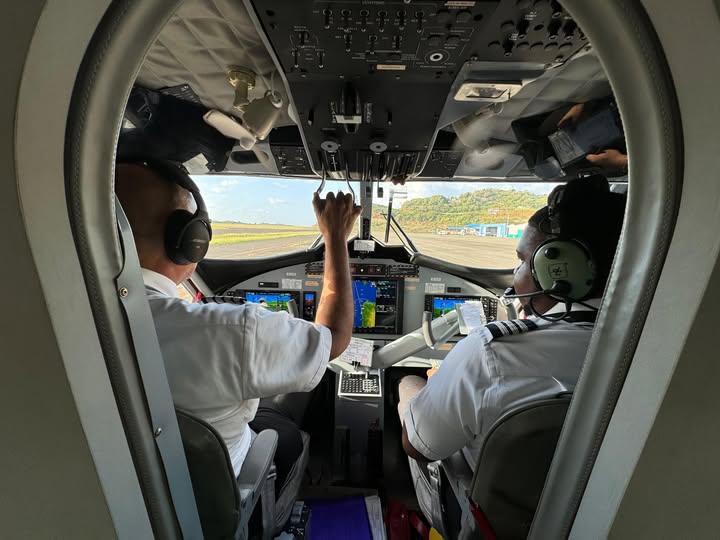
represents a significant step forward for regional connectivity in the Caribbean. The airline will operate three weekly flights on Mondays, Wednesdays and Fridays, using 19-seat Twin Otter aircraft. Currently, the round-trip fare is set at €350, with plans to negotiate lower prices and improve accessibility for travelers in the region. This initiative aims to strengthen regional connectivity and facilitate travel for events such as festivals.
Air transport to the Caribbean islands
The air service to the Caribbean islands is set to boom in 2024. The company Air Adelphi in turn opens the door to Saint Vincent and Saint Lucia. The average ticket price is currently around 350 euros, but with the aim of reduce prices to attract more travelers.
More frequent air travel to Saint Lucia and Saint Vincent is now possible. With the opening of the new scheduled service operated by Air Adelphi Wednesday December 11, the connection between Martinique and our Caribbean neighbors is growing stronger.
Jet Aviation Service boosts service
With the support of Jet Aviation Service, Félix Jean-François’ handling company, the route will operate at least 3 rotations per week to Martinique with these 5 twin-engine 19-seater aircraft. Melissa Joseph, the company’s Director of Operations Air Adelphis new site:
“Air Adelphi plans to operate triple services between the 3 islands on Mondays, Wednesdays and Fridays. The aircraft will depart from St. Vincent. We fly from St. Vincent to St. Lucia, with connections to Martinique. Then at 9:30 a.m., we depart from Martinique to Saint Lucia, with a connecting flight to Saint Vincent.

An ambition for regional connectivity
Adelphi
is looking to open up the corridor between our two countries, not least because we all share such a rich history and culture. We use Martinique as a hub to open up the corridor between the UK and the other Caribbean islands. It’s a great gateway to the Caribbean. We’d like to open up the avenues for other Caribbean countries to Martinique too, such as Barbados, Grenada, Dominica and Trinidad.
Attractive rates for travellers
The ambition is to promote the connectivity that already exists between our territories, despite the strong competition. The company is therefore committed to reducing ticket prices and making its service more affordable:
“Currently, the price is 350 euros for a round trip. However, we have been working with the aviation authorities to bring these prices down to make them more attractive and affordable for people from Martinique, Saint Lucia and Saint Vincent. This is an ongoing process. We hope to have some sort of dispensation that we can then pass on to customers. There would be even cheaper, more affordable tickets. The aim would really be to create a bridge between our countries, manage to do day trips, festival trips, and all sorts of things like that.”
The new air service d’Air Adelphi between Martinique, Saint Lucia and Saint Vincent marks a turning point in the Caribbean air transport landscape. With ambitions for improved connections and affordable fares, this initiative could transform inter-island travel, facilitating access to cultural events and strengthening economic ties between these territories. By adopting cost-cutting measures, Air Adelphi hopes to encourage more passengers to explore these magnificent destinations.