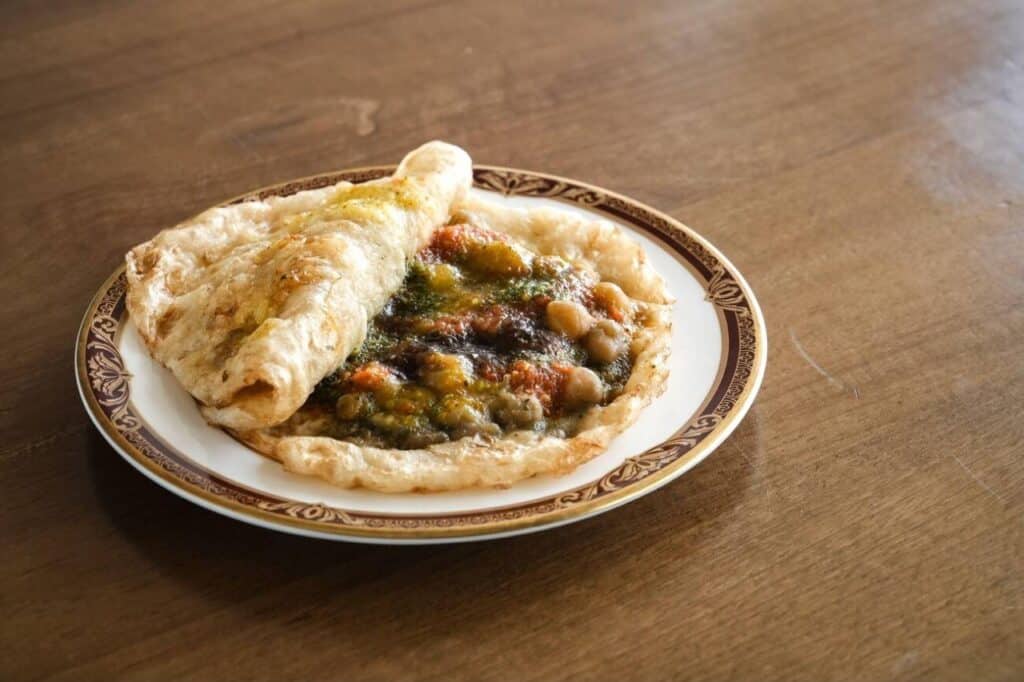
In Princes Town, in southern Trinidad and Tobago, the “doubles” were born in 1936 from a simple gesture: a customer asking for a second piece of bread. At the time, Emamool Deen and his wife Rasulan were selling curry chickpeas on a single piece of fried bread, unaware that they were inventing the country’s most iconic street food. Nearly a century later, doubles still tell the story of Indo-Trinidadian heritage through this chickpea sandwich, which has become a national symbol.
A Morning in Princes Town, 1936
At 4:00 a.m., in a courtyard in Princes Town, in the southern part of Trinidad and Tobago, Rasulan Deen lights the fire that will heat the coconut oil. Her husband, Emamool Deen, is boiling the chickpeas that the couple was able to buy by selling a goat, the only possession they had. The year is 1936, and according to oral tradition preserved by several Trinidadian media outlets, Emamool Deen and Rasulan Deen are unwittingly preparing to create one of the Caribbean’s most famous street foods.
Channa and Bara: The Birth of a Name That Became Doubles
The basic idea can be summed up in one sentence. Rasulan Deen fries chickpeas (kabuli channa) seasoned with toasted cumin, turmeric, garlic, and bandhania—a long-leaved cilantro widely used in Trinidad and Tobago cuisine—and then places them on a bara, a fried flatbread. The dish is called channa and bara, sold by Emamool Deen and his wife on the streets of Princes Town. One day, customers asked for a second piece of bread to better hold the chickpea filling. The name “doubles” is said to have originated from this specific custom: two baras sandwiching a single portion of channa.
Bara and channa: two recipes that have evolved over time
The bara dough, originally made with flour available in the Deen household, gradually shifted to wheat flour, which was more economical for a couple selling their dish day by day on the streets of Princes Town. The channa, meanwhile, continues to be prepared without becoming a thick curry—a deliberate lightness that leaves room for mango, tamarind, or chili chutneys, added according to the customer’s taste. This basic recipe for doubles, passed down through Trinidadian families, then varies from one doubles vendor to another, with each maintaining their own texture for the bara and their own spice blend.
A street food dish with no official status but one that is, in effect, a national dish
Trinidad and Tobago does not have an officially designated national dish, but “doubles” serve as such in the country’s daily life. Today, they can be found at every street corner in Trinidad and Tobago, sold at dawn by vendors known as “doublesmen” for a few Trinidadian dollars, wrapped in newspaper or wax paper. The dish has also spread beyond Princes Town.
As early as 1938, Asgar Ali, Emamool Deen’s brother-in-law, revived the recipe in San Fernando, in southern Trinidad and Tobago, where his family founded what would become the Ali’s Doubles chain, which is still in business today. Other Trinidadian families would follow suit, to the point where a connoisseur can recognize a good doublesman simply by the texture of his bara. Much like the Jamaican beef patty—a street food that has become a national symbol of Jamaica—doubles demonstrate that a street food can embody a country’s identity without official status.
Trinidad and Tobago's Indian Heritage, from Fatel Razack to the Princes Town Dish
The history of this dish cannot be understood without going back to the arrival of the first Indian indentured laborers in Trinidad and Tobago. On May 30, 1845, the ship Fatel Razack docked in Paria Bay with 225 passengers who had departed from Calcutta—the first in a long series of arrivals that would continue until the early twentieth century.
Recruited after the abolition of slavery to work on Trinidad’s sugarcane plantations, these Indian workers brought with them curry, cumin, turmeric, and frying techniques that still shape the cuisine of Trinidad and Tobago. Nearly a century later, in Princes Town, it was the descendants of this migration—such as the Deen and Ali families—who invented an entirely new dish based on this Indian heritage.
A Trinidadian dish, not a copy of the Indian chole bhature
Some observers draw a parallel between doubles and chole bhature from northern India, a chickpea curry served with fried bread. This connection remains a hypothesis rather than a proven link between the two dishes, which primarily share the same concept—that of pairing a spicy legume with fried bread—without one being a direct derivative of the other. This lack of imitation is precisely what makes doubles so compelling—a fully-fledged Trinidadian creation, born of Indian heritage but shaped by the streets of Princes Town and not imported as-is from India.
The Doubles: A Story Passed Down Between Trinidad & Tobago and Its Diaspora
Doubles have since transcended the boundaries of the Indo-Trinidadian community to become a symbol of national identity shared by all of Trinidad and Tobago, regardless of background. They are a staple of workdays, nights out, and national celebrations, and today they travel with the Trinidadian diaspora as far as New York, Toronto, and London, where doubles vendors continue to sell, every morning, the dish born from a goat that was sold and a loaf of bread that someone decided to split in half.
Just like the soup joumou, the only Caribbean dish recognized by UNESCO, as previously described by Richès Karayib, doubles show how a street food dish becomes a symbol shared by an entire diaspora, much like Trini Bites: Trinidadian Cuisine as Told by Richès Karayib on Long Island. One question remains that the children and grandchildren of “doublesmen” ask themselves today: how to pass on a street move—learned in a Princes Town courtyard at four in the morning—to a generation that sometimes discovers “doubles” on social media before experiencing them on the street.
Doubles are a street food from Trinidad and Tobago consisting of two baras—fried flatbreads—enclosing a filling of curried chickpeas called channa. Sold at dawn by vendors known as doublesmen, doubles are widely considered the country’s most popular street food.
According to oral tradition preserved by several Trinidadian sources, the doubles were created in 1936 by Emamool Deen and his wife Rasulan Deen in Princes Town, in the southern part of Trinidad and Tobago. No contemporary documents confirm this account in detail; it continues to be passed down orally by the families of doublesmen.
Doubles draw on spices and frying techniques brought by Indian indentured laborers who arrived in Trinidad and Tobago beginning on May 30, 1845, aboard the ship Fatel Razack. Their descendants, such as the Deen family, later reinvented these traditions into a street food unique to Trinidad and Tobago, distinct from the original Indian cuisine.
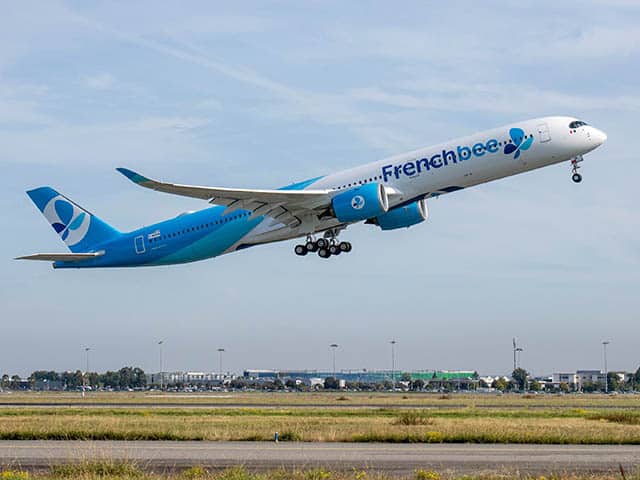
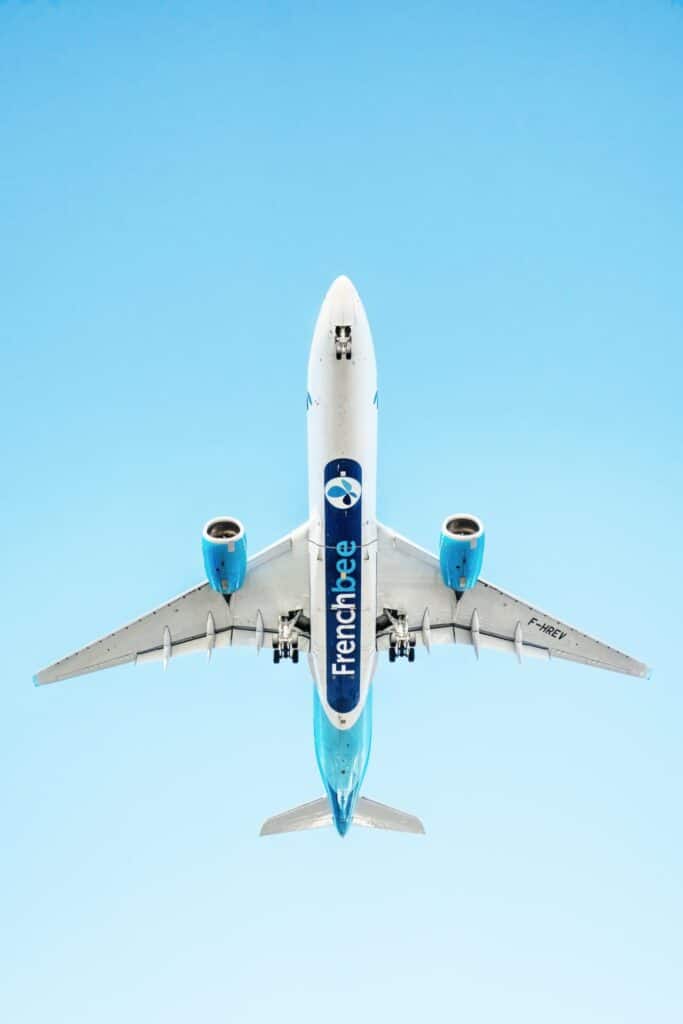
Air Caraïbes, French Bee and Volotea have just signed an unprecedented interline agreement enabling passengers of Spanish low-cost carrier Volotea to combine their short-haul flights with the long-haul routes of Air Caraïbes and French Bee. This alliance aims to considerably simplify bookings and connections, while expanding travel possibilities to the Caribbean, North America and the Indian Ocean without multiplying tickets or the risks associated with stopovers.
An unprecedented partnership in the European and overseas air markets
Air Caraïbes, French Bee and Volotea are opening a new chapter in the airline industry, by combining the low-cost business model with airlines specialized in long-haul flights to the French overseas territories. This cooperation expands Volotea’s network without direct investment in long-haul aircraft, while Air Caraïbes and French Bee strengthen their visibility in Europe, particularly in the face of well-established players.
This geographical alliance now covers connections between several European regional cities – including Lourdes, Rodez, Ancona, Genoa and Turin – and destinations such as Guadeloupe, Martinique, French Guiana, Réunion, Saint-Martin, Saint-Barthélemy, as well as the USA and Canada.
Simplified travel: one ticket, one reservation
At the heart of this partnership is the desire to make travel simpler and less stressful. Air Caraïbes, French Bee and Volotea now enable passengers to book a one-way ticket covering the whole journey, whether it’s a short-haul flight with Volotea or a long-haul one with Air Caraïbes or French Bee.
This integration considerably improves baggage management, with baggage transported directly to the final destination, eliminating the usual hassle of retrieving and depositing baggage during stopovers. The promise of “no more complexity is also based on optimized connections at Paris-Orly airport, the nerve center of these connections. This process makes journeys smoother and reduces the stress associated with delays or difficult connections between several airlines.
An optimized network for a better passenger experience
The coordination of schedules between Volotea and the French long-haul airlines guarantees improved connectivity, enabling passengers to connect the main European regional capitals with the French overseas territories without hindrance. The dense network of short and long flights offers a wide range of connections, coupled with improved logistics management and lower overall costs. Air Caraïbes, French Bee and Volotea are thus reinforcing the fluidity of their routes.
Economic benefits for travellers
Volotea’s low-cost model, combined with the strength of Air Caraïbes and French Bee, now makes destinations previously often reserved for more expensive direct flights accessible at competitive prices. This economic gain is accompanied by greater choice, with the possibility of reaching places like Santo Domingo, Miami, Reunion or Polynesia without the constraint of multiple bookings.
These savings are not purely financial: the reduction in waiting time, the peace of mind linked to integrated baggage management, and the ease of booking clearly enhance the customer experience. Air Caraïbes, French Bee and Volotea are thus helping to democratize access to these destinations.
Impact on the traditional airline industry and future prospects
This strategic alliance between Air Caraïbes, French Bee and Volotea could shake up the traditional hierarchy of airlines linking Europe to its overseas territories. The association of a low-cost player with long-haul airlines brings a new dynamic that could encourage other airlines to consider similar collaborations.
At a time when demand for flexible, simple solutions at competitive fares is growing, this partnership is positioned as an appropriate response to travelers’ expectations, while strengthening the attractiveness of the French Overseas Territories and promoting their links with Europe.
A stronger bridge between Europe and the French overseas territories
In short, the interline agreement signed between Air Caraïbes, French Bee and Volotea offers a turning point for travelers wishing to connect Europe with tropical and overseas destinations. Thanks to simplified routes, more affordable fares and better connection management, this agreement paves the way for a more connected, fluid and competitive air network.
Passengers benefit from a more integrated, less restrictive experience, while airlines strengthen their presence in a fast-changing market. This new balance between low-cost and long-haul could well redraw the map of air transport between Europe and the French overseas territories.
Richès Karayib met Jules Sobion, aka Julius Caesar, founder and CEO of Caesar’s Army Limited, at the 43ᵉ edition of the Caribbean Travel Marketplace. Cultural entrepreneur and informal ambassador of the festival-caribbean-lifestyle, Jules Sobion looks back on the evolution of his company and its strategic positioning around festival-tourism, where celebration becomes a lever for enhancing the value of Caribbean territories.
From Trinidad to the cultural capitals of the world
Founded nearly 20 years ago in Trinidad and Tobago, Caesar’s Army first made a name for itself locally, before the region and beyond : Barbados, Jamaica, Miami, New York, London…
“When we had access to the Trinidad Carnival, we were able to export what we do best: immersion, energy, living culture.”
Today, Caesar’s Army is both an event label and an identity movement. It federates a community of Caribbean culture enthusiasts, always on the lookout for new experiences.
A pivot to experiential tourism
Participation in the Caribbean Travel Marketplace 2025 marks a new stage for Jules Sobion: the structuring of Caesar’s Army as an integrated cultural tourism operator.
“We don’t just want to make events. We want to create immersive weekends with flights, accommodation and cultural discovery of the destination.
This repositioning of Jules Sobion aims to anchor events in local communities by working in partnership with tourist offices and local players, and by offering all-in-one packages. More than just a show, each event becomes a territorial experience.
A 2025 calendar under the sign of the Caribbean and the diaspora
The calendar of events for Caesar’s Army in 2025 reflects a clear strategy: combining celebration, culture, diasporic mobility and territorial roots. Each event is conceived as an immersive experience that links the public to a destination and its Caribbean identity.
🌆 Bacchanal Blocko – Miami, USA
🗓️ Saturday, May 24, 2025 from 9 a.m. to 3 p.m.
📍 Historic Virginia Key Beach Park, Miami
🎯 Beach J’Ouvert” block party: paint, powder, water, DJs and daybreak soca, celebrated to mark Memorial Day Weekend.
Mai Tai Manhattan – New York, USA
🗓️ Sunday, June 22, 2025 : 11 a.m. to 6 p.m.
📍 The Ainsworth Midtown, Manhattan
🎯 Urban cocktail party fusion: tropical mixology, soca, dancehall and afrobeats in a rooftop atmosphere for Caribbean diasporas.
Street X Food Festival – Port of Spain, Trinidad and Tobago
🗓️ Early July 2025
📍 Downtown Port of Spain
🎯 Gastronomic street festival: traditional food (doubles, roti, jerk), hip-hop culture, urban performances, artist booths. A tribute to Caribbean street culture.
Blocko – Saint Lucia
🗓️ Saturday, July 19, 2025 from 5 a.m. to 11 a.m.
📍 Beausejour Promenade, Castries
🎯 J’Ouvert de plage: immersive early-morning party, live music, colorful powders and festive seaside communion.
A.M.BUSH – Crop Over, Barbados
🗓️ Saturday, August 2, 2025 from 2 a.m.
📍 Confidential location, Barbados
🎯 Foreday Morning revisited: an event in the heart of nature with DJ sets, painting, mud and breakfast at dawn. A typically Caesar’s Army sensory trance.
IN.DE.PAINT.DANCE – Trinidad and Tobago
🗓️ Sunday, August 31, 2025 from 2 a.m. to 8 a.m.
📍 Port of Spain (location to be confirmed)
🎯 National celebration of independence: painting, patriotic music, dance, urban culture and community brunch. One of the movement’s most emblematic events.
“Every event is a gateway to a place, a community, a culture.” – Jules Sobion
An army to celebrate the Caribbean
With Caesar’s Army, Jules Sobion isn’t just selling admission tickets: he’s selling cultural passages. Each destination becomes a stopover in a larger narrative: that of a plural, mobile and festive Caribbean aware of its strength.
“The Caribbean Travel Marketplace is the ideal platform for connecting culture, tourism and territory. And we’re ready.” – Jules Sobion