U.S. Virgin Islands – Saint John, an island structured by nature conservation

Saint John

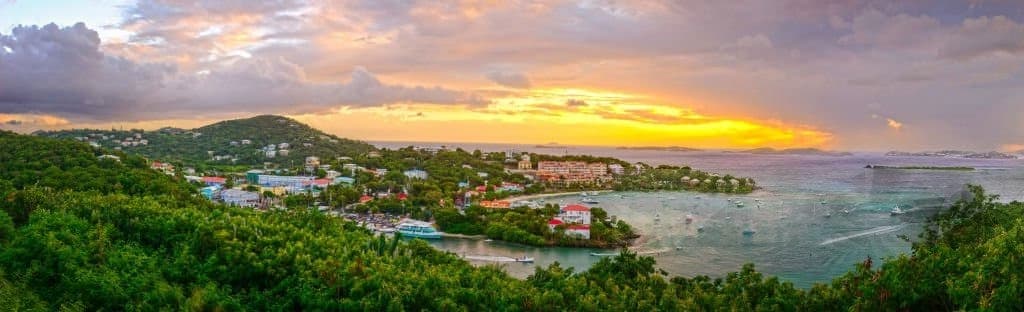
In the U.S. Virgin Islands, Saint John occupies a singular place. More discreet than St. Thomas, less urbanized, it was built around a simple principle: preserve your land. Today, almost 60% of the island is part of the Virgin Islands National Park, directly shaping its landscape, economy and organization.

For travelers, Saint John represents a legible destination: a compact island, accessible beaches, a structuring national park and local life concentrated around a main center, Cruz Bay. This configuration makes it possible to quickly understand the territory, without dispersion or saturation.

Saint John

A large-scale protected island

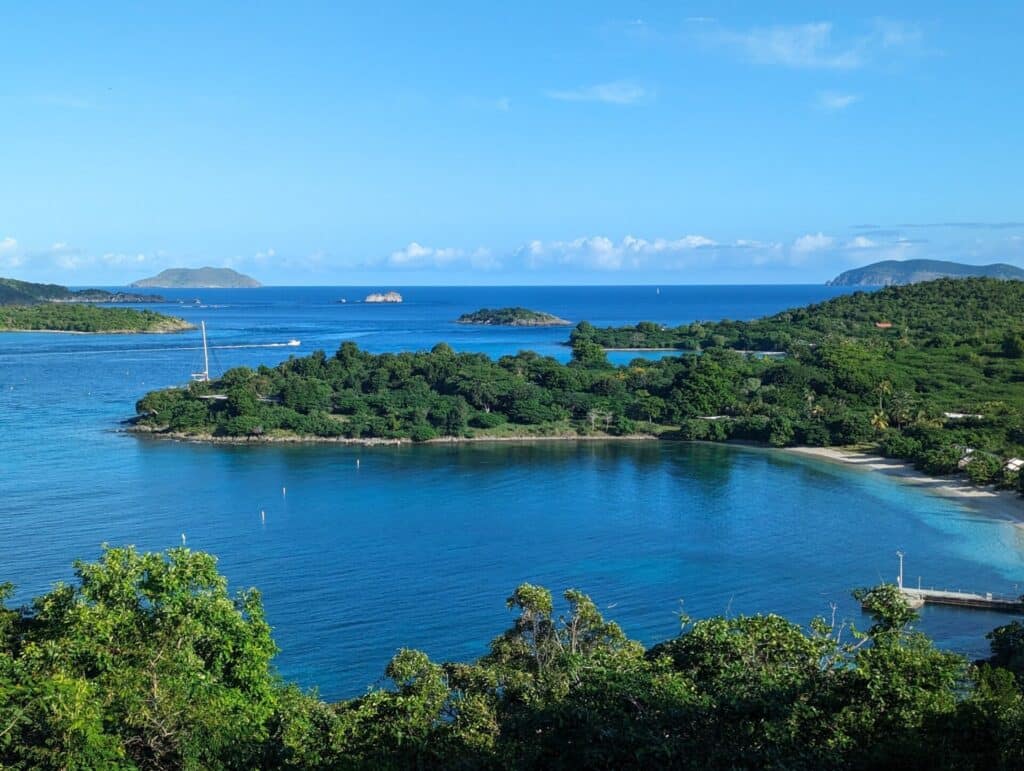
Virgin Islands National Park was created in 1956 thanks to a major land donation. Since then, it has covered most of Saint John’s land territory, as well as protected marine areas. This configuration limits real estate development and maintains large areas of unspoiled nature. Tropical dry forests, hills, mangroves and coral reefs make up most of the landscape. Roads are few and far between, and inhabited areas are concentrated mainly around Cruz Bay and Coral Bay. This territorial organization gives the island an airy character, without excessive urban continuity, which reinforces the feeling of space for visitors.

The national park also offers signposted trails through old plantations, viewpoints and forested areas. For travelers interested in history and nature, these trails offer a complete overview of the territory. The island can be explored both on foot and by sea.

Saint John
©Virgin Islands National Park John
Saint John
©Virgin Islands National Park John
Saint John

Accessible but unspoilt beaches

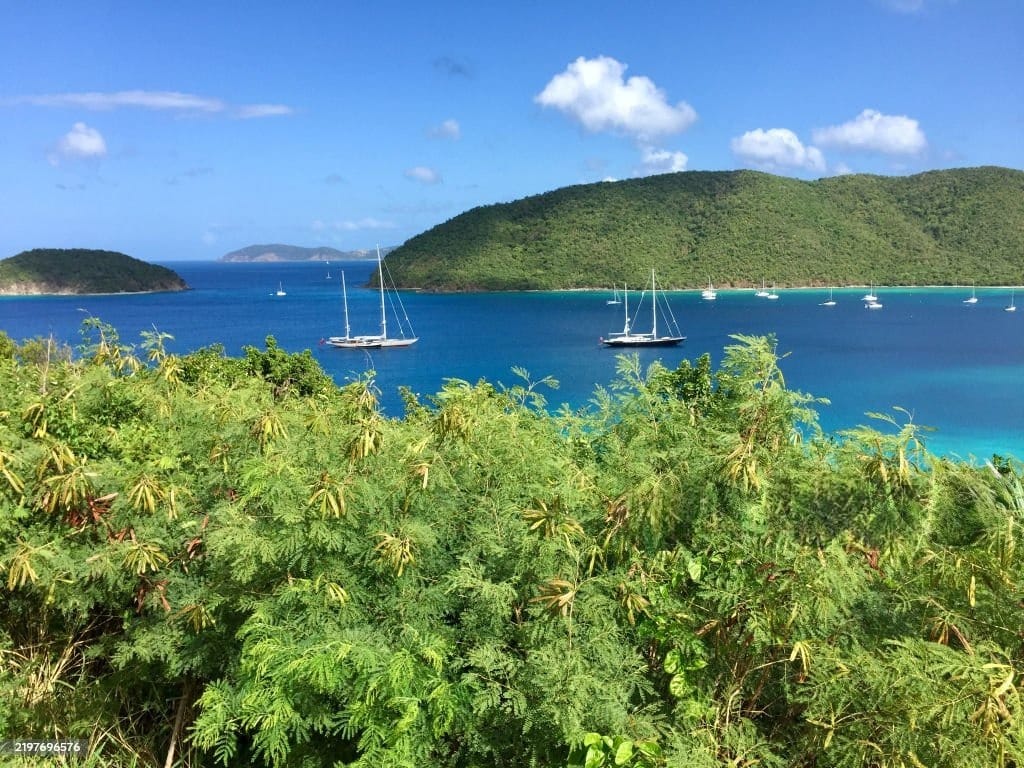
Saint John is renowned for its clear beaches bordered by reef-protected waters. Trunk Bay, Cinnamon Bay and Maho Bay are among the best-known sites. What they all have in common is that they are part of the national park and benefit from strict environmental protection. Access is provided, but construction remains limited. The aim is to keep visitor numbers under control and preserve marine ecosystems. This approach reinforces the image of an island focused on quality rather than tourist density.

Some of the less-frequented beaches also reveal a different facet of the coastline. They are a reminder that the island retains many open spaces, free from intensive occupation. This availability contributes to the balance between visitors and residents.

Saint John
©Virgin Islands National Park John
Saint John

A history visible in the landscape

Before becoming an American territory in 1917, Saint John was part of the Danish West Indies. The island has preserved traces of this period, notably through the ruins of sugar plantations scattered throughout the national park. These remains are a reminder of the colonial economy based on sugar cane and forced labor. Today, they are historical landmarks accessible to visitors, often linked by footpaths. History isn’t just to be found in museums: it’s inscribed in the landscape, stone walls and ancient farm tracks.

Saint John
Saint John
Saint John
Saint John

A controlled tourism economy

Tourism is Saint John’s main economic driver. Unlike other Caribbean destinations, the island has no international airport. Access is by ferry from St. Thomas, which naturally limits visitor flows and encourages a gradual arrival of visitors. This logistical constraint contributes to the balance of the region. Stays are generally longer, encouraging more attentive discovery. The accommodation offer is based on medium-sized hotels, villas and private rentals, rather than large complexes. This organization maintains a human scale.

Simple organization for travellers

The center of Cruz Bay is home to shops, restaurants and services. Coral Bay, further east, is more residential and less busy. Travel is mainly by car, as the roads are hilly and narrow. This configuration encourages you to take it easy and explore the island gradually. To reach Saint John, you must first land in Saint-Thomas, then take a twenty-minute ferry ride. This maritime transition marks your entry into a different territory, where the sea remains omnipresent.

Saint John
Saint John
©Virgin Islands National Park John
Saint John
©Virgin Islands National Park John
Saint John
©Virgin Islands National Park John

A coherent Caribbean destination

Highlighting Saint John means presenting an island where land protection structures all development. The predominant presence of the national park limits urbanization, controls access to beaches and preserves landforms. For travelers, the island offers a clear combination of protected nature, accessible beaches, visible historical heritage and sufficient infrastructure. Saint John doesn’t seek to multiply its attractions; it offers a stable, organized and sustainable territory turned towards the sea. This coherence gives the island a special value in the contemporary Caribbean, where land management is becoming a central issue for the future of island tourism.

Saint John is part of the U.S. Virgin Islands in the eastern Caribbean, east of Puerto Rico and close to St. Thomas.

The island is famous for the Virgin Islands National Park, which protects around 60% of its territory, as well as for its beaches and coral reefs.

You’ll need to fly into St. Thomas, then take the ferry to Saint John in about twenty minutes.

Leave a Reply

Your email address will not be published. Required fields are marked *

More articles from RK

Bonaire
TOURISM
Tolotra

Bonaire, a Caribbean island built around the sea and conservation

In the southern Caribbean, off the coast of Venezuela, Bonaire is a territory in a class of its own. Less publicized than its neighbors Aruba and Curaçao, the island has built its identity around one central principle: the protection of its environment. Here, the sea structures the economy, landscapes and customs, while tourism development has been gradual and controlled. For travelers, Bonaire offers a clear picture: a compact island, visible natural areas, an accessible coastline and an organization geared towards sustainability. An island structured by its marine park Since 1979, Bonaire’s entire coastline has been protected by the Bonaire National Marine Park which completely surrounds the island. This marine area regulates nautical activities and aims to preserve the coral reefs, considered among the best preserved in the Caribbean. One of the island’s special features is the direct accessibility of its marine sites. Diving and underwater observation can be carried out
Read More »
Marcus Garvey
HISTORY & HERITAGE
Tolotra

Jamaica – Marcus Garvey, Jamaican hero of international renown

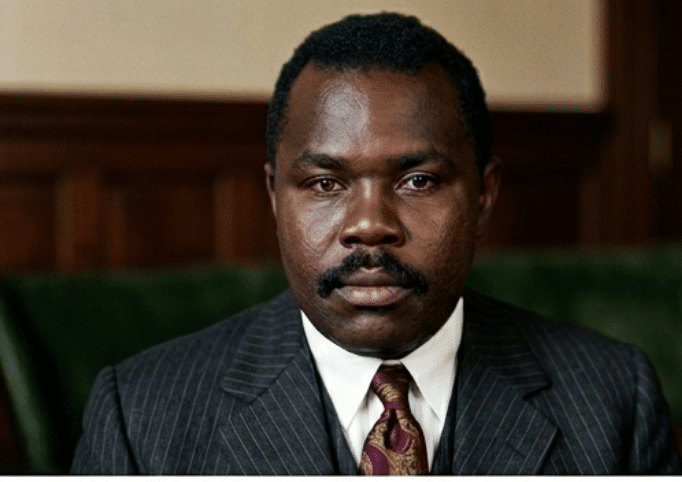
Marcus Garvey remains one of the most influential figures to emerge from the Caribbean. Born in Jamaica at the end of the 19th century, he transformed a local experience into a political and cultural project of international scope. At a time when black populations faced deeply rooted systems of exclusion, Marcus Garvey proposed a structured vision based on dignity, organization and autonomy. Recognized today as a national hero in Jamaica, he is much more than a historical symbol. His story helps us understand how the Caribbean helped shape major intellectual and political movements on a global scale. His name continues to circulate in contemporary debates on identity, memory and the development of societies born out of colonial history. From Jamaican origins to the formation of a committed conscience He was born on August 17, 1887 in St. Ann’s Bay, Jamaica, into a modest family. Very early on, he developed a
Read More »
BlueSeas Festival
EVENT MANAGEMENT
Tolotra

BlueSeas Festival: in Curaçao, Pietermaai becomes the epicenter of Caribbean blues in 2026

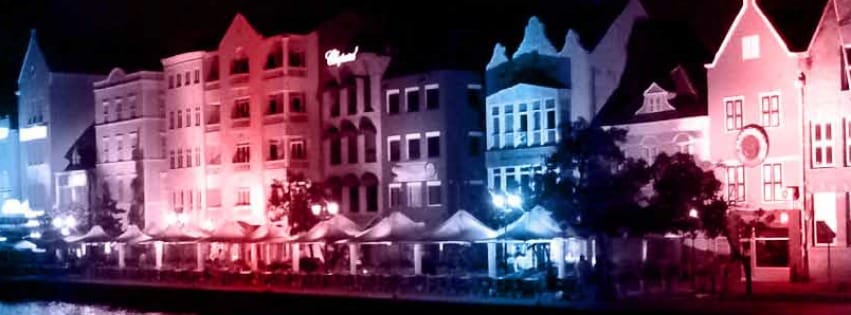
From April 2 to 4, 2026, Curaçao hosts another edition of the BlueSeas Festival a musical event that is gradually establishing itself as one of the most unique cultural events in the Caribbean. Free, open and rooted in the urban space, the festival goes far beyond simple musical programming to become a genuine territorial experience. Right from the opening night, Thursday April 2 at Kura Hulanda Village, the mood is set: the blues settle into a heritage setting, before taking full possession of the Pietermaai district on April 3 and 4. This two-stage format structures an immersive experience in which music, architecture and local life are seamlessly interwoven. A free festival that transforms the city into an open-air stage The BlueSeas Festival is based on the principle of offering free concerts in public spaces. This choice is not insignificant. It widens access to live music, while creating direct interaction between

Read More »

conTACT RK

we'd love to have your feedback on your experience so far

Join The List

Join our Richès Karayib community!  Sign up for our newsletter.

Want To Maximize Your Business Presence On Riches Karayib?

Complete the form to start the application