Martinique – Jordan Beal: A photographic exploration at unRepresented

Jordan Beal

The unRepresented fair, dedicated to artists not represented in galleries, offers an exceptional showcase this year to Jordan Beal, a photographer from Martinique whose work pushes back the boundaries of traditional photography. The first winner of the grant to support contemporary French Caribbean and Amazonian creation, he is exhibiting his “Corrosion” series in Paris, a work that questions our perception of nature and territory. This event marks an important milestone for this emerging artist and for the recognition of talent from the Caribbean.

Who is Jordan Beal?

Jordan Beal, born in 1991 in Martinique, is a photographer whose artistic approach is distinguished by its experimental character and unique sensibility. From the outset, he has shown a keen interest in exploring the interactions between man and his natural environment.

In 2022, he presented “Pour faire le portrait d’une fleur” at Tropiques Atrium. This monographic exhibition showcased a daring technique: certain photographic prints were buried underground for several weeks. This symbolic process aimed to restore to nature what it had inspired in the artist, creating works marked by the imprint of time and natural elements.

Jordan Beal’s art transcends the traditional boundaries of photography. His work questions concepts such as territory, natural and political boundaries, and the transformations undergone by nature in an ever-changing world.

Bursary to support French contemporary creation in the Caribbean and Amazon regions

This grant, initiated by Rubis Mécénat, La Station Culturelle (Martinique) and unRepresented, aims to promote emerging artists from the Caribbean and Amazon territories. It responds to a crucial need: to offer greater visibility and professional resources to creators who are often marginalized on the international art scene.

The main objective is twofold:

  • Supporting artistic production: Artists receive funding to carry out their projects.
  • Supporting their professional development: A personalized program of meetings with experts from the artistic world is set up.

For Jordan Beal, this grant has been decisive. It enabled him to exhibit his “Corrosion” series in a prestigious setting, while strengthening his presence on the European art scene. It also illustrates the importance of promoting talent from regions that are often under-represented in the global cultural landscape.

The "Corrosion" series: A work between abstraction and reality

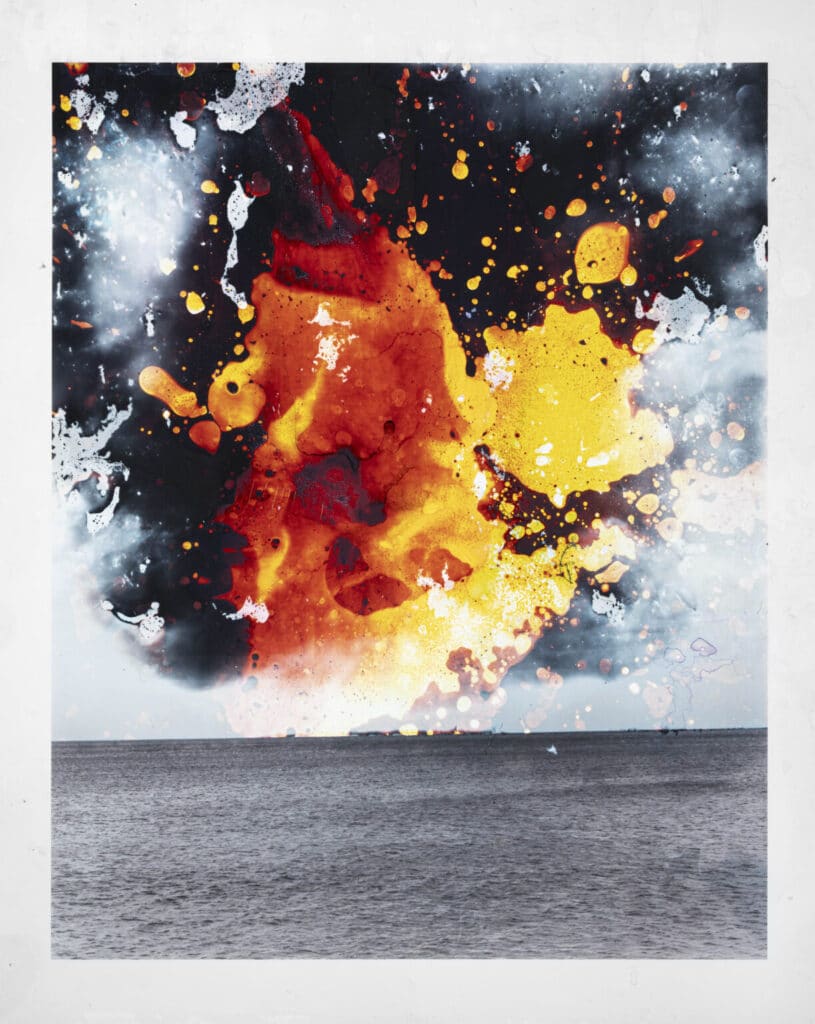
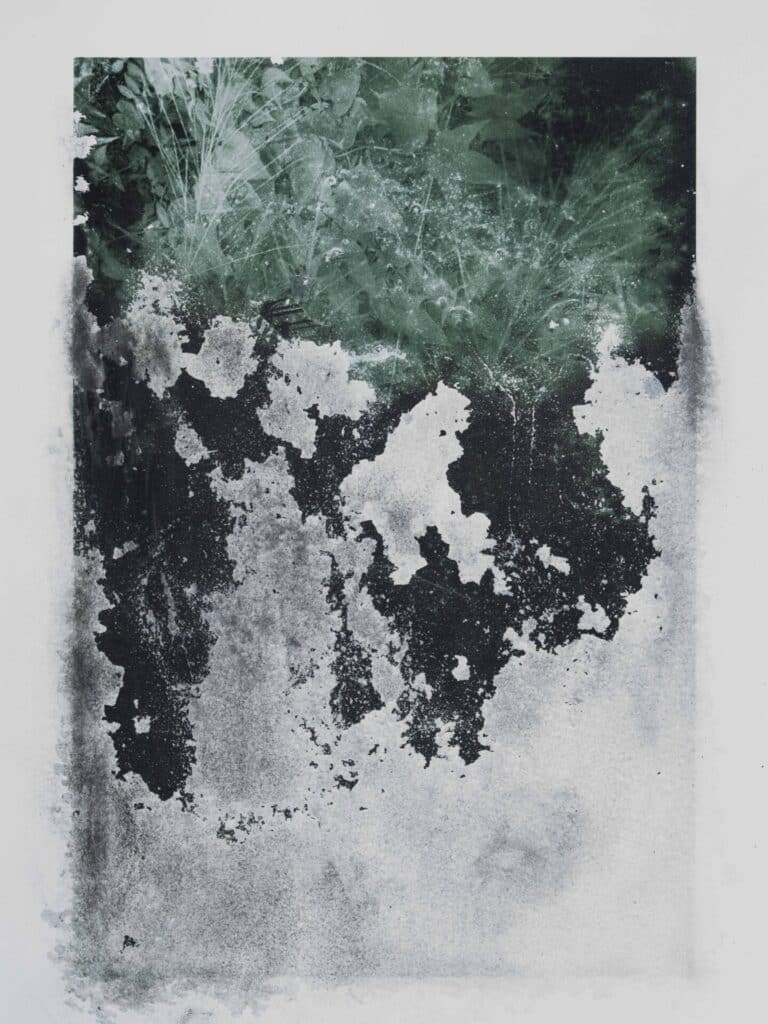
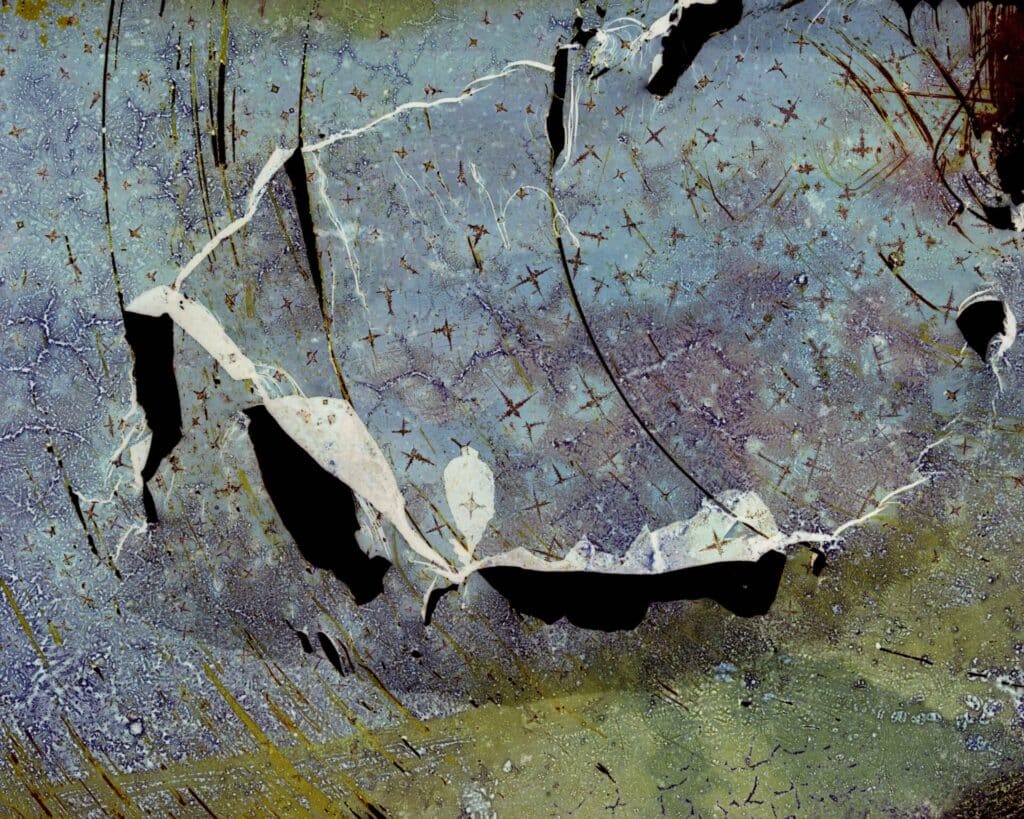
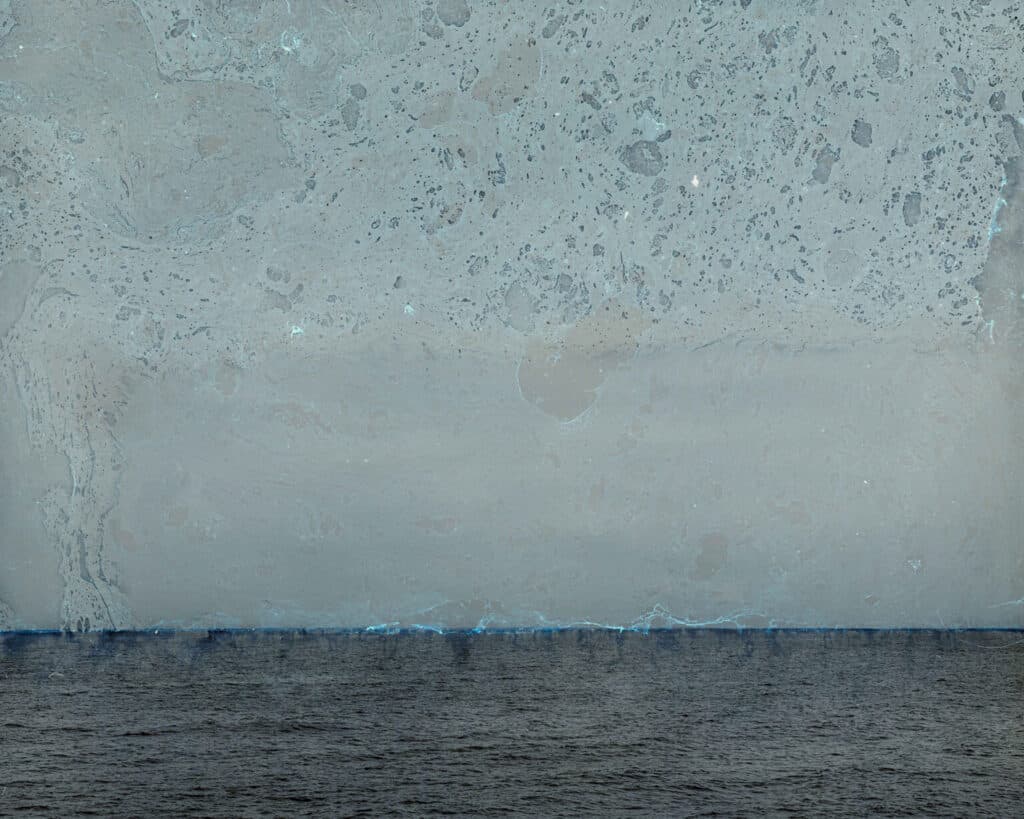
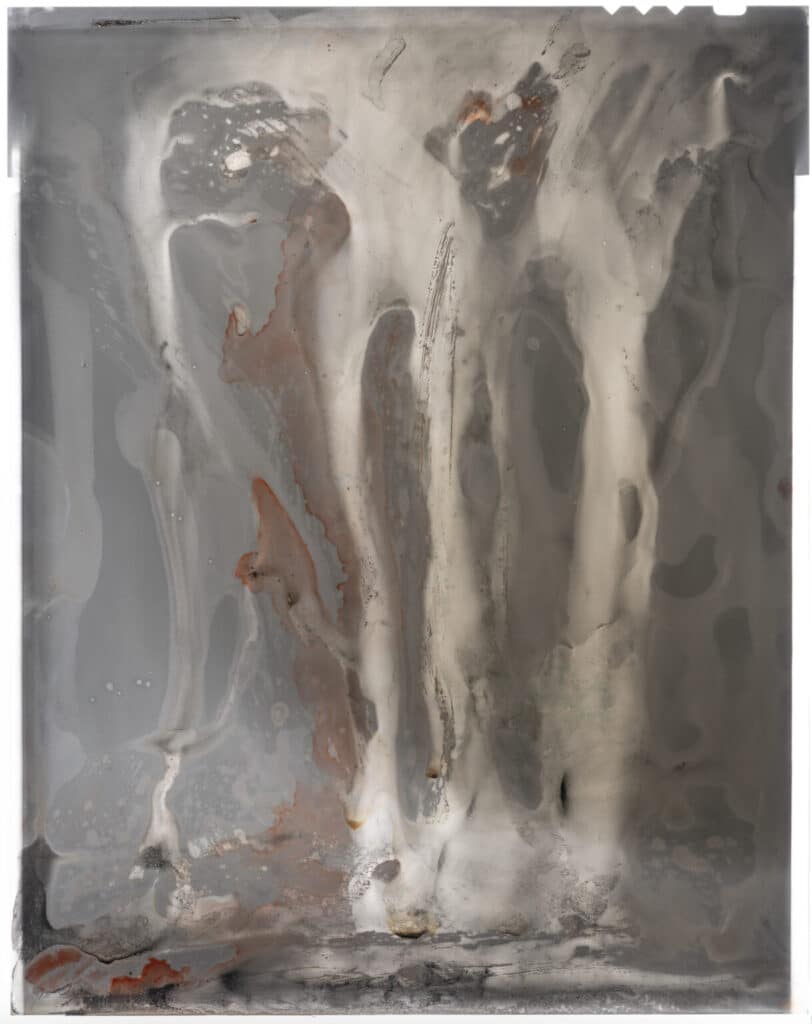
The “Corrosion” series represents a turning point in Jordan Beal’s career. This work explores the limits of the photographic medium by integrating chemical processes, double exposures and artistic cut-outs. These techniques enable the initial image to be transformed into an abstract composition where reality and the imaginary mingle.

The central themes of “Corrosion” include:

  • The relationship between man and his natural environment.
  • Chemical transformations as a metaphor for the passage of time.
  • The blurred boundaries between abstraction and figuration.

Through these works, Jordan Beal offers a poetic reflection on notions of territory and identity. The landscapes he creates are imbued with an enigmatic beauty, inviting the viewer to rediscover the world from a new angle.

Jordan Beal
Jordan Beal, Corrosion 07, 2025, inkjet print on deteriorated Hahnemühle Ultra Smooth paper from scan of deteriorated negative, 24 × 30 cm. Jordan Beal.
Jordan Beal
Jordan Beal, Corrosion 06, 2025, inkjet print on deteriorated Hahnemühle Ultra Smooth paper from scan of deteriorated negative, 24 × 30 cm. Jordan Beal.

Exhibition at unRepresented

The unRepresented fair has established itself as an essential space for artists not represented in galleries. Dedicated to aesthetic experimentation, the event showcased emerging talent while providing a platform for exploring new forms of artistic expression.

This year, the show was held at Le Molière, in the heart of Paris. Jordan Beal’s solo exhibition stood out for its boldness and originality. From April 4 to 6, 2025, visitors were able to discover the “Corrosion” series, a work that defied photographic convention while celebrating the cultural richness of the Caribbean.

Why is this exhibition important?

  • It gave Jordan Beal international exposure.
  • She highlighted the dynamism of the Caribbean art scene.
  • She illustrated the importance of initiatives like unRepresented to promote emerging artists.
Jordan Beal
Jordan Beal, Corrosion 05, 2024, pigment print on Hahnemühle Ultra Smooth paper from scan of damaged negative, 60 × 48 cm. © Jordan Beal.
Jordan Beal
Jordan Beal, Corrosion 04, 2023, pigment print on Hahnemühle Ultra Smooth paper from scan of deteriorated negative, 75 × 60 cm. Jordan Beal.
Jordan Beal
Jordan Beal, Corrosion 09, 2024, deteriorated 4 × 5 negative, 10 × 12 cm. Jordan Beal.

A lasting impact on the Caribbean art scene

Jordan Beal embodies a new generation of Caribbean artists who are pushing the boundaries of traditional mediums while exploring universal themes such as identity, territory and nature. His success at unRepresented testifies to the immense potential of this often underestimated region on the global art scene.

Thanks to this grant and his Paris exhibition, he is paving the way for other artists from the Caribbean and Amazon. He demonstrates that these territories are not only rich in biodiversity, but also in cultural creativity.

Leave a Reply

Your email address will not be published. Required fields are marked *

More articles from RK

Marcus Garvey
HISTORY & HERITAGE
Tolotra

Jamaica – Marcus Garvey, Jamaican hero of international renown

Marcus Garvey remains one of the most influential figures to emerge from the Caribbean. Born in Jamaica at the end of the 19th century, he transformed a local experience into a political and cultural project of international scope. At a time when black populations faced deeply rooted systems of exclusion, Marcus Garvey proposed a structured vision based on dignity, organization and autonomy. Recognized today as a national hero in Jamaica, he is much more than a historical symbol. His story helps us understand how the Caribbean helped shape major intellectual and political movements on a global scale. His name continues to circulate in contemporary debates on identity, memory and the development of societies born out of colonial history. From Jamaican origins to the formation of a committed conscience He was born on August 17, 1887 in St. Ann’s Bay, Jamaica, into a modest family. Very early on, he developed a

Read More »
BlueSeas Festival
EVENT MANAGEMENT
Tolotra

BlueSeas Festival: in Curaçao, Pietermaai becomes the epicenter of Caribbean blues in 2026

From April 2 to 4, 2026, Curaçao hosts another edition of the BlueSeas Festival a musical event that is gradually establishing itself as one of the most unique cultural events in the Caribbean. Free, open and rooted in the urban space, the festival goes far beyond simple musical programming to become a genuine territorial experience. Right from the opening night, Thursday April 2 at Kura Hulanda Village, the mood is set: the blues settle into a heritage setting, before taking full possession of the Pietermaai district on April 3 and 4. This two-stage format structures an immersive experience in which music, architecture and local life are seamlessly interwoven. A free festival that transforms the city into an open-air stage The BlueSeas Festival is based on the principle of offering free concerts in public spaces. This choice is not insignificant. It widens access to live music, while creating direct interaction between

Read More »
Le vodou : Haïti au cœur d’une candidature patrimoniale majeure avec le Bénin
COOPERATION
Tolotra

Vodou: Haiti at the heart of a major heritage bid with Benin

The vodou is entering a new phase in its international history. The joint candidacy of Haiti and Benin for inscription on the Representative List of the Intangible Cultural Heritage of Humanity places centuries of memory, transmission and creation at the heart of a global heritage debate. The deadline set by UNESCO for applications to be examined in 2027, and submitted before March 31, 2026, places this initiative within a precise and structured institutional calendar, but the stakes go far beyond the administrative procedure. For the Caribbean, and Haiti in particular, this candidacy is no mere cultural formality. It’s about recognizing a living heritage, often misunderstood, sometimes caricatured, but deeply rooted in the country’s social, artistic and spiritual history. Vodou is not a fixed folklore; it is a cultural matrix, a way of organizing the link between generations, communities and the sacred. To place it within an international heritage dynamic is

Read More »

conTACT RK

we'd love to have your feedback on your experience so far

Join The List

Join our Richès Karayib community!  Sign up for our newsletter.

Want To Maximize Your Business Presence On Riches Karayib?

Complete the form to start the application