A collective response to the sargassum phenomenon – the SARSEA project

SARSEA

The Caribbean is facing growing environmental pressure from the massive arrival of sargassum: brown seaweed that washes up on the coast in large numbers, weakening coastal ecosystems and affecting fishing, tourism, public health and the daily lives of island communities. It is against this backdrop that the SARSEA – Sargassum Regional Strategies for Ecosystem-based Actions project was officially launched on October 28, 2025 in Saint Lucia, marking a turning point for regional management of this challenge.

A structuring framework and committed partners

Financed by the Agence Française de Développement (AFD) and implemented by Expertise France in partnership with the Commission of the Organization of Eastern Caribbean States (OECS), the SARSEA project offers the states concerned a framework for cooperation, knowledge and action.

The SARSEA project will focus on a number of key areas:

  • – Strengthen regional cooperation on Sargasso planning and management, to improve political coordination and international visibility of the phenomenon.
  • – Support small island states – notably Dominica, Grenada, Saint Lucia and Saint Vincent and the Grenadines – in implementing integrated sargassum management and recovery initiatives, adopting a circular and sustainable approach.
  • – Support regional scientific cooperation to better understand the phenomenon, anticipate its effects and guide management strategies.
  • – Integrate the gender approach into all Sargasso-related policies and actions, to ensure an inclusive and equitable response.
SARSEA
©OECS

The launch: a key moment for dialogue

The opening ceremony in Saint Lucia was attended by governmental, institutional and scientific representatives from all over the Eastern Caribbean. Among them were the French Ambassador to the Eastern Caribbean, Barbados and the OECS, Marie-Noëlle Duris, and the French Ambassador for regional cooperation in the Atlantic zone, Arnaud Mentré.

Dominica stressed the need for a coordinated, multi-level approach to Sargassum management, citing the role that each island can play in a value chain adapted to its capabilities. Saint Lucia reaffirmed its commitment to playing an active part in this collective response. Grenada, for its part, put forward several priorities: the creation of a regional testing center, the implementation of a grounding monitoring system, a harmonized collection mechanism and a strengthening of sanitary monitoring.

During the event, a partnership protocol was signed between Expertise France and the OECS Commission, reinforcing the institutional framework for regional action. Round tables addressed the national visions of partner countries, followed by the challenges and opportunities of regional cooperation in Sargasso management. The afternoon was devoted to a presentation of the project strategy and a coordination meeting of partners. The following day, participants took part in a collective scientific workshop led by the Institut de Recherche pour le Développement.

SARSEA
©OECS
SARSEA
©OECS

Towards a shared Caribbean strategy

The SARSEA project aims to consolidate a network of public, private and scientific players in the region, with a view to pooling skills, data and best practices. The objective of the SARSEA project is clear: to improve preparedness and response to Sargasso groundings, while strengthening the resilience of coastal territories.

Under the SARSEA project, although four states will benefit directly from the project, all twelve OECS member states will be able to take advantage of the lessons, tools and best practices that emerge. This reinforces the regional and inclusive dimension of the action.

SARSEA
©OECS
SARSEA
©OECS

Why is this project so important?

Massive sargassum groundings in the Caribbean are not an isolated phenomenon: they disrupt coastlines on a daily basis, affect people’s health (toxic gas emissions during decomposition, respiratory problems), weaken marine ecosystems (seagrass beds, corals, mangroves) and threaten key economic sectors such as fishing and tourism.

In this context, fragmented or national management alone is no longer enough. The phenomenon crosses borders, currents and ecosystems. The SARSEA project proposes a coordinated, sub-regional response based on robust science.

Future milestones

  • – Structuring integrated value chains around sargassum: from collection to valorization (possibly into bioproducts, fertilizers, etc.).
  • – Set up harmonized monitoring systems for strandings, collection and sanitary analysis.
  • – Deployment of concerted scientific actions to fill knowledge gaps and guide better-adapted public policies.
  • – Promoting women’s participation and gender mainstreaming in all phases of action.
  • Dissemination of project feedback, tools and best practices to all OECS member states.
SARSEA
©OECS
SARSEA
©OECS

The launch of the SARSEA project marks an essential step in the regional mobilization against the impact of sargassum in the Eastern Caribbean. By combining political, scientific, technical and inclusive cooperation, the island states now have a structured framework for tackling this complex phenomenon. The SARSEA project does not replace national or local work: it amplifies and structures it, giving it scope and resources. With this new impetus, the prospect of concerted, better-informed and sustainable management of sargassum is taking shape in the region.

Leave a Reply

Your email address will not be published. Required fields are marked *

More articles from RK

French
NEWS
Tolotra

396 million people speak French: the 2026 report reveals

The Organisation internationale de la Francophonie has published a figure that reshuffles the deck in the global language debate: 396 million people now speak French. With this total, the French language in the world rises from 5th to 4th position behind English, Mandarin and Spanish, but ahead of standard Arabic. This is more than just an announcement. It marks a fundamental change in the place of French on the international stage, and confirms that the language continues to make headway in strategic areas such as education, economic exchanges, digital technology and cultural mobility. Global progress changes the narrative around French For years, French has often been portrayed as a language of great influence, but weakened in the face of global competition. The OIF’s 2026 report introduces an important corrective. The French language in the world is not only holding its own: it is gaining ground in terms of the number
Read More »
Bonaire
TOURISM
Tolotra

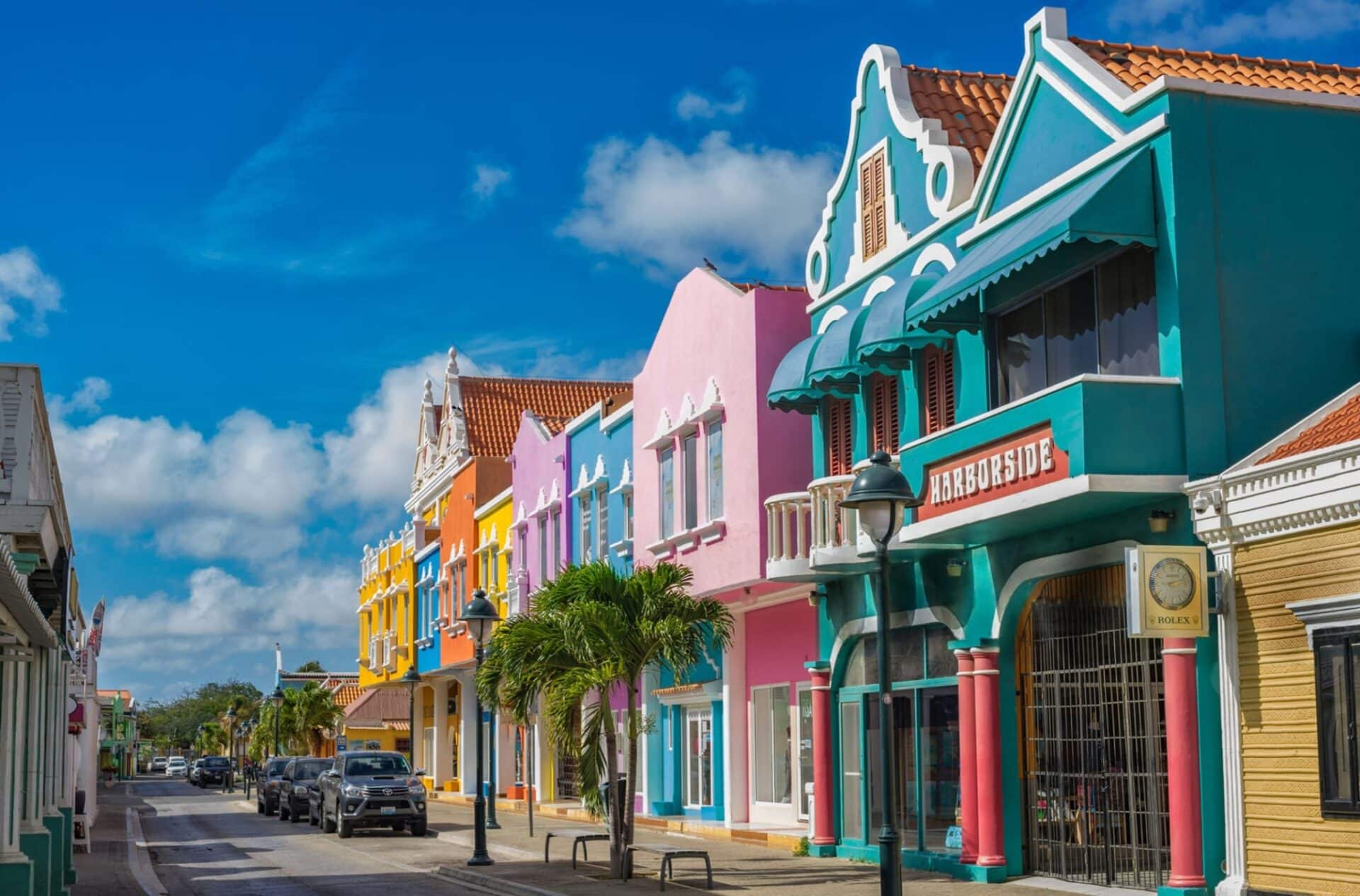
Bonaire, a Caribbean island built around the sea and conservation

In the southern Caribbean, off the coast of Venezuela, Bonaire is a territory in a class of its own. Less publicized than its neighbors Aruba and Curaçao, the island has built its identity around one central principle: the protection of its environment. Here, the sea structures the economy, landscapes and customs, while tourism development has been gradual and controlled. For travelers, Bonaire offers a clear picture: a compact island, visible natural areas, an accessible coastline and an organization geared towards sustainability. An island structured by its marine park Since 1979, Bonaire’s entire coastline has been protected by the Bonaire National Marine Park which completely surrounds the island. This marine area regulates nautical activities and aims to preserve the coral reefs, considered among the best preserved in the Caribbean. One of the island’s special features is the direct accessibility of its marine sites. Diving and underwater observation can be carried out
Read More »
Marcus Garvey
HISTORY & HERITAGE
Tolotra

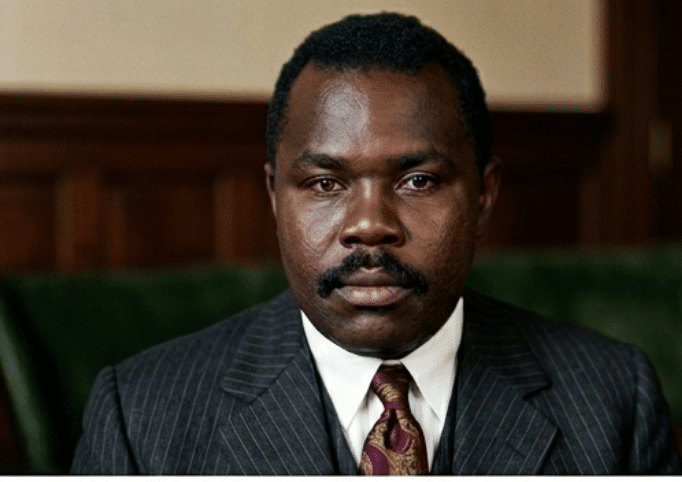
Jamaica – Marcus Garvey, Jamaican hero of international renown

Marcus Garvey remains one of the most influential figures to emerge from the Caribbean. Born in Jamaica at the end of the 19th century, he transformed a local experience into a political and cultural project of international scope. At a time when black populations faced deeply rooted systems of exclusion, Marcus Garvey proposed a structured vision based on dignity, organization and autonomy. Recognized today as a national hero in Jamaica, he is much more than a historical symbol. His story helps us understand how the Caribbean helped shape major intellectual and political movements on a global scale. His name continues to circulate in contemporary debates on identity, memory and the development of societies born out of colonial history. From Jamaican origins to the formation of a committed conscience He was born on August 17, 1887 in St. Ann’s Bay, Jamaica, into a modest family. Very early on, he developed a
Read More »

conTACT RK

we'd love to have your feedback on your experience so far

Join The List

Join our Richès Karayib community!  Sign up for our newsletter.

Want To Maximize Your Business Presence On Riches Karayib?

Complete the form to start the application