An emblematic event of the European Heritage Days
On Friday, September 19, 2025, the Bibliothèque Schoelcher in Fort-de-France hosted the conference “Heritage on the move in the digital age”.. Part of the JEP 2025 devoted to architectural heritage, the meeting was held as an extension to the exhibition Bibliotech exhibition, presented from September 6 to 27 by Georges-Emmanuel Arnaud creator of still and moving images.
A listed monument since 1973, the Schoelcher Library has not only provided a symbolic setting. It became a space for dialogue between past and future, between historical heritage and digital innovations. The event, which was free and open to all, attracted a varied audience of students, researchers, cultural enthusiasts and institutional representatives. JEP 2025 provided an opportunity to combine an iconic location with forward-looking thinking.
A singular career in the service of images and heritage
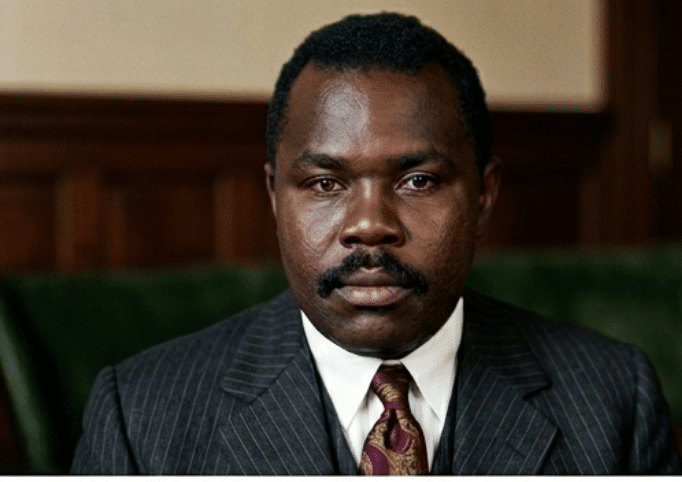
A native of Le Vauclin, Georges-Emmanuel Arnaud claims a multiple identity. Trained as a photographer, he worked in the world of fashion for over fifteen years, for Dior, Chanel and Armani. He signed his images under the pseudonym “Damage” an anagram of his name, before returning to Martinique to devote himself to a more personal approach.
He defines himself as a “technician-artist” he adds: “I try to have a purpose and to put all these techniques that I master at the service of this approach.”
Exploring photography, video, retouching and bronze sculpture in turn, he has focused on the theme of the monstrous body. The group’s work explores differences, disability and human frailty. In tribute to his daughter Kénia, he founded the Studio Caria, a laboratory for artistic and digital experimentation. These experiences, now shared across JEP 2025 give his work a special resonance.

Digital technology as a transmission lever
For the past twenty years, Georges-Emmanuel Arnaud has been involved in digital heritage enhancement. Through his association Anisotropie he has initiated a number of innovative projects:
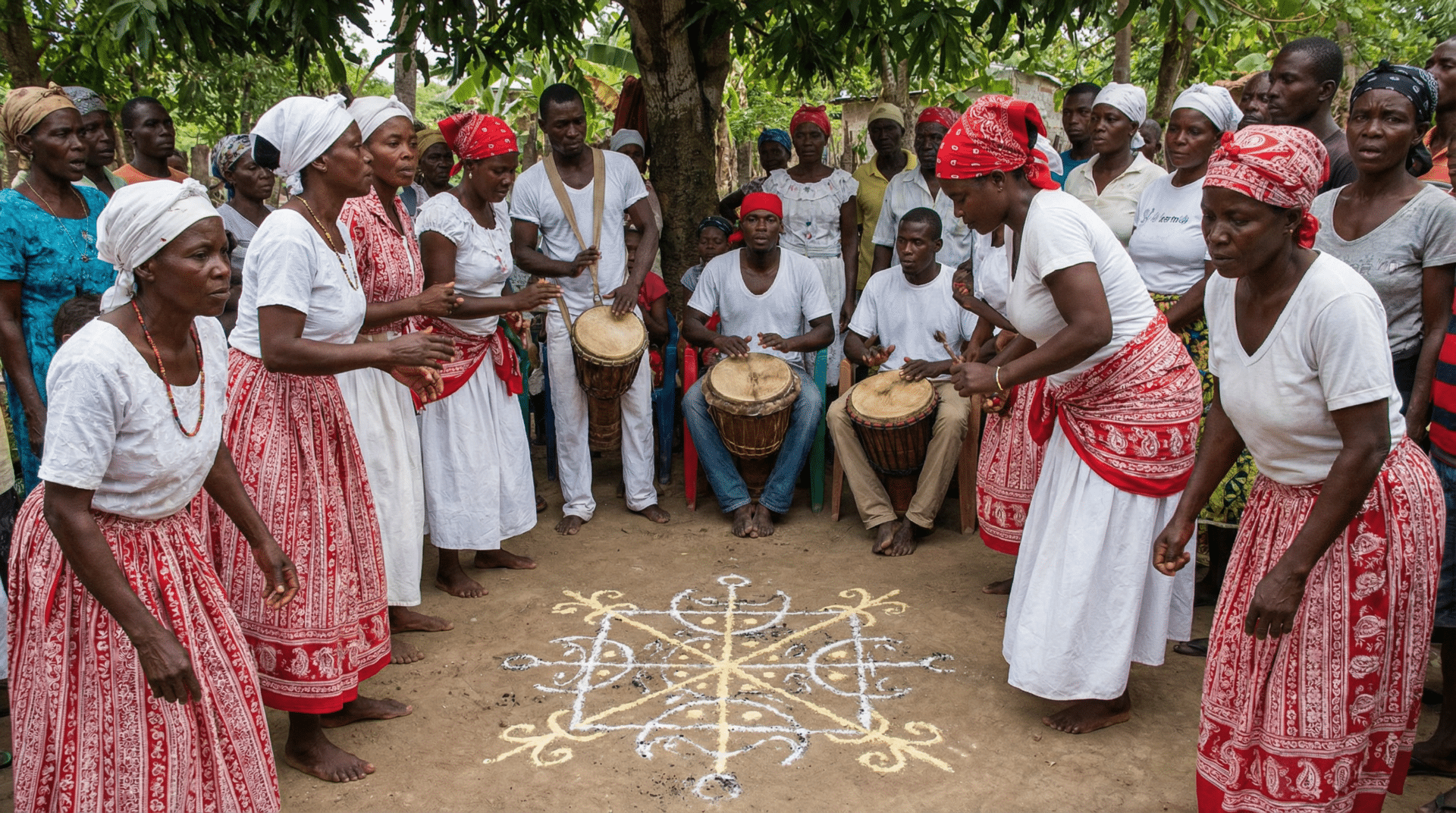
- – Séquence Éphémère : Motion capture of traditional gestures (bèlè, ladja, agricultural practices, culinary gestures) to create a living archive that can be compared with other Caribbean and African cultures.
- – Caribbean Archaeology : a digital platform where archaeological objects can be viewed in 3D, accompanied by multilingual notes and podcasts.
- – Nécropole : a project to digitize the cemeteries of Le Vauclin, linking graves, family archives and old photographs to build a shared genealogical memory.
These initiatives are made possible thanks to the support of the Direction des Affaires Culturelles, which financed motion capture equipment.
For Georges-Emmanuel Arnaud, the stakes are clear: “Digital technology is here to help us project ourselves into tomorrow’s world.”
Here again, the JEP 2025 provide an ideal stage for demonstrating how innovation and memory can go hand in hand.
A conference at the crossroads of heritage and innovation
For almost two hours, the speaker mixed personal accounts, technical demonstrations and philosophical reflections. Images and sequences illustrated how a gesture, a voice, a sculpture or a site could become an archive thanks to digital technologies.
The slogan “Heritage on the move in the digital age” took on its full meaning when the digitization of Montravail’s engraved rocks, the analysis of gestures in the kitchen, the prevention of occupational hazards through motion capture and the 3D reconstruction of the Schoelcher Library itself were discussed. The artist recalled that similar technologies had enabled the restoration of Notre-Dame de Paris after the fire.
He also mentioned his collaboration with John Dauer, the director associated with GTA in Martinique to experiment with the use of digital technology in a heritage context. Proof that local skills can resonate with international expertise. These concrete examples, shared as part of the JEP 2025 show the power of cross-fertilization between cultures and disciplines.

A space for dialogue with the public
The conference was more than just a monologue. There was plenty of audience participation, with questions on site conservation, the use of personal archives and the future of funeral rituals. These exchanges highlighted the Necropolis which links individual and collective memory through the digitization of cemeteries.
The discussion also focused on the definition of heritage: should it be limited to monuments and objects, or include gestures, sounds and voices? Georges-Emmanuel Arnaud’s answer was unequivocal: heritage is alive, in perpetual motion, and must be understood before it can be reproduced. This reflection gave the conference an intensity that will remain as one of the essential contributions of the JEP 2025 in Martinique.

JEP 2025 as an institutional and civic catalyst
Holding this conference as part of the JEP 2025 highlighted cooperation between institutions, associations and citizens. “Direction des Affaires Culturelles”, the “Collectivité Territoriale de Martinique” the teams at the Schoelcher Library, as well as other partners such as Anisotropie, Armada, 150mètres d’altitude, Zeesmind and Seize mètres carrés, made this event possible.
Georges-Emmanuel Arnaud emphasized the value of this collective dynamic: “These are private, public, human, human and more human.”
He also recalled, with a critical touch, the lack of sustainable support from certain bodies, while insisting on citizen responsibility: “The future of our territory and the future of our heritage depend on us alone.”
JEP 2025 are therefore an ideal opportunity to highlight this institutional and civic dialogue, which is vital to the enhancement of our heritage.
A strong message to young people
Beyond technology, Georges-Emmanuel Arnaud had a direct message for the younger generation: “You have to have an Internet connection. You have to log on to YouTube and learn (…) Learning is our only duty as human beings.”
Convinced that access to knowledge is universal, he invites everyone to seize free resources, develop their skills and contribute to the transmission of knowledge. He himself makes himself available to accompany those who wish to progress.
And he concludes with a striking phrase: “You have to put your faith in people, not in resources.”
These words, shared at JEP 2025, sound like a call to commitment and autonomy.

A heritage on the move, from Martinique to the world
The “Heritage on the move in the digital age” conference was not limited to Martinique. It opened up Caribbean and international perspectives.
Through his projects, Georges-Emmanuel Arnaud links Martinique to other Caribbean islands and to Africa. Capturing dances and agricultural practices enables cross-cultural comparisons to be made, links to be forged between continents, and local heritage to be placed in a global context.
More broadly, this reflection reflects global issues: how can we preserve heritages threatened by climate change, erosion or oblivion? How can we transmit intangible knowledge in an increasingly digital world?
Through this conference, part of the JEP 2025 conference, Martinique has shown that it can be a laboratory for answers.
A highlight of JEP 2025 in Martinique
By linking memory, innovation and civic engagement the “Heritage on the move in the digital age” conference was a highlight of the JEP 2025.
She reminded us that heritage should not be static, but recognized as a living, constantly evolving resource. Digital technology makes it possible not only to preserve it, but also to open it up to new horizons, from the Caribbean to the rest of the world.
More broadly, this reflection reflects global issues: how can we preserve heritages threatened by climate change, erosion or oblivion? How can we transmit intangible knowledge in an increasingly digital world?
Through this conference, part of the JEP 2025 conference, Martinique has shown that it can be a laboratory for answers.