Three words heard in Paramaribo
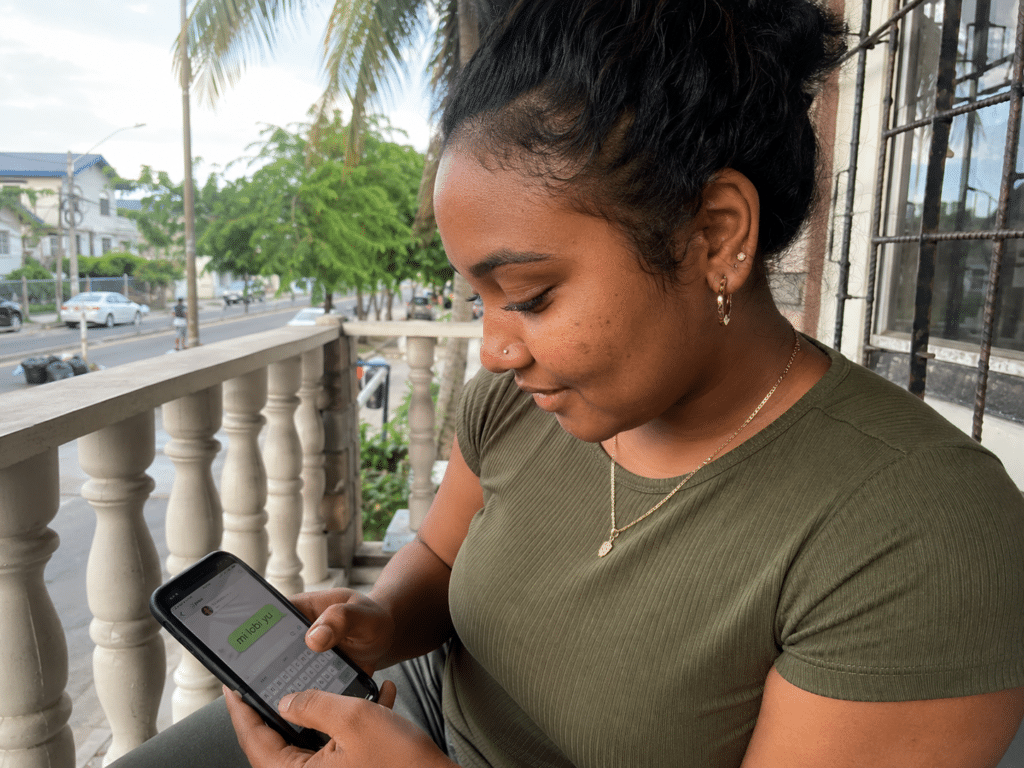
“Lobi” often enters the ear before it enters a dictionary. In Paramaribo, the capital of Suriname, all it takes is a family conversation, a song in the distance or a message sent between loved ones to hear “mi lobi yu”. Three simple words. A declaration of love. And behind them, a long linguistic history born on the Guiana coast, between colonization, slavery, resistance and daily life.
In Sranan Tongo, “lobi” means to love, to be in love or to feel strong affection, depending on the context. It should not be taken to mean more than it says. Sranan dictionaries distinguish other words for kissing or sexual relations. But “lobi” has a special place, because it concentrates the emotional impulse of a language long kept at a distance from official spaces.
A Creole language born of Surinamese history
Sranan Tongo, literally “language of Suriname”, is an English-based Creole formed in the colonial context of the 17th century. It developed among populations brought into brutal contact: European settlers, deported African slaves, workers, local communities. When the Dutch took control of Suriname from the English in 1667, as part of the colonial recomposition around New Amsterdam, the language was already circulating.

Dutch then became the language of administration and schools. Sranan Tongo remains a language of everyday communication. It is used by groups who do not always share the same language of origin. This function explains its strength. It also explains its ambivalence: a common language, but one often scorned by institutions. In the streets of Paramaribo, this reality is still evident: the same person may switch from Dutch to Sranan, then to a family language, depending on the interlocutor, the place and the degree of proximity, in the course of an ordinary conversation.


Loving, without complicated conjugations
“Lobi” comes from the English word for “love”, adapted to the sranan tongo sound system. The phrase “mi lobi yu” translates simply as “I love you”. Literally: I love you. No visible conjugation, no complicated endings. Meaning is based on word order, context and grammatical particles that mark tense or aspect, as the case may be.
This economy gives the word a direct force. “Lobi” can refer to love, family ties, friendship, faith, music, cuisine or country. The same word crosses several registers. This is not a lack of vocabulary. It’s a way of letting the context define the nuance.

A word long left out
For a long time, Sranan Tongo was considered an inferior language. It was called a patois, a street language, a house language. Yet it carried a memory. It carried market exchanges, neighborhood conversations, songs, jokes, arguments, prayers and tenderness.

Its spelling was standardized by the Surinamese authorities in the mid-1980s. This step did not erase the debates, but it did mark an important recognition. Today, Suriname remains profoundly multilingual: Dutch is the official language, while Sranan Tongo coexists with Sarnami, Javanese, Maroon languages such as Saramaccan and Ndyuka, and several Amerindian languages.

A word that travels with the diaspora
The diaspora has taken “lobi” far beyond Paramaribo. In the Netherlands, home to a large community of Surinamese origin, the expression “mi lobi yu” continues to circulate in families, messages, songs and certain forms of urban language. The word becomes an intimate sign. It speaks of love, but also of the continuity of a language transmitted far from the land.

And perhaps that’s what makes “lobi” so precious. It reminds us that a word is never just a translation. It carries a way of feeling, speaking and staying connected. Next week, RK Words crosses the Caribbean again, heading for the Dominican Republic, where we’ll focus on mangú, a morning dish that also tells a story of language, table and memory.

“Lobi” means to love, love or feel strong affection in Sranan Tongo, a Creole language spoken in Suriname. The word can be used in many contexts: love, family attachment, friendship, faith, connection to the country, taste for music or cuisine. That’s what makes this word so important: it’s not limited to a single form of love, but takes on its precise meaning depending on the situation and the relationship between people.
“Mi lobi yu” means “I love you” in Sranan Tongo. The phrase is short, direct and well known in Surinamese culture. It also demonstrates the simple structure of this Creole language: literally, it means “I love you”. Beyond the translation, this expression carries an intimate, familial and cultural dimension. It reminds us that Sranan Tongo remains a language of everyday life, affection and transmission.
The word “Lobi” is linked to the linguistic history of Suriname, where Sranan Tongo was created in a context of contact between different populations, languages and memories. With the Surinamese diaspora, particularly in the Netherlands, the word continues to circulate in families, messages, songs and certain forms of urban language. It thus becomes more than just a love note: it’s also a sign of belonging, memory and cultural continuity.