Barbados – Resilience of Coastal Fisheries to Climate Change

Resilience of Coastal Fisheries

The resilience of coastal fisheries in Barbados has become a crucial issue following the damage caused by Hurricane Beryl on July 1, 2024. This sector, vital to the local economy and food security, is facing major challenges linked to climate change. In this article, we look in detail at the impacts of these upheavals, the responses implemented through an ambitious project, and the expected benefits for Barbadian fishermen and coastal communities.

Climate change impacts on coastal fisheries in Barbados

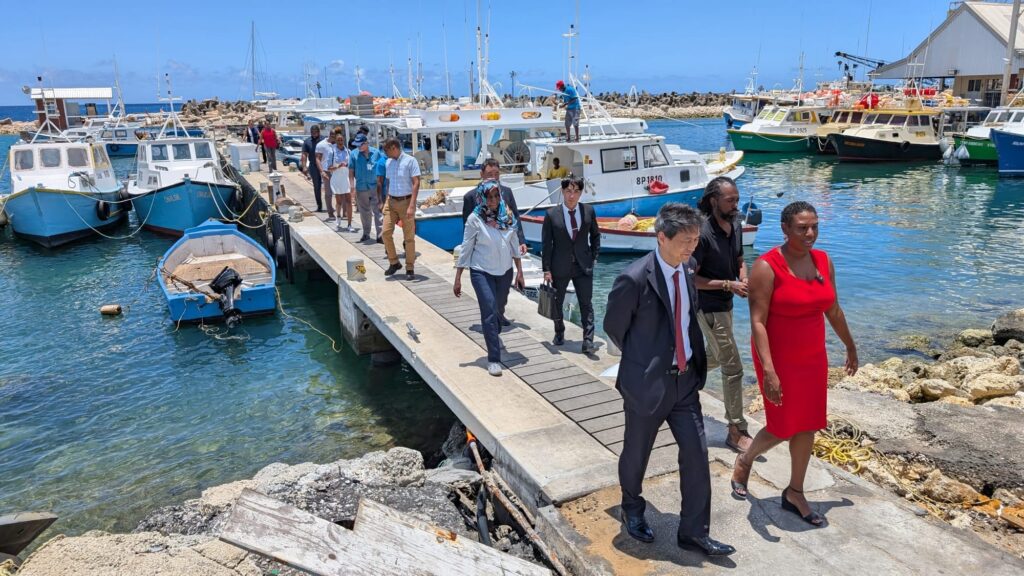
Barbados, like many Caribbean islands, is already suffering the devastating effects of climate change. Hurricane Beryl in particular highlighted the vulnerability of coastal infrastructures. The Bridgetown Fisheries Complex, the heart of the local fishing industry, saw its breakwater, docks, jetties and more than 200 boats severely damaged. These infrastructures are essential for commercial and artisanal fishing, and their destruction has disrupted operations and affected fishermen’s incomes.

In addition to hurricanes, other phenomena linked to climate change are aggravating the situation: rising sea levels, more frequent and intense storms, and the invasion of sargassum, which is destroying marine habitats. These factors compromise not only the productivity of fisheries, but also the food security of the Barbadian population, which relies heavily on coastal fishing for its protein supply. This is why the resilience of coastal fisheries in Barbados is now a national priority.

The Barbados Coastal Fisheries Resilience Project

In response to these challenges, a major project was launched on April 14, 2025: the Barbados Coastal Fisheries Resilience Project. This project is the result of collaboration between the Government and people of Japan, the United Nations Development Programme (UNDP), and the Barbadian Ministry of Environment and National Beautification, as well as other partners.

With funding of US$2.93 million, this project aims to strengthen the resilience of coastal fisheries in Barbados. The project is part of a wider strategy to recover from Hurricane Beryl and adapt to climate change. It is part of a broader strategy for post-Hurricane Beryl recovery and adaptation to climate change, incorporating innovative and sustainable measures.

Resilience of Coastal Fisheries
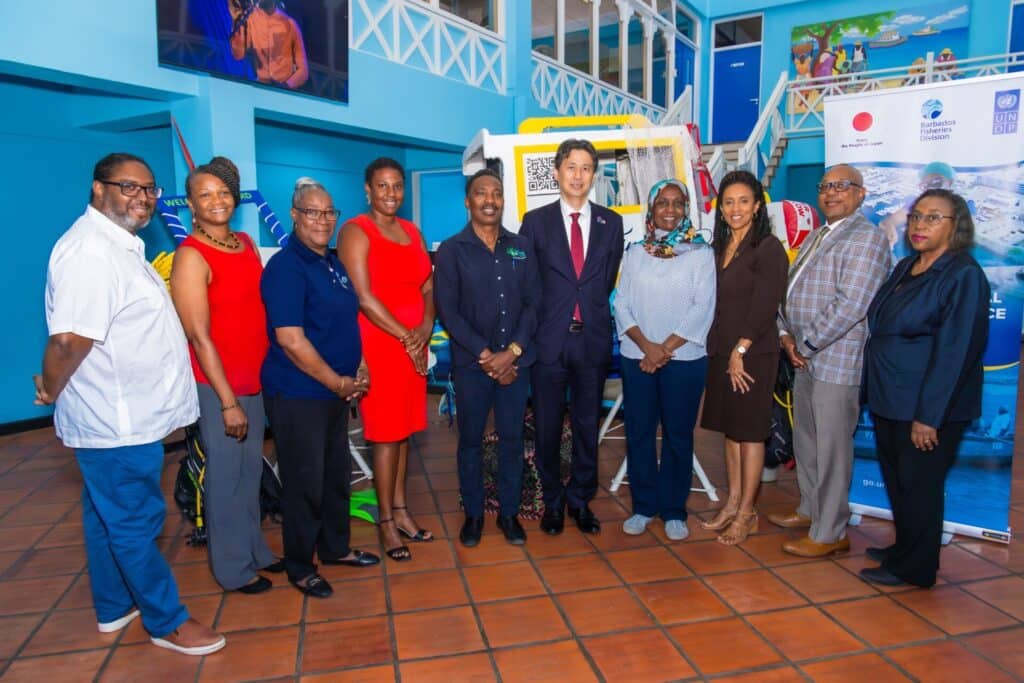
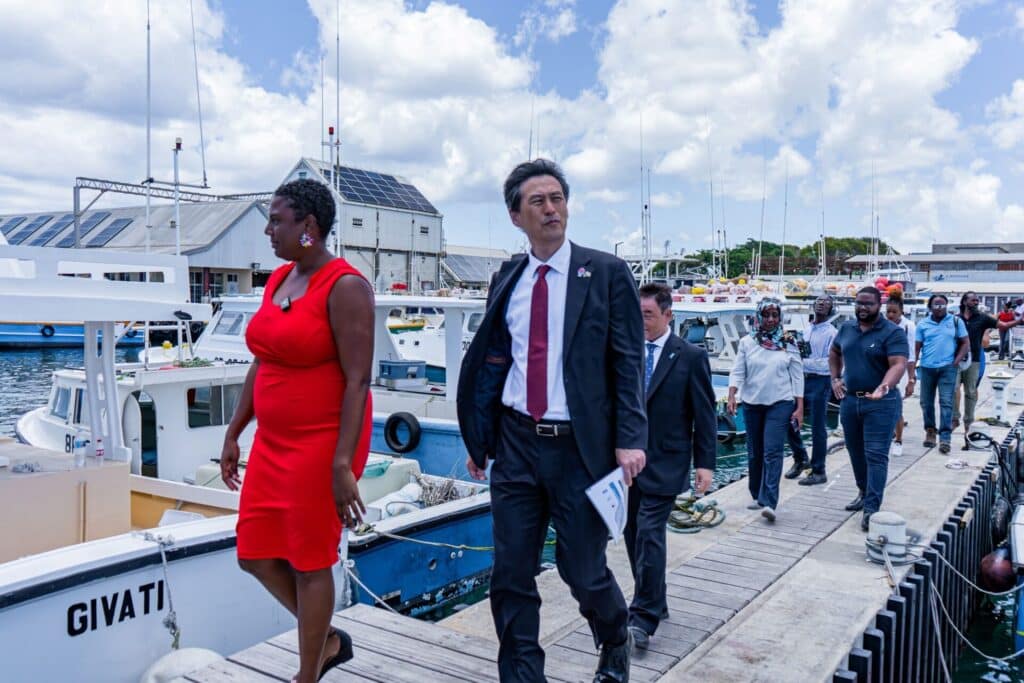
Dr. Shelly-Ann Cox next to Japan’s Ambassador to Barbados, H.E. Misayaka Yusuke. Source : Barbados Fisheries Division
Resilience of Coastal Fisheries
Source : Barbados Fisheries Division
Resilience of Coastal Fisheries
Dr. Shelly-Ann Cox next to Japan’s Ambassador to Barbados, H.E. Misayaka Yusuke. Source : Barbados Fisheries Division

Concrete actions to strengthen resilience

The project has several key components:

  • Infrastructure rehabilitation : Reconstruction and modernization of the Bridgetown Fisheries Complex is a priority. This includes repairing the docks, piers and breakwater to protect the facility from future storms.
  • Installation of technological equipment : A Marine Travel Lift capable of lifting boats up to 54 tonnes will be acquired to facilitate ship maintenance operations. In addition, a Starlink communication system will be installed on around 100 boats to improve coordination, safety and rescue at sea.
  • Training and capacity building: Fishermen will benefit from training in disaster-resistant boat building, as well as emergency preparedness simulations and exercises. The project also supports the organizational strengthening of the Barbados National Union of Fishermen (BARNUFO) through the provision of office equipment and digital technologies.

Each initiative aims to increase the resilience of coastal fisheries in Barbados by implementing concrete solutions adapted to local realities.

Resilience of Coastal Fisheries
Japan’s Ambassador to Barbados, H.E. Misayaka Yusuke. Source : Barbados Fisheries Division
Resilience of Coastal Fisheries
Honorable Adrian Forde, Minister of Environment and National Beautification, Green and Blue Economy. Source : Barbados Fisheries Division
Resilience of Coastal Fisheries
Chief Fisheries Officer, Dr. Shelly-Ann Cox. Source : Barbados Fisheries Division
Resilience of Coastal Fisheries
UNDP Resident Representative, Ms. Limya Eltayeb. Source : Barbados Fisheries Division

Expected benefits for fishing and coastal communities

The benefits of this project are manifold. Firstly, it will rapidly restore the means of production and marketing of fisheries, thus ensuring continuity of income for fishermen and their families. Secondly, by strengthening disaster preparedness, it will reduce the risk of human and material losses in future extreme weather events.

The project also contributes to Barbados’ food security, by guaranteeing a stable supply of seafood products. It is also part of a sustainable development dynamic, promoting a blue economy that respects marine resources and coastal ecosystems. Strengthening the resilience of coastal fisheries in Barbados also helps stabilize local economies while ensuring the survival of traditional fishing practices.

Finally, international collaboration, notably with Japan and the UNDP, demonstrates the importance of mutual assistance between island states and global partners in tackling the challenges of climate change. This model of cooperation reinforces the resilience of coastal fisheries in Barbados through collective intelligence.

The resilience of coastal fisheries in Barbados is vital to the island’s economic and social survival. The project launched in 2025 illustrates a concrete and innovative response to the impacts of climate change, combining rehabilitation, technology and training. This exemplary approach offers a model for other Caribbean countries facing similar challenges. It is essential to pursue these efforts with determination and solidarity to ensure a sustainable future for Barbados’ fisheries and coastal communities.

Leave a Reply

Your email address will not be published. Required fields are marked *

More articles from RK

Philippe Faure-Brac
NEWS
Tolotra

Philippe Faure-Brac at Habitation Clément: Martinique rum as seen by a great sommelier.

Philippe Faure-Brac had never visited Habitation Clément before. World’s Best Sommelier 1992, member of the Meilleurs Ouvriers de France with honorary status since 2015, he came to Martinique to look at rhum agricole from its very place of production: the cane, the cellars, the bottling and the tasting. A first visit to Habitation Clément At Habitation Clément, in Le François, this visit had a special significance. Philippe Faure-Brac was already familiar with Clément rums, their quality positioning and their universe. He had also contributed to the book Rhum Clément, une histoire de famille, bringing his insight into the house’s aromatic precision, balance and tradition of excellence. But he lacked the experience of the place. That of the light, the temperature, the atmosphere of the winery and the exchanges with the teams. “The first time in Martinique? I was going to say finally,” he confided, recalling that he had been hoping

Read More »
Boiling Lake
TOURISM
Tolotra

Boiling Lake: 92 °C, 63 m wide, the 2nd largest bubbling lake in the world

Just 8 kilometers east of Roseau, the capital of Dominica, it’s a three-hour walk from Laudat to Boiling Lake. Three hours of humid forest, desolate valley, soil-heated rocks and sulfurous fumes. At the end of the path, a 63-metre-wide pool. Inside, the water bubbles almost continuously, with temperatures measured up to 91.6°C at the edges. It’s the second largest bubbling lake in the world. A rare phenomenon in a UNESCO park The world’s first is Frying Pan Lake in New Zealand’s Waimangu Valley. But the Dominican Boiling Lake is in a class of its own. Firstly, because it can only be reached on foot, after a demanding hike. Secondly, because it is part of a national park that has been a UNESCO World Heritage Site since 1997: Morne Trois Pitons National Park. This makes it one of the most singular geothermal phenomena protected in a world-renowned natural site. A flooded,

Read More »
Tourisme 3.0
TOURISM
Tolotra

Tourism 3.0: Jamaica wants to keep its tourist wealth

At the Montego Bay Convention Centre, the image speaks for itself. Local entrepreneurs showcase their products, hotel representatives circulate, meetings follow one another. Behind these rapid exchanges, one question weighs heavily: when tourism makes money, how much really stays in Jamaica? This is at the heart of Tourism 3.0, the new direction championed by Jamaica’s Minister of Tourism, Edmund Bartlett. At the Tourism Enhancement Fund’s 11th Speed Networking Event, he set out a clear ambition: to make tourism a more direct driver for Jamaican producers, artisans, manufacturers and suppliers. Tourism that no longer just wants to attract Jamaica knows how to welcome visitors. But the challenge is no longer just to fill hotels or increase arrivals. The real challenge is to retain more value in the territory. Edmund Bartlett has recognized a structural weakness: a large proportion of the goods and services consumed by the tourism industry are still imported.

Read More »

conTACT RK

we'd love to have your feedback on your experience so far

Join The List

Join our Richès Karayib community!  Sign up for our newsletter.

Want To Maximize Your Business Presence On Riches Karayib?

Complete the form to start the application