
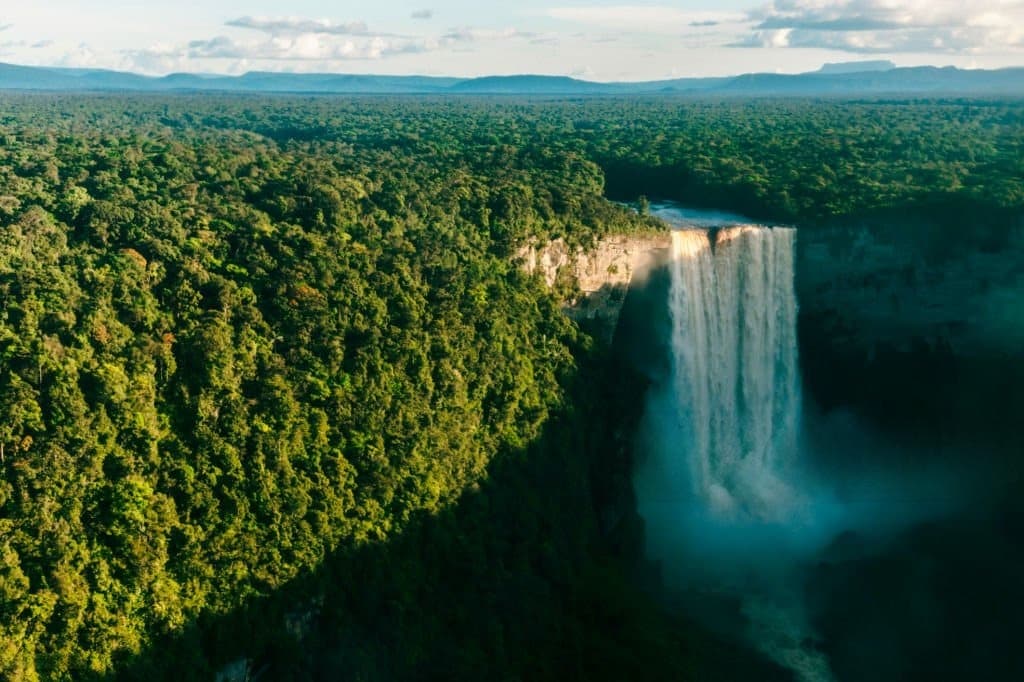
As the plane leaves Georgetown, the roads fade from view, the houses become tiny, and the forest eventually fills almost the entire horizon. Then, suddenly, a white break appears in this vast expanse of green. These are the Kaieteur Falls, where the Potaro River plunges 226 meters in a single drop. The sight is impressive not only for its height but especially for its surroundings: almost no man-made structures, just rock, forest, water, and open space.

Kaieteur Falls: 226 meters that put things into perspective
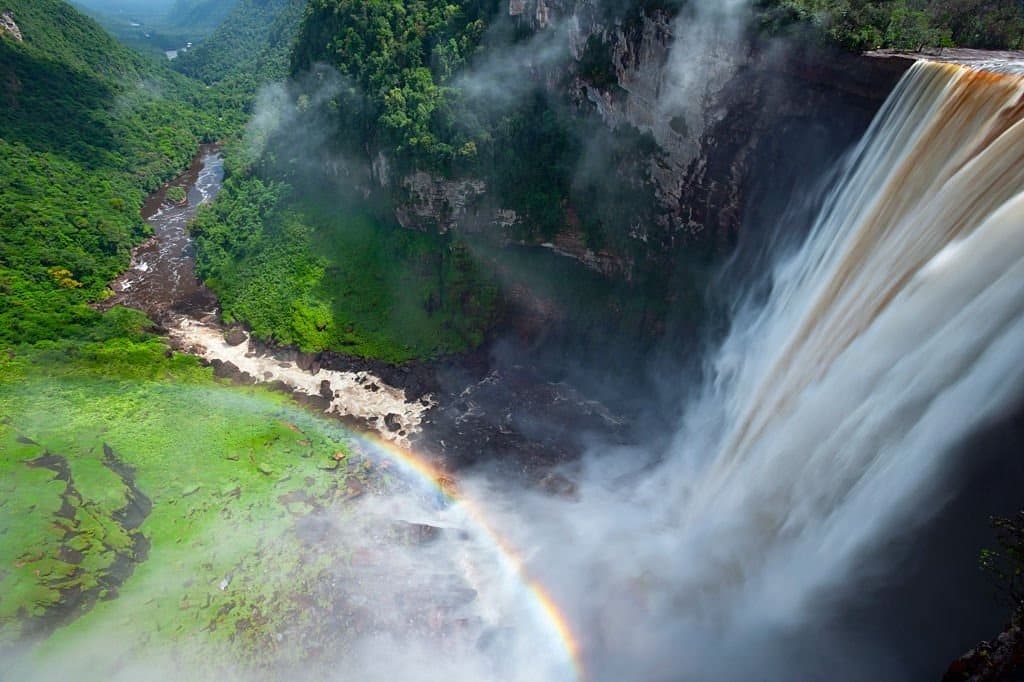
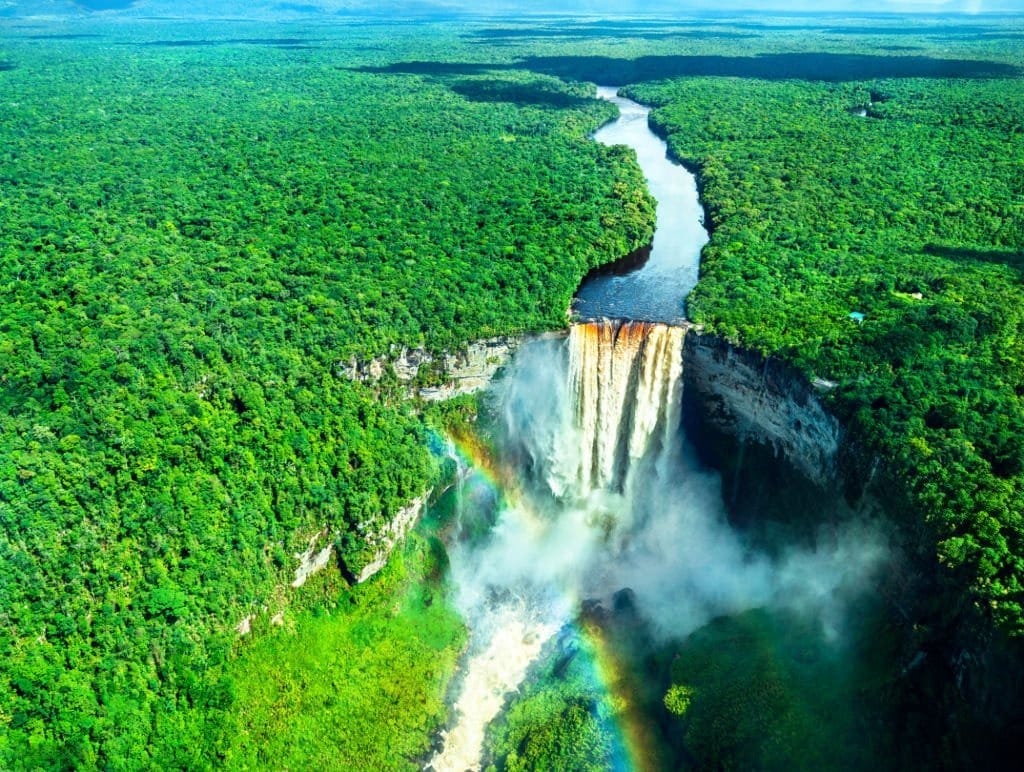
At 226 meters, or 741 feet, Kaieteur Falls is more than four times as high as Niagara Falls. Its uniqueness also lies in the combination of this height and the volume of water plunging from the plateau. Here, the Potaro River does not cascade down in a series of waterfalls. It flows through the landscape, suddenly reaches the escarpment, and then vanishes into a curtain of water, spray, and roaring sound.
This power gives the place a feeling that is difficult to capture in a photograph. From the viewing points, the eye is not drawn solely to the waterfall. It also takes in the rock faces, the mist rising from the pool, and the expanse of forest that seems to stretch on endlessly.


A waterfall in the heart of a landscape billions of years old
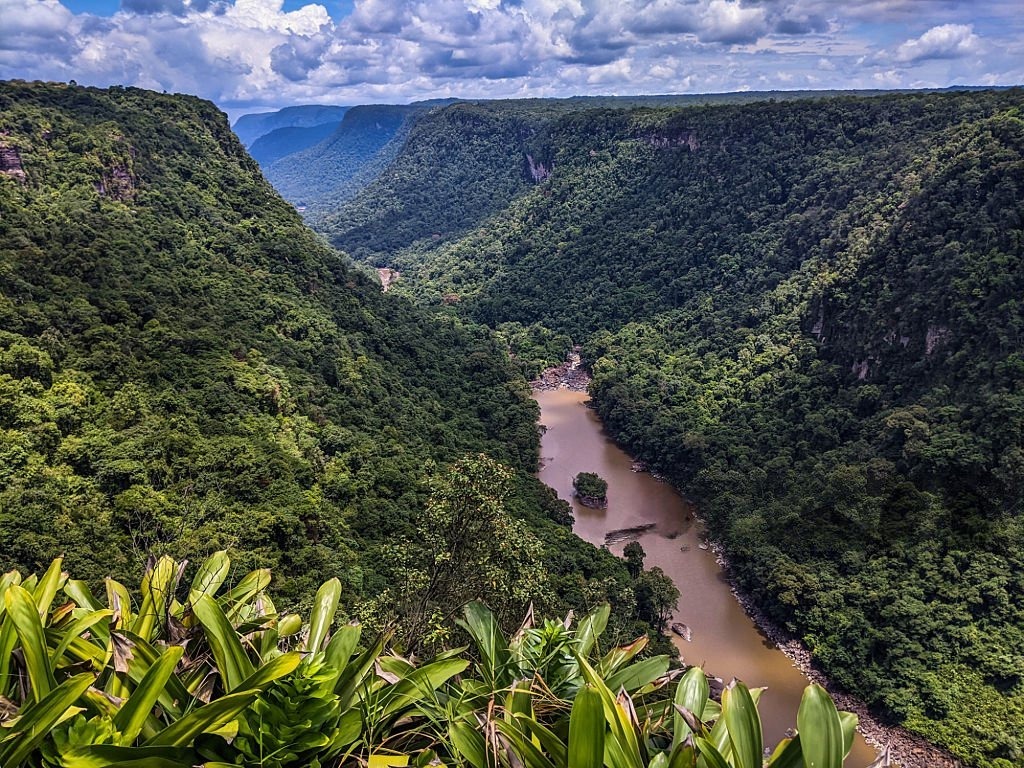
Kaieteur Falls are located in the Potaro-Siparuni region, within Kaieteur National Park. Established in 1929, the park now covers approximately 62,700 hectares. It lies on the Guiana Shield, a geological formation whose rocks are over two billion years old in some places.
This geological depth adds another dimension to the site. Kaieteur is not just a spectacular destination—it’s also a window into one of the oldest landscapes on the South American continent. In this part of Guyana, the tourist experience relies less on a series of activities than on coming face-to-face with the sheer scale of the landscape.
A place filled with stories
Long before the first Western accounts, Kaieteur Falls were known to the region’s Indigenous peoples, particularly the Patamona. Several oral traditions are associated with their name. One tells of a chief who chose to cross the falls in a canoe to protect his people. Another tells of an old man who was swept away by the waters. These stories should not be confused with established historical facts. Their significance lies elsewhere: they serve as a reminder that the place is also part of a cultural memory, and not just part of the history of tourism or exploration.
On April 29, 1870, British geologist Charles Barrington Brown reached the falls during an expedition. This date marks its entry into Western exploration history, but not its “discovery” in the strictest sense: local communities had known about Kaieteur for much longer.
A Living World to Explore Up Close
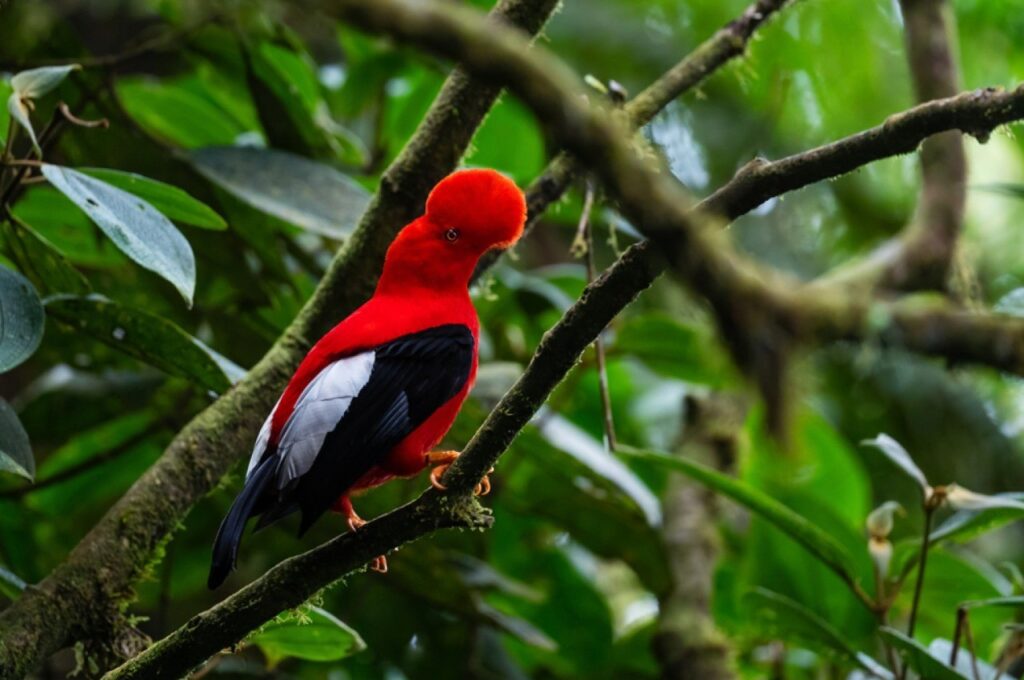
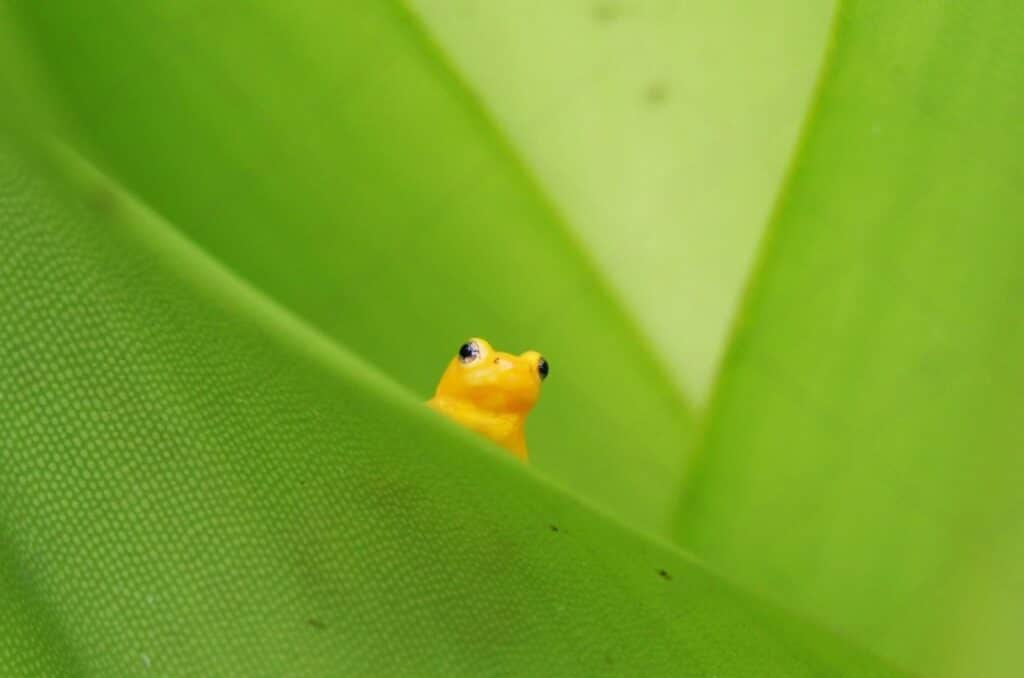
Around Kaieteur Falls, the spectacular can be found in just a few centimeters. The park is home to Anomaloglossus beebei, a small golden frog endemic to the area. It lives in close association with large bromeliads, whose leaves retain small reserves of water used for the development of tadpoles. Visitors can also spot the orange rock cock and Kaieteur swifts, which nest in the cliffs near the waterfall. This biodiversity serves as a reminder that the waterfall is not just an isolated attraction: it is the most visible part of a much larger ecosystem.
The experience of seeing Kaieteur Falls begins even before you arrive
For many visitors, the journey to Kaieteur Falls is part of the experience. Flights from Ogle Airport in Georgetown take about an hour. From the small planes, the urban landscape gradually gives way to rivers, then to the forest. Upon arrival, guided trails lead to several viewing points, including Rainbow View, Boy Scout View, and Johnson View. Each offers a different perspective: from one vantage point, the falls appear massive; from another, they seem almost suspended above the valley.
Perhaps that is where Kaieteur’s true strength lies. Its 226 meters are impressive, but they tell only part of the story. Kaieteur also reveals a Guyana that is forested, ancient, indigenous, and deeply connected to its wild landscapes. It is a destination that demands not only to be admired, but to be understood within the context of the land that gives it its full power.
Kaieteur Falls are located in Guyana, in the Potaro-Siparuni region, in the heart of Kaieteur National Park. They are formed by the Potaro River, in a vast tropical rainforest setting.
Kaieteur Falls is approximately 226 meters, or 741 feet, during their main jump. The Potaro River plunges almost straight down from the plateau, creating the impressive waterfall that can be seen today.
Kaieteur Falls are notable for their combination of height, powerful flow, and secluded forest setting. The site also has significant cultural importance, linked to indigenous traditions, and is home to remarkable biodiversity.
Barbados and Guyana are about to take the next step in Caribbean mobility. From July 1, 2026, eligible citizens of both countries will be able to travel between the two territories with a valid national identity card, without having to present a passport. Behind this administrative measure lies a broader idea: to make regional integration more visible in everyday life.
A national identity card for travel
At airports, the change could be seen at check-in. A Barbadian citizen travelling to Guyana, or a Guyanese citizen travelling to Barbados, will be able to use his or her national identity card for this journey, provided it is valid and recognized under the new bilateral agreement.
This decision does not abolish border controls. Nor does it mean, at this stage, that citizens will automatically have the right to reside or work freely in the other country. The agreement first concerns the document required for travel. This is an important clarification: Barbados and Guyana are making it easier to travel, without announcing a total opening of borders.
An announcement to mark Guyana's 60th anniversary
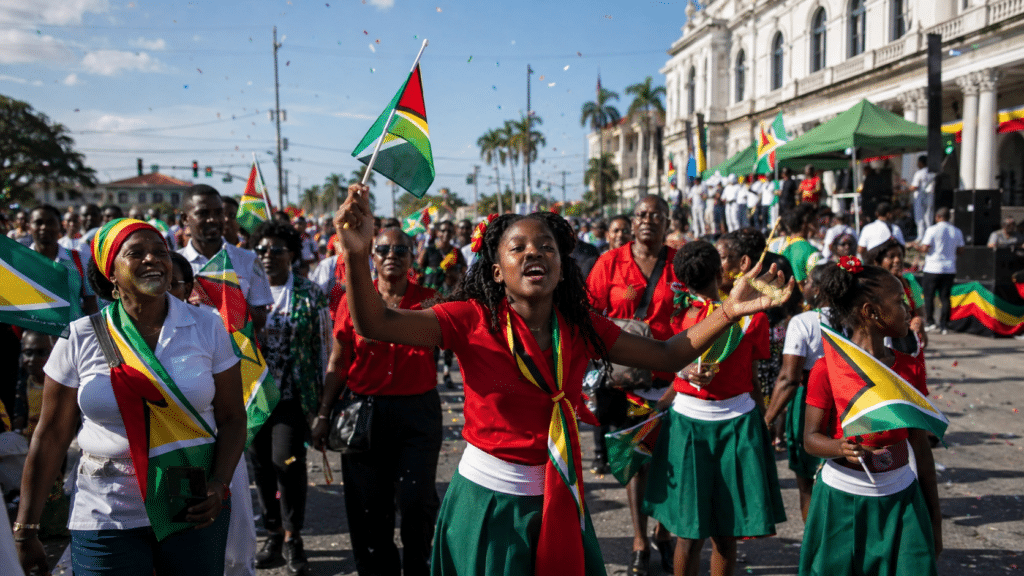
The announcement comes at a highly symbolic time: Guyana marks 60 years of independence on May 26, 2026, while Barbados will reach the same milestone on November 30, 2026. The two countries, which have been independent since 1966, have therefore chosen to give this anniversary a very practical translation: bringing their citizens closer together through a simpler procedure.
The political message is clear. In a region with strong historical, family and cultural ties, travel procedures can be cumbersome. By allowing certain citizens to travel with a national identity card, the two governments want to make passage between the territories more accessible.
A strong signal for CARICOM
For decades, CARICOM has championed the idea of a more united Caribbean. But for many locals, this ambition often remains associated with summits, official declarations and institutional texts. Here, integration becomes more concrete. It’s measured by a document you keep in your wallet.
With this decision, Barbados and Guyana are showing that regional cooperation can have a direct impact on their citizens. A family can plan a trip with fewer constraints. An entrepreneur can organize a trip more easily. An artist, a student or a professional will be able to travel to the other country without going through the classic passport procedure, if all the conditions are met.
The measure can also support tourism, cultural and economic exchanges. Barbados and Guyana occupy two different but complementary positions in the English-speaking Caribbean. One is an island with a strong focus on services, tourism and international trade. The other is a continental territory in the throes of economic transformation, with a particular geographical and cultural depth. Bringing them together lends weight to the idea of a less fragmented Caribbean.

Details still awaited
However, we’ll have to wait for further official details. At this stage, the agreement stipulates that eligible citizens will be able to travel with their national identity card. Governments still need to clarify the exact conditions of eligibility, application procedures, rules for minors, length of stay and instructions to be applied by airlines.
These details will be essential to avoid confusion at the time of departure. A mobility measure only really works if citizens, immigration officers and carriers have the same information. It is on this practical ground that the agreement will be judged.
A closer Caribbean, not just in words
The agreement between Barbados and Guyana is a reminder that a region cannot be built on grand principles alone. It is also built with simple decisions, capable of changing habits. Travelling with a national identity card instead of a passport may seem technical. For the citizens concerned, it can become a concrete sign of belonging to a closer regional area.
It now remains to be seen whether this measure will inspire other CARICOM states. For behind this agreement lies a broader question: how far is the Caribbean prepared to go to make regional mobility easier for its own citizens?
From July 1, 2026, eligible citizens of Barbados and Guyana will be able to travel between the two countries with a valid national identity card. They will therefore no longer need to present a passport for this specific journey, according to the new bilateral arrangement announced by the two governments.
The announced agreement primarily concerns the document required for travel. It should not be confused with an automatic right of residence or work. Governments will still have to specify the exact conditions of eligibility, residence rules and procedures applicable to the citizens concerned.
This measure gives concrete form to Caribbean regional integration. By facilitating travel between Barbados and Guyana, it can strengthen family, cultural, tourist and economic ties between two CARICOM member countries, while paving the way for other similar initiatives in the region.
At the 2026 edition of the Bocas Lit Fest, in the Old Fire Station in Port of Spain, Trinidad and Tobago, Margaret Busby, president of the jury, calls out the name of Tessa McWatt. The audience applauds. It was an historic moment: for the first time in the 16-year history of the OCM Bocas Prize for Caribbean Literature, a Guyana-born author won the grand prize.
An award-winning book beyond the award
The award-winning book is: “The Snag: A Mother, a Forest, and Wild Grief”. A memoir. Random House Canada and Scribe, UK, publish it. The judges described it as “a work of rare brilliance”. The prize comes with an endowment of US$10,000, funded by One Caribbean Media Limited. But money isn’t everything. What matters is what this recognition means for Guyana, a mainland Caribbean country whose literature remains too little read outside its borders.
Tessa McWatt was born in Georgetown, Guyana. Tessa McWatt left the country at a young age for Canada, then settled in the UK, where she teaches creative writing at the University of East Anglia. Tessa McWatt has published eleven books: novels, children’s texts, essays and non-fiction. Tessa McWatt is also a librettist, opera librettist and Fellow of the Royal Society of Literature.


The Snag, a memoir of loss, the forest and the living
The OCM Bocas Prize-winning memoir is not an easy book to summarize. The Snag, which could be translated as “the snag” or “the obstacle”, interweaves several threads. The story of the moment when the author’s mother, suffering from dementia, can no longer live alone and has to leave her home. A meditation on the forest and what natural ecosystems can teach us about loss, attachment and life. And a reflection on the great contemporary destabilization: climate, loss of biodiversity, loneliness, aging, human lives sometimes reduced to statistics.


A Caribbean prize in three categories
The OCM Bocas Prize has existed since 2011. It is awarded each year to a book published in the previous year by a Caribbean author who is a citizen or was born in the Caribbean. The prize is divided into three categories: poetry, fiction and literary non-fiction. Each category has its own winner, who receives 3,000 US dollars. Then a grand prize winner is chosen from among the three, with an endowment of 10,000 US dollars.
For the 2026 edition, the other two category winners were Justin Haynes, for the novel Ibis, and Canisia Lubrin, for The World After Rain: Anne’s Poem. Tessa McWatt first won the non-fiction category before being named overall winner. This achievement reinforces the importance of The Snag in a selection where poetry, fiction and non-fiction each carried a strong voice from the contemporary Caribbean.


Guyana, continental territory of the literary Caribbean
One singularity of the 2026 selection is worth mentioning. All three category winners write from the diaspora: McWatt from the UK, Haynes from the USA, Lubrin from Canada. The OCM Bocas Prize is a reminder that Caribbean literature does not stop at the physical borders of territories. It circulates with families, languages, wounds, memories and books.
For Guyana, the moment is doubly historic. The same ceremony also honored another Guyanese-Canadian: Frank Birbalsingh, scholar and literary critic, winner of the Prix Henry Swanzy 2026 for his distinguished service to Caribbean letters. For a country with a population of less than one million, it’s a powerful public statement.
This Guyanese singularity is worth clarifying. English-speaking Guyana, located on the South American continent bordering Venezuela, Brazil and Suriname, belongs geographically to South America but culturally to the English-speaking Caribbean. This dual belonging produces a literature that constantly questions categories. Wilson Harris, David Dabydeen, Pauline Melville, Fred D’Aguiar, Oonya Kempadoo: the list of great Guyanese voices of the diaspora is dense, and Tessa McWatt’s consecration is part of this lineage.


A consecration that opens the story
The 2026 Bocas Lit Fest theme was “All Together Now”. In this context, Tessa McWatt’s victory takes on a special resonance. It is a reminder that the literary Caribbean is also shaped by its dispersed voices, migrant trajectories and family memories. Above all, it is a reminder that Guyana, often placed on the margins of island narratives, has long been an essential part of Caribbean history.
Reading The Snag, we find a major tension in Caribbean literature: bringing the world into the intimate narrative, and making the Caribbean narrative heard in the world. Tessa McWatt achieves this without turning pain into a slogan. Her book starts from a specific family situation – a mother who can no longer live on her own – to open up a wider reflection on loss, memory, the forest and our way of inhabiting a fragile world. Winning the Prix OCM Bocas doesn’t close a story. It opens up a question: how many other Guyanese voices are still waiting to be read at the height of their power?
Tessa McWatt is an author born in Georgetown, Guyana, whose career spans the Caribbean, Canada and the UK. She is known for a body of work that blends family memory, identity, migration and her relationship with the living world. Her victory in the OCM Bocas 2026 Prize reinforces Guyana’s place in English-speaking Caribbean literature, and highlights an important voice from the Guyanese diaspora.
Tessa McWatt’s victory is historic, as it makes her the first author born in Guyana to win the grand prize of the OCM Bocas Prize for Caribbean Literature. This recognition goes beyond mere literary achievement: it is a reminder that Guyana, although located on the South American continent, occupies a major place in the English-speaking Caribbean cultural space.
The Snag: A Mother, a Forest, and Wild Grief is a memoir that links an intimate family experience with a broader reflection on nature, the forest and contemporary fragilities. In it, Tessa McWatt recalls the moment when her mother, suffering from dementia, can no longer live alone and has to leave her home. The book recounts a situation of loss of autonomy, displacement, family attachment and inner transformation, linked to the ecological and human crises of our time.
Eric Walrond did not leave an abundant body of work, but his name occupies a singular place in the literary history of the Black Atlantic world. Born in Georgetown, Guyana, then under British rule, he grew up in Barbados, Panama, New York and England. This trajectory forms the very material of his writing. For him, Guyana is not a point of departure erased by migration. It remains a founding origin, extended by the ports, newspapers and languages that circulate around the Atlantic.
Georgetown, the first anchor of a displaced life
Eric Walrond was born on December 18, 1898 in Georgetown, Guyana. His father came from this mainland territory of the English-speaking Caribbean; his mother was from Barbados. From a very early age, he grew up in several different places. He left Georgetown, lived in Barbados, then in Colón, Panama, a city marked by the construction of the canal and the arrival of workers from the region.
His passage through Panama was decisive. There, he observed a society where men and women from English-speaking territories worked under difficult conditions, often locked into harsh racial hierarchies. This reality nourished his vision. He would never describe the tropics as a peaceful setting. He writes of them as places of work, tension, fear, resistance and survival.


A voice from Guyana in New York noir
In 1918, Eric Walrond arrived in New York. Harlem became one of the major centers of black thought, press and creativity. But his importance lay in the fact that he did not arrive as an American writer. He arrived with a memory of Guyana, Panamanian experience and first-hand knowledge of migration from the English-speaking Caribbean.
In the 1920s, Black New York brought together people from the United States, Jamaica, Trinidad, Barbados, Guyana and Panama. Eric Walrond brings a particular sensibility: that of a man trained in the region’s British territories, ports and press. He collaborated with several publications and became close to the intellectual circles of the Harlem Renaissance.


Tropic Death, a book that refuses to be exotic
In 1926, Eric Walrond published Tropic Deathhis most important work. This collection of short stories does not seek to flatter the tourist or colonial imagination. It shows fragile existences, exposed to poverty, accidents, beliefs, social violence and death. The characters are not decorative silhouettes. They are workers, isolated women, children, sailors, peasants, inhabitants of villages or port districts.
The book’s strength also lies in its language. It doesn’t smooth out the words to make them more comfortable. It lets us hear accents, oral rhythms, popular expressions and traces of Creole. This writing gives a literary place to voices that the English-language publishing of his day kept at a distance. Tropic Death thus becomes an important text for understanding how a Guyana-born author inscribed the realities of the black tropical world in modern literature.


Recognition, then erasure
In the 1920s, Eric Walrond was noticed. His talent circulated in Harlem circles. However, after Tropic Deathhis trajectory became more fragile. He left the United States, travelled through Europe, stayed in Paris, then settled in England. Gradually, his name faded from the literary centers that had first recognized him.
This erasure cannot be read solely as a personal affair. Eric Walrond occupies a place that is difficult to classify. He does not fit neatly into the category of African-American literature, since his imagination comes from Guyana, Panama and British colonial circulations. Nor does he belong to a national literature that is easy to categorize, since his life is built on displacement. This unstable position explains why his work has long been forgotten.
An author in history
To re-read Eric Walrond is to correct an oversight. It means recognizing that a writer born in Guyana helped to broaden the Harlem Renaissance beyond the American context. His work reminds us that Black Atlantic history is also written from Georgetown, Colón, Harlem, Paris and London. It passes through ports, newspapers, migrations, mixed languages and memories left on the margins.
Died in London on August 8, 1966. Today, he is back in the sights of researchers, readers and publishers. His importance lies in one simple thing: he refused to turn the tropics into an easy image. He wrote the lives of the black tropical world with harshness, precision and dignity. That’s why his name deserves a clear place in Guyana’s literary history.

Eric Walrond is a writer and journalist born in Georgetown, Guyana, in 1898. His career took him to Barbados, Panama, New York, Paris and London. He is best known for Tropic Deathpublished in 1926, a collection of short stories that gives a strong literary place to the realities of the black tropical world. His work is often associated with the Harlem Renaissance, but his outlook remains deeply linked to Guyana, English-speaking Caribbean migration and the circulations of the Black Atlantic.
Eric Walrond is important because he expanded the Harlem Renaissance beyond the African-American framework. He brought a voice from Guyana, informed by the experience of Panama, ports, migrant workers and British colonial societies. Through Tropic Deathhe portrayed lives rarely represented in the literature of his time: workers, isolated women, sailors, peasants and inhabitants of tropical territories confronted with poverty, social tensions and the violence inherited from colonialism.
Eric Walrond was born in Georgetown, Guyana, a mainland territory historically and culturally attached to the English-speaking Caribbean. Guyana should not be confused with French Guiana, nor with Guayana, which refers to other geographical and historical areas. His work starts from this Guyanese origin, but then expands to Barbados, Panama, New York and London. It is this journey that makes him an essential author for understanding the migrations, languages and memories of the Black Atlantic world.
While the energy transition is often discussed from an economic perspective, it also raises major challenges for Caribbean territories, their natural heritage, and the future of their appeal to tourists.
Caribbean Energy Week 2026 marks a major turning point for the Caribbean economy. Long perceived as a region essentially dependent on tourism and services, the Caribbean is now establishing itself as a strategic territory in the global energy sector. The event, scheduled from March 30 to April 1, 2026 in Paramaribo, Suriname, brings together governments, investors, energy companies and financial institutions around a common goal: to transform the region’s energy potential into a sustainable economic driver.
This new edition takes place against a backdrop of profound transformation. Oil discoveries in Guyana and Suriname, the consolidation of Trinidad and Tobago’s energy role and the boom in renewable energy projects on several islands are repositioning the Caribbean on the global economic map. Caribbean Energy Week 2026 is thus a strategic platform for understanding how energy is redefining regional economic balances.
A regional platform for energy investments
Caribbean Energy Week 2026 is more than just an industry conference. The event is positioned as a genuine platform for investment and economic cooperation. Held at the Royal Torarica Hotel in Paramaribo, it will bring together heads of state, ministers, international investors, development banks and energy companies around concrete projects aimed at accelerating the region’s energy transformation.
The objective is clear: to connect Caribbean projects with international capital. The organizers hope to facilitate partnerships between states and investors, accelerate the implementation of energy infrastructures, and present projects deemed “bankable” and likely to attract international financing. This economic dimension makes Caribbean Energy Week 2026 a pivotal event for the region’s financial future.
Beyond technical discussions, the event aims to transform exchanges into real agreements and investments. Round tables will bring together governments and investors to identify concrete development opportunities, while networking sessions will help forge long-term strategic partnerships.

A new economic geography for the Caribbean
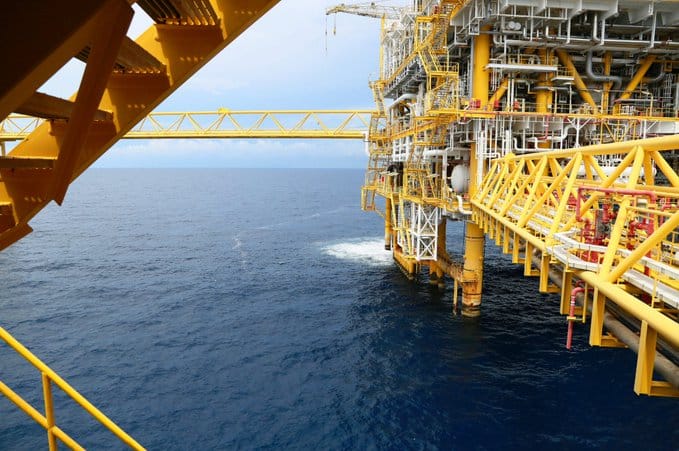
Caribbean Energy Week 2026 comes at a time when the economic geography of the Caribbean is being redrawn. Oil discoveries in Guyana and Suriname have already begun to transform financial flows and investment priorities in the region. Guyana, which has become one of the world’s fastest-growing countries thanks to offshore oil, is now attracting capital, business and skilled labor. Suriname, host of the 2026 edition, is preparing to follow a similar trajectory.
This trend is not limited to hydrocarbon-producing countries. It is influencing the entire region. Caribbean states are seeking to diversify their economies, strengthen their infrastructures and develop local skills in order to reap the economic benefits of this energy boom. Caribbean Energy Week 2026 provides an ideal opportunity to coordinate these regional strategies.
The Caribbean is no longer just a tourist destination. It is gradually asserting itself as an energy and industrial investment zone, capable of attracting international capital and developing regional value chains. This economic transformation is at the heart of the discussions scheduled for the event.
Energy diversity and economic opportunities
The official theme of Caribbean Energy Week 2026, “Leveraging Energy Diversity Across the Caribbean”, highlights the diversity of the region’s energy resources. The Caribbean boasts a range of energy sources, from offshore oil to renewable energies, natural gas and carbon credits. This diversity represents a strategic lever for regional economic growth.
Hydrocarbons remain an important pillar. Oil and gas continue to attract massive investment, notably in Guyana, Suriname and Trinidad & Tobago. However, the event also focuses on renewable energies, such as solar, wind and geothermal power. Several island territories are seeking to reduce their dependence on imported fuels by developing local energy infrastructures.
Caribbean Energy Week 2026 will also address carbon markets, energy storage and the critical minerals needed for the global energy transition. These sectors represent new economic opportunities for Caribbean countries, which can position themselves as resource suppliers or energy innovation hubs.


Impact on employment and training
One of the major consequences of regional energy transformation concerns employment. Energy projects require specialized skills in engineering, logistics, maintenance and project management. Caribbean Energy Week 2026 will highlight the need to strengthen training and local skills development to enable Caribbean populations to benefit directly from these new opportunities.
Several sessions will be devoted to local capacity building and workforce training. The aim is to reduce dependence on foreign labor and promote the integration of Caribbean talent into energy projects. This social and economic dimension is essential to ensure that energy growth truly benefits local populations.
The rise of the energy sector could also stimulate other sectors, including construction, financial services, logistics and digital technologies. Caribbean Energy Week 2026 will highlight these multiplier effects on the regional economy.
Infrastructure and regional connectivity
Energy development also entails investment in infrastructure. Ports, power grids, pipelines and storage facilities are among the projects planned in several countries. These infrastructures are essential to support economic growth and improve regional connectivity.
Caribbean Energy Week 2026 will showcase a number of infrastructure projects aimed at strengthening the region’s energy integration. Cooperation between Caribbean states is seen as a key factor in optimizing resources and reducing costs. Discussions will focus on electricity interconnections, natural gas transport and the creation of regional logistics hubs.
These investments could transform the mobility of goods and services in the Caribbean, facilitating trade and strengthening regional competitiveness. Energy thus becomes a vector for economic integration.


International attractiveness and financial flows
One of the major challenges facing Caribbean Energy Week 2026 is its ability to attract international capital. The region is seeking to position itself as a reliable and stable investment destination. Development banks, investment funds and international financial institutions will be present to assess the opportunities offered by the Caribbean’s energy transformation.
The participation of international players strengthens the credibility of regional projects and facilitates access to financing. Caribbean Energy Week 2026 will serve as a showcase to present investment opportunities and demonstrate the economic viability of Caribbean energy projects. This international visibility is essential to attract the capital needed for infrastructure development.
The influx of financing could also help to diversify Caribbean economies and reduce their dependence on certain traditional sectors. Energy is becoming a lever for economic stability and long-term growth.
A transition to a more diversified economy
Caribbean Energy Week 2026 illustrates a broader transition towards a diversified Caribbean economy. While tourism remains an important pillar, energy is opening up new prospects. Countries in the region are looking to develop complementary industries, strengthen their technological capabilities and improve their economic resilience.
This diversification is essential to cope with external shocks, whether economic or climatic. By investing in energy and infrastructure, the Caribbean can reduce its vulnerability and strengthen its economic sovereignty. Caribbean Energy Week 2026 is part of this structural transformation process.

A new era for the Caribbean economy
Caribbean Energy Week 2026 is more than just a gathering of experts and decision-makers. It symbolizes the Caribbean’s entry into a new economic era. The region, long dependent on traditional sectors, is now positioning itself as a strategic player in the global energy landscape.
The discussions and partnerships that emerge from this event could have a lasting impact on Caribbean economies. Investment, jobs, infrastructure and regional cooperation are at the heart of this transformation. Caribbean Energy Week 2026 thus offers a concrete vision of the region’s economic future.
At a time when the Caribbean is redefining itself on the international stage, this event appears to be a pivotal moment. It enables us to anticipate future economic developments and measure the scale of the transformations underway. For the region’s decision-makers, investors and populations, Caribbean Energy Week 2026 represents much more than a conference: it marks the emergence of a new Caribbean economic dynamic.
It will be held from March 30 to April 1, 2026 in Paramaribo, Suriname, bringing together public and private players in the energy sector.
This event brings together governments, investors and businesses to accelerate energy projects, attract international capital and strengthen the regional economy.
It covers oil, gas, renewables, power infrastructure, carbon credits and critical minerals linked to the energy transition.
The Anthony N Sabga Excellence Awards 2026, this year’s awards recognize five leading figures from the Caribbean whose work, undertakings and commitments are having a measurable impact on a regional scale. Climate science, biotechnology, civic action, visual arts and industrial entrepreneurship: the 2026 edition confirms the vocation of this award – to support concrete solutions, conceived by and for the Caribbean, and to give them the means to accelerate.
A Caribbean prize designed for regional impact
Created in 2005, the Anthony N Sabga Caribbean Awards for Excellence were born of a simple idea: to recognize excellence when it directly benefits the region’s human, economic and cultural development. Initiated by philanthropist and entrepreneur Anthony N. Sabga, the program has established itself as a benchmark thanks to a rigorous selection process, supported by national committees and an independent regional jury.
Unlike purely honorary awards, each winner receives substantial financial support (the local equivalent of $500,000) to extend the work already underway. This philosophy explains the credibility of the prize: it rewards proven trajectories and invests in their immediate future.

Laureates 2026, at the heart of Caribbean challenges
Science & Technology – Climate and health, two regional priorities
Tannecia Stephenson a Jamaican climatologist and co-director of the Climate Studies Group at Mona, was honored for her work in linking research, data and public decision-making. Her digital tools and platforms strengthen the ability of Caribbean governments to anticipate climate risks and adapt sectoral policies. In a region prone to extreme shocks, this approach transforms science into a tool for action.

Niven R. Naraina U.S.-based biotech innovator of Guyanese origin, also receives an award in Science & Technology. Co-founder and president of a biotech company in Boston, he has developed a drug discovery platform powered by artificial intelligence, resulting in some 650 patents and over 100 scientific publications. His career illustrates the contribution of the Caribbean diaspora to global advances, while maintaining active links with the region.

Public & Civic Contributions – Structured social action
Shamelle Rice founder and director of Jabez House in Barbados, is honored for sustainable civic action. Since 2012, her organization has supported women involved in sex work through training programs, professional integration, psychological support and access to housing. More than 1,000 women, often mothers, have benefited from this support in the Caribbean. The approach is pragmatic: stabilize career paths, restore autonomy and create real job opportunities.

Arts & Letters – A contemporary scene without caricature
Sheena Rose a visual artist from Barbados, has been honored for a body of work that moves between painting, performance, frescoes and mixed media. Presented in London, New York, Taiwan and throughout the Caribbean, her practice refuses folkloric assignment and asserts an assumed Caribbean contemporaneity. A Fulbright laureate in 2014 and mentor to young artists, she contributes to the structuring of a demanding regional creative ecosystem.

Entrepreneurship – Building strong regional businesses
Dean Nevers, Jamaican engineer and founder and CEO of Konnex Services Ltd. is rewarded for an entrepreneurial trajectory rooted in industry. His company deploys telecommunications, renewable energy and industrial network solutions in ten Caribbean territories, employs hundreds of people and has surpassed USD 20 million in annual sales after a loss-making start. This success, recognized by Jamaica’s Order of Distinction, illustrates controlled regional growth.

What the Anthony N Sabga Excellence Awards 2026 bring to the Caribbean
The Anthony N Sabga Excellence Awards 2026 provide leverage on several levels:
- – Project acceleration Funding is allocated to existing programs, reducing the time between recognition and impact.
- – Institutional credibility Distinction facilitates access to partnerships, data and markets.
- – Regional networking Regional networking: prizewinners operate in different fields but share common challenges (resilience, innovation, inclusion).
- – Masterful storytelling The prize documents a Caribbean capable of producing exportable responses, without depending on external narratives.
- – Transmission Mentoring, training and the dissemination of knowledge extend the effect of the award beyond the individual.
An edition that confirms a vision of excellence
Anthony N Sabga Excellence Awards 2026 shows that Caribbean excellence is neither abstract nor symbolic. It is measured by the ability to transform research into public policy, innovation into patents and partnerships, social action into stabilized trajectories, artistic creation into structured stages and entrepreneurship into sustainable employment. In this respect Anthony N Sabga Excellence Awards 2026 are a strategic tool for the region: they identify proven solutions and invest in their deployment.
The Anthony N Sabga Excellence Awards 2026 are a major regional award recognizing Caribbean personalities whose work has made a tangible impact in science, the arts, entrepreneurship and civic engagement, with financial support to extend their actions.
The 2026 honorees are Tannecia Stephenson, Niven R. Narain, Shamelle Rice, Sheena Rose and Dean Nevers, recognized for their respective contributions to scientific research, innovation, social action, artistic creation and regional economic development.
The Anthony N Sabga Excellence Awards 2026 support projects that are already up and running, boosting the international credibility of Caribbean players and promoting growth based on knowledge, innovation and sustainable social impact in the region.
In a global landscape marked by food crises, one Caribbean country is making a name for itself where none was expected: Guyana. A recent study published in the journal Nature Food reveals that this territory is the first country in the world capable of feeding its entire population from domestic production alone, while guaranteeing a varied and balanced diet. A distinction that reconfigures the Caribbean’s approach to food security.
Study puts Guyana at the top of an unexpected world ranking


Researchers analyzed the production of 186 countries, comparing it with the essential requirements of a healthy diet based on seven food groups: fruit, vegetables, starchy foods, vegetable proteins, dairy products, meat and fish. The majority of nations cover only part of these categories. Some countries remain highly dependent on imports.
Guyana meets all seven criteria. Rice, tropical fruits, vegetables, roots, sugar cane, seafood and livestock: all nutritional requirements can be covered by local production. The country still imports certain products to diversify dietary habits, but in theory could be self-sufficient in the event of a breakdown in international trade.
In a world where price volatility, conflicts and climatic hazards are making access to food more fragile, this ability places the region in a unique category.

Why has Guyana achieved such food self-sufficiency?

Guyana’s self-sufficiency is based on several complementary factors. The coastline, developed since colonial times with dykes and canals, offers fertile land capable of supporting abundant production. The country grows rice on a massive scale, produces large volumes of sugar, is developing a diversified livestock industry and has fishery resources that complement its protein supply.
Added to this is a clear political commitment. Despite the boom in the oil sector, agriculture is still seen as a pillar of national development. Modernization of rural infrastructures, support for farmers, local purchases for school canteens: the authorities have chosen to strengthen domestic production rather than move away from it.

A strategic role for the Caribbean, between needs and opportunities


In a region where the majority of territories import most of what they consume, Guyana’s situation sends out a strong signal. CARICOM aims to significantly reduce its food import bill, and Guyana is central to this vision. The country already exports rice, flour, meat, fish and many other agricultural products to its neighbors.
With better logistics tools, increased processing capacity and stronger intra-regional trade links, the region can contribute to improving food security throughout the Caribbean. For import-dependent regions, this represents an opportunity to access regional products that are more stable and less vulnerable to international fluctuations.

A success story to be preserved in the face of climate challenges
This enviable position does not erase the risks. Guyana is one of the countries most exposed to the effects of climate change. Most of its population and agricultural land is concentrated on a coastal plain below sea level. Recent floods have shown just how fragile this model can be, with crop losses, submerged rice fields and interrupted farming operations.
The country’s future will depend on its ability to strengthen its infrastructure, protect its mangroves, modernize drainage and accelerate the transition to more resilient agriculture.


An inspiration for the region
The example of Guyana brings a new perspective to the Caribbean. It shows that a country can build robust food autonomy by focusing on agricultural diversity, support for producers and a coherent vision of the territory. It also reminds us that access to healthy food depends as much on production as on climate resilience and social equity.
Without presenting itself as a perfect model, Guyana demonstrates that another trajectory is possible for the region. A trajectory where feeding the population becomes a strategic strength, a political choice and a lever for the future of the entire Caribbean.
FAQ
According to the Nature Food study, Guyana is the only country that produces enough fruit, vegetables, starchy foods, vegetable proteins, meat, fish and dairy products to fully cover the nutritional needs of its population, without depending on essential imports.
Yes, the country continues to import certain products to diversify its food supply, but it could theoretically feed its entire population with local production alone in the event of a crisis or logistical breakdown.
The main challenge is climatic. Much of the country’s agricultural land lies below sea level, making it vulnerable to flooding, erosion and salinization. Maintaining self-sufficiency will therefore depend on substantial investment in coastal adaptation and protection.
COP30: this name refers to the 30ᵉ Conference of the Parties to the United Nations Framework Convention on Climate Change, to be held from November 10 to 21, 2025 in Belém, Brazil. Held for the first time in the heart of the Amazon, this international conference will bring together more than 190 national delegations, heads of state, NGOs, scientists and representatives of civil society to negotiate urgent measures to deal with worsening climate disruption.
This geographic choice marks a turning point: the world’s largest tropical forest becomes both the backdrop and the focus of discussions. Faced with record levels of deforestation, loss of biodiversity and growing pressure from the extractive industries, COP30 aims to redefine the priorities in the fight against climate change by placing the protection of ecosystems at the heart of international commitments.

Curupira: an ancient spirit for the challenges of the future
To embody this decisive edition, Brazil has chosen a figure from indigenous legends: Curupira the mythical guardian of the Amazon rainforest. Far from being a consensual symbol, this character embodies a form of resistance. In Tupi-Guarani tradition, he is depicted as a small man with red hair and upturned feet, capable of outwitting intruders and fiercely defending his territory.
His name, formed from the words “curumin” (boy) and “pira” (body), evokes both childhood and vitality. Curupira is no mere folkloric character: he is deeply rooted in the collective memory of the forest peoples, and his influence extends beyond Brazil’s borders.
In French Guiana, it takes the name Makilili. In Colombia, it becomes Madre Monte. In Ecuador, it’s known as Sachamama, the mother of trees. In the Peruvian Amazon, it is known as Chullachaqui. In Suriname and Guyana, he is referred to as Winti-boskopu or Watramama. All these avatars fulfill the same mission: to protect the forest from predators.
A shared territory, a common emergency
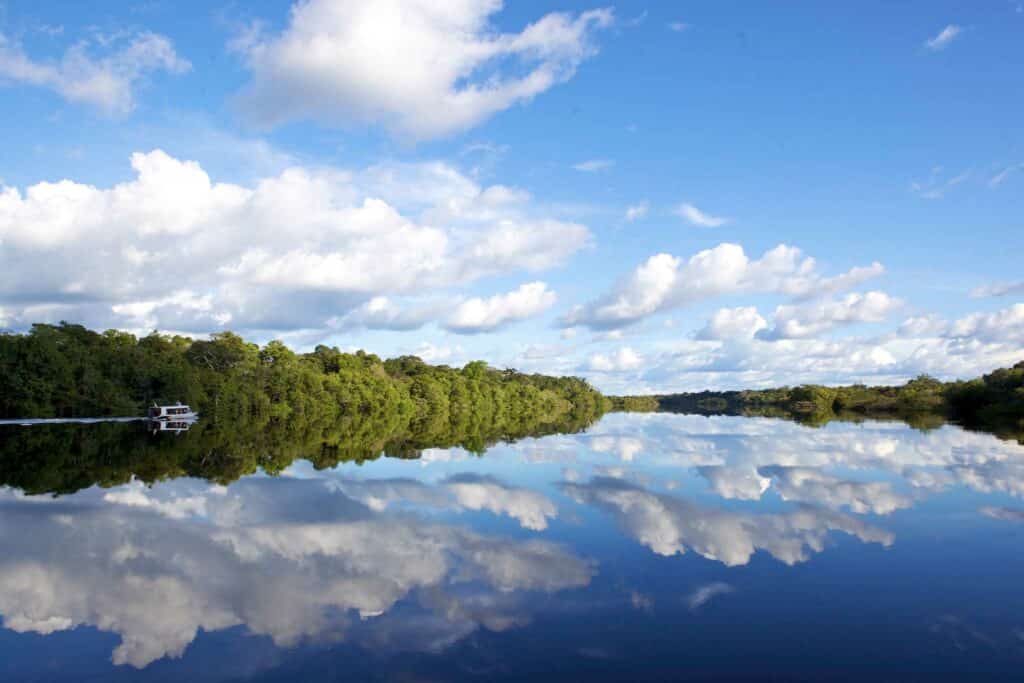
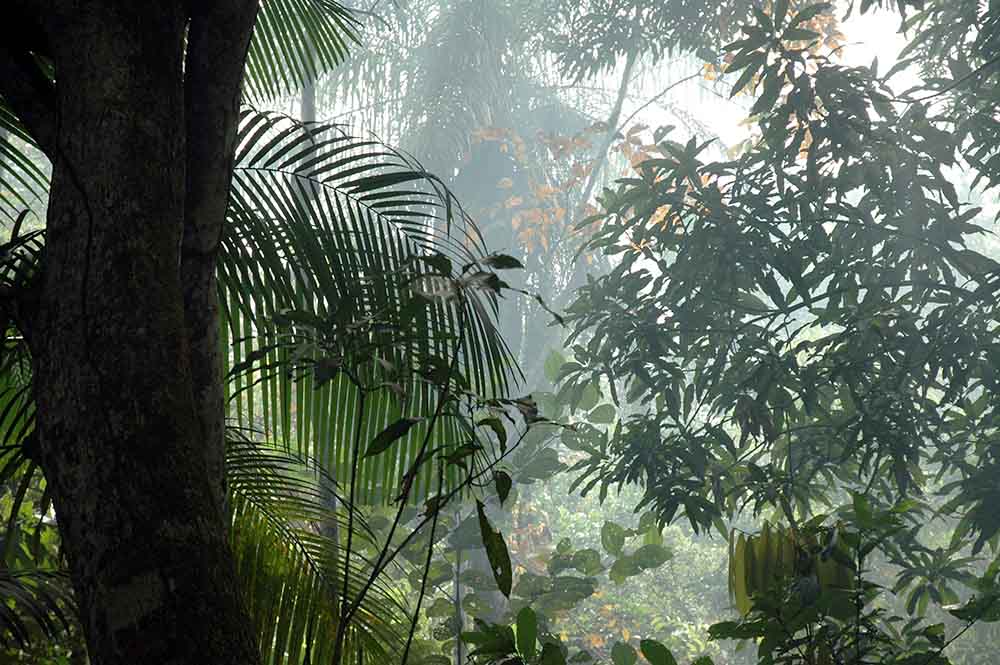
The Amazon covers more than five million square kilometers and crosses nine countries: Brazil, Colombia, Peru, Bolivia, Ecuador, Venezuela, Suriname, Guyana and French Guiana. This vast territory is home to some 34 million inhabitants, including hundreds of indigenous peoples, often on the front line of the effects of extractivist policies and the climate crisis.
By choosing Curupira as its official mascot, COP30 is sending out a strong signal: the recognition of ancestral knowledge and local struggles, and the full involvement of Amazonian populations in global debates.


COP30: objectives, tensions and expectations
COP30 promises to be a strategic moment in international climate governance. Several crucial issues will be addressed in Belém:
- ✔️ Implementing a fair energy transition, with concrete support for the most vulnerable populations.
- ✔️ The creation of a global fund to preserve tropical forests, with announced support from China.
- ✔️ The aim is to mobilize $1,300 billion a year by 2035 to finance adaptation to climate change.
- ✔️ Sensitive negotiations around the reduction of fossil fuels, in a country like Brazil, a major oil producer.
These challenges are compounded by strong popular pressure. Brazilian civil society, researchers and indigenous organizations expect ambitious decisions. In this context, Curupira is not just a symbol: it has become the voice of an Amazon that is demanding its place at the negotiating table.
And what about the Caribbean?
The Caribbean territories are participating fully in COP30, as members of the Framework Convention and representatives of the Small Island Developing States. They include Barbados, Trinidad and Tobago, Haiti, Saint Lucia, Jamaica, Cuba, Antigua and Barbuda, Dominica, Saint Kitts and Nevis, Grenada and Saint Vincent and the Grenadines.
Why is their presence essential? Because these countries, although low emitters of greenhouse gases, are bearing the full brunt of climate change: increasingly violent cyclones, rising sea levels, water stress, coastal erosion and the collapse of marine biodiversity.
For the Caribbean, COP30 is an opportunity to advocate specific financing mechanisms tailored to their vulnerability, as well as to showcase their often innovative local initiatives in resilience, sustainable agriculture and risk management.
An educational and symbolic device around Curupira
Not every climate conference has had a mascot, but Curupira marks a breakthrough. At COP28, a sea turtle symbolized the fragility of marine ecosystems. But until now, no figure had embodied a protective force rooted in popular belief.
Curupira is to be presented in the form of educational and symbolic objects: posters, educational games, school events and workshops in the “citizens’ villages” running parallel to the official conference. This choice aims to raise awareness of global climate issues among a wider public, especially young people, through a figure from the collective imagination.

Curupira, the Amazon's red alert to the world
Through Curupira, COP30 is reminding us that the answers to ecological crises will not only come from laboratories or ministries. They will also require listening to local communities, recognizing local knowledge and redefining our relationship with living things.
By setting up its debates in the Amazon, COP30 is opening a new chapter. For the Caribbean, as for the Amazonian countries, it’s a question of transforming a long-marginalized voice into a lever for global decision-making. And perhaps by looking Curupira in the eye, leaders will understand that the forest is not asking for charity. It demands respect.
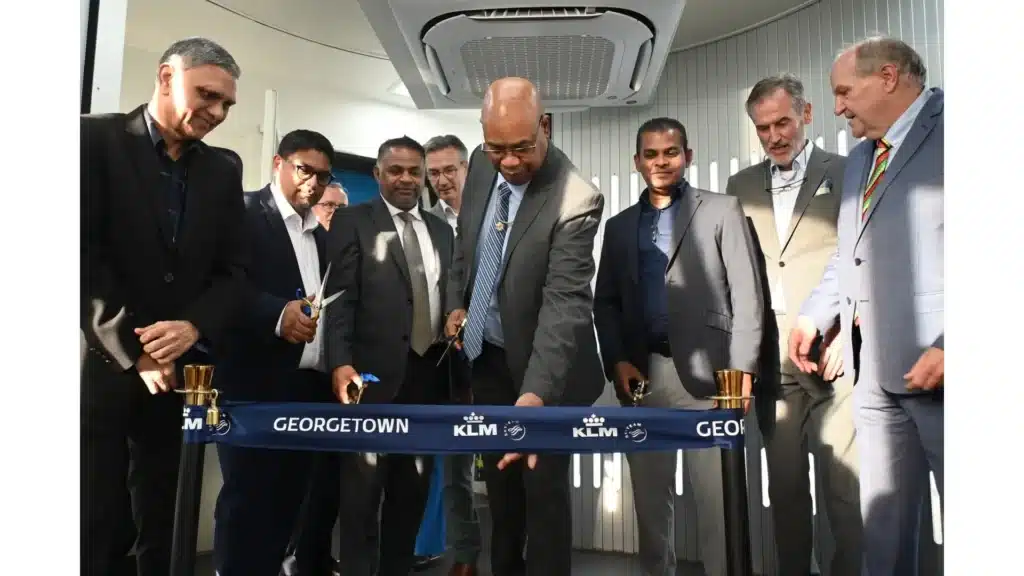
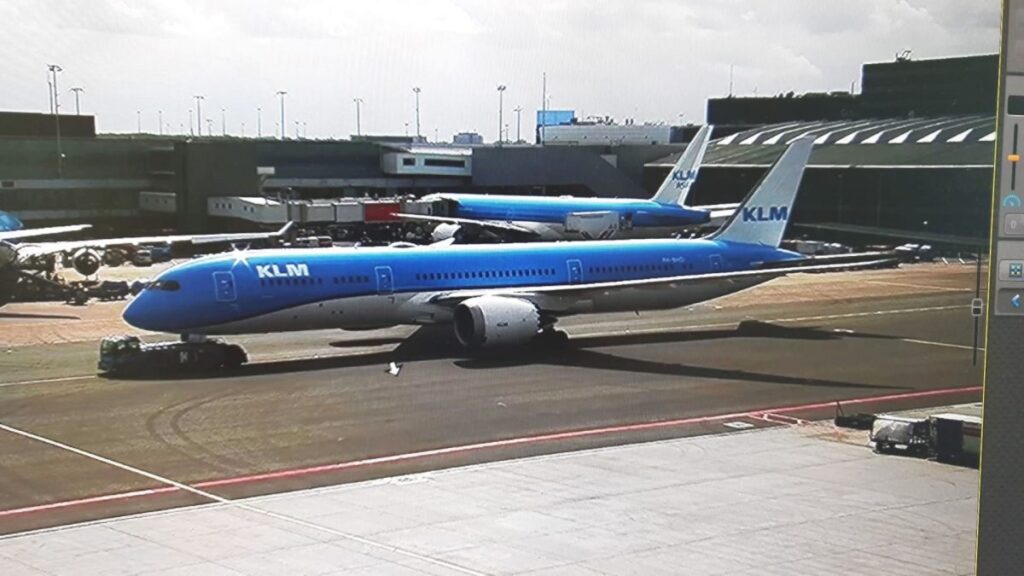
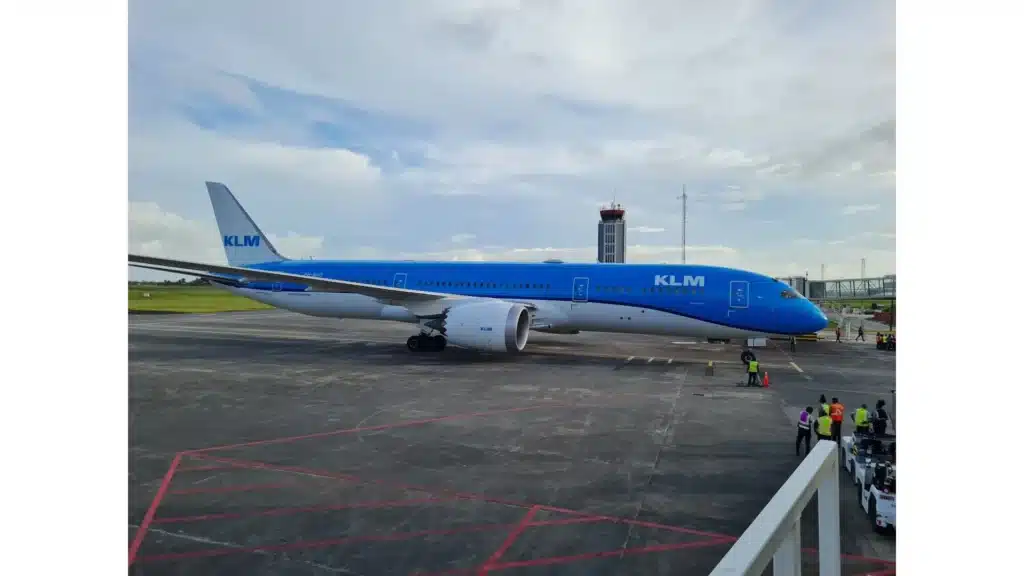
KLM Royal Dutch Airlines inaugurates a new route between Europe and Guyana, marking a decisive step forward in the air integration of this South American country. Thanks to this direct flight from Amsterdam, with a stopover in Sint Maarten, Georgetown is now more accessible, both for travelers and for the business community.
Accelerated growth in air travel since 2020
In recent years Guyana is undergoing a significant transformation in its air transport sector. Several international airlines, including KLM Royal Dutch Airlines. This new dynamic has made it possible to expand the range of flights on offer, while lowering costs for customers. This new dynamic is helping to expand the range of flights on offer, while lowering costs for customers.
A necessary distinction with French Guiana
Often confused with French Guiana. Guyana is a sovereign state with a history marked by British and Dutch influences. Its English-speaking capital, Georgetown, reflects this singularity within the South American continent. The flight operated by KLM Royal Dutch Airlines therefore responds to a specific logic, distinct from the issues specific to the neighboring French territory.
Route details Amsterdam - Georgetown
The service offered by KLM Royal Dutch Airlines plans two weekly rotations, on Wednesdays and Saturdays. Flight KL789 leaves Schiphol at 9:45 a.m., making a stopover in Sint Maarten, before continuing on to Georgetown, where it lands at 4:25 p.m. The return flight is by direct overnight flight. The return flight is a direct overnight flight, considerably reducing the journey time between Europe and Guyana to less than ten hours.
The Airbus A330-200 used on this route offers 18 seats in Business class and 246 in Economy class. This choice guarantees passengers a level of comfort in line with international standards and seamless access to the intercontinental network of KLM Royal Dutch Airlines.
Major economic and tourism benefits
The launch of this route by KLM Royal Dutch Airlines is part of a wider national strategy. President Irfaan Ali hailed a step forward that goes beyond simple passenger transport: it also involves developing trade, freight and diplomatic connections.
Guyana’s aviation sector already generates over $116 million for the country’s GDP and supports around 5,000 jobs. The presence of KLM Royal Dutch Airlines in this context further strengthens the country’s position as an up-and-coming player in the region.
One ambition: to reach 3 million passengers
By 2030, the Guyanese government is forecasting a spectacular increase in traffic, with a target of three million passengers a year. This ambition is accompanied by a vast program to modernize airport infrastructures and open up new routes. KLM Royal Dutch Airlines plays a key role in this shift towards greater international connectivity.
Guyana, the new regional crossroads?
With eleven airlines now serving its territory – compared with just six four years ago – Guyana is positioning itself as a potential regional hub. Linking South America to Europe, KLM Royal Dutch Airlines is directly involved in this geostrategic vision.
This opening also represents an opportunity for local companies, who can now consider exporting to the European market, while benefiting from improved logistics times. For travelers, the gains in accessibility and flexibility are obvious.
Cooperation welcomed by both sides
The inauguration of the flight by KLM Royal Dutch Airlines was enthusiastically welcomed by local and Dutch authorities. The Minister of Public Works, Juan Edghill, saw it as a validation of the efforts being made to modernize the aviation sector. For his part, the Dutch ambassador, Walter Oostelbos, emphasized the importance of the diplomatic and economic rapprochement that such an initiative enables.
Dirk Buitelaar, regional representative of Air France KLM, underlined the human importance of this new link, capable of bringing communities together across continents. The inaugural flight gave rise to a symbolic reception, marked by warm exchanges and high local visibility.
Looking to the future
With this route, KLM Royal Dutch Airlines confirms its commitment to connecting strategic growth regions. Thanks to this strengthened position on the air transport map, Guyana is opening up new prospects for tourism, trade and international cooperation.
Offering direct and regular access to Europe, KLM Royal Dutch Airlines is not just adding a new route to its network: it is actively participating in Guyana’s integration into the world’s major air flows. An initiative that could well reshape the region’s air traffic balance.
Strengthening sea turtle protection through regional ocean governance was one of the key issues at the 2025 annual meeting of the WIDECAST network, held in Saint Kitts and Nevis. Marine experts and conservationists from the Greater Caribbean, Australia and the Netherlands joined forces to deepen regional cooperation on marine turtle protection, with Suriname and the Guianas playing a central role.

A shared commitment to the Caribbean's sea turtles
Held in March at the St. Kitts Marriott Resort, WIDECAST’s AGM 2025 brought together over 80 participants committed to marine conservation. The event provided an opportunity to share update on national actions, share scientific data and make collective progress on flagship projects such as Blue Corridors for Sea Turtles, focused on preserving sea turtle migration routes and the Northwest Atlantic (NWA) Leatherback Regional Action Plan (RAP) for the Wider Caribbean, focused on protecting the leatherback in this region.
The workshops addressed fundamental themes: the fight against illegal trade, sea turtle autopsies, marine health, and the use of the EarthRanger platform for species monitoring. These exchanges illustrated WIDECAST’s key role as a network linking local actions and regional strategies.
Suriname and the Guianas in action

As Oceans Coordinator for WWF-Guianas and WIDECAST Country Coordinator in Suriname, the speaker presented a presentation entitled “Transforming regional ocean governance by combating IUU fishing and protecting marine turtles in the Guianas”.
Her presentation highlighted the one of the main challenges towards the decline of the leatherback which is illegal, unreported and unregulated (IUU) fishing, as well as the efforts undertaken to address them, including:
Strengthening fisheries governance frameworks ;
Enhanced surveillance and information sharing in the field;
Protecting spawning beaches and migration corridors;
Adapting to the impacts of climate change;
Updating Suriname’s Sea Turtle Recovery Plan (STRAP).
The Guianas are thus positioning themselves as a driving force for sustainable, concerted ocean governance on a Caribbean scale.

Local action for regional impact
Suriname’s contribution underlined the extent to which threats to marine biodiversity transcend national borders. The conservation of marine turtles, a migratory species par excellence, calls for coordinated, cross-functional responses.
This dynamic is illustrated by the Northwest Atlantic (NWA) Leatherback Regional Action Plan (RAP) for the Wider Caribbean and the Blue Corridors project and the commitments made collectively. Against a backdrop of increasing pressure on marine ecosystems, the future of conservation will require greater cooperation, science-based decisions and a genuine sense of the common good.
