From July 6 to July 08, 2025, Montego Bay will vibrate to the rhythm of the 49th CARICOM Summit, where the Heads of State and Government of member countries will meet to discuss the major challenges facing the region. Chaired by Andrew Holness, Prime Minister of Jamaica, the atmosphere at this year’s summit is both solemn and charged with urgency, as each delegation has come with high expectations in terms of food security, economic resilience, the Haitian crisis and, above all, the overhaul of regional logistics.
The corridors of the Montego Bay Convention Centre are buzzing with strategic conversations, while plenary sessions alternate with thematic workshops, giving each territory the chance to make its voice heard.
A demanding regional context
Right from the opening of the 49th CARICOM Summit, the tone was set: the Caribbean is going through a pivotal period. Successive speeches by representatives from Barbados, Trinidad & Tobago, Saint Lucia and Dominica highlighted the reality of logistical disruption, dependence on costly air transport and the fragility of supply chains. The debates were lively, with each head of delegation insisting on the need for concrete and immediate solutions. Behind-the-scenes exchanges testify to a shared determination to make this summit a decisive moment for the region.
In his inaugural address, Andrew Holness reiterated the importance of strengthening cooperation and diversifying trade, while stressing the need for rapid responses to security and climate issues. His call for collective mobilization did not go unheeded: the 49th CARICOM Summit featured a series of round-table discussions on regional peace, the pooling of resources and the role of young people in building shared prosperity.
One of the highlights of the 49th CARICOM Summit was the address by Mia Mottley, Prime Minister of Barbados. With eloquence applauded by all participants, she painted a lucid picture of the logistical shortcomings holding back Caribbean development. Her voice, firm and poised, resonated in the auditorium as she spoke of the need for a “regional freight revolution”, stressing the urgent need to democratize transport and restore the sea to its historic role as a link between islands.
Mia Mottley was not one to rest on her laurels. She announced that two CARICOM member states are in advanced negotiations to acquire cargo aircraft, an initiative she believes will help to fluidify trade and guarantee the supply of essential goods. She also mentioned the expected presentation of a private-sector-led regional ferry project, which could revolutionize connectivity between the islands. These announcements, made at the heart of the 49th CARICOM Summit, were greeted with thunderous applause, a sign that the logistics issue is at the heart of our collective concerns.
Mia Mottley took advantage of her platform to point out that the success of these projects depends above all on the political will of leaders. She fondly evoked memories of the Federal Maple and Federal Palm, symbols of a time when the sea united the peoples of the Caribbean. Her plea, echoed in several sessions of the 49th CARICOM Summit, found particular resonance with the delegations, who recognized the need to overcome institutional inertia to build a modern, resilient regional logistics system.
The concrete contributions of the 49th CARICOM Summit for member territories
Food security and trade fluidity
Food security was one of the key topics discussed at the 49th CARICOM Summit. Participants emphasized that the establishment of new sea and air links, such as those mentioned by Mia Mottley, will ensure a steady supply of agricultural produce and essential goods. The exchange of best practices between the Ministers of Agriculture and the Economy testifies to a shared desire to optimize logistics circuits and strengthen the food sovereignty of each territory.
Strengthening economic integration and resilience
Discussions on economic integration have highlighted the importance of pooling resources and diversifying trading partners. The 49th CARICOM Summit’s announcements of public and private investment in regional freight pave the way for enhanced cooperation, enabling member territories to better withstand external shocks, whether economic, health-related or climatic. The participants agree that this edition represents a crucial milestone on the road to shared prosperity.
Outlook for youth and innovation
Throughout the workshops, Caribbean youth and technological innovation took center stage. The initiatives presented, whether in training programs, student mobility or support for entrepreneurship, illustrate the determination of leaders to prepare the next generation and give young people the means to become part of the regional dynamic. These perspectives, discussed in depth at the 49th CARICOM Summit, point to new, concrete opportunities for young people.
The 49th CARICOM Summit, catalyst for a new regional era
In Montego Bay, the 49th CARICOM Summit continues in a studious and determined atmosphere. Led by the likes of Mia Mottley and Andrew Holness, the region is taking a decisive step towards modernizing its infrastructure and deepening its integration. The discussions, rich and sometimes passionate, bear witness to a collective determination to transform challenges into opportunities and build a sustainable future for all the people of the Caribbean.
Richès Karayib met Geraine Georges, Public Relations Manager at the Saint Lucia Tourist Board, and Dexter Percil, Director of Global Marketing, at the 43ᵉ edition of theCaribbean Travel Marketplace held this year in Antigua. For these two strategic representatives of Saint Lucia tourism, the event is an opportunity to showcase the destination’s strengths, strengthen relations with their international partners, and also to launch their summer calendar and open their arms to the French-speaking Caribbean.
A strategic presence for Saint Lucia
For Geraine Georges, participating in the CHTA Marketplace is essential for promote the Saint Lucia brand and to maintain ties with existing partners while forging new ones.
“This event allows us to ensure the continuity of our relationships, but also to position ourselves in the global tourism space.”
On his side, Dexter Percil, Global Marketing Director, stresses the importance of market intelligence data, trends and insights into travel behavior. These are all elements that will guide Saint Lucia’s destination strategy.
“CHTA also gives us the opportunity to position our accommodation offering, and above all, to launch our summer campaign. “
Geraine George
Dexter Percil
A strong delegation and an assertive summer campaign
Saint Lucia came out in force. More than 20 hotel partners were present: Bay Gardens, The Landings, Ladera, Sugar Beach, Ti Kaye, Coconut Bay, Jade Mountain… to name but a few. All with the logistical support from Sunrise Airways providing transfers from Saint Lucia.
This massive presence was also an opportunity to officially launch the “Summer Saint Lucia Style” campaign in Antigua. “Summer Saint Lucia Style a new marketing offensive for summer 2025.
Flagship events 2025: between local traditions and regional bridges
Saint Lucia relies on a strong attractive summer calendar articulated around three highlights:
🎭 Lucian Carnival – Saint Lucia Carnival
🗓️ 01 – July 23rd, 2025 🎯 Parade, Calypso, Panorama, private parties 📍 Castries and festive areas of the island
A mainstay of the Saint Lucian summer, the Lucian Carnival takes place over several weeks, culminating in a two-day parade. Musical ambience, flamboyant costumes, sound systems and calypso competitions transform the island into a Caribbean party capital.
“We invite the whole Caribbean, and Martinique in particular, to come and enjoy this unforgettable experience.”
🎶 Martinique in Gros Islet – Franco-Creole street party
🗓️ Last weekend of July to early August 2025 🎯 Guest DJs from Martinique (DJ Payo & co), local gastronomy 📍 Gros Islet Street Party, north of Saint Lucia
Original initiative launched in 2024, Martinique in Gros Islet is back again this year. The concept: invite DJs and artists from Martinique to perform in the legendary setting of Saint Lucian street parties.
“The idea is to strengthen ties between French and English-speaking cultures around music, rum and good food.”
🌴 Creole Heritage Month & other highlights
🗓️ From October 2025 🎯 Creole culture, heritage events 📍 All over the island
In addition to summer, Sainte Lucie is preparing rich cultural season in autumn including Creole Heritage Month, the arrival of the Atlantic Rally for Cruisers (ARC) and other events focusing on Creole crafts, language and traditions.
A clear opening to the French-speaking Caribbean
Dexter Percil puts it bluntly: Martinique is a priority. And the objective is clear: to welcome more French-speaking visitors to Saint Lucia by capitalizing on geographic proximity, short flights and intense programming.
“Come for a weekend, a carnival or a concert… We guarantee labis, conchs, and unparalleled hospitality.”
A festive invitation to Caribbean unity
Through the dynamic presence of Geraine Georges and Dexter Percil, Saint Lucia has a dual ambition: to strengthen its international business connectionswhile strengthening its regional links. This is a region where culture, festivities and gastronomy unite. Culture, festivities and gastronomy serve as a link here.
The exhibition Paris Noir will be a major cultural event in 2025. From March 19 to June 30, the Pompidou center is highlighting an often overlooked dimension of artistic history: the influence of Afro-descendant artists in Paris between 1950 and 2000. Nearly 400 works and documents showcase the work of 150 artists from Africa, the Americas and the Caribbean, some of whom have never before been exhibited in France. This retrospective highlights the role of the French capital as a place of resistance and transformation for contemporary artistic currents.
A historiographical challenge met
The exhibition Paris Noir undertakes the task of documenting and presenting an often marginalized artistic history. From the creation of the magazine Présence Africaine in 1947 to the distribution of Revue Noire in the 1990s, it traces half a century of expression and affirmation in Paris. In the face of scattered works and gaps in research, this initiative is an essential memorial contribution.
This chronological journey coincides with major historical events: African independence, the fall of apartheid in South Africa and the struggle for civil rights. The Paris Noir exhibition links these political contexts with artistic creation, highlighting the role of art as an instrument of resistance and identity affirmation.
Paris, refuge and creative crossroads
For artists such as Gerard Sekoto, whose self-portrait marks the entrance to the exhibition, or Beauford Delaney and his abstract compositions, Paris was a refuge from segregation, apartheid and political censorship. The city became a unique space for artistic and intellectual interaction, fostering encounters between creators from different horizons.
The diversity of practices, ranging from identity awareness to the search for new plastic expressions, bears witness to this dynamic. Paris Noir highlights how these artists have enriched artistic currents and opened up new aesthetic perspectives.
Estate of Beauford Delaney, by permission of Derek L. Spratley, Esquire, Court Appointed Administrator, Courtesy of Michael Rosenfeld Gallery LLC, New York
From anti-colonialism to artistic affirmation
The title Paris Noir reveals a central political dimension. The exhibition places the works in the context of anti-colonial and post-colonial struggles. From the magazine African presence to the Revue Noires show how these publications contributed to the recognition of Afro-descendant artists.
The archives, photographs and films on display illustrate how art has served as a means of expression in societies marked by colonial legacies.
Exceptional creative diversity
The exhibition highlights emblematic figures such as Wifredo Lam and Roseman Robinot, as well as lesser-known artists such as Christian Lattier and Guido Llinas. It reveals paths and influences that are still little explored in France.
The majority of the works on display have never before been shown in the country. Drawn from public and private collections, they have been brought together thanks to in-depth research. Paris Noir offers a fresh look at the contributions of Afro-descendant artists to modern art.
The exhibition revolves around a central installation representing the Black Atlantic, evoking transatlantic cultural circulations and interactions. This space puts into perspective how Paris became a place of convergence for these artists.
Contemporary installations by Valérie John, Nathalie Leroy Fiévee, Jay Ramier and Shuck One enrich the itinerary and resonate with the themes addressed.
A Parisian base
The exhibition unfolds a never-before-seen cartography of Paris, highlighting the places that saw the birth of this artistic effervescence. Montparnasse, Saint-Germain-des-Prés and the Goutte d’Or emerge as spaces of creation and interaction.
A historical and cultural impact
Paris Noir highlights the French capital’s role as a pan-African laboratory for artistic expression. Institutions such as the École des Beaux-Arts contributed to the recognition of African, American and Caribbean artists, who participated in the redefinition of modernism and postmodernism.
The exhibition focuses on art as a form of resistance to postcolonial realities. It features committed works that bear witness to the struggle for independence and against racial discrimination.
A Paris-wide event
A number of Parisian galleries will be presenting exhibitions in connection with Paris Noir. Among them, Galerie Clémentine de la Féronnière will present works by George Hallett, William Melvin Kelley and James Barnor from March 19 to May 17, 2025. Galerie Hauser & Wirth will be showing collages by Frank Bowling until May 25.
L’Archipel cinema, the Maison Européenne de la Photographie and other institutions will be organizing film screenings and meetings with art historians and critics.
Practical information
The exhibition Paris Noir will be held at the Pompidou center from March 19 to June 30, 2025, from 11am to 9pm, except Tuesdays and May 1st. Tickets are available online or on site, with reduced rates for certain audiences. Guided tours and audio guides are also available.
Nobel Laureate Day is an emblematic date celebrated every January 23 in Saint Lucia. On this day, the island honors its two illustrious laureates, Sir Arthur Lewis and Sir Derek Walcott, both born in Castries. Their outstanding contributions to the economy and literature make this day a source of inspiration for all Saint Lucians and lovers of Caribbean culture. In honouring these emblematic figures, the Nobel Laureate Day reminds the world of the importance of excellence and commitment to progress.
Saint Lucia's Nobel laureates
Sir Arthur Lewis: An economic visionary
Born in 1915, Sir Arthur Lewis was the first black man to win the Nobel Prize in Economics in 1979. His work on economic development and his analysis of the economic problems of developing countries have had a considerable and lasting impact. Lewis highlighted the challenges facing developing countries, proposing innovative solutions that continue to influence economic policies today.
His research was particularly relevant in the context of the Caribbean, where the economy is often based on agriculture and tourism. Lewis advocated economic diversification, stressing the importance of investing in education and training to prepare future generations for an ever-changing world. This message remains relevant today, as Caribbean countries seek to diversify their economies in the face of global challenges.
Sir Arthur Lewis
Sir Derek Walcott: the voice of the Caribbean
Sir Derek Walcott, born in 1930, is a world-renowned poet and playwright. Winner of the Nobel Prize for Literature in 1992, he is celebrated for his ability to capture the essence of Caribbean life through his writing. His works, such as Omeros explore universal themes while remaining deeply rooted in local culture.
Walcott has used his art to address issues of colonialism, identity and culture, creating a bridge between Caribbean traditions and global influences. His poems and plays transcend borders, reaching an international audience while remaining true to his roots. His literary legacy continues to inspire new writers in the region and beyond, encouraging a new generation to express themselves through art.
Sir Derek Walcott
The Nobel Laureates Festival: celebrating excellence
The Nobel Laureate Day is also associated with the Nobel Laureates Festival, which takes place every year from January 5 to February 4, with the theme “Celebrating Excellence”. This festival highlights the achievements of Lewis and Walcott through a variety of activities that bring the community together and promote cultural education.
Festival activities
Lectures: Experts share their knowledge of Caribbean economics and literature, enabling participants to deepen their understanding of Lewis and Walcott’s contributions.
Performances: Students present plays and poetry readings inspired by the work of the two prizewinners, providing a platform for local artistic expression.
Workshops: Interactive sessions allow participants to explore the themes addressed by Lewis and Walcott, fostering an enriching dialogue on cultural heritage.
Cultural and educational impact
The Nobel Laureate Day and the accompanying festival are more than just a celebration. Visit Nobel Laureate Day plays a crucial role in the education and promotion of Caribbean culture. Young people are encouraged to engage in discussions about the cultural heritage and contemporary challenges facing their nation. By incorporating elements of Lewis and Walcott’s legacy into the educational program, Saint Lucia ensures that these contributions are never forgotten.
A lasting legacy
Recognition of Lewis and Walcott’s contributions goes beyond the Nobel Laureate Day. Their legacy is integrated into the Saint Lucian education system, inspiring future generations to pursue excellence in their respective fields. The island’s schools and universities showcase their work, encouraging students to study their ideas and apply them in modern contexts.
The importance of education
Education plays a fundamental role in perpetuating this legacy. School curricula include studies on the contributions of Lewis and Walcott, encouraging students to reflect on the impact of economics and literature in their own lives. By understanding the importance of these figures, young Saint Lucians are better prepared to contribute to their country’s future.
Continuous inspiration
The Nobel Laureate Day and the accompanying festival are more than just a commemoration; they represent an opportunity to reflect on the rich cultural heritage of the Caribbean. The contributions of Sir Arthur Lewis and Sir Derek Walcott continue to inspire not only Saint Lucia, but the entire Caribbean region.
By celebrating these iconic figures, we are committed to promoting excellence in all fields, while honoring our unique cultural heritage. Whether through economics or literature, their legacy reminds us that every individual has the potential to influence the world. As Caribbean experts, it is our duty to pass on this inspiration to future generations.
The rum, this emblematic Caribbean drink has a rich and complex history, intertwined with stories of colonization, slavery and local culture. This article explores its manufacture, its evolution through the centuries and its cultural importance in the territories of the Greater Caribbean.
History of sugar cane
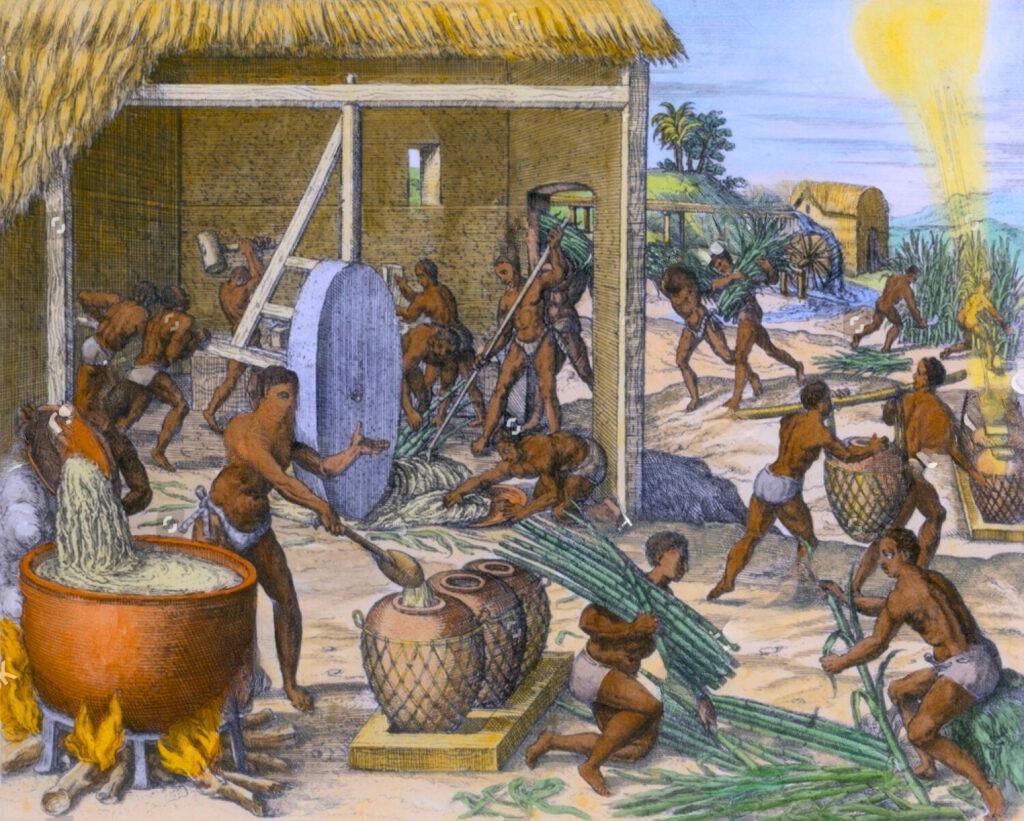
The history of rum begins in the 17th century, when European settlers introduced sugarcane to the Caribbean. Christopher Columbus is often credited with bringing the plant to the island of Hispaniola (Haiti and the Dominican Republic) in the late 1400s. The first sugar cane plantations were established, and sugar quickly became a valuable commodity for Europe.
Rum emerges as a by-product of sugar production. Slaves working on plantations discovered that fermented sugarcane juice could be distilled to produce an alcoholic beverage. This process gave rise to terms like guildive and tafia, before the word rum became commonplace in the 18th century.
The history of rum begins in the 17th century, when European settlers introduced sugarcane to the Caribbean. Christopher Columbus is often credited with importing the plant to the island of Hispaniola (Haiti and the Dominican Republic) in the late 1400s. The first sugar cane plantations were established, and sugar quickly became a valuable commodity for Europe.
Rum emerges as a by-product of sugar production. Slaves working on plantations discovered that fermented sugarcane juice could be distilled to produce an alcoholic beverage. This process gave rise to terms like guildive and tafia, before the word rum became commonplace in the 18th century.
Sugar cane plantation
Rum-making
The history of rum begins in the 17th century, when European settlers introduced sugarcane to the Caribbean. Christopher Columbus is often credited with importing the plant to the island of Hispaniola (Haiti and the Dominican Republic) in the late 1400s. The first sugar cane plantations were established, and sugar quickly became a valuable commodity for Europe.
Rum emerges as a by-product of sugar production. Slaves working on plantations discovered that fermented sugarcane juice could be distilled to produce an alcoholic beverage. This process gave rise to terms like guildive and tafia, before the word rum became commonplace in the 18th century.
Rum and Caribbean culture
Economic and tourism impact
The production of this liqueur also has a significant economic impact on Caribbean territories. Distilleries attract tourists eager to learn more about the production process and taste different types. Events such as rum festivals celebrate the drink and reinforce its role in local cultural identity.
The journey from sugar to rum illustrates not only an artisanal process, but also a rich cultural heritage that continues to evolve in the Caribbean. For connoisseurs and novices alike, the world of rum offers a fascinating experience well worth exploring.
It’s much more than just a drink in the Caribbean; it’s a cultural and historical symbol. It is often associated with local celebrations, rituals and traditions. For example, toddy, a mixture of rum with water and sometimes lemon, was popularized by British Admiral Vernon in the 18th century as a remedy for scurvy.
What’s more, each Caribbean island produces its own style. Martinique is famous for the agricultural version with an Appellation d’Origine Contrôlée (AOC), while Guadeloupe produces the industrial and agricultural type. These differences reflect not only production techniques, but also the unique cultural influences of each region.
The different types of rum produced in the Caribbean
The Caribbean is renowned for its varied production, with each island having developed its own style and manufacturing methods. Here’s an overview of the main types to be found in this region rich in culture and history.
Agricultural type
Origin: Martinique and Guadeloupe
Characteristics: Made from fresh sugarcane juice rather than molasses, it has a more vegetal and often more complex taste.
It is often considered a top-of-the-range product.
Notable examples:
Clément
Barbancourt (Haiti)
Rum Clément
Type Molasses
Origin: Cuba, Dominican Republic, Jamaica, and other islands
Characteristics: This type is generally produced from molasses, a sugar by-product.
It can vary in taste from light and mild to rich and spicy.
Notable examples:
Havana Club (Cuba)
Brugal (Dominican Republic)
Appleton Estate (Jamaica0
Havana Club
Brugal
Type White
Characteristics: Often unaged or very briefly aged, it is clear and light, perfect for cocktails. It is generally distilled at high alcohol levels.
Use: Ideal for drinks such as Mojito or Daiquiri.
Daiquiri
Type Amber
Characteristics: moderately aged, it has a golden color and a richer flavor than white. It is often used in more complex cocktails.
Type Old
Caractéristiques : Aged for several years in oak barrels, it develops deep, complex aromas. It is often drunk neat or with a little water.
Type Spicy
Caractéristiques : Infused with spices such as cinnamon, vanilla or ginger, it offers a unique taste experience and can be drunk neat or mixed in cocktails.
Type Flavoured
Characteristics: it is flavored with various tropical fruits or other flavors. Popular for fruity cocktails.
Navy type
Origin: Several Caribbean islands
Characteristics: traditionally used by the British Navy. It is often a blend with different types created to be robust and rich in flavor.
Demerara type
Origin : Guyana
Caractéristiques : Made from Demerara sugarcane molasses, it is known for its rich, earthy flavors. It is often used in cocktails or enjoyed neat.
Notable examples: El Dorado.
El Dorado
The most famous rums of the Caribbean islands
The most famous rums of the English-speaking islands
The English-speaking Caribbean islands are renowned for their rich tradition of production, offering a variety of styles and flavours.
Here’s a look at some of the most famous from these territories.
Mount Gay Rum (Barbados)
Origin : Barbados
Caractéristiques : Considered the world’s oldest producer, Mount Gay was founded in 1703. Their rums are renowned for their quality and complexity, with a range from light white to rich old.
Appleton Estate (Jamaica)
Origin: Jamaica
Caractéristiques : With over 265 years of history, Appleton Estate is famous for its rich, aromatic versions, often made from molasses. Their expressions include young rums and popular aged blends.
Cruzan Rum (US Virgin Islands)
Origin: St. Croix, U.S. Virgin Islands
Features: Founded in 1760, Cruzan is known for its varied type, ranging from light whites to rich older wines. Their production focuses on quality and authenticity.
John Watling’s Rum (Bahamas)
Origin : Bahamas
Caractéristiques : Produced in Nassau, it is made from local sugar cane and is known for its distinctive taste and smoothness. John Watling’s Rum is frequently considered an excellent choice for cocktails.
Don Q (Puerto Rico)
Origin: Puerto Rico
Caractéristiques : Don Q is the most popular in Puerto Rico, produced since 1865. It is appreciated for its sweetness and versatility in cocktails.
Pusser’s Rum (British Virgin Islands)
Origin: British Virgin Islands
Caractéristiques : Pusser’s Rum is known for its association with the British navy and its robust taste, generally used in classic cocktails such as the Painkiller.
Black Tot Rum (Various Caribbean islands)
Origin: Mix of Caribbean islands
Caractéristiques : It pays tribute to British naval traditions and combines rums from several islands to create a richly aromatic blend.
Hampden Estate (Jamaica)
Origin: Jamaica
Caractéristiques : Renowned for its highly esterified, powerful type, Hampden Estate produces rums that are often considered among the best in the world for lovers of intense flavors.
These brands represent just a sample of the rich diversity of products on offer in the English-speaking Caribbean islands. Each distillery brings its own unique touch, making this region a veritable paradise for spirits lovers.
The most famous rums of the French-speaking islands
They are produced in the French Caribbean territories of Martinique, Guadeloupe and Marie-Galante.
Martinique
Clément: Founded in 1887, known for its top-of-the-range agricultural type.
JM: Founded in 1845, located in the north of the island.
Neisson: Founded in 1931, located in the northwest of France.
La Favorite: Founded in 1842, using copper stills.
St James: Founded in 1765, one of the oldest distilleries.
Depaz: Founded in 1651, located in the northeast.
Trois Rivières: Founded in 1660, using wild yeasts for fermentation.
La Mauny: Produces the highest quality agricultural type.
Bally: Famous for its pyramid-shaped bottle.
HSE (Habitation Saint-Étienne): Offers the old type with special finishes.
A1710: A recent brand with innovative expressions.
Guadeloupe
Damoiseau: One of the biggest producers of the agricultural type.
Bologna: An agricultural and industrial product.
Montebello: Offers a wide range of products.
Mon Repos: Quality agricultural product.
Longueteau: Known for its traditional methods.
Séverin: A locally appreciated agricultural product.
Marie-Galante
Bielle: Produces artisanal agricultural rums.
Bellevue: Offers superior quality agricultural rums.
Père Labat: Located in Marie-Galante, known for its artisanal rums.
These brands represent part of the richness and diversity of rums produced in these French Caribbean territories. Each distillery brings its own unique touch to the tradition of rhum agricole.
The most famous rums from the Spanish-speaking islands
The Spanish-speaking islands of the Caribbean, including Cuba, Puerto Rico and the Dominican Republic, are renowned for their quality rums. Here’s an overview of the brands and types of rum that stand out in this region.
Cuba
Cuba is famous for the light, refined type, often made from molasses. Iconic brands include:
Havana Club: This world-renowned brand offers a wide range of products, from white to aged.
Santiago de Cuba: representing the Cuban tradition, with cuvées such as Santiago de Cuba 11 ans.
Diplomatico: Although a Venezuelan brand, it is frequently associated with Cuban tradition and is highly appreciated for its Reserva Exclusiva.
Puerto Rico
Puerto Rico also produces top-quality rums, generally milder and sweeter. Notable brands include :
Bacardi: One of the world’s best-known brands, offering a wide range of products from white to black.
Don Q: Another popular brand that focuses on handcrafted products, notably the Don Q Gran Añejo.
Ron del Barrilito: Renowned for its unique barrel aging, it is considered a local treasure.
Dominican Republic
The Dominican Republic is renowned for its rich, complex type. Here are a few brands to discover:
Brugal: An iconic brand of oak-aged spirits, including Brugal 1888.
Barceló: Known for its refined style, Barceló offers vintages such as Barceló Imperial.
Matusalem: Often called the “rum of kings”, Matusalem is famous for its unique solera aging process.
Each type of rum offers a unique experience that reflects not only local ingredients but also the cultural traditions of the Caribbean islands. Whether you’re a connoisseur or a novice, exploring these different styles will allow you to fully appreciate the richness of the Caribbean heritage.
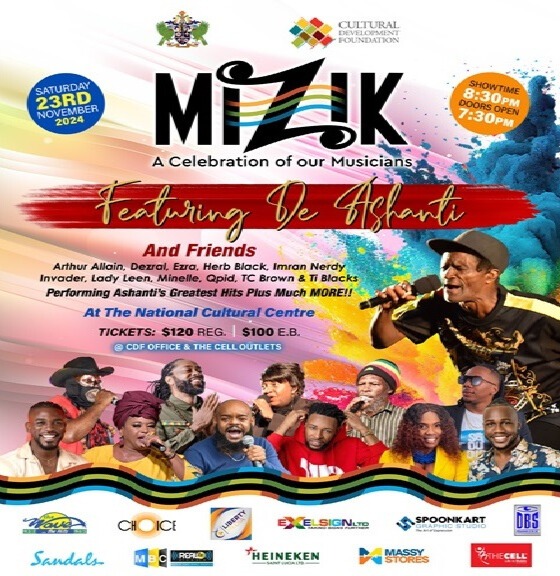
On November 23, 2024, the Cultural Development Foundation organized a memorable “MIZIK Festival: A Celebration of Our Musicians – featuring De Ashanti“ at the National Cultural Centre of Saint Lucia. This celebration occurred in commemoration of Saint Cecilia’s Day, traditionally recognized as the Musicians’ Day celebrated every year on November 22. This event aimed to pay tribute to the immense talent and musical legacy of De Ashanti, while commemorating the musicians of Saint Lucia.
The Event and Its Impact
The evening was marked by captivating performances by De Ashanti, whose lyrical works resonate deeply in the hearts of Saint Lucians. The event also showcased an impressive lineup of artists, including local icons such as Dezral, Arthur Allain, Qpid, Ezra, Herb Black, Imran Nerdy, Invader, Lady Leen, Minelle, TC Brown, and Ti Blacks. Each of these artists performed timeless hits by De Ashanti, thus celebrating the power of Saint Lucian music across generations and genres.
The importance of the day was highlighted by Murchel Hippolyte, Director of Business Development and Marketing at the Cultural Development Foundation. He stated: “Saint Cecilia’s Day is an ideal moment to honor our musicians who have significantly contributed to our culture and brought Saint Lucian music to the world.” This event not only allowed for the celebration of musical talents but also served as a platform to pass down generational knowledge to young talents.
MIZIK Festival
A Tribute to Saint Lucian Music
The MIZIK festival was designed to bring together music enthusiasts of all ages, creating a space where music and culture can thrive. The diversity of performances, ranging from folk rhythms to contemporary sounds, reflected the richness of the island’s musical scene. Music direction was provided by maestro Gregory Piper, who added a touch of expertise and passion to the event.
Public feedback was overwhelmingly positive. Many attendees expressed their appreciation for the quality of performances and the festive atmosphere at the National Cultural Centre. Entire families attended the event, thus strengthening the bond between generations through music. Young musicians also had the opportunity to meet seasoned artists, fostering valuable and inspiring exchanges.
Youth Initiatives
In parallel with the main event, the Cultural Development Foundation, in collaboration with the Caribbean Music Development Unit and renowned Saint Lucian lyricist Nahum Jn Baptiste, organized a development activity focused on songwriting for youth. Scheduled for December 6, 2024, in the Cultural Development Foundation conference room, this initiative aims to encourage creativity and provide tools for young artists to express themselves through music. This effort emphasizes the Cultural Development Foundation’s commitment to supporting the next generation of musicians and ensuring the continuity of Saint Lucian music heritage.
The Future of MIZIK Festival
With the success of this year’s event, the Cultural Development Foundation aspires to establish the MIZIK festival as a flagship event in the cultural calendar of Saint Lucia. Organizers plan to further develop this celebration in the coming years by inviting musicians from diverse backgrounds and integrating interactive elements for the audience. The goal is to create an immersive experience that celebrates not only music but also the history and culture of Saint Lucia.
The MIZIK festival is not just a simple concert; it is a celebration of the island’s cultural identity, a moment when Saint Lucians can come together to honor their musical heritage. Music is a powerful connector, and this event has proven that it can unite communities and inspire future generations.
The inaugural edition of the MIZIK festival was a landmark event for the Saint Lucian music scene. By honoring De Ashanti and celebrating local talents, the Cultural Development Foundation has not only reinforced the link between past and present but also paved the way for a promising musical future for the island. The impact of this celebration goes beyond music; it touches lives, inspires dreams, and celebrates the richness of Saint Lucian culture.
It is essential to continue supporting initiatives like the MIZIK festival to preserve and promote Saint Lucian music, ensuring that this beautiful island continues to resonate with the sounds of its artists for generations to come. The music of Saint Lucia is a treasure that deserves to be celebrated and shared, and the MIZIK festival represents a significant step in this mission.