
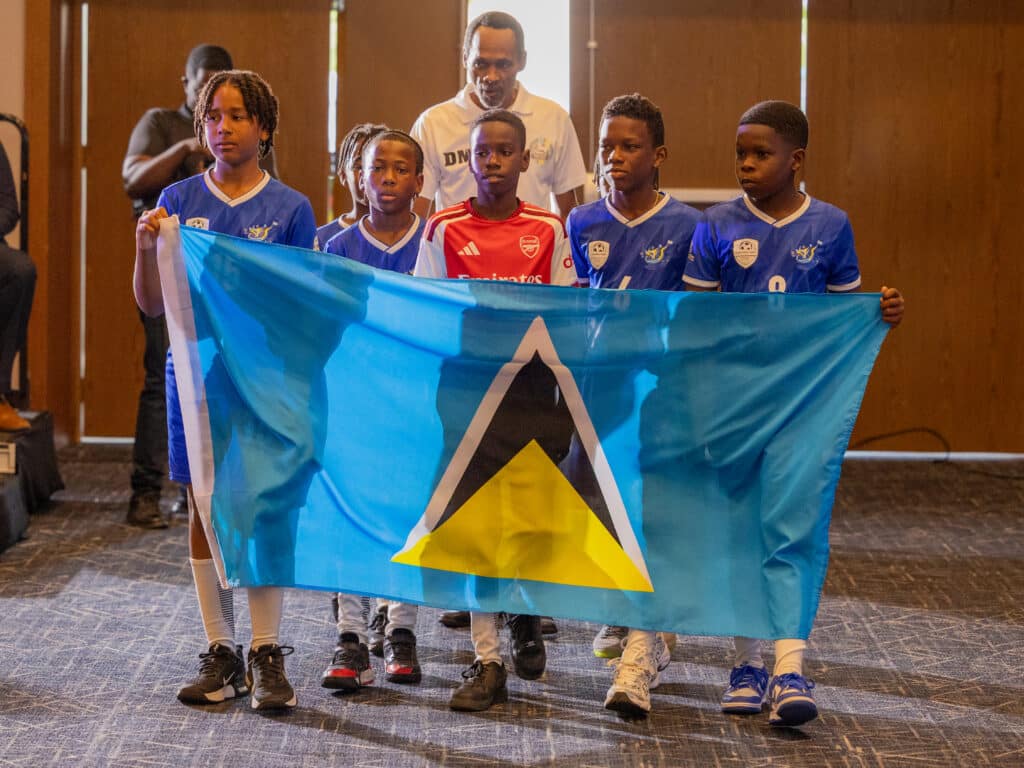
Starting with the 2026–2027 season, Saint Lucia will join the Arsenal family as an official destination partner. This partnership places a Caribbean island at the heart of a strategy aimed at transforming global soccer into tourism, a source of pride, and opportunities for its youth.
A Partnership Formalized in Castries
In Castries, the Saint Lucia Tourism Authority formalized a multi-year global partnership with Arsenal Football Club. The London-based club will now serve as an ambassador for this Eastern Caribbean island, which has a population of approximately 180,500.
This choice is no small matter. Saint Lucia is seeking to raise awareness of its beauty, culture, and tourism offerings among an international audience. The United Kingdom plays a key role in this strategy, as it is one of the island’s main tourism markets. Arsenal serves as a gateway to millions of fans, matches watched in many countries, and platforms capable of spreading the island’s image far and wide. For an island destination, this visibility can make all the difference.


Saint Lucia, a showcase at the heart of English soccer
The partnership provides for Saint Lucia’s presence within the Arsenal ecosystem. In particular, the island will gain visibility at Emirates Stadium during Premier League, Women’s Super League, and cup matches. It will also be featured on the club’s digital platforms and channels.
Today, tourism is no longer limited to trade shows or traditional advertising campaigns. It also plays out through collective emotions. A game, a jersey, a video, a community of fans—these are places of memory, conversation, and sometimes the desire to travel. St. Lucia is therefore positioning its image where attention already exists to spread awareness of its name, its “Let Her Inspire You” campaign, and its identity among an audience that may know Arsenal before it knows the Pitons.
Saint Lucia Looks Back on Its Youth
The most interesting part of the agreement lies far from the stands. The partnership is also intended to support the creation of an Academy Hub in Saint Lucia. The stated goal is to create mentoring opportunities and development pathways to help young players develop their talent.
On many islands, sports serve as a common language. They embody children’s dreams, families’ efforts, makeshift fields, local clubs, and coaches who volunteer their time. When an international partnership promises opportunities for young people, it deserves careful consideration. The challenge will be simple to articulate but harder to measure: Can this global visibility produce real results on the ground? For young players in Saint Lucia, the Academy Hub will be the one to watch.



A destination with a story to tell
The island is often described as the only country in the world named after a woman. It is known for the Pitons, aUNESCO World Heritage Site, as well as for its forests, beaches, mud baths at Sulphur Springs Park, its chocolate-making heritage, and its major cultural events.
The Gros Islet Friday Night Street Party, the Saint Lucia Jazz & Arts Festival, the Lucian Carnival, and Creole Heritage Month already give the island a packed calendar of events. The partnership with Arsenal therefore builds on an existing legacy. The involvement of Julien Alfred, Olympic champion and tourism ambassador, further reinforces this perspective. Saint Lucia already knows that sports can project a name far beyond its borders. With Arsenal, the island is simply taking things to a whole new level.
Sports Tourism as a Strategy
This isn’t the first time the Saint Lucia Tourism Authority has partnered with big names in sports. The organization has previously collaborated with the New York Yankees, the Toronto Raptors, the Toronto Maple Leafs, and the Brooklyn Nets. The agreement with Arsenal is therefore part of a broader strategy focused on sports tourism.
Soccer, cricket, rugby, swimming: Saint Lucia wants to attract teams, athletes, visitors, and attention. For a Caribbean island, this strategy can become a powerful tool if it remains rooted in the local community. Visibility alone is not enough. It must fuel the local economy, events, young talent, and cultural recognition. That is where this partnership will truly be judged—not just by the size of the screens or the number of fans reached, but by what it leaves behind on the island.


When an Island Enters the Global Arena
With Arsenal, Saint Lucia is entering a space where sports, tourism, and identity intersect. Soccer becomes a showcase. The island becomes a story. And its youth become a promise to watch. The question now is: to what extent can a small Caribbean island transform the power of a major club into tangible benefits for its people?
Saint Lucia will become Arsenal Football Club’s official destination partner starting with the 2026–2027 season. This multi-year partnership, led by the Saint Lucia Tourism Authority, is intended to boost the island’s international visibility, particularly in the United Kingdom, one of its key tourism markets. It also provides for Saint Lucia’s presence within the Arsenal environment, at Emirates Stadium, during men’s and women’s matches, as well as on the club’s digital platforms.
Saint Lucia is partnering with Arsenal to reach a global audience already passionate about soccer. The goal is to raise the island’s profile beyond traditional tourism campaigns by associating the destination with a club that has a following in many countries. This partnership also helps strengthen the “Let Her Inspire You” campaign and showcase Saint Lucia as a Caribbean destination known for its nature, culture, events, and sports tourism.
The Academy Hub planned for St. Lucia is intended to create mentoring opportunities and pathways to help young players develop their talent. This is one of the most important aspects of the partnership with Arsenal, as it goes beyond mere tourism promotion. The challenge will be to see how this collaboration can produce tangible results for young athletes, local clubs, and the development of soccer on the island.
A capital city with no residents
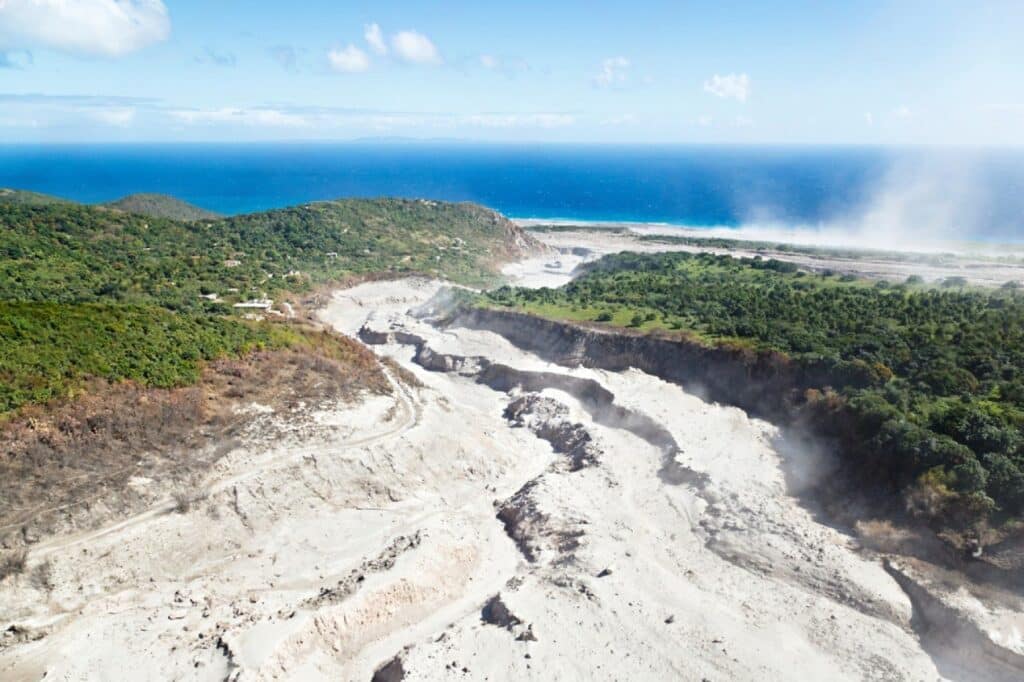
On official maps of the United Kingdom, the capital of Montserrat still bears a name: Plymouth. But in Plymouth, there are no longer any neighbors, no longer an open town hall, no longer a bustling harbor. The town has been within the exclusion zone since 1997. In some places, it is buried under several meters of volcanic deposits—ash, mud, and lahars. And yet it remains linked, both legally and symbolically, to the capital of this British Overseas Territory in the Eastern Caribbean.
The Awakening of Soufrière Hills
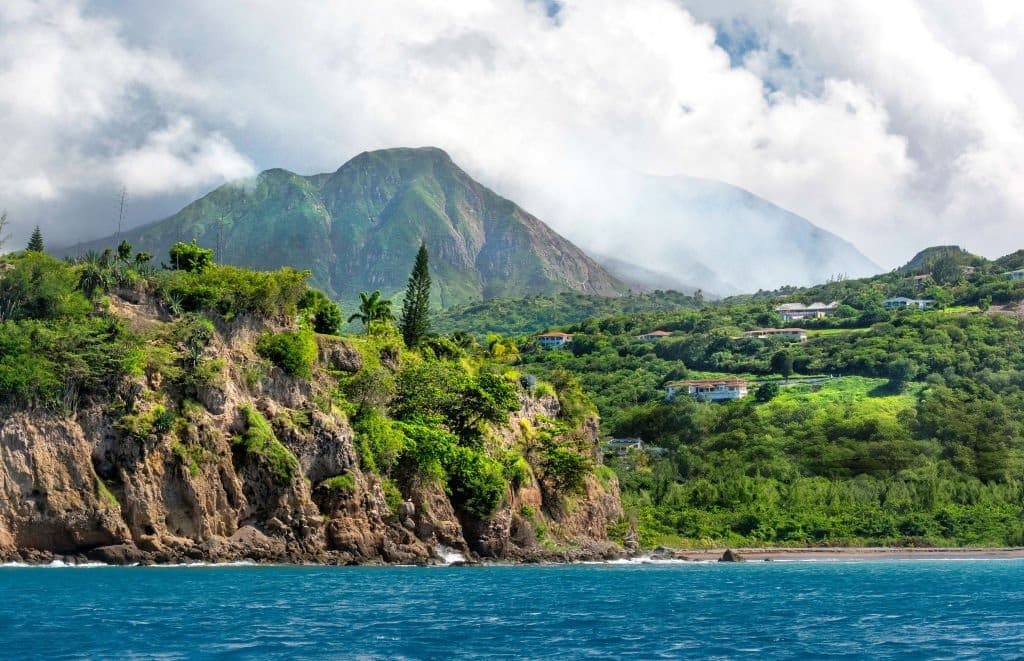
On July 18, 1995, after centuries of dormancy, the Soufrière Hills volcano erupted. The first phreatic eruption, consisting of steam and ash, took the people of Montserrat by surprise. No one was killed. But scientists at the Montserrat Volcano Observatory, established as an emergency measure, quickly realized that this episode would not be brief. On August 21, 1995, Plymouth, the island’s capital and economic hub, located just a few kilometers from the summit, was evacuated for the first time. The residents returned. Then left again. The cycle would last for years.
In local lore, its name retains a special resonance. It evokes at once an ancient capital, a tangible loss, and a testament to resilience. To speak of Plymouth, then, is not to gaze at a ruin from afar. It is to return to a place that continues to shape the memory of an entire island, despite the silence of its streets today.
The Day There Is No Turning Back
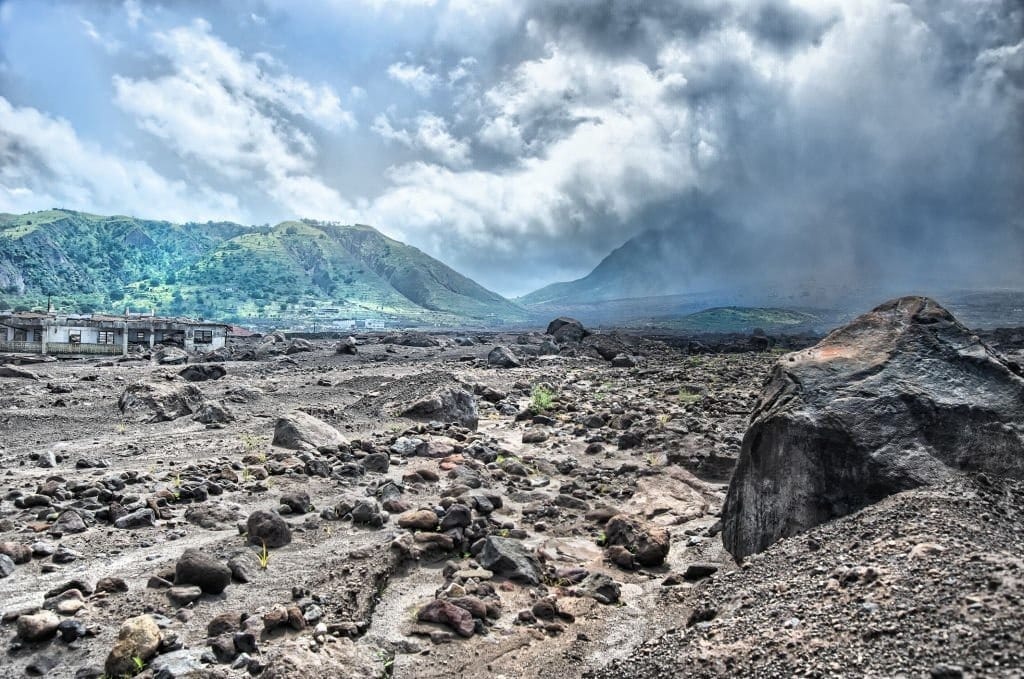
The turning point came on June 25, 1997. Pyroclastic flows raced down the volcano’s flanks. These avalanches of gas, rock, and ash can reach extreme temperatures and move at high speeds. Nineteen people died that day in the danger zones. It was the only directly fatal event of the crisis. But it was also the tipping point. In August 1997, new flows covered a large part of Plymouth. Not all the buildings disappeared. Some roofs and walls remained visible. But the capital became uninhabitable. It ceased to be a city of daily life and became a city at a standstill.


An island that has shifted northward
What makes Montserrat unique is a set of statistics. The island covers approximately 102 square kilometers. Before the eruption, it had a population of over 10,000. The 2023 census recorded 4,386 residents. Between these two realities lie departures to the United Kingdom, Antigua, North America, and other Caribbean territories. There are also abandoned homes, papers saved in too much of a hurry, and families who have learned to live elsewhere.
The southern two-thirds of the island remain subject to strict restrictions. The area around the volcano no longer has any ordinary homes. The north, on the other hand, is home to schools, government offices, businesses, and new infrastructure. Montserrat hasn’t just rebuilt itself. It has moved.


Brades Takes the Helm, Little Bay Looks to the Future
The government has set up its headquarters in Brades, in the north. This town serves as the de facto capital. A new airport, now known as John A. Osborne Airport, opened in 2005 in Gerald’s to replace the former W. H. Bramble Airport, which was lost within the exclusion zone. In Little Bay, new port and administrative facilities are creating another hub.
But Plymouth remains the name that lingers in the memory. This anomaly is not merely administrative. It shows that a capital city can leave its buildings behind without leaving the collective imagination of a people. For many Montserratians who have moved to the United Kingdom—to London, Manchester, or elsewhere—Plymouth remains a place close to their hearts.
Look without entering freely
Unsupervised access to Plymouth is prohibited. Guided tours are available, led by certified guides and with the necessary permits, from the hills or along certain controlled routes. You can see the old bell tower, facades weathered by deposits, and the bay where ships used to arrive. The silence is far from a simple attraction. It forces you to look at things differently.
The Soufrière Hills volcano is not dormant. Since 2010, it has been in a long period of calm, but it remains active and under surveillance. The Montserrat Volcano Observatory continues its work. This, too, is the strength of Montserrat: living with the volcano without reducing its history to disaster. Plymouth is now uninhabited, but it still poses a question. What becomes of a capital city when its people must leave, yet refuse to erase it?
Plymouth became a ghost town following the eruptions of the Soufrière Hills volcano, which began in 1995. The capital of Montserrat was gradually evacuated and then rendered uninhabitable by pyroclastic flows, ash, mud, and volcanic deposits. Much of the southern part of the island remains under restrictions today, and the city lies within the exclusion zone. This makes Plymouth a rare case in the Caribbean: a former capital still present in official memory, but devoid of daily life.
Unrestricted access to Plymouth is not permitted, as the city is located in Zone V, a volcanic hazard exclusion zone. However, certain guided tours are available with a certified guide, subject to strict safety conditions. Visitors can view the buried city, its partially visible buildings, and the landscapes scarred by the eruption, but the experience remains controlled. Plymouth is therefore not a typical tourist destination: it is a place of remembrance, vigilance, and respect.
Plymouth remains significant because it represents the former political, economic, and social heart of Montserrat. Even though government operations have moved to Brades and new projects are taking shape in Little Bay, Plymouth continues to preserve the island’s memory of the time before the eruption. For Montserratians who remained on the island as well as those who left for the United Kingdom, Antigua, or elsewhere, the buried town serves as a reminder of a collective loss, but also of a territory’s ability to rebuild itself without erasing its history.
A constraint that can become a value
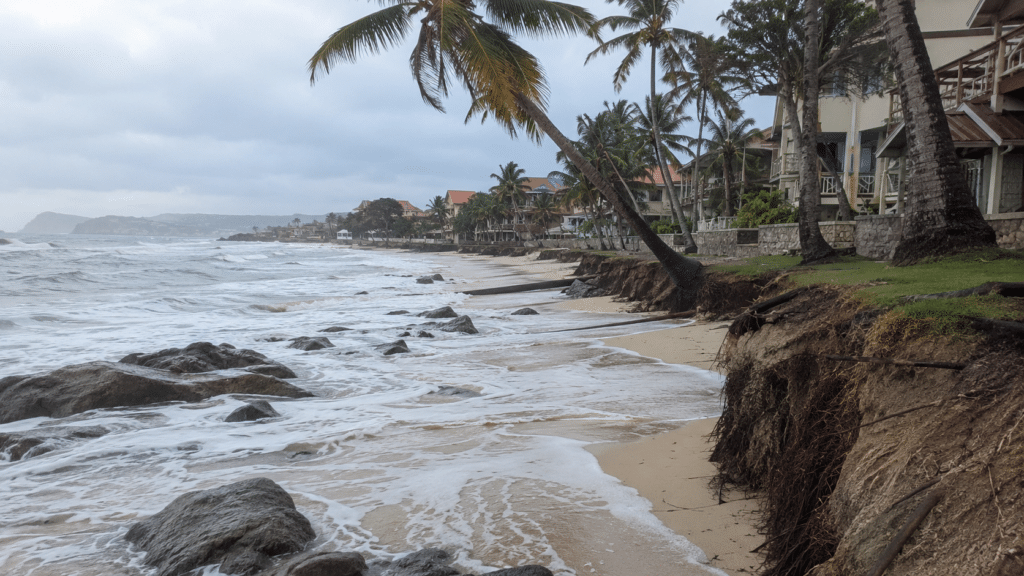
The Caribbean is experiencing climate change directly, brutally and continuously. More intense cyclonic seasons, accelerated coastal erosion, fragile coral ecosystems, energy vulnerability: no island in the region has been totally spared. For a long time, this reality has been presented as a constraint for public budgets, for tourism operators and for economic models based on the classic spa industry.
The Travel Dreams 2026 report by Amadeus, however, suggests a possible turnaround. What was once perceived as a fragility can become a value proposition, as long as it is acknowledged and accurately portrayed. This is where the notion of visible sustainability becomes central.
What travellers say
The study first documents the scale of demand. Of the 6,000 travelers surveyed across six major global markets, 75% say that a hotel’s sustainability commitments are important in their booking decision. More than one in three, precisely 35%, consider them “very important”.
And this concern translates into willingness to pay. Travelers who place importance on this criterion say they are willing to spend an average of 11.7% more per night to stay in an establishment with serious sustainable practices. This represents around $29 more on a $250 room. Among Generation Z travelers, this willingness rises to 14.7%, or almost $37 more per night. Visible sustainability starts here: in a hotel’s ability to communicate why these practices are worth more.
One data point deserves particular attention for the Caribbean: sensitivity to sustainability varies greatly according to source markets. It reaches 93% of travelers surveyed in India and 85% in China, compared to 65% in the UK and Germany. For a region seeking to reduce its dependence on traditional markets, these discrepancies open up a strategic avenue to be handled with caution. These travelers won’t be satisfied with a generic discourse on nature. They’ll be looking for evidence, visible features, documented stories. For the Caribbean, visible sustainability can become a way of speaking to these audiences without denying its local roots.

What hotels do
On the supply side, Amadeus data show a widespread commitment among the hoteliers surveyed. Of the 500 general managers or equivalent profiles consulted across nine countries, all say they plan to spend on sustainability initiatives in the coming year. The average anticipated expenditure represents 6.7% of total company expenditure. And 35% of hoteliers identify sustainability as a key differentiating factor from their competitors.
But the study also highlights a revealing discrepancy. Hotels invest primarily in actions that have an internal operational efficiency rationale: water conservation (33%), sustainable catering supply (33%), responsible supply chains (33%), waste reduction (32%), staff training (32%).

On the other hand, practices that are more visible to the customer, such as renewable energies (28%), biodiversity and community initiatives (27%), and the link between sustainability and loyalty programs (21%), remain less developed. It is this tension that makes visible sustainability strategic: it forces us to move from internal effort to an experience understood by the traveler.
Closing the gap
Joerg Schuler, Head of Global Hospitality Sales at Amadeus, sums up this discrepancy by talking about sustainability as being more “visible, experiential and integrated into the stay”. The formula is important, because it changes the subject. It’s no longer just a question of saying that a hotel consumes less water or reduces its waste. It’s about making these choices understandable, concrete and experienced by the traveler. Visible sustainability therefore requires not only proof, but also an accurate narrative.

This gap is precisely what the Caribbean can bridge. Visible Caribbean sustainability is not an abstract technical program. It can be embodied in visible, relatable, situated practices. Restoring mangroves. Coral reef protection. Local solar energy. Short-distance sourcing from small island producers. Saving water in contexts where the resource is precious. Passing on traditional knowledge of how to use the environment sparingly.

Each of these practices can be both a serious environmental commitment and a story that travelers can experience during their stay. It is this articulation that transforms visible sustainability into perceived value, and thus into pricing leverage.
A value to be documented
A Caribbean hotel that can document, with figures, identified partners and measurable results, its role in restoring a local ecosystem is no longer just selling a room. It’s selling participation in a broader regional project. Travelers surveyed by Amadeus have already indicated their willingness to pay for this. Visible sustainability therefore requires showing what is being done, by whom, with what effects.

This logic goes beyond the individual hotel business. It also concerns destination management bodies, tourism authorities and regional economic players. A region’s ability to credibly communicate its ecological commitment is becoming a competitive variable in the face of other tropical destinations. At destination level, visible sustainability can become a common language for hotels, producers, associations, communities and travellers.

The Caribbean challenge
For the Caribbean, the challenge is not to become sustainable in the sense that other regions understand it. It is to make legible a sustainability that, in many cases, is already practiced at the level of communities, small businesses, local cooperatives and inherited know-how. The global market is willing to pay for it. The question is whether the region will be able to present this reality with the appropriate rigor, coherence and pride.

This series of articles, in its three parts, has attempted to defend the same thesis. The expectations of travelers in 2026 – disconnection, connection to place, visible sustainability – are not constraints that Caribbean players have to endure. They are expectations that the region structurally bears, by virtue of its geography, cultures and history. What remains, as always, is the patient task of putting them into words. This is the editorial mission that Richès Karayib will continue to carry out, alongside the region’s economic, institutional and creative players.
Visible sustainability refers to the set of sustainable commitments that a traveler can actually see, understand or experience during their stay. It’s not just about internal measures, such as reducing water costs or limiting waste behind the scenes. In the Caribbean, this can take the form of solar power clearly integrated into the hotel, a mangrove restoration program, coral reef protection, sourcing from local producers or community actions presented with concrete results. This approach makes the ecological commitment more legible and credible for the traveler.
Visible sustainability can become a competitive advantage as travelers increasingly value hotels’ environmental commitments. According to the data used in the article, a majority of travelers consider these commitments to be important when choosing an establishment, and a proportion are even willing to pay more for serious practices. For Caribbean hotels, the challenge is not only to act, but also to document and tell the story of these actions with precision. An establishment capable of demonstrating its local impact is no longer just selling a room: it is proposing participation in a local project.
Caribbean destinations can better promote their visible sustainability by linking the actions of hotels, producers, associations, local authorities and communities into a coherent narrative. This requires proof: figures, identified partners, measurable results, actions monitored over time. A destination that explains how it protects its reefs, saves water, supports short circuits or restores its ecosystems builds a stronger promise than a simple discourse on nature. For the Caribbean, this storytelling is strategic, as it transforms real climate vulnerability into a cultural, ecological and economic value proposition.
When luxury is more than just décor
For a long time, luxury in the international hotel industry was measured by the thickness of the marble, the height of the ceilings, the scarcity of objects in the rooms. Some of this grammar still exists. But another, potentially more profitable, is emerging. Cultural luxury is gaining in importance. It is measured by the quality of the connection a traveler can establish with the place he or she is visiting.
This evolution is documented in Travel Dreams 2026: From data to delight, a report published by Amadeus in April 2026, based on a survey conducted by Opinium Research in the fourth quarter of 2025. Asked about the sensations they seek in a destination, 24% of the 6,000 travelers cited “connection to a place: food, experiences, special moments”. This was the second most frequent response, behind freedom. As far as hoteliers are concerned, the figure is becoming strategic: 44% of the 500 general managers surveyed across nine countries identified “concierge and guided experiences” as one of the two main drivers of growth in non-room revenues, on a par with social events.
What travellers are really looking for
In other words, what travelers are looking for, and what hoteliers worldwide are beginning to monetize in earnest, is the same thing: access to living culture. Cultural luxury is not just about décor or service levels. It’s about creating the right relationship between the visitor, the area and the people who bring it to life.
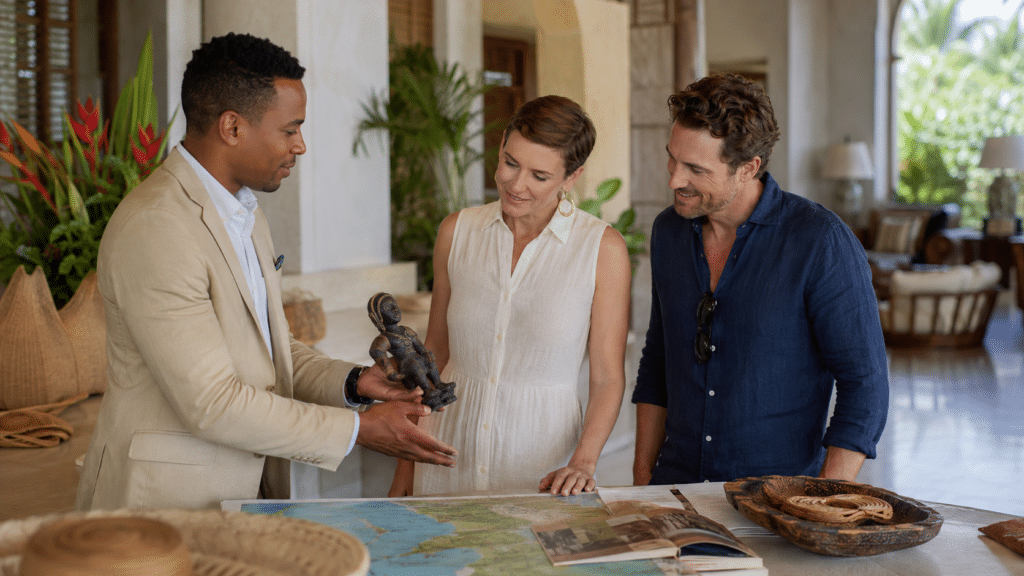
The Amadeus report goes further, putting a figure on what it calls “local experience kits”: neighborhood guides, handcrafted souvenirs, connections with cultural players. It estimates that a mid-range hotel could generate over $243,000 in additional annual revenue from this type of service, based on a guide price of $20 per kit. Nearly a third of business travelers who extend their stay for leisure purposes say they are prepared to pay more than 15% above the average rate for this type of service. With this in mind, cultural luxury is also becoming an issue of business model, not just image.
The Caribbean's value is still under-structured
This fact is particularly relevant to the Caribbean. The region’s cultural heritage is alive and well, but still unevenly structured in terms of tourism and hotel offerings. The Kalinago traditions of Dominica, the Creole languages spoken from island to island, the memory of ancient maritime routes, syncretic ritual practices, culinary know-how handed down outside the formal circuits: all this constitutes a capital that still largely escapes the logics of standard hotel valorization. And yet, this is precisely where cultural luxury can find its most solid footing.

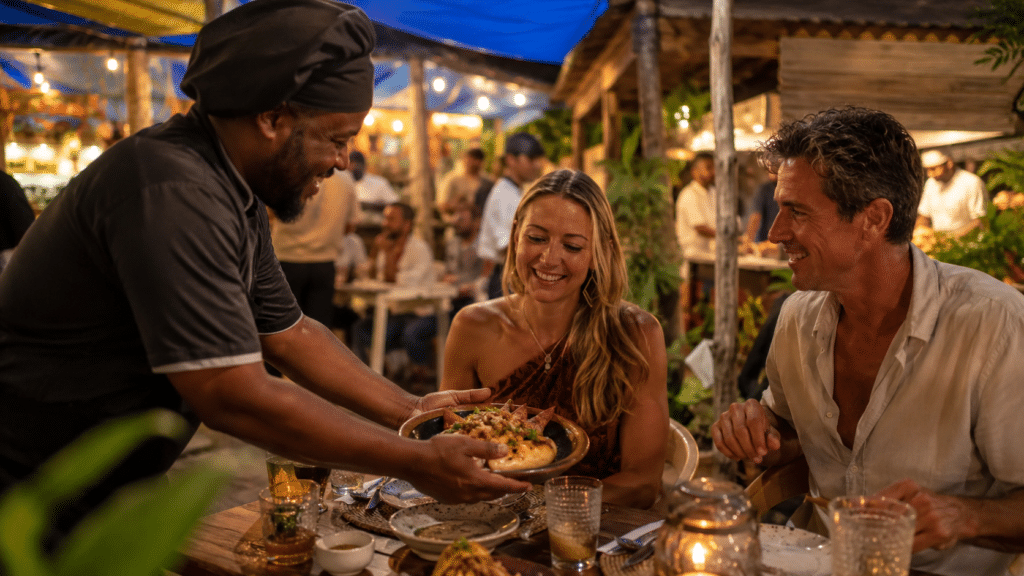
Exceptions do exist. Some independent hotels in the Caribbean have long understood that having a traveler dine in a local market, meet with an artisan or enjoy an hour’s silent walk in a heritage district creates a value that is difficult to compare with a standardized spa facility. But these initiatives often remain isolated, barely visible in destination communications, and rarely structured as a coherent economic proposition. To turn cultural luxury into a sustainable lever, we need to move on from one-off initiatives to a clear, profitable offering that respects local players.

Local experiences to be organized differently
The Amadeus report identifies a potentially game-changing trend. According to the study, 41% of hotels surveyed have already created packages linked to regional concerts, cultural events or popular TV series, and 38% plan to do so within the year. The traveler of 2026 no longer comes just to see a place. They come to enter into a relationship with it, through proposals that are constructed, told and embodied. This shift towards cultural luxury is exactly the kind of proposition that the Caribbean can articulate, provided its economic players work together.
This implies a number of shifts. Firstly, we need to move away from competition between islands and think in terms of pan-Caribbean offerings, where the richness of each territory complements rather than cannibalizes each other. Secondly, we need to professionalize the way in which our cultural heritage is presented: not by folklorizing it, but by presenting it with the editorial and visual rigor expected by a well-informed international traveler. Finally, we need to structure the economic relationship between hotels, local cultural players and experience operators, so that the value generated benefits the regions and not just international intermediation platforms. Caribbean cultural luxury can only be as strong as the people who bring it to life.

A journey that also promises personal transformation
Another statistic in the report is worth noting. Asked what they hope to bring back from a trip, 18% of travelers surveyed cite “a new version of themselves: clearer, lighter, more intentional”. This figure rises to 39% among travelers surveyed in China. For Caribbean destinations seeking to diversify their source markets, this signal deserves attention. It does not allow us to generalize to all Asian markets, but it does show that some travelers already associate travel with a form of personal transformation.

Enhancing without diluting
In 2026, cultural luxury is no longer sold in rooms alone. It’s sold in encounters. In hours. In presence. The Caribbean has what it takes to meet these expectations. All that remains is to organize it, to tell its story, to enhance its value without diluting it.
Cultural luxury is a new way of thinking about high-end travel. It’s not just about the comfort of a hotel, the quality of a room or the presence of exclusive amenities. It’s built around the relationship between the traveler and the territory visited. In tourism, this can take the form of a meeting with an artisan, a meal prepared with local produce, a guided tour by a local, or an experience that provides a better understanding of a place’s history, languages, practices and memories. Cultural luxury therefore gives value to that which cannot easily be copied: the living identity of a territory.
Cultural luxury represents a major opportunity for the Caribbean, as the region boasts a rich living heritage: Creole languages, culinary traditions, historical memories, music, craft skills, community practices and indigenous or Afro-descendant heritages. Yet some of this richness remains unstructured in conventional tourism offerings. By developing better-organized local experiences, Caribbean territories can create new revenue streams, boost the attractiveness of their destinations and better involve cultural players in the value generated by tourism. The challenge is not just economic: it also concerns the transmission, recognition and preservation of local identities.
Caribbean hotels can develop cultural luxury by working directly with local players: artisans, guides, chefs, artists, historians, cultural associations, heritage communities and experience operators. The aim is not to turn culture into décor, but to build respectful, rewarding and well-told propositions. This means choosing legitimate partners, presenting traditions accurately, avoiding clichés and guaranteeing that income actually benefits the people who carry this knowledge. A solid cultural luxury doesn’t put culture on display: it creates a fair encounter between the visitor, the place and those who bring it to life.
Zona Colonial, in Santo Domingo, capital of the Dominican Republic, boasts a street billed as the first paved street in the Americas. It’s called “Calle Las Damas”. In the early 16th century, the ladies of the court of María de Toledo, wife of Diego Colón, used it to walk between the buildings of Spanish power, under the Caribbean sun. The street is still there. It borders the Ozama, the river that flows into the Caribbean Sea. And it provides access to the most densely populated “first-time” district in all of colonial America: the Zona Colonial.
A UNESCO-listed founding city
Zona Colonial, also known as Ciudad Colonial in the Dominican Republic, was designated aUNESCO World Heritage Site in 1990. Santo Domingo is considered to be the first permanent European city in the Americas. First established on the east bank of the Ozama in 1496, then founded as a colonial city in 1498 according to UNESCO, it was reorganized in 1502 on the west bank by Nicolás de Ovando. The city became the first lasting seat of Spanish power in the New World, and a major base for expansion towards the rest of the continent.


The cathedral that opened up the religious history of the Americas
The list of “firsts” remains impressive. The Catedral Primada de América, the first Catholic cathedral in the Americas, was built from 1514 onwards, its foundation stone attributed to Diego Colón, son of Christopher Columbus. The building was completed in the early 1540s, and elevated to the rank of metropolitan and primatial cathedral in 1546. Its limestone façade, vaulted interior and sober decor make it one of the great architectural landmarks of the 16th century in the Americas.


The Christopher Columbus debate continues
The cathedral is also linked to one of the best-known funerary debates in Atlantic history. Remains attributed to Christopher Columbus are said to have rested here before being transferred to Cuba and then Seville, while a lead box discovered in Santo Domingo in 1877 has fuelled the Dominican claim. DNA analysis has confirmed the authenticity of the remains preserved in Seville, although it does not completely rule out the possibility that other fragments may have remained in the Dominican Republic. The Zona Colonial is therefore not just an ancient setting: it is also the focus of many open historical questions.

A neighborhood of firsts and powers
Fortaleza Ozama, at the mouth of the eponymous river, is one of the oldest surviving colonial military structures in the Americas. It was built in the early 16th century, as part of Nicolás de Ovando’s organization of the city. The Casa del Cordón, built around 1503, is one of the first European stone houses in the New World. The Alcázar de Colón, a Gothic-Mudejar palace with Renaissance influences, was built between 1511 and 1514 for Diego Colón and his wife María de Toledo. As for the Dominican convent, it recalls the arrival of the first Dominican friars in Hispaniola in 1510, a religious milieu from which emerged the first major criticisms of colonial violence against indigenous peoples.


A historic center still inhabited
This Dominican singularity deserves to be named. The Zona Colonial is not just a concentration of ancient monuments. UNESCO also emphasizes its character as a living historic center, with social, religious, administrative and commercial functions still present. Cafés, schools, parishes, museums, housing, hotels, bookshops and nightlife rub shoulders. The district is not simply a scenography for visitors. It remains an inhabited space, frequented, traversed, sometimes contested, like all historic centers subject to tourist pressure.
Preserving without freezing
On the horizon, several challenges remain. Hurricane Beryl didn’t hit Santo Domingo with the violence suffered by Carriacou or Petite Martinique in 2024, but the southern Dominican coast did experience the effects of swell, rain and localized flooding. Gentrification, on the other hand, is transforming the social composition of neighborhoods more slowly, as in many historic centers classified as world heritage sites. Recent public programs are not limited to facades and monuments: they also include housing improvements, with the stated aim of keeping traditional residents in the historic center.
But the essential remains. When you walk along Calle Las Damas, you’re walking along one of the first legible European urban grids in the Americas. More than five centuries later, the street is still standing. In the Zona Colonial, the stone doesn’t just tell the story of the brutal beginning of a colonial order. It also forces us to look at what Caribbean societies have transformed, preserved, inhabited and passed on in spite of everything. Perhaps this is where the real question begins: how can we keep a heritage alive without freezing it?
The Zona Colonial is important because it corresponds to the historic core of Santo Domingo, one of the first permanent European urban centers in the Americas. Here you’ll find many of the founding sites of the continent’s colonial history, including the Calle Las Damas, the Catedral Primada de América, the Fortaleza Ozama and the Alcázar de Colón. This district provides an insight into how the first Spanish urban settlement in the Caribbean was organized, and how this heritage continues to be inhabited and passed on today.
Zona Colonial is located in Santo Domingo, capital of the Dominican Republic, near the Ozama River. The district is home to several major monuments linked to the early Spanish presence in the Americas. These include the Calle Las Damas, often referred to as the first paved street in the Americas, the Catedral Primada de América, the Fortaleza Ozama, the Casa del Cordón and the Alcázar de Colón. Its interest also stems from the fact that it’s not just a heritage area: the Zona Colonial remains a living district, with inhabitants, shops, cultural venues and daily life.
Calle Las Damas is one of the Zona Colonial’s most emblematic landmarks, because it is generally considered to be the first paved street in the Americas. Its name refers to the ladies of the court of María de Toledo, wife of Diego Colón, who would have walked along this street in the early 16th century. The street links several historic buildings of Spanish colonial power, and provides an insight into the urban structure of Santo Domingo as Spain organized its presence in the New World.
A global report published in early 2026 by Amadeus reveals what travelers will be looking for in 2026. The Caribbean has always carried it.
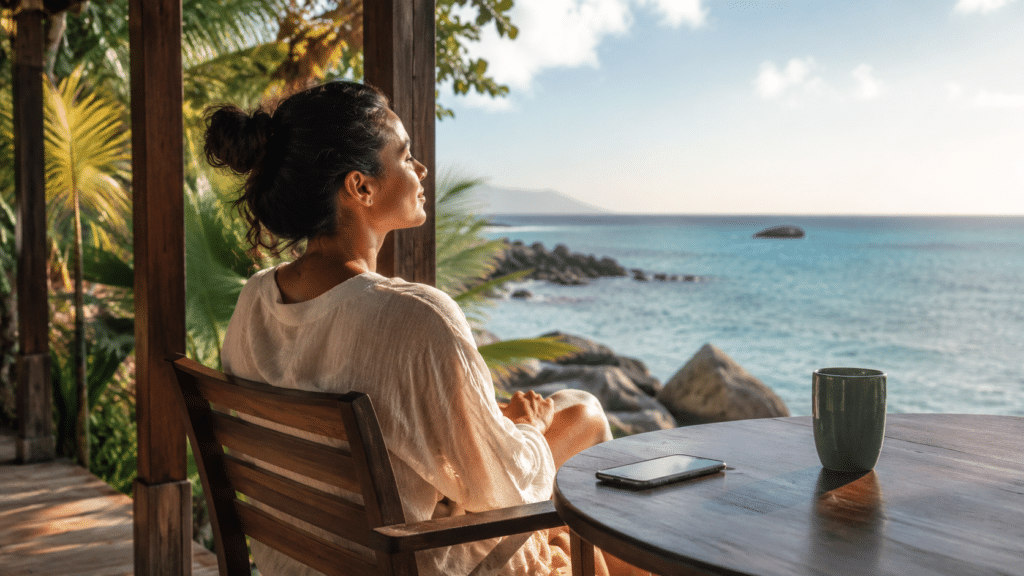
There’s a precise moment, in a Caribbean village in the early hours of the morning, when the noise of the world seems to stop. The first lights fall on the facades, a voice answers from one courtyard to another, the smell of coffee mingles with that of the nearby sea. Hardly anyone checks their phone. Life is there, in front of us, denser than any notification. This scene, commonplace for anyone who lives in the Caribbean, is precisely what millions of travellers around the world are now looking for.
When the world is looking to get off the hook
These are the findings of Travel Dreams 2026: From data to delight, a study published in early 2026 by Amadeus, one of the world’s leading technology players in tourism. Conducted by Opinium Research among 6,000 travelers in Australia, China, Germany, India, the UK and the USA, the survey identifies a profound shift in contemporary expectations.
Asked what makes them feel they’ve reached their dream destination, 32% of travelers say “when I stop looking at my phone because real life is more interesting”. This is the top answer, far ahead of the others. Another statistic from the same report extends this observation: 41% of travellers say they want to return from their trip with “a refreshed brain and a calmed nervous system”.
Travel as a response to collective exhaustion
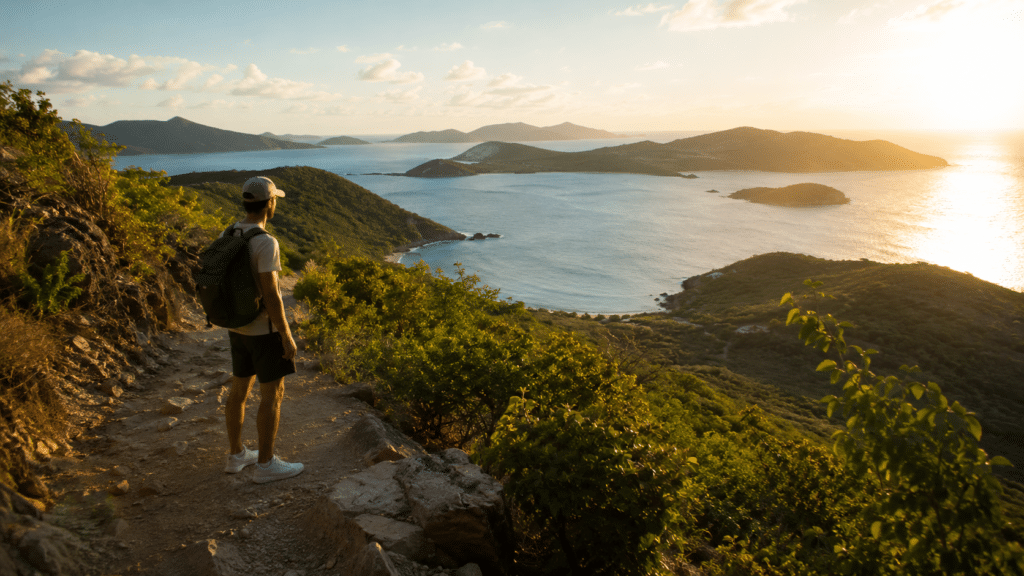
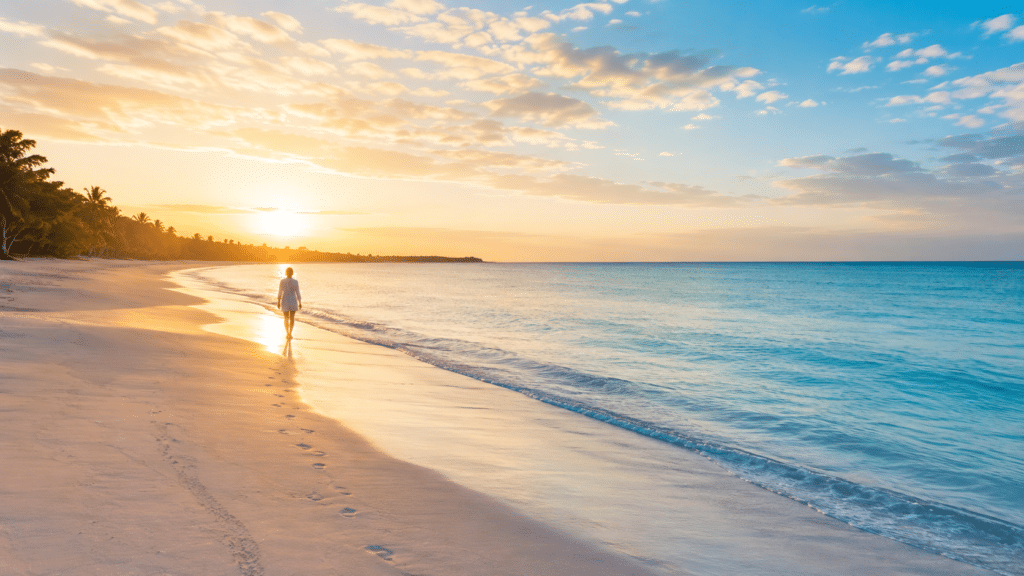
These figures are not anecdotal. They tell of a collective exhaustion. In a world saturated with screens, high-performance productivity and manufactured urgency, travel is no longer a trophy to be collected, but a means of rediscovering a quality of presence. The Amadeus report puts it bluntly: travelers are looking to feel “genuinely alive, not just ticking off landmarks”.
What the Caribbean has always carried
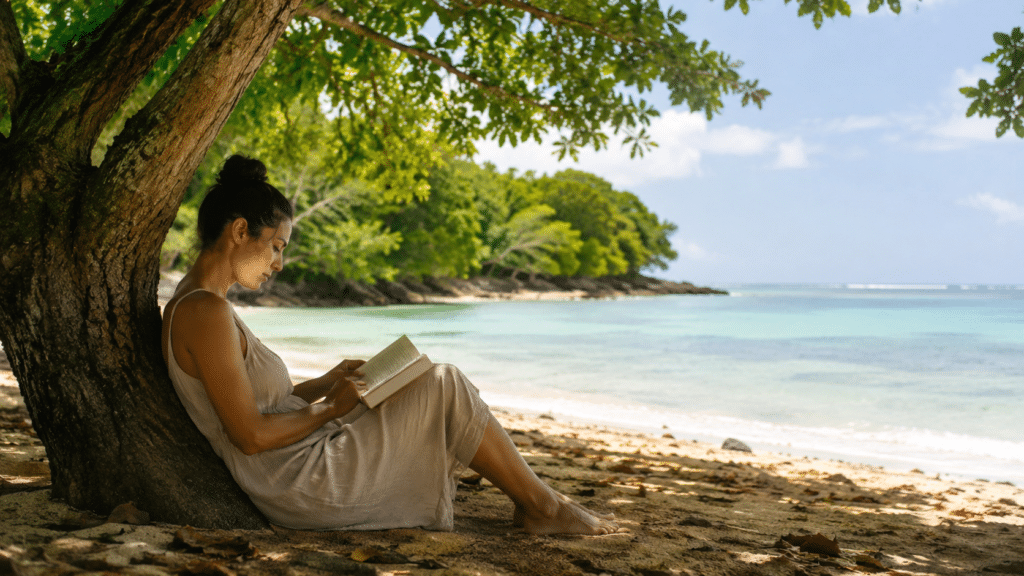
This shift in expectations is global, but it offers the Caribbean a special reading. The region didn’t wait for a study to cultivate what the market is rediscovering today. The density of the Caribbean present, the thickness of a conversation on a doorstep, the slowness of a shared meal, the way in which the landscape imposes its rhythm on those who cross it, is not a marketing strategy. It’s a heritage. It comes from languages, from multiple spiritual heritages, from a long relationship with the sea and the land, from the memory of the peoples who made these islands.


Four global expectations already present in the region
The same Amadeus study identifies four main sensations sought by travellers from a destination: freedom (29%), connection to a place (24%), discovery (22%) and ease (17%). Structurally, the Caribbean offers these four dimensions without having to transform itself. The freedom of open itineraries, connection to places that still resist tourist standardization, ongoing discovery – each island has its own language, its own rhythms, its own history – and the ease of hospitality that is measured not in added services but in the attention paid.


Breaking out of the generic imaginary
The challenge, then, is not for the Caribbean to invent a new offer. It’s about making visible what it already has. All too often, the communication of Caribbean destinations remains trapped in a generic imaginary of beaches, palm trees and sunshine, which says nothing about the real depth of the experience. But what the Amadeus report documents is precisely the end of this imaginary world. Travelers are no longer asking for a postcard. They’re asking for a return to themselves.

A strategic window of opportunity for Caribbean players
For the region’s economic players – DMOs, independent hoteliers, cultural operators, tourism ministries – this global data opens up a strategic window. It validates an intuition that has been circulating in the region for years: the Caribbean doesn’t have to chase global tourism trends. On the contrary, it needs to strongly articulate what sets it apart. Silence is no longer lack. Slowness is no longer delay. The density of a local presence, handed down from generation to generation, is becoming a major economic asset in a market desperate for the real thing.
That leaves us with a question that sets the scene for the next pages in this series. If the Caribbean does indeed have what the world is looking for in 2026, what’s stopping it from saying it with the appropriate force?
Caribbean tourism 2026 responds to a growing expectation: travel to slow down, reconnect with real life and regain mental balance. The Amadeus report highlights travelers who are no longer looking just for landscapes, but for a sense of presence, calm and connection with a place. The Caribbean already possesses these elements in its villages, languages, daily rhythms, community ties, relationship with the sea and different ways of inhabiting time.
The Caribbean can distinguish itself by moving away from a form of communication too limited to beaches, sunshine and postcards. Its strength lies in the depth of its territories: memories, languages, culinary traditions, music, spirituality, inhabited landscapes and human relationships. In 2026, travelers are looking for authenticity, freedom and connection to place. So it’s in the region’s interest to tell a better story about what it already has, rather than copying global tourism trends.
This evolution concerns tourist offices, independent hotels, guides, cultural operators, restaurateurs, craftsmen, local authorities and tourism ministries. Everyone can contribute to repositioning Caribbean tourism 2026 around experiences that are more human, more rooted and more faithful to the territories. The challenge is not only to attract more visitors, but also to make the most of what makes each island unique, while creating fairer economic benefits for local communities.
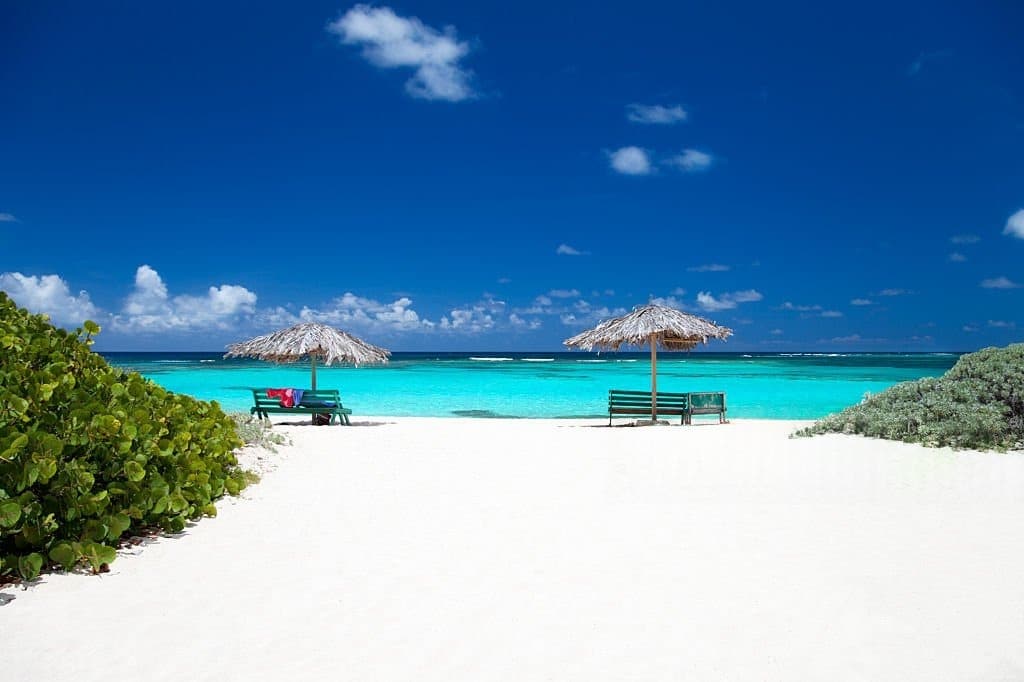
In Anegada, 28 feet is enough to tell the story of an entire island. In the British Virgin Islands, this low-lying land is measured not by its peaks, but by its permanent proximity to the sea. Around it, Horseshoe Reef stretches 18 miles of coral: a protection, a trap, and the great natural story of this territory. These two figures immediately give the scale: an island almost at water’s edge, defended by one of the region’s most remarkable reef systems. They also speak of a way of living, sailing and protecting a place where every metre counts.
An island that the sea watches closely
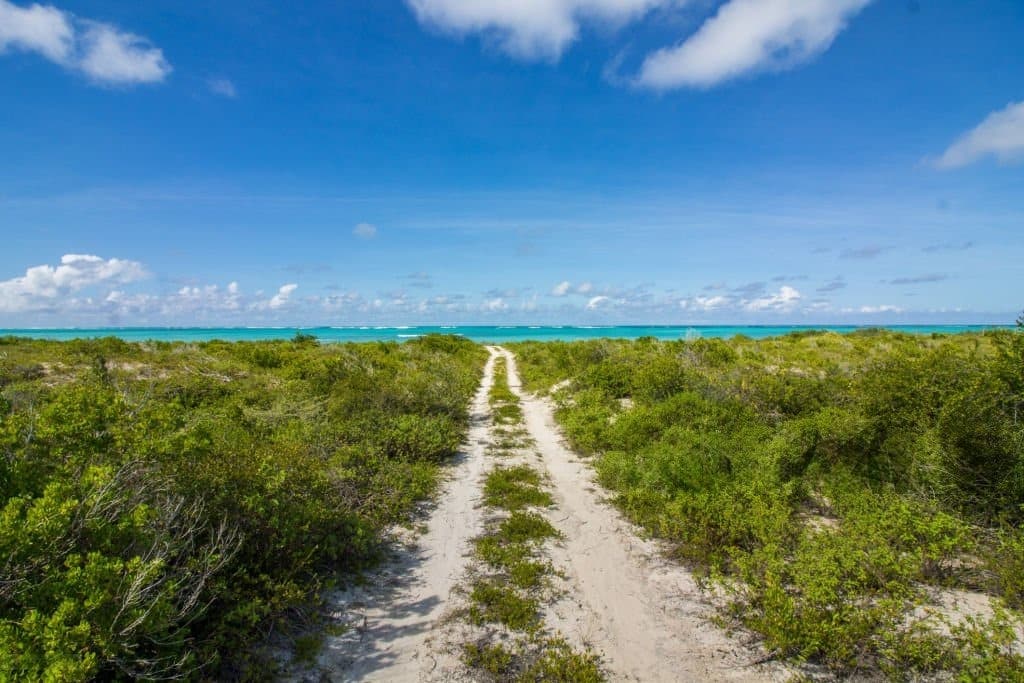
Anegada lives up to its name. The word comes from the Spanish language and conjures up the idea of a drowned land. This image is not a formula. The island reaches only 28 feet, or about 8.5 meters, at its highest point. That’s less than a small three-storey building. In an archipelago where Tortola, Virgin Gorda and Jost Van Dyke are marked by volcanic reliefs, Anegada imposes another reading of the landscape.
Here, you don’t look up at the hills. It glides towards beaches, salt ponds, shallows and passes. This horizontality changes everything. It explains the caution of sailors, the place of the reef, the presence of birds, but also the way tourism has developed: less around spectacular scenery than around a fragile natural balance.
18 miles of reefs, between refuge and danger
Horseshoe Reef is the number that gives thickness to Anegada. This barrier reef measures around 29 kilometers, or 18 miles. It is billed by the BVI government as the largest barrier reef in the Caribbean, and the fourth largest in the world. For an island that doesn’t exceed 28 feet, this coral belt functions as a living rampart.
But this rampart also has a dark memory. The reef has long made maritime approaches difficult. Inaccurate charts, shallow waters and coral formations have trapped many a ship. The HMS Astraea in 1808, the Donna Paula in 1819 and the MS Rocus in 1929 are among the wrecks cited in local history. Anegada is a reminder of a simple truth: the maritime beauty of the Caribbean has often been inextricably linked with risk.

A rare geological difference in the archipelago
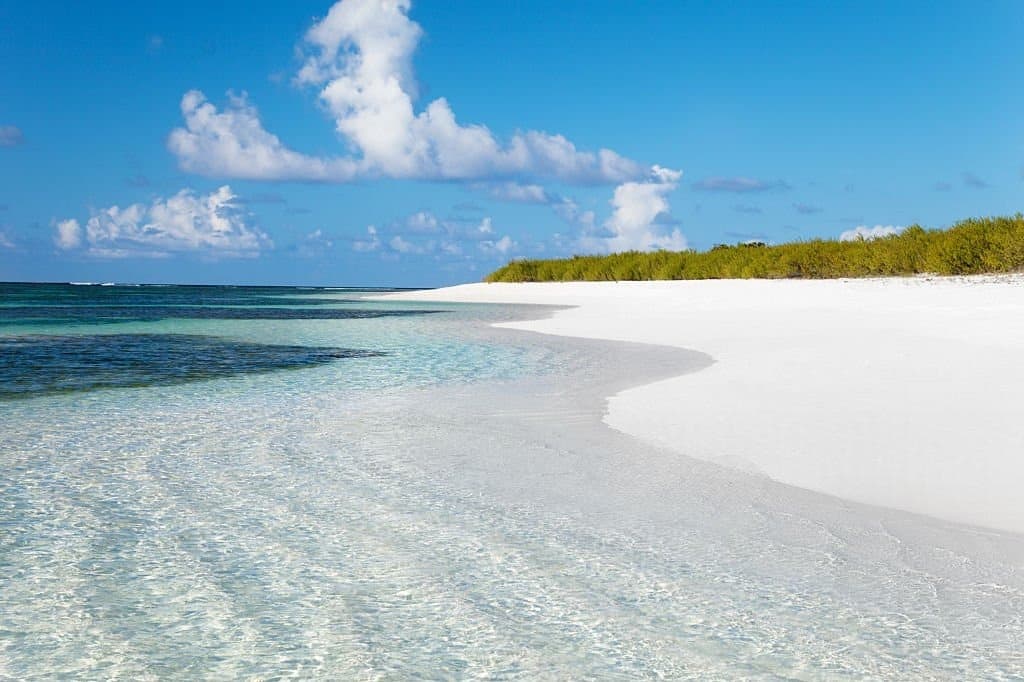
Anegada’s strength also lies in its composition. It is the only coral island in the Virgin Islands volcanic chain. Made of coral and limestone, it stands out clearly from its neighbors. This geological detail explains its almost flat relief, long white beaches, underwater caves, clear springs and salt ponds.
This difference avoids the cliché of the interchangeable island. Anegada doesn’t sell the same imaginary world as the other territories of the BVI. It tells of a lower, more exposed Caribbean, more attentive to invisible thresholds: depth, navigation, reef protection, access to natural areas. And this is precisely where RK Facts finds its value: a figure opens up a complete understanding of the territory.


Flamingos, salt ponds and tourism responsibility
To the west of the island, the salt ponds add another dimension. They have long been home to Caribbean flamingos. Authorities report that these birds were present in their thousands in the 1830s, before disappearing locally around 1950 as a result of hunting for food and feathers. Their reintroduction today gives Anegada a strong ecological significance.
The island is not just a place of beaches and reefs. It raises a question of management: how to receive visitors without damaging what makes the place so unique? In fact, the government states that anchoring is forbidden on Horseshoe Reef in order to protect the reef. This detail lends depth to the subject: Anegada attracts visitors because it remains fragile.
At 28 feet high and 18 miles of reef, Anegada turns two numbers into a Caribbean lesson. The island doesn’t dominate the sea; it negotiates with it. And in this tension, it reminds us that a territory can be immense in its vulnerability, its memory and its way of standing up to the water, all year round.


Anegada is located in the British Virgin Islands, in the northeast of the archipelago. It stands out from its neighbors for its low relief and coral formation. Unlike many of the BVI’s more mountainous and volcanic islands, Anegada is a flat island of coral and limestone. It’s this geographical singularity that makes its landscape so special.
Anegada is known for its maximum height of 28 feet, or around 8.5 meters above sea level. This figure tells us a lot more than just a relief: it explains its name, its direct relationship with the sea, its environmental fragility and its identity in the British Virgin Islands. Anegada impresses not with its mountains, but with its constant proximity to the water.
Horseshoe Reef is essential to understanding Anegada. This reef stretches for some 18 miles around the island, and plays a role of natural protection, marine heritage and maritime memory. It has contributed to the ecological richness of the area, but it has also made navigation difficult for a long time, with several shipwrecks recorded in local history. This is one of the elements that gives Anegada its narrative power.
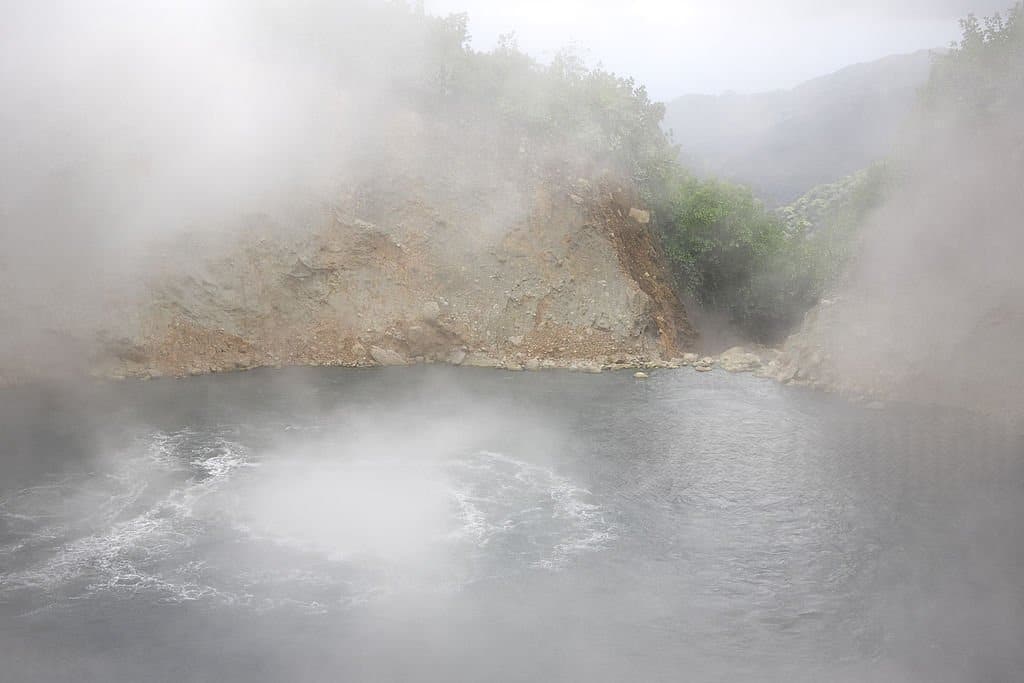
Just 8 kilometers east of Roseau, the capital of Dominica, it’s a three-hour walk from Laudat to Boiling Lake. Three hours of humid forest, desolate valley, soil-heated rocks and sulfurous fumes. At the end of the path, a 63-metre-wide pool. Inside, the water bubbles almost continuously, with temperatures measured up to 91.6°C at the edges. It’s the second largest bubbling lake in the world.
A rare phenomenon in a UNESCO park
The world’s first is Frying Pan Lake in New Zealand’s Waimangu Valley. But the Dominican Boiling Lake is in a class of its own. Firstly, because it can only be reached on foot, after a demanding hike. Secondly, because it is part of a national park that has been a UNESCO World Heritage Site since 1997: Morne Trois Pitons National Park. This makes it one of the most singular geothermal phenomena protected in a world-renowned natural site.
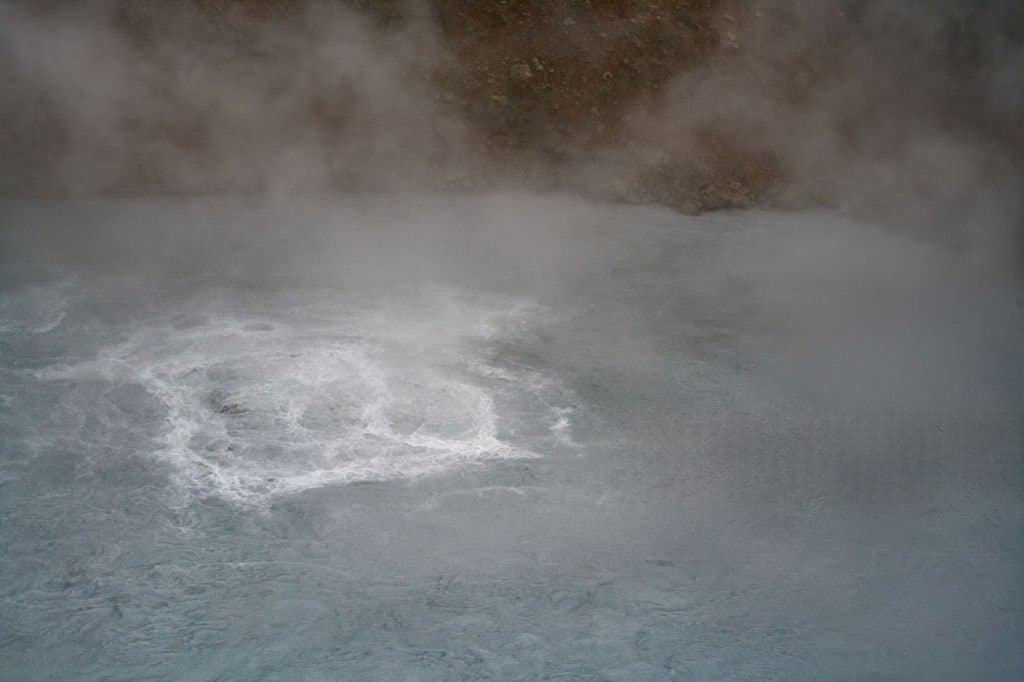
A flooded, rain-fed fumarole
Geologically, Boiling Lake is what scientists call a flooded fumarole – an opening in the Earth’s crust that lets out volcanic steam and gases. The heat comes directly from the volcanic activity below. The lake is fed by rainfall, nearby slopes and small streams. Its exact depth is difficult to determine: the first measurements in 1875 indicated a depth of over 59 metres, but recent data vary according to sources and the state of the lake.

An unstable lake since the 19th century
The lake was first observed in 1875 by Edmund Watt and Dr Henry Alford Nicholls, two Englishmen working in the colony, accompanied by their guides. Since then, lake levels and temperatures have fluctuated dramatically. In 1880, a phreatic eruption in the Valley of Desolation had a profound effect on the area. There have also been several episodes of significant drops in water levels, notably in 1988 and between December 2004 and April 2005. The UWI Seismic Research Centre, based in Trinidad, monitors the lake’s activity as part of its volcanic monitoring program in Dominica.

Dominica, an island of visible geology
Dominica’s absolute uniqueness lies in a particular alignment. The island – around 750 km², with a population of almost 70,000 – boasts a geological and ecological density that is rare in the Caribbean: several potentially active volcanic centers, 365 rivers according to the country’s tourism communication, a tropical forest that is still very much present, and the last pre-Columbian Kalinago population in the eastern Caribbean. Boiling Lake is one of the jewels in the crown.


A human memory around a natural site
For the Kalinago people, Dominica’s land, landscapes and natural spaces bear an ancient memory. During the colonial period, the island’s mountains and forests also served as refuges for Maroon populations fleeing the plantations. This dual indigenous and African memory gives the territory a historical depth that few geological curiosities can claim. Boiling Lake is not just a natural curiosity. It’s part of an island of memory.
A demanding hike, not a simple excursion
The hike to the lake is a demanding one. The official trail starts from Ti Tou Gorge, near the village of Laudat, and takes about three hours to get there, then the same to get back. The route passes through the Valley of Desolation, where steam comes out everywhere, sulfur deposits stain the rocks, you can sometimes cook an egg in the cracks in the ground, and the smell of sulfur marks the air. The authorities strongly recommend that you set off with a certified guide, don’t start hiking after 10 a.m., wear suitable footwear and check the weather forecast before setting off.


What Boiling Lake has to say about Caribbean tourism
At a time when the Caribbean is seeking to position itself as a destination for experiential tourism, Dominica offers a clear answer. No all-inclusive beaches. No over-the-top resorts. A hike of several hours to see a lake boil. And UNESCO status to protect it all. Boiling Lake tells the story of another Caribbean: a Caribbean of volcanoes, forests, rivers, trails, memories and landscapes that don’t come without effort. Perhaps that’s where its strength lies. Dominica doesn’t just sell scenery. It’s a reminder that Caribbean nature can still command respect.
Boiling Lake is located in Dominica’s Morne Trois Pitons National Park, a UNESCO World Heritage Site since 1997. The hike usually starts from the Laudat area, near Ti Tou Gorge. It takes around three hours’ walk each way to reach this bubbling lake, set in a volcanically active environment of rainforest, hot springs, sulphur deposits and the Valley of Desolation.
Boiling Lake is famous for being the second largest bubbling lake in the world, after New Zealand’s Frying Pan Lake. Its basin is around 63 metres wide and its water reaches temperatures close to 92°C at the edges. This rare natural phenomenon provides an insight into the volcanic power of Dominica, an island where geology remains visible through fumaroles, hot springs and volcanic landforms.
We strongly recommend that you visit Boiling Lake with a certified guide. The hike is long, physical and sometimes challenging, especially due to the heat, humidity, slippery rocks, sulfurous fumes and rapid weather changes. The trail passes through geothermally active areas, notably the Valley of Desolation. A guide helps to make the route safe, explain the site and avoid mistakes in an impressive but potentially dangerous natural area.
At the Montego Bay Convention Centre, the image speaks for itself. Local entrepreneurs showcase their products, hotel representatives circulate, meetings follow one another. Behind these rapid exchanges, one question weighs heavily: when tourism makes money, how much really stays in Jamaica?
This is at the heart of Tourism 3.0, the new direction championed by Jamaica’s Minister of Tourism, Edmund Bartlett. At the Tourism Enhancement Fund’s 11th Speed Networking Event, he set out a clear ambition: to make tourism a more direct driver for Jamaican producers, artisans, manufacturers and suppliers.
Tourism that no longer just wants to attract
Jamaica knows how to welcome visitors. But the challenge is no longer just to fill hotels or increase arrivals. The real challenge is to retain more value in the territory. Edmund Bartlett has recognized a structural weakness: a large proportion of the goods and services consumed by the tourism industry are still imported. Food, equipment, vehicles, items sold to visitors, specialized services: too much spending still leaves the island instead of feeding its local economy.
With Tourism 3.0, the Jamaican government is looking to change its approach. It’s no longer just about selling a destination. It’s about building a tourism economy where Jamaicans are not just employees, but also suppliers, creators, owners and beneficiaries.
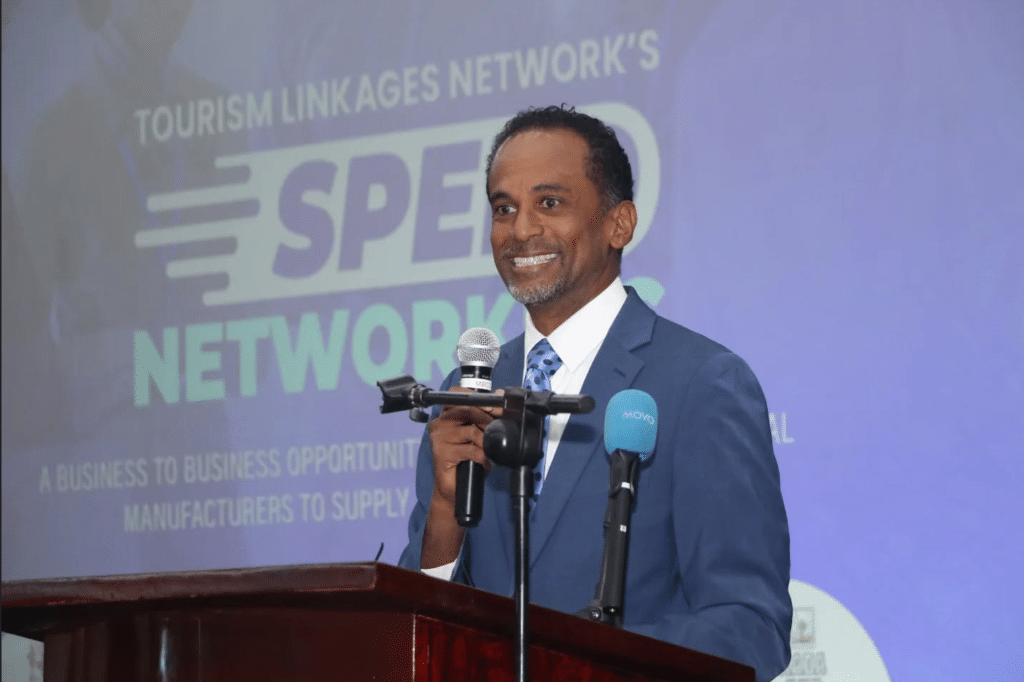

The "Local First" challenge
This orientation is in line with the “Local First” policy, which aims to place Jamaican companies at the heart of the tourism chain. The stated objective is concrete: to increase the share of the tourism dollar remaining in the national economy. This point is essential to understanding the scope of Tourism 3.0. In many Caribbean territories, tourism generates substantial revenues, but some of this wealth is exported through imports. Jamaica wants to reduce this economic drain by strengthening its own production capacities.
The Speed Networking Event does just that. This year’s event brought together 137 local manufacturers and 25 tourism companies for scheduled meetings. The aim is not symbolic. It’s about creating contracts, structuring volumes, bringing hotels closer to those who can supply them.

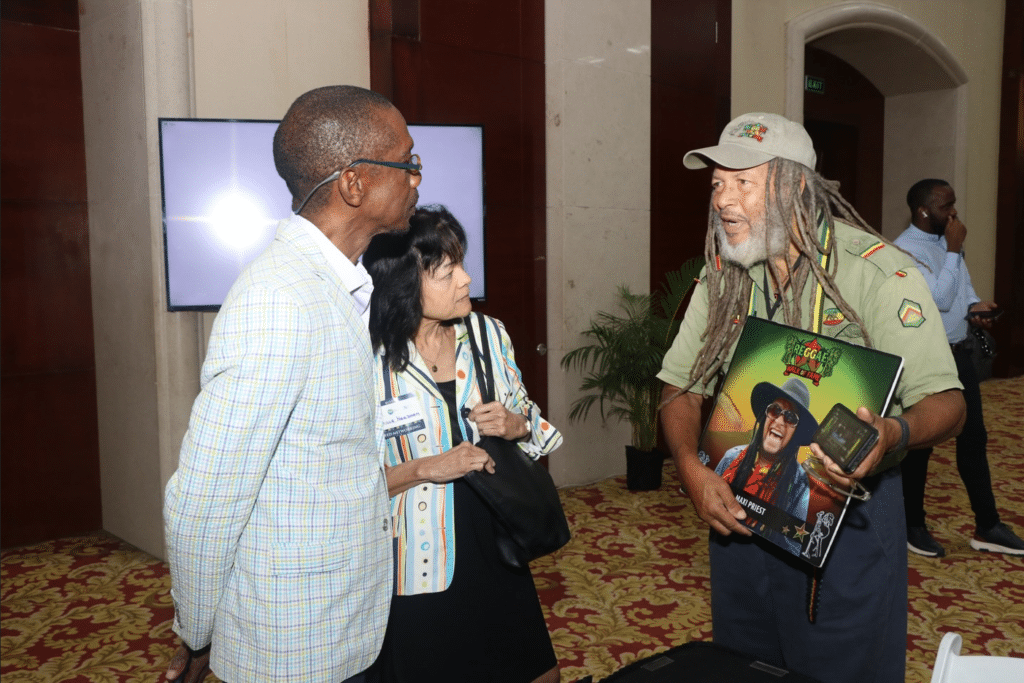


A strong commitment to local suppliers
Edmund Bartlett also sent a direct message to Jamaican producers. Tourism 3.0 needs creativity, but it also requires consistency. A hotel can’t run on a few samples. It needs sufficient volumes, consistent quality, on-time delivery and competitive prices. This is where Tourism 3.0 becomes a profoundly transformative project. To succeed, local businesses will have to step up their game. Farmers, craftsmen, furniture makers, food producers, object designers and service providers will have to respond to a professional, continuous and demanding demand.
In this sense, Tourism 3.0 is not just about the Ministry of Tourism. It involves agriculture, finance, education, health, security, economic development organizations and professional associations. Tourism becomes a national affair, not just a hotel affair.

A new framework for a new ambition
The Jamaican government also wants to modernize the sector’s legal framework, with the development of a new Tourism Authority Act. The aim is to adapt tourism governance to an industry that has become more complex, connected and strategic. This change adds an extra dimension to Tourism 3.0. Jamaica is not just looking to improve its tourism image. It wants to rethink the way wealth flows between visitors, hotels, producers and local communities.
This news isn’t just about the economy. It questions the productive dignity of a Caribbean territory: who feeds tourism? Who produces what it consumes? Who really earns when the world comes to vacation? Jamaica is blazing a trail that other islands will be watching closely. It remains to be seen whether Tourism 3.0 will become a measurable, financed and sustainable reform. For in the Caribbean, the future of tourism will not be played out in arrivals alone. It will also depend on the ability of territories to keep the value they create at home.
Tourism 3.0 refers to the new direction advocated by the Jamaican government to transform tourism into a more local economic lever. The aim is not just to attract more visitors, but to ensure that more of the money spent in the sector stays in Jamaica. This means better integrating local producers, craftsmen, manufacturers, farmers and suppliers into the tourism chain.
Tourism 3.0 is important because it addresses a common weakness in Caribbean tourism economies: a significant proportion of the goods and services consumed by hotels and visitors are imported. Jamaica wants to reduce this dependence by giving more room to local businesses. If successful, this strategy could create more income for Jamaican producers, boost local employment and limit the outward flight of value.
Yes, Tourism 3.0 could be of interest to other Caribbean territories facing similar challenges. In several islands, tourism generates substantial revenue, but local spin-offs are sometimes limited by imports and poorly structured supply chains. The Jamaican approach points to a way forward: connecting hotels, visitors and institutions more closely to local producers, so that tourism benefits local communities more directly.
On Redonda, the third largest island in Antigua and Barbuda, vegetation has increased by over 2,000% in eight years. “The island has been transformed before our very eyes,” sums up Johnella Bradshaw, program coordinator at the Environmental Awareness Group. No village, no road, no hotel, just a 1.6 km² volcanic rock that today tells the story of one of the most beautiful ecological restorations in the Caribbean.
An isolated rock off the coast of Antigua
Seen from the sea, Redonda first appears to be a mineral mass. An abrupt relief, set between Antigua, Montserrat and Nevis, off the beaten tourist track. It measures around 1.6 km² and rises to almost 305 meters above sea level. It is the smallest of the three islands that make up Antigua and Barbuda, but its recent history far exceeds its size.

2017, the year of changeover
The fact that changes everything comes down to one date: 2017. That year, teams from the Redonda Restoration Programme removed invasive black rats and relocated wild goats to Antigua. The program, launched in 2016 with Antigua & Barbuda’s Department of Environment, the Environmental Awareness Group and Fauna & Flora, aimed to save an island whose ecosystem was collapsing.
For decades, Redonda had been plagued by a double whammy. Rats preyed on eggs, young birds and small wildlife. Goats, left behind after past human activity, grazed the plants to the point of preventing natural regeneration. Little by little, the island lost its plant cover. The soil slid into the sea. The nearby reefs received stones and sediment.
An island shaped by guano mining
This bare landscape was not only the result of nature. In the 19th century, Redonda had also been mined for the phosphate contained in guano, a deposit of bird droppings used as fertilizer. Workers from Montserrat in particular took part. The activity declined after the First World War, but the introduced species remained. They continued to transform the island long after the men had left.

The visible return of life
The return has been rapid. In just a few years, plant biomass has increased by over 2,000%, according to data from Antigua and Barbuda’s Department of Environment. The number of land bird species has risen from 9 to 23. The Redonda Ground Dragons – unique black lizards that live nowhere else in the world – saw their population increase thirteenfold between 2017 and 2021. Where the ground was gray, vegetation is returning. Where rats once dominated, birds are nesting again. Where erosion washed the land into the sea, roots once again hold the soil.


A reserve to protect land and sea
In September 2023, this reconstruction reached a new stage with the creation of the Redonda Ecosystem Reserve. This protected area covers almost 30,000 hectares of land and sea, including the island, seagrass beds and an 18,000-hectare coral reef. According to a national survey, 96% of Antiguans and Barbudans support this protection * a rare consensus on an environmental issue.
The strength of this model also lies in its refusal of mass tourism. Redonda is not an island that’s easy to sell. Its cliffs, lack of permanent fresh water and difficult access keep it at a distance. But this distance gives it a rare value: that of a natural laboratory where we can measure what an island can become again when human pressure and invasive species recede.
Another tale of the Caribbean
In a Caribbean often presented by its beaches, Redonda imposes another narrative. The story of a tiny, uninhabited, long-damaged territory, brought back to life by patient science and local cooperation. Its beauty cannot be summed up in an image. It can be seen in the return of the birds, in the lizards re-colonizing the stones, in the plants once again holding the earth together.
Finally, Redonda reminds us that the greatness of an island does not depend on its population, its roads or its hotels. It can depend on a new-found equilibrium. And if this rock of Antigua and Barbuda can come back from the desert, how many other small Caribbean territories could also regain some of what they had lost?
Redonda is an uninhabited island belonging to Antigua and Barbuda. It lies in the Lesser Antilles, between Antigua, Montserrat and Nevis.
Redonda has become a rare example of successful ecological restoration. Since 2017, the removal of invasive rats and feral goats has enabled the return of endemic vegetation, birds and reptiles.
Redonda is not a classic tourist destination. Access is difficult and the island is protected above all for its ecological value, notably as part of the Redonda Ecosystem Reserve.
