
After Cuba, Jamaica, Trinidad and Tobago, Haiti, Guadeloupe, and Martinique, our serieson the history of Caribbean cinema continues its exploration of Caribbean cinema in the early 21st century. This seventh episode takes us from Antigua and Barbuda to Martinique.
On one hand, Howard and Mitzi Allen are helping to build a local movie theater in a small island nation. On the other, Guy Deslauriers and Patrick Chamoiseau are depicting the origins of the biguine in 19th-century Saint-Pierre. You are watching the seventh episode of ten. Six episodes are already available on Richès Karayib, and three more will follow.
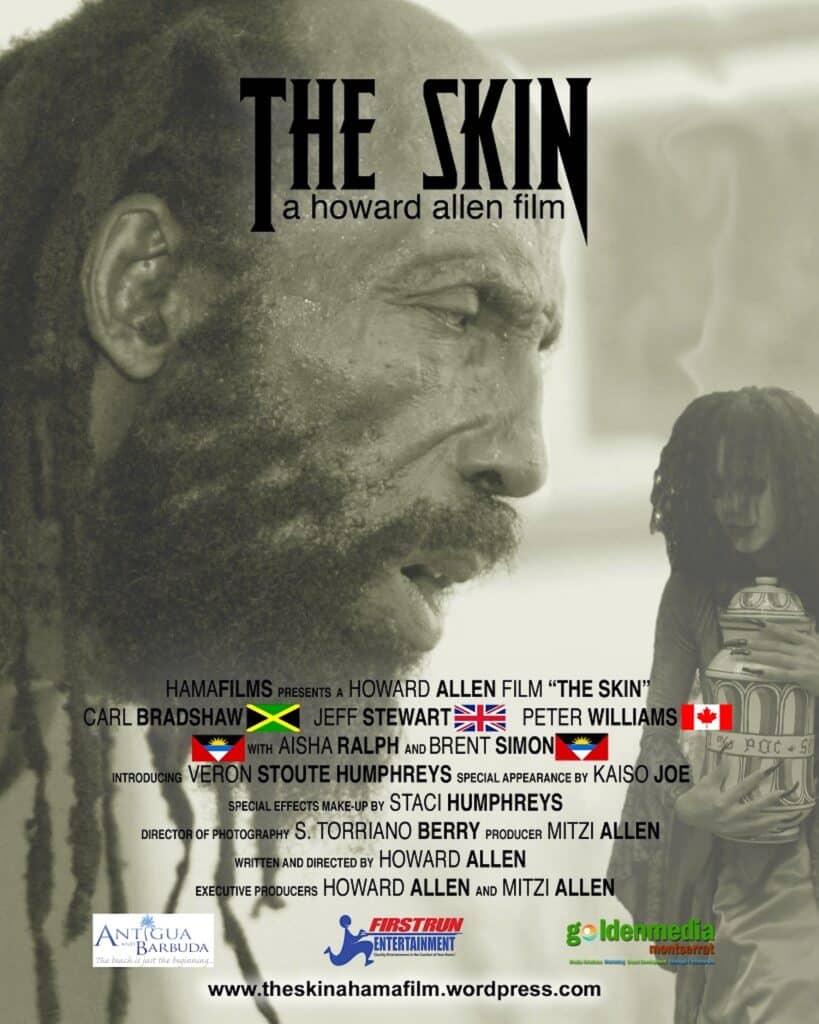
2001: ANTIGUA AND BARBUDA – “THE SWEETEST MANGO, THE SKIN” BY HOWARD ALLEN
The Skin is the second feature film by the Allen couple—Howard directing and Mitzi producing. In 2001, they directed *The Sweetest Mango* (2001) so that their country would have its first “local” feature film to mark the dawn of the 21st century. The film is clearly inspired by their own love story: Lovelyanne “Luv ” Davies, returning after several years living in Canada, struggles to readjust to her home country, given the small size of the archipelago (440 km²) and the limited professional opportunities, while one of her colleagues woos her and eventually marries her.
Based on a classic plot, this film—which was, unfortunately, technically flawed (shot with first-generation digital cameras)—already stood out in several ways: it lacked any social or historical dimension, unlike other Caribbean films, a title referencing mango season (from April through the end of summer), which created a temporal marker firmly rooted in the landscape; and the assertion that even small spaces can be the setting for grand stories (of love, among others).
For The Skin, this ambitious couple—struggling to make a film on an island with fewer than 100,000 residents—received support from a technical crew from the prestigious African American university Howard University as well as an international cast that included the famous Jamaican actor Carl Bradshaw and British comedian Jeff Stewart.
While catering to a tourist-oriented vision of the island (aerial shots of the coastline, pleasure boats, sensuous dances and accompanying music, etc.), this film is firmly rooted in Caribbean magical-religious folklore through the story of a cursed vase linked to the era of slavery and features some particularly unsettling nighttime sequences in the woods, where the Creole language mischievously blends with English. An effective film with lofty ambitions.
2004: MARTINIQUE – BIGUINE, BY GUY DESLAURIERS
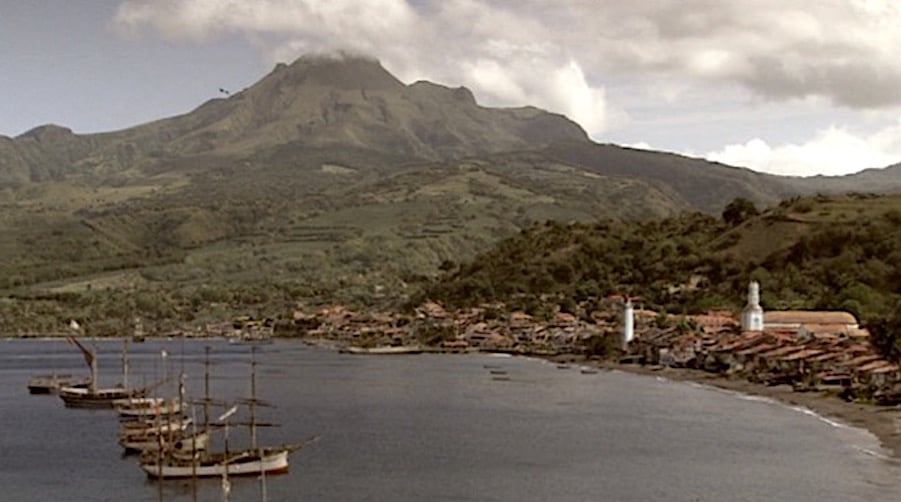
The third feature film from the Chamoiseau-Deslauriers duo, a unique collaboration between Caribbean literature and Caribbean cinema To date, this musical (or, more precisely, musical drama) about the invention of the famous “biguine” music in the city of Saint-Pierre (at the time the world capital of sugar and rum) in Martinique during the second half of the 19th century serves as an opportunity to portray the process of creolization, an accelerated and unpredictable cultural fusion (as proposed by the author Édouard Glissant), through musical creation. Hermansia (Micheline Mona, daughter of the famous Eugène Mona, a specialist in the “flûte des mornes”) and Tiquitaque (Max Télèphe), coming from the countryside, settle in the city, where they will live for nearly 30 years.
The music they play, of African origin, held no appeal for bourgeois dance halls. It was then, upon coming into contact with European music, ballets (Saint-Pierre had an opera house, a streetcar, and gas lighting) or mazurkas, and European instruments, which were largely unfamiliar to them, they began to blend different musical styles. In particular, Hermansia made a major decision by giving her partner a clarinet.
The clash between rhythms of African origin (music from the Martinican countryside) and European instruments (clarinet, violin, piano, etc.) gave rise to the biguine, much like so many other forms of Caribbean music, from reggae to steel bands to compas. In this film, the Caribbean woman is thus at the heart of the process of cultural creolization: Biguine complements the various aspects of “femifocality”, that is, the importance of women in Caribbean cinema. Finally, in addition to the numerous musical sequences featuring legendary biguine songs with strong political undertones, the film concludes with a depiction of the famous 1902 eruption of Mount Pelée, which leveled the city of Saint-Pierre and claimed nearly 30,000 lives.
About the Author
Guillaume Robillard holds a Ph.D. in film studies; he is a professor and researcher, a documentary filmmaker, and a specialist in Caribbean cinema and artistic production. He is the author of two books: *Conquest of Space and Time: Caribbean Cinema (Éditions Jannink, “Hypothèses d’Art,” 2023) and Decolonial Cinema: Characters in Caribbean Cinema (Presses Universitaires des Antilles, “Arts et Esthétique,” 2024).
"Stories of Caribbean Cinema" series. Season 6/10 is already available on Richès Karayib. Stay tuned for Season 8/10 coming soon.
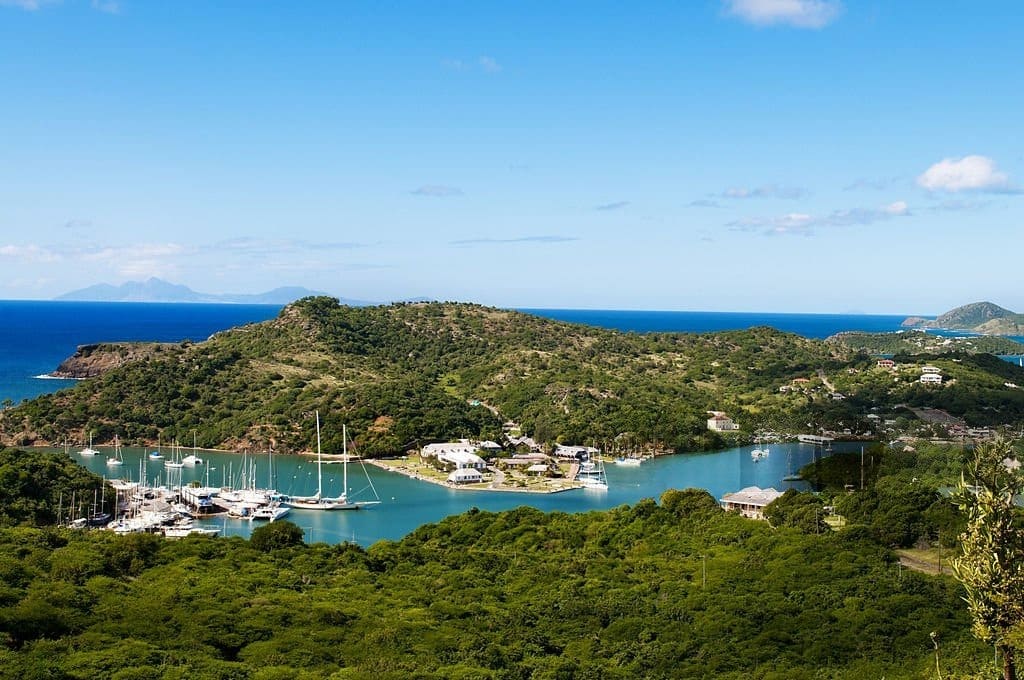
Even today, boats come and go from the English Harbour basin on Antigua’s south coast. Some come to have their rigging repaired; others moor there for the season. The setting has hardly changed—the same stone docks, the same Georgian warehouses with shingled roofs. Nelson’s Dockyard is not a museum frozen in time. It is the only shipyard from the Georgian era still in continuous operation in the world, founded on September 25, 1725, and built primarily by enslaved Africans.
English Harbour, the harbor that gave rise to Nelson's Dockyard
English Harbour was chosen for a very practical reason. Its narrow shape provides natural shelter from hurricanes, and its location on the southern flank of Antigua made it possible to monitor the movements of rival fleets in the neighboring islands. It was in this bay that the shipyard would gradually take shape, serving the Royal Navy.
September 25, 1725: The founding charter of Nelson's Dockyard
On September 25, 1725, the Antigua Assembly passed a law transferring this land to the Royal Navy. The island’s sugarcane planters hoped that, in exchange, the Navy would invest more in protecting local trade. For nearly twenty years, the Navy built almost nothing on the site. It was not until the mid-1740s thatit truly began to take shape.
Nelson's Dockyard was built by enslaved laborers
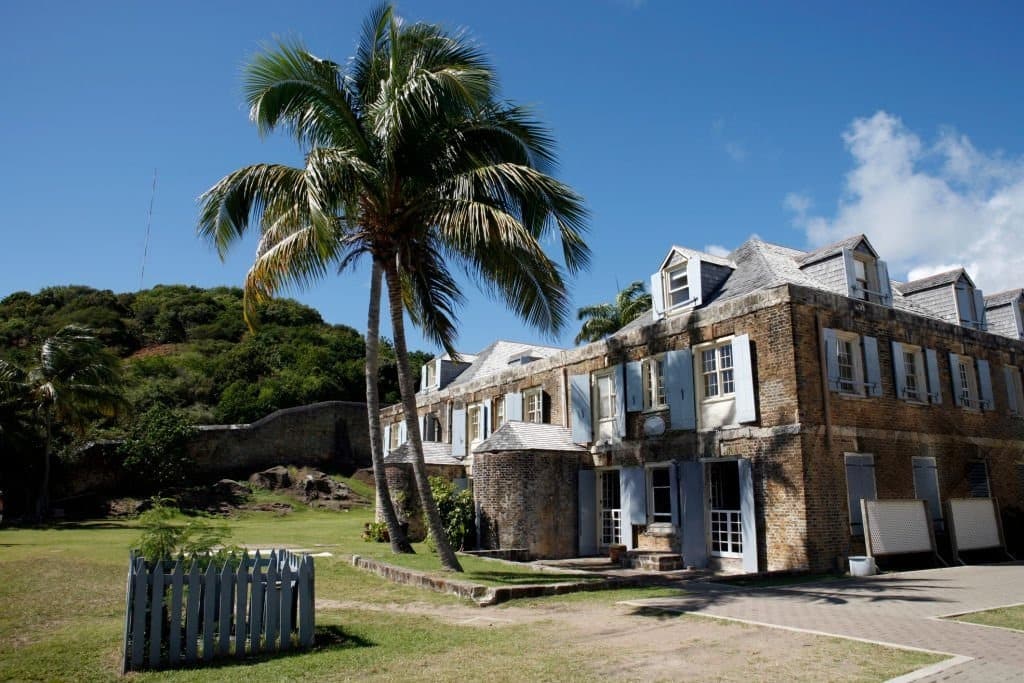
Wooden warehouses, copper stores, forges, and sail-making workshops sprang up between 1745 and 1794, in successive phases. The construction of the shipyard relied on enslaved Africans sent from nearby plantations. According to Antigua’s heritage authorities, more than 75% of the shipyard’s workforce consisted of enslaved men, who worked as shipwrights, blacksmiths, caulkers, or sailmakers.
Why Nelson's Dockyard Is Named After Admiral Nelson
It was at this shipyard that Admiral Horatio Nelson lived from 1784 to 1787, while he was a young officer in the Royal Navy. He was neither the founder nor the builder of Nelson’s Dockyard. But his name has stuck, and it is by this name that the site is known throughout the world today.
From Neglect to the Designation of Nelson's Dockyard as a World Heritage Site
The British Navy finally abandoned the shipyard in 1889, as the age of sail had come to an end. The buildings fell into disrepair over several decades before a lengthy restoration effort brought them back to life in the 20th century. On July 16, 2016, during its 40th session held in Istanbul, the UNESCO World Heritage Committee inscribed Nelson’s Dockyard under the name “Antigua Naval Dockyard and Related Archaeological Sites.”

Nelson's Dockyard, a Shipyard That's Still Going Strong
It is precisely this continuity that makes Nelson’s Dockyard unique. Unlike many Caribbean heritage sites, which have been frozen in their original use, this one has never ceased to serve its primary function: hosting and repairing boats. Other fortresses in the region also bear the marks of colonial rivalry between European powers, such as Brimstone Hill in St. Kitts or La Fortaleza in Puerto Rico. But few can claim to have remained as vibrant as this shipyard, rather than being transformed into mere ruins to be visited.
Three centuries after the vote by the Antigua Assembly, one question regarding the history of Nelson’s Dockyard remains unanswered. The name that has gone down in history is that of a passing officer—who spent barely four years in a place that spans three hundred. The names of those who actually built the shipyard, stone by stone, remain largely absent from the archives consulted to this day. It remains to be seen whether Caribbean history will ever be able to trace them.
Nelson’s Dockyard is a historic shipyard located in English Harbour, on the southern coast of Antigua. It is the only shipyard from the Georgian era still in continuous operation anywhere in the world.
It was established on September 25, 1725, the date on which the Assembly of Antigua passed the law transferring the land to the British Royal Navy.
Yes, it is part of the “Antigua Naval Dockyard and Related Archaeological Sites,” which was inscribed on the UNESCO World Heritage List on July 16, 2016.
In Saint Lucia, during the 51st meeting of CARICOM heads of government, Dr. Hyginus “Gene ” Leon, executive director of DBRP/The Nature Bank, presented an ambitious idea during a side event on reparations: using restorative justice to rethink Caribbean development. Here, the term does not refer solely to financial compensation. It aims to acknowledge the consequences of slavery and colonization, to redress the harm caused, and to transform the mechanisms that continue to perpetuate them.
Four Measures of Development
Development is often measured in terms of growth, investment, and infrastructure. This perspective is incomplete. An economy can build roads, ports, or hotels while at the same time undermining its natural resources, its population, or its institutions. This discussion is based on four forms of wealth. Productive capital includes infrastructure, businesses, and financial resources. Natural capital encompasses soil, forests, water, reefs, and the climate. Human capital encompasses health, education, skills, and dignity. Finally, societal capital relates to institutions, social cohesion, and trust.
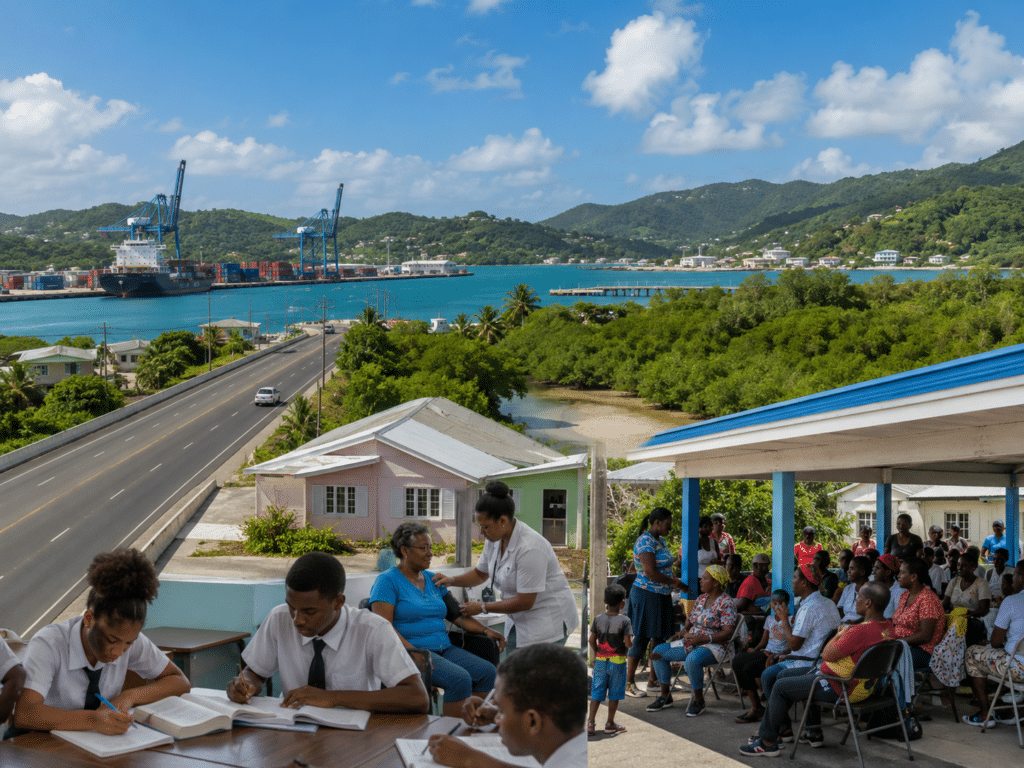
Progress requires that these four forms of wealth advance together. When one form of capital develops at the expense of the others, growth becomes fragile. A region can achieve strong economic performance while simultaneously depleting the very foundations that make that prosperity possible.
A Five-Century-Old Economic Error
Restorative justice takes on a broader dimension here. It stems from a historical observation: for centuries, the economic system has assigned a price to produced goods while reducing people and nature to mere resources. The British Emancipation Act of 1833 illustrates this logic. More than 800,000 enslaved people were freed. Yet the 20 million pounds allocated compensated the slaveowners, while the freed people received no compensation. The financial value of property was recognized; the value of human life remained absent from the balance sheet.

This extractive model has not entirely disappeared. Cocoa produced in Ghana and Côte d’Ivoire fuels a global industry, while producers and the regions of origin retain only a small share of the value created. Incomes remain low, forests are shrinking, and the bulk of the profits are concentrated elsewhere.

Reparations, Climate, and Inequality: A Common Root
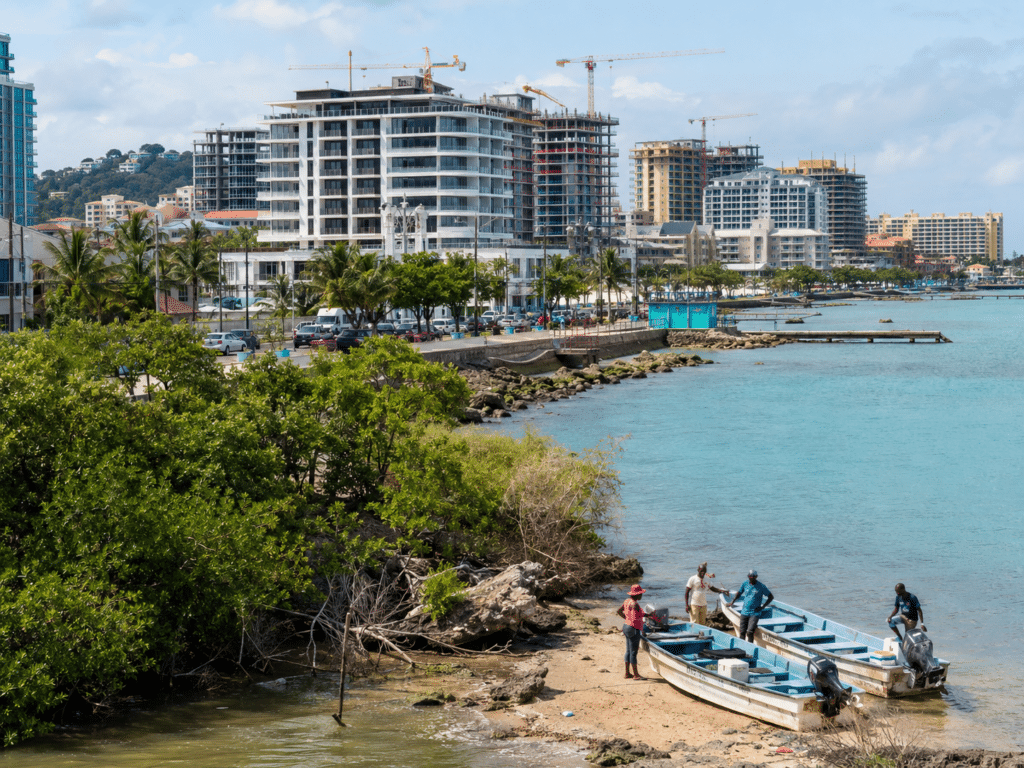
Reparations for slavery, climate-related losses and damages, and the fight against inequality are often addressed separately. Yet these issues stem from the same mistake: counting only part of the actual wealth. In the Caribbean, this contradiction is evident. A mangrove forest may be destroyed to make a project profitable in the short term. Its ability to protect coastlines, limit storm damage, or support fisheries is not always factored into the initial calculations. When disaster strikes, the region must finance reconstruction, often through debt. The value of nature is ignored at the outset, and then its absence becomes a collective burden.

Restorative justice thus links memory, the economy, and the environment. It raises a concrete question: How can we redress a historical injustice without reproducing the same imbalances in current decisions?

Rescue, Rebuild, and Transform
Restorative justice is structured around three stages: relief, reconstruction, and repositioning. The first addresses immediate emergencies. The second restores what has been lost. The third transforms the rules so that the harm is not repeated. This final stage is crucial. Rebuilding a house on the same fault line is tantamount to setting the stage for its next collapse. Similarly, compensation scattered across isolated projects may produce temporary results without addressing the root causes of vulnerability.

Restorative justice could therefore fund additional investments: education, health care, ecosystem protection, resilient infrastructure, strong institutions, and economies capable of retaining more value within the Caribbean region. The goal would be to compensate for a loss while making its recurrence less likely.

Three Possible Changes for CARICOM
Restorative justice offers three avenues for the region. First, every major public or financial decision could assess what it creates and what it destroys in terms of the four forms of wealth. Second, reparations could be organized as a coherent portfolio of reconstruction and transformation. Finally, human and environmental costs could be incorporated into the evaluation of projects, loans, and investments.
Restorative justice would thus shift the focus of the debate. For the Caribbean, making amends for the past could become a way to protect the future, by finally treating people, nature, institutions, and infrastructure as equally valuable.
In this context, restorative justice refers to an approach aimed at acknowledging and addressing the lasting consequences of slavery and colonization. It is not limited to the payment of financial compensation; it also seeks to invest in communities, institutions, the environment, and the economy to ensure that the same inequalities do not continue to be perpetuated.
The four forms of capital are productive capital, which includes infrastructure and businesses; natural capital, such as forests, reefs, and water; human capital, which encompasses health, education, and skills; and societal capital, based on institutions, trust, and social cohesion. Sustainable development requires advancing these four forms of capital together, without enriching one at the expense of the others.
It could help fund a coherent set of initiatives in education, health, ecosystem protection, climate resilience, and infrastructure. It also involves factoring human and environmental costs into financial decisions and assessing what each project creates or destroys. These guidelines were presented to CARICOM as proposals, not as decisions that have already been adopted.
On the future EC$5 bill, the face of Grenadian Olympic champion Kirani James will appear alongside that of former Saint Vincent and the Grenadines Prime Minister Robert Milton Cato. This pairing encapsulates the ambition of the new series: to bring to life, through everyday gestures, the stories of those who have left their mark on the Eastern Caribbean.
On July 9, 2026, the Eastern Caribbean Central Bank (ECCB) unveiled the new designs for the five main denominations of the regional currency. For the first time, the 5, 10, 20, 50, and 100 EC dollar bills will no longer feature the portrait of Queen Elizabeth II. Ten figures from member countries will take her place.
A common currency for eight territories
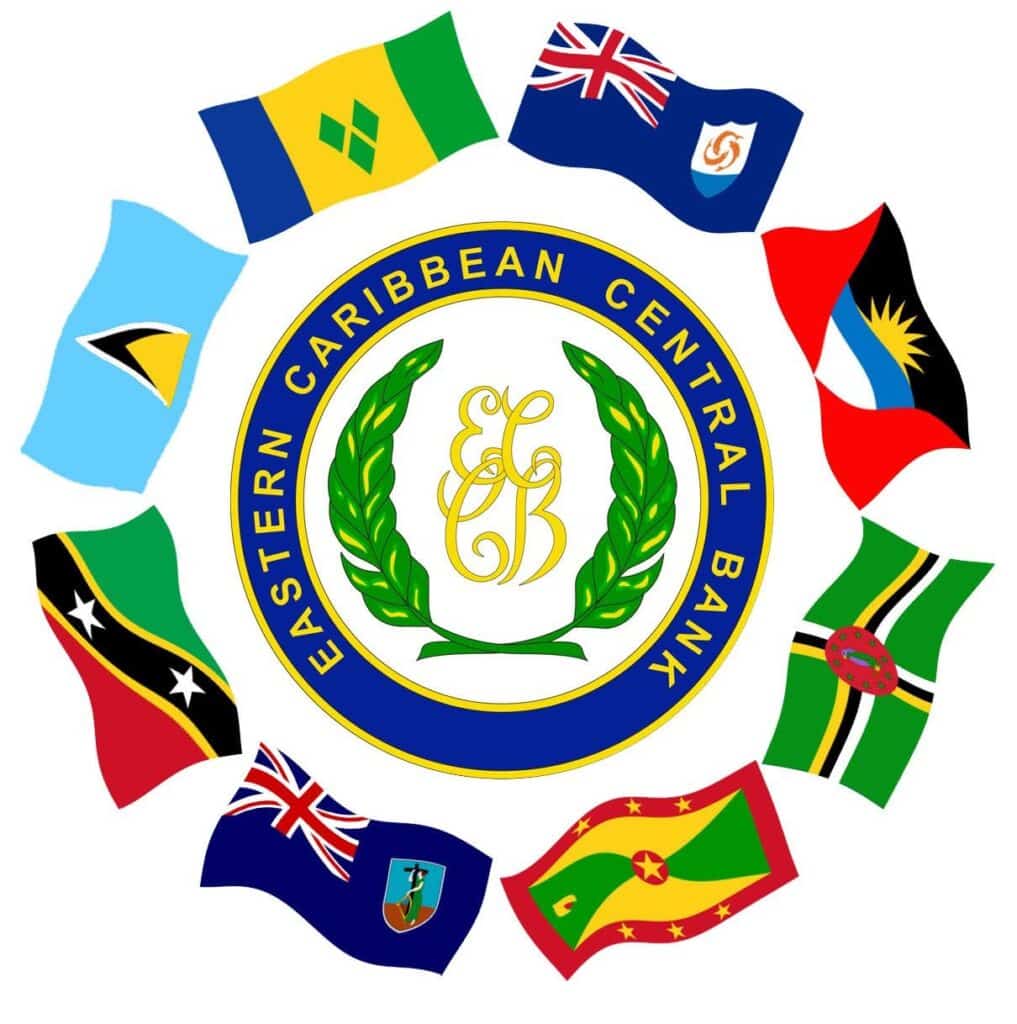
The EC dollar is the official currency of Anguilla, Antigua and Barbuda, Dominica, Grenada, Montserrat, Saint Kitts and Nevis, Saint Lucia, and Saint Vincent and the Grenadines. These eight member states share a central bank and a currency, but each retains its own national history. The new design specifically seeks to bring these narratives together without blurring them. In the Eastern Caribbean, the banknote thus becomes more than just a means of payment; it becomes a symbol of regional recognition.
Five cuts for ten courses
The $100 bill will feature Saint Lucian economist Sir William Arthur Lewis and Sir John Compton. In 1979, Arthur Lewis received the Bank of Sweden Prize in Economic Sciences for his pioneering work on development. The $50 bill will feature Sir K. Dwight Venner, governor of the ECCB from 1989 to 2015, and Sir Robert Llewellyn Bradshaw. The $20 bill will feature Sir Vere Cornwall Bird Sr. and Dame Mary Eugenia Charles, the first woman elected prime minister in the Caribbean region.
The $10 bill will feature William Henry Bramble and James Ronald Webster. Finally, the $5 bill will feature Robert Milton Cato and Kirani James. As the 2012 Olympic 400-meter champion in London, Kirani James earned Grenada its first-ever Olympic medal.

A decision that has been in the works since 2023
The decision to make this change was not reached in a matter of weeks. On July 21, 2023, the ECCB’s Monetary Council approved the replacement of the image of Elizabeth II. The Central Bank then held public consultations between July and December 2023. According to the ECCB, these discussions revealed strong support for national heroes and the region’s founding figures. The 2026 unveiling thus reflects not only an institutional decision but also the expectations expressed in the countries concerned.
What memory do the tickets choose?
The collection tells a certain story of the Eastern Caribbean . It primarily highlights political leaders, an economist, a pioneer of monetary integration, and an athlete. These figures evoke the region’s path to independence, the building of its institutions, and the determination to establish the region’s presence on the international stage. But the list also sparks debate. Among the ten figures selected, only one is a woman: Dame Eugenia Charles. The arts, literature, and music are not directly represented. This observation does not diminish the significance of the change, but it does show that a currency alone cannot encapsulate the full richness of a region.
By replacing the monarch’s portrait with those of local figures, the Eastern Caribbean is shifting the symbolic center of its currency. They are not merely changing images: they are choosing the faces that will henceforth accompany purchases, wages, and trade. A new question then begins to circulate along with these bills: what other women, artists, thinkers, or builders might one day become part of the shared narrative of the Eastern Caribbean?
📸 @ECCB
The Eastern Caribbean Central Bank is replacing the portrait of Queen Elizabeth II with those of ten prominent figures from the region. This new series aims to better represent the history, achievements, and shared identity of the eight member countries that use the EC dollar.
The five banknotes will feature, among others, economist Sir Arthur Lewis, former Prime Minister Dame Eugenia Charles, former ECCB Governor Sir K. Dwight Venner, and Grenadian Olympic champion Kirani James. Each banknote will feature two regional figures.
The EC dollar is used by eight members of the Eastern Caribbean Monetary Union: Anguilla, Antigua and Barbuda, Dominica, Grenada, Montserrat, Saint Kitts and Nevis, Saint Lucia, and Saint Vincent and the Grenadines.
On June 2 and 3, 2026, public and economic players from Guadeloupe, Antigua and Barbuda, Dominica and St. Kitts and Nevis sat around the same table in Guadeloupe to work on a very concrete question: how can we better connect nearby islands, whose exchanges are still hampered by transport breaks? The first KARULINK steering committee is not yet launching new lines. It is setting up a method, partners and a timetable to examine the feasibility of regular maritime passenger services.
A first COPIL to move from principle to method
This meeting marks an important milestone for KARULINK, a European territorial cooperation project co-financed by the European Union as part of the INTERREG Caribbean 2021-2027 program. Discussions focused on three areas: feasibility studies for future maritime services, the development of more environmentally-friendly transport solutions, and prospects for economic and tourism cooperation between the partner territories.
This framing is essential. There’s more to a sea link than simply putting a ship out to sea. We need to study the possible flows, the ports involved, land connections, operating costs, standards, security, timetables, ticketing and passenger reception. The entire travel chain needs to be considered. This is one of the challenges of the project’s intermodal approach: to make it easier for passengers to switch from one mode of transport to another.


A Guadeloupean project with a Caribbean scope
KARULINK is led by the STEP Group in Guadeloupe, with several economic and institutional partners: the Antigua and Barbuda Chamber of Commerce, the Dominica Association of Industry and Commerce, the St. Kitts and Nevis Chamber of Industry and Commerce, the Communauté d’Agglomération La Riviera du Levant and the Ville de Bouillante. The project is scheduled to run until December 31, 2027.
Data published by INTERREG Caraïbes indicate a period running from January 4, 2025 to December 31, 2027, with a total cost of 1,868,743 euros, including 1,143,896 euros from the ERDF and 444,535 euros from the EDF. These amounts place KARULINK within a structured, financed and European framework, with measurable objectives.
The sea as a space for cooperation
The appeal of KARULINK lies in its starting point: the sea can once again become a space for traffic, work and cooperation between nearby islands. The project aims to strengthen connectivity within the Guadeloupe archipelago, while exploring new routes to Dominica, Antigua and St. Kitts. It also combines broader objectives: stimulating the tourism economy, promoting low-carbon transport, creating local jobs and developing training in maritime and land transport professions.
This is an important dimension for the Eastern Caribbean. The territories concerned share geographical proximity, commercial exchanges, family ties, tourist traffic and economic needs. Yet regional mobility remains a sensitive issue, as it depends on public decisions, private operators, technical constraints and fragile economic balances. KARULINK should therefore prove that cooperation can produce concrete solutions.


A response to the challenge of regional integration
The project is part of the “A more connected Caribbean” priority of the INTERREG Caribbean program. This priority includes a specific objective dedicated to sustainable, intelligent and cross-border mobility. It corresponds to the stated ambition of reducing obstacles to inter-island mobility and promoting economic, tourist and human exchanges.
For Guadeloupe, the stakes are also strategic. As one of Europe’s outermost regions in the Caribbean, it is seeking to better integrate into its regional environment. KARULINK gives it a pivotal role, not to speak on behalf of other territories, but to build useful, realistic and sustainable links with them.


The next stage will be decisive
At this stage, the available information points to feasibility studies, coordination between partners and preparation of the next steps. Future routes have yet to be defined: routes, frequency, fares, ships, ports and operating partners.
This is where KARULINK will be needed. If successful, the project could provide the Eastern Caribbean with a concrete example of maritime cooperation, at the service of inhabitants, visitors, businesses and territories. June 2 and 3, 2026 have not yet changed the transport map. But they did lay a foundation stone: that of Caribbean mobility conceived from within the region, with its constraints, needs and ambitions.
KARULINK is a European territorial cooperation project designed to strengthen maritime connectivity between several territories in the Eastern Caribbean. It brings together Guadeloupe, Antigua and Barbuda, Dominica and St. Kitts and Nevis, with a concrete objective: to study the establishment of regular maritime passenger links, improve transport intermodality and facilitate economic, tourist and human exchanges between the islands.
The KARULINK project mainly concerns Guadeloupe, Antigua and Barbuda, Dominica and Saint Kitts and Nevis. On the Guadeloupe side, it involves Groupe STEP, the Communauté d’Agglomération La Riviera du Levant and the Ville de Bouillante. The project is in line with a regional approach: to better link geographically close territories, which are still hampered by transport, coordination and organization constraints for maritime flows.
KARULINK is important because it addresses a central issue in the Caribbean: the difficulty of moving easily between islands that are nevertheless neighbors. By working on maritime services, more sustainable transport solutions and better cooperation between public and private players, the project can help strengthen regional integration. It can also support tourism, economic exchanges, family ties and the movement of people in the Eastern Caribbean.
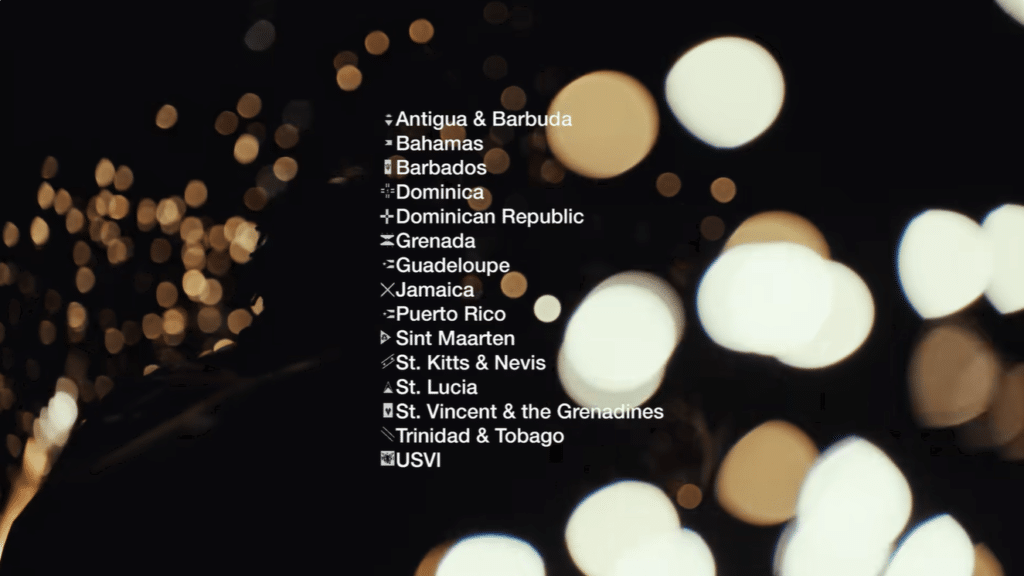
IShowSpeed Caribbean Tour opens a rare window on the Caribbean. The announcement was broadcast on April 20 on the American creator’s networks, with a live broadcast scheduled for April 25, 2026. The published list mentions fifteen destinations: Antigua and Barbuda, the Bahamas, Barbados, Dominica, the Dominican Republic, Grenada, Guadeloupe, Jamaica, Puerto Rico, Sint Maarten, Saint Kitts and Nevis, Saint Lucia, Saint Vincent and the Grenadines, Trinidad and Tobago and the US Virgin Islands. In the space of a few hours, this tour placed the region in an unusual position of global visibility.
IShowSpeed Caribbean Tour deserves attention for one simple reason: IShowSpeed gathers a gigantic audience. The Associated Press recalls that it surpassed 50 million subscribers on YouTube during its African tour in January 2026. At this scale, every move becomes a live event, picked up by other accounts and transformed into short sequences that circulate quickly. When an entire itinerary is devoted to the Caribbean, the territories, accents, landscapes and everyday customs enter the field of vision of an international audience.
The Caribbean as a whole
The first strength of the IShowSpeed Caribbean Tour lies in the overall picture it produces. The list combines independent states and territories, English-, French-, Spanish- and Dutch-speaking areas. This juxtaposition reminds us that the Caribbean is a multiple region, crossed by different languages and heritages, while retaining deep links.
This regional reading corresponds to a historical reality. Human, musical, commercial, religious and family circulations have existed for centuries from one island to another. Borders have shaped distinct administrations and statuses. They have never erased exchanges. In a single announcement, the Caribbean appears as a legible space for millions of people who often perceive it in a fragmented way.
Visibility through the codes of the present
The format counts almost as much as the list of destinations. IShowSpeed is all about live action, improvisation, immediate reaction and massive sharing. Its audience follows less a program than a presence. This way of filming changes the nature of the exhibition. The viewer watches streets, beaches, markets, journeys, encounters and crowd scenes as they happen.
For the Caribbean, this exhibition has a special significance. Many of the region’s territories suffer from uneven visibility in the major media circuits. The best-known benefit from a well-established image. Others remain absent from global narratives, or reduced to a few clichés. The IShowSpeed Caribbean Tour can therefore play a useful role: showing a diversity of places and atmospheres to a young public that is building its vision of the world through platforms.


An opportunity for cultural and media players
IShowSpeed Caribbean Tour is also of interest to artists, organizers, local media and creators based in the region. A tour of this scale can highlight a dancer, a musician, a culinary tradition, an urban setting, a popular event or a local personality. It can also create connections between territories that rarely communicate at this speed.
However, the added value of IShowSpeed Caribbean Tour will depend on how these moments are accompanied. A viral image attracts attention for a few hours. Serious editorial work extends this interest. It provides reference points, recalls history, clarifies political and cultural contexts, and helps us understand what we’re seeing. This is an opportunity for the Caribbean to tell the story of its plurality with greater mastery.
A visible symbolic impact
It would be premature to announce any quantified tourist effects or immediate economic spin-offs. However, one thing is clear: the Caribbean is gaining a global presence in one of today’s most popular formats.
This is where IShowSpeed Caribbean Tour really comes into its own. IShowSpeed Caribbean Tour brings together in a single movement territories that are often commented on separately. It reminds us that the region possesses a cultural, visual and social force capable of capturing attention on a grand scale. For audiences unfamiliar with the area, it can open a first door. For those who are already familiar with it, it confirms that the Caribbean remains a major hotbed of creation, circulation and energy in the contemporary world.
IShowSpeed Caribbean Tour is a tour announced by American creator IShowSpeed across several Caribbean territories. Beyond the announcement itself, this tour is attracting attention for its media scope and the visibility it can offer the region as a whole.
IShowSpeed Caribbean Tour is attracting a lot of interest because IShowSpeed is one of the most followed creators in the world. When he travels, his videos, live broadcasts and excerpts shared on the networks quickly reach an international audience, giving this tour a much wider reach than a series of stopovers.
IShowSpeed Caribbean Tour is important because it shows the Caribbean as a visible, vibrant and connected regional space. The tour links several territories in a single narrative and reminds us that the region possesses a cultural, linguistic and social richness capable of attracting attention on a large scale.
Yes, IShowSpeed Caribbean Tour can have a real cultural impact. This type of tour can highlight local landscapes, sounds, accents, lifestyles, artists and moods. It can also encourage a new way of looking at the Caribbean, particularly among a younger audience who follow world news via digital platforms.
It’s still too early to accurately measure the impact of the IShowSpeed Caribbean Tour on tourism. On the other hand, this tour can already raise the profile of the Caribbean and feed the curiosity of a global audience. This media exposure can then benefit the territories if it is intelligently relayed by cultural, tourism and media players.
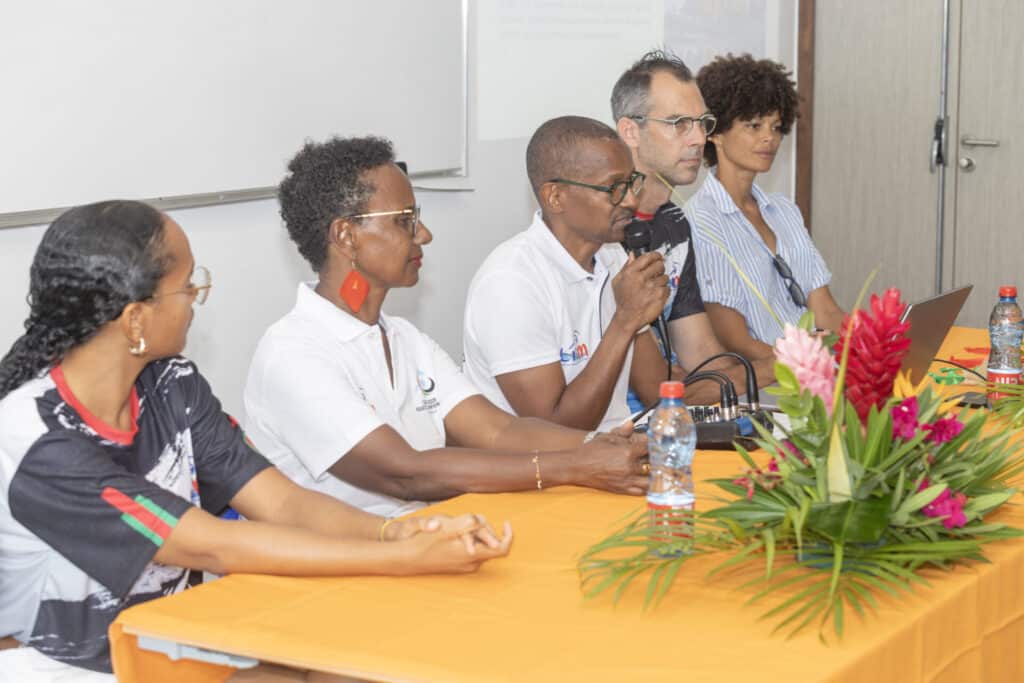
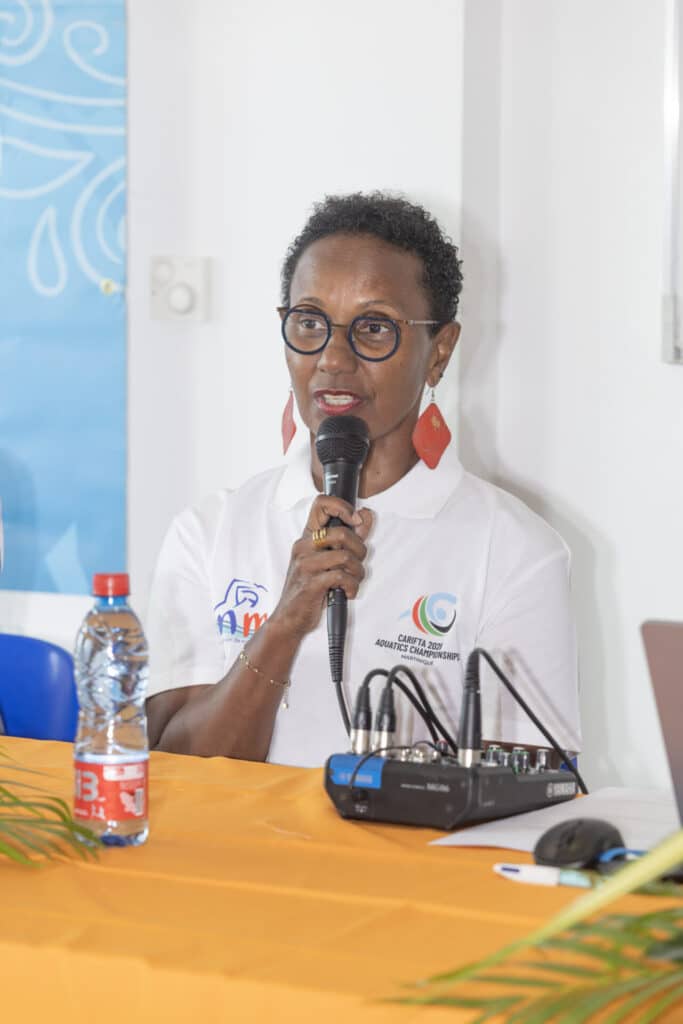
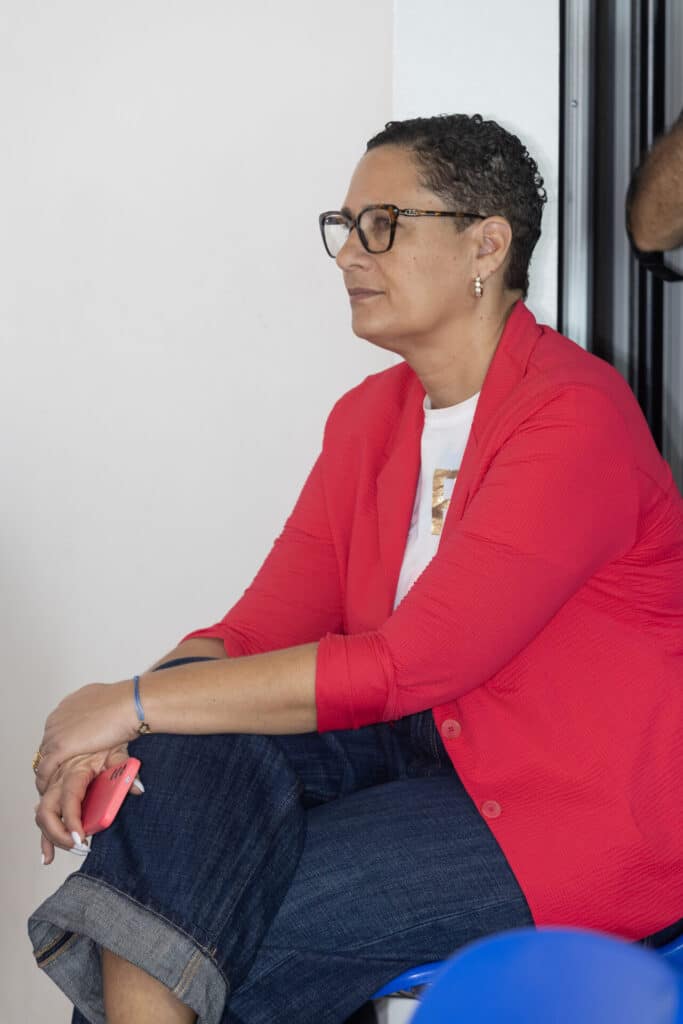
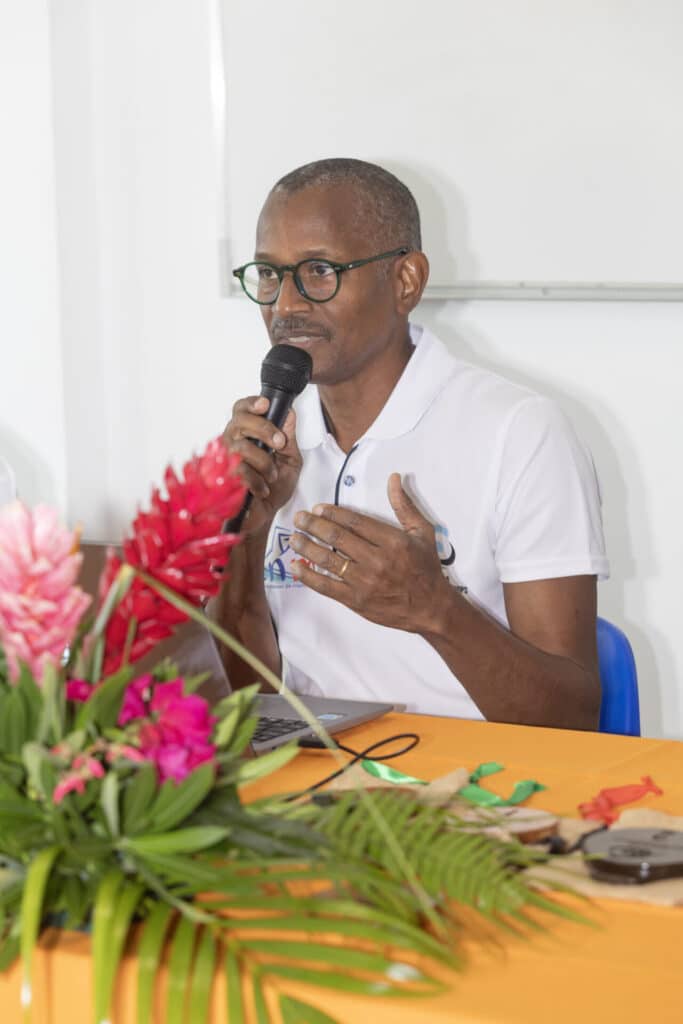
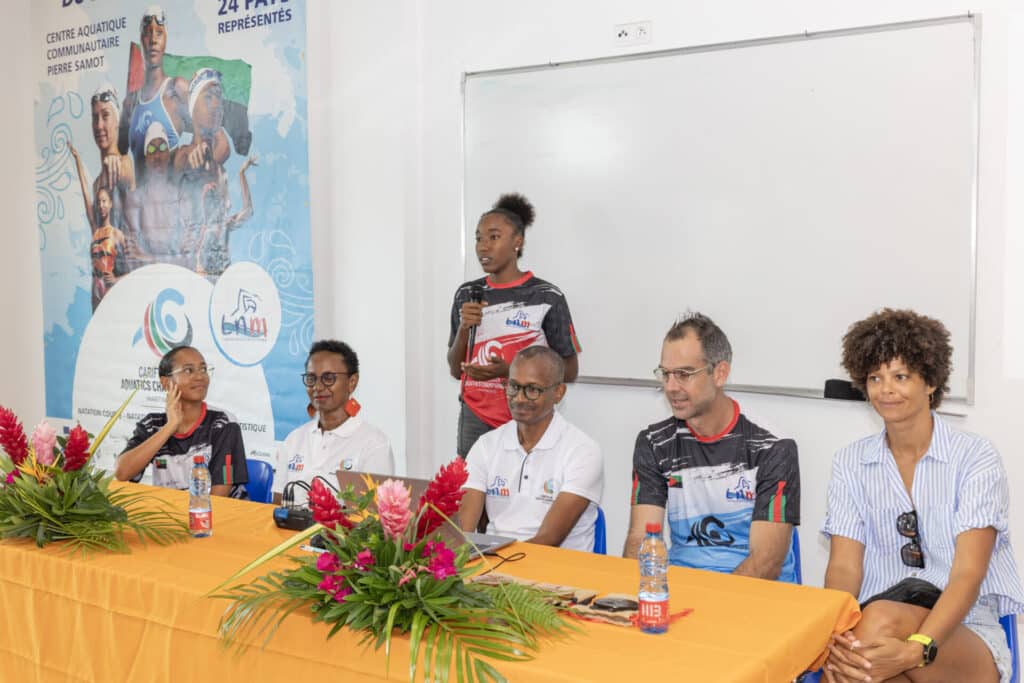
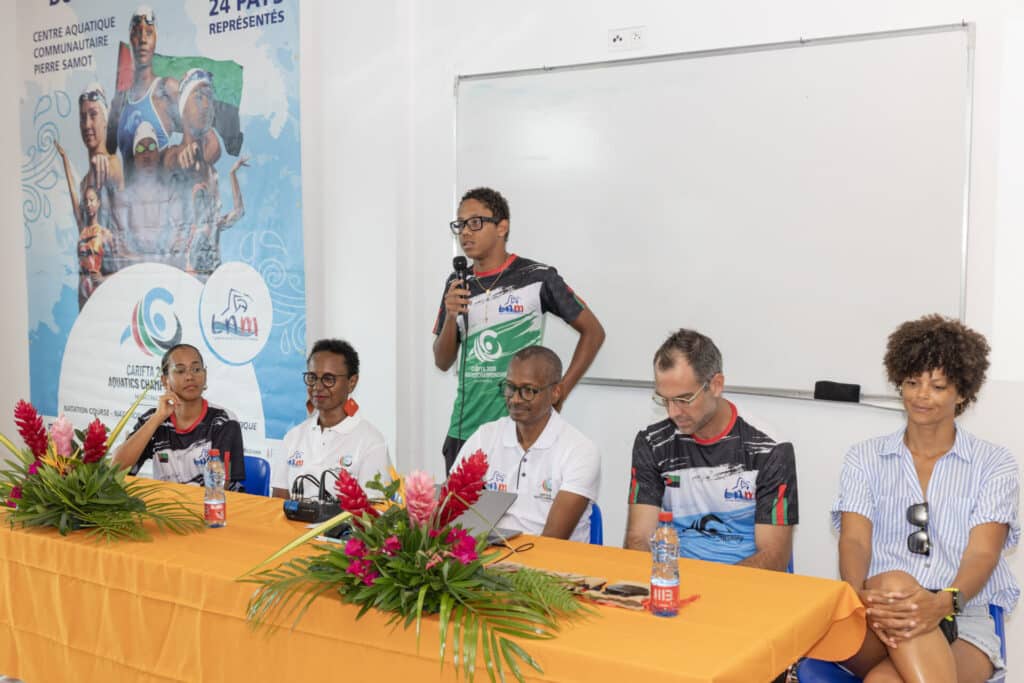
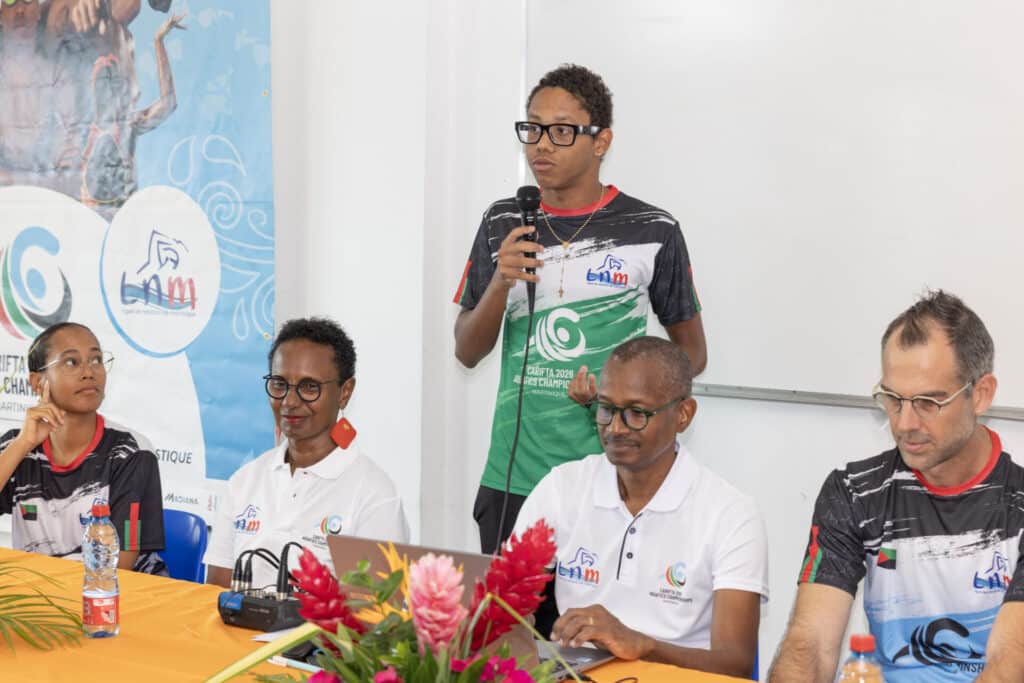
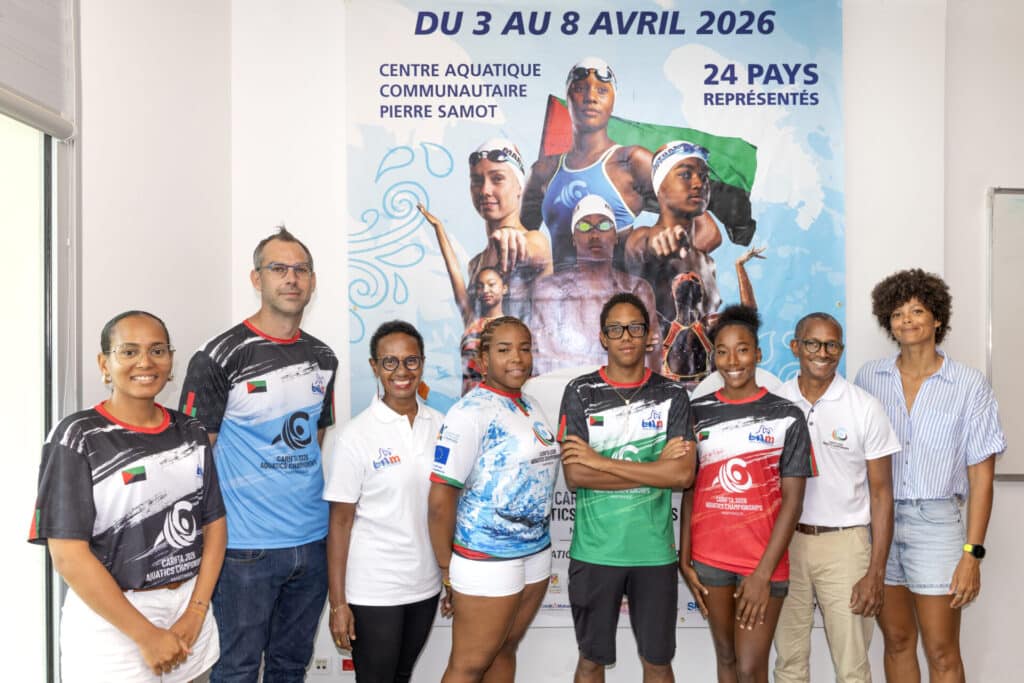
On Saturday March 28, at the Centre Aquatique Pierre Samot in Le Lamentin, the CARIFTA Aquatics Championships 2026 press conference was more than just an information meeting. Over the course of an hour and a half, organizers, athletes and partners presented much more than just the sporting program: from April 3 to 8, Martinique will host the 39th edition of the Caribbean’s leading junior aquatic event, ten years after the first edition was so memorable. Twenty-four nations. Three disciplines. A home territory that knows it.
A bid driven by collective memory
In 2024, at the Caribbean Aquatics Association Congress held in the Bahamas, two bids were put forward to host the 2026 CARIFTA Aquatics Championships: Saint Lucia and Martinique. The vote was clear-cut: some thirty votes for Martinique, ten for Saint Lucia.
Behind this result is a story. The 2016 edition, the first ever to be held on home soil, left its mark on the minds of all those who were there: coaches, delegation leaders, officials. In 2024, when it came time to vote, many still remembered that week.
"It was a beautiful edition, and one that will always be remembered."
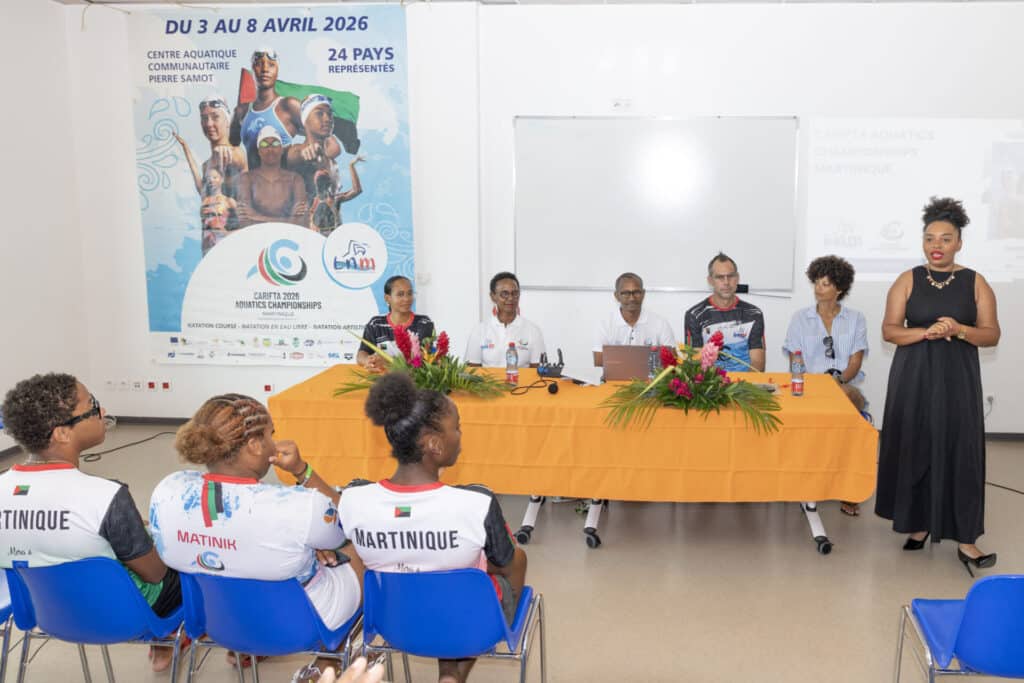
The other factor was more concrete: Sainte-Lucie did not yet have its own pool. Martinique, on the other hand, can count on the Centre Aquatique Pierre Samot in Le Lamentin, with its ten-lane Olympic pool, 800-seat grandstand and 25-meter warm-up pool. One of the best facilities in the Caribbean.
The organization also emphasized its capacity to welcome delegations from outside the basin, with several accommodation solutions mobilized in the south of the island, supplemented by other structures if necessary. This logistical aspect, rarely secondary in this type of event, reinforced the credibility of Martinique’s bid.
Three disciplines, 24 nations, a demanding format
The CARIFTA Aquatics Championships 2026 will bring together 24 countries: 21 English-speaking Caribbean nations, plus Martinique, Guadeloupe and Guyana. The swimming races will take place over four days: heats in the morning, finals in the afternoon, from Saturday April 5 to Tuesday April 8. Artistic swimming gets underway on Monday during the lunch break, with solos followed by technical events. The duets and teams round off the program on Wednesday morning. On the same Wednesday, the open water event takes place over five kilometers in the Anses d’Arlets.
Competitors: Benjamins (11-12 years), Minimes (13-14 years), Cadets (15-17 years) do not enter as individuals. They are national selections, with the best swimmers from each territory. To enter the Martinique selection, swimmers must satisfy a time grid established over the previous two seasons, which only selects swimmers capable of reaching the finals.
In the minds of the organizers, selection is based on a simple logic: to score points, you have to enter the final, and to enter the final, you have to be among the top eight times in the morning heats. In other words, the swimmers selected are supposed to have a level that enables them to play a real role in the competition, and not just participate.
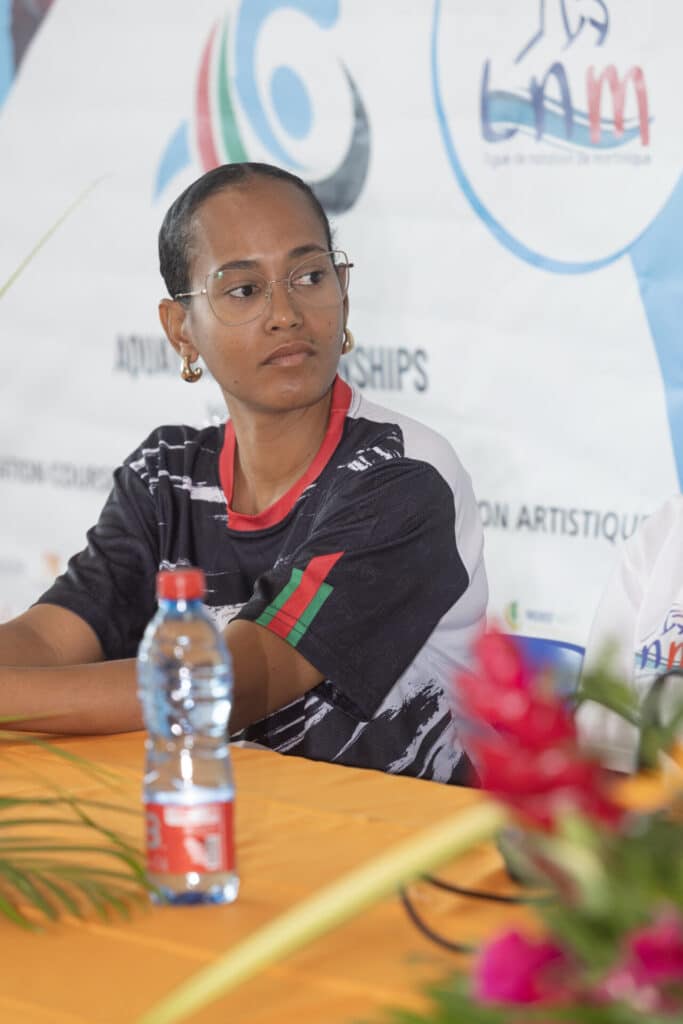
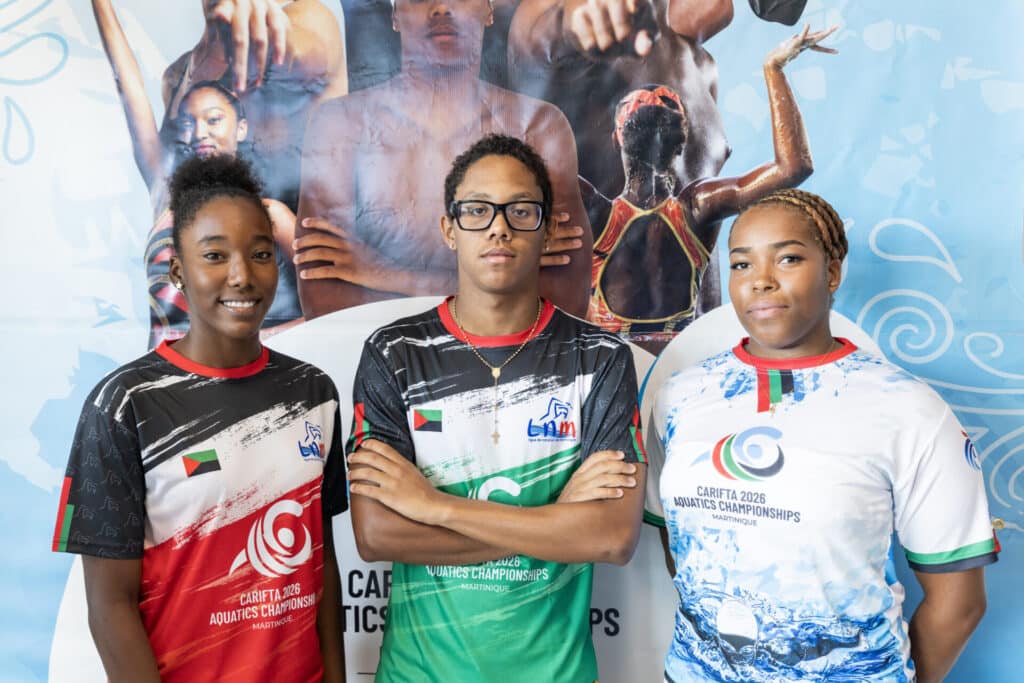
The Martinique delegation at the CARIFTA Aquatics Championships 2026 has 61 swimmers: 36 in racing, 12 in open water, five of whom also race, and 18 in artistic swimming. The team is led by five captains: Jean-Naël Zozime and Maxime Auguste-Charlery for boys’ racing (15-17 age group), Cyrielle Manin and Sayanne Guivissa for girls’ racing, and Nohemy Marajo for artistic swimming.
Water as starting point and destination
When asked how he got started, Jean-Naël Zozime, captain of the boys’ selection, answers straightforwardly: “I was introduced to swimming so that I wouldn’t drown. Cyrielle Manin, captain of the girls’ selection, tells much the same story: she almost drowned as a child, and that’s what led her to learn to swim.
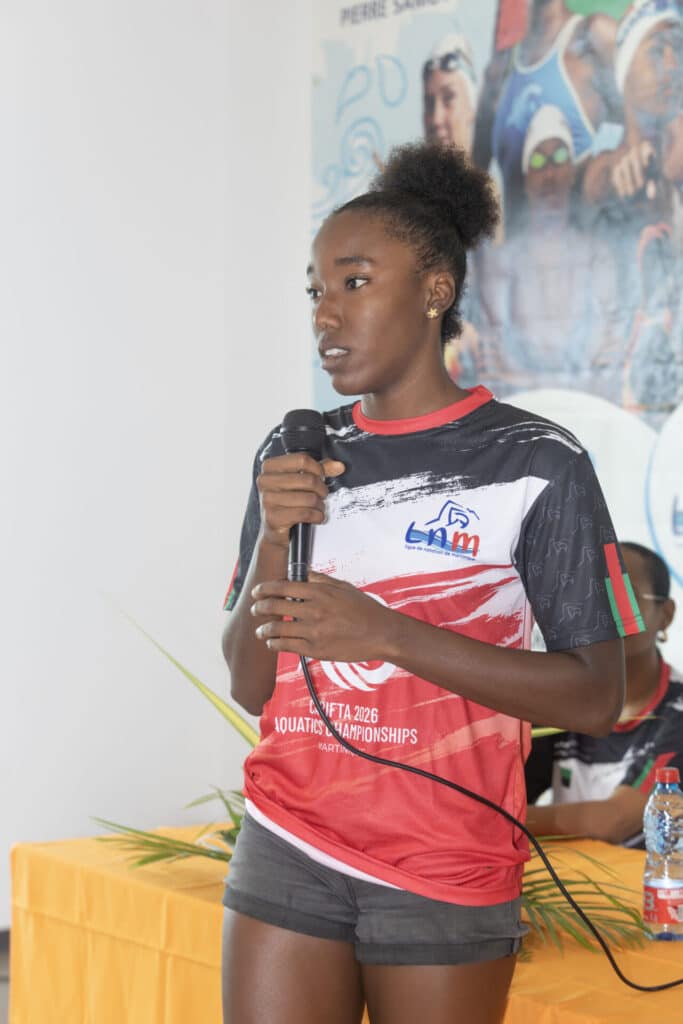
These two testimonies, heard just a few minutes apart, say something important about this territory. Two young Martiniquans, initially frightened by the sea, who are now representing their island against twenty-three Caribbean nations. This is more than just a sporting achievement.
"Swimming is a tough sport. You can't expect it to be easy, but with a lot of perseverance, anyone can do it."
— Jean-Naël Zozime
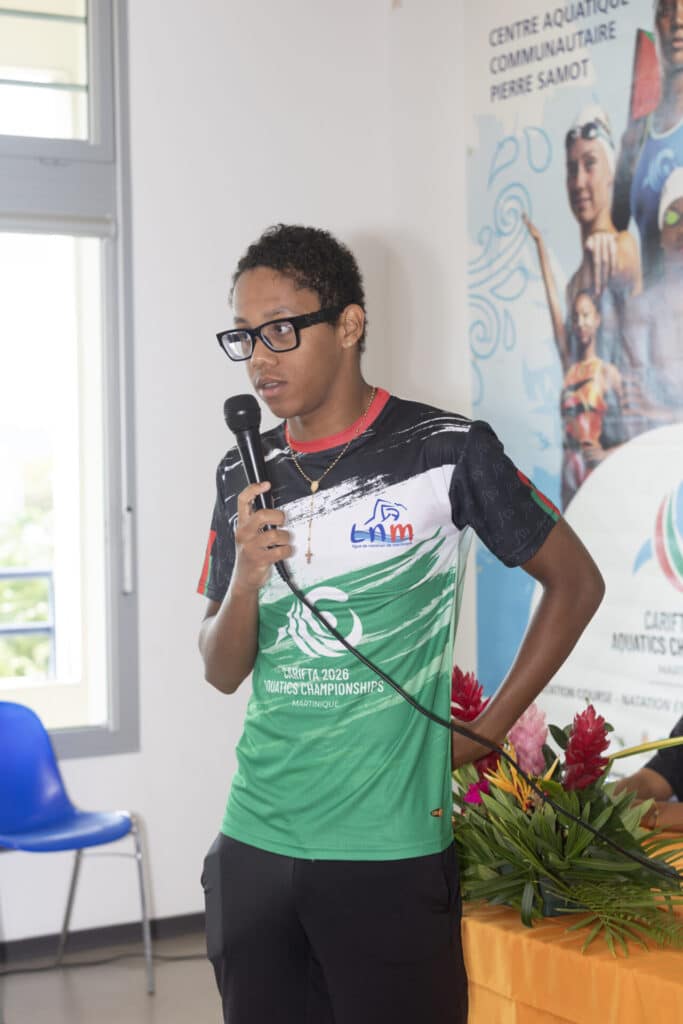
Nohemy Marajo, artistic swimming captain, has been practicing for ten years a discipline that the public still knows little about. She explains it concretely: learning choreographies on dry land, rehearsing them in the water, controlling your breathing under the surface while your legs draw figures above. It’s a sport that’s as technically demanding as it is physically demanding, and has as much to do with ballet as it does with endurance.
"You have to know how to endure, how to save every last breath to finish the choreography."
— Nohemy Marajo
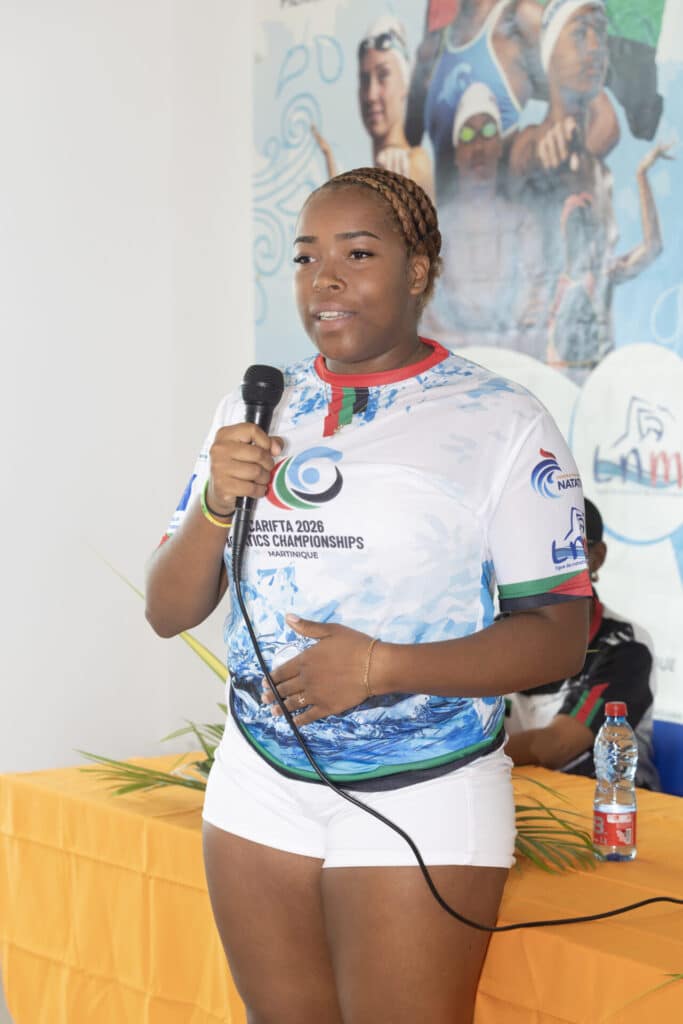
The conference of the CARIFTA Aquatics Championships 2026 also pointed out that artistic swimming is still a confidential discipline in the Caribbean, due to the infrastructure it requires and the level of preparation required. It requires three-dimensional work and very thorough technical preparation, as well as the support of outside professionals, particularly in dance and gymnastic preparation. For the supervisors, the challenge of CARIFTA is twofold: to support those who are already practising and to encourage new vocations.
What the coaching team observes in these youngsters is a constant: they train, take their exams, compete at weekends, and do it all over again. “Generally, swimmers perform well in their studies too, because they’ve worked on this rigor on a daily basis.” What you learn in the pool also applies elsewhere, and the organizers insist on this daily requirement: it’s not enough to qualify, you have to be able to show up on the day, in a sport where regularity and discipline count as much as talent.
Medals from the hands of the island
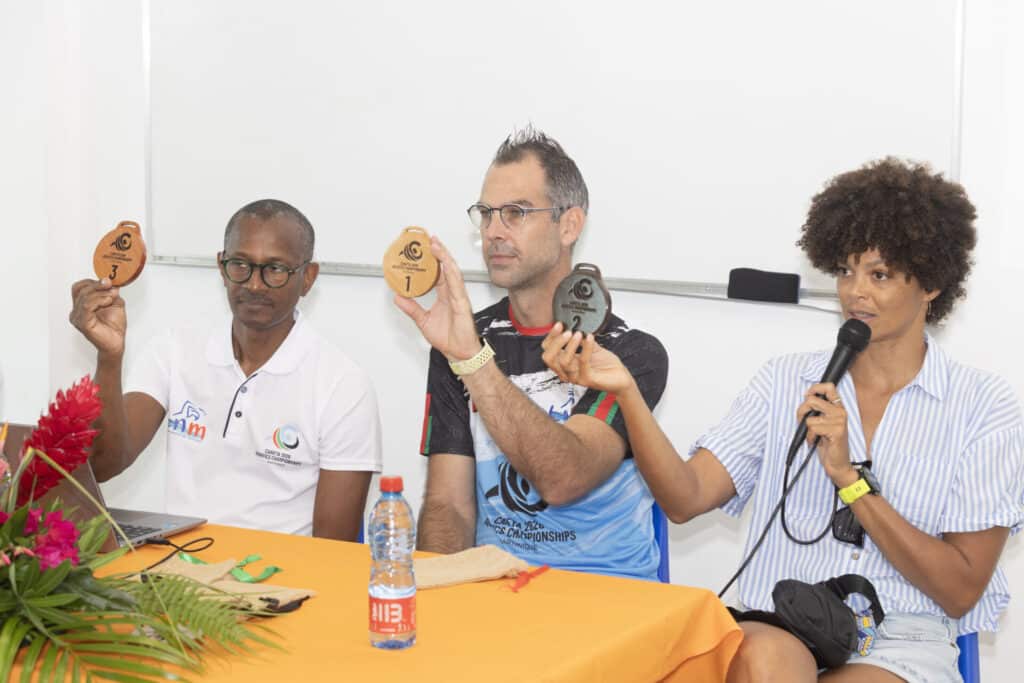
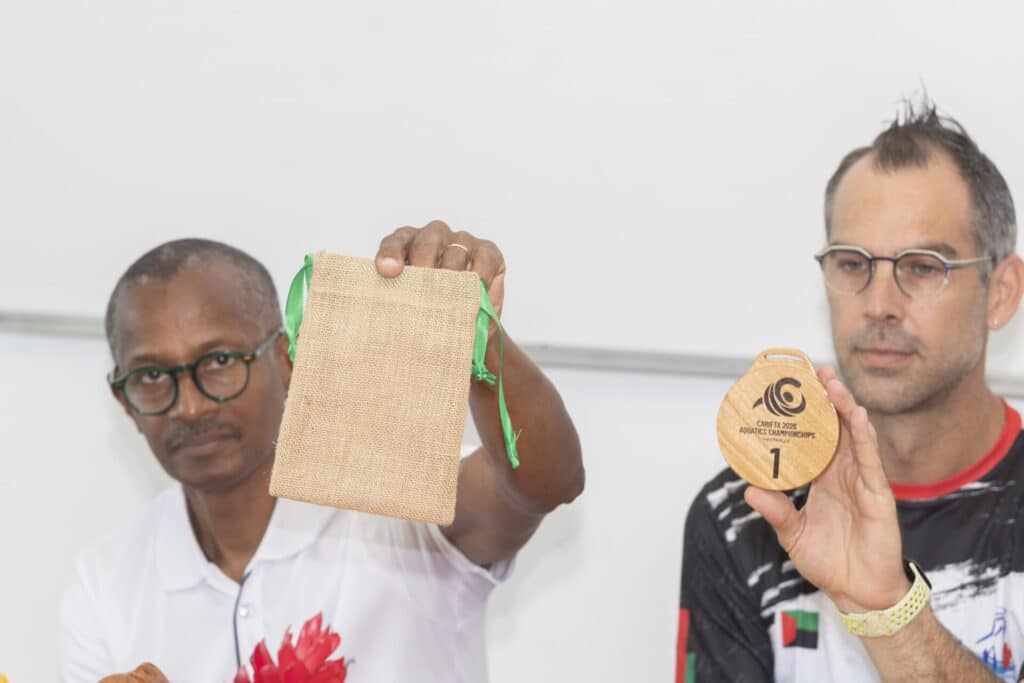
The way an event rewards its champions often says a lot about what it stands for. At the CARIFTA Aquatics Championships 2026, the medals were made in Martinique from noble woods: pearwood for gold, mao bleu for silver, mao ghani for bronze. A craftsman from the Nord-Atlantique region produced them, Joseph Galliard signed the engravings, and a local seamstress made the pouches in the three colors of the Martinican flag.
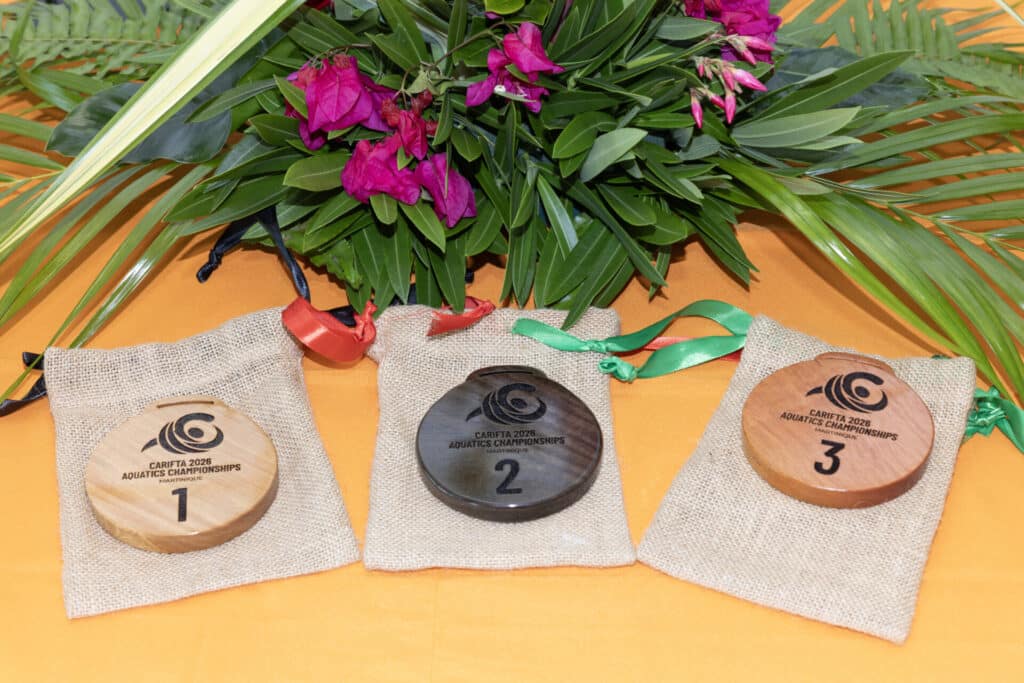
The initiative was spearheaded by the event’s godmother, Coralie Balmy, a former top-level swimmer who had taken part in the CARIFTA four times in her career. An eco-responsible and identity-affirming initiative, hailed as a first on the Caribbean scale.
Every Caribbean athlete who reaches the podium at the CARIFTA Aquatics Championships 2026 will leave with a piece of Martinique, a unique medal made by local craftsmen, unlike any other.
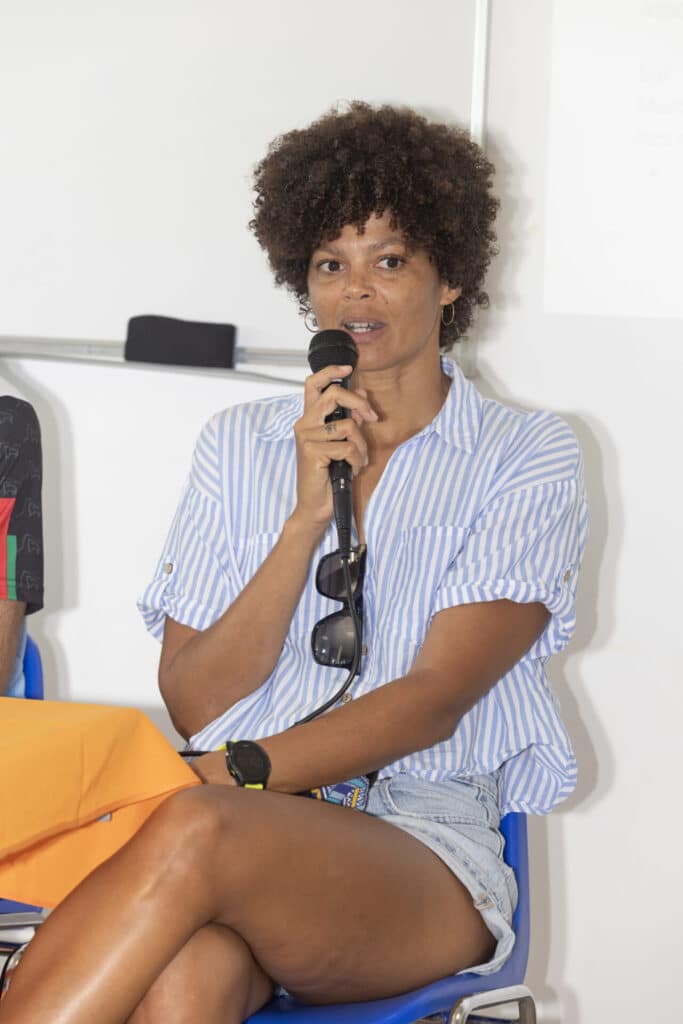
The conference also specified that trophies would accompany these awards, and that the medals had yet to receive their lanyards before the competition opened. Here too, the aim is clear: to make each award a sporting, local and symbolic object.
A week that mobilizes the whole territory
The CARIFTA Aquatics Championships 2026 won’t just be played out in the pools. Between 1,500 and 1,800 people are arriving in Martinique: swimmers, staff and families spread out over several hotels in the south of the island. Every day, around 150 volunteers ensure the smooth running of the event: former swimmers, parents, locals who sometimes have no direct connection with swimming, but who wanted to get involved.
Among them, the officials play a decisive role: some 26 officials from the Caribbean will reinforce the Martinique officials, bringing the number of people around the pool to around fifty for each morning and afternoon meeting. In addition, there will be first-aid attendants, reception teams, people in charge of awards, delegation escorts and areas open to the public.
Welcoming delegations to the CARIFTA Aquatics Championships 2026 was also thought through in detail. They all had to arrive on April 2, at different times of the day, sometimes very early in the morning, sometimes late at night. In conjunction with the transport company and SAMAC, a precise plan was drawn up at the airport to ensure smooth exits, transfers to buses and settling into accommodation, with particular attention paid to meals depending on the time of arrival.
The opening ceremony of the CARIFTA Aquatics Championships 2026, on Friday April 3 at the Georges Gratiant stadium, is free and open to all: 2,800 seats to fill. The group “Nou Pa Sav” will accompany the parade of delegations. On Saturday, April 4, Les Hommes d’Argile will be on hand as the delegations arrive on site, offering a strong cultural backdrop intended as a symbolic first encounter with Martinican identity. Throughout the week, Martinican cultural groups will be on hand to ensure that visitors leave with a living image of the region, not just competition results.
The CARIFTA Aquatics Championships 2026 ceremony is scheduled to take place from 4 to 6 p.m., and will be broadcast on a giant screen, as well as relayed by media partners and via YouTube for wider distribution in the Caribbean. The ambition is clear: to make Martinique the center of the Caribbean for the duration of the event.
In addition to sport, the organizers of the CARIFTA Aquatics Championships 2026 also have an economic and cultural objective. Bringing in up to 1,800 people means filling accommodation, generating consumption, encouraging car rentals and putting the hotel and restaurant sectors to work. It’s also a way of showcasing Martinique’s culture, notably through the entertainment planned for the opening ceremony and the arrival of the delegations.
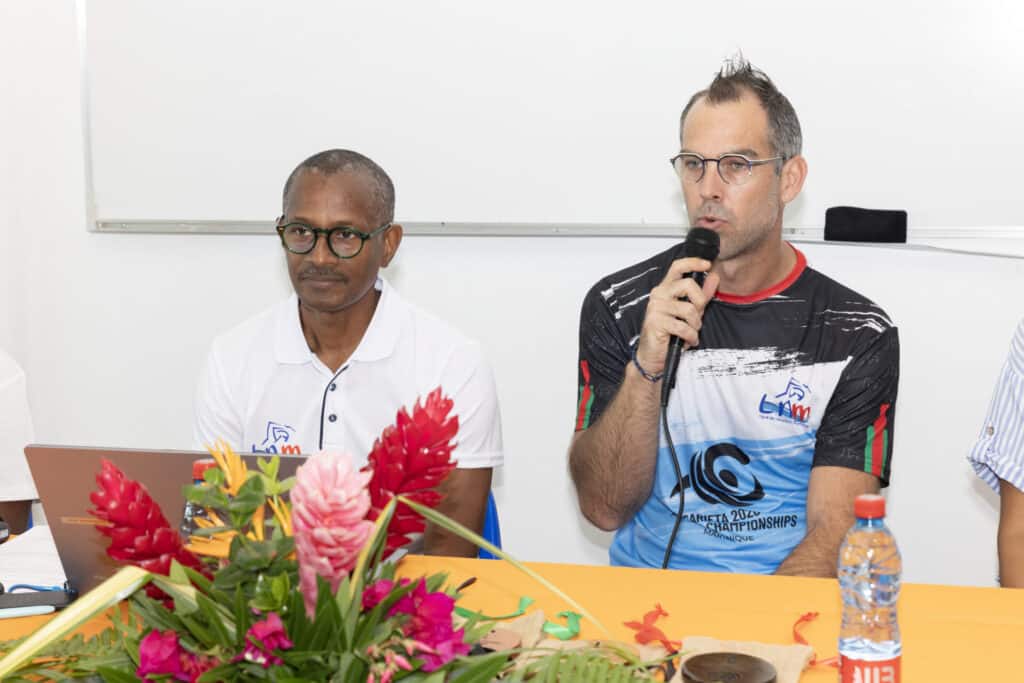
The open water event at Anses d’Arlets also serves as a reminder that the sea is a living, fragile environment that deserves protection. The association’s representative at the conference sums up its mission simply: “learn to swim to discover the seas and protect them.”
This educational dimension goes beyond drowning prevention. It also touches on the appropriation of water by the people of Martinique, the discovery of the discipline by the youngest and the broader desire to reinforce the region’s aquatic culture in the long term.
An assertive island
A phrase uttered at the end of the conference sums up the general mood: “We’re ready, and we’ll make the CARIFTA Aquatics Championships 2026 a collective success and a great source of pride for our region.”
What the delegations take away with them on the evening of April 8 is more than just a ranking. It’s an image of Martinique, a territory that knows how to welcome, organize and assert its identity. For six days, the whole Caribbean will be there. It’s up to Martinique to show what it can do.
But the organizers of the CARIFTA Aquatics Championships 2026 also want to leave their mark after the event. The Ligue de Natation de Martinique ended the 2024-2025 season with some 2,540 members, around ten affiliated clubs and, generally speaking, 7 to 8 clubs involved in competition. With this in mind, the CARIFTAs are not intended as a parenthesis, but rather as a possible catalyst to encourage vocations, boost membership and establish swimming as a permanent fixture on the Martinique sports scene.
The organizers of the CARIFTA Aquatics Championships 2026 have also chosen not to reproduce the large village of 2016. In 2026, the activities surrounding the competition are to be more focused, with one day in particular being highlighted, in order to concentrate energy and attendance rather than scattering the highlights.
The CARIFTA Aquatics Championships 2026 is the 39th edition of the Caribbean’s leading junior aquatic event, held in Martinique from April 3 to 8. Twenty-four nations are taking part in racing, artistic and open water swimming, in categories ranging from 11 to 17 years of age.
The swimming race and artistic swimming events take place at the Centre Aquatique Pierre Samot in Le Lamentin. The 5-kilometer open water event takes place in Anses d’Arlets on Wednesday April 8.
Tickets are available on cariftamartinique2026.com and on the Ligue de Natation de Martinique social networks. Prices: €10 in the morning, €20 in the afternoon for adults, 4-day pass at €125. The opening ceremony at the Georges Gratiant stadium is free of charge.
Twenty-four countries are taking part: 21 English-speaking Caribbean nations, plus Martinique, Guadeloupe and Guyana.
The Martinique squad is led by five captains: Jean-Naël Zozime and Maxime Auguste-Charlery for boys’ racing, Cyrielle Manin and Sayanne Guivissa for girls’ racing, and Nohemy Marajo for artistic swimming.
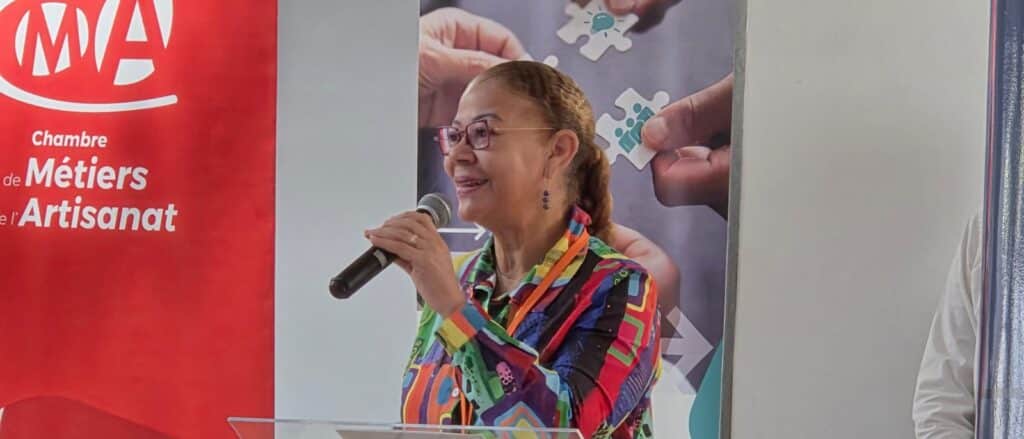
On Saturday March 14, 2026, the Hotel de l’Assemblée de la CTM in Fort-de-France hosted the 6th edition of the Caribbean Business Cruise (CBC). Organized by Isanaja Consulting in partnership with Martinique Développement this economic morning brought together Caribbean entrepreneurs from Guadeloupe, Saint Lucia and Antigua & Barbuda to work towards a common goal: to turn the Caribbean into a concrete area of economic cooperation.
A business cruise, a pioneering concept in the Caribbean
The Caribbean Business Cruise is no ordinary networking event. Created in 2019 by Isabelle Adelis Flandrina, founder and CEO of Isanaja Consulting, the Caribbean Business Cruise is presented as the first Caribbean business cruise. The concept is to enable business leaders to meet aboard a ship, away from busy schedules, to build real business relationships.
"Together with my husband, we created the first edition of the Caribbean Business Cruise in 2019, which was originally founded to enable business leaders to go on mission with their families."
— Isabelle Adelis Flandrina, fondatrice d'Isanaja Consulting
In six years, Caribbean Business Cruise has evolved to include an increasingly structured economic dimension. Caribbean Business Cruise 6 now boasts a partnership agreement with the Organization of Eastern Caribbean States (OECS), making Isanaja Consulting one of the few private French companies to hold this partnership, according to its founder. This recognition opens up access to an English- and Spanish-speaking network that Martinique is still struggling to exploit to the full.
Martinique as a host and investment destination
The Caribbean Business Cruise kicked off with a speech by Alexandre Ventadour, territorial councillor at the Martinique Assembly and President of Martinique Développement. His message: Martinique isn’t waiting for investors, it’s getting ready to receive them.
"Our Martinican companies are here to showcase what Martinique can do best."
— Alexandre Ventadour, président de Martinique Développement

Yann Yala also of Martinique Développement, gave an economic overview of the region: GDP in excess of €10 billion, with growth of around 1%, per capita GDP of €29,000, a population of 356,000, and a trade balance that is largely in deficit, with a coverage rate of around 20% by 2025. Three sectors have been identified as priority development drivers: tourism (6% of GDP, €600 million in annual sales), renewable energies and the digital economy.

With this diagnosis in mind, the question of export support became central. Martinique Développement focuses on attractiveness and installation support, while the Martinique Chamber of Commerce and Industry (CCIM) has taken over responsibility for exports, notably via the Caribbean Trade Facilitation Team. Stéphanie Pujar, project manager for Caribbean cooperation at the CCIM, presented this bilingual (French and English) program, which supports companies from Martinique, Guadeloupe and Guyana in their export development.
"International business support is truly a tailor-made service. Every company has its own project, so every company also has services that suit it."
— Stéphanie Pujar, responsable coopération Caraïbes, CCIM

French companies can benefit from grants from the French Ministry for Overseas France covering between 50% and 75% of the cost of international assignments. It’s a little-known lever that’s regularly highlighted at this type of event.
Caribbean entrepreneurs in search of partners
Caribbean Business Cruise 6 gave a dozen companies the opportunity to present themselves in two minutes, before getting down to B2B business. A deliberately tight format to get straight to the point.
Among the English-speaking participants, Celia Samuel representative of Go To Enterprise (Antigua & Barbuda) and board member of the Antigua Chamber of Commerce, was back for the second year running. She distributes wholesale food products: fruits, vegetables, meats, agro-processed products, from producer to end customer, and is looking for manufacturers wishing to export to the English-speaking Caribbean.
"I am passionate about working with other Caribbean islands and other Caribbean companies. Time waits for no man. So if you see an opportunity, jump on it. "
"I'm passionate about working with other Caribbean islands and companies. Time waits for no one. So if you see an opportunity, seize it."
— Celia Samuel, Go To Enterprise, Antigua & Barbuda
Her testimonial is a concrete illustration of the value of the Caribbean Business Cruise: during the previous edition, she forged a relationship with a producer in Grenada, and is now the exclusive distributor of his brand in Antigua, with prospects for expansion to other islands.
Chantal Alexander, General Manager of Abby’s Exotic Blends (Saint Lucia), was presenting a range of preservative-free agro-processed products based on plantain, breadfruit, sweet potato and green banana, potato chips, confectionery and rum punches, and was looking for distributors or production partners.
On the Guadeloupe side, the sectors represented covered a broad spectrum: cybersecurity with CyberCorsair (Jérémy Benallal) water and renewable energy engineering with Prest’eau Caraïbes (Luigi Apoari), management consulting with Auxiliary Being (Franciane Morvany), software and digital training with ISP Informatique and cultural and tourist development with the association Fout Gwada Bel (Leslie Morvany). Guadeloupe’s Chambre des Métiers de l’Artisanat was also on hand to promote its Artisans Pays de Guadeloupe label and explore synergies with its counterparts in Martinique.
A mindset to build
Isabelle Adelis Flandrina was keen to point out a reality with which the room is familiar: French-speaking and English-speaking entrepreneurs don’t arrive at the same meetings with the same frame of mind.
On the English side, when they go there, they go there to do business. Clearly, if they come to meet you, it's to find out if you can meet their demand."
— Isabelle Adelis Flandrina
This difference in entrepreneurial culture runs like a thread through the successive CBCs. This year, the Martinique and Caribbean delegations were more cautious than expected: the founder refers in particular to the Caribbean geopolitical context linked to US policies and its impact on regional business dynamics. A Haitian delegation, initially scheduled, was unable to join the event for logistical reasons.
Despite these absences, the Caribbean Business Cruise 2026 confirmed the usefulness of these regional meetings. The B2B exchanges that followed the presentations, in the Assembly hall, materialized what the CBC seeks to provoke: real connections between players who, geographically close, do not spontaneously cross paths.
Digicel Business a partner of the event, emphasized through the voice of its Administrative and Financial Director René Klock the importance of this type of initiative in strengthening the regional economic fabric around Caribbean VSEs and SMEs.
The 7th edition of the Caribbean Business Cruise is already on the cards, with organizers hoping for a larger Martinique delegation on board.

The Caribbean Business Cruise (CBC) is the first Caribbean business cruise, created in 2019 by Isanaja Consulting. Each year, it brings together business leaders from all over the Caribbean – French, English and Spanish speakers – for B2B exchanges and regional partnership opportunities. The 6th edition was held on March 14, 2026 in Fort-de-France, Martinique.
Martinique boasts a GDP of over 10 billion euros, a largely service-based economy and identified growth sectors: tourism, renewable energies and digital technology. Martinique Développement and the Martinique Chamber of Commerce and Industry offer tailor-made support for setting up and exporting, with grants covering 50-75% of the costs of international missions for French companies.
The 6th edition of the Caribbean Business Cruise in Fort-de-France brought together companies in five sectors: agro-processing (Abby’s Exotic Blends, Saint Lucia), cybersecurity (CyberCorsaire, Guadeloupe), water and environmental engineering (Prest’eau Caraïbes, Guadeloupe), distribution and international trade (Go To Enterprise, Antigua), and business training and support.
Since October 25, Antigua and Barbuda has been living to the rhythm of the ceremonies, concerts and popular initiatives marking the 44ᵉ anniversary of its independence, acquired on November 1ᵉʳ 1981.
Under the theme “Solid – Stable – Soaring”, the archipelago is highlighting its political stability, the solidity of its institutions and the ambition to pursue its economic and cultural expansion.
Until November 3, ten days of festivities structure a dense program where youth, memory and creation meet.
A message of unity and trust
The Antigua and Barbuda Festivals Commission (ABFC), organizer of the celebrations, wanted a theme that was both sober and meaningful. “Solid – Stable – Soaring” expresses the continuity of a country anchored in its values while looking to the future.
Forty-four years after proclaiming its independence, Antigua and Barbuda has a clear objective: to consolidate its foundations and encourage young people to take part in its development.
The first days of the program have already mobilized schools, choirs and local communities. The National Schools’ Panorama, held on October 25 at the Antigua Port Authority, opened the series of events. The Independence Church Service, the following day, brought together religious leaders and citizens around a message of gratitude and solidarity.
National Heroes Day, on October 27, honored the country’s great figures at the Wreath-Laying Ceremony in Heroes Park, a symbol of recognition for those who have shaped the nation.


Youth at the heart of the celebrations
This year’s program places particular emphasis on youth, considered to be the driving force behind national progress. The National Youth Rally, held on October 30 at Sir Vivian Richards Stadium, brought together hundreds of students from all over the country.
Songs, parades, sports and artistic performances illustrated the theme of independence and the role of new generations in building the future of Antigua and Barbuda.
The Festival of Choirs, held on October 28 at St. Anthony’s Secondary School, was another reminder of the importance of transmission. The voices of students, teachers and community choirs symbolically united the two islands in a single breath of cohesion.


Culture, stage and commitment
The 2025 celebrations also mark the 20th anniversary of the National Youth Theatre, which presents a new creation, “Wadadli Roots”, tracing the links between generations and the contemporary realities of Antiguan society.
This production, hailed for its artistic quality, is in line with the Ministry of Culture’s ongoing efforts to support emerging talent.
One of the most eagerly awaited events was the return of the Independence Calypso Competition, held last night at Jack Idle. Calypso, the emblematic genre of the English-speaking Caribbean, has served as a social mirror for decades. Through their lyrics, the artists deliver a lucid and often ironic look at the transformations of Antigua and Barbuda, between national pride and everyday realities.
Another cultural highlight was the presentation of “Unchartered Waters” by Team Antigua – Island Girls, a group renowned for their sporting achievements and youth initiatives. Their artistic creation, presented at the John E. St. Luce Building, illustrates the values of courage, endurance and solidarity so dear to the people of Antigua.
These initiatives confirm the vitality of the local artistic landscape and the place of women in the public sphere.


Tribute to Burning Flames
One of the highlights of this 44ᵉ edition will undoubtedly be the tribute paid to legendary band Burning Flames.
To mark their 40ᵉ anniversary, one of Potters’ main thoroughfares was renamed Burning Flames Highway, a symbolic gesture that links music with collective memory.
On November 3, the road will host a “Highway Traffic Jam”, a closing concert featuring a mix of the band’s old and new rhythms.
Burning Flames has embodied the creativity of Antigua and Barbuda for four decades, and its influence continues to leave its mark on the Caribbean scene.
National holiday and ceremonies on November 1ᵉʳ
This November 1ᵉʳ, official Independence Day, celebrations stretch between Barbuda and Antigua.
The day begins with the Flag Ceremony in Barbuda, followed by the National Food Fair and the grand Independence Ceremonial Parade & National Awards Ceremony at Sir Vivian Richards Stadium.
The parade, broadcast on local media, brings together defense forces, schools, associations and district representatives. It symbolizes the cohesion between institutions and civil society.
In the aisles of the stadium, Food Fair stands showcase national gastronomy: seafood, traditional dishes and contemporary creations testify to local know-how.
Producers and restaurateurs contribute to this promotion of a culinary identity that Antigua and Barbuda defends as a pillar of its heritage.

A forward-looking archipelago
In 2025, commemorations are not limited to a simple patriotic sequence.
They reflect Antigua and Barbuda’s ability to reconcile its history and its ambitions. Activities ranging from school choirs to calypso stages all share a common goal: to assert cultural sovereignty, encourage civic participation and maintain intergenerational cohesion. Political stability and economic growth, mentioned in the official theme, find a concrete echo in popular mobilization.
As the festivities continue until November 3, the archipelago’s image is one of unity and confidence.
Antigua and Barbuda’s forty-four years of independence are thus written as a demonstration of continuity: a solid, stable nation resolutely looking to the future.
The Organization of Eastern Caribbean States (OECS) has taken another step forward in its commitment to sustainable development by signing a memorandum of understanding with the International Solar Alliance (ISA). The agreement was signed in Santiago, Chile, at the seventh meeting of the ISA Regional Committee for Latin America and the Caribbean, held from August 4 to 6, 2025.
More than just a technical document, it embodies a collective vision: to accelerate the energy transition of small island states thanks to solar energy, and reduce dependence on costly fossil fuel imports.
OECS: a central player in the Eastern Caribbean
Created in 1981, the OECS currently has eleven members, including six independent states: Antigua and Barbuda, Dominica, Grenada, Saint Kitts and Nevis, Saint Lucia and Saint Vincent and the Grenadines. This regional organization plays a fundamental role in economic integration, shared governance and the coordination of public policies in strategic areas such as education, health, climate and energy.
The signing of this protocol with the ISA is part of a wider strategy to strengthen the economic and environmental resilience of a region particularly exposed to the effects of climate change, devastating hurricanes and volatile energy prices.

The strengths of the International Solar Alliance
The ISA, founded in 2015 on the initiative of India and France, today brings together 124 member states on four continents. It positions itself as a gas pedal of the solar transition, offering innovative financing, technical support and capacity-building programs. Its expertise is particularly valuable for countries in the South, which have to reconcile economic development with climate imperatives.
Under the agreement, ISA undertakes to :
- ✅ promote solar energy in member states,
- ✅ mobilize public and private funds via the World Solar Fund and other climate finance instruments,
- ✅ strengthen local skills through Solar Technology Application Resource Centers (STAR-C).

Action-oriented cooperation
For the OECS, the agreement signed with the ISA goes beyond mere institutional cooperation. It aims to achieve concrete results:
- ✅ develop solar projects capable of reducing dependence on diesel,
- ✅ facilitate access to financing for governments and businesses alike,
- ✅ create skilled jobs in green industries,
- ✅ pool solar equipment purchases to lower costs.
This strategy is perfectly aligned with the “Decade of Sustainable Energy” launched by the OECS for the period 2025-2035. The objective is clear: to make solar energy a cornerstone of the economic and social development of member states.

The specific challenges of small island states
OECS member countries belong to the category of Small Island Developing States (SIDS). Their vulnerability is manifold:
- Geographical, because hurricanes and extreme weather can destroy energy infrastructures in a matter of hours;
- financial, since access to international credit remains limited due to the small size of their economies;
- structural, with heavy dependence on fossil fuel imports that weigh heavily on national budgets and trade balances.
Kerryne James, Minister for Climate Resilience and Co-Chair of the ISA Regional Committee for Latin America and the Caribbean, emphasized this point: “We need to recognize that access to finance for the energy transition remains a major challenge for SIDS.”
A regional center of excellence for solar energy
One of the most innovative aspects of this cooperation is the creation of a Regional Center of Excellence for Solar Energy. This will be used to develop local expertise, promote knowledge sharing and set up training programs tailored to Caribbean realities.
According to Ashish Khanna, Managing Director of the ISA, this initiative will also leverage digital innovations: “By promoting group purchasing of solar energy through digital bidding platforms, we will improve efficiency, reduce costs and attract large-scale private investment.”
A long-term vision for the Caribbean
For Dr Didacus Jules, Director General of OECS, the agreement signed is not just about energy. It is a truly strategic investment in the resilience and economic independence of the region. By transforming the energy sector, the OECS intends to offer its citizens a better quality of life, while reducing greenhouse gas emissions.
The Decade of Sustainable Energy (2025-2035) thus marks a turning point: solar energy is no longer seen as just another option, but as a pillar of the economic and social future of the islands of the Eastern Caribbean.
OECS as regional leader
By signing this agreement with the International Solar Alliance, the OECS confirms its role as a leader in the Caribbean energy transition. By focusing on solar energy, it is charting a credible course towards greater resilience, independence and prosperity for its member states. Beyond the technical aspect, this partnership embodies an ambition: to enable small island states to transform their vulnerability into an asset, by becoming laboratories for sustainable solutions on a global scale.
