AbiYah Yisrael embodies the meeting of authentic roots reggae and a profound spiritual philosophy, rooted in historical truth and the quest for enlightenment. From the very first notes, her voice resonates like an ancestral echo, as crystalline as the waters of Dominica, carrying a powerful message that transcends mere music to become a true life mission.
Origins and childhood: the roots of faith
Born Nicole Alfred, AbiYah Yisrael is the youngest of six children, from the home of Mr. and Mrs. Adolphus and Sonia Christian. She grew up in Glasgow, a suburban area of south-west Dominica, where Christian values are not only taught, but lived daily. In this home, faith is the foundation of education, forging a strong identity and spiritual openness from an early age.
Dominica, an island rich in tradition and diversity, shapes its view of the world. The natural environment, community life and pervasive spirituality nurture a unique artistic sensibility. It was in this environment that AbiYah Yisrael’s vocation was born, driven by the desire to convey a universal message of peace and truth.


Musical awakening and artistic journey
From the age of five, AbiYah Yisrael distinguished herself in music by joining her school choir. Her talent quickly asserted itself in local competitions such as Star Quest and on the live stages of Dominica. This artistic precociousness is accompanied by a discipline and passion that will never leave her.
It was at university that the revelation came: she discovered roots reggae, an organic, conscious style with profound messages.
This music, far from commercial clichés, becomes for her a privileged channel of expression. Influenced by major artists such as Nasio Fontaine, Marcia Griffiths, Dennis Brown, Lucky Dube, Aretha Franklin and Yolanda Adams, AbiYah Yisrael forges a style all her own, blending reggae, blues and spirituality.
Her career has been punctuated by encounters and experiences that have enriched her artistic palette. She also tried her hand at other genres such as calypso and cadence-lypso, proving her versatility and openness to musical experimentation.
Spiritual philosophy and Hebrew identity
AbiYah Yisrael’s spiritual philosophy lies at the heart of his work. Her quest for meaning led her to take an interest in the Hebrew teachings of the Kodesh Scriptures, a move encouraged by her life partner. This transition marks a decisive turning point: she adopts a worldview centered on truth, justice and connection with the Most High.
His emblematic quote sums up his approach: “The vocalizations of spiritual frequencies, through the enunciation of the sound that Elohim created. Music transmits vibrations that create or destroy. Such is the power of our words. I choose to speak life, otherwise this music is mere egotistical vanity. I create by speaking.” – AbiYah Yisrael
This philosophy is reflected in every aspect of her music. For her, words are tools of creation or destruction. She chooses to “speak life”, to make her music a vehicle for elevation, refusing any superficiality or quest for personal glory.
Her attachment to the Hebrew heritage is evident in her texts, in which she salutes the Lion Conqueror of the Tribe of Yahawadah (Judah) and Yahawashi Ha Mashayach. This spiritual identity nurtures a mission: to emerge from “Babylon” and call others to the light of the Kingdom, in search of the fullness of Christ, in the purest truth.
Music, lyrics and commitment
AbiYah Yisrael’s music is much more than entertainment: it’s an act of commitment. She calls her style “Truth Music”, where every word is weighed and every vibration carries meaning. Her aim is to raise awareness of the importance of identity and spirituality in a world often disconnected from its roots.
Her first gospel album, “Speak To Me”, released in 2012, marks a milestone. Through this project, she explored deep spiritual themes, while beginning an evolution towards a more assertive expression of her new identity. Since then, her art has continued to mature, incorporating new influences and an ever sharper vision of truth.
AbiYah Yisrael’s lyrics are steeped in history, philosophy and spirituality. She uses music as a mirror of the soul, a means of conveying powerful messages, sometimes disturbing, but always hopeful. Her commitment is also reflected in her desire to denounce injustice and call for inner transformation.

Focus on "Wake Up": The African Renaissance Anthem
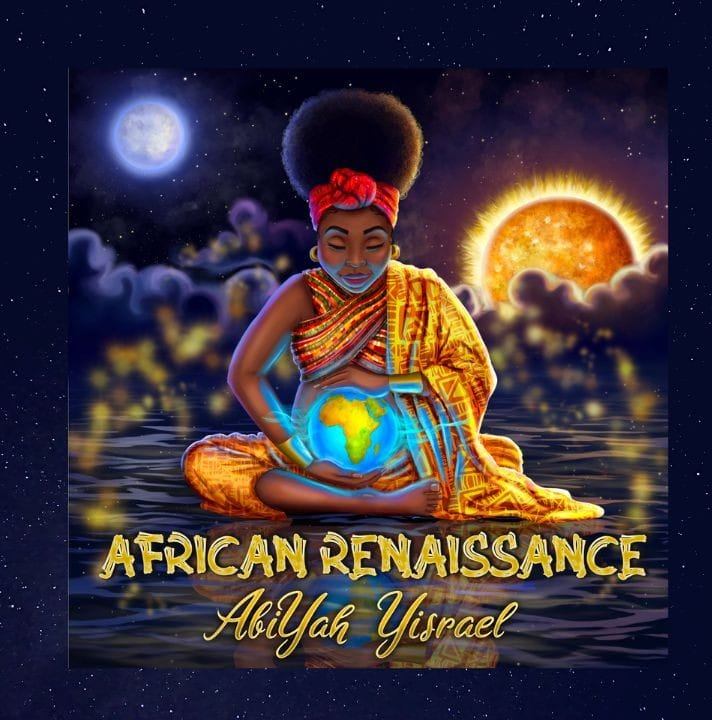
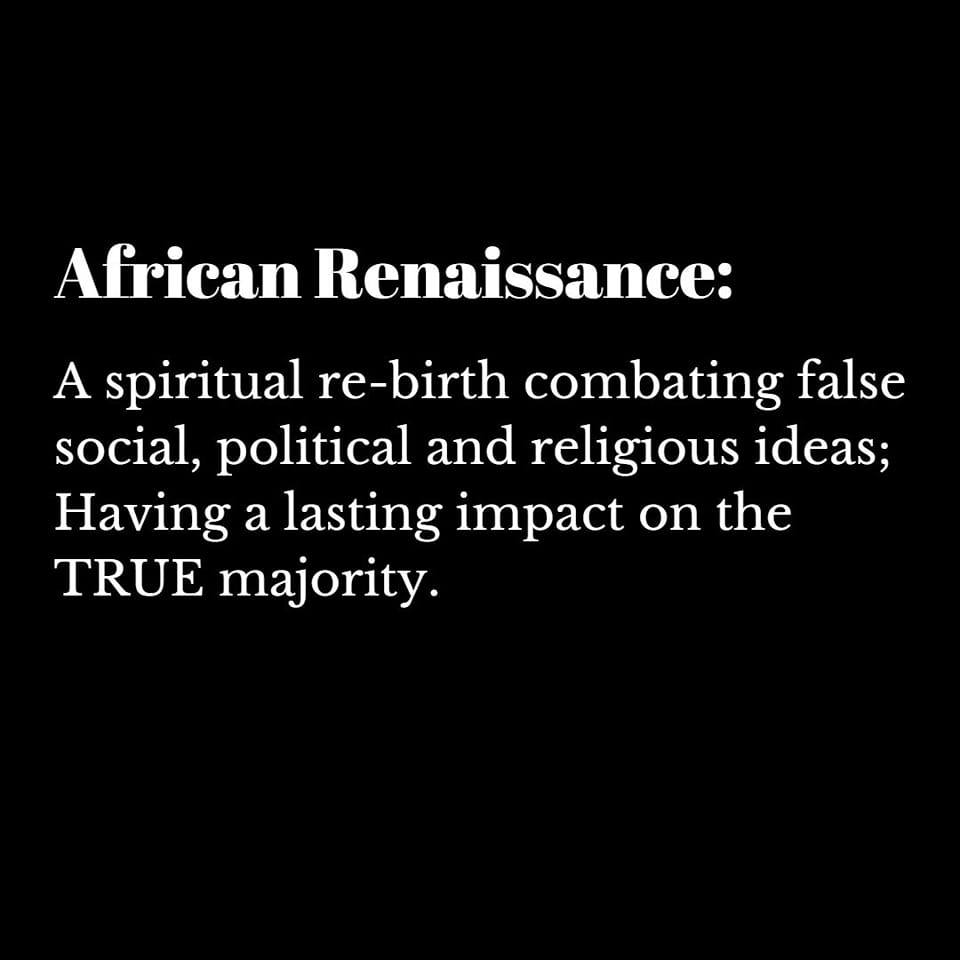
In 2025, AbiYah Yisrael strikes hard with “Wake Up”, the title track from his first reggae E.P., “African Renaissance”. The song establishes itself as a veritable hymn to the spiritual, social and political rebirth of Afro-descendant peoples. “Wake Up” embodies a call for awareness, identity reappropriation and liberation from the shackles of history.
Carried by a meticulous production by Hilroy “ObadYah” Alfred and recorded at ChaYah Studios, the song benefits from the participation of talented musicians: Jervon “Natty Bill” Henderson on bass, Hilroy “ObadYah” Alfred on guitar and keyboards, Eryk Nowak on piano and organ. Mixing is by ObadYah and mastering by Dernel “Dernz” Green, guaranteeing impeccable sound quality.
The clip, directed by Abner Jacques and filmed by Goldfilms Cinema Production and GloSho Multimedia, showcases the beauty of Mama Africa and the dignity of her children, while denouncing exploitation, injustice and the legacy of the past. The lyrics, powerful and straightforward, proclaim:
“Beautiful is she, Mama Africa, washed in melanin, appearance of a queen… Babylon hates us just because we’re black, I’m not afraid to speak it ’cause it’s a fact. We keep fighting for justice and equality, sons and daughters, children of the promised land. Africa, wake up ! Time to cross over borders, Mama Africa awaits us, better know who you are… Descendants of King David, Mama Africa awaits us, you better know who you are. “
This refrain insisting on the need to “wake up” resonates as a call to dignity, memory and action. “Wake Up” is a continuation of AbiYah Yisrael’s approach: using music as a peaceful weapon to raise awareness, celebrate black beauty, and remind everyone of the importance of knowing their origins.
Current life and projects
Today, AbiYah Yisrael lives in the rural region of Castle Bruce, in eastern Dominica. She cultivates the land, drinks from the source, and embodies a return to essential values, far removed from urban frenzy. This voluntary simplicity is the natural extension of her life philosophy: to live in harmony with nature, respecting divine laws.
With her husband ObadYah, she founds ChaYah Studios, an independent label that gives her total artistic freedom. This choice of independence is crucial: it gives her the opportunity to produce authentic, uncompromising music, true to her convictions.
AbiYah Yisrael continues on its independent path, faithful to its principles and its faith.
The clip, directed by Abner Jacques and filmed by Goldfilms Cinema Production and GloSho Multimedia, showcases the beauty of Mama Africa and the dignity of her children, while denouncing exploitation, injustice and the legacy of the past. The lyrics, powerful and straightforward, proclaim:
His latest project, the E.P. “African Renaissance”, promises to be a major work. Scheduled for release on July 29, this opus promises to leave a lasting impression with its lyrical richness and spiritual depth. With this project, AbiYah Yisrael intends to pursue her mission: to enlighten, awaken and transmit truth through the power of roots reggae. With “Wake Up”, she has already set a milestone in this new musical era.
AbiYah Yisrael is much more than a reggae artist: she is a messenger, a shepherd of light, a voice that reminds us all of the importance of truth, spirituality and identity. Her journey, marked by faith, resilience and commitment, inspires connoisseurs and neophytes alike. Through her music, and particularly with “Wake Up”, she invites everyone to listen, reflect and commit to the path of truth. In her, roots reggae finds an authentic ambassador, faithful to her roots and resolutely focused on the future.
Supalyne, whose real name is Shain Alexander, is a name that is increasingly resonating on the Caribbean music scene. Known for his unique fusion of dancehall and Dominican culture, he captivates audiences with high-energy performances and an authentic artistic approach. Originally from the community of Fond Cole in Dominica, Supalyne grew up in Marigot, where music was omnipresent.
His passion for music began at an early age, influenced by artists such as Chris Brown, whom he discovered on BET. This trigger marked the beginning of a journey that led him to become one of the region’s most promising dancehall artists. His goal is clear: to become the first dancehall artist from Dominica to break through internationally, while remaining true to his roots and pushing the boundaries of his style.
Musical influences and unique style
Supalyne is renowned for his ability to blend dancehall with elements of Dominican culture, creating a sound that speaks to several generations. His music is deeply rooted in dancehall, a genre that has shaped the Caribbean music scene for decades. By integrating his local dialect, typical expressions and other cultural elements, he breathes an innovative and original touch into traditional Caribbean sounds.
His songs have met with success not only in Dominica, but also in the French-speaking Caribbean, earning him recognition as one of the region’s up-and-coming talents. His ability to blend different influences while remaining authentic has enabled him to stand out in a particularly competitive Caribbean music industry.


Musical and stage performances
Supalyne is no newcomer to the stage. He has performed at many major events, from his first appearance at “Color Me More” in 2019 to his most recent performance at “Carnival Gopwell 2025”.
His energy and authenticity on stage make him a crowd favorite at many local events. His songs are regularly played on the radio, in bars, stores, on public transport and at parties, proof of his growing influence on the Dominican music scene. Thanks to his hard work and talent, he is now recognized in the local industry, enabling him to collaborate with renowned artists and producers.

Collaboration and recognition
Throughout her career, Supalyne has collaborated with renowned producers such as Cecil “thaWizzard” Joseph, Dylan “Producer Dlo” Lowe and Jamaican producer Countree Hype. These collaborations not only enriched his musical experience, but also strengthened his reputation as a serious player on the dancehall scene. The support of his community has played a decisive role in his rise, making him a role model for young Dominican artists aspiring to break through.
Its influence now extends beyond the borders of Dominica, as it is also recognized in the French-speaking islands of the Caribbean, as well as in Antigua, St. Kitts, St. Martin and St. Lucia. This growing regional presence testifies to its potential to break into the international arena. While continuing to perfect her art, Supalyne remains true to her mission: to spread the Dominican dancehall worldwide.
The "Wicked Tight" single
One of Supalyne’s latest hits, “Wicked Tight”released on Valentine’s Day 2025, perfectly illustrates his ability to marry sensual rhythms with bold lyrics. The track is underpinned by haunting dancehall beats and a provocative narrative, further cementing his reputation as a trailblazer in modern dancehall.
The clip, directed by Dreamer Filmz / Chris Davis, showcases the track’s sensual universe through dynamic direction. The images alternate between intimate scenes and suggestive dance sequences, capturing the balance between vulnerability and power that defines the song. “Wicked Tight.
With this track, Supalyne demonstrates a bold and authentic approach to dancehall, pushing back the boundaries of creativity while highlighting the art of Caribbean music.


Supalyne is well on the way to becoming the first international dancehall artist to hail from Dominica. With his distinctive style, energetic performances and steadfast commitment to authenticity, he continues to appeal to an ever-growing audience across the Caribbean. His musical future looks bright, and it’s clear that he will continue to make his mark on the local and international scenes. By staying true to his roots while embracing innovation, Supalyne embodies what a passionate and determined artist can achieve.
The Rhum Fest 2025, held at the Parc Floral de Vincennes in Paris, has become one of the most emblematic events for enthusiasts, experts and professionals in the world of rum. The 2025 edition, which took place from April 12 to 14, attracted nearly 8,000 visitors, enthusiasts and the curious alike, as well as over 150 distilleries from 36 countries. Among them, distilleries from the French West Indies made their mark with their authenticity, the quality of their production and their ability to pass on their heritage.
Immerse yourself in the world of rum
Rhum Fest is no ordinary trade show. It’s a real immersion in the complex world of rum: its origins, its production methods, its aromas, its terroirs, its human stories. It’s also a meeting place for producers, distributors, wine merchants, journalists, restaurateurs, and enthusiasts. The event features tastings, educational conferences, masterclasses and professional meetings.
For novices, it’s an ideal opportunity to learn about the world of rum without pressure, by tasting, asking questions, and discovering the differences between an agricole rum, a molasses rum or an oak-aged rum. For connoisseurs, it’s a chance to deepen their understanding of aromatic profiles, the specificities of each region, vintages and ageing techniques.


French West Indies take center stage
Rhum Fest 2025 devoted a lot of space to the French West Indies. Martinique and Guadeloupe are world-renowned for the quality of their rhum agricole, made from pure sugarcane juice, unlike traditional molasses rum.
Martinique is the only region in the world to benefit from an AOC (Appellation d’Origine Contrôlée) for rum, which guarantees production to strict specifications and a strong link with the terroir. Distilleries such as La Favorite, Neisson and Baie des Trésors were present, each defending a strong identity, artisanal methods and attachment to the land.
Stéphane Gouyer, Baie des Trésors cellar master, shares: “The AOC allows us to structure our work while highlighting the richness of our soils. It’s a real recognition of the work of our farmers and distillers.
In Guadeloupe, although there is no AOC, the rum tradition is just as strong. Distilleries such as Longueteau, Bologne and Reimonenq offer rums with highly expressive profiles. Jordan Lognos, representing the fourth generation of the Reimonenq distillery, emphasizes: “We focus on innovation while respecting our values. The Rhum Fest allows us to tell our story, let people taste our creations and respond directly to the expectations of connoisseurs.”
A space for exchange and education
One of the strong points of Rhum Fest is its educational aspect. Unlike a simple tasting room, the emphasis is on passing on knowledge. Visitors can attend workshops where they learn, for example, to distinguish between types of rum according to region, to recognize secondary aromas resulting from aging, or to understand the effects of climate on sugar cane.
Producers from the West Indies played the game to the hilt, generously sharing the subtleties of their craft. The Parisian public, whether informed or novice, was thus able to better understand what makes agricole rum so special: its complexity, balance, freshness and ageing potential.

Spirit tourism: a lever for the regions
The Rhum Fest also highlights the development of spiritourism, a form of tourism focused on the discovery of spirits through distillery tours, sensory workshops and meetings with producers.
In Martinique, spirit tourism is already well established. Rum routes have been set up, with distilleries offering guided tours, immersive experiences and direct on-site sales. This helps to promote the island’s local heritage and enhance its appeal as a tourist destination.
In Guadeloupe, the offer is gradually taking shape. Jordan Lognos explains: “We want to offer our visitors complete experiences: the tour, the tasting, but also an understanding of our history and methods.”
This development is promising for the entire industry. It creates local jobs, broadens the tourism offer and strengthens the link between the product and its region.

A future rooted in roots
By showcasing West Indies producers, Rhum Fest 2025 contributes to their international reputation. These producers don’t just produce excellent rum; they also tell a story, the story of a heritage, of know-how handed down, of an identity shaped by the land and time.
At a time when global demand for quality rum continues to grow, distilleries in the French West Indies are setting the standard. Their authenticity, rigor and commitment to quality make them role models in the sector.
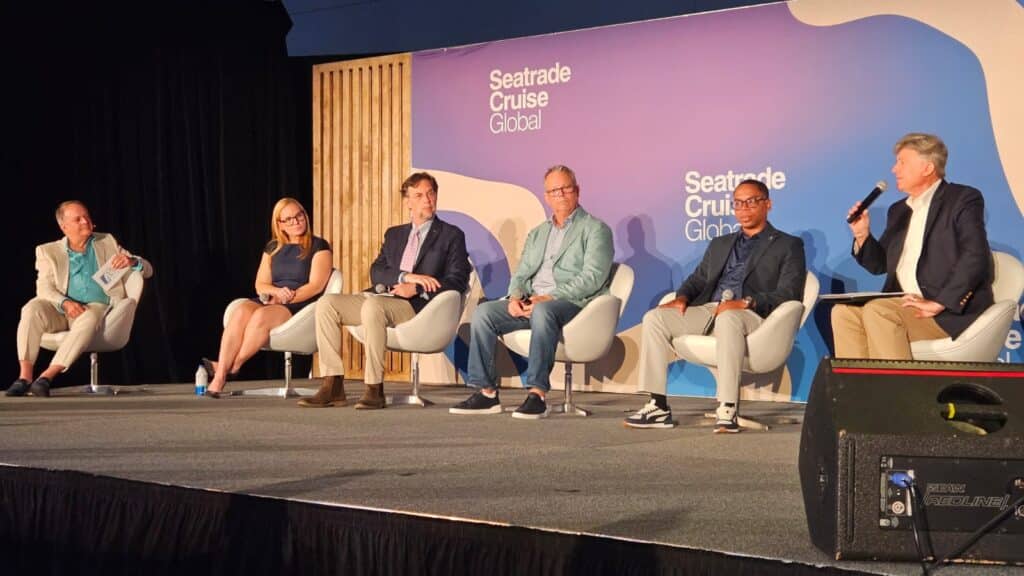
At Seatrade Cruise Global 2025, a panel discussed the changing expectations of cruise travelers, particularly the younger generations, and how these changes require a complete reinvention of the experiences offered ashore.
Seatrade Cruise Global 2025: from guided tour to personalized experience
Moderated by Shannon McKee, President of Access Cruise, the Seatrade Cruise Global 2025 discussion featured key industry figures Tracey Diaz (Princess Cruises), Christine Manjencic (Norwegian Cruise Line Holdings), Marc Melville (Chukka Caribbean Adventures), Leyla R. Osorio (Global Cruises LLC) and Claudine Pohl (Lemoneight).
Right from the outset of Seatrade Cruise Global 2025, it was clear that today’s cruisers expect much more than a simple panoramic tour. “What this new generation is looking for is a real experience,” says Christine Manjencic. She cites the example of a “selfie tour” initially designed for Norwegian Cruise Line and adapted for Oceania Cruises under the title Capturing the Moment – a simple but effective rebranding to appeal to a premium audience.

“Today, a new generation is discovering cruising… and no longer sees it as an activity for retirees.”
Tracey Diaz reminds us at Seatrade Cruise Global of the extent to which the pandemic has changed expectations: travel is no longer a given, but a privilege. Passengers are now looking for more intimate, truer, more human experiences.

Authenticity, Local Voices, and Storytelling as Value Drivers
For tourism operators, the challenge is twofold: to remain innovative while remaining rooted in reality. For Marc Melville, the answer can be summed up in one word: authenticity. ” Our strength is to be resolutely local, without compromise. What seems commonplace to us is often what makes the biggest impression on a visitor. “
He stresses the importance of storytelling. A gesture as simple as putting your hand on a tree can become a lasting memory, as long as it’s contextualized. “You can’t put a price on a local, authentic experience,” he stresses.

With a presence in 140 destinations, Leyla Osorio observes that regular cruisers don’t want to relive the same excursion. “We need to offer a new reading of the place, with a different perspective, a different narrative.” At Seatrade Cruise Global, she also emphasizes the importance of adapting excursions to the specific identity of each cruise line.

Experience Design, Collaboration, and Looking Ahead
All the speakers at Seatrade Cruise Global 2025 agree: the future of the industry will depend on innovation, anticipation… and greater collaboration.
Christine Manjencic shared some revealing data on how behavior has changed since the pandemic: “Before COVID, we put excursions online 2 to 3 months before the cruise, and only 20% were sold in advance.”
“Today, we open 365 days and reach 75% pre-sales.”
She adds, not without pride: “In 2019, we sent 4.3 million passengers on shore excursions. Last year, we came close to 6 million.”
This spectacular growth shows just how essential anticipation, trend monitoring and personalization have become in the design of our offers.
Claudine Pohl reminds us at Seatrade Cruise Global 2025 that the skill to tell a story is as valuable as the itinerary itself. “Without training in speaking, your guides won’t convey the experience.”
Leyla Osorio, for her part, insisted on an essential new dimension in experience design: “An excursion must be immersive, authentic… and photogenic.“
In an age of travel dictated by social networks, it’s no longer enough to have an experience: you have to be able to share it, visually, and derive “bragging rights” from it.
She encourages destinations to incorporate striking elements – aesthetic, symbolic, Instagrammable – that become memories as much as social proof.

Finally, Marc Melville, speaking at Seatrade Cruise Global 2025, concluded with an appeal for commitment: “The Caribbean has never had so many opportunities. Let’s seize them. Let’s work hand in hand with our cruise partners to make our islands shine even brighter. “


Cruisers are no longer looking for tours, but for emotions.
This panel provides a valuable compass for Caribbean territories wishing to remain attractive to cruisers in search of meaning and authenticity.
👉 Fully embracing local roots. As Marc Melville points out, “What is banal to you can become extraordinary to a visitor.” It’s essential to focus on storytelling, sensory immersion and cultural expression, rather than conforming to globalized standards.
👉 Offer exclusive cruising value. An on-shore product has to offer something that visitors can’t book alone on the Internet. Sometimes it’s a gesture, a dish, a symbolic place or a moment to share… as long as it touches.
👉 Cooperation at all levels. Claudine Pohl reminds us of the importance of mobilizing cab drivers, craftsmen, guides and local authorities. A simple, well-thought-out “Welcome” or visual staging can transform the experience.
In short, it’s no longer just a matter of welcoming, but of passing on a story.
As economic uncertainties intensify around the world, the live music sector live music in the Caribbean remains on course. Better still, it has demonstrated an astonishing capacity to adapt and generate value, even in times of slowdown.
A changing Caribbean music industry
In the streets of Kingston, on the beaches of Saint Lucia, or in the concert halls of Fort-de-France, the live music is an integral part of the cultural experience. It is festive, identity-building, but also economic. In recent years, despite successive crises – pandemics, inflation, tourist instability – concerts, festivals and live performances have never completely disappeared. And today, the trend seems to be reversing.
Events such as the Saint Lucia Jazz Festival, Dominica World Creole Music Festival, Baccha Fest in Martinique and Carifesta continue to attract local and international audiences, boosting the local economy and structuring an industry in full professionalization. Their success is based on several structural factors.
First, advance ticket purchases. In the region, major events announce their programming several months in advance, allowing a spread of expenses over time. Secondly, affordability: a ticket to a Caribbean concert remains, on average, more affordable than a ticket to a comparable cultural event in North America or Europe. Last but not least, the high emotional value of these live music acts as a buffer in times of crisis: we may give up certain consumer goods, but it’s hard to give up the promise of a moment of musical sharing.

A parallel economy: online ticket resale gets organized
Still relatively unregulated, the secondary ticketing market – in other words, the resale of tickets – is beginning to attract interest. While in some countries, such as the United States and the United Kingdom, this segment is already generating billions, in the region it remains informal, but growing.
Through local platforms or resale groups on social networks, a new dynamic is emerging: some people buy their tickets as soon as they go on sale, betting on strong demand later on.
Although often criticized, this phenomenon plays an important buffering role. It captures some of the fluctuations in demand, particularly when household spending becomes more cautious.
In other words, in times of economic uncertainty, this secondary market is the first to absorb the shocks – indirectly protecting the producers, organizers and artists of live music.
That said, this model also raises ethical and economic issues. How can we guarantee equitable access to live music ?
Should this market be regulated to prevent abuses?
And how can we make sure that the benefits go primarily to the region’s cultural players?
These are all questions that merit collective reflection on a Caribbean scale.

A forward-looking scene
While some fear the headwinds of the global economy, the live music Caribbean music seems to be playing its own score. Driven by a creative youth, an active diaspora and a loyal audience, it is building a resilience nourished by the diversity of its audiences and territories.
In a region where concerts are a means of cultural expression, a lever for tourism and a source of income for many professionals, every ticket sold for a live music becomes more than just an admission ticket. It’s support for an industry, a commitment to culture and a vector for regional influence.
At a time when the Caribbean live music scene is enjoying a resurgence, the region has a propitious opportunity to further strengthen and structure its musical ecosystem. Better regulation of the ticketing market, an appropriate support policy, and promotion of the economic role of the live music could reinforce this dynamic in the long term.
Music is more than just entertainment: it stands up when all else falters, it unites when all else divides, it moves forward when all else slows down. Economic upheavals don’t hinder its momentum; they remind us of its strength.
As economic uncertainties intensify around the world, the live music sector in the Caribbean remains on course. Better still, it has demonstrated an astonishing capacity to adapt and generate value, even in times of slowdown.

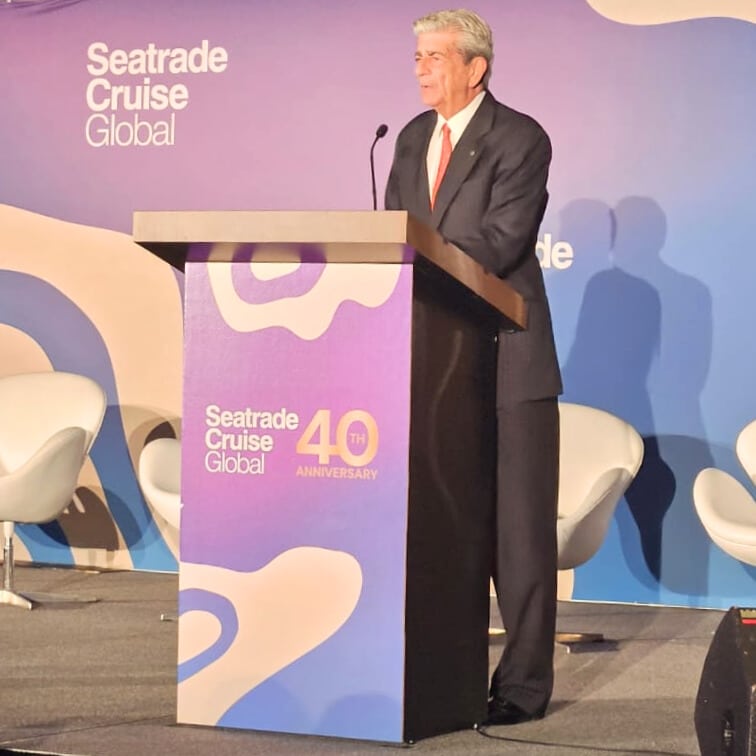
The opening morning of Seatrade Cruise Global 2025 set the tone: the future of cruising lies in collaboration, innovation and sustainability.
A global vision for an industry in transition
Richard Sasso, President of MSC Cruises USA, opened the event with an outline of the 2025 Global Cruise and Destination Outlook. This strategic overview served as a reminder that, despite an ever-changing global context, the cruise industry is progressing with ambition and responsibility.
Highlighting the growing importance of more sustainable tourism and authentic experiences, Richard Sasso insisted on the need to adapt offers not only to economic challenges, but also to the expectations of an increasingly impact-conscious public.
Anticipating the expectations of new generations
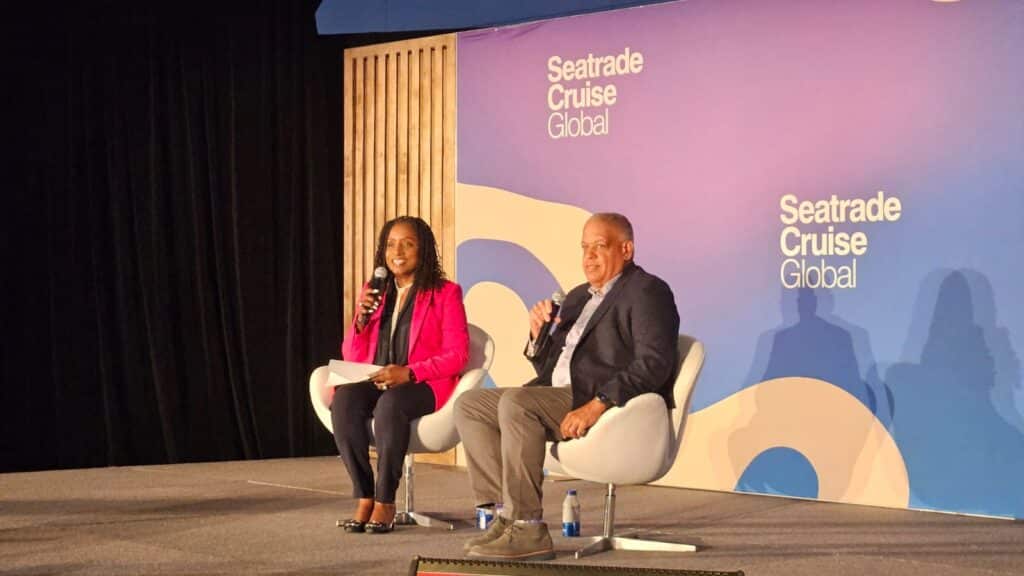
The first panel of the day at the Seatrade Cruise Global 2025, “Sailing Across Generations and Rethinking Experiences Ashore”, moderated by Marc Blum, brought together a number of major players: Mark Edson (Royal Caribbean), Alexander Gumbs (Port of Saint-Martin), Mike Maura (Nassau Cruise Port), Natasha Salzedo (Carnival Cruise Line) and Ugo Savino (US State Department).
Together, they explored ways of adapting to changing travel profiles, highlighting the importance of technological innovation, better integration of destinations and a more personalized approach to the customer experience.
A look at the world of cruise tourism
The morning of the Seatrade Cruise Global 2025 concluded with a panel entitled “World Cruise Tourism Summit: regional updates”. The event was moderated by Ioannis Bras, with the participation of representatives from MedCruise, Cruise Arabia, the Caribbean Tourism Organization and Cruise Saudi. This overview highlighted the specific realities of each region, while converging on common challenges: better managing passenger flows, developing resilient infrastructures, and strengthening cooperation between ports.
A strong idea emerged from this opening: decisions must be based on concrete data, and the future will be built by combining know-how.
We’ll be coming back to these interventions in more detail later.


Caribbean tourism is undergoing a transformation thanks to Breeze Travel Solutions (BTS). Headed by AMA-certified marketing specialist Casey Davy, Breeze Travel Solutions is restructuring the sector by integrating advanced technologies. Its aim is to simplify bookings and enhance the traveler’s experience. With its Caribbean Travel and Tours (CTT) subsidiary, BTS is unifying a still fragmented market into an efficient and harmonious solution.
The challenges facing tourism in the Caribbean
The Caribbean tourism sector suffers from outdated procedures and a lack of coordination between local players. Many service providers still use manual methods or unsuitable tools, making booking complex. This fragmentation limits the visibility of offers and reduces opportunities for smaller market players. As Casey Davy points out, “These obstacles are a hindrance to travelers who want to organize their stay with complete peace of mind.” BTS has been designed to solve these problems using new technologies.
Innovations from Breeze Travel Solutions
Caribbean Travel and Tours: an all-in-one platform
CTT is the pillar of innovation for Breeze Travel Solutions. Unlike traditional platforms that limit themselves to accommodation, CTT offers an intuitive interface for booking flights, accommodation, activities and transfers all in one place. This approach simplifies holiday planning and improves the accessibility of offers. It also enables local travel agencies and hoteliers to better structure their services and attract a wider customer base.
Artificial intelligence for travelers
AI plays a key role in personalizing offers from Breeze Travel Solutions. By analyzing users’ data and preferences, it can suggest itineraries tailored to their interests, whether in sports, wellness or cultural discovery. “AI enables us to provide precise and relevant recommendations,” Davy explains. The system also facilitates better management of tourist flows by avoiding overcrowding at certain sites.
Commitment to safety and community development
Rigorous selection of suppliers
Breeze Travel Solutions only works with service providers who meet strict criteria, including legal registration, liability insurance and compliance with local regulations. This approach guarantees quality service and a safe experience for travelers. Transparency and security are key to reassuring tourists and encouraging trouble-free stays.
Community development program
To help local companies achieve these standards, BTS has set up a Community Development Program. It supports service providers in the certification of their services and their transition to digitalization. This initiative promotes local economic integration and contributes to the growth of regional tourism. By facilitating access to reservation platforms and training local players, BTS is creating a more supportive and efficient ecosystem.
Promoting responsible and authentic tourism
Enhancing cultural heritage
Breeze Travel Solutions offers more than just beach resorts. It highlights the history, gastronomy and traditions of the Caribbean islands. By collaborating with local communities, the company ensures that the economic spin-offs directly benefit the local population. This approach also diversifies the tourism offering, moving away from the standardized model often proposed to visitors.
Support for green initiatives
The company is committed to integrating eco-responsible solutions, selecting sustainable accommodations and activities focused on environmental conservation. This approach preserves the Caribbean’s fragile ecosystems while offering enriching experiences to travelers. BTS also works with local associations to make tourists aware of the impact of their presence on natural and cultural environments.


Breeze Travel Solutions modernizes Caribbean tourism by combining technology and sustainable development. With its intuitive platforms and community programs, the company enhances travelers’ experience while respecting the islands’ natural and cultural heritage. Its innovative approach optimizes the tourism offer while supporting the local economy and preserving the region’s riches.
Le Jazz n Creole 2025 promises to be an unforgettable experience for all music and culture lovers. This iconic Dominica event, to be held on Sunday May 4 at the magnificent Fort Shirley in Portsmouth’s Cabrits National Park, promises a captivating fusion of jazz, Caribbean rhythms and cultural immersion. With a program mixing international artists and local talents, this festival is much more than just a concert: it’s a true celebration of Dominican artistic and cultural identity.
The framework of Jazz n Creole 2025
Imagine yourself surrounded by Dominica’s natural beauty, with Fort Shirley as your backdrop. Nestled in the Cabrits National Park, this historic site offers a unique blend of colonial history and tropical scenery. This idyllic setting amplifies the magical atmosphere of the festival, allowing spectators to fully immerse themselves in an authentic cultural experience. The breathtaking view of the Caribbean Sea adds an extra touch to the magical atmosphere.
International and local headliners
The musical program of Jazz n Creole 2025 is nothing short of exceptional. Among the international headliners is Etienne Charles, a renowned trumpeter from Trinidad and Tobago. Known for his innovative style blending traditional jazz with Caribbean influences, Etienne promises a memorable performance.

Another international star is Etana, a Jamaican reggae singer acclaimed for her powerful voice and inspiring lyrics. Her presence adds a reggae dimension to the festival, further enriching its musical diversity.

On the local side, Dominica is proudly represented by Marie-Claire Giraud, an opera and jazz singer whose talent has conquered international stages. Alongside her, groups such as Swingin’ Stars, The Signal Band, ColtonT and Abiyah Israel will be bringing their high energy and varied styles, from calypso to bouyon.


Side events
Le Jazz n Creole 2025 is not limited to its main event. A series of fringe events will enrich the festival experience. These include:
- Intimate jazz performances in picturesque locations across the island.
- Cultural showcases highlighting local crafts, Creole gastronomy and Dominican traditions.
- Pre-festival celebrations that allow visitors to gradually immerse themselves in the festive atmosphere.
These satellite events play a key role in creating a sense of anticipation, while offering attendees a unique foretaste of the main festival.
Fashion and theme: Sunset Creole Chic
The clothing theme of Jazz n Creole 2025 this year, Sunset Creole Chicinvites participants to draw inspiration from the colors of Dominican sunsets: deep coral, rich gold, warm orange, bright red and luminous yellow. These tropical hues are complemented by shades of peach and magenta.
To be perfectly in tune:
- Choose flowing dresses with prints.
- Choose lightweight fabrics such as linen or cotton.
- Accessorize with handcrafted jewelry for an authentic local touch.
This dress code adds a unique visual dimension to the festival while reflecting Dominica’s tropical aesthetic.
Why is Jazz 'n Creole a unique experience?
Le Jazz n Creole 2025 is more than just a music festival; it’s a true immersion in Dominican culture. The fusion of jazz music, Caribbean rhythms and local art creates a dynamic atmosphere that appeals to novices and enthusiasts alike.
In addition, the Jazz n Creole 2025 plays a crucial role in promoting Dominica as a tourist destination. It attracts visitors from all over the world while highlighting the island’s cultural and natural wealth. Whether you’re a music lover or simply curious, this festival offers an unrivalled experience that will remain engraved in your memory.
Le Jazz n Creole 2025 is much more than just a musical event: it’s a living celebration of all that Dominica has to offer. With its enchanting setting, exceptional program and warm atmosphere, this festival promises to be a highlight for all who attend. So get your outfits ready Sunset Creole Chic this musical adventure!
The exhibition Paris Noir will be a major cultural event in 2025. From March 19 to June 30, the Pompidou center is highlighting an often overlooked dimension of artistic history: the influence of Afro-descendant artists in Paris between 1950 and 2000. Nearly 400 works and documents showcase the work of 150 artists from Africa, the Americas and the Caribbean, some of whom have never before been exhibited in France. This retrospective highlights the role of the French capital as a place of resistance and transformation for contemporary artistic currents.
A historiographical challenge met
The exhibition Paris Noir undertakes the task of documenting and presenting an often marginalized artistic history. From the creation of the magazine Présence Africaine in 1947 to the distribution of Revue Noire in the 1990s, it traces half a century of expression and affirmation in Paris. In the face of scattered works and gaps in research, this initiative is an essential memorial contribution.
This chronological journey coincides with major historical events: African independence, the fall of apartheid in South Africa and the struggle for civil rights. The Paris Noir exhibition links these political contexts with artistic creation, highlighting the role of art as an instrument of resistance and identity affirmation.
Paris, refuge and creative crossroads
For artists such as Gerard Sekoto, whose self-portrait marks the entrance to the exhibition, or Beauford Delaney and his abstract compositions, Paris was a refuge from segregation, apartheid and political censorship. The city became a unique space for artistic and intellectual interaction, fostering encounters between creators from different horizons.
The diversity of practices, ranging from identity awareness to the search for new plastic expressions, bears witness to this dynamic. Paris Noir highlights how these artists have enriched artistic currents and opened up new aesthetic perspectives.


From anti-colonialism to artistic affirmation
The title Paris Noir reveals a central political dimension. The exhibition places the works in the context of anti-colonial and post-colonial struggles. From the magazine African presence to the Revue Noires show how these publications contributed to the recognition of Afro-descendant artists.
The archives, photographs and films on display illustrate how art has served as a means of expression in societies marked by colonial legacies.
Exceptional creative diversity
The exhibition highlights emblematic figures such as Wifredo Lam and Roseman Robinot, as well as lesser-known artists such as Christian Lattier and Guido Llinas. It reveals paths and influences that are still little explored in France.
The majority of the works on display have never before been shown in the country. Drawn from public and private collections, they have been brought together thanks to in-depth research. Paris Noir offers a fresh look at the contributions of Afro-descendant artists to modern art.


A scenography at the service of memory
The exhibition revolves around a central installation representing the Black Atlantic, evoking transatlantic cultural circulations and interactions. This space puts into perspective how Paris became a place of convergence for these artists.
Contemporary installations by Valérie John, Nathalie Leroy Fiévee, Jay Ramier and Shuck One enrich the itinerary and resonate with the themes addressed.
A Parisian base
The exhibition unfolds a never-before-seen cartography of Paris, highlighting the places that saw the birth of this artistic effervescence. Montparnasse, Saint-Germain-des-Prés and the Goutte d’Or emerge as spaces of creation and interaction.
A historical and cultural impact
Paris Noir highlights the French capital’s role as a pan-African laboratory for artistic expression. Institutions such as the École des Beaux-Arts contributed to the recognition of African, American and Caribbean artists, who participated in the redefinition of modernism and postmodernism.
The exhibition focuses on art as a form of resistance to postcolonial realities. It features committed works that bear witness to the struggle for independence and against racial discrimination.
A Paris-wide event
A number of Parisian galleries will be presenting exhibitions in connection with Paris Noir. Among them, Galerie Clémentine de la Féronnière will present works by George Hallett, William Melvin Kelley and James Barnor from March 19 to May 17, 2025. Galerie Hauser & Wirth will be showing collages by Frank Bowling until May 25.
L’Archipel cinema, the Maison Européenne de la Photographie and other institutions will be organizing film screenings and meetings with art historians and critics.
Practical information
The exhibition Paris Noir will be held at the Pompidou center from March 19 to June 30, 2025, from 11am to 9pm, except Tuesdays and May 1st. Tickets are available online or on site, with reduced rates for certain audiences. Guided tours and audio guides are also available.
The orange economy, based on creativity, innovation and cultural knowledge, has become a strategic development lever in the Caribbean.
But what does this mean in practical terms for our regions?
In a region rich in living heritage, artistic expression and community dynamics, it paves the way for new sustainable economic models, driven by local talent.
One of the most promising developments is creative tourism – or orange tourism – which combines cultural immersion, know-how enhancement and active visitor participation. At a time when travelers’ expectations are changing, this type of tourism offers a more authentic and inclusive alternative, in phase with the ecological, social and digital transitions underway.
From mass tourism to sustainable and creative travel
The evolution of tourism is closely linked to global economic transformations and technological advances. Since the 1950s, the expansion of the middle class and rising disposable incomes have led to an explosion in international travel – from 25 million tourists in the 1950s to 1.5 billion in 2019. But this growth has revealed a fragility: tourism is extremely sensitive to economic crises. In 2008, for example, the first budget cuts made by households concerned vacations.
This model of mass tourism has gradually given way to alternative, more responsible and sustainable forms, driven by a new type of traveler: the conscious tourist. These travelers are looking for more than just entertainment: they aspire to authentic experiences, cultural immersion and respect for the environment. It’s in this context that ecotourism, rural tourism, community tourism and educational and religious travel have emerged.

Sustainable tourism is based on a hybrid approach, combining government initiatives (top-down) and the participation of local communities (bottom-up). It recognizes that to be viable, tourism must respect the environment, value cultures, be economically profitable and socially just – including gender equality and the preservation of traditional knowledge.
The emergence of the orange economy and creative tourism
The term “orange economy” was popularized in 2011 by British writer John Hawkins. Also known as the creative or cultural economy, it encompasses economic activities based on creativity and intellectual property: arts, music, film, design, technology, advertising, etc. According to UNESCO, this economy represents 3% of global GDP and more than 30 million jobs worldwide.
Orange tourism lies at the crossroads of this creative economy and the tourism sector. Unlike traditional tourism, it doesn’t just consume culture: it invites you to immerse yourself in it. This involves staying in local communities, taking part in craft workshops, traditional music classes, cooking lessons or sailing initiations. It’s not just about seeing, it’s about doing with the locals, interacting and sharing. This type of tourism fosters commitment, frequent returns, and sometimes even forms of personal investment in the communities visited.

Orange tourism also paves the way for indirect job creation through digital technologies – app development, activity booking platforms, or tools facilitating administrative procedures, logistics and hospitality. The aim: to turn creative ideas into economic opportunities through cultural and digital innovation.
What could orange tourism look like in the Caribbean?
Orange tourism in the Caribbean could take a variety of forms, rooted in the cultural realities, local know-how and creative aspirations of the territories. Several concrete avenues can be explored to structure this offer:
– Agricultural tourism, for example, would enable visitors to take part in immersive experiences on local farms, such as permaculture or hydroponics, learning about Caribbean farming techniques and taking part in the harvest.
– Traditional nautical activities, such as sailing lessons or artisanal navigation, could combine the transmission of knowledge, adventure and the enhancement of maritime heritage.
– Music workshops would offer visitors the opportunity to learn how to make and play traditional instruments (drums, cordophones, percussion), while discovering the cultural roots of local music.
– Craftwork, with sessions to create dolls, jewelry, pottery or textiles inspired by local traditions, would reinforce the link between creativity, collective memory and the solidarity economy.
– Gastronomy, for its part, is a powerful gateway to exploring the Caribbean identity: cooking workshops focusing on local products and ancestral recipes could enhance the destination’s appeal, while promoting short distribution channels.
Added to these experiences are the opportunities offered by digital technology. Whether facilitating access to information, enhancing the value of cultural offerings or streamlining the traveler experience, digital tools are playing a growing role in the transformation of Caribbean tourism. The development of local initiatives in this direction could enhance the attractiveness of these territories while supporting creative ecosystems.
Finally, structuring initiatives such as the creation of living museums or immersive heritage trails could enable key moments in Caribbean culture – carnivals, festivals, emblematic competitions – to be relived through physical or virtual installations, combining memory, transmission and innovation.

An opportunity for Caribbean territories
Today, orange tourism represents a way forward for Caribbean territories. At the crossroads of culture, creativity and innovation, it transforms intangible resources – knowledge, stories, local practices – into meaningful experiences for visitors, and sustainable economic opportunities for communities.
Anchored in the orange economy, this tourism model opens up new horizons: it enhances cultural identities, stimulates job creation in sectors that cannot be relocated, and strengthens the resilience of territories in the face of global crises. But it needs to be supported by appropriate public policies, suitable infrastructures and active support for cultural and creative projects.
By focusing on orange tourism, the Caribbean doesn’t just welcome the world: it invites it to enter into a dialogue with its territories, peoples and imaginations.